Egypt Edition
  MENA+ Edition
  UAE Edition
  Saudi Edition
  AI + Innovation (MENA)
  Logistics (MENA)


 Share Issue







Good morning, friends. All eyes are on the central bank today as the Monetary Policy Committee sits down to decide on rates. If you’re waiting for the easing cycle to pick back up, don't hold your breath — all 11 analysts we polled see a hold. Inflation is cooling, but not fast enough to give the committee room to move.
The CBE isn’t only in the rate-setting chair this morning. It’s also tightening what banks can do with non-bank finance — telling lenders to get its sign-off before joining sukuk issuances. This is the latest thread in what looks like a single strategy to keep banks from building exposure to the NBFI boom faster than the risks can be measured.
The IMF, meanwhile, has a split verdict for us. Our just-ended fiscal year gets marked up 0.4 points to 4.6%, while the year we’re now in gets trimmed by the same margin to 4.4% as the regional conflict weighs on the neighborhood. A pat on the back for what’s done, a note of caution for what’s ahead.
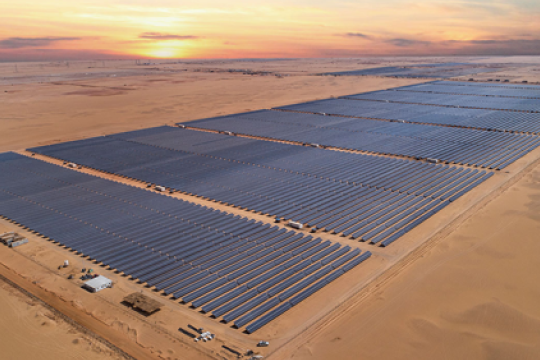
Lastly, from the M&A desk: B Investments has closed the book on Benban, selling the last of its solar holdings as it turns toward a EGP 2-3 bn regional push. The Orascom-OCI story, on the other hand, is going nowhere fast — with the merger deadline sliding to December.
***
ARE YOU MORE OF A LISTENER?Morning Drive is a 10-minute summary of today’s issue crafted for you to enjoy with your morning coffee, while getting the kids ready for school, or driving through the morning rush. And if you like it, tell your friends to tell their friends. They can find us on Apple, Spotify, or wherever they get their podcasts.
***
Happening today
The Central Bank of Egypt’s Monetary Policy Committee meets today — and anyone hoping for a resumption of the easing cycle is likely to be disappointed. All 11 analysts we polled expect policymakers to leave the overnight deposit rate at 19% and the lending rate at 20%. Annual urban inflation cooled to 14.6% in May, down from 14.9% in April, still well above the CBE’s 7% (±2) target — leaving little room to cut without risking the disinflation path.
Watch the timing: State statistics agency Capmas may release June’s urban inflation figure today, though the committee is likely to have the reading in hand regardless of when it goes public — one more input as it weighs whether the disinflation trend is intact.
IMF reserve target, check
Egypt’s net international reserves rose USD 1.94 bn in June to a new record of USD 55.07 bn as rising foreign currency holdings outweighed a near-USD 2 bn fall in the value of the central bank’s gold, according to Central Bank of Egypt (CBE) data.
Foreign currency assets climbed USD 3.93 bn to USD 37.85 bn. Gold holdings fell to USD 16.78 bn from USD 18.78 bn, tracking global prices, former Banque Misr deputy chair Sahar El Damaty tells EnterpriseAM, noting that gold’s value in reserves moves with prices driven by geopolitical tension and its inverse pull against the USD. Special drawing rights (SDRs) edged down to USD 444 mn from USD 448 mn.
REMEMBER- Breaching the USD 55 bn threshold clears the IMF’s primary metric for the Extended Fund Facility (EFF), which mandates a reserve buffer of USD 55-56 bn before the program concludes at year-end. The build has given policymakers more FX cover as the EGP absorbs shocks — officials recently told us reserves held up during the Gulf risk-off bout, with no sign the CBE was drawing on them to smooth outflows.
The EU money is a question mark over the June figure. Egypt was due to receive EUR 1.5bn (USD 1.72 bn) from the EU by the end of June, part of the bloc’s EUR 5 bn macro-financial assistance package — but whether it landed inside June’s reserves or slips into July isn’t clear. Egypt also issued USD 500 mn (JPY 80 bn) in sustainable Samurai bonds in Japan, backed by a partial credit guarantee from the African Development Bank.
Read the record with some care: Ahly Pharos’ Hany Genena has no definitive explanation for the rise but points to the CBE’s latitude over how it books USD inflows — reflecting them in official reserves or holding part as what he calls “hidden reserves” or “unannounced reserves,” deposits parked at state-owned banks. Those banks in turn invest part of the money abroad, making it a form of indirect reserve routed through the banking system. “The way these inflows are distributed could affect how reserve figures are read from one month to another,” he says.
What holds the record up is the harder question. The strength will last only as long as real inflows keep coming, banking expert Hany Aboul Fotouh tells us. “The sustainability of this strength will remain tied to continued real foreign currency inflows into the economy, because reserves ultimately reflect the strength of these resources rather than being an objective in themselves.”
A mixed review
The IMF trimmed its forecast for Egypt’s economic growth in the current fiscal year by 0.4 percentage points to 4.4% while raising its estimate for the elapsed FY 2025/26 by the same margin to 4.6%, according to the Fund’s latest World Economic Outlook update (pdf).
The Fund’s outlook still trails the government’s own ambitions. Planning and Economic Development Minister Ahmed Roustom said in April the FY 2026/27 development plan targets 5.2-5.4% growth — well above where the IMF now sees the economy landing.
Data hungry, power heavy
Incom Group plans to build a USD 300 mn data center in Borg El Arab, Alexandria, over three years and multiple phases. The Electricity Ministry would supply 100 MW in the first phase, rising to 400 MW as later phases come online.
REFRESHER- Incom — formally the International Company for Petroleum and Industrial Services — signed a 2024 MoU with the CIT Ministry, Record Digital Asset Ventures, and SIC Investment to study a green data center running on 200 MW of solar and wind across two phases. How that renewable-powered plan relates to the grid-fed Borg El Arab project now described isn’t clear — the earlier MoU was pegged at 200 MW from renewables, the new plan at up to 400 MW from the national grid.
Why it matters: Egypt’s data-center pipeline is increasingly a grid-allocation story. Hassan Allam’s digital infrastructure arm committed USD 400 mn last month for a first phase — the Borg El Arab project would add another power-heavy facility. Egypt has the geography and subsea-cable position to sell itself as a data hub, but the real test lies in infrastructure gaps, operating costs, and reliable power.
Want to know more? We dug into Egypt’s data-center-hub potential and the obstacles in Hardhat last year.
PSA-
WEATHER- It’s another typical summer day in Cairo today, with a high of 35°C and a low of 24°C, according to our favorite weather app.
It’s several degrees cooler in Alexandria, with a high of 31°C and a low of 22°C.
And over the weekend, expect to see even warmer conditions in the capital (a high of 36°C) and similar temperatures for our friends on the Mediterranean (a high of 30-31°C).
The big story abroad
The revived flare-up between the US and Iran has escalated. The US armed forces said its strikes on Iran continued for a second straight day, following a declaration by US President Donald Trump that the interim US-Iran peace accord was “over.” Washington has maintained that their attacks are in retaliation for Tehran’s “recent unjustified aggression” on maritime traffic in the Strait of Hormuz.
In response to threats by Trump, an advisor to Iran’s supreme leader said the Islamic Republic will deliver an “immediate response.” Washington’s strikes on Tuesday provoked retaliatory strikes on military bases in Kuwait and Bahrain, the Islamic Revolutionary Guard Corps reportedly said.
In other geopolitical news from the region, Israel blocked Arab League Secretary-General Nabil Fahmy from visiting Ramallah in the occupied West Bank, where he was slated to meet with Palestinian National Authority President Mahmoud Abbas on Wednesday. This would have been Fahmy’s first foreign trip since being appointed late last month.
Federal Reserve officials are increasingly concerned about inflation, weighing the inflationary impact of surging investments in artificial intelligence, according to the minutes from their June meeting. Some members saw a case for raising rates, but a majority saw a scenario in which inflation fell within the bank’s targets.