Get EnterpriseAM daily

Available in your choice of English or Arabic

Alcazar locks in USD 420 mn deal to manage Gabal El Zeit

1

WHAT WE’RE TRACKING TODAY

EGX to launch single-stock futures for CIB and TMG

Good morning, all. We lead today’s issue with a much welcomed privatization update — the UAE’s Alcazar Energy has taken over the management and operation of Gabal El Zeit wind farm.

PLUS- MNT-Halan secured the first close of a strategic investment round, which pushed its valuation to USD 1.4 bn; the Finance Ministry plans to secure EGP 900 bn in additional revenue from income tax amendments currently with the House; and the EGX will soon launch single-stock futures.

***

WISH THIS MORNING’S ISSUE was a podcast? We’ve got you. Tap or click here to listen to Morning Drive, a 10-minute version of today’s issue crafted for you to enjoy with your morning coffee, while getting the kids ready for school, or while stomping around the house wondering where the [redacted] you left your [redacted] reading glasses.

***

Introducing single-stock futures

Investors will soon be able to trade futures on blue chips CIB and TMG. The EGX is rolling out single-stock futures contracts on two of its most liquid names — the Commercial International Bank (CIB) and Talaat Mostafa Group (TMG) — starting Thursday 18 June, according to a statement by the bourse. Contracts will come in three- and six-month maturities, with a standard size of 100 shares.

One more tool in the box: Single-stock futures, which let investors speculate on or hedge against price moves in individual stocks without owning them, are the next step in a phased rollout that will eventually include EGX70 derivatives and options.

What we know about the pipeline: The EGX wants to diversify “contracts across different market segments to support the continued development of a balanced derivatives market,” Khaled Amer, CEO of the EGX’s futures clearing arm Tasweyat, tells EnterpriseAM, though he cautioned that timing will depend on demand, trading activity, and broader market development.

REFRESHER- EGX30 index futures — Egypt’s first-ever derivatives product — launched in early March into a regional market rattled by the outbreak of the Iran war — a less-than-ideal backdrop for a new instrument trying to find its footing. While volumes remain thin, the rollout was arguably the single biggest upgrade to the EGX’s architecture in a decade, making the bourse “more investable for bigger players,” Evolve Investment Holding CEO Sameh Al Torgman told EnterpriseAM at the time.

A silver lining: With regional geopolitical tensions still running high, the hedging case for derivatives is arguably stronger than ever. “Some investors might use [the futures market] to express their fears regarding the market,” Al Ahly Pharos Head of Research Hany Genena told EnterpriseAM right when the conflict began, a read that is still relevant today as US-Iran talks remain deadlocked.

Why CIB and TMG are the obvious choices: The two names account for an outsized share of EGX liquidity. CIB was the single most-traded stock on the exchange in May at EGP 10.4 bn (6.6% of total listed stock turnover), with TMG close behind at EGP 9.7 bn (6.3%), according to an EGX report (pdf). Together, just two tickers out of 200-plus pulled nearly 13% of all listed stock trading value last month.

There’s also a strategic logic to the pairing: “An investor looking to gain exposure to the other 28 stocks in the index could go long on the EGX30 and go short on these two specific stocks in varying proportions, effectively allowing them to hedge or bet on those remaining 28 stocks,” Amr El Alfy, head of equities at Thndr, tells EnterpriseAM.

SOUND SMART- Single-stock futures broaden the appeal beyond index-level players. They “provide a more direct and precise tool for expressing views on specific companies, hedging individual stock positions, and implementing a wider range of trading and portfolio management strategies,” Amer says.

Laying tracks in Dammam

Hassan Allam Saudi arm lands new railway contract: Hassan Allam Construction Saudi, a subsidiary of Hassan Allam Holding, and OHL Arabia secured a contract to build a new 22.7 km freight railway connection for the Dammam 2nd Industrial City from Saudi Arabia Railways, according to a press release (pdf). The OHL-HACS JV will execute the full scope of civil and railway works for the single-track line.

The breakdown- The project links the city — one of Saudi Arabia’s largest manufacturing and industrial zones in the Eastern Province — to the existing 556 km Dammam-Riyadh freight railway, known as the East Train Network. The announcement did not disclose the total ticket size or the project timelines.

IN CONTEXT- As we’ve previously reported, Hassan Allam is rapidly building a transit backlog outside the Egyptian market, adding the Dammam freight line to its ongoing work on Riyadh’s King Abdullah Financial District monorail and the UAE-Oman Hafeet Rail.

Localizing desalination

Saudi renewables heavyweight Acwa Power plans to build a local factory in partnership with an unnamed membrane manufacturer, aligning with Egypt’s push to localize its desalination supply chain, according to a readout following a meeting between company officials and Prime Minister Mostafa Madbouly. The Saudi player has also thrown its name in the hat for several desalination projects offered up by the Housing Ministry. The effort dovetails into the Madbouly government’s commitment to raise desalination output from 1.8 mn cbm per day to 10 mn cbm per day.

There’s more: Acwa Power also plans to set up a local training center to develop Egyptian expertise in membrane manufacturing.

REMEMBER- During last year’s talks with Acwa Power regarding upcoming projects, Madbouly emphasized that localizing component manufacturing is now a strict requirement for companies seeking to build desalination plants in Egypt.

ICYMI: EnterpriseAM recently sat down with Acwa Power Egypt Country Director Hassan Amin to discuss Egypt’s desalination potential, the declining costs associated with it, and how it can be cheaper than pumped water.

Data point

USD 14.3 bn — that’s the total volume of invested capital currently deployed across the country’s freezones, funding around 1.3k active projects, according to a cabinet statement.

PSA-

We have a long weekend to look forward to: The public sector will be taking Thursday, 18 June off in observance of the Islamic New Year, according to a prime ministerial decision. We will be on the look out for similar statements from the Labor Ministry, the EGX, and the central bank.

WEATHER- The capital is in for another sunny day with a high of 37°C and a low of 23°C, according to our favorite weather app.

It’s breezier in Alexandria, with a high of 29°C and a low of 21°C.


You’ve spent decades building wealth, and the question now isn’t how to make money — it’s how to make sure it survives you, works across borders, and doesn’t quietly erode while you’re not looking. The rules have changed. Egyptian real estate, once a near-guaranteed store of value, is competing with markets in Greece, Spain, and Dubai.

Whether it’s art as an asset, crowd-funding, or the tax implications quietly stacking up behind that second passport, the toolkit for serious capital deployment has expanded faster than most conventional advice — or most advisors — have.

In Issue 3 of EnterpriseAM Money Matters, we cover the decisions that matter most when you’re at the stage where capital preservation is just as important as capital growth — and where getting it wrong is no longer something you can simply recover from.

Coming straight to your inbox — Wednesday, 10 June.


The big story abroad

Regional tensions have eased after Iran and Israel said attacks will stop for now, but both countries warned that they are ready to launch retaliatory attacks if provoked. Israeli Prime Minister Benjamin Netanyahu said that Tel Aviv’s operations against Iranian-backed Hezbollah will continue.

SpaceX’s upcoming IPO continues to make headlines, becoming heavily oversubscribed as institutional investors place USD 10 bn worth of orders. The IPO is set to price on 11 June and start trading the following session.

Another anticipated IPO is making waves: OpenAI has confidentially filed for an IPO with the Securities and Exchange Commission. The company is yet to decide on a timetable for the listing, but unnamed sources have said the company could go public as soon as this fall.

Introducing Siri AI: Apple has unveiled a new phase for its voice assistant Siri, overhauling the program with AI, steering it closer to chatbots like OpenAI’s ChatGPT or Anthropic’s Claude. The tech giant says its commitment to privacy and data protection is key in differentiating its AI offerings from its rivals. A beta version will be available next month before a full launch in the fall.

Meanwhile, in Washington: A judge has ruled as unlawful an attempt by the Trump administration to levy a USD 100k fee on H-1B visa applications — widely used by tech companies and specialized industries to hire foreign workers. The Department of Justice is expected to appeal the decision.

Chinese firms in the hot seat: The Pentagon has accused three Chinese firms — Alibaba Group, BYD, and Baidu — of aiding China’s armed forces. The companies have been listed as “Chinese military companies” that pose a national security risk to the US.


*** It’s Going Green day — your weekly briefing of all things green in Egypt: EnterpriseAM’s green economy vertical focuses each Tuesday on the business of renewable energy and sustainable practices in Egypt, everything from solar and wind energy through to water, waste management, sustainable building practices and how you can make your business greener, whatever the sector.

In today’s issue: We dive into the country’s first commercial-scale agrivoltaics pilot to see if the dual-use model of sharing land for crops and solar power can survive local market conditions.

The horizon is expanding.

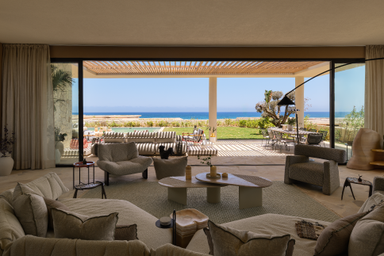
Introducing GranMarina, a new waterfront destination that opens the door to new experiences, new connections, and a new way to experience life by the sea.

A landmark addition to Somabay and a new chapter in the story of the destination, marking a significant milestone in the continued evolution of the destination.

Coming soon.

2

Privatization Watch

Privatization catches a second wind

It’s official: Alcazar has taken over Gabal El Zeit. UAE-based Alcazar Energy has inked a USD 420 mn agreement to operate, manage, maintain, and upgrade the 580 MW Gabal El Zeit wind farm, according to a Cabinet statement.

Upgrades are coming: Under the agreement with with the New and Renewable Energy Authority, Alcazar will handle all renovation and efficiency upgrades to boost production capacity, maintaining a minimum output of 580 MW. The Egyptian Electricity Transmission Company will off-take all energy generated throughout the duration of the contract under a power purchase agreement inked between the two sides.

One big step for our privatization ambitions: The transaction gives a big boost toward reaching our privatization targets for the coming few years and keeps the privatization wheel spinning after sources told us that the long-awaited Banque du Caire IPO has been pushed back yet again.

While the statement announcing the agreement was light on details, we were previously told that the cost of electricity produced by Alcazar will be denominated in USD but settled in EGP at the prevailing exchange rate — a move that will shield the developer from currency volatility.

Better late than never: We first caught wind of the takeover in February, when a government source told EnterpriseAM that the acquisition would wrap up later that month at a price exceeding USD 420 mn. Weeks later, we were told that the acquisition would be finalized in March.

This publication is proudly sponsored by

3

Investment Watch

Banking on fintech

Local fintech unicorn MNT-Halan reached a USD 1.4 bn valuation after securing the first close of a strategic investment round led by Al Ahly Capital Holding, according to a company statement (pdf). Al Ahly Capital — the investment arm of the National Bank of Egypt (NBE) with over USD 2.5 bn in assets under management — did not disclose the size of the investment or the stake acquired. A second close is currently in the works as part of the ongoing round.

Where the money is going: The company will channel the bulk of the proceeds into expanding its Egypt business, targeting SMEs and historically underserved populations in remote towns and villages. The funds will also back the company’s ongoing regional growth plans, including into new markets across the Gulf region.

Why it matters: Banks have long funded non-banking financial institutions (NBFIs), and now the NBE is directly buying into one. While MNT-Halan has worked with over 30 Egyptian banks and financing institutions, this is the first time a commercial bank has become an equity partner, MNT-Halan founder and chairman Mounir Nakhla says in the statement. We will be closely watching to see if other lenders follow suit, especially after the CBE tightened oversight over how banks fund NBFIs.

DATA POINT- The transaction comes as consumer finance volumes climbed 57% y-o-y to EGP 96.3 bn by end-2025, while financing to MSMEs and microfinance clients rose 24% to EGP 106.9 bn. For MNT-Halan, the latest round follows a USD 157.7 mn raise in July 2024 that was earmarked for its international expansion.

MNT-Halan says it has provided more than USD 15.5 bn in financing since launch, serving over 8 mn customers globally with a comprehensive NBFI and e-wallet license stack. The company’s regional expansion accelerated in 2024 after it acquired Advans Pakistan Microfinance Bank and Turkish commercial finance company Tam Finans. It also launched Halan Advance in the UAE in late 2024 to target the country’s underbanked expatriate community.

ADVISORS- Matouk Bassiouny & Hennawy acted as counsel, and Al Ahly Pharos served as financial advisor to MNT-Halan. Meanwhile, Van Campen Liem acted as counsel to Al Ahly Capital, and Baker Tilly served as its financial and tax advisor.

4

Tax

Carrots, sticks, and EGP 900 bn

The Finance Ministry finalized draft income tax amendments aiming to add EGP 900 bn to state revenues in FY 2026/27, according to three government officials and a draft law seen by EnterpriseAM. The bill attempts to encourage EGX listings and infrastructure financing by easing the tax burden on businesses and investors while simultaneously tightening rules around delisting and pulling daily market activity into the stamp tax net.

The draft law scraps the long-delayed capital gains tax on EGX-listed shares, replacing it with a stamp tax. However, as an anti-evasion measure, capital gains will still be taxed at 10% if a transaction results in a company being delisted from the bourse. The draft also drops all capital gains tax claims on listed securities dating back to June 2023 to avoid a legislative gap during which there was no law governing the tax.

A new carrot for IPOs

Confirming our report from March, companies that float on the EGX will receive a 15% deduction from income tax due for three years. This simplifies the tiered scheme we reported on in May — which offered a 30% reduction in year one, 20% in year two, and 10% in year three — by opting for a straight 15% average instead.

Companies must either have a fair-value market cap of at least EGP 50 bn (floating at least 20% of shares) or offer shares worth at least EGP 10 bn to qualify. The measure should encourage large companies to list on the EGX and generate wider economic returns for the state, Egyptian Tax Authority advisor Ragab Mahrous tells EnterpriseAM. The incentive would be granted only once during a company’s lifetime, though the finance minister could extend it for another three-year period.

You heard it here first: A senior government official told us in March that the Finance Ministry was preparing a new incentive scheme that will offer tiered corporate income tax reductions over three years to companies that list on the EGX. The incentive will benefit both private and public companies, which should improve the runway for the state-owned enterprises that the government is looking to list or exit as part of its plan to generate USD 3-4 bn in divestment revenues by year-end.

Borrowing relief and better tax math

When selling unlisted securities, taxpayers will be allowed to add the equivalent of the CBE’s credit and discount rate — currently standing at 19.50% — to their acquisition cost for every year they hold the shares. This mechanism accounts for inflation, reduces the final taxable gain, and encourages shareholders to disclose the true value of their transactions, Mahrous notes.

Holding companies get dividend relief: Resident holding companies will be fully exempt from taxes on dividends received from both resident and non-resident subsidiaries. To qualify, the parent company must own at least 25% of the subsidiary’s capital or voting rights and have held that stake (or commit to holding it) for at least two years.

Public and private Egyptian companies contributing to national infrastructure projects will be exempt from the tax cap on deducting interest paid on loans and credit facilities. Eligibility will be determined by a prime ministerial decree, and the exemption will expire once the project’s core loans mature. This should make it easier for companies working on national infrastructure projects to secure financing from international financial institutions, Mahrous says.

A clean up job

The draft applies a unified 2.5% tax rate to multiple property disposals, entirely exempting property transfers between first-degree relatives. It also makes writing off bad debt easier by setting a EGP 5k threshold per debt that is exempt from the usual regulatory collection procedures. As we heard in March, the draft also cancels the practice of arbitrary tax assessments, removing a long-running source of uncertainty for businesses.

The package is meant to pay for itself: The Finance Ministry is targeting EGP 3.5 tn in total tax revenues in the coming fiscal year, with a medium-term target of EGP 5.5 tn. The EGP 900 bn in newly targeted receipts will be driven largely by the proportional EGX stamp tax. Additional revenues will be generated by a 0.25 per mille tax on same-day trading, increasing the Finance Ministry’s share of state-owned company income (expected to yield EGP 37.5-42 bn) and implementing higher departure fees (expected to generate EGP 30 bn).

What’s next: The tax amendments are currently before the House, as the government pushes to secure parliamentary approval ahead of a planned July rollout.

5

Moves

Valmore taps Shady Makary as CFO

Valmore Holding appointed Shady Makary (LinkedIn) as chief financial officer, according to a company statement seen by EnterpriseAM. Makary brings over 25 years of corporate finance and operational leadership across MENA and Asia to the role, and his mandate will focus on optimizing financial performance and strengthening internal controls. He joins from B.Tech, where he served as group CFO. Prior to that, he held regional leadership roles at Danone Dairy and Unilever.

A broader C-suite shakeup: Makary’s appointment follows the recent naming of Moataz Kandil as CIO and Hani Shehata as COO to lead Valmore’s ongoing executive transformation. The leadership overhaul aligns with the company’s rebrand last year and its push to derisk its structural exposure to the EGP. CEO Jon Rokk previously told us the group is expanding into overseas markets where it can replicate its existing operating expertise.

6

Also on our Radar

Safaga 2 terminal begins trial operations

The Transport Ministry began trial operations yesterday at the Safaga 2 multi-purpose terminal, Al Mal reports, citing unnamed sources. The UAE’s AD Ports Group — which tapped Hassan Allam Construction for infrastructure works — completed phase one of the superstructure, with a total investment of USD 200 mn. The terminal is Upper Egypt’s first internationally operated port and contractually requires AD Ports to handle 500k containers annually during its first five years.

Why it matters: The terminal gives Safaga more muscle at a time when the port is becoming a more important node in the Europe-Egypt-GCC corridor — cargo can land at Mediterranean ports, move overland to Safaga, and cross by ferry into Saudi Arabia and Gulf markets.

Magnite made in Egypt

Nissan rolled out the first Africa-made Nissan Magnite from its Sixth of October factory, according to a Cabinet statement. The model is made with up to 55% local content and is the automaker’s third locally assembled model. Nissan plans to export 7k of the 17k Magnite units it produces annually. The rollout follows Nissan’s USD 45 mn investment pledged in December 2024 to upgrade its local passenger-car assembly lines.

IN CONTEXT- The rollout aligns with the government’s Automotive Industry DevelopmentProgram, which targets 100k vehicles annually with 60% local content. For Nissan, the Egypt plant is its only passenger-vehicle manufacturing base in Africa after it sold its South Africa factory earlier this year.

Kuwaiti deposit stays

Kuwait rolled over its USD 2 bn deposit at the Central Bank of Egypt for an additional year after it matured in April, the Arabicpress reports, citing an unnamed CBE official. We heard about the CBE moving to renew the Kuwaiti deposit back in April, and the confirmation comes as Egypt’s foreign reserves continue their upward trajectory, rising by USD 125 mn in May to USD 53.13 bn and extending a record-breaking streak that has lifted reserves by roughly USD 1.68 bn since the start of the year.

Learning about AI — in Arabic

Local AI education platform Efham.ai secured an undisclosed sum from AI-focused investment firm Foras AI to scale up its Arabic-language tech training, Wamda reports. The startup will use the fresh capital to launch more than 100 AI training lessons by the end of 3Q 2026 across Egypt, Saudi Arabia, the UAE, Kuwait, Jordan, and other Arab markets.

Making AI accessible: Developed by local tech firm NixAI, Efham.ai aims to build the region’s first community dedicated to learning about AI in Arabic. It delivers its educational content in Egyptian colloquial Arabic to simplify complex technical concepts, helping users apply AI tools for content creation, product development, entrepreneurship, and fundraising.

Raising our aircraft fleet

EgyptAir plans to add 28 new aircraft to its fleet in 2026 and 2027 as part of a wider goal of expanding its fleet to 125 planes in the coming years, Civil Aviation Minister Sameh El Hefny said yesterday. The flag carrier currently owns 72 aircraft. AirCairo’s fleet is also set to expand from 42 aircraft to 82 within the next four years, he added.

7

PLANET FINANCE

From a favorite to have-not: Software dealmaking is in a rout

After recording USD 290 bn in buyouts last year — the highest total in 11 years — software dealmaking has slowed down significantly this year. Activity fell to USD 50 bn in the first five months of 2026, down from USD 88 bn a year earlier and the lowest level for the period since the pandemic, the Financial Times reports.

The retreat isn’t limited to M&A: In the US’s leveraged loan market, software’s share of new issuance has fallen to just 9%, roughly half last year’s level and its lowest share since 2013, according to PitchBook.

What’s changed? Fears that AI agents could replace parts of traditional software workflows have left investors struggling to separate winners from losers in the industry. Monthly software transaction value fell from USD 24 bn in January to just USD 5 bn in May after Anthropic’s launch of new AI productivity tools rattled the sector.

That uncertainty is weighing not just on acquisitions, but also on the financing that supports them. Software's share of LBO-related issuance has also fallen, to 17.5% from 34.5% last year — another sign that lenders and sponsors are becoming more cautious about backing the sector.

The core problem is valuation: “Until an investor knows what a business may be worth post-AI adoption, it’s impossible for them to make a case to their investment committee,” Arma Partners’ Paul-Noël Guély told the salmon-colored paper.

That is leaving software as one of the market’s “have-nots,” in the words of PGIM Credit's Engin Okaya, as investors grow more selective about where they deploy capital. Healthcare, by contrast, has overtaken software as the largest source of institutional loan issuance for the first time since 2015, accounting for 14% of volume this year. Investors are showing much more confidence in sectors seen as less exposed to AI disruption, Latham & Watkins' David Walker told the newspaper.

MARKETS THIS MORNING-

Asia-Pacific markets rebounded in early trading after Iran and Israel said they would press pause on launching any further attacks against each other. South Korea’s Kospi is up 3.4%, while Japan’s Nikkei is up a more modest 0.8%. The Shanghai Composite is up as well, while the Hang Seng is in the red.

EGX30

51,883

-0.5% (YTD: +24.0%)

USD (CBE)

Buy 52.09

Sell 52.23

USD (CIB)

Buy 52.05

Sell 52.15

Interest rates (CBE)

19.00% deposit

20.00% lending

Tadawul

10,973

+0.4% (YTD: +4.6%)

ADX

9,484

-1.4% (YTD: -5.1%)

DFM

5,735

-0.6% (YTD: -5.2%)

S&P 500

7,406

+0.3% (YTD: +8.2%)

FTSE 100

10,373

+0.1% (YTD: +4.5%)

Euro Stoxx 50

6,062

0.0% (YTD: +4.6%)

Brent crude

USD 93.74

-0.5%

Natural gas (Nymex)

USD 3.15

0.0%

Gold

USD 4,361

-0.1%

BTC

USD 63,127

-0.3% (YTD: -27.9%)

S&P Egypt Sovereign Bond Index

1,056

+0.1% (YTD: +6.4%)

S&P MENA Bond & Sukuk

151.25

-0.2% (YTD: -0.4%)

VIX (Volatility Index)

18.92

-12.0% (YTD: +26.6%)

THE CLOSING BELL-

The EGX30 fell 0.5% at yesterday’s close on turnover of EGP 11.0 bn (33.0% above the 90-day average). Regional investors were the sole net sellers. The index is up 24.0% YTD.

In the green: Orascom Investment Holding (+3.7%), GB Corp (+3.1%), and Juhayna (+2.7%).

In the red: Raya Holding (-3.5%), E-finance (-2.5%), and Emaar Misr (-2.4%).

8

Going Green

Crops and kilowatts

Engazaat is building Egypt’s first commercial-scale agrivoltaics pilot at Nuweiba in South Sinai, backed by EUR 4 mn from the Flanders International Climate Action Programme — with a Marsa Matrouh follow-up ten times the size already in the pipeline, regional COO Dina Kafafi tells EnterpriseAM.

The big question: Run in partnership with Brussels-based energy consultancy 3E, ORG, and the Flemish government, the project will deliver its first indicative results in September and will answer a key question: can agrivoltaics — solar panels mounted above farmland so crops and electricity share the same plot — survive Egyptian conditions?

Why it matters: The pilot is the first serious test of an idea Egypt’s policymakers have been bouncing around for years. The country wants to expand agricultural output, reclaim land, and improve food security while running into harder water constraints every year. Agrivoltaics promises to do three things at once — generate power, shade crops to reduce evaporation, and squeeze more revenue per feddan. IFC modelling suggests dual-use systems can cut water consumption by up to 29%, though the report (pdf) is clear that the figure depends heavily on crop type and system design. The Egyptian-conditions test is what’s missing — and Nuweiba is the first attempt to fill it.

This isn’t about needing more solar. Egypt already runs some of the region’s largest solar parks and added 0.7 GW of installed solar capacity in 2025, taking the total to 3.3 GW, according to an IEA report (pdf). The agrivoltaics conversation is about land and water, not MWs.

The Nuweiba site is testing three metrics — water efficiency, crop productivity, and land-use efficiency — across three growing seasons, Kafafi tells us. The project will trial a mix of cash crops, fruits, and vegetables, including tomatoes and onions. The Marsa Matrouh follow-up would be among the largest agrivoltaics deployments in the region if it proceeds, she adds.

The industry is split on whether it can work. “Agrivoltaics is academically compelling, but it sits well outside our commercial reality in Egypt,” Karm Holding CTO Akram Ismail tells us. “The demand we consistently see from agricultural clients centres on reliable, round-the-clock energy for irrigation and operations, not dual-use solar-crop configurations.”

The cost stack is Karm’s central argument. Elevated agrivoltaic structures cost at least 20% more than conventional ground-mounted solar, depending on design and crop type. For Egyptian agricultural operators already facing high financing costs, the additional capex is hard to justify. The bigger problem, Ismail says, is what comes before the solar conversation: “In our operating areas, drilling a single water well costs no less than EGP 12 mn. That capital burden alone breaks the economic case before any conversation about the additional cost of an elevated, specialised agrivoltaic structure begins.”

But Kafafi argues that agrivoltaics is being priced against the wrong benchmark. Treating it as a standalone power project misses the point; the value comes from bundling power, water, and land productivity into one infrastructure asset. The economics, she argues, become legible when “the hedge on renewables becomes a hedge on macroeconomics too, not just power.”

The barriers could also be largely institutional: “The technology economics are favorable, but the governance and finance architecture is the gating issue — permitting authority, tariff design, taxation of dual streams, and land-tenure protocols for multi-decade contracting,” Egyptian Agrivoltaics Initiative (EAI) founder Zeinab Hafez tells EnterpriseAM, noting that scaling requires inter-ministerial coordination, climate- finance-ready documentation, contracting models for productive farmland, and a well-documented national pilot with verified yield, energy, water, and economic data.

EAI is Egypt's first dedicated governance and ESG architecture for true agrivoltaics on

productive farmland. The initiative focuses on the institutional side of deployment, including governance protocols, ESG and monitoring frameworks, inter-ministerial coordination models, and land-tenure protocols, Hafez tells us.

SOUND SMART- Agrivoltaics works on two layers: elevated panels generate electricity above, while crops grow underneath in partial shade. The shading reduces soil evaporation and heat stress on the crops; the crops, in turn, cool the panels — solar panels lose efficiency as temperatures climb, so shaded ground can lift generation yields. Global capacity sits somewhere between 2.8 GW and 14 GW, the IFC report estimates, with the wide range reflecting how new and under-measured the asset class still is.

REMEMBER- EgyptERA suspended the existing net metering system in late December and paused new rules in January after pushback from solar developers. The framework is still under review. Net metering doesn’t determine whether agrivoltaics works technically, but it does determine whether anyone will pay for it — and on Ismail’s read, layering agrivoltaics on top of an unresolved net metering regime “multiplies risk without proportionally multiplying return.”

Our take: Karm and Engazaat are solving different problems — and they're both right. Karm is sizing agrivoltaics against the unit economics of standalone solar-for-irrigation — a model that already works and is already cheap. Engazaat is sizing it against a broader question of what kind of land-use our water-stressed economy can sustain over the next decade. The September results will tell us whether the integrated-infrastructure argument has data behind it or remains a useful framing exercise.


2026

JUNE

16-18 June (Tuesday-Thursday) AFA International Annual Fertilizer Conference & Exhibition, Nile Ritz-Carlton, Cairo.

23-25 June (Tuesday-Thursday): The Big 5 Construct Egypt, Egypt International Exhibition Center, Cairo.

23-25 June (Tuesday-Thursday): Watrex Expo, Egypt International Exhibition Center, Cairo.

30 June (Tuesday): June 30 Revolution.

JULY

9 July (Thursday): Monetary Policy Committee’s fourth meeting of 2026.

23 July (Thursday): Revolution Day (TBC).

AUGUST

20 August (Thursday): Monetary Policy Committee’s fifth meeting of 2026.

26 August (Wednesday): Prophet Muhammad’s birthday.

SEPTEMBER

10-12 September (Thursday-Saturday): Egyptian Entrepreneurship Sector Diagnostics Report Summit, El Gouna.

15 September (Tuesday): IMF to hold its eighth review of Egypt’s USD 8 bn EFF arrangement.

24 September (Thursday): Monetary Policy Committee’s sixth meeting of 2026.

27-29 September (Sunday-Tuesday): Global Conference on Population, Health, and Human Development.

OCTOBER

6 October (Tuesday): Armed Forces Day.

26-28 October (Monday-Wednesday): IEX Egypt, Egypt International Exhibition Center, Cairo.

29 October (Thursday): Monetary Policy Committee’s seventh meeting of 2026.

DECEMBER

7-10 December (Monday-Thursday): Food Africa, Egypt International Exhibition Center, Cairo.

17 December (Thursday): Monetary Policy Committee’s eighth meeting of 2026.

EVENTS WITH NO SET DATE

1Q 2026: Trial operations for the Ain Sokhna-Sixth of October section of Egypt’s first high-speed rail line scheduled to begin.

May 2026: End of extension for developers on 15% interest rates for land installment payments.

July 2026: British Prime Minister Keir Starmer set to visit Egypt.

2H 2026: Operations at Deli Glass Co’s new USD 70 mn glassware factory kick off.

2026: The Egyptian-American Economic Forum.

4Q 2026: Banque du Caire IPO

2027

16-18 January (Saturday-Monday): Agri Expo, Cairo International Convention Center.

20 January-7 February: Egypt to host the African Games.

April 2027: Tenth of Ramadan dry port and logistics hub to begin operations.

EVENTS WITH NO SET DATE

2027: Egypt to host EBRD’s annual meetings.

2027: Egypt-EU Summit 2027.

End of 2027: Trial operations at the Dabaa nuclear power plant expected to take place.

September 2028: First unit of the Dabaa nuclear power plant begins operations.

Now Playing
Now Playing
00:00
00:00