Good afternoon, friends, and what a way to kick off the week. Egypt beat New Zealand last night, Mo Salah is one goal shy of the national scoring record, and we imagine productivity is suffering accordingly. In today’s issue: the story of Socks, a Korba coffee shop built on the conviction that neurodiverse employees are an asset. Also, House of the Dragon is back for a third season, and we have the recap. All that and last night’s full World Cup roundup below.
But first, the news…
THE BIG STORY ABROAD-
🌐 UK Prime Minister Keir Starmer’s resignation is dominating headlines this afternoon as the country’s sixth prime minister in 10 years announces he will step down just two years after his landslide victory. Starmer will remain in office until a new Labour Party leader is elected, with former mayor of Greater Manchester Andy Burnham already confirming he will stand as candidate to replace Starmer.
Starmer’s announcement comes after he asserted for weeks that he would fight any attempt to oust him amid the UK’s growing political turmoil and opposition from his own lawmakers. In an emotional speech at 10 Downing Street, Starmer says his role as PM had been “the proudest moment of [his] life” and that he accepts with “good grace” that his party no longer supports him.
MEANWHILE- Following “encouraging progress” in the US-Iran talks in Switzerland, Iran has agreed to invite International Atomic Energy Agency (IAEA) inspectors back to their country, according to US Vice President JD Vance. Vance says the move marks “the first step in permanently ending a nuclear weapons program in Iran.”
IN THE BUSINESS PRESS- SpaceX stock fell nearly 5% in premarket trading today, marking the third consecutive drop after a record-breaking IPO. This comes after SpaceX was reported to have been handed the lowest possible ESG rating by MSCI.
** CATCH UP QUICK on the top stories from today’s EnterpriseAM:
Egypt is on track to break two records in the same wheat season — local procurement and imports. The gov’t has already collected more than 4.6 mn tons of domestic wheat since mid-April, surpassing last year’s full-season total of 3.9 mn tons. Egypt also imported 7.1 mn tons of wheat in January-May 2026, up 65% from 4.3 mn tons in the same period last year;
Majid Al Futtaim is anchoring East Cairo’s Mada City with a USD 3.1 bn+ (c. EGP 155 bn) mixed-use project under a strategic partnership inked with Midar. The Egyptian-Emirati private-sector partnership will build an integrated urban development across 553 feddans inside the New Cairo development;
Egyptian banks adopted the ISO 20022 international standard for SWIFT financial messaging in interbank transfers. The move follows upgrades to Egypt’s Real-Time Gross Settlement (RTGS) system to bring it into compliance with the international standard. This allows richer, more structured data to travel with each payment.
☀️ TOMORROW’S WEATHER- Cairo’s turning up the heat tomorrow with a high of 36°C, following a cool low of 24°C. Up north, the weather remains pleasant with a sunny high of 30°C and a low of 22°C, according to our favorite weather app.
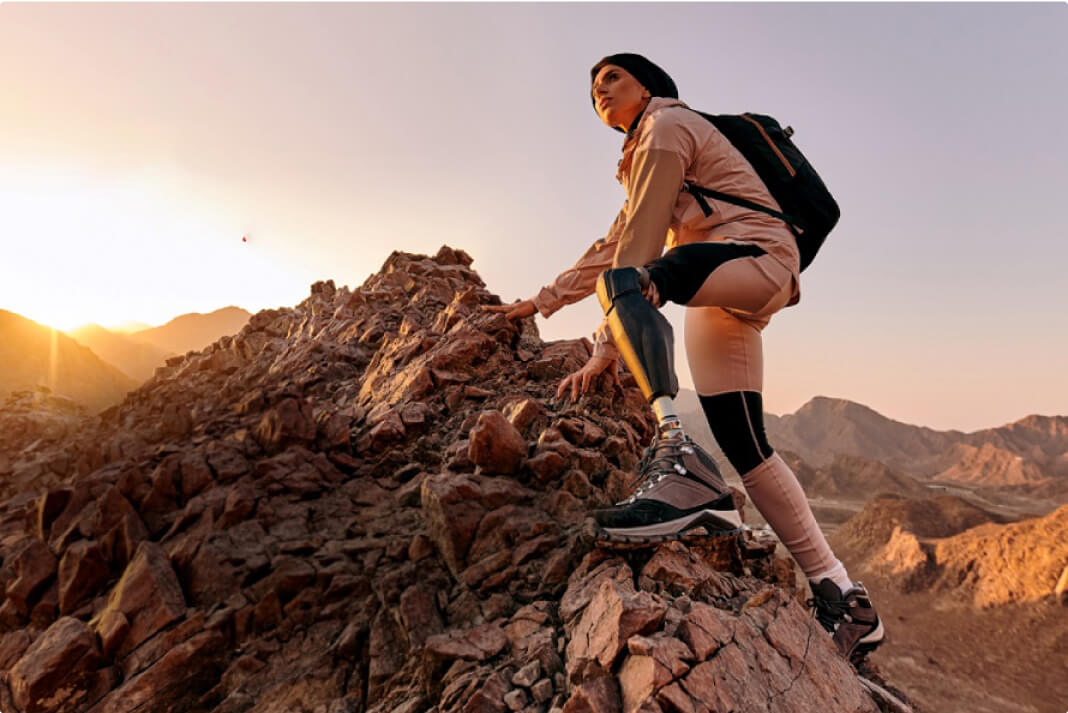
☕🧦 Egypt’s inclusion conversation has, for years, been trapped in the language of charity. Hire someone with a disability, the thinking goes, and you absorb the cost — operationally, commercially, and culturally. Socks, a specialty coffee shop that opened in Korba Heliopolis in August 2025, was built on the exact opposite premise: people with developmental disorders, properly trained and properly supported, are an asset. Ten months in, the model is a success.
Rania Abdel Aziz, co-founder of Socks, DIR Floortime advanced provider, and certified speech and language practitioner, is most responsible for that premise. Abdel Aziz has spent a decade working in developmental disorders, founding Hope and Beyond, an awareness platform launched during the pandemic, and co-founding Etwasel, an early intervention center built on a communication-first methodology. Socks is the latest of Abdel Aziz’s initiatives, through which she proves her argument that the system’s failure to see capability in neurodiverse individuals is a failure of imagination, not evidence of said capability’s absence.
How it started
Socks’ story can be traced back to 2015 and a diagnosis. Abdel Aziz’s nephew, Hamza — born days apart from her daughter, Nourine, for whom the family had mapped out a shared childhood — was diagnosed with severe autism at 19 months. “I didn’t understand anything about autism before the diagnosis,” Abdel Aziz tells EnterpriseAM. “Then it became clear that there must be someone in the family who knows what he’s going through.” She left her job as a translator at Save the Children, retrained, and spent the next decade building the support systems she wished had existed when Hamza was diagnosed.
The moment Socks was conceived came when Abdel Aziz, alongside her friend Alaa El Masry, whose sister has Down syndrome, visited Dubai’s Mawaheb Café — a haven for adults with special needs — to launch Abdel Aziz’s book Oh Hamza — an educational children’s book on autism, drawing from her own personal experiences with her nephew. The question on the way home was simple: Why didn’t we have something like this in Cairo? She approached Taha Moussa, a friend of her brother’s and co-founder of 929, a Cairo-based F&B group, with the concept. “He didn’t hesitate,” she says. Training began in January 2025, and Socks opened seven months later.
Building Socks
Every detail about Socks was deliberate.Islam Salem, architect and 929 co-founder, designed the space to be sensory-friendly — calm colors, controlled lighting, acoustic dampening, no exposed electrical sockets, and an automatic milk steamer instead of the standard model. Harsh lighting can trigger overstimulation; for staff with epilepsy, it can trigger seizures.
Staffing Socks required just as much — if not more deliberate — planning. Hesham Sayed, brought in as a brand manager with no prior background in special needs, ran the training program from January through to opening. What he built, Abdel Aziz says, went beyond a skills curriculum. “He didn’t just train the children, he created an environment in which Socks operates normally, and that whoever comes in understands the staff without difficulty.” Socks now is home to twelve employees with developmental disorders — Down syndrome, autism, and others — working alongside neurotypical staff, including Abdel Aziz’s own daughter, who volunteers in her spare time.
So, why is the café called Socks? The International Awareness Day of Down Syndrome, which falls on 21 March, is marked globally by wearing mismatched socks — a visual reference to the shape chromosomes take under a microscope. Abdel Aziz wanted a name with a story behind it, and Socks fit the bill.
On operating commercially
“There’s a difference between empathy and sympathy,” Abdel Aziz tells EnterpriseAM. “I want people to come for the quality, not for empathy.” The distinction matters operationally: a customer who walks in once out of goodwill and finds the product underwhelming won’t return. Goodwill doesn’t compound. Quality does. “If the quality didn't please you, will you come again? You won't,” Abdel Aziz adds.
The proof point she returns to is Mahmoud Bahwashy, a staff member with a mild intellectual disability and a history of severe epilepsy, who now runs shifts independently and has begun mentoring newer colleagues. He’s the model’s clearest illustration. Capable, trained, and trusted with day-to-day operations. “One day, he can be the manager,” Abdel Aziz says.
On the regulatory side, setting up the business was surprisingly a walk in the park. Government support for employing people with disabilities exists at the policy level, and Socks encountered no significant licensing obstacles specific to its employment structure. The harder work was cultural, not legislative.
Navigating preconceived notions on neurodivergence
The preconceptions problem comes in two forms. The first is among customers. Walk into Socks, and you will, at some point, hear someone call the staff “angels.” You will hear “May God heal them.” You will hear assumptions — sourced, apparently, from television and social media. Abdel Aziz’s approach is consistent: explain first, draw a line second. “Before you [confront] someone, explain to them,” she says. She is selective about who she spends energy educating. “I will educate the person who wants to learn — the one who keeps asking, because they actually want to understand. Someone who doesn't come and see the reality? I won't go to them.”
Neurotypical F&B workers arrive at Socks with ingrained assumptions — not malicious, but present. The instinct to hover, to over-correct, to treat a colleague with a developmental disorder as someone to be managed rather than worked alongside. Sayed’s training targets this directly, building an internal culture where the baseline is inclusion, not accommodation. It is, as Abdel Aziz acknowledges, a long project. “You are trying to change a mindset of years and years, and a culture. It's complicated.”
Running the operation carries a personal cost she is candid about. Abdel Aziz visits the café four or five days a week and is closely connected to every member of the team — each carrying their own needs, their own histories, their own difficult days. The mornings are what anchor her: arriving at Socks, moving through the space, and catching up with the staff before the day gets going.
The way forward
Abdel Aziz wants to expand. The structural gaps she names are specific: schools that cannot adequately accommodate neurodiverse students, university programs that don't produce enough qualified specialists, and a workforce pipeline that places the cost of intervention almost entirely on individual families.
“Schools are one of the most difficult things these children face,” she says. “There is no capacity, no passion from teachers, and a lot of neglect.” The more immediate indicator of where Socks is headed is happening right now. The café was invited to cater at the Egypt vs. Belgium FIFA World Cup match in the New Capital — a booking that followed Abdel Aziz's attendance at a presidential event, where the capital's management took notice.
It is, in her framing, less a commercial milestone than a proof of concept, that a café staffed by people the system has spent decades underestimating can operate at whatever scale it can reach when given the chance. The argument Socks has been making since August 2025 — that inclusive employment is a viable business model, not a charitable gesture — is getting a larger stage.
📺🐉 After two years of waiting with bated breath, HBO’s juggernaut production and sister series to the iconic Game of Thrones, House of the Dragon, is finally back for its third season. It’s been a period full of tinfoil-hat theories, leaked scripts, and viral controversies — this morning, we were treated to a handful of answers to our most biting questions.
How the season kicks off: Kicking off exactly where the second season left off, the episode starts with Princess Rhaena Targaryen (Phoebe Campbell) still adamant on claiming the wild, untamed dragon in The Vale of Arryn — just when all hope seems to be lost, Rhaena’s efforts prove successful, and Sheepstealer is hers.
From that point onward, the remaining loose threads of the sophomore season are promptly addressed, with Aegon (Tom Glynn-Carney), Aemond (Ewan Mitchell), Alicent (Olivia Cooke), Daemon (Matt Smith), and Rhaenerya (Emma D’Arcy), alongside the remainder of the cast, all getting their time in the spotlight. We’ll keep it at that to avoid spoilers.
What we liked: There was not a single second throughout the premiere’s runtime when our eyes were not laser-focused on the screen. The episode starts off strong and maintains that fiery momentum throughout. It’s brilliantly shot, and the score is — as usual — top-notch, giving us a first glimpse of the mysterious Prince Daeron Targaryen (Henry Ashton). The entire second half of the episode features one of the franchise’s longest-ever battle sequences, a whopping 25 minutes — if you’ve read the book, you’ll know what’s in store.
The episode also features some of the cast’s best performances to date — with Campbell, Henry Collett (Prince Jacaerys Velaryon), and Cooke in particular all stealing their scenes.
What book-savvy viewers might not like: Following the episode’s release, it becomes clear why author George R.R. Martin has spent the better part of the past two years trashing showrunner Ryan Condal. The third season veers dramatically from the source material, irrevocably impacting how future events will unfold. If you’re a book die-hard, you’ll likely share Martin’s disappointment, but if you’ve been looking for a twist, you’ll find it and then some.
The verdict: With a 9.4/10 rating on IMDb, it seems fans are pleased — us, certainly, included. The premiere is, subjectively, the franchise’s best to date, but the real question is: Will it maintain its momentum throughout the season, or will it crash and burn like a certain someone’s dragon? Time will tell, but we’re very optimistic.
💡NOTE: The show, in true Game of Thrones fashion, is gory and explicit — and, without the comedic relief offered in A Knight of the Seven Kingdoms, so tread with care.
WHERE TO WATCH- Episodes drop weekly on Mondays at 4am on OSN+. Watch the trailer on YouTube (watch, runtime: 2:30).
⚽🎉 Onwards and upwards, Pharoahs. Om el Donia is celebrating today after the national team, under Hossam Hassan, produced a historic first World Cup victory — coming from behind to beat New Zealand 3-1 at BC Place in Vancouver earlier this morning.
Egypt scored twice in less than 10 minutes in the second half— with Mostafa Ziko opening with a close-range header, Salah putting Egypt ahead, then Trezeguet wrapping it up from a Salah corner. The victory ends a 92-year wait since Egypt’s first World Cup appearance — the Pharaohs had gone seven games without a triumph across 1934, 1990, 2018, and their match against Belgium earlier last week. Salah is now Egypt’s all-time top scorer at the World Cup, and Hossam Hassan became the first coach to lead Egypt to victory at both AFCON and the World Cup.
Qualification dreams might just be reality: Egypt sit top of Group G on four points after two games — the only side in the group with a victory so far. Belgium and Iran are level on two points each after their goalless draw, while New Zealand have one. A victory or draw against Iran on Saturday at 6am Cairo time is enough to ensure Egypt’s advance as group leaders.
On our radar tonight
Argentina face Austria at the Dallas Stadium in Texas in a top-of-the-table clash with both sides on three points. Argentina arrive in high spirits after Messi’s hat-trick sank Algeria, looking to double down on their position at the top of Group J and secure their spot in the next round against an Austrian side that means business after sending Jordan packing 3-1. The match will be broadcast on beIN Sports Max 1 at 8pm.
Post-midnight:
France vs. Iraq — Group I (12am, beIN Sports Max 2);
Norway vs. Senegal — Group I (3am, beIN Sports Max 1);
Jordan vs. Algeria — Group J (6am, beIN Sports 2).
**Don’t miss out on the fierce competition in the EnterpriseAM Fantasy World Cup — click on this{link} or use the code 2CUFGASD to join.
🎤 3Phaz, Hady Moamer, El Waili, and Al Nather are turning up the volume with a genre-defying lineup this Wednesday, 24 June, at Cairo Jazz Club 610 in Sheikh Zayed. The artists join forces for a night where Arabic sounds meet electronic beats, sharp production, and boundary-pushing rhythms.
Expect everything from futuristic electro shaabi and cinematic synths to trap, hip-hop, and experimental sounds — which is to say, you’ll be in for a good time. The show starts at 8pm, with tickets available on TicketsMarche.
The EGX30 fell 0.2% at today’s close on turnover of EGP 9.3 bn (7.1% above the 90-day average). Local investors were the sole net sellers. The index is up 25.7% YTD.
In the green: GB Corp (+7.9%), Qalaa Holdings (+3.0%), and Telecom Egypt (+2.3%).
In the red: Abu Qir Fertilizers (-4.1%), Kima (-3.3%), and Emaar Misr (-2.9%).


 Egypt Edition
  MENA+ Edition
  UAE Edition
  Saudi Edition
  Logistics (MENA)


 Share Issue