Good afternoon, friends, and welcome to a brand new week. Today’s issue has a dress code: red. Red screens on the EGX and the Reds hosting the Red Devils at Anfield tonight. Only one of those is fun to watch.
If 25 October was the first time you saw circuit breakers trip on the EGX, this one’s for you. For most of today’s retail crowd, it was their first selloff. This week’s Enterprise Guide takes the questions first-timers have been asking (Should I sell? Why did my small-cap fall harder than the index? Am I stuck with that IPO?) to the people who know. The short answer: it depends less on the market than on whose money you’re holding.
Elsewhere today: We review a markets podcast that skips the small talk, look to the pitches for major action in the European leagues, and head to Madinaty, where Tamer Hosny opens the Madinaty Winter Music Festival this Friday.
But first, the news…
Become a morning regular
What’s moving Egypt’s economy, in your inbox every weekday. Free, in English or Arabic.
Here are the stories driving the day, both at home and abroad.We are on track to become Africa’s biggest gas consumer this year, the International Energy Agency says (pdf) says. Gas demand rose 11% y-o-y to some 35 bcm in January-July on record gas-fired power generation. The country’s gas demand could end the year around 6% higher even if consumption in August-December holds flat y-o-y.
Meanwhile, tankers carrying US LNG bound for Egyptian regasification terminals changed course on their way, Bloomberg reports, and one made it as far as Port Said before turning back. Spot cargoes have become more expensive after the recent price rally, and we head into winter with less of a cushion than we had over the summer, when we could lean on supply deals signed before the war.
^^We’ll have more on this story in tomorrow’s edition of EnterpriseAM.
☀️ TOMORROW’S WEATHER- It’s looking like another moderately warm day in C-town tomorrow, with temperatures peaking at 26°C before dipping to a mainly clear 16°C overnight, according to our favorite weather app.
MAKING HEADLINES ABROAD-
It’s a relatively calm afternoon on the news fronts today, but dominating the conversation is the latest updates at COP31.
COP31 climate talks in Antalya, Turkey, are at risk of collapse after the European Union formally rejected the latest draft agreement, arguing that it fails to address the climate crisis and makes no mention of fossil fuels. Ireland’s climate minister Darragh O’Brien said the EU would not endorse a text that falls short of scientific requirements, while Panama also joined the opposition. COP31 President Murat Kurum confirmed that the draft had not been adopted due to a lack of consensus. The negotiations have now become the longest COP summit on record, running two days beyond their scheduled conclusion.
MEANWHILE- Finland’s coast guard reported that a fire aboard the Russian cargo ship Sparta II has continued to burn overnight despite ongoing firefighting efforts, with the vessel still anchored in Finnish waters after a suspected Ukrainian drone strike. The 16 crew members were evacuated to another Russian ship, while Finnish, Estonian, and Russian assets worked to keep the vessel from sinking. Finland’s Border Guard said there was no immediate danger to nearby maritime traffic or the environment.
The Sparta II wasstruck on Saturday morning in international watersin the Gulf of Finland while heading for Russia’s Kaliningrad exclave. The vessel is under US and Ukrainian sanctions and was suspected of transporting weapons from Syria to Russia.
IN TECH NEWS- The US Securities and Exchange Commission is scrutinizing Nvidia’s accounting practices, with enforcement staff probing potential issues at the chipmaker, according to Reuters. Former CEO Jensen Huang has also agreed to testify at a public Senate Banking Committee hearing, according to a spokesperson for Republican Senator Tim Scott, though a date has yet to be confirmed. Scott initially requested that Huang appear on December 3. The former CEO is also scheduled to sit for a closed-door interview with three House committees on December 1.
Individuals have been setting the EGX’s direction for most of this year. They accounted for 72.7% of gross trading in listed stocks in 1H 2026, while institutional money largely stayed on the sidelines. When the screens turned red in October, it was mostly first-timers deciding whether to hold their nerve or hit sell.
So, does a halt mean the market is broken? No, EGX Chairman Omar Radwan went on television that Sunday afternoon (watch, runtime: 10:55) to call the suspension routine. He urged investors to diversify and hold instead of selling in a hurry. “Some investors don’t know that investment is supposed to be long-term,” he said.
We know that most first-timers have a lot of questions and confusion, so we compiled the answers to some of these questions below; especially with the stock market swinging, after the EGX closed today’s session down 2.9%.
Why did the market fall?
Not because the economy cracked,Ahmad Hammouda, co-founder and CEO of Thndr,argues. In a video recorded right after the halt, drawing on an earlier conversation with Amr Elalfy, financial analyst and chief equity strategist at Thndr, he pointed to regional tensions, investors locking in gains from earlier in the year, margin calls, and back-to-back IPOs pulling liquidity out of listed stocks. None of that reflects weaker companies or a weaker economy, he says.
Between selling and holding
So, should I sell? That depends less on the market than on whose money you’re holding. The investors who rode out October best hadn’t borrowed to invest or used money they’d need back soon. Almost half the respondents to a poll on Menthum’s WhatsApp channel had borrowed through BNPL providers while being heavily invested in stocks, Himanshu Shrimali, co-founder and CEO, told EnterpriseAM. Paying 50% interest means you need the market to return more than 50% just to come out ahead. If your stock money is next month’s installment or January’s school fees, a 10-20% drop decides for you.
Why did holding work last time? Because the market bounced back, not for the first time. Individuals ended October as net buyers of EGP 4.14 bn, excluding block trades, while institutions sold the same amount. In his video, Hammouda walks through earlier EGX100 slides that were all followed by recoveries: 8.8% when Japan raised rates in August 2024 and 9.7% during the Iran-Israel conflict in June 2025. The catch, Shrimali says, is that investors used to quick rebounds may be less ready for a market that stays down.
What happens if it stays red? A long, flat stretch is the harder test. Shrimali thinks two months of a falling or stagnant market is enough to wear retail investors down. Hammouda’s answer is to stop trying to time the bottom: invest a fixed amount every month, which buys more shares when prices are low, and stick to companies you understand or to index and managed funds instead of social media tips. One investor EnterpriseAM spoke to held more than 40% of his portfolio in liquidity going into October and was down only 4% at the worst of it.
Further under the hood
Why did my small-cap fall more than the index? Margin calls did a lot of the damage. In October, the EGX70 lost 9.91% while the EGX30 lost 4.43%. Margin calls cluster in the sharpest sessions and among the most actively traded mid- and small-caps, where brokers sold positions once collateral ran out, Okaz Asset Management Managing Director Randa Hamed told Enterprise AM. Only a fraction of a typical EGX company’s shares actually trade, Shrimali adds, so the same money moves prices further.
Companies are buying back their own shares. Should I buy too? Treat it as a clue to look into. Five EGX-listed mid-caps (Ibnsina Pharma, Edita, Taaleem, PRE Group, and Bonyan) took some 20.1 mn of their own shares off the market in the week after the selloff. Hamed calls buybacks a sign of confidence from the people who know these companies best.
I bought into an IPO, and it’s below the offer price. Am I stuck? Not if it came with a stabilization fund, as most recent offerings did. Public-tranche buyers can sell their allotted shares back at the IPO price for 30 calendar days after listing. Banque du Caire holders can sell back to CI Capital at EGP 5.30 until 1 December. After that, it’s supply and demand.
When does selling make sense?
When it follows a plan you made before the panic. The best investors control their emotions better than they read charts, Hammouda says, and decisions should come from a plan, not from dumping shares in a dip or piling in during a rally. Going by what Shrimali and Hamed told us, good reasons include paying down expensive debt, freeing up money you’ll need soon, and exiting a margin position before your broker does it for you. Hammouda also wants retail investors to shake off their reputation for buying high out of excitement and selling low out of fear, and to treat dips as a sale on quality assets.
Missed this morning’s edition of EnterpriseAM? Here are the top stories in a nutshell.
With no comparable EGX-listed company for investors to benchmark it against, Misr Life Insurance (MLI) hasspent much of its roadshow explaining how the business worksin the first place, CEO Moustafa Elkamash tells EnterpriseAM ahead of the company’s planned EGX debut next month. He also argues that conventional return on equity doesn’t capture what MLI really earns, because a sizeable chunk of its investment gains is accounted for separately;
Goldman Sachs expects the Central Bank of Egypt tohold its overnight deposit rate at 20% until late 1Q 2027before it resumes cutting. Once easing starts, the bank sees 500 bps of cuts over 2027 and a further 200 bps in 2028, taking the rate to 15% by end-2027 and 13% in 2028. That’s a slower descent than the 14% end-2027 rate Goldman penciled in back in September, while the 13% rate matches its estimate of Egypt’s neutral rate (the level that neither stimulates nor restrains growth);
Egyptian General Petroleum Corporationsigned a framework agreement with US oilfield services company Weatherfordto bring around 100 shut-in oil wells back into production within 18 months. The plan is to use AI to select an intervention for each well that needs no drilling rig. The program covers onshore and offshore fields nationwide and sits inside the ministry’s five-year plan to lift oil and gas output through FY 2029/30. The ministry attached no volume or value to the program;
The EU isconsidering barring foreign companies found to have benefited from distortive subsidiesin one public tender from bidding in any other member state, the Financial Times reports, citing three officials. “When we catch someone, they should not be allowed to simply try elsewhere,” one of the officials says. The Commission has already caught one: earlier this year, it found that state-owned Chinese rail maker CRRC had received subsidies that gave it an unfair edge in a tender for a new Lisbon metro line.
It’s a packed Sunday across the European leagues, headlined in the Premier League by Liverpool’s meeting with their traditional rivals, Manchester United, who have been struggling badly of late. Fifth-placed Liverpool host the Red Devils at Anfield in Matchday 11 of the Premier League. Kickoff is at 6:30pm on beIN Sports 1.
The match marksMauricio Pochettino’s first gamein charge of Manchester United, which are in sharp decline and sit 19th in the table after a dismal start, with one victory and eight points from 10 matches, while conceding 19 goals.
Over in La Liga: Barcelona are currently playing Villarreal in Matchday 13 of the Spanish league, in a match that kicked off at 3pm on beIN Sports 1. Barça lead the table with 33 points, 11 victories, and a single defeat so far this season.
In the Turkish league: Trabzonspor, led by star Mohamed Salah, take on Eyüpspor at 6pm on beIN Sports 3, looking to extend their run of positive results and climb the table, where they currently sit second with 25 points, six points behind leaders Galatasaray.
Also on our radar in the major European leagues:
Hull City vs. Brighton — Premier League, 4pm, beIN Sports 5;
Racing Santander vs. Real Sociedad — La Liga, 5:15pm, beIN Sports 2;
Lorient vs. Rennes — Ligue 1, 6:15pm, beIN Sports 4;
Milan vs. Frosinone — Serie A, 7pm, Starzplay;
Osasuna vs. Málaga — La Liga, 7:30pm, beIN Sports 2;
Marseille vs. Le Mans — Ligue 1, 9:45pm, beIN Sports 2;
Atalanta vs. Inter Milan — Serie A, 9:45pm, Starzplay;
Getafe vs. Atlético Madrid — La Liga, 10pm, beIN Sports 1.
In the U-17 World Cup, Egypt face hosts Qatar at 5pm, on Al Kass 1. The Young Pharaohs are looking for their first points of the tournament after a 2-1 loss to Greece in the first round last Thursday.
ICYMI-
Real Madrid came from behind tobeat Celta Vigo 2-1on Saturday, their ninth consecutive victory in all competitions, which drew them level on points with leaders Barcelona. Pablo Durán caught the hosts off guard with a goal inside the first six minutes, before Kylian Mbappé missed a penalty. Jude Bellingham then equalized in the 66th minute, and substitute Carlos Espí grabbed the decider in the 85th.
Across the pond, Premier League leaders Arsenal stumbled on Saturday, drawing 2-2 with hosts Newcastle in a match that saw their goalkeeper David Raya go off injured. Despite dropping two points, the Gunners keep top spot, six points clear of Brighton.
**The EnterpriseAM Fantasy Football League is live. Join the Classic League and lock in your picks — click on this link or use the code hm029y to join.
Whether you want the inside story on the Nvidia scandal, the complicated US-China geopolitical and economic implications of Jensen Huang’s resignation, or how the latest GTA installment became the most expensive game ever made, Bloomberg’s Odd Lots is required listening. The business news outlet extends its expertise in markets and economics to a dedicated podcast covering finance, business, and the forces shaping the global economy.
What to expect: Bloomberg journalists and co-hosts Joe Weisenthal and Tracy Alloway have led the podcast’s three episodes per week since its launch in 2015. AI gets plenty of airtime, as expected, with the hosts digging into its market implications, influence on media coverage, effects on the labor and corporate landscape, and its growing footprint in Hollywood. The episodes also venture into the growing Substack creator economy, the economic costs of El Niño, as well as international affairs like French politics, the Iranian economy, and the Japanese Yen. If it has implications for global markets and the wider economy, Odd Lots is likely to dig into it.
One recentepisodegets into the complicated state of the AI industry, the financial fragilities underneath the AI boom, and why some of its more encouraging indicators — such as Anthropic’s oversubscribed IPO and Nvidia’s unexpected positive earnings outlook — might not tell the full story. The hosts start with rising GPU rental prices and work their way to a bigger question: is AI infrastructure spending sustainable? Helping them answer it are Stanley Lee, chief product officer at Liquid Compute, and Paul Kedrosky, managing partner at SK Ventures. The episode also considers whether the tns being poured into AI can ultimately be justified by the revenue and productivity gains it promises.
What we liked: The show delivers sharp, fast-paced, and to-the-point insights without wasting time on lengthy introductions, small talk, or unnecessary banter. The guests are well-informed, engaging, and bring fresh perspectives to the subject matter, complementing the hosts, who are already knowledgeable in their own right and ask the right questions. Episodes pack in quite a lot, running anywhere from 30 minutes to a little over an hour, and are best-suited to listeners who already have a good grasp of the topics and are ready to dig deeper than headline-level explanations.
The verdict: Odd Lots is a gold mine for market and economy junkies. Its episodes offer enough depth to make for an engaging, uninterrupted listen without dragging or becoming repetitive. If Bloomberg is already part of your daily news diet, Odd Lots is well worth adding to your podcast queue.
The EGX30 fell 2.9% at today’s close on turnover of EGP 6.6 bn (40.4% below the 90-day average). International investors were the sole net buyers. The index is up 19.5% YTD.
In the red: Emaar Misr (-6.3%), Heliopolis Housing (-6.2%), and Juhayna (-6.0%).
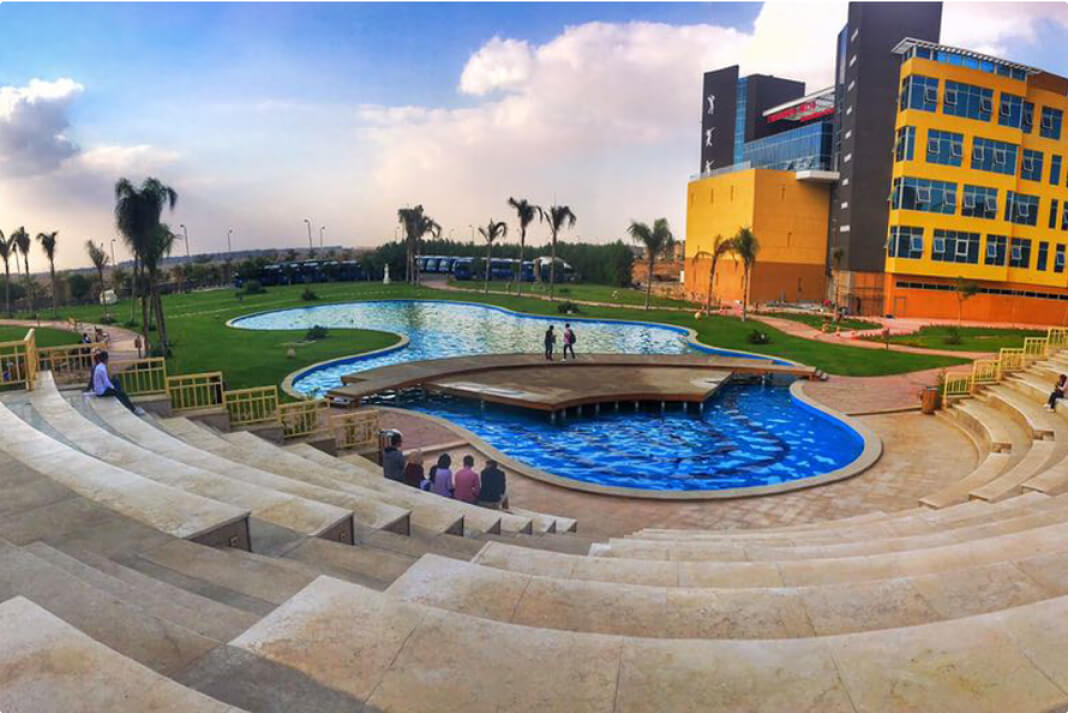
The Madinaty Winter Music Festival returns for the third year, kicking off with pop icon Tamer Hosny at Open Air Mall this Friday, 27 November. Expect a high-energy show packed with the singer’s greatest hits. Doors open at 6pm, with the performance starting at 7pm. You can get tickets through the festival’s website.


 Egypt Edition
 MENA+ Edition
 UAE Edition
 Saudi Edition
 AI + Innovation (MENA)
 Infrastructure


 Share Issue