MNT-Halan’s retail book hits 13.5x as the wider market sells off

1

WHAT WE’RE TRACKING TODAY

Vietnamese tech giant FPT opens first Africa office in Cairo

Good morning, ladies and gents, and happy Thursday. The IPO everyone has been talking about takes its last orders today, and the rest of the market is making room for it.

MNT-Halan’s retail book closes when trading ends this afternoon, and it’s 13.5x covered going in. While it’s great news for the IPO, it’s also part of why the wider EGX is having a rough week. Fund managers are selling stocks to release liquidity for MNT-Halan, Banque du Caire (BdC), and the offerings lined up behind them, three analysts tell us, and with fewer buyers around, a months-long small-cap bubble is deflating. It matters beyond this week too: a strong MNT debut next Tuesday on 20 October would help clear the way for the much bigger BdC offering. We unpack the flows, the margin calls, and what the analysts expect next below in our top story.

Speaking of BdC, word is the state could sell more of it than planned, and at a discount. Unnamed sources tell Asharq Business that the price range is EGP 4.30-4.82 a share and that the government is weighing selling 45% instead of 30%, which could raise some EGP 33 bn at the top of the range. That range values the bank 9-19% below its EGP 80.8 bn fair value, or at around book, by our math. As we reported this week, Banque Misr is selling the stake and keeping all the proceeds, with subscriptions closing in late October ahead of a November debut. Even at 30% and the reported prices, it’s more than twice the size of MNT-Halan’s IPO, and it would be the state’s first since the United Bank IPO in late 2024.

The timing makes both offerings a test of foreign appetite. Foreign investors have spent most of the year selling Egyptian stocks, and the tension around the region hasn’t given them much reason to come back. Still, more than 300 investors from over 10 countries put in orders for MNT-Halan, which is encouraging for BdC, though an offering more than twice the size will need a far deeper pool of foreign money behind it.

Over on the energy front, Elsewedy Electric and PowerChina’s Sinohydro signed a USD 2.2 bn contract to build a 2.3 GW gas-fired plant in Saudi Arabia’s Rabigh. They didn’t wait for the paperwork: the JV has been on site under a limited notice to proceed, and work is already more than 39% done.

The state is also selling its UN carbon credits directly for the first time, with bids closing 31 October. They’re a cheaper fix than a solar plant for exporters under pressure from foreign buyers, a senior government source tells us, though they won’t help with the EU’s carbon border tax.

***

ARE YOU MORE OF A LISTENER? Morning Drive is a 10-minute summary of today’s issue crafted for you to enjoy with your morning coffee, while getting the kids ready for school, or driving through the morning rush. And if you like it, tell your friends to tell their friends. They can find us on Apple, Spotify, or wherever they get their podcasts.

***

Hanoi to Cairo

Vietnam’s tech giant FPT opened its first Africa office, launching operations in Cairo as a base to serve clients across Europe, the Middle East, and Africa, according to a statement (pdf). FPT Egypt began operating in New Cairo and launched with a team of more than 60 Egyptian engineers delivering software development, AI solutions, and application support. It aims to reach 100 employees by year-end, and 300-500 within the next three to five years, Information Technology Industry Development Agency (ITIDA) chief Ahmed El Zaher tells EnterpriseAM. The office already serves clients in Saudi Arabia, the UAE, and Kuwait; Europe is on the map next, starting with France.

REMEMBER- The launch builds on a memorandum of understanding ITIDA signed with FPT at the Global Offshoring Summit in Cairo in November 2025. Egypt’s outsourcing sector generated USD 5.2 bn in service exports in 2025, roughly 70% of the country’s USD 7.4 bn in digital exports, and employs about 195k people across 252 companies. This new office will create more jobs for Egyptians and build local capabilities in the tech world, moving Egypt up the value chain, El Zaher tells us.

Why it matters: FPT brings scale to Cairo. The group operates in more than 30 countries, reported USD 2.66 bn in revenue in FY2025, and has a workforce of 44k+ serving over 1.1k clients, including 130+ Fortune Global 500 companies. Its services span embedded systems, semiconductor design, and connected-car software, which is the kind of higher-value work Egypt is chasing as AI automates routine offshore tasks.

Data point

USD 33.9 bn — that’s how much remittances sent home by Egyptians working abroad in the first eight months of 2026, marking a 27.2% y-o-y increase from USD 26.6 bn, according to Central Bank of Egypt data. August alone brought in c. USD 4.2 bn, up 21.7% y-o-y from USD 3.5 bn, though slightly down from the c. USD 4.5 bn recorded in July.


PSA-

#1- The Industrial Development Authority (IDA) is offering 400 ready-to-operate factory units across 11 industrial complexes in 10 governorates, and applications run from 15 to 29 October through the Egypt Industrial Hub platform, according to a Cabinet statement. The fully built and serviced units range from 48 sqm to 960 sqm and are suited to engineering, food, chemicals, metals, pharma, leather, textiles, and building materials.

#2- WEATHER- It’s a bit breezier than usual in Cairo today, with a high of 28°C and a low of 20°C, according to our favorite weather app.

It’s about the same in Alexandria, with a high of 27°C and a low of 21°C.

And over the weekend, expect something similar in the capital (a high 28°C) and a bit cooler for our friends on the Mediterranean (a low of 18°C).

The big story abroad

Two Singapore-registered container vessels were struck by “unknown projectiles” while crossing the Strait of Hormuz earlier this week, according to a statement (pdf) by the Maritime and Port Authority of Singapore. One of the vessels caught fire and sank, while the other, struck separately, sustained hull damage. No injuries were reported in either incident.

Anthropic’s 3Q revenue jumped 45% q-o-q to USD 16.8 bn, and the company was profitable on an adjusted basis, according to an investor who attended a pre-IPO meeting with its leadership, Reuters reports. Revenue came in at USD 4.7 bn in 1Q and USD 11.6 bn in 2Q, the source said, as Anthropic courts prospective investors ahead of its highly anticipated IPO.

A bipartisan group of eight US states said yesterday they had sued OpenAI in state courts across the country, alleging ChatGPT has coached users, including teenagers, to harm themselves or others. OpenAI also faces lawsuits alleging ChatGPT helped users plan mass shootings or other acts of violence.

Who said summer is over? It’s SOMATIME!

At Somabay, summer is more than a season. It’s a lifestyle shaped by endless sunshine, the beauty of the Red Sea, and experiences that bring people together. And there’s always more to enjoy.

Discover a summer that lasts a little longer.

#ItsSOMATIME #Somabay

2

The Big Story Today

Why EGX stocks are going under the IPO wave

MNT-Halan’s retail book is 13.5x covered going into its final session: Retail investors’ orders for shares in MNT Tech Holding for Financial Investments (the Egyptian arm of fintech group MNT-Halan) covered the 48 mn-share public tranche roughly 13.5 times by the end of yesterday’s session, brokerage Thndr told its users in an app notification. That’s up from 5.26x on Tuesday, and it leaves retail more heavily oversubscribed than the institutional book: around EGP 15.9 bn of orders are chasing a tranche worth EGP 1.18 bn at the EGP 24.50 offer price, by our math. Subscriptions close at the end of today’s session.

REFRESHER- Parent MNT Investments B.V. is floating 320 mn existing shares, or 20% of the company, for some EGP 7.84 bn (c. USD 150 mn), set to be the EGX’s biggest IPO in USD terms since eFinance in 2021. The private placement closed 11.2x oversubscribed earlier this week, or 19.4x excluding cornerstones CIB and London’s Redwheel, and the window to upsize the offering closed without one. Shares are expected to start trading on 20 October. Our friends at EFG Hermes alongside Citi are joint global coordinators and bookrunners.

Somebody’s got to sell

Could the IPO rush be costing the EGX buyers? Egyptian equities shed roughly EGP 204 bn of market cap over the three sessions through Tuesday, according to data EnterpriseAM compiled from the bourse’s daily reports, before the EGX30 closed up 0.44% yesterday. The damage was concentrated well below the blue chips: the EGX70 lost about 9% over those three sessions, against 3.8% for the EGX30, by our math. On Tuesday, the exchange halted about 34 stocks for 10 minutes each after they moved 5%, among them Korra Energi, Middle and West Delta Flour Mills, Golden Tex, Egypt Hotels, and Minapharm.

Two things are driving the selloff. Fund managers are releasing liquidity for the ongoing IPOs of MNT-Halan and Banque du Caire and also for offerings expected over the next three months, including state-backed insurer Misr Life and EFG-backed Egypt Education Platform, three analysts separately tell EnterpriseAM. That leaves fewer buyers in the market as a months-long small-cap rally starts to unwind, Al Ahly Pharos Head of Research Hany Genena says.

“The liquidity of the big players is not really ample,” Genena says. Managers are either selling selected stakes to release liquidity for the offerings or not buying at all, he says, so an individual selling an EGX30 name finds no fund manager willing to take the other side. Amr El Alfi, Thndr’s chief equity strategist, independently points to the same pipeline as a likely driver, though he says he’s going on price moves rather than actual order data.

The flows back that up, at least at first. Institutions net sold EGP 364.6 mn of listed shares on Sunday and another EGP 187.2 mn on Monday, with individuals taking the opposite side of both sessions. Then it flipped. On Tuesday, individuals net sold EGP 307.8 mn and institutions net bought the same, with foreign institutions accounting for EGP 264.6 mn of the buying. Foreigners’ share of turnover jumped to 11.4% on Monday and 11.9% on Tuesday, up from 1.8% on Sunday. That’s hard to square with a regional risk-off story, in our read, since the money that prices geopolitical risk for a living was buying into the drop.

What’s unwinding in the small caps is a bubble, Genena argues. Most EGX70 names have been in one since around March, he says, with some running 200-600% in three to four months on small market caps and even smaller freefloats. At points, companies a fraction of the size were trading higher volumes than CIB or Talaat Moustafa, he adds. Korra Energi alone made up 12.7% of all equity trading on Tuesday as it fell 19.93%, by our math.

The mechanism is margin, and it runs both ways. Liquidity leaving the market pushes prices down, eroding margin ratios, which forces leveraged holders to sell and pushes prices lower again, Tycoon Securities’ Sameh Gharib says, describing a snowball. Genena sees it starting at the top: the party ends when one of the big players heads for the exit, and the smaller holders sell behind them, then the leveraged ones behind those. He expects it to continue, and welcomes it. Pockets of stretched valuations remain in the EGX70, though the number of names trading above roughly 50x earnings has come down, he says.

Analysts are split on how much the region mattered. Genena says rising political risk pushed individuals into panic mode and sped up a burst that was coming anyway. El Alfi plays down external factors and points inside the market instead, though he allows that forced selling by margined individuals could explain Tuesday in particular. Gharib is somewhere in between, saying the geopolitical backdrop is real but recurring, and it only bit this time because the subscription drain and the margin build-up hit at the same moment.

Retail investors have paid for the run. A lot of people were wiped out over the past four months following stock-tipping groups, whether deliberately or out of ignorance, Genena says. He thinks clearing out the froth is worth it, since the lesson for small investors is that speculation doesn’t last long. The benchmark is a different matter. “EGX30 will soften but will not crash because its valuations are much, much, much more reasonable,” he says.

This publication is proudly sponsored by

3

Energy

Elsewedy JV signs a USD 2.2 bn EPC contract for Saudi Arabia’s Rabigh 2 expansion

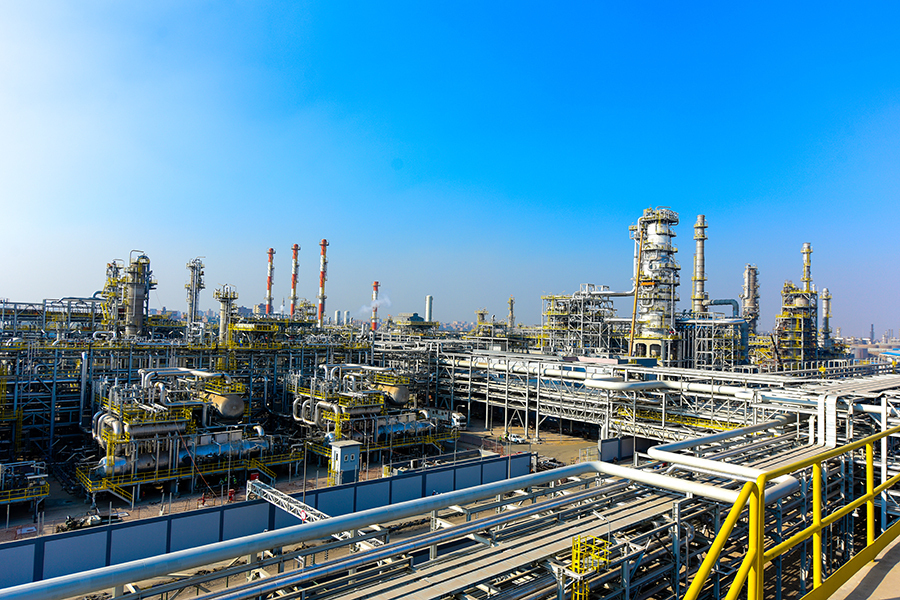
A joint venture between Elsewedy Electric’s power systems arm and PowerChina’s Sinohydro signed a USD 2.2 bn EPC contract to build the 2.3 GW Rabigh 2 Independent Power Plant (IPP) expansion on Saudi Arabia’s Red Sea coast, according to a press release (pdf). The two signed the contract in Riyadh on Monday but haven’t said how they’re splitting the work.

The JV is delivering the plant turnkey for Al Mourjan Two for Electricity, the project company of which Acwa and Saudi Energy (formerly Saudi Electricity Co.) each hold 40%. That covers everything from design to commissioning and testing, plus the civil works and the grid connection. The gas-fired combined-cycle plant will run on six Siemens gas turbines and two steam turbines, and it’s built to take a carbon capture unit later.

Already under way: Work is more than 39% complete. The JV has been on site under a limited notice to proceed, Elsewedy says, and the signing marks the start of full-scale construction. Commercial operations are slated for May 2029, and Saudi Energy expects the plant to show up in its numbers from 2Q 2029.

The money is in place: Acwa and Saudi Energy locked in their buyer first, signing a SAR 11.5 bn power purchase agreement with the Saudi Power Procurement Company in April. That agreement covers 31 years from the plant’s commercial operation date, according to Acwa’s disclosure to Tadawul. The project company then reached financial close on 1 October, with SAR 9.69 bn (USD 2.58 bn) in debt from 14 local, regional, and international lenders, repayable over roughly 34 years, according to a Saudi Energy filing.

Rabigh 2 expands an existing 2.06 GW plant that Acwa’s consortium signed for in 2013, which has sold power under a PPA of up to 20 years since June 2017. Elsewedy knows the neighborhood too: next door, it’s building the 1.2 GW Rabigh 1 expansion for Saudi Energy with Siemens Energy, due to reach full operation next year.

4

Trade

Egypt puts its UN carbon credits up for sale to companies and banks for the first time

Companies and banks can now buy the state’s UN-certified carbon credits directly, but they’ll have to move fast. The Egyptian Environmental Affairs Agency (EEAA) began taking bids on Sunday from public- and private-sector companies, entities, and banks, and will accept them until 31 October, according to a statement and announcement (pdf). Credits will go out on a first-come, first-served basis until they run out.

It’s the first time the state has sold them directly, a senior government source tells EnterpriseAM. On offer is the government’s share of credits earned by national projects in recent years, open to local and international buyers alike. Until now, the agency has kept them for the state’s own use, applying them toward carbon neutrality for some national projects, the source says.

Why it matters: Foreign buyers increasingly set emissions limits for their suppliers, and the credits give exporters a cheaper way to meet them than heavy green capex. A manufacturer that falls short can buy credits “instead of building a giant solar power plant,” the source says. The state, meanwhile, earns a return on the national projects that generated them.

SOUND SMART- Each credit represents 1 ton of CO2 kept out of the atmosphere, or the equivalent in other greenhouse gases. These are Certified Emission Reductions (CERs), which the UN issued to projects in developing countries under its Clean Development Mechanism. A buyer uses a credit by “cancelling” it against its own emissions, so no one can claim the same ton twice. Buyers here never hold the credits themselves: they don’t need a registry account or a transfer of ownership. Instead, they get an official UN cancellation certificate in their name, according to the EEAA.

A shortcut to a lighter footprint

The credits cover the gap between what a factory can cut and what its buyers ask for. Take the source’s example: a company whose goods carry 100 tons of CO2 equivalent might aim for 50 to stay competitive. If its production lines can’t get it all the way there, credits can make up part of the difference. That’s most useful for firms that can’t afford emissions-cutting projects at their own plants yet, the source adds.

Name your price

There’s no guide price. Bidders name their own, and the EEAA will weigh offers against global credit prices, aiming for the highest price it can get for the state’s national projects, the source says. The agency hasn’t said how many credits are on offer.

How to bid: Bids go to the EEAA’s headquarters in the New Capital in two sealed envelopes, the agency says. The technical offer covers the bidder’s statutory documentation, the number of credits it wants, the period they cover, and the exact name of the company, project, or event they’ll offset. That name goes on the certificate and can’t be changed once it’s issued. The financial offer sets out the price per ton, the currency, and the total value. Buyers pay in full upfront before the credits are canceled.

The UN sets the clock

The rush comes from the UN, which is phasing out the Clean Development Mechanism by the end of this year. Its registry will process cancellations only until 31 December, and it guarantees processing only for requests filed by 25 November, less than four weeks after bids close.

What the credits don’t cover

They won’t count toward the EU’s carbon border tax, the source says. The Carbon Border Adjustment Mechanism (CBAM) requires real emissions cuts and doesn’t accept these certificates in their place. That matters more this year; since CBAM’s definitive phase began in January, EU importers of cement, iron and steel, aluminum, fertilizers, electricity, and hydrogen have had to pay for the carbon in those goods, on top of reporting it.

REMEMBER- Environment Ministry studies estimate that CBAM could cost local manufacturers USD 317 mn a year if they don’t decarbonize, about USD 236 mn of it in iron and steel.

The credits aren’t meant for the local carbon market, either. The voluntary market on the EGX trades credits from projects companies take on by choice, while these come from a UN scheme with its own rules, the source says. That market has had a slow start, clearing just six trades for 6k credits since it launched in August 2024. That could change soon: FRA rules require non-bank financial firms with issued capital or net equity above EGP 100 mn to offset 20% of their reported emissions through it, with compliance due on 31 December, the same day the UN window shuts.

What’s next: Bids close on 31 October. If the EEAA discloses the volume sold and the price, it’d be the first public price for the state’s credits, and the first real measure of how much exporters want them.

5

A MESSAGE FROM AUC ONSI SAWIRIS SCHOOL OF BUSINESS EXECUTIVE EDUCATION

HR leaders: Job descriptions are dead. Start with the data.

Every hire, review, and training course leaves a data trail. Most HR teams still look at it after the fact. For years, people decisions came down to managers’ judgment, with little data behind them. COVID-19 and rapid digitization exposed the limits of that approach. AI raises the stakes further.

Somaya El Sherbini, co-founder and CEO of Opus Talent Analytics, has watched that shift up close. She spent 19 years at Microsoft before co-founding Opus and now serves as a subject matter expert across the school’s Executive Education HR programs. Her point is simple: HR can no longer run on instinct alone.

Start with hiring. “Job descriptions are dead,” El Sherbini argues. Take a digital marketer: the skills change so fast that the job description can be out of date almost as soon as it’s posted. Recruiting software can check applicants against what the role needs and surface the strongest matches, so hiring managers start with the most relevant candidates, not whoever happened to land on top of the pile.

Then there’s the traffic light. One midsize bank she cites used a red-yellow-green scorecard for its people metrics. HR counted completed training courses, while the digital banking unit said those courses missed their strategic goals. Everyone had a number, and nobody had the picture. Connect those measures, and AI can flag risks early before the light turns red.

Fixing that is a C-suite job. In another case, HR said it was delivering candidates and training, while business units rejected applicants and left roles open for months. El Sherbini calls these execution gaps. Closing them requires executives to agree on shared objectives and tie people measures to business results.

And analytics can’t live in a corner of the HR department. It isn’t a job for a couple of specialists armed with R and Excel macros. As Gen Z and Gen Alpha enter the workforce and skills keep shifting, managers across the business need to know how to use the numbers.

That’s the practical problem AUC Onsi Sawiris School of Business Executive Education’s Advanced HR Certificate is designed to tackle. Over seven months of blended learning, participants work through competency frameworks, performance management, talent management, and people analytics, and learn to build the business case for people decisions and take it to the C-suite.

6

Moves

Azzam to head new four-year FRA board through 2030

The Financial Regulatory Authority’s (FRA) board has been reconstituted for a four-year term running October 2026 to October 2030, keeping Chairman Islam Azzam (LinkedIn) at the helm, according to a decree by Prime Minister Mostafa Madbouly. Azzam is joined by two vice chairs, Mohamed Al Sayyad (LinkedIn) and Tarek Seif (LinkedIn), and one of the Central Bank’s two deputy governors, to be chosen by the governor.

Five outside experts round out the board:

  • Mohamed Sami Abdelsadek (LinkedIn), president of Cairo University;
  • Mohamed Awad (LinkedIn), CEO of the General Authority for Investment and Freezones (Gafi);
  • Ehab Abdel Rahman (LinkedIn), provost of the American University in Cairo (AUC);
  • Jasmin Fouad (LinkedIn), professor of finance at AUC;
  • Amany Samir Abdel Fattah, a banking expert specializing in credit and investment.

Why it matters: The four-year term hands Azzam a stable runway through 2030 to carry out the FRA’s busiest rulemaking stretch in years, including the short-selling framework, the pending market-maker mechanism, and the newly launched derivatives and hedge fund rules. Azzam already sits on almost every government body that engages the private sector — Gafi’s board, the Cabinet’s Economic Group, and the Ministerial Committee for Entrepreneurship — alongside his Iosco vice-chair seat. Gafi’s CEO now takes a seat on his board, mirroring that overlap.

Concrete Fashion Group appointed former Investment and Foreign Trade Minister Hassan El-Khatib as an independent board member, according to a company statement. El-Khatib brings more than three decades across investment, private equity, infrastructure, and public policy. He established and led the EBRD Equity Group’s investment platform across 38 countries, chaired the Sovereign Fund of Egypt, and held senior roles at The Carlyle Group and EFG Hermes Private Equity.

7

LAST NIGHT’S TALK SHOWS

Pharma chief dismisses talk of drug price hikes

There is no intention to raise drug prices for now, Ali Ouf, head of the Pharma Division at the Federation of Egyptian Chambers of Commerce, told Sherif Amer in a phone-in on Yahduth Fi Misr. Ouf’s comments came after statements attributed to him circulated claiming that the Egyptian Drug Authority (EDA) had approved repricing some 40 drugs, with increases taking effect in January.

Drug prices were last raised in October 2024, Ouf said, and were set “on the basis that the USD would rise… they were priced at EGP 50 to the greenback back then.” Those prices remain manageable for companies so far, he added, and “there is no intention to raise any drug prices under the current circumstances.” (watch, runtime: 3:47) All essential medicines are available, including drugs for diabetes, blood pressure, and chronic diseases,” Ouf emphasized. (watch, runtime: 0:57)

REMEMBER- The government has put drug pricing on a new rules-based footing, with the EDA tying price reviews to a weighted mix of FX movements, inflation, and interest rates. FX carries 60% of the formula, urban inflation 30%, and changes in the CBE’s overnight deposit rate the remaining 10%, with the calculation to be run every six months — or sooner in exceptional circumstances.

8

Also on our Radar

Electricity Ministry taps Giza Cable Industries for EGP 237.3 mn Saudi interconnection work

The Electricity Ministry awarded a EGP 237.3 mn contract to Giza Cable Industries to maintain the 3-GW Egypt-Saudi Arabia electricity interconnection line, a government official tells EnterpriseAM. The company will supply equipment, upgrade capacity, and perform maintenance under the direct assignment order, with work under the contract scheduled for completion by the end of 2027, according to a document seen by EnterpriseAM. The move comes as Saudi Arabia undergoes final testing on its side of the grid, following the completion of Egypt’s domestic interconnection infrastructure, the official says.

BACKGROUND- The USD 1.8 bn project, first floated in 2012, runs on 500-kV high-voltage direct current (HVDC) technology, built for moving large amounts of power over long distances with minimal losses. It links Egypt’s Badr converter station to Saudi Arabia’s East Madinah and Tabuk stations via roughly 1.4k km of overhead lines and subsea cables crossing the Gulf of Aqaba. In August, we reported that the project is in the final stages of technical and operational trials, and pre-operation trials were expected to conclude by the end of August, aiming for full operation in September.

The Gulf of Suez interconnections push: The government is deploying over EGP 2 bn to expand overhead transmission lines in the Gulf of Suez, preparing the national grid to absorb surging renewable energy capacity and integration from the Saudi interconnection, the official says. Foreign-local consortia — including El Sewedy Electric, the Kharafi group, and a joint venture between Hideleco and Korra Energi — are executing the grid upgrades and power station developments.

Dilution pending

Emaar Misr is taking another step toward buying out the remaining 75% of Skytower for Real Estate Development. The developer has hired BDO Keys Financial Consulting to determine the fair value of both companies’ shares and work out the share swap ratio for the acquisition, according to an EGX filing (pdf). Emaar, which already owns 25% of Skytower, plans to pay for the remaining stake by issuing new shares. The swap ratio will determine how many new Emaar shares are issued and how much existing shareholders are diluted.

ICYMI- The transaction has been in the works for nearly two and a half years. Emaar Misr first laid out its plans in May 2024, when it made a non-binding cash offer for an initial 25% stake in Skytower, with plans to acquire the remaining 75% through a share swap later on.

De-risking the book

Misr Life Ins. inked a partnership agreement with consumer finance platform TRU to extend life and total permanent disability ins. across TRU’s loan book, according to a press release (pdf). The agreement will cover outstanding receivables exceeding EGP 3 bn across more than 130k users, hedging TRU’s balance sheet against credit defaults caused by death or permanent disability while providing borrowers with built-in coverage.

IN CONTEXT- Egypt’s non-bank consumer finance sector has drawn tighter oversight as the total NBFI consumer finance portfolio ballooned to roughly EGP 96 bn by end-2025 (up more than fivefold since 2021) across 10.8 mn borrowers, prompting regulators to mandate tighter risk governance and real-time credit tracking. The two companies say the partnership responds to those regulatory developments, with the aim of protecting borrowers and strengthening risk management.

9

PLANET FINANCE

IMF flags AI leverage, bond yields, and cyber attacks as threats to market calm

Strong earnings and heavy AI spending have kept markets buoyant, but the IMF says the calm could break. Three shocks — an AI-driven correction, a spike in bond yields, or a cyberattack — could sharply tighten global financial conditions, the fund warns in its Global Financial Stability Report (pdf). Inflation from the Middle East energy shock has already pushed 14 of 33 major central banks to raise rates since 2Q, up from two in 1Q, though the moves were modest.

AI is the fund’s primary concern, and leverage is what makes it dangerous. Hyperscalers now account for 10% of global investment-grade bond issuance, up from less than 1% in 2024. The share of single stocks in leveraged ETFs has risen to 28% from 16% since 2024. Fourteen circular deals have channeled around USD 300 bn of equity and USD 650 bn of debt into weaker AI firms in exchange for USD 1.4 tn in future revenue commitments. If a firm on the receiving end runs into trouble, both sides are exposed at once — a bind the fund calls “wrong-way risk.” Advanced Asian equity markets are the most sensitive to global AI returns, while Europe, the UK, and most emerging markets look better insulated. That insulation is only partial, however, as many have loaded up on US equities since 2022, mainly hyperscalers and other AI names.

Bond yields are climbing on both higher expected rates and fatter term premiums, with the surge in AI-related debt issuance blamed for crowding out government paper. Hedge funds have partly unwound their sovereign bond basis trades without setting off market turmoil, though enough leverage remains for a messy exit. Liquidity is holding up in the US, Europe and the UK, and continues to thin in Japan.

Cyber is the third threat, and AI is on both sides of it. Advanced models can run simulated network attacks, and they are also a key line of defense. In more than 70% of cases in 2026, vendors had almost no time to issue fixes before flaws were exploited, up 20 percentage points on a year earlier. The IMF wants regulators to put the continuity of critical services first, alongside incident reporting and oversight of providers.

Pension funds and insurers are among the financial system’s softer points. Their illiquid holdings have nearly doubled as a share of their portfolios over the past decade, even as the two groups hold over a quarter of corporate bonds in the US and Europe. Private credit is another spot where the fund sees the system thinning, with direct lending growing to nearly USD 2 tn as borrowers take on more debt. Of 10 large business development companies, four, with around USD 90 bn in assets, have lending commitments that run past their liquidity buffers.

Emerging markets are drawing down their foreign exchange reserves, which have fallen most sharply among lower-rated sovereigns. Risk premiums have slid back to low levels, while frontier economies have expanded their access to international markets. The fund sees that mix as a warning sign: Tight risk premiums alongside 10-year US Treasury yields above 4.5% was last seen in 2007. Opaque funding tools such as sovereign total return swaps could also set off margin calls when markets come under stress.

The IMF’s prescription is to build resilience while there’s still room to. It wants limits on margin lending, leveraged ETFs and short-dated options, capital charges on AI-related exposures, credible plans to shrink budget deficits, and wider central clearing of bonds and repos. Regulators should finish putting Basel III in place and keep watch on the ties between banks and non-banks. Emerging markets, meanwhile, need to rebuild their buffers and disclose hidden borrowing.

MARKETS THIS MORNING-

Asian markets were in the red earlier today. Japan’s Nikkei was down 3.9% and South Korea’s Kospi was down around 7%. The performance tracked overnight losses across Wall Street.

EGX30

51,493

+0.4% (YTD: +23.1%)

USD (CBE)

Buy 53.04

Sell 53.18

USD (CIB)

Buy 53.06

Sell 53.16

Interest rates (CBE)

19.00% deposit

20.00% lending

Tadawul

10,138

-1.7% (YTD: -3.4%)

ADX

9.834

+0.4% (YTD: -1.6%)

DFM

5,893

+0.6% (YTD: -2.6%)

S&P 500

7,719

-1.1% (YTD: +12.8%)

FTSE 100

10,725

+0.7% (YTD: +8.0%)

Euro Stoxx 50

6,190

+0.4% (YTD: +6.8%)

Brent crude

USD 105.79

-0.3%

Natural gas (Nymex)

USD 3.29

+2.9%

Gold

USD 4,134

+0.6%

BTC

USD 81,563

-1.9% (YTD: -6.9%)

S&P Egypt Sovereign Bond Index

1,130

+0.0% (YTD: +13.8%)

S&P MENA Bond & Sukuk

147.35

+0.1% (YTD: -3.0%)

VIX (Volatility Index)

16.87

+10.5% (YTD: +12.8%)

THE CLOSING BELL-

The EGX30 rose 0.4% at yesterday’s close on turnover of EGP 7.3 bn (36.0% below the 90-day average). Local investors were the sole net buyers. The index is up 23.1% YTD.

In the green: ADIB (+5.1%), Orascom Construction (+3.0%), and Orascom Development (+2.1%).

In the red: Cleopatra Hospital Company (-1.4%), Telecom Egypt (-1.2%), and Fawry (-1.2%).

10

My Morning Routine

My Morning Routine: Ali Diab, co-founder and CEO of Agriventure

Ali Diab, co-founder and CEO of Agriventure: Each week, My Morning Routine looks at how a successful member of the community starts their day — and then throws in a couple of random business questions just for fun. Speaking to us this week is Ali Diab (LinkedIn), co-founder and CEO of Agriventure, one of Egypt’s dominant blueberry growers and exporters.

Edited excerpts from our conversation:

I spent more than 10 years in finance before I ever farmed. I studied accounting at the American University in Cairo and started my career at Procter & Gamble. My work then took me around the Gulf, where I worked with one of the region’s biggest retail chains. I went on to become CFO of a listed company in Kuwait. Then in 2011, my longtime friend Karim Hendi (LinkedIn) and I decided to go into agriculture together. That’s how I got into fruits and vegetables. We started Fresh & More on the notion that we always wanted to do agriculture differently.

Agriventure started during Covid as a long-term plan. We wanted to put Egypt on the map for blueberry production. About two years later, our long-term plan accelerated and became much, much bigger. We now run multiple farms across Egypt, all relying on precision farming and agricultural tech platforms. We export more than 95% of what we grow, mostly to the UK and Europe, and sell the rest locally under our Nature’s Pick brand. In under four years, we became one of the largest growers in Africa and were ranked by Market Research and News as the 15th global rising player in Global IoT Precision Agriculture.

The two morning people in my life are my wife and my business partner. Not me, though. My three toy poodles wake me up, usually between 9 and 9:30 am. I start with a bowl of our own berries — my first quality check of the day. Then I go through the papers, overnight farm data, buyer messages, and freight updates.

Mornings are for listening, evenings are for building. For the first three hours, I read to catch up on what happened overnight. I usually don’t talk much or make any decisions. I never respond right away. I do my best thinking late at night, once the house is back to silence.

Karim and I learned early that the company works best when we split the work. We each handle what the other couldn’t do as well. He wakes up early, hits the gym at 5:30 am, and then runs operations on the farm. I take business development, finance, marketing, sales, and new varieties. We catch up for half an hour around 10 am, and I usually fill him in on everything from the night before.

My year runs on the berry season. From 1 October to 1 May, we work hard, with up to 10k people on our farms every day. The rest of the year is what we call strategy and home care. We’re not building the house anymore, just maintaining it. That’s when I take about three months on the North Coast or travel.

The gym is where I blow off steam. I go every day on the way home, never in the morning. Some people go to lose weight or build muscle. I go to burn off whatever the day piled up, so none of it follows me through the door. Walking my dogs is the other thing I never skip.

Lunch with my nine-year-old son is sacred. Unless I’m traveling, we eat lunch and dinner together as a family, and everyone plans their day around it. Weekends belong to the family, too. My wife and I try never to miss our weekly night out. At home, we keep a map with a pin and photos for every country we’ve visited together.

My days end with the news and a podcast. Nearly all our revenue comes from exports, so FX, inflation, and shipping are part of my thinking every single day. I follow financial news during the day and politics at night. Then, in bed, I put on a podcast with an Egyptian businessman and usually fall asleep before it ends.

“Your partner at work is like your wife at home,” my father always told me. They’re the two most important decisions you’ll ever make. Karim and I met as students in 1997, and trust is the most valuable thing we have. Build around your weaknesses, find someone who’s strong where you aren’t, and trust them completely. I leave my ego at the door — both at work and at home. At home, my wife is the CEO.


OCTOBER

12-18 October (Monday-Sunday): IMF & World Bank Annual Meetings, Bangkok.

19-22 October (Monday-Thursday): UfM Economic Forum, Cairo.

19-24 October (Monday-Saturday): Egypt 2026 Forum, The St. Regis New Capital.

26-28 October (Monday-Wednesday): IEX Egypt, Egypt International Exhibition Center, Cairo.

29 October (Thursday): Monetary Policy Committee’s seventh meeting of 2026.

NOVEMBER

5-7 November (Thursday-Saturday): ICA Annual Conference 2026, Cairo.

6-8 November (Friday-Sunday): Global Entrepreneurship Festival, JW Marriott Hotel, New Cairo.

7-10 November (Sunday-Wednesday): Cairo ICT Forum, Egypt International Exhibition Center, New Cairo.

10 November (Tuesday): Cityscape Egypt Forum, Cairo.

DECEMBER

7-10 December (Monday-Thursday): Food Africa, Egypt International Exhibition Center, Cairo.

11-12 December (Friday-Saturday): ISER International Conference, Cairo.

17 December (Thursday): Monetary Policy Committee’s eighth meeting of 2026.

17-20 December (Thursday-Sunday): MacTech Egypt, Egypt International Exhibition Center, Cairo.

EVENTS WITH NO SET DATE

2H 2026: Operations at Deli Glass Co’s new USD 70 mn glassware factory kick off.

2026: The Egyptian-American Economic Forum.

4Q 2026: Banque du Caire IPO.

2027

20 January-7 February: Egypt to host the African Games.

1-3 February (Monday-Wednesday): Agri Expo, Cairo International Convention Center.

April 2027: Tenth of Ramadan dry port and logistics hub to begin operations.

29 September - 2 October (Wednesday-Saturday): Cityscape Egypt Exhibition, Cairo.

EVENTS WITH NO SET DATE

2027: Egypt to host EBRD’s annual meetings.

2027: Egypt-EU Summit 2027.

End of 2027: Trial operations at the Dabaa nuclear power plant expected to take place.

September 2028: First unit of the Dabaa nuclear power plant begins operations.

Now Playing
Now Playing
00:00
00:00