Egypt Edition
  MENA+ Edition
  UAE Edition
  Saudi Edition
  Logistics (MENA)

 Share Issue






Good morning, friends. We are kicking off the new week with interesting twists — no change in rates, but the central bank changed its guidance language, and drug pricing got its biggest overhaul in years.
Leading the news, the CBE held rates steady for a fifth straight meeting, which was expected. The part that wasn’t: it dropped the “positive real interest-rate margin” language it had used since April and replaced “ready to adjust policy” with “deploy all available policy tools.” Less tied to a specific formula, more room to maneuver.
Over in pharma, drug pricing just got its most significant rewrite in years. The new framework ties pricing to a three-variable formula — FX carries 60% of the weight, inflation 30%, and interest rates 10% — reviewed every six months. Separate tracks for originators, generics, biosimilars, and localized production. The old system left manufacturers waiting six-to-nine months between an economic shock and a price adjustment. We spoke to industry figures and analysts to break down what the new rules actually mean on the ground.
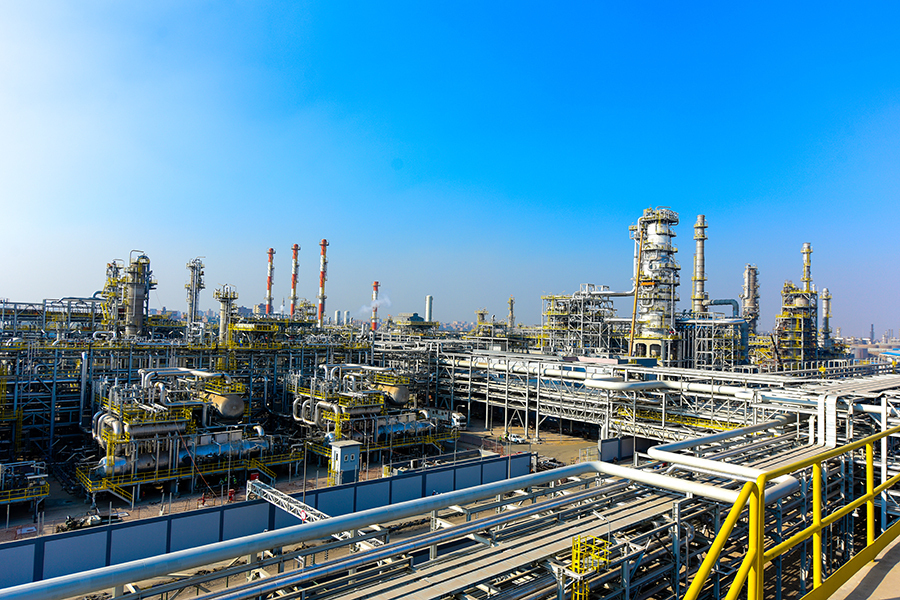
And Qalaa swung back to the black in 2Q, helped in large part by the Egyptian Refining Company, which finished repaying its senior debt and opened the way to dividends. The holding company is now moving to more than double its stake in the refinery.
***
WISH THIS MORNING’S ISSUE was a podcast? We’ve got you. Tap or click here to listen to Morning Drive, a 10-minute version of today’s issue crafted for you to enjoy with your morning coffee, while getting the kids ready for school, or while stomping around the house wondering where the [redacted] you left your [redacted] reading glasses.
***

We’re delighted to welcome Ahmed Demerdash Badrawi (Dasha) as a guest speaker at the 2026 EnterpriseAM Egypt Forum — the AI edition.
Dasha serves as Executive Vice Chairman of MARAKEZ, a member of the Fawaz Alhokair Group, one of the largest Saudi-based foreign investors in Egypt across real estate, retail, and renewables. He joined the Group to lead its new phase of development and expansion in Egypt, establishing MARAKEZ in 2015.
Today, MARAKEZ operates 4 malls in Cairo and the governorates hosting over 700 retailers across 320k sqm of GLA with more than 30 mn visitors per year, alongside 250k sqm of office space, over 4.7k residential homes in East and West Cairo, and developments in Ras El Hekma and the Red Sea.
In 10 years, MARAKEZ has become the leading mixed-use developer in Egypt with one of the largest recurring revenue platforms in the country.
Join us on 5 October in Cairo. Attendance is by invitation only, and we've reached full capacity.
Request your invitation here to join the waitlist.

Banque Misr remains solid
Fitch says the proposed US clampdown on Banque Misr’s (BM) UAE branches will have a limited impact on the bank’s credit rating, according to a recent commentary note, affirming BM at B/Stable/b. The outpost accounts for less than 5% of BM’s assets and net income. The agency flagged potential reputational spillovers that could weaken BM’s business profile or its ability to raise foreign-currency funding, either of which could pressure its Viability Rating.
REMEMBER- Last week, the National Bank of Egypt (NBE) signed a preliminary agreement to acquire BM’s UAE operations, which Fitch says would lower the risk of a deteriorating credit rating, though no price, timeline, or branch count has been disclosed. The UAE central bank issued preliminary approval for the deal last Tuesday. NBE’s potential acquisition is in response to a proposal from the US Treasury Department’s Financial Crimes Enforcement Network (FinCEN) to cut BM’s five UAE branches off from correspondent banking access. This is based on allegations that the subsidiary processed around USD 1.8 bn between January 2024 and June 2026 for 103 companies that FinCEN claims may be linked to Iranian shadow-banking networks. It is unclear whether the acquisition will lead to the lifting of restrictions, Fitch noted.
The numbers: The UAE branch’s USD 2.3 bn in USD-denominated obligations at end-2025 make up 43% of the branch’s liabilities but just 2.5% of BM’s total, Fitch said. Healthy liquidity buffers at both branch and head-office level will contain the fallout despite an estimated 20-30% of the branch’s USD deposits leaving the bank since the announcement. BM is a net lender to foreign banks and has moderate reliance on foreign funding, further limiting group-level risk, Fitch said.
What’s next: The proposed rule has not taken effect yet and the public comment period ends 1 October. BM has appointed US legal counsel and plans to submit a response within the window. Fitch expects the bank’s cash reserves to cover its remaining USD debts through the period.
CIB backs Eroglu’s next phase
CIB is providing USD 80 mn to fund the next stages of Turkish textile group Eroglu Global Holding’s Eroglu Knitting complex in Qantara West, according to a statement (pdf). The package includes a USD 75 mn, seven-year medium-term loan to finance machinery and equipment for phases two and three, alongside a USD 5 mn working-capital facility. The integrated complex carries a total investment of USD 140 mn.
The project is being built for exports. The 150k sqm complex is targeting an annual capacity of 24 mn garments at full operation, alongside yarn and dyed-fabric production, with projected annual revenue of around USD 165 mn and more than 4.5k jobs. The project will export all of its sales, with around 50% headed to Europe, 30% to the US, and the remainder to other markets.
REMEMBER- Eroglu has been steadily scaling its Egyptian manufacturing footprint and outlined plans earlier this year to invest more than USD 800 mn in Egypt. The group says its investments in Egypt currently total USD 370 mn across its operations, including Eroglu Knitting and Eroglu Garments in the Suez Canal Economic Zone.
Funding the data play
Raya Holding is putting up to USD 60 mn behind a bid for 100% of an unnamed data center here at home, the company said in a bourse filing (pdf). The transaction will see its wholly owned subsidiary, Raya Integration, subscribe to a capital hike at Raya Data Center Services for up to USD 60 mn (c. EGP 3 bn). Proceeds will be used exclusively to fund the equity portion of the purchase price. Raya Integration owns 60% of Raya Data Center Services, according to a separate disclosure (pdf).
The board’s sign-off becomes effective only if the acquisition is awarded to and completed by Raya Integration and/or Raya Data Center, definitive documents are signed, all conditions precedent are met or waived, and all regulatory, legal, and third-party approvals come through, per the filing. If the transaction falls through, the capital increase stays ineffective and creates no funding obligation. The increase can be drawn in one or more tranches in USD, EGP, or a mix, at the executing bank’s rate on each payment date, provided the total doesn’t exceed the USD cap.

The Egyptian government locked in enough LNG and crude to carry the country through peak demand this summer, and the real question now is who pays for it and for the rebuild ahead.
PowerTrip, our new four-part signature series, follows the money behind an energy sector that went from exporting gas to importing it in just five years.
Over the four issues this autumn, we'll look at how the lights stayed on and what that cost, who will own the next generation of power, how fast renewables can really scale, and whether Egypt's claim to be the region's energy hub still holds.
Issue I lands Wednesday, 30 September, and looks at how Egypt avoided rationing this summer, what the gas shortfall means for the economy, and where oil is headed over the next 18 months.
Coming straight to your inbox — Wednesday, 30 September.
PSA-
WEATHER- It’s another nice summer day in Cairo, with a high of 32°C, according to our favorite weather app.
It’s similarly nice in Alexandria, with a high of 31°C. Though it’s not that nice along our north western shores up to Matrouh, where a thunderstorm covers the skies.
The big story abroad
Prospects for a lasting resolution to the regional war dimmed over the weekend. US President Trump rejected Iran’s proposal for a seven-day ceasefire that would have seen Tehran reopen the Strait of Hormuz and restart nuclear talks in exchange for Washington lifting its port blockade. Trump expects the bombardment of Iran to continue after the US midterm elections in November, officials said.
Tehran’s response? Tehran has signalled that meeting its conditions and continuing negotiations is the only path to reopening the Strait of Hormuz. Mediators in the US-Iran talks have not officially passed along a US rejection of the plan, despite Trump’s public comments, Iranian Foreign Minister Abbas Araqchi said.
In other geopolitical news: Washington and Beijing have agreed to cut over USD 30 bn worth of tariffs on non-sensitive goods in both directions. This applies to US exports including farm goods, wood, and cosmetics, and imports including small appliances, toys, and decorations. The two sides agreed to establish an investment board to discuss opportunities and challenges and to schedule a November dialogue on AI risks and benefits.
Apple liable for haptic patent infringement: A federal jury in San Diego ordered Apple to pay upwards of USD 5.7 bn in damages to Taction Technology after finding the tech giant infringed two haptics patents. The suit alleged that Apple used patented tech to power the haptic feedback in iPhones and Apple Watches. Apple intends to appeal the verdict, describing it as “entirely unsupported by facts.”