Imported cars facing informal squeeze

1

WHAT WE’RE TRACKING TODAY

Telecom Egypt pulled the plug on its planned sale of a majority stake in its Regional Data Center Hub

Good morning, friends. We have a lot of ground to cover as we kick off the week.

The squeeze on imported cars is the story to watch. A formal tariff is coming by the end of August, but importers of finished cars are already facing an unofficial squeeze.

On regulation: The FRA has introduced mandatory credit checks for individual life ins. policies worth EGP 10 mn or more — and ins’rers now have to build internal systems to flag unusual application patterns. It’s a meaningful tightening of underwriting standards at the high end of the market.

And in energy finance: EAAIF has committed USD 30 mn to Hassan Allam Utilities for the Minya solar and battery storage project, with the EBRD considering up to USD 170 mn more for the same plant. The project itself is notable, but the pattern behind it is the bigger story: development finance lenders are systematically backing Egypt’s grid buildout, and Minya is one node in a much larger architecture.

***

ARE YOU MORE OF A LISTENER? Morning Drive is a 10-minute summary of today’s issue crafted for you to enjoy with your morning coffee, while getting the kids ready for school, or driving through the morning rush. And if you like it, tell your friends to tell their friends. They can find us on Apple, Spotify, or wherever they get their podcasts.

***

The EnterpriseAM Egypt Forum is back — and this year, we’re giving the full day to the one question on every business leader's mind: What does AI actually mean for your company, your people, and your own job?

Leaders in New York, London, Abu Dhabi, and Singapore are asking the same things, and nobody has built a playbook that works yet. We're all figuring it out in real time — and for Egypt, the stakes are unusually high.

Egypt could leapfrog a generation on the back of this technology — or watch AI hollow out the industries and jobs we can't afford to lose. The leaders who get literate early will be the ones who get to decide which road we take.

Every session on stage answers one question: “So, what do I actually do about it?”

Join us on 5 October in Cairo. Seats are limited and attendance is by invitation only.

Request your invitation here.

Data hub stays in-house

Telecom Egypt (TE) wants to keep its data center business in-house: The EGX-listed telco pulled the plug on its planned sale of a majority stake in its Regional Data Center Hub (RDH) to Helios Investment Partners, the UK-based, Africa-focused PE firm, according to a bourse disclosure (pdf). TE cited unmet conditions in the term sheet — including some tied to third parties — but gave no further details.

ICYMI- Helios secured preliminary board approval in September to acquire 75-80% of a subsidiary that would own RDH. The binding offer valued RDH at USD 230-260 mn, depending on performance metrics.

Helios may have lost this sale, but it's still making big moves in Egypt. Its bid for Raya Holding’s frozen-food unit Raya Foods has escalated from an initial USD 40 mn for 49% — a mix of share purchase, capital increase, and a convertible loan, on an estimated USD 65 mn valuation — to a full buyout. The Raya board cleared the offer in December, with terms pending a fair-value review. The bid sits inside a plan the PE firm — which manages around USD 3 bn in assets — announced last year to deploy up to USD 250 mn across Egyptian acquisitions spanning consumer, fintech, and digital assets.

What’s next: TE will fold RDH into a wholly owned subsidiary with a dedicated technical and commercial team, betting on rising local and global demand for data centers, the filing said. The company says the decision will have no financial or operational impact on the parent.

Clearing the way inland

French shipping group CMA CGM has asked the Investment Ministry to let dry ports clear cargo as final customs destinations — the status sea ports hold — and to revisit transit-certificate procedures, steps that would benefit the group’s own dry-port and sea terminal investments, according to a cabinet statement. Egyptian dry ports can already clear cargo — what CMA CGM wants is for a container to finish clearance there without first clearing at the seaport, cutting a step for goods moving inland.

The request aligns with CMA CGM’s whole-chain footprint. Last year, it won competition-authority clearance for a 35% stake in the USD 60 mn October Dry Port project, where it also markets rail connections linking Alexandria and Ain Sokhna with the dry port. Final-clearance status would make October Dry Port a more useful node in that chain. The group is also a partner in Alexandria's Tahya Misr multipurpose terminal and in the Red Sea Container Terminal at Sokhna — which opened this year with initial capacity of 1.7 mn TEUs.

IN CONTEXT- The government has spent the year loosening transit rules to capture Gulf and East Africa cargo rerouted by the Hormuz crisis. It dropped advance ACI registration for Gulf-bound transit cargo moving through Nuweiba, Ain Sokhna, and Safaga in March, before extending the exemption to cargo bound for six East African markets last month. Transit trade is up 40% since March, with the Europe-Egypt-GCC route gaining traction during the war. Customs also moved last week to activate the UN-backed International Road Transport (TIR) system by appointing the Federation of Egyptian Chambers of Commerce as its national guarantor — this would allow trucks to move goods across borders under a single customs document.

Second SPAC preps to shop

The board of OG Capital, the newly-listed blank check company, approved putting a tenfold issued-capital increase — from EGP 10 mn to EGP 100 mn, funded by an EGP 90 mn issuance of 90 mn new shares — to a shareholder vote, according to a disclosure to the EGX (pdf). The SPAC must clear the EGP 100 mn floor within three months of listing before it can hunt a target.

What’s next: Shareholders have to approve the increase first. The 90 mn new shares would then be placed privately with qualified investors and institutions. Under the Financial Regulatory Authority’s (FRA) SPAC rules, the proceeds sit untouched in a local bank — or low-risk liquid securities — until there is an acquisition. The same rules give a SPAC six months from listing to bring a target to a shareholder vote, extendable with the FRA's sign-off. OG Capital listed temporarily on 19 May, which puts that deadline at around 19 November.

IN CONTEXT- The SPAC market is small but growing. OG Capital was preceded by Catalyst Partners Middle East (CPME), which listed in late 2024. A third is in the pipeline: Netherlands-based PE firm RMBV filed with the FRA in May to set up its own vehicle, eyeing targets across consumer goods, industrials, education, and financial services.

REMEMBER- CPME cleared the same threshold and still took over a year to reach the trading floor, debuting at end-2025 only after a run of acquisitions that lifted its issued capital to around EGP 3 bn. The capital raise moves OG Capital forward in the process, but it says nothing about how soon a deal may land.

Fertilizers may catch a break

The government is weighing exemptions for Mopco and Abu Qir Fertilizers from transferring 5% of income from state-owned companies to the treasury, a government source tells EnterpriseAM. The government is building a final database of covered companies that will exclude firms where state ownership is below 50%, in addition to considering temporary carveouts for companies that may need to retain earnings to shore up their balance sheets or fund investment.

Why fertilizers: Mopco and Abu Qir benefited from a war-era export boom as global fertilizer prices climbed, but the cycle has cooled. Egypt's fertilizer exports fell 58.4% y-o-y in April to USD 117.8 mn, per Capmas — leaving companies that may be past peak-cycle income still needing capex and balance-sheet room, which makes retained earnings more sensitive.

PSA-

WEATHER- Cairo is kicking off the week with another hot day — expect to see a high of 37°C and a low of 26°C in the capital throughout the day, according to our favorite weather app.

It’s a little cooler in Alexandria, which is in for a high of 32°C and a low of 24°C.

The big story abroad

It is an oddly quiet morning on the international front pages, with the latest war updates receiving top billing.

The renewed regional war is showing no sign of slowing down. The US military launched fresh attacks yesterday to “swiftly punish” the Islamic Revolutionary Guard Corps for a strike on Jordan that killed two US soldiers. Tehran announced yesterday that it would no longer adhere to the terms of the interim truce, and launched a round of strikes on Jordan and Kuwait.

Can manual labor relieve Gen Z’s AI job woes? A wave of young content creators is pitching blue-collar jobs to a Gen Z audience increasingly anxious about an unsteady labor market and AI-driven layoffs. The movement is changing conceptions surrounding jobs — in plumbing, carpentry, and welding — that may be more lucrative and secure than most people think.

The final of the 2026 World Cup kicks off tonight, with defending champion Argentina facing off against Spain. England secured its third-place position yesterday after defeating France 6-4. The final starts at 10pm Cairo time.

Some places become part of your story.

This summer, slow down, reconnect, and create moments that linger long after the season ends. From sunrise by the sea to unforgettable experiences, every stay at Somabay is designed to become a memory worth keeping.

2

Automotive

Imported cars are facing an unofficial squeeze ahead of a formal tariff coming by end-August

Imported cars are facing stretched-out customs registration and lower priority for FX, even before a new tariff takes effect. While importers of finished cars are facing these informal challenges, parts and local-content importers are being waved through. A formal tariff on fully-built cars is coming separately by end-August.

The Industry Ministry is “trying to control and organize” the import market, Minister Khaled Hashem said at an Egyptian Center for Economic Studies seminar two weeks ago (watch: runtime, 01:00:56). The comment set off widespread speculation. For importers, it reads as a slow margin and volume squeeze. For everyone else, it’s the clearest signal yet that Cairo wants cars built here, not shipped in, sources across government, independent importers, and manufacturers tell EnterpriseAM.

What’s on the books

Two things are actually official. Since January, Chinese cars have had to come in through official agents and accredited companies, with obligations on local parts manufacturing and after-sales service, sources told EnterpriseAM in December. The trigger came from China, not Egypt, an Industry Ministry source says: Chinese manufacturers switched on warranty coverage only through their own official agents after non-agent importers brought in models built for China or other markets that didn't suit Egyptian buyers — which effectively blocks non-agent importers from bringing in mismatched Chinese models.

There’s also more room to import, not less. The Egyptian government raised this year’s passenger-car import ceiling to USD 2.5 bn from USD 1.8 bn as USD liquidity improved.

The squeeze is real

There have been no new restrictions, secretary-general of the Egyptian Association of Automobile Manufacturers Khaled Saad says. According to Saad, Hashem “completely refuted” the idea, and calls the chatter “just a ‘trend’ with no basis.” Saad points to Law 9 of 2022, already in effect, which requires importers to run nationwide service centers, stock spare parts for 15% of import volume, and include dual airbags.

But Saad acknowledges that the squeeze is real, just “unannounced.” Advance Cargo Information Declaration (ACID) registration for complete vehicles now takes unusually long and can be delayed or blocked outright, Saad says, while currency allocation and approval priority go to parts and local-content importers over finished cars. No new rules — but a deliberate bottleneck.

The shift, in numbers

The decline in personal-use and disabled-persons imports has fed straight into local sales, Saad says. Imports once took 65-70% of the sales against roughly 30% for local products; that’s now flipped, he adds, with local at about 65% and imports down to 35%.

What’s coming

Customs draws a line between how cars clear and what they’ll cost. A Customs Authority official tells EnterpriseAM nothing has changed in clearance rules since 2024, and there are no instructions to change them — a car clears like any other commodity once the importer has an ACID number and clears banking procedures. What’s changing is the tariff: the Supreme Council for Customs Tariffs is preparing amendments on fully-built cars to support local industry, alongside new customs breaks for parts and production inputs, the official said — due as a new tariff structure by end-August.

The monopoly worry

Restricting imports to a narrow set of approved importers could lock in agents’ pricing power, member of the car trade division Montaser Zeitoun tells us. It might limit competition and flatten price differences that customers rely on. Regulation, he argues, shouldn’t come bundled with prohibition, or the market loses real diversity and competition.

Hashem’s remark was an offhand comment with nothing legally binding behind it, says Maged El Tawil, importer and host of Cars by Maged YouTube channel. The real trigger for the squeeze on imported cars was USD volatility tied to the Iran war, he says — the EGP has since recovered from around EGP 53-54 to roughly EGP 49.

EVs are a separate question

The government is also weighing an end to full customs exemptions for imported EVs, a senior government official tells us. EVs now pay just 14% VAT and a 1% schedule tax against a 40-135% duty on traditional cars. Saad doubts higher import costs would do much for local EV manufacturing: the bigger constraint is charging infrastructure, not price, he says — buyers hesitate because they’re unsure where they’d physically charge an EV, and demand hasn’t grown enough to justify building out more stations.

This publication is proudly sponsored by

3

REGULATION WATCH

Credit checks are coming to high-value life insurance policies

Individual persons ins. policies worth EGP 10 mn or more now carry a mandatory credit check on the applicant, under new risk-management standards from the Financial Regulatory Authority (FRA), according to an FRA statement. The standards — set in FRA chairman decision 2036 of 2026, published in the Official Gazette and updating a 2024 circular — also require ins’ers to pull an applicant’s credit record when their income, occupation, premiums, or requested cover don’t add up, or where there’s doubt about the legitimacy of the application.

The credit check is one piece of a wider underwriting test. Ins’ers must verify applicants’ identities and supporting documents, collect accurate health and financial data, and judge whether the requested cover and premiums are proportionate to the applicant’s income — and to comparable policies covering similar risks in the same geographic area of the ins’red. They also have to build internal systems to flag unusual application patterns and repeated cover of the same risks.

Detected fraud can’t sit. Any fraud or attempted fraud uncovered during underwriting has to be reported to the FRA as soon as it’s detected, and ins’ers must write the new standards into their formal underwriting policies.

OUR TAKE- The FRA looks to be stitching together a more integrated risk framework for the ins. market. Its recent reins. rules tightened how ins’ers assess capital, liquidity, risk appetite, and their capacity to handle claims. The push on anomaly detection and instant fraud reporting echoes a broader move toward data systems that catch fraud and leakage.

What's next: Ins’ers have until 16 October to bring their underwriting policies and systems into line — three months from the standards’ 16 July effective date.

4

DEBT WATCH

The Minya solar plant is drawing fresh financing from EAAIF

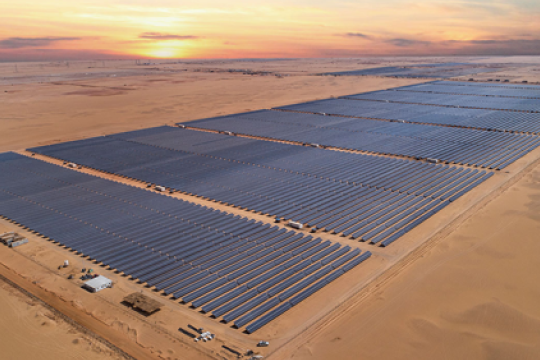
The Emerging Africa & Asia Infrastructure Fund (EAAIF) committed a USD 30 mn senior secured corporate loan to Hassan Allam Utilities (HAU) to help finance the Minya 1 GW solar and 660 MWh battery-storage system (BESS), according to a statement. Separately, the European Bank for Reconstruction and Development (EBRD) is weighing up to USD 170 mn in senior debt for the same plant, against a total project cost of USD 764 mn, per an EBRD disclosure.

Who owns it: The Minya plant is held through Nefer Menya for Renewable Energy (NMRE), an Egyptian SPV set up solely to build and run the project. Infinity Power Holding (IPH) — a joint venture between Abu Dhabi’s Masdar (49%) and Infinity Energy (51%) — owns 51%. HAU Energy — a platform backed by HAU, the EBRD, and French infrastructure investor Meridiam — holds the remaining 49%.

IN CONTEXT- The project falls under the EBRD-led Energy Pillar of Egypt’s Nexus of Water, Food and Energy (NWFE) program, targeting 10 GW of renewables by 2028. Last month we reported that the EU is backing Egypt with EUR 690 mn to upgrade the country’s transmission network and integrate 22 GW of renewable capacity by 2030. The investment comes under T-Med, the EU’s new Mediterranean energy initiative. The backing combines a EUR 600 mn EIB Global loan and EUR 90 mn in European Commission grants and will cover 44% of the total program cost, with the Egyptian Electricity Transmission Company covering the rest.

Why it matters: The EU has framed T-Med as doing more than domestic grid upgrades. The initiative’s stated priorities include cross-border interconnections and hydrogen corridors between the EU and its Southern Mediterranean partners. MENA solar and wind costs 30-40% less than in the EU, with technical renewable potential over 2.3k GW — more than double the EU’s own installed capacity. Our take is that the program isn’t just for Egypt’s 22 GW, but it also forms the backbone of a future Egypt-Europe power or hydrogen export corridor.

A broader group of development-finance lenders is backing Egypt’s grid. EBRD’s Hashem Abd El Hakim told EnterpriseAM in April the bank’s 2026 Egypt ticket is valued at USD 1.4-1.5 bn, with at least 40% — as much as USD 600 mn — for green projects. AfDB’s Dandara financing for EgyptAlum and EAAIF’s expanding relationship with Hassan Allam point to the same pattern.

More from Hassan Allam: In April, the EBRD extended a USD 65 mn bridge loan to HAU’s Nefer Benban, a 200 MW and 120 MWh BESS sister project which secured funding for new phases under the same November 2025 PPA package with the Electricity Ministry and EETC. Minya and Benban together make up 1.2 GW of solar and 720 MWh of storage — one part of a much larger Masdar-Infinity-Hassan Allam pipeline that also includes a 10 GW wind project in Sohag and a USD 15 bn green hydrogen venture with BP in the Suez Canal Economic Zone.

5

Also on our Radar

Hilton’s Egypt expansion reaches Ras El Bar with a new Doray Bay hotel deal

MBG Developments will manage and operate the 160-room Hilton Garden Inn Doray Bay Ras El Bar under a strategic partnership inked with Hilton, according to a company statement picked up by Al Mal. The hotel will sit inside MBG’s mixed-use Doray Bay project, which it is developing in partnership with the New and Urban Communities Authority, with fully finished unit handovers targeted for 2027.

Why it matters: The move brings branded hospitality into a less conventional tourism corridor — Ras El Bar typically attracts locals, not foreign tourists — as Egypt tries to build hotel capacity beyond Cairo, the Red Sea, South Sinai, and the North Coast. Hilton has been widening its Egypt pipeline, with plans to triple its presence in the country through 25 new hotels. Egypt’s hotel pipeline remains central to the state’s tourism targets of reaching 30 mn tourists a year and boosting hotel room capacity to 500k by 2030.

Ras El Hekma’s Mykonos moment

Abu Dhabi's Modon Holding and Nammos Hotels & Resorts have launched Nammos Ras El Hekma, the Mykonos-born lifestyle brand’s first fully integrated destination in Egypt, according to a press release. Based in the Wadi Yemm precinct, the project bundles Nammos Residences, a 79-key resort, and Nammos Village, a retail-and-wellness hub.

IN CONTEXT- Nammos is the second global hospitality brand Modon has brought to Ras El Hekma in a matter of months. It signed a similar deal with Montage Hotels & Resorts in May. Since ADQ named Modon master developer on the USD 35 bn project in 2024, it’s been building out Ras El Hekma on two tracks at once: hiring contractors to actually construct it — including a USD 316 mn contract with Orascom Construction in January — and signing recognizable brand names to build consumer trust. Securing Montage and Nammos is part of that second track, as the megaproject works toward a projected USD 110 bn in investment by 2045.

From find to factory

Afaq Mining is reportedly lining up a USD 150 mn gold processing plant at West Gabal Elba, with the company planning to build the facility over the next three years and begin commercial production by 2030. A formal commercial discovery is expected within weeks, paving the way for Afaq and state-owned Shalateen Mineral Resources to establish a JV to work on the Gabal Elba find.

The reserve base is getting larger: Confirmed reserves have risen 60% to 320k ounces after six months of drilling, up from 200k ounces in the commercial-discovery study submitted last October. At the time, Afaq was planning a USD 50 mn processing plant, meaning the planned investment may have tripled as the project moves closer to development.

6

PLANET FINANCE

The SEC’s transparency push could expose Gulf money behind activist hedge funds

Some of the Gulf’s most discreet investors may soon find themselves in the public eye. The US Securities and Exchange Commission (SEC) said in an updated interpretation on 13D filings and proxy statements last week that activist hedge funds must disclose the identities of clients backing company-specific campaigns — a shift that could pull Gulf family offices out of the shadows of America’s activist-investing scene.

SOUND SMART- Activist funds often raise money through “sidecars,” special-purpose vehicles that let outside investors back a single campaign without joining the fund’s broader portfolio — or having their names attached to it.

And what’s changed? Under the SEC’s new interpretation, clients investing more than USD 500 in certain vehicles used to solicit votes must be named in regulatory filings.

Why family offices like the structure: Sidecars let investors shape a specific outcome — a boardroom shake-up, a breakup, a sale — while keeping the rest of their public-market exposure untouched and their name off it, The National cites IQ-EQ’s Peter Unwin as saying.

Why it matters for the Gulf: North America accounts for 50% of Middle Eastern family-office portfolios, according to UBS’s Global Family Office Report 2026. That being said — being permanently identified as the foreign capital behind a campaign to replace management, break up a company, or force a sale could invite political and media scrutiny in both Washington and the Gulf, lawyers and experts told The National. The requirements are particularly sensitive where private wealth and state interests are perceived to overlap.

But this is guidance, not law: “This is not a new rule, but just guidance on the interpretation,” Insead’s Ben Charoenwong told The National. The SEC could reverse course without completing a formal rulemaking process, while sophisticated investors may shift back into larger pooled funds or avoid structures that name them as co-investors.

The bigger signal here is scrutiny, not just disclosure: The SEC’s unexpected interpretation signals greater scrutiny of what investors pushing for boardroom changes must disclose about their clients, lawyers who work on investor activism told Reuters. Companies targeted by activists say they need that information to defend themselves, while hedge funds argue disclosure could expose proprietary strategies and encourage copycats.

Sovereign wealth isn’t the one sweating: Ziemba Insights’ Rachel Ziemba told The National that Abu Dhabi Investment Authority, Mubadala, and Qatar Investment Authority tend to back management they already trust rather than join activist campaigns. The pressure falls instead on family offices and private investors running single-company sidecars.

EGX30

52,928

+0.7% (YTD: +26.5%)

USD (CBE)

Buy 50.48

Sell 50.62

USD (CIB)

Buy 50.45

Sell 50.55

Interest rates (CBE)

19.00% deposit

20.00% lending

Tadawul

10,720

+0.2% (YTD: +2.2%)

ADX

9,782

0.0% (YTD: -1.6%)

DFM

5,814

-1.4% (YTD: -3.9%)

S&P 500

7,458

-1.0% (YTD: +8.9%)

FTSE 100

10,600

+0.3% (YTD: +6.7%)

Euro Stoxx 50

6,231

-0.8% (YTD: +7.5%)

Brent crude

USD 88.10

+4.6%

Natural gas (Nymex)

USD 2.91

+1.9%

Gold

USD 4,019

+0.7%

BTC

USD 64,814

+1.4% (YTD: -26.0%)

S&P Egypt Sovereign Bond Index

1,081

+0.1% (YTD: +8.9%)

S&P MENA Bond & Sukuk

151.44

+0.1% (YTD: -0.3%)

VIX (Volatility Index)

18.77

+12.2% (YTD: +25.6%)

THE CLOSING BELL-

The EGX30 rose 0.7% at Thursday’s close on turnover of EGP 12 bn (33.9% above the 90-day average). International investors were the sole net buyers. The index is up 26.5% YTD.

In the green: Abu Qir Fertilizers (+2.4%), Arabian Cement (+2.2%), and Fawry (+1.9%).

In the red: Palm Hills Developments (-1.9%), GB Corp (-1.3%), and Raya Holding (-1.0%).


JULY

23 July (Thursday): Revolution Day.

AUGUST

19 August (Wednesday): Connected Banking Summit, Fairmont Nile City Hotel.

20 August (Thursday): Monetary Policy Committee’s fifth meeting of 2026.

26 August (Wednesday): Prophet Muhammad’s birthday.

SEPTEMBER

8-10 September (Tuesday-Thursday) El Alamein International Airshow, El Alamein International Airport.

10-12 September (Thursday-Saturday): Egyptian Entrepreneurship Sector Diagnostics Report Summit, El Gouna.

15 September (Tuesday): IMF to hold its eighth review of Egypt’s USD 8 bn EFF arrangement.

24 September (Thursday): Monetary Policy Committee’s sixth meeting of 2026.

27-29 September (Sunday-Tuesday): Global Conference on Population, Health, and Human Development.

OCTOBER

6 October (Tuesday): Armed Forces Day.

10-11 October (Saturday-Sunday): Egypt Women’s Health Summit (EWHS), Cairo Marriott Hotel.

26-28 October (Monday-Wednesday): IEX Egypt, Egypt International Exhibition Center, Cairo.

29 October (Thursday): Monetary Policy Committee’s seventh meeting of 2026.

NOVEMBER

6-8 November (Friday-Sunday) : Global Entrepreneurship Festival, JW Marriott Hotel, New Cairo

DECEMBER

7-10 December (Monday-Thursday): Food Africa, Egypt International Exhibition Center, Cairo.

17 December (Thursday): Monetary Policy Committee’s eighth meeting of 2026.

EVENTS WITH NO SET DATE

July 2026: British Prime Minister set to visit Egypt.

2H 2026: Operations at Deli Glass Co’s new USD 70 mn glassware factory kick off.

2026: The Egyptian-American Economic Forum.

4Q 2026: Banque du Caire IPO.

2027

16-18 January (Saturday-Monday): Agri Expo, Cairo International Convention Center.

20 January-7 February: Egypt to host the African Games.

April 2027: Tenth of Ramadan dry port and logistics hub to begin operations.

EVENTS WITH NO SET DATE

2027: Egypt to host EBRD’s annual meetings.

2027: Egypt-EU Summit 2027.

End of 2027: Trial operations at the Dabaa nuclear power plant expected to take place.

September 2028: First unit of the Dabaa nuclear power plant begins operations.

Now Playing
Now Playing
00:00
00:00