State IPOs gear up for a 4Q EGX debut

1

WHAT WE’RE TRACKING TODAY

Petro sector back in the black

Good morning, folks. We’ve got some good news on the privatization front and a veteran’s read on recent legislative reforms in today’s issue.

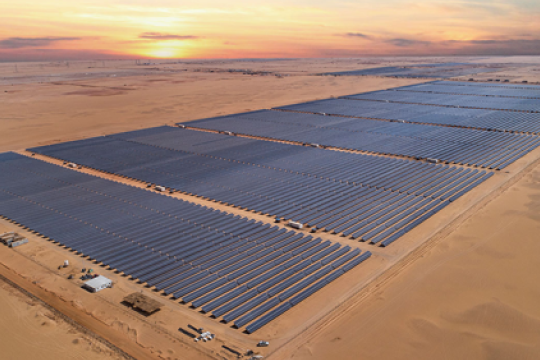
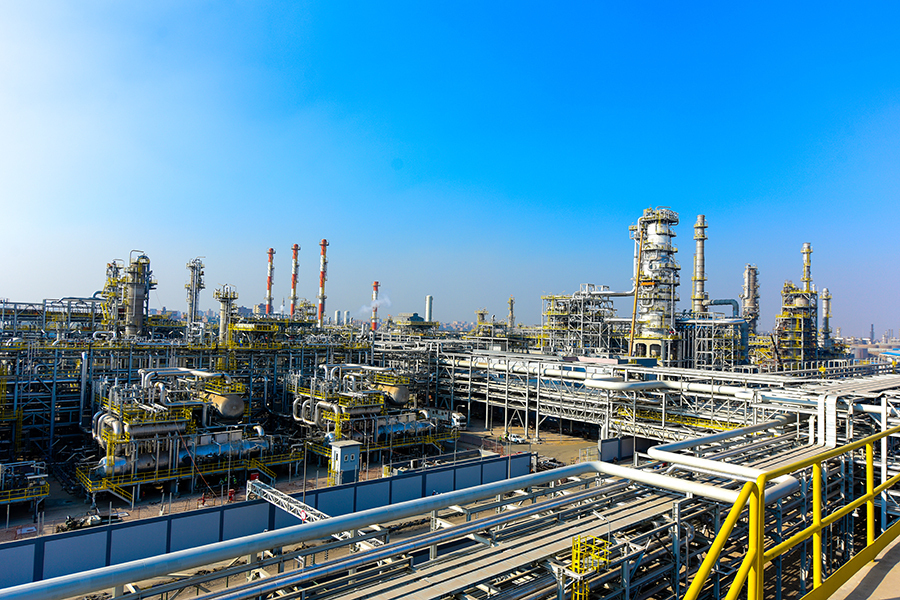
The first batch of temporarily listed state companies is expected to begin trading in 4Q — the clearest timeline we’ve seen yet from the State-Owned Companies Unit. Officials also celebrated the new EGX ticker for four government companies, including the three familiar names from the petroleum sector: Enppi, Petroleum Marine Services, and Egyptian Linear Alkyl Benzene Company (Elab).

Don’t miss our Coffee with former FRA and GAFI chairman and former Deputy Prime Minister for Economic Development Ziad Bahaa-Eldin as he returns to private practice at Adsero – Ragy Soliman & Partners this week. He shares his thoughts on where Egypt’s legislative reform agenda is headed and where the macro picture stands as the Strait of Hormuz crisis continues to ripple through the global economy.

On the investment front: Singapore-based Indorama is closing in on a USD 348 mn debt package from the IFC and EBRD for a greenfield phosphate fertilizer complex in Ain Sokhna. Two multi-laterals, one facility, and a USD 525 mn total project cost.

***

ARE YOU MORE OF A LISTENER?Morning Drive is a 10-minute summary of today’s issue crafted for you to enjoy with your morning coffee, while getting the kids ready for school, or driving through the morning rush. And if you like it, tell your friends to tell their friends. They can find us on Apple, Spotify, or wherever they get their podcasts.

***

Petroleum sector turns corner

The petroleum sector returned to growth for the first time since 1Q 2023/24, expanding 0.7% in 3Q FY 2025/26 on higher domestic production of crude oil, condensates, and LPG, according to a cabinet statement.

Why it matters: The reading confirms that upstream production gains are feeding through to broader economic activity — a significant shift after more than two years of sector contraction. The government has moved on several fronts to reverse the decline, including repaying USD 6.1 bn in arrears to partners, introducing a flexible R-Factor profit-sharing mechanism, and launching new drilling campaigns to unlock a USD 1.3 bn exploration push targeting 101 wells this year.

A hard deadline for Al Hamra

The Oil Ministry expects to wrap up the USD 457 mn expansion of Wepco’s Al Hamra Petroleum Port in New Alamein by December, the Arabic press reports, citing an unnamed government official. The project, developed by state-owned Wepco in partnership with the UAE’s Fujairah, will more than double crude storage capacity to 5.3 mn barrels, up from the current 2.5 mn barrels.

Fresh details: The expansion involves USD 122 mn in development across the port’s northern section and USD 335 mn for the southern section — which will house a two-phase, 130k-ton petroleum product storage and loading complex. The government aims to lift Al Hamra’s storage capacity to 20 mn barrels of crude oil and 400k tonnes of products by 2030.

IN CONTEXT- A new pipeline linking the Midor refinery to Al Hamra in 2H this year will close a two-way loop, letting Egypt import crude, refine it domestically, and re-export higher-value products. Fujairah started working on its USD 3 bn oil logistics zone at Al Hamra Port last October, following three agreements the Oil Ministry signed with the Emirate of Fujairah.

Faster streaming

The country’s four mobile operators will receive new frequencies starting next month under the USD 3.5 bn spectrum agreement signed earlier this year, the Arabic press reports, citing an unnamed government official. Telecom Egypt, Vodafone Egypt, Orange Egypt, and e& Egypt will receive 410 MHz of additional spectrum.

Why it matters: The allocation doubles the total spectrum allocated to local operators since mobile services launched three decades ago. With the country’s subscriber base topping 122 mn lines by November last year, networks need extra room to absorb growing data consumption and stabilize service quality. It also gives operators the capacity to turn the USD 150 mn 5G licenses they purchased in 2024 into usable infrastructure.

REMEMBER- The four operators signed the USD 3.5 bn spectrum agreement back in February, which was billed as the largest in Egypt’s telecom sector. They paid USD 500 mn in 1Q 2026 and are due to pay another USD 300 mn in 1Q 2027. The remaining USD 2.7 bn will be settled in annual USD-denominated installments through 2030.

GO DEEPER– We examined how spectrum scarcity, tower economics, and infrastructure-sharing rules have held back growth for telecom infrastructure in Hardhat last year.

Ready to reset?

The government plans to launch its new customs tariff in July, a senior government official tells EnterpriseAM. The new schedule is meant to remove tariff distortions that have left some production inputs facing higher duties than finished goods. The Finance Ministry is sending legislative amendments to three customs laws to the House of Representatives to enable the facilitation package.

What changes: Under the new structure, production inputs would sit in the lowest bracket — 2-5% — while finished goods reach as high as 60%, with brackets in between calibrated by the imported product’s importance. New tariff categories are expected to fall 10-30%. The reset is expected to benefit home appliances, garments, chemicals, EVs, automotive glass, and sheet metal. A schedule also introduces a new chapter with 5% and 10% brackets for auto-assembly components used in both simple and deep assembly to support local manufacturing and attract investment. The exact cuts and priority items are still under study.

REMEMBER- Government officials told us earlier this year that the Finance Ministry was weighing requests from around 80 companies to revise tariffs on 150 production inputs, with input duties potentially falling 10-30% to an effective 2-5% and some finished-goods tariffs rising as high as 60%. That package also included customs-facilitation measures: cutting clearance times, allowing installment payment of customs duties, accepting cash and non-cash guarantees, and reforming temporary admission rules.

Why it matters:The government is targeting a rise in industry’s share of GDP from 14% to 20% by 2030, as well as an increase in industrial jobs from 3.5 mn to 7 mn.

Buy the basket, short the stock

The bourse is reviewing four requests to establish investment funds that track EGX equity indices, Al Borsa reports, citing EGX chairman Omar Radwan. The move signals that a fresh wave of passive money is about to hit the market, although the exact size of the new funds and the specific benchmarks they will track remain under wraps.

Why it matters: The push for new index-tracking products comes as retail liquidity surges on the exchange. The EGX issued some 300k new investor codes by mid-May, according to Radwan, and index funds offer a diversified, lower-risk vehicle to channel this incoming wave of retail money.

The applications would add to a lineup of 11 approved index-tracking funds, with mandates spanning the EGX30, EGX33 Shariah, EGX35-LV, EGX70, and EGX100 indices. These are managed by Beltone, EFG Hermes, CI Asset Management, Azimut, and NI Capital.

Another brick in the derivatives wall: More companies could soon join the single-stock futures market beyond CIB and TMG, with the EGX and Financial Regulatory Authority working to qualify more brokerages and financial institutions to trade futures contracts, Radwan says, without providing a timeline or naming the next stocks in line. The EGX is also working to roll out short selling, alongside plans to introduce market-makers and liquidity providers.

ICYMI- Short selling, which allows investors to take a bearish position against stocks, has been in the works forsome time now. Former EGX boss Islam Azzam told us earlier this year that it would deepen liquidity, likening it to margin trading as a neutral price-discovery tool.

Take it away

The government has launched a campaign to reclaim unutilized land plots and industrial units from non-serious investors, according to a statement from the Industry Ministry. The campaign — led by the Industrial Development Authority — aims to curb land hoarding and speculation as well as boost industrial momentum, initially targeting 10th of Ramadan and Badr City, before expanding to the rest of Egypt.

Hoarding land triggered a five-fold price hike: Land speculation led to a shortage of serviced lands provided by the authority, driving up the official prices of industrial lands in 10th of Ramadan City from around EGP 6k up to EGP 30k per meter on the broker market, several sources had told EnterpriseAM.

PSA-

WEATHER- The heatwave lingers in Cairo today, with the capital looking at a high of 36°C and a low of 25°C, according to our favorite weather app.

It’s a bit cooler in Alexandria, with a high of 31°C and a low of 23°C.

The big story abroad

The US and Iran have reportedly agreed (once again) to cease strikes, following a spate of attacks over the weekend, with the two sides planning to resume talks in Doha tomorrow to resolve their dispute over the Strait of Hormuz. Hostilities reportedly reignited over contradicting interpretations of the MoU signed by both sides earlier this month to secure an interim peace.

Meanwhile, sovereign funds may be getting bolder: One-third of sovereign funds surveyed by US investment management firm Invesco say they plan to double down on riskier, unlisted assets like private credit, private equity, and infrastructure this year — around one-fifth want to reduce exposure to stocks. The trend dovetails into the AI-led paradigm shift in investment, as lenders pivot from concentrated stock markets to wagering on data centers and associated energy sources.

But… is private credit on a stable path? Major private credit players like Blue Owl, KKR, and Elliot Investment Management are pumping USD bns into buy now, pay later (BNPL) models, providing a major windfall to platforms like PayPal. While the credit sector continues to swell on the back of BNPL, auto, and student loans, it has been seen by some as incentivizing a dangerous uptick in consumer debt — not unlike the levels seen before the 2008 mortgage crisis.

Is defense heading towards mass production? Because standard US munitions are both costly and slow to manufacture, some defense contractors are developing modular workshops to rapidly produce affordable missiles during wartime. Defense group Co-Aspire has designed missiles that can be built with off-the-shelf parts in a bid to capitalize on major order requests from big US spenders, the Pentagon and US Air Force.

*** It’s Blackboard day: We have our weekly look at the business of education in Egypt, from pre-K through the highest reaches of higher ed.

In today’s issue: We look at how Egypt is tracking its brain-drain problem with a post-graduate census to find out whether its talent has entered the research economy, is underemployed, or moved abroad.

2

Privatization Watch

Hitting the floor soon

The first batch of temporarily listed government companies is expected to begin trading in 4Q this year, State-Owned Companies Unit head Hashem El Sayed tells EnterpriseAM. This marks the clearest timeline yet for when the state’s privatization push will move from a regulatory staging step to actual trading. The process starts once the companies finalize their fair-value studies and appoint offering advisors approved by the Financial Regulatory Authority (FRA), he adds.

The pipeline: Four more state-owned companies will temporarily list on the EGX next month, El Sayed notes, with the remaining petroleum companies to follow once their paperwork clears.

Every temporarily listed company has already received multiple acquisition offers, El Sayed says, explaining that staging the companies on the EGX before entertaining strategic bids requires them to meet the exchange’s financial-disclosure and transparency rules.

No more rigid quotas: The government is also dropping the rigid stake-sale models of the past. Offering sizes will no longer be capped at fixed percentages, he adds. Offering sizes will instead vary with market valuations and demand.

On deck, but not live yet

Four new names just got assigned an EGX ticker, bringing the government’s temporary listings roster to 20, including three petroleum companies and Al Maamoura, according to an FRA statement. Enppi, Petroleum Marine Services, and Egyptian Linear Alkyl Benzene Company (Elab) temporarily listed on the EGX yesterday, with FRA Chairman Islam Azzam pegging their combined book capital at around EGP 35 bn, while their fair value sits significantly higher.

IN CONTEXT- The move brings in three of the 10 petroleum companies the government committed to bring to market by end-June under its IMF program, clearing the runway for Petrojet and Midor to follow in July.

Rounding up the fresh batch: Al Maamoura, a subsidiary of the Holding Company for Tourism and Hotels (Hotac), was also temporarily listed, according to an EGX statement. Al Maamoura is the third of four Hotac subsidiaries due for a temporary listing, following Misr Travel and Egoth. The company listed 25 mn shares at a nominal value of EGP 10 each, under the ticker MMHC.CA.

This publication is proudly sponsored by

3

Coffee With

Back to private practice

Ziad Bahaa-Eldin (LinkedIn) has spent a career moving between the regulator’s chair and the advisor’s seat. He has served as executive chairman of both the Financial Regulatory Authority (FRA) and the General Authority for Investment and Freezones (GAFI), sat on the Central Bank’s board, and served as a member of parliament and deputy prime minister for economic development. Bahaa-Eldin also drafted legislation across the Arab world — in the UAE, Saudi Arabia, Lebanon, and Jordan.

Now, Bahaa-Eldin is heading back to private practice, joining Adsero – Ragy Soliman & Partners on 1 July as a senior partner and head of a newly configured Financial Regulatory and Capital Markets Department. He’ll be joined by Partner Mohamed El Ehwany (LinkedIn), an M&A and energy and infrastructure specialist, and Counsel Rana El Kahwagy (LinkedIn), whose practice spans antitrust and regulatory compliance.

We sat down with Bahaa-Eldin to talk about the new practice, where he thinks Egypt’s legislative reform agenda is headed, and how he reads the macro picture as the Strait of Hormuz crisis ripples through the global economy.

Edited excerpts from our conversation:

EnterpriseAM: What is it about the market right now that makes the combined structure of this new department — regulatory and capital markets together — the right one, rather than keeping them as two separate entities?

Ziad Bahaa-Eldin: You don’t get capital markets companies anymore that only do capital markets. Any new financial institution has to start somewhere — as a bank, a portfolio manager, a broker, a private equity firm — but once it’s licensed in one area, it ends up dealing across boundaries constantly. It’s hard to think of a private equity company doing old-school private equity without also getting into restructuring, M&A, sometimes ins., sometimes securitization. Clients’ own businesses are moving across the lines between capital markets, finance, and regulation, and a modern law firm has to adopt that same fluidity rather than work in silos.

EnterpriseAM: You said Egypt is on the brink of major expansion in regulatory practice — what’s behind that?

ZB: Several things. With recent geopolitical changes, Egypt is entering a new phase of potentially major transactions — whether in public-sector restructuring, private-sector companies organizing to be more competitive internationally, or multinationals and Gulf institutional capital coming back in to consider prospects here.

The other piece is the new State Ownership Document, version two. The document itself is shorter, better organized, and more realistic than the first version four years ago. But more importantly, there is more credibility behind it this time, and more willingness on the government's part to actually go ahead and begin implementing it. The first version was well-written but almost not applied at all. This time feels different — and that puts more transactions on the way.

EnterpriseAM: You’ve spent years on the regulatory side — at the FRA and GAFI — and you’ve also advised the private sector since leaving government. How has that shift shaped the way you now approach clients navigating those same institutions?

ZB: People tend to assume licensing is the practical heart of the job, but the real value lies in the thinking that goes into structuring [an agreement], setting up a company, or restructuring a group. It’s about understanding what a regulation is actually meant to achieve, how to comply with it from the outset, and how to put a client in the best position to benefit from it. Laws carry benefits and tax advantages as well as restrictions. Getting that framework right from the start matters more than people give it credit for.

EnterpriseAM: What gap are you trying to fill with this new department? Is there a particular goal you are hoping to achieve within the first year?

ZB: We’re not bringing something completely new — we’re regrouping resources that already exist at Adsero. The firm has deep expertise in regulation, capital markets, financial transactions, banking, and M&A. What we’re adding is an extra layer of emphasis on regulation and compliance, which is becoming a fundamental service area for clients navigating Egypt’s more complex regulatory system. Mohamed brings deep M&A and corporate transaction experience, particularly in oil and gas; Rana adds strength in regulation, supervision, competition, and compliance.

I want to introduce new lines of business, particularly cross-border transactions, deploying some of my knowledge of Gulf and Middle East [systems of law]. Clients increasingly don’t want to [navigate] single transactions in isolation — they’re bringing complex issues spanning three or four areas of law at once.

EnterpriseAM: We’ve seen a lot of infrastructure investments in the past years, and legislative activity recently — a new competition law, company law amendments moving through the Senate, and FRA decrees reorganizing the non-banking financial sector. What’s your read on the current state of legislative reform?

ZB: Physical infrastructure — roads, bridges — chases specific goals: lower costs, better efficiency, more competitiveness. Legislative reform needs the same clarity. It has to deliver justice (correcting imbalances that disadvantage one group), economic efficiency (investors moving quickly without bureaucratic delay), and — the point I wish got more attention — predictability.

As an investor, I can live with delay if I know it’s coming, and I can factor rising costs into my margins. What I can't plan around is a lawyer telling me a process could take anywhere from a month to two years, or cost between EGP 100 to EGP 10k. Legislative reform isn’t about introducing something brand new or shortening procedures — it's about improving an investor’s ability to predict and plan for the future.

Laws themselves are like an iceberg — a small part floats on the surface, the larger body sits submerged. Procedural improvements — fee reductions, one-stop-shops, shorter customs — matter, but they're the visible surface.

Real reform means going below the surface, to the fundamental laws underneath. The companies law isn’t about how many copies you submit when you incorporate; it’s the legal framework governing how companies function. The banking law of 2020 and ins. law of 2022 are in the same category — they didn’t tweak the system, they rebuilt it, the way Egypt does maybe once every 30 to 40 years.

The revision of the companies law before the Senate matters for the same reason — it hasn’t changed since 1981, and the one before that was from 1954. A change every 30 or 50 years. These are the things that actually impact economic activity. I hope to see more work on the fundamental laws, not just procedural fixes.

EnterpriseAM: Are you optimistic about Egypt’s direction this year, particularly if the war winds down?

ZB: I think the war will end soon in the narrow sense — the active fighting. But the anxiety isn’t really about Egypt alone, it’s global, and we talk about the war ending as if we’ll simply return to where we were two months before it started.

This war’s impact will stretch for years. Take the Strait of Hormuz. Even if it reopened tomorrow, shipping would take four to five weeks to flow normally. The oil facilities that were hit need, by conservative estimates, four to five years to recover. The disruption isn’t only about a closed route — the goods that are supposed to come out aren’t coming out at all.

On Egypt, I’m optimistic by nature. I describe the country as a large ship — heavy, slow, less affected by rapid shocks but slow to change direction. We don’t leap upward, and we don’t collapse downward. Compare the Gaza war’s impact on Egypt’s tourism to Jordan’s or Lebanon’s, and you see the same pattern with the current war relative to the Gulf, Greece, Iraq, or Jordan. I’m not worried about the country. But for genuine reform, we need a pace of effort, decisions, laws, and policy that is considerably faster than what we have today.

4

Investment Watch

A rock-solid investment

Singapore-based Indorama is closing in on a combined USD 348 mn debt package for its greenfield phosphate fertilizer complex in the Suez Canal Economic Zone (SCZone) from both the International Finance Corporation (IFC) and the European Bank for Reconstruction and Development (EBRD), according to separate disclosures from the lenders. The IFC and the EBRD are independently weighing debt packages of up to USD 174 mn each for Indorama Misr Fertilizers to bankroll the USD 525 mn facility in Ain Sokhna.

The details: The proposed loan structures would see each institution commit a USD 100 mn A-loan while mobilizing the remaining USD 74 mn through syndicated B-loans — portions of a loan funded by participating commercial banks.

About the facility: Once operational, the Ain Sokhna facility is expected to produce 600k tons per annum of phosphate-based fertilizers alongside sulfuric and phosphoric acid plants. The facility — a joint venture with state-owned Phosphate Misr — will draw an estimated 1.25 mn tons of phosphate rock annually directly from Phosphate Misr’s Red Sea Mines. Phosphate Misr holds a 15% equity stake and will claim 20% of the plant’s final production in exchange for supplying the raw phosphate rock.

BACKGROUND- The project — which has been in the works since 2023 — locked in its final contracts in April. Indorama and Phosphate Misr initially laid the groundwork for the Ain Sokhna plant as part of a broader USD 700 mn investment playbook that includes plans for a second factory dedicated to silicon metal production for solar panels.

 Speaking of fertilizers

The Agriculture Ministry is facilitating talks for local fertilizer manufacturers to secure long-term supply agreements with the Philippines, with ministers from both sides set to meet next month, according to a statement from the Philippines’ Department of Agriculture. Egyptian officials have committed to providing a list of manufacturers able to supply the Philippine market, while Manila runs a feasibility study to assess potential procurement prospects.

Why it matters: The Philippines isn’t the first Asian country to knock on Egypt’s door for fertilizers since the Strait of Hormuz crisis began. In May, Indian buyers locked in 300k-350k tons of local fertilizer at a premium of USD 850-880 per ton. For our producers, locking in long-term Asian supply agreements is now a defensive play against the falling global spot prices and the 10% duty linked to the FOB value.

A fruit basket on the side: The supply talks also include a reciprocal agricultural trade push. Egyptian buyers are eyeing Philippine tuna, papaya, and pineapple, while Manila is pushing for local market access for bananas, mangoes, coconuts, durian, tobacco, pomelo, and dragon fruit. A Specific Commodity Understanding remains under negotiation between the two ministries, alongside a separate track on halal development cooperation.

 In other investment news

Elsewedy Electric is pouring USD 200 mn into three new industrial projects slated to begin operations 1Q 2028, according to an EGX disclosure (pdf).

The breakdown: The largest chunk of the funds — USD 80 mn — will go toward a complex to recycle copper scrap and electronic waste, with an annual capacity of 20k tons. Another USD 65 mn is earmarked for a new factory capable of producing 15k tons of copper pipes annually for the local heating, ventilation, air conditioning (HVAC), and home appliances. The final USD 55 mn piece of the investment covers a new aluminum rod production line with a 50k-ton annual capacity that will be geared entirely toward export markets.

5

Also on our Radar

A pyramid plan

Orascom Pyramids Entertainment (OPE) plans to funnel EGP 500 mn into the Giza Plateau next year, bringing the cumulative investment by the Orascom Investment Holding subsidiary to around EGP 2 bn, Al Arabiya reports, citing Executive Chairman Amr Gazarin. The additional funding will be entirely self-financed and will focus on service quality, infrastructure, F&B, and cultural events. OPE is expecting the pyramids area to generate EGP 3-3.5 bn in revenues by year-end, riding on an annual growth rate of 20–25%. The company is also targeting 5 mn visitors to the area next year.

Why it matters: The Pyramids Plateau is one of our most high-profile private-sector concessions, operating under a strict 50-50 revenue-sharing agreement with the government, where the state is entitled to a minimum of EGP 20 mn per year. The EGP 500 mn step-up comes after the company hit its initial EGP 1.5 bn investment milestone earlier this year and signals continued confidence in the model, even as the site’s protected status puts a hard cap on how much OPE can build.

Booster shot

Korra Energi secured a EGP 470.7 mn integrated works contract for GennVax Egypt’s vaccine manufacturing facility, it said in a statement (pdf). The firm’s scope could further extend to another EGP 100 mn of additional works depending on the needs of the Ain Sokhna plant in the Suez Canal Economic Zone (SCZone). The contract covers civil, architectural, and electromechanical works across the plant, including production buildings, warehouses, water-treatment stations, admin and service buildings, and external finishing.

IN CONTEXT- Construction began on the GennVax complex in December as part of the SCZone’s pharma localization push, with plans to start production at 70-80 mn doses a year before scaling to 270 mn doses at full capacity. The contract also lands fresh off Korra’s EGX debut earlier this month, when shares closed up 19.5% on their first day of trading.

Concrete plans

Local cement player Titan Egypt is studying a EUR 20 mn investment to add a new grinding mill at its plant in El Max, Alexandria, according to an Investment Ministry statement. The consideration comes after the company secured a license to lift annual production capacity by nearly 1 mn tons, following a EUR 10 mn investment to open new export silos at the same plant. The company is targeting 300k tons of US exports over the short term, with plans to scale up to 1.3 mn tons over the coming two years.

This capacity buildout is the logistical backbone of Titan’s wider EGP 3 bn green transition, with CEO Amr Reda previously pledging to halt high-emission clinker exports entirely and pivot strictly to green cement exports. Local cement exports hit nearly USD 877 mn in 2025, with another USD 355 mn booked in the first five months of this year.

6

PLANET FINANCE

AI’s debt dilemma

Tech companies are raising equity like it’s the dot-com era again — and bond investors are getting nervous. Alphabet sold USD 85 bn of stock this month, while SpaceX followed its record USD 75 bn IPO with a USD 25 bn bond sale, Bloomberg reports.

Why the nerves? Companies that already generate strong cashflow are still raising fresh capital, suggesting they are preparing for heavier AI spending than investors had expected. OpenAI could pursue an IPO as soon as next year, while Anthropic and Meta are weighing equity raises. “It’s telling us that the amount of capital expenditure that they’re going to do is probably going to go up,” Columbia Threadneedle’s Tom Murphy said.

The bill keeps getting bigger: JPMorgan now expects AI and data center-related spending to reach USD 5.5 tn by 2030, up USD 400 bn from its November forecast. It also expects USD 2.1 tn of data center financing to be raised in high-grade bond markets over the next five years, up from USD 1.5 tn previously.

Bond markets are already blinking: SpaceX’s USD 25 bn bond sale weakened shortly after trading began, leaving investors with roughly USD 360 mn of paper losses relative to Treasuries, while spreads on US investment-grade tech bonds widened to 79 bps this month from 74 bps at the end of May.

The risk is duration as much as debt. Bondholders are being asked to take decades of AI obsolescence risk, with SpaceX and Nvidia both selling 20- and 30-year bonds this month and Alphabet selling 100-year GBP bonds in February. That makes the downside more awkward for credit investors: shareholders get the upside if the AI wager works, but bondholders are left holding the bag if it does not.

That is exactly the kind of risk the Bank for International Settlements (BIS) is worried about. The BIS warned in its annual report (pdf) that the AI boom is becoming increasingly reliant on debt and complex funding structures, while supply bottlenecks and intense competition could trigger the kind of overinvestment seen in previous boom-and-bust cycles.

The warning goes beyond AI: The BIS also flagged record public debt, sticky inflation risks, and fragile bond markets, warning of a new “sovereign-financial stability nexus” that could amplify shocks, Reuters reports. “Policymakers must act now,” BIS General Manager Pablo Hernández de Cos said. “Delay will only make the necessary adjustments more costly.”

MARKETS THIS MORNING-

Asia-Pacific markets are mixed in early trading this morning, as regional developments continue to weigh on investor sentiment. Japan’s Nikkei and South Korea’s Kospi are both down, while the Hang Seng is looking at gains. Over on Wall Street, stocks are set to open higher, with futures in the green.

EGX30

50,344

-2.1% (YTD: +20.4%)

USD (CBE)

Buy 49.31

Sell 49.45

USD (CIB)

Buy 49.28

Sell 49.38

Interest rates (CBE)

19.00% deposit

20.00% lending

Tadawul

10,908

-0.2% (YTD: +4.0%)

ADX

9,880

0.0% (YTD: -1.1%)

DFM

6,018

-0.1% (YTD: -0.5%)

S&P 500

7,354

-0.1% (YTD: +7.4%)

FTSE 100

10,508

-0.2% (YTD: +5.8%)

Euro Stoxx 50

6,222

-0.7% (YTD: +7.3%)

Brent crude

USD 72.48

+0.7%

Natural gas (Nymex)

USD 3.30

+0.6%

Gold

USD 4,080

-0.4%

BTC

USD 59,538

-1.1% (YTD: -32.1%)

S&P Egypt Sovereign Bond Index

1,068

+0.1% (YTD: +7.6%)

S&P MENA Bond & Sukuk

152.60

0.0% (YTD: +0.5%)

VIX (Volatility Index)

18.41

-2.5% (YTD: +23.1%)

THE CLOSING BELL-

The EGX30 fell 2.1% at yesterday’s close on turnover of EGP 7.4 bn (15.2% below the 90-day average). Local investors were the sole net buyers. The index is up 20.4% YTD.

In the green: ADIB (+0.8%) and Misr Cement (+0.3%).

In the red: Ibnsina Pharma (-6.2%), Orascom Construction (-6.0%), and Kima (-5.5%).

7

BLACKBOARD

Egypt is counting its postgraduate talent, but can we use them?

A public-sector employee with a master’s degree earns an extra EGP 100 a month, while a PhD adds EGP 200, House Labor Committee deputy head Ihab Mansour tells EnterpriseAM. With that gap between the cost of an advanced degree and the financial return it generates at home now a structural one, the Higher Education Ministry has launched its first nationwide census of master’s and PhD holders across public and private Egyptian universities, a senior ministry official tells EnterpriseAM. The goal? A centralized database mapping the country’s postgraduate pool for the first time.

What the census is: The count began three months ago and is being conducted across Egyptian universities, the ministry official tells us. Completing the count is within the ministry’s remit, while decision-making on how to deploy that pool to fill government vacancies falls to the Central Agency for Organization and Administration. The Supreme Council of Universities, meanwhile, continues working on appointing top postgraduates at home.

The census follows years of parliamentary pressure to put postgraduate talent to work. The efforts have been stuck for five years — no appointments, no deployment — pushing some to leave and others into a holding pattern, Mansour says. MPs have repeatedly asked for findings from a ministerial committee formed in 2021 to study the question, but still have no updated figures on how many people qualify, what they studied, or where the state actually needs them.

The question isn’t whether postgraduates get appointed inside the state bureaucracy, Mansour says — it’s whether Egypt can direct specialized talent into the ministries, research centers, technical bodies, and development sectors that actually need it. The Egyptian Survey Authority is one example: delays in resolving the postgraduate conundrum have held up compensation work tied to land expropriation for public benefit because of shortages in specialized staff.

Roughly 232k students enrolled in postgraduate studies at Egyptian universities in the 2023/24 academic year, according to Capmas’ Annual Bulletin of Higher Education Graduates and Scientific Degrees. Doctoral students accounted for 16.8% of that total — roughly 39k by our math. Egyptians also obtained 122.9k higher degrees last year, up 22.2% from 2023 — a figure that spans diplomas, master’s degrees, and PhDs and captures the scale of the advanced-degree pipeline the state is now trying to map.

The structural mismatch the census is meant to surface: The state has spent years accrediting advanced degrees without a clear strategy to absorb them — and no reliable count of where graduates actually end up. The 2024 OECD report (pdf) gives that gap its labor-market frame, warning that sectors requiring high skills — ICT, finance, and professional services — remain very small, leaving more educated workers with limited options at home. In 2018, 7.0% of Egypt’s highly educated population was working or living abroad, compared with just 1.4% of those with only pre-secondary education. The OECD attributes the gap to weak domestic prospects and “the incentive for some highly-educated people to look for better job [prospects] abroad.”

Misallocation, not just migration: The problem starts before departure. Around 10% of male workers are overqualified — their education exceeds what their occupation requires — and overqualification is highest in the very sectors meant to absorb advanced skills: ICT, finance, and professional services. The degree exists, but the job that fits it often doesn’t.

The state’s counter-frame: exporting talent is policy. A senior Labor Ministry official frames the situation differently — not as stopping mobility but as governing it. Exporting trained labor and scientific talent is an explicit policy target, the official tells us. Egypt has a large pool it can deploy through bilateral labor-export agreements, and better governance of those agreements could secure stronger prospects for Egyptians abroad. On this reading, the census is also infrastructure for managing outbound flows — not only for keeping graduates at home.

Our take: Counting postgraduates is only useful if it’s tied to demand — where ministries have technical shortages, research centers need staff, and companies can absorb R&D talent. We flagged this gap last month when the OECD documented the supply-demand mismatch in Egypt’s research base. While the university count nearly doubled from 53 to 100 between 2018 and 2023 — with Egyptian publications now appearing in top-cited journals at rates above the OECD average — businesses spend just 0.2% of GDP on R&D. Furthermore, only 7% of innovation-active SMEs and 3% of large firms collaborate with universities on innovation, and industry employment of PhD holders remains very low. The risk isn’t only that we train advanced talent and lose it abroad. It’s that we train advanced talent without building the jobs, labs, incentives, and private-sector demand needed to use it at home.


JUNE

30 June (Tuesday): June 30 Revolution.

JULY

9 July (Thursday): Monetary Policy Committee’s fourth meeting of 2026.

23 July (Thursday): Revolution Day (TBC).

AUGUST

19 August (Wednesday): Connected Banking Summit, Fairmont Nile City Hotel

20 August (Thursday): Monetary Policy Committee’s fifth meeting of 2026.

26 August (Wednesday): Prophet Muhammad’s birthday.

SEPTEMBER

8-10 September (Tuesday-Thursday) El Alamein International Airshow, El Alamein International Airport

10-12 September (Thursday-Saturday): Egyptian Entrepreneurship Sector Diagnostics Report Summit, El Gouna.

15 September (Tuesday): IMF to hold its eighth review of Egypt’s USD 8 bn EFF arrangement.

24 September (Thursday): Monetary Policy Committee’s sixth meeting of 2026.

27-29 September (Sunday-Tuesday): Global Conference on Population, Health, and Human Development.

OCTOBER

6 October (Tuesday): Armed Forces Day.

10-11 October (Saturday-Sunday): Egypt Women's Health Summit (EWHS), Cairo Marriott Hotel

26-28 October (Monday-Wednesday): IEX Egypt, Egypt International Exhibition Center, Cairo.

29 October (Thursday): Monetary Policy Committee’s seventh meeting of 2026.

DECEMBER

7-10 December (Monday-Thursday): Food Africa, Egypt International Exhibition Center, Cairo.

17 December (Thursday): Monetary Policy Committee’s eighth meeting of 2026.

EVENTS WITH NO SET DATE

July 2026: British Prime Minister Keir Starmer set to visit Egypt.

2H 2026: Operations at Deli Glass Co’s new USD 70 mn glassware factory kick off.

2026: The Egyptian-American Economic Forum.

4Q 2026: Banque du Caire IPO

2027

16-18 January (Saturday-Monday): Agri Expo, Cairo International Convention Center.

20 January-7 February: Egypt to host the African Games.

April 2027: Tenth of Ramadan dry port and logistics hub to begin operations.

EVENTS WITH NO SET DATE

2027: Egypt to host EBRD’s annual meetings.

2027: Egypt-EU Summit 2027.

End of 2027: Trial operations at the Dabaa nuclear power plant expected to take place.

September 2028: First unit of the Dabaa nuclear power plant begins operations.

Now Playing
Now Playing
00:00
00:00