Hospitality rebound in 4Q?

1

WHAT WE’RE TRACKING TODAY

THIS MORNING: Fujairah workaround attracts Aramco attention + AD Ports’ tender clock starts

Good morning, friends. It feels like we’ve taken a time machine and traveled back a few months, with the first missile alert in over a month arriving on our phones yesterday afternoon. The Defense Ministry later confirmed it detected two ballistic missiles launched from Iran, both of which fell into the sea.

In response, the UAE halted all trade and financial transactions with Iran, citing escalations that undermine regional peace.

That, along with the uncertainty over the future of the US-Iran conflict (with no ceasefire renewal and no talks scheduled), is fueling anxiety, especially as we approach back-to-school season in two weeks.

In other disappointing news this morning, we’ve had another major event cancelation: OFFLIMITS festival, which was taking place in Abu Dhabi in November, has been canceled. Organizers gave no reason for the cancellation but said they hope to return in 2027, according to the event’s website. The festival had been set to bring Shakira, the Jonas Brothers, and Ne-Yo, and had already been delayed from April due to the conflict.

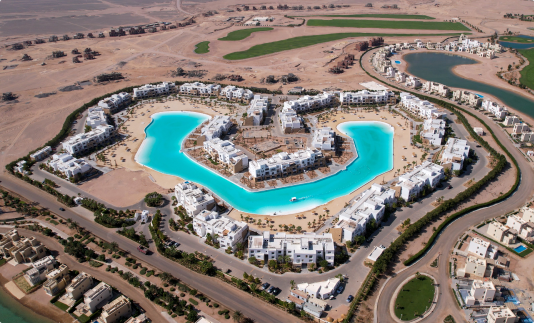
Meanwhile, Dubai’s hospitality sector is still reeling from the uncertainty and the usual summer lull, though Cavendish Maxwell expects recovery to begin in 4Q 2026.

Abu Dhabi’s investment machine is still running at full speed despite everything, with Mubadala subsidiary Abu Dhabi Investment Council making another USD 1 bn investment in a hedge fund.

The EnterpriseAM Egypt Forum is back — and we’re devoting the full day to the singular set of questions on everyone’s mind: What does AI actually mean for your company, your people, your economy, your own job — and your kids’ future?

Every session on stage answers one question: “So, what do I actually do about it?”

Join us on 5 October in Cairo. Seats are limited and attendance is by invitation only.

Request your invitation here.

AD Ports’ tender clock starts

AD Ports’ minority shareholders now have until 3pm on 15 September to tender their shares to ADQ, after the L’imad subsidiary submitted a formal offer of AED 6.25 per share for the 24.58% stake it does not already own, according to the offer document (pdf).

REFRESHER- We reported yesterday that the offer values AD Ports at around AED 31.8 bn and would cost ADQ roughly AED 7.8 bn to buy the remaining stake, according to our math. The move follows L’imad’s recent Taqa takeover and points to a broader push to bring strategic capital-intensive platforms fully under its control.

What to watch for: AD Ports’ board is due to meet this Friday, 21 August, to review the offer. Offer results are expected on 16 September, unless the acceptance period is extended. The key question is how many minority investors choose to lock in the 23% premium now, versus staying exposed to a growth story L’imad says is capital-intensive, long-term, and potentially heavier on leverage.

ADVISORS- Rothschild & Co Middle East is financial adviser to ADQ, while Allen Overy Shearman Sterling is providing counsel. Emirates NBD Capital and FAB are joint lead managers, EFG Hermes UAE is co-lead manager, and Emirates NBD Bank and FAB are joint lead receiving banks.

Iran claims UAE-linked tanker detained at Hormuz

Iran’s Islamic Revolutionary Guard Corps (IRGC) has allegedly detained a UAE-linked oil tanker while it was transiting the Strait of Hormuz, claiming the vessel refused to use Iran’s designated northern route and failed to pay transit service fees, Iranian state news agency Fars said on X.

The claim is unverified, and Fars has not named the tanker or its owner. Bloomberg has reported that a Liberian-flagged tanker operated by UAE-based Superfleet sailed empty into the Arabian Gulf on Monday before making at least five U-turns and coming to a standstill near Iran’s Qeshm Island.

REMEMBER- The Strait of Hormuz is growing quieter by the day, with just five commodity vessels crossing the strait on Saturday, and none passing through on Sunday, versus 31 over the previous weekend. Adnoc had reportedly been moving tankers through the strait in dark mode by switching off transponders, and has been a major user of “shuttle trade” — where crude is moved out of the Gulf and transferred between vessels in the Gulf of Oman to help maintain exports while reducing exposure to Hormuz. Three of its tankers came under attack in the past week, and the end of the US and Iran’s ceasefire agreement on Monday is keeping shipowners and charterers even more wary.

Aramco’s Fujairah workaround

Fujairah is becoming a critical staging point for Gulf crude exports as prolonged Hormuz disruptions force producers to find alternative routes to Asian buyers, Reuters reports. Saudi Aramco is in talks with Asian refiners to supply Arab Medium and Arab Heavy crude through ship-to-ship transfers off Fujairah, mirroring Adnoc’s strategy. It has also redirected Arab Light to Saudi Arabia’s Red Sea port of Yanbu and offered cargoes from Egypt’s Sidi Kerir after Red Sea tensions, allowing Asian customers to receive cargoes without sending their own tankers through the high-risk chokepoint.

Adnoc has already sold more than 100 mn barrels through tenders, using arrangements that allow buyers to receive Gulf crude without sending their own tankers through the strait.

They’re not the only ones rerouting: Two of China's biggest state shippers have simply stopped sailing the risk zone. Cosco Shipping Energy Transportation and China Merchants Energy Shipping loaded crude via ship-to-ship transfer at Fujairah in July, per Vortexa, and about a dozen more from each carrier are booked to load outside the Gulf between now and mid-September — mostly at Fujairah and near Omani ports, chartered largely by Chinese refiners, Reuters reports. The two companies — which run more than 100 VLCCs between them and normally carry roughly half of China's Middle East crude imports — have kept tankers outside both Hormuz and Bab Al Mandab amid security concerns.

UAE-EU trade talks still on track

The UAE and European Union are pushing to wrap up their trade agreement this year, with the conflict making the case for closer economic ties stronger, EU ambassador to the UAE Lucie Berger said, according to a press release from the EU Delegation to the UAE.

“We haven't been derailed by the geopolitical shifts in the region,” Berger said. “On the contrary, I think we are even more serious about concluding the agreement.” The two sides have completed six rounds of negotiations, an unusually rapid pace for the EU, which, Berger said, has historically taken one to two decades to negotiate trade agreements.

The UAE is the bloc’s largest export destination and investment partner in the region, with bilateral goods trade estimated at EUR 57 bn (USD 67 bn). The trade agreement would be the EU’s first with a Gulf country.

REMEMBER- Just last month, UAE Foreign Trade Minister Thani Al Zeyoudi flagged a slow rate of progress on the comprehensive economic partnership agreement talks with the bloc. The delay, according to analysts we spoke to, has been attributed to a heavier agenda on the table, spanning services, investment, digital trade, energy, procurement, and sustainable development.

Has KSA tightened oversight of UAE transfers?

The Saudi Central Bank (Sama) reportedly placed financial transfers to the UAE under additional scrutiny, unnamed sources told Reuters. The UAE is reportedly among more than half a dozen countries in the region deemed high-risk for financial crimes by Sama.

What’s going on? The central bank reportedly notified major banks earlier this year to apply such measures to settlements with the UAE. Several executives told the newswire that Saudi banks delayed or returned transfers in various currencies without providing an official explanation. A banking source had also told EnterpriseAM last month that some payments from banks in Saudi Arabia to accounts in the UAE have been delayed, returned, or blocked outright since at least May, confirming reports first picked up by the Financial Times and Bloomberg.

Some Saudi clients have asked UAE-based firms to relocate operations elsewhere entirely. The head of a Dubai-based consultancy told Reuters that some of his Saudi clients were struggling to pay him — and had suggested he do just that. Other companies said local authorities had asked them not to do business with UAE-based firms.

BUT- The official line, on both sides, is that there’s no story. Sama denied the presence of restrictions on specific countries, and a UAE official also told Reuters that the Economy Ministry received no reports from firms about facing such difficulties.

Background: The UAE and the Kingdom have had conflicting views over oil quotas and geopolitical influence and have competed for foreign capital and talent for the past couple of years. The rift later reached a boiling point over tensions over Yemen in December and was not helped by Abu Dhabi’s April exit from Opec.

Gulf oil looks east

The UAE and Saudi Arabia want to expand oil reserves outside the conflict-prone region, with each engaging in talks to expand reserves in Japan and South Korea, the New York Times reports, citing unnamed sources. Both nations asked Tokyo to increase their crude storage in Japan tenfold from the current 8 mn barrels each. Talks continue on final volumes and cost-sharing, with joint stockpiles expected to grow markedly.

The problem? The requested volumes likely exceed Japan’s storage capacity and face logistical challenges, the sources said. Since the East Asian country imports almost all its fossil fuels — with 90% of crude sourced from MENA — the proposed move will help stave off supply disruptions, but will limit capacity for domestic refiners and national reserves.

A trick from the old playbook: Last May, the UAE expanded its joint crude oil stockpiles in Japan, which relies on Abu Dhabi for about 40% of its crude imports — both countries already operate joint crude storage facilities under a longstanding agreement. Abu Dhabi also arranged to store more than 6 mn barrels of crude in South Korea in March.

A third hedge, for good measure: Earlier this year, Adnoc agreed to increase its crude storage presence in India to as much as 30 mn barrels — nearly triple the roughly 11 mn barrels-equivalent it already leases there through India’s strategic reserve system.

PSA

WEATHER- The mercury tops out at 44°C in Abu Dhabi and 43°C in Dubai — although it will feel closer to 48°C — with lows of 33-34°C in both emirates, according to our favorite weather app.

The big story abroad

In the absence of a major development in the regional war, the global press has set its sights on a number of stories. Here are the most notable headlines.

A bond yield problem: Sovereign borrowing rates are surging across the globe, with yields on 30-year US Treasuries reaching their highest levels since 2007 this week — rates in France, Germany, the UK, and Japan have also risen dramatically in recent days. A confluence of factors — largely Washington’s Iran offensive and tariff campaign — is pushing debt in developed countries to unsustainable levels.

Ottawa in the tariff target: Canada is bracing for a salvo of US tariffs on USD 20 bn worth of exports, while US President Donald Trump is reportedly mulling a last-minute agreement to avert the duties. After rounds of talks, the White House called on Canada to scrap its retaliatory auto tariffs and provincial liquor bans, while Ottawa angled to lower duties on automobiles. The tariffs are due to come into effect at midnight Eastern Daylight Time.

And in the AI world: Anthropic’s pre-IPO revolving credit facility is set to rise above its roughly USD 10 bn target, as Wall Street banks line up to lend massive sums to signal confidence and clinch a slice of one of the largest tech IPOs in history. The terms are still under negotiation, and the company could choose to cap or reduce the credit line.

***

You’re reading EnterpriseAM UAE, your essential daily roundup of business, economics, and must-read news about the UAE, delivered straight to your inbox. We’re out Monday through Friday by 7am UAE time.

EnterpriseAM UAE is available without charge thanks to the generous support of our friends at Mashreq and Hassan Allam Properties.

Were you forwarded this email? Tap or click here to get your own copy of EnterpriseAM UAE.

Want to send us a story idea, request coverage, ask for a correction, or otherwise get in touch? Reach out to us on [email protected].

DID YOU KNOW that we also cover Egypt, Saudi Arabia, and the MENA logistics industry?

***

Check out our full calendar on the web for a comprehensive listing of upcoming news events, national holidays and news triggers.


This publication is proudly sponsored by

Rise every day
From OUR FAMILY to YOURS
2

THE BIG STORY TODAY

Dubai hotel market set to rebound from 4Q, just as a wave of luxury supply hits the segment that struggled most this year

Dubai’s hospitality market could start to recover from 4Q onward as international connectivity improves and the winter season lifts demand, Cavendish Maxwell says in its latest hospitality report. But the rebound is arriving alongside a heavy wave of luxury supply — a problem for a segment that bore the brunt of this year’s slowdown.

Still, the full-year picture will be one to forget: Full-year occupancy is forecast at 60.4-66.2%, with average daily rates at AED 600-675, and Dubai International Airport (DXB) passenger traffic at 67.6-79.3 mn — all below 2025 levels. Analysts previously told us that a full recovery in tourism flows would not come before 2029.

The 1H picture: Citywide occupancy fell 30.3% y-o-y to 56.4%, tracking a 31.7% drop in passenger traffic at DXB to around 26.6 mn in the first five months of the year, as regional airspace disruptions weighed on international travel. Average daily rates held up far better, dipping just 7% to AED 701, as operators largely held the line on discounting.

Luxury felt the pain most: Luxury hotels posted occupancy of 51.2%, while upper-upscale hotels came in at 51.8%, as their heavier reliance on long-haul international travelers left them more exposed to disrupted air connectivity. Upper-midscale was the strongest-performing segment at 65.7% occupancy, while midscale occupancy came in at 63.7%, helped by a broader mix of domestic, regional, and corporate demand.

The supply picture

Supply is still coming: Dubai had 727 hotels and around 152.1k rooms at the end of June, down slightly from year-end 2025, as closures offset new openings. Another roughly 3.2k rooms are due by year-end, taking total inventory to around 155.3k rooms.

The pipeline is getting even more premium: More than 80% of rooms scheduled for delivery in 2027 are in the luxury segment, with the share also above 80% in 2028. That could raise competition just as premium hotels are proving the most sensitive to weaker international demand, although Cavendish Maxwell expects the gradual pace of additions to give the market time to absorb the new supply.

Background

Dubai has been one of the hardest-hit hospitality markets in the UAE. We reported last week that Dubai revenue per available room was down 35.2% YTD in 1H, versus a 31.8% decline across the UAE overall, as weaker international inflows hit the emirate particularly hard. That broader downturn has also pushed operators toward domestic demand, fee relief, and more cautious development timelines.

The policy cushion: Dubai rolled out AED 2.5 bn in hospitality support during the period, including suspending the Tourism AED and municipal fees on hotel and restaurant bills, alongside campaigns to stimulate domestic, regional, and international demand. The UAE Tourism Council is also looking to widen Jaywan card acceptance across hotels and attractions and introduce more benefit programs through Esaad and Fazaa, as part of a broader push to channel more resident spending into domestic tourism.

3

INVESTMENT WATCH

Adic’s USD 1 bn bet on Dymon Asia Capital is its third major hedge fund allocation this year

Another hedge fund investment from Adic: Mubadala’s investment arm Abu Dhabi Investment Council (Adic) is pledging some USD 1 bn to Singapore-based hedge fund Dymon Asia Capital, backing its expansion across London, Hong Kong, and other markets, Bloomberg reports, citing people it says are in the know. The allocation will be made in tranches.

BACKGROUND- Adic is the independently run, roughly USD 160 bn investment arm of Mubadala Investment Co. Since Saeed Al Mazrouei took over as CEO in late 2023, the fund has pushed into new territory — a secondaries business, larger BTC exposure, and expansion into ins. — all in service of a stated target of 10%+ returns, Bloomberg reported in February.

Hedge funds are the latest leg of that push: Adic has reportedly also invested in ExodusPoint Capital Management and London-based Deem Global and is considering building exposure worth USD 15 bn with global hedge funds. The sovereign investor has previously said it sees value in hedge fund strategies that offer downside protection and risk-adjusted returns across market cycles as it diversifies away from a portfolio built on private equity, real estate, and passive equities toward strategies designed for long-term resilience.

Who’s it investing in this time around? Dymon Asia was founded in Singapore in 2008 by Danny Yong and Keith Tan, with Temasek taking a minority stake in 2014. The firm opened its first Middle East office in Dubai in late 2024. Its growth has outrun its own forecasts: the firm expected to be managing around USD 5 bn by the end of 2026, but assets have nearly doubled to USD 9 bn as of 31 July, making it one of the region’s largest hedge fund operators. Its flagship multi-strategy fund is up 7.5% this year, even after a 6.5% drop during July’s market rout.

It’s looking to scale up: The manager is expanding particularly in commodities and building its London presence while growing its teams across South Korea, Hong Kong, and India.

4

MOVES

Eli Lilly taps Tayllit Aherdan as lead for UAE, Qatar, and Kuwait

Eli Lilly appointed Tayllit Aherdan (LinkedIn) to lead its operations across the UAE, Qatar, and Kuwait, according to a press release. Aherdan will oversee Lilly’s commercial activities and business strategy across the three markets, working with healthcare providers, government stakeholders, and other partners.

Aherdan has over 20 years of experience working in international biopharma, and her more than 12-year tenure at Eli Lilly most recently included serving as chief marketing officer for Lilly China.

Tags:
5

ALSO ON OUR RADAR

Dubai plans train line from DXB to DWC

Dubai moves to link DXB and DWC

Dubai took a step toward linking its two airports, with the Roads and Transport Authority shortlisting six bidders for the design and construction of an Airport Express Line connecting Dubai International Airport (DXB) and Al Maktoum International Airport (DWC), The National reports. The 55-km line will pass through five stations and include offshoots into Business Bay and Al Fardan Exchange near Dubai Marina.

BACKGROUND- The rail link comes as DWC moves toward becoming Dubai’s main aviation hub. The first phase of commercial operations at the expanded airport is slated for 2032, with more than AED 55 bn in contracts expected to be awarded by the end of 2026. At full build-out, DWC is planned to handle more than 260 mm passengers annually, with operations gradually shifting from DXB.

6

PLANET FINANCE

The 30-year Treasury hit 5.31%, the highest level since 2007

The 30-year US Treasury closed Monday at 5.31%, the highest level since June 2007. Every long-dated USD borrowing in our coverage area — Saudi sukuk, Adnoc infrastructure paper, Egyptian eurobonds, Kuwaiti sovereign issuance, and GCC utility refinancing — just repriced against a materially harder curve.

The move happened despite softer US data: July retail sales fell 0.6%, the jobs report was weak, and inflation numbers were benign. Under a normal cycle, that combination pushes long yields down, but it didn’t. Ameriprise Chief Market Strategist Anthony Saglimbene told CNBC that investors are “increasingly evaluating Treasury securities through the lens of longer-term fiscal sustainability and less through the lens of inflation, monetary policy, and growth, at least for the longer end of the Treasury curve.”

Why does this matter? Read carefully. That means bond investors have stopped pricing US long-term debt against what the Fed will do, and they’re now pricing it against whether the US government can service the debt it already carries. That is a categorical shift, and the transmission to our coverage area is close to one-for-one under the USD peg.

The three drivers, according to Bloomberg and Axios: The CBO raised its US annual deficit forecast to USD 2.1 tn last week, USD 200 bn more than February’s estimate. AI capex is competing directly with sovereigns for global fixed-income capital, with tech giants issuing enormous corporate bond volumes to fund data centers. And markets are still recalibrating around Warsh’s “reform-oriented” framework, which has yet to disclose what it actually means for policy.

The move is global. Canadian 30-year yields hit their highest level since 2010 on Monday, German long yields are at 2011 levels, and the landscape looks like a sovereign debt sustainability repricing move — not a US-specific event.

For GCC sovereign issuers: Vision 2030 megaproject financing, Adnoc infrastructure paper, and QIA/PIF-adjacent sovereign vehicles all price from a harder curve today than they did last quarter. GCC central banks cannot cut regional rates to compensate — the USD peg means monetary policy is inherited from the Fed.

For EM importers in our region: Egypt’s eurobond window was already shut on Fed-transition uncertainty. The fiscal-sustainability driver hitting the Treasury curve now means even an eventual Fed cut cycle is insufficient to reopen it at clean pricing. Pakistan, Turkey, and Sri Lanka face the same constraint. The African local-currency debt trade covered earlier this week looks structurally sharper by the day.

For Gulf SWFs and regional corporates: PIF, Mubadala, Adia, and QIA carry material long-duration Treasury exposure — paper losses on existing books, better forward yields on new deployments. The “fiscal sustainability” narrative is exactly the risk their diversification pivots are hedged against; PIF’s Q1 pivot to four US positions and cut in international allocations from 30% to 20% look increasingly prescient. For regional corporates — Saudi PIF-portfolio companies, UAE utilities, Egyptian state banks, regional telecoms — any long-dated bond, sukuk, or infrastructure financing planned for the next twelve months prices from the same harder curve.

What to watch this week: Today’s FOMC minutes will show how the four July dissenters framed their case for hikes and what Warsh signaled internally about the framework he plans to build. Friday’s Jackson Hole speech — Warsh’s first as chair — is the single most important central-bank communication event of 2026. A hawkish tone reinforces Monday’s fiscal sustainability repricing. A dovish tone introduces cross-currents that could partially reverse it. Either way, the long end of the Treasury curve moves.

(** Tap or click the headline above to read this story with all of the links to our background as well as external sources.)

MARKETS THIS MORNING-

Asian markets saw notable losses this morning. South Korea’s Kospi dropped 4.2%, while Japan’s Nikkei followed with a 2% loss. This mirrored overnight losses on Wall Street, which coincided with a broad selloff in global bonds, pushing long-term yields to multi-year highs.

ADX

10,098

+0.2% (YTD: +2.9%)

DFM

5,858

+0.0% (YTD: -3.1%)

Nasdaq Dubai UAE20

4,904

+0.7% (YTD: +0.3%)

USD : AED CBUAE

Buy 3.67

Sell 3.67

EIBOR

3.7% o/n

4.2% 1 yr

TASI

10,912

+0.0% (YTD: +4.0%)

EGX30

55,277

-0.3% (YTD: +32.1%)

S&P 500

7,692

-0.7% (YTD: +12.4%)

FTSE 100

10,728

+0.1% (YTD: +8.0%)

Euro Stoxx 50

6,468

-1.0% (YTD: +11.6%)

Brent crude

USD 91.02

+0.2%

Natural gas (Nymex)

USD 2.79

+0.5%

Gold

USD 4,385

-0.8%

BTC

USD 64,632

+0.3% (YTD: -26.1%)

Chimera JP Morgan UAE Bond UCITS ETF

AED 3.60

-0.6% (YTD: -1%)

S&P MENA Bond & Sukuk

150.91

-0.1% (YTD: -0.65%)

VIX (Volatility Index)

15.84

+4.3% (YTD: +6.0%)

THE CLOSING BELL-

The DFM remained flat yesterday on turnover of AED 533.2 mn. The index is down 3.1% YTD.

In the green: National Cement Company (+9.4%), National International Holding Company (+7.4%), and Agility The Public Warehousing Company (+4.1%).

In the red: Al Mazaya Holding Company (-4.8%), Emirates Integrated Telecommunications Company (-3.1%), and Aramex (-2.9%).

Over on the ADX, the index rose 0.2% on turnover of AED 1.3 bn. Meanwhile, Nasdaq Dubai was up 0.7%.


AUGUST

21 August (Friday): AD Ports board reviews ADQ’s offer.

24-26 August (Monday-Wednesday): Dubai International Humanitarian Aid and Development Conference and Exhibition, Dubai World Trade Center, Dubai.

SEPTEMBER

1-3 September (Tuesday-Thursday): Middle East Energy, Dubai World Trade Center, Dubai.

7-9 September (Monday-Wednesday): AIM Congress, Dubai World Trade Center.

7-9 September (Monday-Wednesday): International Property Show, Dubai World Trade Center, Dubai.

12-13 September (Saturday-Sunday): Emirates International Congress on AI & Visionary Leadership in Transforming Healthcare, Adnec Center Abu Dhabi.

14-17 September (Monday-Thursday): Arabian Travel Market, Dubai World Trade Center, Dubai.

15 September (Tuesday): Deadline for minority shareholders to tender their shares to ADQ.

15-16 September (Tuesday-Wednesday): Federal Open Market Committee (FOMC) meeting.

16 September (Wednesday): Expected AD Ports offer results, unless extended.

17-19 September (Thursday-Saturday): International Real Estate & Investment Show (IREIS), Adnec, Abu Dhabi.

29-30 September (Tuesday-Wednesday): AFCM Annual Conference, Abu Dhabi.

OCTOBER

4-10 October (Sunday-Saturday): World Space Week, Abu Dhabi.

5-7 October (Monday-Wednesday): AI Everything Global, Adnec Center, Abu Dhabi.

12-14 October (Monday-Wednesday): Airport Show, Dubai World Trade Center, Dubai.

14-15 October (Wednesday-Thursday): Sharjah Investment Forum, Jawaher Reception and Convention Center, Sharjah.

13-15 October (Tuesday-Thursday): Annual Meeting of Global Future Leaders, Dubai.

20-22 October (Tuesday-Thursday): Future Health Summit, Adnec Center Abu Dhabi.

27-28 October (Tuesday-Wednesday): Arab Competition Forum, Dubai.

27-28 October (Tuesday-Wednesday): Federal Open Market Committee (FOMC) meeting.

30 October (Friday): Large businesses achieving annual revenues equal to or above AED 50 mn must appoint an accredited service provider for e-invoicing implementation.

Signposted to happen sometime in October 2026:

  • Abu Dhabi Space Week, Abu Dhabi.

NOVEMBER

2-6 November (Monday-Friday): Dubai Future Finance Week, Dubai.

4 November (Wednesday): Digital Transformation Summit, Sofitel, Abu Dhabi.

9-10 November (Monday-Tuesday): Annual government meetings, Abu Dhabi.

9-12 November (Monday-Thursday): EMEA Council on Hotel, Restaurant and Institutional Education Conference, Dubai College of Tourism, Dubai.

10-12 November (Tuesday-Thursday): Dubai International Electric Vehicle Exhibition & Conference, Dubai World Trade Center.

16-18 November (Monday-Wednesday): World Police Summit, Dubai World Trade Center, Dubai.

18-19 November (Wednesday-Thursday): Touchdown Middle East 2026, Conrad Abu Dhabi Etihad Towers, Abu Dhabi.

25-26 November (Saturday-Sunday): Doers Summit, Dubai Silicon Oasis, Dubai.

DECEMBER

2-4 December (Wednesday-Friday): UN Water Conference, UAE.

4-6 December (Friday-Sunday): Formula 1 Abu Dhabi Grand Prix, Abu Dhabi.

8-9 December (Tuesday-Wednesday): Capital Market Summit, Madinat Jumeirah, Dubai.

8-9 December (Tuesday-Wednesday): Federal Open Market Committee (FOMC) meeting.

7-10 December (Monday-Thursday): Abu Dhabi Finance Week, Al Maryah Island, Abu Dhabi.

8-10 December (Tuesday-Thursday): Abu Dhabi Water & Power Week, Adnec Center, Abu Dhabi.

8-10 December (Tuesday-Thursday) Middle East & North Africa Business Aviation Association Show, DWC, Dubai Airshow Site.

Signposted to happen sometime in 2027:

  • 1 January: Deadline for large businesses to implement e-invoicing;
  • 1Q 2027: Completion of the first phase of Hassyan seawater desalination project;
  • 1-3 February (Monday-Wednesday): World Governments Summit;
  • 31 March: Small businesses with annual revenues of less than AED 50 mn are obliged to contract with an accredited service provider for e-invoicing implementation;
  • 31 March: Government entities are required to appoint an accredited service provider for e-invoicing implementation;
  • 21-22 April (Wednesday-Thursday): Token2049, Dubai;
  • 1 July: Deadline for small businesses to implement e-invoicing;
  • 1 October: Deadline for governments to implement e-invoicing;
  • Abu Dhabi’s solar and battery energy facility, combining 5.2 GW of solar capacity and 19 GWh of battery storage, is set for commissioning.

Signposted to happen sometime in 2028:

Signposted to happen sometime in 2029:

  • Sibos 2029 organized by the Society for Worldwide Interbank Financial Telecommunication (SWIFT), Dubai;
  • Annual Meetings of the World Bank Group and the International Monetary Fund, Abu Dhabi;
  • The commissioning of the seventh phase of Mohammed bin Rashid Al Maktoum Solar Park.
Now Playing
Now Playing
00:00
00:00