Chasing cashflow

1

WHAT WE’RE TRACKING TODAY

THIS MORNING: FII is going hybrid

Good morning, ladies and gentlemen. Moody’s came to Riyadh this week with a number for the next five years of PIF spending that lands roughly where the last five did, and a view that the sequencing of the giga-projects is what changes. The agency’s read on which developments sit comfortably and which depend on financing and execution, Neom included, leads this morning’s news well.

The sorting principle is how soon a project earns its keep. The sectors Moody’s flags as priorities — tourism, housing, mining, manufacturing, logistics, AI and digital infrastructure — are the ones that bring in revenue on something shorter than a decade, and the assets closest to finishing are the ones best placed to fund what comes after them.

That reordering is arriving at the same time as a wider financing mix. Saudi Arabia is now the Gulf’s largest source of private credit demand, in a regional market that is still tiny against the global total, and banks that lent heavily for several years have turned choosier. Where that leaves SMEs, whose share of bank lending sits well below the national target, is the part worth reading closely.

Shaking things up

Saudi Arabia will open the Future Investment Initiative (FII) to remote attendance, turning its flagship conference into a hybrid event so executives can take part without flying to Riyadh, Reuters reports, citing people it says are familiar with the planning. A crowd in the room is still expected for the 26-29 October gathering. One source said some delegates may fly into airstrips outside Riyadh, or into neighboring Gulf states, then drive to the capital.

REMEMBER- The workaround follows strikes on King Khalid International Airport, after which FII organizers had maintained the 26-29 October summit would proceed with “comprehensive security measures.” Few executives want to skip an event of FII’s stature, so firms are “deferring decision-making” to the last possible moment, Phil Miles, associate managing director at risk advisory Kroll, told the Financial Times. One senior banker expected a thinner foreign turnout and welcomed it, saying it’s “great for us! Less competition for face time.”

The pressure extends to the sports calendar: The Asian Tour said it is monitoring the security situation, with its season-closer, the PIF Saudi International, due at Riyadh Golf Club from 18 to 21 November, Reuters reports. The tour is in talks with partner Golf Saudi and will announce any schedule changes once it settles on a course of action.

The bigger test comes early next year, when the Kingdom hosts its first Asian Cup from 7 January to 5 February 2027, across eight venues, five of them in Riyadh. Football Australia said this week that its “experienced security team” is tracking developments, and that risk assessment is standard for every national-team camp.

The events business is counting the cost too. The past two weeks attacks have renewed questions about the resilience of Informa’s regional operation. The UK trade-show group, which partnered with the Kingdom through its Tahaluf joint venture in 2023, postponed 15 events worth USD 175 mn in revenue when the Iran war began, CEO Stephen Carter told the Financial Times. Those events had been coming back before the latest attacks.

Strained defenses

The Houthis have told shipping companies, workers, and civilians to clear Saudi airports and oil facilities, saying they will keep striking both in the coming days. The group claimed responsibility for recent attacks on Aramco’s Ras Tanura refinery and Dhahran facilities and King Khalid International Airport.

The coalition intercepted a cruise missile over Al Kharj Governorate and a ballistic missile launched at Riyadh. The Houthis also said that the Saudi-led coalition carried out an airstrike on a state oil company facility in the Ras Isa port area of Hodeida, killing two people and wounding two others. Intercepting everything isn’t realistic, however, analysts tell the Independent, given the size of the Kingdom and the number of interceptors available. Former US ambassador Michael Ratney said Riyadh had assumed civilian targets such as airports were off-limits, and now has to respond without triggering a spiral.

Riyadh is seeking out wider regional support: Crown Prince Mohammed bin Salman met Iraqi Prime Minister Ali Al Zaidi, in the first visit by a foreign leader to the Saudi capital since the Houthi strikes on King Khalid International Airport, SPA reported. The visit comes after Egypt said it will back Saudi Arabia “without any reservation” as Riyadh taps regional allies, including the UAE, Turkey, Pakistan, and others.

MEANWHILE- US President Donald Trump accused the Houthis of “purposefully trying to drive up oil prices” at Iran’s orders ahead of the midterm elections, saying, “I’ll be there after the Elections, and I will never forget.”

The China feed

Aramco’s China mega-refinery takes its first Saudi crude: Saudi Aramco and its Chinese partners have received the first Arabian crude shipment at their Hapco refining and petrochemical complex in Liaoning province, and commercial operations could begin in 1Q 2027, Bloomberg reports. The cargo arrived aboard the Kassab after loading at Saudi Juaymah port. The complex pairs a 300k bbl/d refinery with a capacity of around 1.6 mn tons of ethylene and 2 mn tons of paraxylene annually.

Aramco will supply most of the crude the refinery runs: The firm holds a 30% stake in Hapco alongside North Huajin (51%) and Panjin Xincheng (19%), and has the right to supply up to 210k bbl / d of crude to the complex.

Why this matters: The new capacity could help ease regional shortages of key inputs used in plastics, packaging, and polyester production, after the war disrupted Gulf petrochemical and naphtha exports. Before the conflict, naphtha shipments through Hormuz met 60-70% of Asia’s import requirements, according to S&P Global. Hapco’s paraxylene output could be particularly useful for China, which imported 9.6 mn tons of chemicals last year despite expanding domestic production.

Shale spending

US oilfield services firm National Energy Services Reunited (Nesr) plans to spend USD 1 bn on equipment over five years as it expands in Saudi Arabia, which accounts for more than half of its global business, CEO Sherif Foda told Asharq Business. Its biggest job in the Kingdom is Aramco’s Jafurah unconventional gas field, where it supplies hydraulic fracturing equipment and services. Foda puts Nesr’s Jafurah work at USD 3-8 bn over five years, on top of the equipment spending.

Foda’s benchmark for Jafurah is the US Permian Basin. Nesr aims to develop unconventional resources as efficiently as US operators or better, he said, adding that gas and condensate economics at Jafurah already match or beat the Permian’s — a point the US basin took around two decades to reach.

REMEMBER- Jafurah began production late last year and is the largest individual shale gas field outside North America. Aramco is investing more than USD 100 bn into the field over 15 years and is targeting 2 bn cubic feet of gas a day by 2030. That gas will let the Kingdom burn less oil in its power plants and export the crude it freesup, under the Liquid Fuel Displacement Program.

Nesr’s work with Aramco now reaches beyond gas into lithium. The two are developing a demonstration plant to produce 2k tons a year of battery-grade lithium carbonate, using direct extraction technology to recover lithium from brine. Nesr announced the five-year, USD 200 mn agreement earlier this month, with production targeted for late next year.

Data point

SAR 960 bn — that’s the value of M&A agreements in Saudi Arabia in 3Q 2026, as the number of applications rose 7% y-o-y, Talal Al Huqail, Director of M&A at the General Authority for Competition, told Al Arabiya. Foreign companies accounted for 81% of approved applications, led by US firms (27%), followed by German firms (10%) and British firms (5.5%).

***

You’re reading EnterpriseAM Saudi, your essential daily roundup of business, economics, and must-read news about Saudi, delivered straight to your inbox. We’re out Sunday through Thursday by 7am Riyadh time.

EnterpriseAM Saudi is available without charge thanks to the generous support of our friends at Tas’heel and Hassan Allam Properties.

Want to send us a story idea, request coverage, ask for a correction, or otherwise get in touch? Reach out to us on [email protected].

DID YOU KNOW that we also cover MENA+, Egypt, the UAE, and the MENA logistics industry?

Were you forwarded this email? Tap or click here to get your own copy of EnterpriseAM Saudi delivered every weekday.

***

The big story abroad

Two Singapore-registered container vessels were struck by “unknown projectiles” while crossing the Strait of Hormuz earlier this week, according to a statement (pdf) by the Maritime and Port Authority of Singapore. One of the vessels caught fire and sank, while the other, struck separately, sustained hull damage. No injuries were reported in either incident.

Anthropic’s 3Q revenue jumped 45% q-o-q to USD 16.8 bn, and the company was profitable on an adjusted basis, according to an investor who attended a pre-IPO meeting with its leadership, Reuters reports. Revenue came in at USD 4.7 bn in 1Q and USD 11.6 bn in 2Q, the source said, as Anthropic courts prospective investors ahead of its highly anticipated IPO.

A bipartisan group of eight US states said yesterday they had sued OpenAI in state courts across the country, alleging ChatGPT has coached users, including teenagers, to harm themselves or others. OpenAI also faces lawsuits alleging ChatGPT helped users plan mass shootings or other acts of violence.


This publication is proudly sponsored by

Easier life with Tasheel
The Luxury of Certainty
2

ECONOMY

Moody’s sees Saudi Arabia reprioritizing toward projects that generate liquidity sooner

Saudi Arabia could delay or restructure some giga-projects and move money toward developments that generate liquidity sooner, Moody’s says. PIF spending over 2026-2030 is forecast at SAR 600-800 bn, against around SAR 750 bn in 2021-2025, with tourism, housing, mining, manufacturing, logistics, AI, and digital infrastructure being the priority sectors, according to a report (pdf) presented at the agency’s Riyadh Media Briefing, attended by EnterpriseAM.

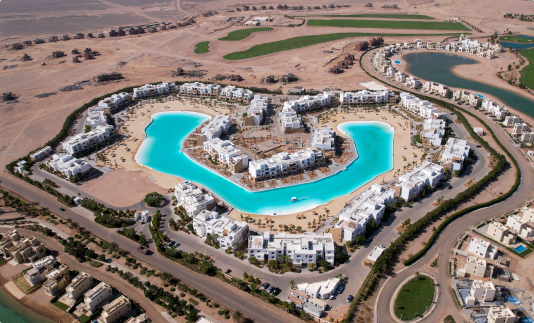
Which projects sit where: More advanced developments, including some Red Sea assets, are better positioned to generate cashflow, while earlier-stage projects such as Jeddah Central remain more dependent on financing and execution, Moody’s said. It also points to restructuring of financing arrangements linked to Neom.

Behind the shift is a wider deficit. The Kingdom raised its projected budget deficit to SAR 245 bn, or 4.9% of GDP, from SAR 165 bn, or 3.3% of GDP. Government spending is forecast at SAR 1.435 tn, against revenue of SAR 1.2 tn. Moody’s has cut its oil production forecast to 7.7 mn bbl / d for 2026 from 8.4 mn, and to 9.9 mn bbl / d for 2027 from 10.3 mn, according to one of the agency’s reports (pdf). The government expects GDP to contract 3.6% this year before expanding 12.8% next, while Moody’s has a 3.3% contraction followed by 8.5% growth.

The buffers behind that are substantial. Liquid government financial assets, net of direct debt owed by the PIF, run to around 18% of GDP, with deposits at Sama above 9%. Alternative export routes and reserves support the credit profile, though prolonged disruption through the Strait of Hormuz or the Red Sea could erode them. Government debt could reach around 40% of GDP by the end of the decade.

The Kingdom is separately targeting 1.5 GW of data center capacity and 1.9 GW of AI computing capacity by 2030, and Humain and stc have signed an MoU for a joint venture of up to 1 GW. Moody’s says the credit implications depend on capital requirements, funding sources and whether the capacity generates revenue.

3

DEBT WATCH

Saudi Arabia leads Gulf private credit demand in a small but fast-expanding market

Saudi Arabia is the Gulf’s largest source of private credit demand, in a regional market Moody’s puts at around USD 6 bn against roughly USD 1.8 tn globally. Regional sovereign wealth funds hold around USD 5 tn in assets, which the agency sees as the room for expansion as companies look past bank lending, according to its private credit report (pdf). “GCC private credit remains small, but is entering a period of rapid expansion,” said Annabel Schaafsma, managing director for global financial institutions. It can complement bank lending and institutional financing on both large transactions and smaller businesses needing more flexible structures, she said, adding that credit discipline will matter more than headline growth.

Moody’s puts SMEs at around 9% of Saudi bank lending, against a national target of 20%. Banks are getting choosier after several years of strong lending, with loan-to-deposit ratios reaching around 110% before moderating this year, which has eased some funding pressure. The agency has seen no material hit to asset quality from the conflict or project reprioritization so far, and its central scenario assumes trade flows return to pre-conflict levels by the end of 1Q27.

The listed debt market remains thin. Corporate bonds and sukuk accounted for 2.4% of total listed debt at the end of 3Q, with corporate borrowers raising around SAR 50.7 bn during 2025. Assets under management reached around SAR 1.2 tn, up 18% y-o-y.

Securitization is the newer channel. Moody’s presented a SAR 431 mn residential mortgage portfolio, with senior sukuk expected to total around SAR 400 mn subject to market conditions, a weighted-average loan-to-value ratio of 57.8% and a weighted-average age of 5.8 years. Pier Paolo Vaschetti, VP ratings, called the transaction “a milestone for the institutional market in the Kingdom.” Further deals could broaden the investor base and give lenders liquidity, though Moody’s says sustainable growth needs transparent disclosure, clear risk allocation and strong regulatory protections.

4

ENERGY

Rabigh 2 expansion moves to full construction under USD 2.2 bn contract

Acwa Power and Saudi Energy awarded a USD 2.2 bn contract to build the 2.3 GW Rabigh 2 expansion on the Red Sea coast, with the gas-fired plant due to begin commercial operation in May 2029. The engineering, procurement, and construction contract went to a joint venture between Egyptian company Elsewedy Electric’s power systems arm and PowerChina’s Sinohydro, according to a press release (pdf).

The JV is delivering the plant turnkey for Al Mourjan Two for Electricity, the project company of which Acwa and Saudi Energy (formerly Saudi Electricity Co.) each hold 40%. That covers everything from design to commissioning and testing, plus the civil works and the grid connection. The gas-fired combined-cycle plant will run on six Siemens gas turbines and two steam turbines, and it’s built to take a carbon capture unit later.

Already under way: Work is more than 39% complete. The JV has been on site under a limited notice to proceed, Elsewedy says, and the signing marks the start of full-scale construction. Commercial operations are slated for May 2029, and Saudi Energy expects the plant to show up in its numbers from 2Q 2029.

The money is in place: Acwa and Saudi Energy locked in their buyer first, signing a SAR 11.5 bn power purchase agreement with the Saudi Power Procurement Company in April. That agreement covers 31 years from the plant’s commercial operation date, according to Acwa’s disclosure to Tadawul. The project company then reached financial close on 1 October, with SAR 9.69 bn (USD 2.58 bn) in debt from 14 local, regional, and international lenders, repayable over roughly 34 years, according to a Saudi Energy filing.

Rabigh 2 expands an existing 2.06 GW plant that Acwa’s consortium signed for in 2013, which has sold power under a PPA of up to 20 years since June 2017. Elsewedy knows the neighborhood too: next door, it’s building the 1.2 GW Rabigh 1 expansion for Saudi Energy with Siemens Energy, due to reach full operation next year.

5

SAUDI IN THE NEWS

Riyadh’s allies weigh the risks of Yemen and stepping in

Riyadh’s call for backup is testing Washington’s caution and Islamabad’s balancing act between the Kingdom and Iran. The Houthis’ escalation on Riyadh’s main airport is pressuring Washington to do more for its regional ally, Bloomberg reports. The US already provides intelligence, targeting, and aerial refueling but has resisted direct involvement. US President Donald Trump, however, said over the weekend that he would look into joining Saudi-backed strikes.

Why the hesitation: The timing is awkward for Trump, with the Republicans already facing tough midterms after the Iran war pushed up oil prices and stoked cost-of-living worries in the US. US-backed offensive strikes would also jeopardize the existing ceasefire with the Houthis, with Ameneh Mehvar of ACLED warning that Washington’s involvement could trigger wider attacks on Red Sea shipping and noting that earlier campaigns failed to establish deterrence.

Diplomatic and intelligence resolutions are favored on the US’ table: Saudi Arabia is pressing for more air-defense interceptors, but Young expects US help to stop at intelligence, telling Bloomberg “the Saudis are very much on their own.” Meanwhile, some analysts say a negotiated settlement is likely required to resolve this situation.

Pakistan is pulled in as well to weigh a costly option: Islamabad and Ankara said last week that they are ready to provide military forces under their mutual defense agreement with Riyadh. Pakistan had hoped to avoid the Yemen front amid growing public opposition to entering such a war, including from a large Shia minority that sympathizes with Iran, the Financial Times reports. Its options are limited, however, by a USD 3 bn Saudi loan and a three-year extension on a USD 5 bn Saudi deposit at Pakistan’s central bank that together equal about 38% of its reserves.

6

ALSO ON OUR RADAR

Foreign trade, export development authorities folded into one entity

The Cabinet approved merging the Kingdom’s foreign trade and export development authorities into a single body: the General Authority for Foreign Trade and Export, SPA reports. Officials have 180 days to prepare the merger paperwork and file any regulatory changes needed. Industry and Mineral Resources Minister Prince Abdulaziz bin Salman will chair the new authority’s board, with Commerce Minister Majid Al Kassabi as vice chairman.

Overhauling the wholesale price index

The General Authority for Statistics updated the methodology behind the Wholesale Price Index, rebasing it to 2023 from 2014 and widening coverage from three cities to 23 across all 13 administrative regions, it said in a statement. The goods basket grows to 554 from 343 items, with weights now refreshed annually under a chain-linking approach, and the classification, outlet sample, and price quotes all expanded. The first figures on the updated basis are published today.

Zood launches Élevée

Zood real estate launched a SAR 2.5 bn-plus mixed-use community in Riyadh. Élevée, the eight-tower development in the Al-Nakheel district — three residential towers, two hospitality towers (a hotel and hotel apartments), and three office towers, plus two standalone retail buildings — is designed by Spain’s Elia and built with Jadwa Investment as a strategic partner, the Saudi Gazette reports. It is due for completion by end-2029.

Al Tamimi Energy eyes a Tadawul listing

Al Tamimi Energy Group is lining up a Tadawul listing within two to three years. The Saudi group has been working on the IPO for more than a year, after starting preparations some four years ago, CEO Adel Al Shraim told Asharq Business. It spans about 19 companies, more than half of them industrial, across manufacturing, petrochemicals, power, and water, and has localized nine factories in the Kingdom with more to come.

On the docket: Al Shraim also flagged a new gas-for-power supply agreement in the works, a quantum-computing tie-up with France’s Pasqal, and talks on projects in Syria.

7

PLANET FINANCE

IMF flags AI leverage, bond yields, and cyber attacks as threats to market calm

Strong earnings and heavy AI spending have kept markets buoyant, but the IMF says the calm could break. Three shocks — an AI-driven correction, a spike in bond yields, or a cyberattack — could sharply tighten global financial conditions, the fund warns in its Global Financial Stability Report (pdf). Inflation from the Middle East energy shock has already pushed 14 of 33 major central banks to raise rates since 2Q, up from two in 1Q, though the moves were modest.

AI is the fund’s primary concern, and leverage is what makes it dangerous. Hyperscalers now account for 10% of global investment-grade bond issuance, up from less than 1% in 2024. The share of single stocks in leveraged ETFs has risen to 28% from 16% since 2024. Fourteen circular deals have channeled around USD 300 bn of equity and USD 650 bn of debt into weaker AI firms in exchange for USD 1.4 tn in future revenue commitments. If a firm on the receiving end runs into trouble, both sides are exposed at once — a bind the fund calls “wrong-way risk.” Advanced Asian equity markets are the most sensitive to global AI returns, while Europe, the UK, and most emerging markets look better insulated. That insulation is only partial, however, as many have loaded up on US equities since 2022, mainly hyperscalers and other AI names.

Bond yields are climbing on both higher expected rates and fatter term premiums, with the surge in AI-related debt issuance blamed for crowding out government paper. Hedge funds have partly unwound their sovereign bond basis trades without setting off market turmoil, though enough leverage remains for a messy exit. Liquidity is holding up in the US, Europe and the UK, and continues to thin in Japan.

Cyber is the third threat, and AI is on both sides of it. Advanced models can run simulated network attacks, and they are also a key line of defense. In more than 70% of cases in 2026, vendors had almost no time to issue fixes before flaws were exploited, up 20 percentage points on a year earlier. The IMF wants regulators to put the continuity of critical services first, alongside incident reporting and oversight of providers.

Pension funds and insurers are among the financial system’s softer points. Their illiquid holdings have nearly doubled as a share of their portfolios over the past decade, even as the two groups hold over a quarter of corporate bonds in the US and Europe. Private credit is another spot where the fund sees the system thinning, with direct lending growing to nearly USD 2 tn as borrowers take on more debt. Of 10 large business development companies, four, with around USD 90 bn in assets, have lending commitments that run past their liquidity buffers.

Emerging markets are drawing down their foreign exchange reserves, which have fallen most sharply among lower-rated sovereigns. Risk premiums have slid back to low levels, while frontier economies have expanded their access to international markets. The fund sees that mix as a warning sign: Tight risk premiums alongside 10-year US Treasury yields above 4.5% was last seen in 2007. Opaque funding tools such as sovereign total return swaps could also set off margin calls when markets come under stress.

The IMF’s prescription is to build resilience while there’s still room to. It wants limits on margin lending, leveraged ETFs and short-dated options, capital charges on AI-related exposures, credible plans to shrink budget deficits, and wider central clearing of bonds and repos. Regulators should finish putting Basel III in place and keep watch on the ties between banks and non-banks. Emerging markets, meanwhile, need to rebuild their buffers and disclose hidden borrowing.

MARKETS THIS MORNING-

Asian markets were in the red earlier today. Japan’s Nikkei was down 3.9% and South Korea’s Kospi was down around 7%. The performance tracked overnight losses across Wall Street.

TASI

10,138

-1.7% (YTD: -3.4%)

MSCI Tadawul 30

1,366

-1.6% (YTD: -1.5%)

NomuC

21,832

-0.9% (YTD: -6.3%)

USD : SAR (SAMA)

USD 3.75 Sell

USD 3.75 Buy

Interest rates

4.25% repo

3.75% reverse repo

EGX30

51,493

+0.4% (YTD: +23.1%)

ADX

9,833

+0.4% (YTD: -1.6%)

DFM

5,892

+0.6% (YTD: -2.6%)

S&P 500

7,719

-1.1% (YTD: +12.8%)

FTSE 100

10,725

+0.7% (YTD: +8.0%)

Euro Stoxx 50

6,190

+0.4% (YTD: +6.8%)

Brent crude

USD 105.79

-0.3%

Natural gas (Nymex)

USD 3.29

+2.9%

Gold

USD 4,134

+0.6%

BTC

USD 81,563

-1.9% (YTD: -6.9%)

Sukuk/bond market index

886.16

-2% (YTD: -3.6%)

S&P MENA bond & sukuk

147.35

-2.4% (YTD: -3%)

VIX (Fear gauge)

16.87

+10.5% (YTD: +12.8%)

THE CLOSING BELL: TADAWUL-

The TASI fell 1.7% yesterday on turnover of SAR 3.9 bn. The index is down 3.4% YTD.

In the green: Watani Iron Steel (+10%), Saudi Enaya Cooperative Ins. (+1.9%), and Sedco Capital REIT Fund (+1.7%).

In the red: Seera Group Holding (-7%), Development Works Food (-6.8%), and SAL Saudi Logistics Services (-6.6%).

THE CLOSING BELL: NOMU-

The NomuC fell 0.9% yesterday on turnover of SAR 19.6 mn. The index is down 6.3% YTD.

In the green: Molan Steel (+13.9%), Saudi Top for Trading (+11.1%), and Almuneef Company for Trade, Industry, Agriculture and Contracting (+9.7%).

In the red: Almujtama Alraida Medical (-18.2%), Alfakhera for Mens Tailoring (-7.7%), and

Lana Medical (-7.2%).


14-17 October 2027 (Thursday-Sunday): Red Sea Yacht Show, Jeddah Yacht Club, Jeddah.

21 October - 30 December (Wednesday-Wednesday): Riyadh Season, Riyadh.

25-26 October (Sunday-Monday): The Global Proptech Summit, Mandarin Oriental Al Faisaliah Hotel, Riyadh.

26-28 October (Monday-Wednesday): ACHEMA Middle East, Riyadh International Convention & Exhibition Center.

26-29 October (Monday-Thursday): The Future Investment Initiative, King Abdulaziz International Conference Center, Riyadh.

28-29 October (Wednesday-Thursday): Procurement and Supply Chain Futures Forum, Mandarin Oriental Al Faisaliah Hotel, Riyadh.

28-29 October (Wednesday-Thursday): Real Estate Supply Chain Forum, Mandarin Oriental Al Faisaliah Hotel, Riyadh.

30 October-1 November (Friday-Sunday): The New Global Sport Conference, Sofitel Hotel & Convention Centre, Riyadh.

NOVEMBER

11-12 November (Wednesday-Thursday): Aluminum Arabia, The Arena, Riyadh.

16-19 November (Monday-Thursday): Cityscape Global, Riyadh Exhibition and Convention Centre (Malham), Riyadh.

29 November-1 December (Sunday-Tuesday): The UN Trade and Development Global Supply Chain Forum, Riyadh.

29 November-1 December (Sunday-Tuesday): The Global Logistics Forum, King Abdulaziz International Convention Centre, Riyadh.

Signposted to happen sometime in 2026:

2027

JANUARY

12-14 January (Tuesday-Thursday): The Future Minerals Forum (FMF), Riyadh.

FEBRUARY

1-3 February (Monday-Wednesday): Energy Regulators Regional Association annual conference, Riyadh.

MARCH

21-25 March (Sunday-Thursday):The World Water Forum, Riyadh.

22–24 March (Monday-Wednesday): Capital Markets Forum, Four Seasons Hotel, Riyadh

APRIL

26-29 April (Monday-Thursday): World Energy Congress, Riyadh.

JUNE

1-3 June (Tuesday-Thursday): The Saudi Entertainment and Amusement Expo, Riyadh Front Exhibition and Conference Center.

Signposted to happen sometime in 2027:

  • The Ocean Race finishes in Amaala on the Red Sea;
  • Riyadh-Kudmi transmission line to be completed;
  • Aero Middle East and Sand & Fun takes place in Thumamah Airport, Riyadh.

Signposted to happen sometime in 2Q 2027:

  • The Hail Region Water Networks Project is expected to be completed.
Now Playing
Now Playing
00:00
00:00