Get EnterpriseAM daily

Available in your choice of English or Arabic

World Bank approves USD 1 bn in concessional financing

1

WHAT WE’RE TRACKING TODAY

Settle the tab, fill the tank

Good morning, wonderful people. We’re back from the extended holiday with an issue packed with positive headlines. The World Bank just signed off on USD 1 bn in concessional financing under the second phase of its Growth program, tied to structural reforms.

We have welcome news for our wallets — inflation has cooled. April’s urban print shows the first decline in three months.

ALSO- We have a tax package heading to the House that kills the EGX capital gains tax, USD 19 bn in commitments from the oil and gas majors, and commodities trader Trafigura sinking investments into the Naga Hammadi smelter.

We haven’t had a morning this dense with good news in some time. Let’s dive right in.

***

Got a few minutes to spare? We’d love to hear from you. Morning Drive has been up and running for about seven months, and we think it’s time for a quick check-in. We’ve put together a few questions that will help guide us as we grow to become a vital part of your morning routine. So, whether you’re a longtime listener, you’ve only just heard us, or you’re somewhere in between, please spare a few minutes to fill out this survey. AND — here’s today’s episode.***

Debt down, rigs up

Global energy giants have pledged to pour USD 19 bn into our petroleum sector over the next three years, according to a statement from Prime Minister Mostafa Madbouly. This fresh wave of FDI will be deployed across new exploration, drilling, and production programs, giving a much-needed jolt to our domestic energy supplies.

This influx of FDI arrives after the government slashed arrears owed to foreign energy firms from USD 6.1 bn to just USD 714 mn, with a strict mandate to clear the rest by June 2026 — this new wave indicates the strategy is working.

Who is writing the checks? Italy’s Eni is leading the pack with a USD 8 bn commitment, followed by British Petroleum (USD 5 bn), the US’ Apache (USD 4 bn), and the UAE’s Archios (USD 2 bn).

Keeping it fresh

US agribusiness firm Blumberg Grain is narrowing down the site for its USD 500 mn regional food security hub, with a final decision between East Port Said and Abu Qir expected by June, Al Arabiya reports, citing unnamed sources. The facility is designed to serve as the company’s central operational launchpad for the Middle East and East Africa, featuring cold-chain terminals, agricultural greenhouses, and specialized storage.

IN CONTEXT- Since late 2025, the gov’t has been working to transform East Port Said port into a large grain storage and distribution center to secure domestic food supply and tap into wider regional markets. Plans also include expanding into food processing and integrating Egypt’s grain networks with Arab and African markets.

ICYMI- The potential investment follows a meeting in December between Blumberg CEO Philip Blumberg and Investment Minister Hassan El Khatib, where the government pitched the firm on managing infrastructure for the state’s New Delta agricultural megaproject under a public-private partnership. Blumberg also met with other state officials to explore parallel cold-storage investments in the pharma sector.

What’s next: A company delegation is expected back in Cairo this June to finalize regulatory groundwork and sign the contracts.

Fixing the neighbour’s gas pipes

Egyptian-Jordanian JV Technical Gas Services (TGS) is stepping in to overhaul the Lebanese segment of the Arab Gas Pipeline, according to a ministry statement. Under the agreement, the Oil Ministry and its Lebanese counterpart will repair around 30 km of 24-inch pipe and upgrade metering stations and power plant connections.

Why it matters: This is the technical follow-through needed to make good on our Decemberagreement to supply Lebanon’s Deir Ammar Power Plant with natural gas. While we started pumping gas to Lebanon and Syria back in January, the aging Lebanese domestic network has slowed down distribution. Deploying TGS to modernize these lines ensures the local infrastructure can handle the flows needed to stabilize the country’s energy supply.

The price of staying connected

The National Telecom Regulatory Authority (NTRA) has approved a 9-15% hike to the price of telecom services after repeated calls from service providers for a price adjustment, according to a statement. There is one caveat — mobile operators must offer new packages to offset the impact on lower-income users, including a minimum home internet package of EGP 150 (down from EGP 210) a month, as well as mobile data starting at EGP 5 (down from EGP 13).

Why it matters:Telecom operators have been lobbying for a price adjustment for months, citing the soaring costs of electricity, fuel (for powering cell towers), and the FX-heavy cost of imported network hardware and microchips. With landline data usage surging 36% over the past year, the NTRA is allowing service providers to recalibrate their margins to fund infrastructure upgrades while ensuring that essential state services remain digitally accessible to all users regardless of their balance.

Your minutes aren’t getting any more expensive. The price hike only applies to select data and service bundles — the regulator confirmed that the price of voice minutes for both landline and mobile will remain unchanged.

Direct-payment subsidies, take two

The government has confirmed the transition to a direct-payment subsidy system will start in FY 2026/27, Prime Minister Moustafa Madbouly said during a press conference last week (watch, runtime: 0:22). The transition will replace the physical distribution of bread and oil with targeted digital transfers. More details on the exact mechanics of the rollout will be revealed soon, according to the statement.

Why it matters: Swapping in-kind commodities to direct payment is the state’s primary strategy for slashing the waste and leakage inherent in the traditional ration card system. The move was initially pushed back by a year following recommendations from the National Dialogue to let inflation cool. The shift aims to make sure support reaches the most vulnerable while shrinking the fiscal burden of the state’s massive supply chain.

Happening today

Macron wraps up visit: French President Emmanuel Macron is expected to depart Egypt today, wrapping up a diplomatic visit highlighted by a meeting with President Abdel Fattah El Sisi. The two heads of state attended the inauguration of Senghor University’s headquarters in New Borg El Arab and held discussions on regional geopolitics.The trip is part of a wider Africa tour that will see Macron visit Kenya and Ethiopia.

PSA-

WEATHER- We’re in for a warm day in Cairo today, with a high of 33°C and a low of 19°C, according to our favorite weather app.

It’s more moderate in Alexandria, with a high of 28°C and a low of 18°C.


Riyadh to Mumbai. Abu Dhabi to Singapore. Dubai to London. Cairo to Shenzhen.

The most important business stories in MENA aren’t happening inside MENA anymore — they’re happening at the edges, where regional capital meets global ambition.

EnterpriseAM MENA+ is our new flagship newsletter, built to cover the flows of capital, people, and ideas across the Middle East — and beyond it. AI, geopolitics, the war for talent, sovereign wealth strategy, the changing energy economy, and the new corridors reshaping global trade.

Tap or click here to get your own copy delivered to your inbox every Monday, Wednesday, and Friday at 12pm UAE | 11am KSA | 11am Egypt.


The big story abroad

Global headlines are abuzz with geopolitical updates from around the world. After reports of US-Iran clashes on Friday, the situation in the Strait of Hormuz appeared to reach relative calm as of yesterday, while Washington awaits Tehran’s response to its latest proposals. A Qatari LNG vessel is attempting to transit the waterway in what sources characterize as Tehran’s bid to build confidence with mediators in Doha and Islamabad.

Meanwhile, the world’s oil inventory is shrinking, with one estimate placing the drop at roughly 4.8 mn bbl / d between March and April. As the global economy is forced to draw increasingly from its security buffers, the risk of more volatile price fluctuations and severe supply shortages rises.

Over in the UK, Prime Minister Keir Starmer declared he plans to stay in office following calls for his removal after the Labor Party’s dire performance in local elections — the worst results by a governing party in decades. Right-wing party Reform UK and Welsh nationalist party Plaid Cymru made notable gains at Labor’s expense in key areas.

Brazil’s IPO dry spell is over: Energy player Compass sold around USD 655 mn in shares in Brazil’s first landmark listing in nearly five years. The ongoing regional conflict, which shot up crude prices, prompted foreign investors to pump funds in the oil exporter, as well as other energy heavyweights.

Another virus outbreak on the brink? World Health Organization officials are working to contain a hantavirus outbreak reported on a cruise ship carrying around 150 passengers. The vessel is due to arrive at Spain’s Tenerife island today.

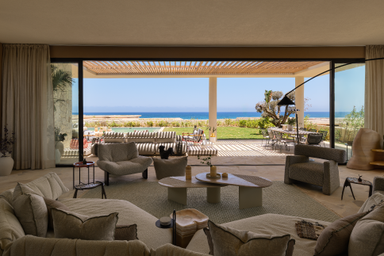
The Anantara x Somabay Strategic Partnership signing ceremony marked a key milestone for Somabay, as Somabay Hotel Company S.A.E officially signed its agreement with Minor Hotels to bring a luxury Anantara-branded resort and residences to the destination.

The ceremony underscored Somabay’s continued growth and long-term vision to position itself as a globally recognized luxury lifestyle hub, aligned with rising demand for experience-led hospitality, branded residences, and wellness-driven travel.

The planned development is set to introduce a luxury resort, branded residences, and Red Sea-inspired wellness experiences, reinforcing Somabay’s role in elevating Egypt’s luxury tourism offering while preserving its natural identity and sustainability vision.

2

The Big Story Today

World Bank doubles down

The World Bank Group approved USD 1 bn in concessional financing for Egypt under the second phase of its Growth program, tied to structural reforms targeting state ownership, debt markets, and private-sector mobilization, it said in a statement (pdf).

The package includes USD 800 mn from the World Bank and a USD 200 mn credit guarantee from the UK government. “Given the uncertainty in the region and the shock facing Egypt like other countries … we agreed with the authorities to increase from USD 500 mn to USD 800 mn,” World Bank Country Director Stephane Guimbert said during a media briefing attended by EnterpriseAM.

How the program works: This is the second tranche of a three-part Development Policy Financing (DPF) program launched with the IMF and the European Union in June 2024. Unlike project financing, DPF disburses directly into the state budget once agreed-upon reforms are enacted. “It’s essentially supporting a set of reforms,” Guimbert said. The reforms tied to this tranche include state-owned enterprise governance, domestic debt market efficiency, fair competition rules, and the automatic enrollment of Takaful and Karama beneficiaries in the Universal Health Ins. System, the statement reads.

Mobilizing private capital: The bank is in talks with the government on mechanisms to draw private investment into desalination, water, and electricity infrastructure — the third and final pillar of the operation, due next year. “We’re thinking with the Planning and Finance ministries how to create a facility that would give confidence to private investors to finance those sectors,” Guimbert said. “Investors will need clearer visibility on the government’s long-term plans and the financial sustainability of utilities to reduce reliance on sovereign guarantees,” he added.

Where growth could come from: Egypt can sustainably grow at around 6% a year over the medium term, up from roughly 4% in recent years — a rate that generated only around 600k jobs annually, Guimbert said. “Growth at 6% or higher could create as many as 2 mn jobs a year,” he argued. The bank sees tourism, agriculture and agribusiness, healthcare, renewable energy, infrastructure, and manufacturing as Egypt's highest-potential sectors, capable of driving exports, improving energy security, easing food-price pressures, and creating jobs outside Cairo.

More funds coming our way: The Asian Infrastructure Investment Bank is expected to provide parallel financing tied to the same reform agenda, the World Bank said.

This publication is proudly sponsored by

3

Economy

Cooler than expected

Annual urban inflation eased 0.3 percentage points to 14.9% y-o-y in April — the first decline in three months and a full point below the 15.9% consensus from 14 analysts polled by Reuters, according to Capmas data. Core inflation fell 0.2 percentage points to 13.8% y-o-y, according to CBE data.

Headline m-o-m inflation decelerated 2.1 percentage points to 1.1%, with food and beverages tipping into disinflation at -0.7%. Core m-o-m slowed more modestly, by 0.1 percentage points to 1.1%.

The mix was uneven. Food and beverages rose 1.1 percentage points to 6.7% y-o-y and housing and utilities jumped 3.2 percentage points to 38.5% on the back of electricity price hikes. Pulling the headline down? Transport (a 10.2 percentage point drop to 29.2%) and health (a 7.7 percentage point decrease to 9.3%).

A step in the right direction? Sure. But we’re still a long way away from meeting our targets, as the central bank's 7% y-o-y (±2 percentage points) inflation target for 4Q 2026 looms ever closer. Zooming out, annual inflation is still at its highest level since May of last year.

Looking ahead, “inflation will remain around current levels in 2Q-3Q 2026, on average, with the CBE year-end inflation target of 5-9% looking increasingly unlikely,” Beltone head of research Ahmed Hafez tells us. “Notwithstanding this, with the currency finding some stability, the ceasefire deal still holding up, and early signs of a potential de-escalation, we are also ruling out further material price pressures,” he adds.

Why it matters: The central bank’s Monetary Policy Committee meets on 21 May, and the calculus has shifted. After putting rates on hold last meeting, a hike is now less likely — and resuming the easing cycle is back in play.

ALSO FROM THE DEPT. OF UNEXPECTEDLY GOOD NEWS- Growth hit 5.0% in 3Q FY 2025/26, 0.2 percentage points above original estimates and despite “the repercussions of the start of the war in March,” Prime Minister Mostafa Madbouly said Wednesday, per a cabinet statement. He cautioned that 4Q may take a harder hit, but said full-year growth “will, God willing, be promising and higher than the previous fiscal year” — which clocked 5.3% y-o-y across the first two quarters.

AND IN NOT SO POSITIVE NEWS- Net foreign assets contracted 22.0% m-o-m in March to USD 21.4 bn, down USD 6.0 bn from February, per CBE data (pdf). That breaks a 21-month appreciation streak that peaked at USD 29.5 bn in January before reversing when the war on Iran was launched in late February. “The decline in foreign assets held by commercial banks was expected post war due to capital outflows,” Genena tells us.

Commercial banks are taking the hit. Their net foreign assets fell USD 5.9 bn (-50.5%) to USD 5.8 bn, while the CBE’s own position barely moved — down USD 108 mn (-0.6%) to USD 15.5 bn.

4

Tax

Stamp of approval pending

The new tax package is en route to the House of Representatives ahead of a planned July rollout, killing the controversial capital gains tax, restructuring VAT for key industries, and taxing white cement for the first time, a government official tells EnterpriseAM.

Goodbye CGT, hello stamp tax. The draft law cancels the capital gains tax and explicitly drops previous tax claims on listed companies for that period to lure heavyweights back to the market. In its place: a tiered stamp tax of 0.05% on market makers and blue-chip stocks, and 0.1% on all other shares.

Newly listed companies also get a three-year corporate income tax incentive — 30% in year one, 20% in year two, 10% in year three — formally cementing a scheme we heard about in March.

Why it matters: The structure is designed to “encourage major companies to list on the exchange and provide an advantage for large stocks to support the Egyptian bourse,” our source tells us. It deepens liquidity in blue-chip names, makes the bourse more stable, and gives big-ticket companies one less reason to stay private.

BACKGROUND- The government has been circling a stamp tax as a cleaner CGT replacement since at least 2024, with the plan gaining detail earlier this year. The 0.1% rate isn't new either — we reported last June the government was looking to land there for both buyers and sellers, down from an earlier 0.125% proposal.

Shaking up the VAT: Detergents move out of the 5% schedule bracket into the standard 14% rate, letting manufacturers deduct input tax against general liabilities — similar to recent adjustments for contracting. State revenues from the item are projected to more than double, from EGP 1 bn to EGP 2.3 bn, our source tells us.

Also on the VAT front: The legislation introduces a direct exemption for transit goods and related services to stimulate the country's broader ambitions of becoming a regional transit trade hub.

AND- White cement is getting taxed for the first time. A flat EGP 35 per ton state development fee now applies across all cement types, ending the carve-out that limited the levy to black cement. Total development fee revenues from the sector are expected to rise to EGP 7.7 bn from EGP 2.9 bn, our source says.

Medical devices catch a break. VAT drops to 5% from 14%, with a full exemption for dialysis and kidney filter inputs and a four-year VAT suspension on machinery and medical equipment. Foreign passenger departure fees will be set at EGP 50-100 across Egypt's airports.

Compliant taxpayers get a clearer lane. The draft codifies the "white list" and the Tamayoz card, building on FinMin’s push to reward compliant taxpayers with faster treatment. Companies can also get a temporary tax card valid for four months to speed up incorporation.

5

A MESSAGE FROM AUC ONSI SAWIRIS SCHOOL OF BUSINESS EXECUTIVE EDUCATION

The missing middle: closing the leadership gap

Many organizations are discovering a gap between strategy and execution: the “missing middle.” Firms often combine strong senior leadership with capable frontline teams, yet lack a well-developed middle layer to translate strategy into execution. As organizations grow, this gap becomes more visible and more costly.

McKinsey research is unambiguous on this point: organizations with top-performing middle managers can achieve between three and 21 times greater total shareholder returns (TSR) than those with weaker management layers. Yet the same research finds that middle managers spend much of their time navigating administrative tasks and organizational bureaucracy, leaving little room for the strategic and people-focused work that drives performance.

Closing this gap requires more than incremental training. It demands deliberate investment in leadership capability at the middle layer. Organizations are increasingly investing in programs that build strategic thinking, business acumen, and people leadership. As this need grows, executive education is evolving to meet it where it matters most: in the middle.

At AUC Onsi Sawiris School of Business Executive Education, programs such as the Senior Executive Diploma, Management Acceleration Program, Executive Leadership Program, and Advanced Management Program are designed to help managers strengthen decision-making and connect strategy with execution, turning the missing middle into an organization's most reliable layer.

The strength of an organization is not defined at the top or the front lines, but in the layer that connects them.

6

IPO WATCH

NRPM setting sail on the EGX?

Qalaa Holdings logistics subsidiary National River Ports Management (NRPM) is reportedly preparing to list a 30-40% stake on the EGX, Al Arabiya reports, citing unnamed sources. The company plans to submit its listing paperwork within the next few weeks, targeting a public offering in June or July, depending on market conditions. The move values the company’s capital at an initial EGP 1 bn.

About the IPO hopeful: NRPM is a heavy hitter in our local logistics and river transport sector, operating the Tanash River Port in Giza and developing the Tebbin Port in Alexandria. The company provides specialized warehousing and handling solutions for bulk commodities like coal, grain, cement, and phosphate — handling 1.1 mn tons of coal and petcoke last year.

The bigger picture: This IPO is just the start of Qalaa’s plan to unlock value and shrink its debt pile — the board signed off on an ambitious plan last year to float up to five of its subsidiaries on the EGX over the next two years, including Dina Farms for Food Industries, ASEC for Automation, and two undisclosed companies.

Qalaa’s plan is setting sail just as the Nile gets a much-needed digital upgrade. The Cabinet just signed off on a contract with Austrian tech firm Frequentis to deploy a real-time River Information System across the waterway. By wiring vessels with advanced tracking and electronic charts, the new tech will allow commercial barges to navigate safely 24/7 — laying the infrastructure needed for the state to actually hit its target of increasing the river’s share of national freight to 10% by 2038.

ADVISORS- Zilla Capital has been tapped to manage the offering, while Baker Tilly is acting as an independent financial advisor.

IN OTHER IPO NEWS

Al Ahly Sabbour is hitting the brakes on its planned EGX debut until the regional conflict subsides, Zawya writes, citing comments by Chairman and Managing Director Ahmed Sabbour. The real estate developer was gearing up to float a 20-25% stake, but Sabbour confirmed the IPO is now on hold to shield the transaction from market volatility.

BACKGROUND- A public listing has been in the pipeline since 2017 and the developer — whose ownership is split between the Sabbour family (60%) and the National Bank of Egypt (40%) — said last year it was in the final stages of selecting an IPO advisor by June 2025.

Sabbour noted, however, domestic sales remain fully insulated despite the IPO freeze, although rising construction costs are expected to drive up local property prices by 15-20% this year.

7

M&A WATCH

A trader builds a smelter

Trafigura goes upstream: Commodities trading giant Trafigura has signed a term sheet to take a minority stake in a new project company alongside the Metallurgical Industries Holding Company (MIH) and Egyptalum, according to statements here and here (pdf) released last week. The expansion will carry an investment ticket of USD 750-900 mn and involves doubling the Naga Hammadi complex’s capacity to 600k tonnes per year by adding a 300k tpa primary smelter plus a 150k tpa anode plant.

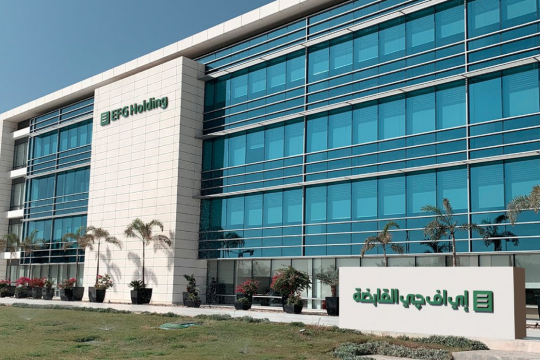
Trafigura is coming in as minority equity holder, debt provider, long-term offtake partner, and the supplier of alumina feedstock, according to EFG’s statement.

Why is this important? Egypt has no functioning alumina refineries and currently imports the raw material to feed the Naga Hammadi smelter, which has historically left Egyptalum exposed to global alumina pricing and shipping cycles.

REMEMBER- Back in September, MIH and Egyptalum signed a non-binding MoU with Aluminium Bahrain (Alba) to study a USD 3 bn alumina refinery with a target capacity of around 2 mn tpa.

And why now? The International Aluminium Institute projects demand will grow 40% by 2030, with transportation alone adding 11.8 mn tonnes of new demand and electric vehicles accounting for some 63% of that growth. Supply isn’t keeping pace — global inventories are at multi-year lows, and new primary capacity remains limited by high capital costs, energy constraints, and environmental permitting. That’s the backdrop against which Trafigura is willing to lock in feedstock and offtake on a 25-year project.

ADVISORS- EFG Hermes is sole financial advisor, working on both the equity and the debt raise.

Tags:

8

Also on our Radar

Valu gets FRA nod to enter SME lending

Valu has secured approval from the Financial Regulatory Authority to establish a dedicated SME financing arm, marking its entry into the B2B lending space and opening a new funding channel for small and medium-sized businesses, it said in a statement (pdf). Valu says it plans to use proprietary underwriting algorithms and data analytics to assess SME financing applications.

SOUND SMART- Algorithmic underwriting uses data models and automated analytics to assess a borrower’s creditworthiness and price risk faster than traditional manual lending processes. In Valu’s case, that likely means using merchant transaction and repayment data collected through its consumer finance business to evaluate SME financing applications.

Why it matters: SMEs continue to face limited access to formal credit, constraining growth and operations. Valu is looking to plug that gap by deploying its consumer finance tech stack — including proprietary underwriting algorithms — into business lending as it positions itself as a broader financial services platform.

FRA greenlights three non-banking financial activity licenses

The Financial Regulatory Authority (FRA) has approved three new licenses for local companies to operate across the non-banking financial sector, according to a statement.

Meet the companies: Fawry Healthcare-TreMed is the standout, snagging the market’s first-ever specialized license to operate as a third-party healthcare administrator (TPA). The authority also licensed Misr Reins. Brokerage to begin operations and gave Horizon Securities and Bonds Trading the regulatory nod to receive subscriptions for investment fund certificates.

Uh, Enterprise… What's a TPA? TPAs act as the operational middleman between patients, healthcare providers, and ins. companies — managing processing claims, provider networks, and ins. paperwork.

Belarusian tractors, made in Egypt?

Gaining tract-ion: Belarus and Egypt have signed a cooperation protocol to expand joint production of tractors and heavy equipment, according to an Industry Ministry statement. The move will give Belarus access to the African and Arab markets and Egypt's freetrade agreements via the Arab Organization for Industrialization.

The two are also eyeing a joint pharma manufacturing zone, in line with Egypt's goal of becoming a producer in global supply chains, not just a consumer.

9

PLANET FINANCE

Hybrid bond rush

Companies are selling hybrid bonds at a record pace this year, with Bloomberg data showing that firms have sold USD 65 bn worth of the debt instrument YTD, continuing on from a wave of issuances that followed a move from Moody’s to raise the equity credit in hybrid bonds back in 2024.

Why hybrid bonds, and why now? Hybrid bonds allow issuers to strengthen their balance sheet given that their debt-equity mix doesn’t only add leverage like traditional bonds. For buyers, the subordinated debt comes with a higher coupon in comparison to senior notes. Right now, that additional cost is near record lows, with spreads reaching an all-time low of 58 bps in March.

There’s also “massive demand” for the instrument from investors willing to take on extra risk, analysts said. Orders in Europe are currently surpassing issuance sizes by 4.5x.

Europe is the primary issuance hub for the moment, with the likes of Carlsberg issuing hybrid notes to shore up its balance sheet after an acquisition play. The Gulf is also starting to warm up to the concept, with Abu Dhabi developer Aldar Properties raising not one, but two hybrid issuances this year.

A wider debt rush is happening over in Asia as well, with hopes of an end to the war also triggering record lows in credit spreads and leading issuers to race to secure cheap financing, Bloomberg reported elsewhere. Westpac Banking issued a USD 4 bn offering, while HSBC is also preparing a USD-denominated issuance.

Credit spreads tightened by 13 bps in 1Q in Asia, outperforming global averages of 5 bps, Bloomberg data showed. The findings indicate a vote of confidence in the fundamentals of the energy import-reliant region, amid reports of a possible ceasefire.

The outlook: For hybrid notes, the more selective, the better, one analyst says, pointing to issuances with shorter waiting periods before the first call. For now, the flurry of activity in Europe is particularly precarious, given its exposure to energy distribution linked to the war.

EGX30

53,605

+2.0% (YTD: +28.2%)

USD (CBE)

Buy 52.63

Sell 52.77

USD (CIB)

Buy 52.60

Sell 52.70

Interest rates (CBE)

19.00% deposit

20.00% lending

Tadawul

11,031

+0.8% (YTD: +5.2%)

ADX

9,840

-0.4% (YTD: -1.6%)

DFM

5,902

-0.5% (YTD: -2.4%)

S&P 500

7,399

+0.8% (YTD: +8.1%)

FTSE 100

10,233

-0.4% (YTD: +3.0%)

Euro Stoxx 50

5,912

-1.0% (YTD: +2.0%)

Brent crude

USD 101.29

+1.2%

Natural gas (Nymex)

USD 2.76

-0.4%

Gold

USD 4,529

-0.1%

BTC

USD 80,819

+0.7% (YTD: -7.8%)

S&P Egypt Sovereign Bond Index

1,050

+0.1% (YTD: +5.8%)

S&P MENA bond & sukuk

151.88

-0.1% (YTD: 0.0%)

VIX (Volatility Index

17.19

+0.6% (YTD: +15.0%)

THE CLOSING BELL-

The EGX30 rose 2.0% at Wednesday’s close on turnover of EGP 13.8 bn (84.8% above the 90-day average). International investors were the sole net buyers. The index is up 28.2% YTD.

In the green: Orascom Development (+10.1%), Orascom Construction (+6.2%), and E-finance (+5.7%).

In the red: Qalaa Holdings (-6.2%), AMOC (-4.0%), and Egypt Aluminum (-2.0%).


2026

MAY

21 May (Thursday): Monetary Policy Committee’s third meeting of 2026.

27-29 May (Wednesday-Friday): Eid El Adha (TBC).

JUNE

15 June (Monday): Seventh review of the IMF’s Extended Fund Facility.

30 June (Tuesday): National holiday in observance of the June 30 Revolution (TBC).

JULY

9 July (Thursday): Monetary Policy Committee’s fourth meeting of 2026.

23 July (Thursday): National holiday in observance of Revolution Day (TBC).

AUGUST

20 August (Thursday): Monetary Policy Committee’s fifth meeting of 2026.

26 August (Wednesday): National holiday in observance of Prophet Muhammad’s birthday (TBC).

SEPTEMBER

15 September (Tuesday): IMF to hold its eighth review of Egypt’s USD 8 bn EFF arrangement.

24 September (Thursday): Monetary Policy Committee’s sixth meeting of 2026.

27-29 September (Sunday-Tuesday): Global Conference on Population, Health, and Human Development.

OCTOBER

6 October (Tuesday): Armed Forces Day.

29 October (Thursday): Monetary Policy Committee’s seventh meeting of 2026.

DECEMBER

17 December (Thursday): Monetary Policy Committee’s eighth meeting of 2026.

EVENTS WITH NO SET DATE

Early 2026: Passenger operations on the New Administrative Capital-Nasr City monorail scheduled to begin.

1Q 2026: Trial operations for the Ain Sokhna-Sixth of October section of Egypt’s first high-speed rail line scheduled to begin.

May 2026: End of extension for developers on 15% interest rates for land installment payments.

July 2026: British Prime Minister Keir Starmer set to visit Egypt.

2H 2026: Operations at Deli Glass Co’s new USD 70 mn glassware factory kick off.

2026: The Egyptian-American Economic Forum.

2027

20 January-7 February: Egypt to host the African Games.

April 2027: Tenth of Ramadan dry port and logistics hub to begin operations.

EVENTS WITH NO SET DATE

2027: Egypt to host EBRD’s annual meetings.

2027: Egypt-EU Summit 2027.

End of 2027: Trial operations at the Dabaa nuclear power plant expected to take place.

September 2028: First unit of the Dabaa nuclear power plant begins operations.

Now Playing
Now Playing
00:00
00:00