Get EnterpriseAM daily

Available in your choice of English or Arabic

What does next year’s budget have in store for us?

1

WHAT WE’RE TRACKING TODAY

Which state-owned oil assets could we soon see hit the EGX?

Good morning, wonderful people, and happy THURSDAY to you all. We’ve got another week in the books (all of us now have 69.3% of the year left to hit our budgets…), and with it, we’re closing on a busy note.

UP FIRST- GPC, Enppi, and Petrojet are just three of the big oil and oil-related assets that the state IPO committee thinks could make credible offerings on the EGX, a senior government official tells EnterpriseAM. GPC — the state’s primary exploration and production arm — could be first in line, potentially followed by Enppi (sound familiar?), Petrojet, Petromaint, and the Egyptian Drilling Company. As many as 10 petro-related companies could be in line.

What they’re doing now: The committee is reviewing each company on a case-by-case basis to resolve law-related hurdles and bottlenecks, including updating decades-old articles of association and securing general assembly approvals.

IN CONTEXT- This push is part of a race to meet the government’s target of “listing” 30 state companies by the end of June. The state has already moved forward with the temporary listing of 12 public business sector firms — including El Nasr Housing and the National Company for Asset Management — giving them a six-month window to finalize their paperwork before any potential transaction.

From The Dept. of Caveats: While preliminary “listings” on the EGX could be in the cards as early as summer, that’s an administrative step. There’s no way the market, in its current state, has the liquidity to support a sudden influx of big names. Instead, look for investment bankers to bring a series of offerings to market, one by one, to broaden and deepen the pool of potential investors. Listings could also presage stake sales to strategics.

A particularly welcome investment

Kuwaiti franchise giant Alshaya Group opened its first global talent center in Cairo to manage its tech and customer service operations across MENA, according to a press release (pdf). The facility will serve as a central hub for IT solutions, digital marketing, and multilingual customer service, covering MENA, Turkey, Central and Eastern Europe, Greece, and Cyprus, it said.

The Communications and IT Ministry has been pushing hard to turn Egypt into a global destination for what the industry now calls “global capabilities centers” — what we called “outsourcing” a generation ago. Last year alone, Egyptians doing digital, back-office, and customer service work for the rest of the world brought a staggering USD 7.4 bn into the country, of which USD 4.8 bn came from outsourcing services.

Why it matters: We’re not sure we see the outsourcing sector growing as fast as the good people at ITIDA do (AI will challenge its prospects worldwide), but two thoughts there. First, these are real, meaningful jobs — and many of them will survive whatever happens with AI. And perhaps more significantly in this case: Alshaya is investing more in Egypt, just two years after it had to close stores and brands as it grappled with the FX crisis of the day.

***

WISH THIS MORNING’S ISSUE was a podcast? We’ve got you. Tap or click here to listen to Morning Drive, a 10-minute version of today’s issue crafted for you to enjoy with your morning coffee, while getting the kids ready for school, or while stomping around the house wondering where the [redacted] you left your [redacted] reading glasses.***

Changing the rules for margin trading

The Central Bank of Egypt has tightened the rules on margin trading, according to a circular (pdf) published last night. The biggest changes include setting stricter ceilings on how margin-trading is financed, restricting financing to local currency borrowing for EGP-denominated securities, and introducing a 10% cap on how much of a client’s portfolio can come from securities outside the EGX100. Brokerages will also have to report clients’ margin borrowing to iScore.

The main takeaway: The central bank wants to protect local lenders — the move ensures that if the already-volatile market takes a hit, banks will stay in the clear, protected by these new regulations. The Financial Regulatory Authority has steadily made margin trading easier by loosening regulations over the past decade, but adoption has been relatively shallow — a few years back, a small minority of investors traded on the margin. The CBE has in the past explored ways of backstopping brokerages ; the new regulations fit its wider pattern tightening regulations to make sure nothing happening outside of banks might impact the stability of the banking system.

Looking ahead: Local lenders have six months to comply with the updated regulations. We’ll be watching to see if the concentration rules could see liquidity shift to blue-chip names.

Data point

EGP 4 tn — that’s how much we transferred via our mobile wallets last year, as the country’s digital payment ecosystem matures, according to CBE data (pdf). By the end of the year, the total number of registered mobile wallets in the country reached 60 mn, nearly 4x higher than the 15.2 mn recorded in 2019. The data does not specify the ratio of active users to dormant accounts.

Youth driving adoption: The surge in adoption is largely driven by younger users. Some 19 mn wallet holders are aged 15-35, compared with 17 mn users aged 36 and above. Meanwhile, prepaid cards continue to dominate the physical payment space, accounting for 50.5% of all issued cards in the country.

PSA-

You’re losing an hour of sleep tonight: We’ll be moving our clocks 60 minutes forward at midnight as we welcome daylight saving time this Friday, the cabinet said in a statement.

BUT ON THE BRIGHT SIDE- We have a long weekend to look forward to after Prime Minister Mostafa Madbouly announced Thursday, 7 May, as an official holiday for the public and private sectors in observance of Labor Day, which falls on Friday, 1 May. We will be on the lookout for similar statements from the central bank and the EGX.


WEATHER- It is a little warmer in Cairo today, but just a temporary break from an otherwise perfect spring week, with a high of 30°C and a low of 18°C, according to our favorite weather app.

It’s single degree cooler in Alexandria, with a high of 29°C and a low of 17°C.

It will stay warm over the weekend before returning to spring conditions. Expect the mercury to remain at a high of 30-32°C in the capital and 27-28°C for our friends on the Mediterranean.


Meet EnterpriseAM MENA+, our new flagship newsletter covering the flows of capital, people, and ideas across the Middle East — and beyond it.

MENA+ covers AI and tech — and geopolitics, the war for talent, which BSD is on top (and who's gunning for them), the changing energy economy, new corridors to India and China, and much, much more.

What’s with the “+” in MENA+? We think one of the most powerful stories in the region is the *export* of ideas and capital not just to neighboring regions (Asia, the Stans) but to international financial centers. MENA countries are jockeying for position in the new global economy now taking shape, and we're going to shape that conversation.

Tap or click here to get your own copy delivered to your inbox every Monday, Wednesday, and Friday at 12pm UAE | 11am KSA | 10am Egypt.


The big story abroad

US forces have attacked at least three Iranian-flagged tankers in Asian waters, signaling that Washington’s naval blockade is active despite its ongoing ceasefire with Tehran. Partly laden with crude, the vessels were rerouted from their locations off the coasts of India, Sri Lanka, and Malaysia.

Meanwhile, in the Strait of Hormuz, traffic halted after Tehran attacked three ships, escorting two of them into Iranian waters. The attacks do not constitute violations of the truce, since the vessels were not flying US or Israeli flags, White House Press Secretary Karoline Leavitt said.

Oil jumped in early trading amid maritime turmoil, with Brent crude rising above the USD 100 per barrel mark, reaching USD 101.91 per barrel — up 3.5% from Tuesday’s closing price.

With Hormuz still mired in conflict, Panama Canal transit charges have hit record highs as Asian buyers scramble for oil and gas amid the regional conflict. Daily auction bids have surged fivefold.

AND IN BUSINESS NEWS- Tesla’s 1Q results offered a mixed bag, with income topping analysts’ forecasts, despite revenues falling short of expectations.

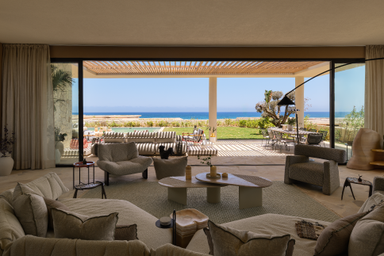
From 7–9 May, the Somabay Endurance Festival returns to the Red Sea for Egypt’s leading multi-sport challenge, where swimming, cycling, and running meet one of the region’s most iconic coastal destinations.

This year also introduces a new racing venue and enhanced endurance course experience, elevating the competition and athlete journey even further.

In partnership with The TriFactory, Somabay continues to lead the way in sports tourism, active lifestyle experiences, and world-class events. Register here.

2

The Big Story Today

Gov’t targets fiscal balance in EGP 5.1 tn FY 2026/27 budget

Finance Minister Ahmed Kouchouk presented the FY 2026/27 budget to the House of the Representatives yesterday, targeting EGP 4 tn in total revenue — up 29% y-o-y — and EGP 5.1 tn in expenditures, up almost 11%, and aligning with targets previously reported by EnterpriseAM. An overall deficit of 4.9%, down from 6.1%, is projected at the end of the current fiscal year.

“The government is addressing current and potential risks by increasing the size and share of general reserves,” Kouchouk told the House while delivering the financial statement. To hedge against volatility, contingency reserves have been nearly doubled to EGP 262.9 bn, representing 4.6% of total spending.

Significant portions are ring-fenced to cover emergency volatility, with EGP 73.6 bn earmarked for potential increases in wages and EGP 65.2 bn for energy costs. Central to the state’s de-risking strategy is a push to bring the debt-to-GDP ratio down by 3-4% to 78% by June 2027, while trimming external debt by USD 2 bn annually.

The wage bill is set to rise 21% to EGP 821 bn to support an EGP 8k minimum wage. Total subsidy and social protection allocations stand at EGP 832.3 bn.

On a wider level

The broader FY 2026/27 economic plan, also presented to the house yesterday, expects a 5.2% growth while adding an extra 0.2% under a “cautiously optimistic scenario.” Four key sectors — agriculture, industry, wholesale/retail trade, and construction — are slated to contribute approximately 62% of this expansion.

“There are [prospects] for the Egyptian economy in manufacturing and exports,” Planning Minister Ahmed Rostom told the House, saying the economy has shown resilience after “five consecutive shocks” in recent years.

The private sector is expected to contribute EGP 2.2 tn of EGP 3.7 tn penciled in for investments in the upcoming fiscal year. This amounts to 59% of the total investments, and less than that 63% projected in the current budget.

This publication is proudly sponsored by

3

Investment Watch

The Sawiris playbook heads to Morocco

A consortium led by b’naire Samih Sawiris is investing EUR 200 mn (c. USD 215 mn) to kick off the first phase of rebuilding the long-stalled Mogador resort in Morocco, a source with knowledge of the project tells EnterpriseAM. The second phase is expected to cost between EUR 100-150 mn, the source added. Phase 1 will see the development of 800 rooms across three hotels and a club, our source tells us.

The players: The consortium consists of Sawiris’ SOSTNT, his Luxembourg-based investment company, we were told back in 2023. The three other investors are Emirati investment company Al Nowais, Egyptian hotel chain Sunrise Resorts & Cruises, and Orascom Construction JV Besix.

Why it matters: Morocco is preparing to host the 2030 World Cup and needs every room it can build to hit its target of 26 mn tourists annually by the time stadiums are full. “Essaouira's proximity to Marrakech and Agadir positions it as a natural extension of Morocco’s key tourism corridors [with the developments directly supporting] the country's ability to absorb increased visitor volumes,” our source tells us.

IN CONTEXT- The original Mogador resort project dates back to 2004, but eventually went bankrupt and stalled. The Sawiris-led consortium took over in 2023 to revive the resort with an investment ticket of MAD 4 bn (c. USD 390 mn) at the time. The consortium’s acquisition of the resort’s management company SAEMOG — through Dubai-based Orascom Investments LLC — got clearance from Morocco’s Competition Council in 2024.

4

IPO WATCH

The fast track

CapitalMed is heading toward a 25% float of its shares on the EGX in 2Q 2026, targeting an EGP 2 bn raise, the Arabic press reports, citing people it says have knowledge of the matter. The news confirms what former EGX head and FRA Executive Chairman Islam Azzam hinted at to EnterpriseAM earlier this year. CapitalMed, a 144-acre integrated medical complex in Badr City, is being developed by Hassan El Kalla’s Egyptians for Healthcare Services (EHCS).

The pitch? EHCS is raising funds to expand the flagship project. The move would value the preprofit venture at roughly EGP 8 bn at listing, by our math. The project is 28% owned by our friends at CIRA.

Uh, Enterprise… how is a preprofit venture going public? To pull this off, CapitalMed is leaning on Article 7 of the Capital Market Law, which allows greenfield projects — new ventures built from scratch in undeveloped spaces — to list without the standard two years of audited earnings, provided they show a path to black within three years.

Where things currently stand: Following a site visit by the EGX Listing Committee last week, the smart medical city is expected to receive formal approval for a temporary listing on the EGX next month, sources told the Arabic press.

A redemption arc with caveats: Just two years ago, CapitalMed appeared to be a casualty of the FX crisis when UAE district-cooling giant Tabreed walked away from an EGP 1.6 bn contract to design, build, and operate a cooling plant for the complex. Tabreed cited the project as “financially unsustainable” due to USD-denominated costs and EGP-pegged returns.

ICYMI- EHCS derisked the project for the IPO: The company closed Egypt’s first-ever sustainability-linked musharaka sukuk last year, raising EGP 2.4 bn to jumpstart the first phase of CapitalMed. The transaction drew interest from Al Ahly Pharos, National Bank of Egypt, Suez Canal Bank, and Al Baraka Bank, as well as Abu Dhabi Commercial Bank and the Industrial Development Bank.

About CapitalMed: The medical city will bring together a string of hospitals, specialized medical facilities, medical research centers, and support services, with plans to house over 4k beds, 700 ICUs, and 70 operating rooms, serving over 5 mn patients per year.

5

Investment Watch

Knock, knock

The Madbouly government is adopting a stakeholder-mapping approach to capture more of the USD 7 tn US FDI market. “It is no longer possible to approach all investors with the same message and the same set of [offerings],” Yahya Al Wathik Bellah, minister plenipotentiary and director of the Economic and Commercial Office at Egypt’s embassy in Washington, DC, said on the sidelines of the AmCham Egypt Doorknock Mission.

A more flexible, solutions-oriented approach tailored to align with both the priorities of each market and Egypt’s own development agenda is key. Investment Minister Mohamed Farid’s strategy is built on a deeper understanding of market needs and the development of structured investment offerings to meet investor expectations in terms of returns, ease of doing business, and regulatory clarity — enhancing Egypt’s competitiveness in attracting global capital flows.

Trade flows highlight both openings and challenges: The Investment Ministry is tasking commercial offices abroad with identifying sector-specific avenues, while exporters are being supported with detailed market intelligence, Al Wathik Bellah noted.

Destination? USA

The approach seeks to strengthen Egypt’s position within investment flows from the US. “It is not a relationship Egypt can afford to sideline,” Al Wathik Bellah said. “I saw firsthand how ministers moved quickly and split themselves across meetings during their intensive visit in Washington on the sidelines of the Spring Meetings of the World Bank and the International Monetary Fund,” he added.

Egypt ranks as the 47th largest US trade partner, with bilateral trade growing by 39% last year. US exports to Egypt reached USD 9.5 bn in 2025, compared to USD 2.9 bn in Egyptian exports to the US — a disparity that reflects structural constraints. Meanwhile, the US is among our top trade partners — it was our third largest non-oil trade partner last year, according to AmCham data.

US investments in Egypt are estimated at around USD 25 bn, with the bulk concentrated in the oil sector. What are the key sectors of US interest? Agriculture and agribusiness, financial services, ports and logistics, ICT, renewable energy, and pharma.

But penalties and stricter requirements make Egyptian exporters tend to favor nearby markets in the Arab world, Africa, and Europe. “Penalties can reach up to USD 5k per day for delays in deliveries to major companies like Walmart … [some] US firms request orders that exceed the production capacity of Egyptian exporters,” Al Wathik Bellah said.

Diversification unlocked

Egypt sees significant diversification potential, especially in financial services and investment funds. The government is also working to expand the scope for capital flows from the US through specialized funds, Al Wathik Bellah noted.

The ministerial group held meetings with several investment funds, with some expressing interest in Egyptian startups. Farid also presented investment avenues linked to sub-funds affiliated with the Sovereign Fund of Egypt, he added.

Egypt’s ICT and outsourcing sectors also continue to attract US interest. A large pool of skilled engineers and programmers, competitive labor costs, and a young workforce with strong language capabilities make it an attractive investment target. Food industries are also drawing attention, driven by the growth of the domestic market. “Foreign investors are eyeing roughly 2 mn new consumers entering the market each year,” Al Wathik Bellah said.

The mining sector is picking up momentum with US investors, particularly in rare earth minerals, Al Wathik Bellah said. The government is preparing an integrated incentives framework alongside plans to roll out a comprehensive national mining map in the coming months detailing reserve levels and extraction costs.

A dedicated zone?

US investors have previously welcomed the proposal of a dedicated American investment zone in Egypt, contingent on the availability of suitable incentives and exemptions. The idea was floated during the first US-Egypt Business Forum last year, which is expected to have a second edition later this year.

6

Moves

Omar Radwan crosses the aisle to lead the EGX

Veteran financier Omar Sadiq Radwan (LinkedIn) has been tapped to head up the Egyptian Exchange (EGX) as its new chairman for a one-year term. Prime Minister Mostafa Madbouly issued the decree appointing Radwan, officially filling the vacancy left by Islam Azzam, according to a Cabinet statement.

Radwan brings over two decades of private-sector experience in wealth management and financial services to the bourse. He most recently served as CEO of wealth management at Beltone Holding, where he spearheaded digital transformation initiatives. Prior to that, he was head of risk management at CI Capital and spent eight years as a portfolio manager at EFG Hermes.

Radwan’s appointment completes a broader reshuffle of Egypt’s top financial regulators. He succeeds Islam Azzam, who ran the EGX in 2H 2025 before moving on last month to head the Financial Regulatory Authority. Azzam was also recently appointed vice chair of the International Organization of Securities Commissions for the 2026-28 term.

7

Also on our Radar

Special treatment for foreign players

A new VIP lane for big businesses

Major foreign companies will get a VIP pass to expedite the resolution of labor disputes and accelerate approvals, with the investment and labor ministries launching a direct-access unit to bypass a litany of bureaucratic hoops, according to a statement.

The rationale: During regular meetings with ministry reps, LG execs expressed a need for faster timelines for issuing five-year residences for foreign executives as well as better mechanisms to handle labor disputes without halting factory production lines. They argued these hurdles were delaying their export line and hurting business.

Turkey’s Ela Tekstil to invest USD 16.5 mn in new Qantara West garment plant

Turkish textile manufacturer Ela Tekstil is investing USD 16.5 mn to build a mega denim and apparel facility in the Qantara West Industrial Zone, according to a statement. The facility will be built on a 23k sqm plot and is expected to produce 7 mn pieces of denim and garments annually, with 80% of production earmarked for export.

Why it matters: Ela Tekstil is the latest Turkish manufacturer to land in Qantara West, bringing the zone’s total to 42 projects with combined investments of USD 1.14 bn and cementing its status as Egypt’s premier textile hub.

Turkish industrial capital is seeking refuge in Egypt, fleeing high inflation and wage costs at home to leverage Egypt’s competitive labor and global trade agreements. Some 1.7k Turkish businesses have already put more than USD 3 bn into Egypt, with nearly 200 factories operating in textiles, garments, and chemicals in the 10th of Ramadan, Sadat City, and the SCZone.

House gives final approval to Competition Law amendments

The Egyptian Competition Authority will soon have the right to levy penalties directly, without the need to launch traditional criminal proceedings, after the House gave final approval to amendments to the Competition Law. The amendments will also introduce harsher penalties for violations that affect freedom of competition.

8

PLANET FINANCE

Warsh asserts Fed independence, vows reform

Warsh to Senate: No rate-cut promises, and the Fed needs an overhaul: Kevin Warsh made clear at his Senate Banking Committee confirmation hearing on Tuesday that lower rates are anything but a sure thing under his watch, pushing back hard on the idea that he’s been pre-wired to deliver what the White House wants.

No pressure? Trump “never asked me to predetermine, commit, fix, decide on any interest rate decision in any of our discussions, nor would I ever agree to do so,” the Fed chair nominee told the panel during a two-and-a-half-hour grilling (watch, runtime: 2:40:00). The line came just days after Trump told reporters he would be “disappointed” if his pick didn’t deliver cuts.

Elected officials voicing views on rates doesn’t, in itself, undermine Fed autonomy, Warsh argued. He drew a clear line, though, between monetary policy and everything else: on bank regulation, supervision, and the Fed’s non-monetary functions, he believes the president should have greater sway.

Regime change: Warsh argued that the Fed needs significant reform after committing policy mistakes during the post-Covid inflation surge, telling senators that once inflation takes hold, it becomes harder and more expensive to reverse — and that the errors of 2021-2022 are still weighing on US households today.

Cleaner inflation data is the top priority: Warsh floated a “new inflation framework” and said one of his first projects would be a joint public-private data effort to better capture underlying inflation trends. His preferred gauge? Trimmed-mean measures that strip out extreme price moves.

Rapid AI adoption could pull inflation lower — but proceed with caution: Warsh agreed that productivity gains from fast AI adoption could eventually bring down inflation and lift output, but stopped short of endorsing the Trump administration’s view that this justifies near-term rate cuts. The labor market effects and their timing remain uncertain and should be at the center of the Fed’s analysis, he said.

What’s next?

A committee vote isn’t coming soon — despite broad support. Warsh appears to have thebacking of most committee members. Senator Thom Tillis has vowed to block the nomination for as long as the DOJ investigation into Powell remains open. With Tillis retiring at year-end, he has little incentive to back down — meaning the next move likely rests with Trump and the Justice Department, not the Senate.

MARKETS THIS MORNING-

Asia-Pacific markets are mixed in early trading this morning as surging oil prices and strong corporate earnings pull investors in different directions. Japan’s Nikkei and the Hang Seng are both down, South Korea’s Kospi is up 0.8%, and the Shanghai Composite is flat. Wall Street appears set for a more volatile trading day, with futures in the red.

EGX30

51,962

0.0% (YTD: +24.2%)

USD (CBE)

Buy 51.94

Sell 52.08

USD (CIB)

Buy 51.96

Sell 52.06

Interest rates (CBE)

19.00% deposit

20.00% lending

Tadawul

11,245

-0.9% (YTD: +7.2%)

ADX

9,786

-0.8% (YTD: -2.1%)

DFM

5,816

-1.1% (YTD: -3.8%)

S&P 500

7,138

+1.1% (YTD: +4.3%)

FTSE 100

10,476

-0.2% (YTD: +5.5%)

Euro Stoxx 50

5,906

-0.4% (YTD: +2.0%)

Brent crude

USD 102.52

+0.6%

Natural gas (Nymex)

USD 2.73

+0.2%

Gold

USD 4,761

+0.2%

BTC

USD 78,248

+2.5% (YTD: -10.7%)

S&P Egypt Sovereign Bond Index

1,045

0.0% (YTD: +5.2%)

S&P MENA Bond & Sukuk

152.07

+0.1% (YTD: +0.1%)

VIX (Volatility Index)

18.92

-3.0% (YTD: +26.6%)

THE CLOSING BELL-

The EGX30 fell marginally at today’s close on turnover of EGP 12.0 bn (71.6% above the 90-day average). International investors were the sole net buyers. The index is up 24.2% YTD.

In the green: Raya Holding (+9.1%), Heliopolis Housing (+6.8%), and Qalaa Holdings (+6.0%).

In the red: Orascom Development (-2.5%), GB Corp (-2.0%), and CIB (-2.0%).

9

My Morning Routine

My Morning Routine: Nabih Berzi, Edita Food Industries Snacking and Bakery Division CEO

Nabih Berzi, CEO of Edita Food Industries Snacking and Bakery Division: Each week, My Morning Routine looks at how a successful member of the community starts their day — and then throws in a couple of random business questions just for fun. Speaking to us this week is Edita Food Industries Snacking and Bakery Division CEO Nabih Berzi (LinkedIn).

Edited excerpts from our conversation:

My name is Nabih Berzi, and I’m the CEO of Edita Food Industries’ snacking and bakery division. I’ve spent over 14 years in the food industry, focusing on building brands that combine quality, affordability, and convenience for consumers across Egypt and the wider region. At its core, my role is about delivering value to consumers, shareholders, and the communities we serve.

Edita’s story started with a simple observation. Our group CEO was in Greece when he noticed a mother giving her child a packaged chocolate croissant on the beach. At the time, Egypt’s FMCG market didn’t have products like that — convenient, ready-to-eat snacks. That moment sparked the idea of bringing this format to Egypt, and it quickly proved to be a strong fit for a market where people are constantly on the move.

One of the most interesting shifts we’re seeing in the industry is the rise of better-for-you indulgence. Consumers still want great taste and convenience, but they’re increasingly looking for healthier options with higher protein, less sugar, and more natural ingredients. It’s a trend we’ve seen globally, and it’s now gaining traction in Egypt as well.

I’m not a very early morning person. I usually wake up around 8 am and the first thing I do is brew coffee using freshly ground beans. I like to take a few minutes to read the news, usually skimming through X to get a quick sense of what’s happening globally. Then I get ready and head to the office — it’s about a 10-minute drive. On the way, I listen to EnterpriseAM Morning Drive on Spotify to catch up on both the local and international business news.

To stay focused, I rely on what I call ruthless prioritization. At the start of each week, I define a short list of what really moves the needle. Regular check-ins with my executive team also help keep us aligned, and I also block time for deep thinking, away from emails and day-to-day noise.

No two days are exactly the same, which is something I really enjoy about my role. I usually start by reviewing the previous day’s sales to make sure we’re on track. From there, the day can include leadership meetings, strategy discussions, or visits to our production facilities to stay close to operations. I also make time for market visits, as being close to the consumer is critical in our industry.

I don’t like to stay at my desk for too long. I move around a lot — checking in with teams, sitting with colleagues, and staying connected to what’s happening across the business. That’s a constant in my day.

Outside of work, I’m very focused on my family. I have two young kids — a five-year-old boy and a three-year-old girl — and I make sure I’m home early enough to spend time with them before they go to bed. My father wasn’t as present as I would have liked when I was younger because of work, so I try to be intentional about that.

Looking ahead, my focus professionally is on accelerating growth, expanding our product portfolio, strengthening our regional presence, and continuing to lead in quality and sustainability. On a personal level, I’m committed to developing the next generation of leaders within the company, while continuing to invest time in my family. This year is also a milestone for us, as Edita is celebrating 30 years since its founding, and we’re preparing to mark the occasion with our stakeholders, partners, and teams.

Work-life balance is still an ongoing journey. I’ve learned that it’s less about splitting time evenly and more about being fully present — whether at work or at home.

I’m currently reading Chip War by Chris Miller, which looks at the history of semiconductors and how they’ve shaped the world today. Another book I found interesting is The Next Million Years by Charles Galton Darwin — it takes a long-term view of where humanity might be heading.

The best advice I’ve received came from our group CEO, who told me to always focus on people. Technology can be replicated, strategies can be copied, but a strong team and culture are what truly differentiate a company.


2026

APRIL

25 April (Saturday): Sinai Liberation Day.

MAY

1 May (Friday): Labor Day.

5 May (Tuesday): S&P Global to release PMI figures for April

7 May (Thursday): CBE expected to release foreign exchange reserve data for April

10 May (Sunday): Capmas expected to release inflation data from April

21 May (Thursday): Monetary Policy Committee’s third meeting of 2026.

27-29 May (Wednesday-Friday): Eid El Adha (TBC).

JUNE

15 June (Monday): Seventh review of the IMF’s Extended Fund Facility

30 June (Tuesday): National holiday in observance of the June 30 Revolution (TBC).

JULY

9 July (Thursday): Monetary Policy Committee’s fourth meeting of 2026.

23 July (Thursday): National holiday in observance of Revolution Day (TBC).

AUGUST

20 August (Thursday): Monetary Policy Committee’s fifth meeting of 2026.

26 August (Wednesday): National holiday in observance of Prophet Muhammad’s birthday (TBC).

SEPTEMBER

15 September (Tuesday): IMF to hold its eighth review of Egypt’s USD 8 bn EFF arrangement.

24 September (Thursday): Monetary Policy Committee’s sixth meeting of 2026.

27-29 September (Sunday-Tuesday): Global Conference on Population, Health, and Human Development.

OCTOBER

6 October (Tuesday): Armed Forces Day.

29 October (Thursday): Monetary Policy Committee’s seventh meeting of 2026.

DECEMBER

17 December (Thursday): Monetary Policy Committee’s eighth meeting of 2026.

EVENTS WITH NO SET DATE

Early 2026: Passenger operations on the New Administrative Capital-Nasr City monorail scheduled to begin.

1Q 2026: Trial operations for the Ain Sokhna-Sixth of October section of Egypt’s first high-speed rail line scheduled to begin.

May 2026: End of extension for developers on 15% interest rates for land installment payments.

July 2026: British Prime Minister Keir Starmer set to visit Egypt.

2H 2026: Operations at Deli Glass Co’s new USD 70 mn glassware factory kick off.

2026: The Egyptian-American Economic Forum.

2027

20 January-7 February: Egypt to host the African Games.

April 2027: Tenth of Ramadan dry port and logistics hub to begin operations.

EVENTS WITH NO SET DATE

2027: Egypt to host EBRD’s annual meetings.

2027: Egypt-EU Summit 2027.

End of 2027: Trial operations at the Dabaa nuclear power plant expected to take place.

September 2028: First unit of the Dabaa nuclear power plant begins operations.

Now Playing
Now Playing
00:00
00:00