Get EnterpriseAM daily

Available in your choice of English or Arabic

Up next: Privatization station

1

What We're Tracking Today

Egypt to end privatization hiatus next month

Good morning, wonderful people. It’s looking more and more like the Madbouly government is serious about kickstarting the privatization program, with news we could see the first transaction out of the pipeline as early as next month.

The kicker: It could be a military-owned company that’s first to market, we’re told.

***

Do you want to *listen* to this morning’s issue? Tap or click here for a curated 10-minute version of today’s EnterpriseAM that you can listen to while you’re getting ready for work or hopping into the car.

***

FROM THE DEPT. OF SMART POLICY- Officials are mulling new measures to lure tier-one real estate developers away from the capital city, studying a range of measures that would relieve pressure on Cairo by building new communities in more remote areas.

And also in real estate: We have news this morning that Palm Hills Developments has inked an agreement to extend its iconic October community.

MEANWHILE- Your regular reminder the private equity is a different animal in emerging markets. RMBV and our friends at Alta Semper have landed substantial tickets for their latest funds from the European Investment Banks and the International Finance Corporation. That’s good news for operators of midcaps as well as healthcare and consumer companies who might be looking to monetize a piece of their hard work.

PSA- Our fellow photo nerds in the UAE will want to circle 29 January to 4 February on their calendars. This year’s Xposure, the global celebration of visual storytelling, features a who’s who of talented photographers — including our friend Romany Hafez, whose haunting analog work explores memory, presence, and sacred spaces. Romany will be giving a talk on Saturday, 31 January headlined Between Memory and Light. Don’t miss it if you love black and white photography as much as we do.

WEATHER- Expect a foggy morning and overcast skies in Cairo today. As for the weather, the capital is in for a high of 18°C and a low of 11°C, according to our favorite weather app.

It’s official: Gourmet is EGX-bound

The board of B Investments has green-lit the IPO of Gourmet, the high-profile grocer and food brand, according to a bourse disclosure (pdf). This comes after last week's reports that the PE-backed grocer had filed for approval from the Financial Regulatory Authority to push ahead with the initial public offering.

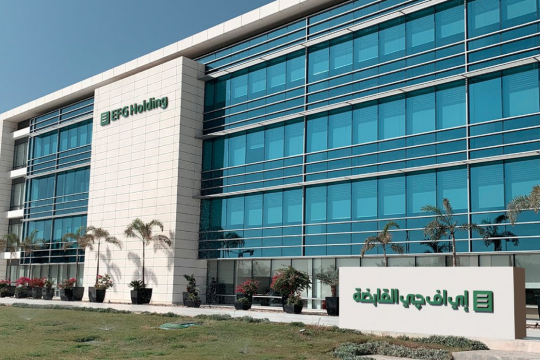
Advisors: Our friends at EFG Hermes are reportedly quarterbacking the transaction, with White & Case acting as counsel.

Watch this space

PRIVATIZATION — The Madbouly government is looking to net as much as USD 6 bn in proceeds as it reboots the privatization program, with the first transactions heading to market as early as next month, a senior government official tells EnterpriseAM.

At least two of these companies could come to market as early as February, with both stake sales and EGX listings in the cards, the official said.

Military companies could be at the head of the pack: The Sovereign Fund of Egypt is finalizing a timeline for five companies affiliated with the National Service Projects Organization. The reboot will focus on the most market-ready assets in the military-affiliated firm’s portfolio, including fuel retailers Wataniya and Chill Out, bottled water company Safi, food processor Silo Foods, and Chill Out-parent company National Company for Roads.

The move is the first step in a much larger consolidation that could see 60 more state-owned companies transferred to the SFE for restructuring and eventual sale, the official said.

The one to which we’re really looking forward? That would be the spring sale on the EGX of a stake in Banque du Caire. CEO Hussein Abaza, a perennial favorite of international institutional investors, has been on the road for an early look on the transaction.


CAPITAL MARKETS — A revamped derivatives market is on track for a 1Q 2026 launch, EGX Chairman Islam Azzam confirmed on Monday at an event attended by EnterpriseAM. The launch is contingent on the conclusion of ongoing trials of the short-selling and market maker mechanisms, which are slated to wrap up by the end of January.

The hope: That a fully functional derivatives market will burnish our attractiveness to major global asset managers as the exchange looks to get foreign institutions back into the market. They’re not wrong, but the thing investors want most: Lots of new, high-quality names coming into the market with transactions big enough (and interesting enough) to take a look.

Why size matters: It costs your average institutional investor investor as much time in DD and other paperwork to kick the tires on a USD 100k ticket as it does a USD 7 mn investment — there’s a minimum size to make any worth her while to consider.


SOVEREIGN DEBT — The European Union will send EUR 1 bn our way this Thursday, but there’s plenty of structural benchmarks to clear before we secure the remaining EUR 3 bn. The tranche — the second in the EUR 5 bn macro-financial assistance package pledged in 2024 — comes after we implemented 38 economic and structural measures under the program, Planning and International Cooperation Minister Rania Al Mashat said at a press conference yesterday.

But 38 is just the start — there are 100 other measures in the implementation pipeline, she said. The reforms “enhance economic and financial stability, improve the business environment, and bolster the competitiveness of the Egyptian economy,” she added.

The remaining EUR 3 bn could arrive sooner than we thought, with the amount split between two tranches in 2026, ending the package a year earlier than we expected.


REAL ESTATE — Palm Hills Development and Egyptian Kuwaiti Company will set up a 1.4 mn sqm residential project in West Cairo, adjacent to the current Palm Hills October project, according to a statement. The project is expected to launch in 1H 2026 and generate some EGP 177 bn in sales, the company said.

GDP watch

The World Bank now sees the Egyptian economy growing 4.3% this fiscal year, up 0.1 percentage points from its June 2025 estimates, the lender said in its latest Global Economic Prospects (pdf). It also revised upward the next fiscal year’s forecast by 0.2 percentage points to 4.8%, citing “robust next exports…softening price pressures and easing global financial conditions [supporting] private consumption.”

The bank sees private-sector investment and private consumption both picking up as inflation cools.

** DID YOU KNOW that we cover Saudi Arabia, the UAE and the MENA-IndiaCorridor?

** Were you forwarded this email? Tap or click here to get your own copy delivered every weekday before 7am Cairo time — without charge.

Happening today

The Pharaohs face Senegal tonight at 7pm in the 2025 Afcon semi-finals. Egypt secured its spot in the semis with a 3-2 victory against defending champions Côte d’Ivoire earlier this week.

The big story abroad

There are two big business stories making the rounds this morning: US-based luxury retailer Saks plans to file for bankruptcy, but is finalizing a USD 1.75 bn financing agreement that would keep its stores open. Plus: Netflix is considering turning its takeover bid for Warner Bros into an all-cash offer, a move that would help solidify it as the stronger suitor after Paramount Skydance (along with Gulf investors and Larry Ellison) made an all-cash, USD 108.4 bn hostile takeover bid for the company.

Meanwhile, US President Donald Trump has ramped up his threats of US interference in Iran, telling protesters that “help is on its way” on Truth Social. White House officials have been meeting to discuss the situation in Iran, where the death toll has reached 2k, according to the US-based Human Rights Activists News Agency.

*** It’s Hardhat day — your weekly briefing of all things infrastructure in Egypt: EnterpriseAM’s industry vertical focuses each Wednesday on infrastructure, covering everything from energy, water, transportation, and urban development, as well as social infrastructure such as health and education.

In today’s issue: We dive into why the real estate boom is yet to reach the EGX.

A year defined by ambition, energy, and global connection.

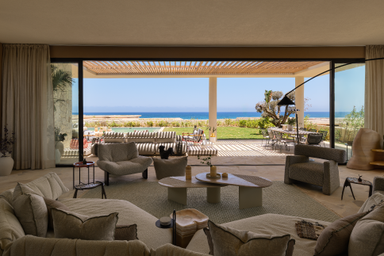
From elite performance to community-driven experiences, we continue to shape environments where sport goes beyond competition. Creating moments that inspire, connect, and endure at Somabay.

2

The Big Story Today

The Madbouly government is mulling fresh tax breaks for real estate developers as Egypt gears up for an urbanization push

Real estate developers could soon receive a 10-year tax break for launching projects in remote areas, away from the country’s current urban clusters, the Federation of Egyptian Industries’ real estate division head, Osama Saad El Din, tells EnterpriseAM.

Part of a wider plan: The Finance Ministry has formed a joint committee with the division to resolve outstanding tax disputes and weigh a new incentive package for the sector, Saad El Din told us.

Why it matters: Just about all of us live on the Nile, and most of us seem to want to live in Cairo. Egypt’s urban footprint is currently crammed into just 14% of its total land area. Saad El Din argues that tax breaks are the only way to offset the high risk of moving into unserved territory and to ease the overcrowding of investment in major cities. If approved, these incentives could lower unit costs for buyers and attract fresh FDI into the sector.


Lobbying efforts aren’t limited to taxes as the division is also pushing the New Urban Communities Authority for longer grace periods and other payment facilities when they put down cash for remote plots, according to Saad El Din.

Developers have often had issues with how their units are taxed, with the Tax Authority ignoring contract values for residential units, instead using market price estimates based on neighboring projects, division member Mohamed El Bostany told us.

(** Tap or click the headline above to read this story with all of the links to our background as well as external sources.)

This publication is proudly sponsored by

3

Agriculture

Egypt is closer than ever to achieving sugar self-sufficiency and local refiners are paying the price

We may be close to self-sufficient when it comes to sugar production, but manufacturers say they’re bleeding cash. As the sugarcane harvest kicks off in Upper Egypt, a sharp divide has emerged between the narrative heralding the strategic success of boosting domestic supply — longtime readers will remember the sugar crises of years past — and the difficult financial reality facing the country’s refiners as they work overtime to ensure supply targets are met.

Annual sugar production stands at nearly 3 mn tons, with consumption only marginally outpacing this at roughly 3.2 mn tons. To secure this supply, the Madbouly government hiked the procurement price of sugarcane to EGP 2.5k per ton and allocated EGP 25 bn to pay farmers promptly, in addition to logistics support, Managing Director of the Sugar and Integrated Industries Company Salah Fathi tells EnterpriseAM. The state is hoping to procure 7 mn tons of sugarcane this season — about 1 mn tons more than it aimed to buy during last year’s harvest, Supply Minister Sherif Farouk has said.

The catch? Local refiners are being squeezed by the higher price they’re paying farms. While the state’s decision to hike farmer payouts secures the harvest and protects farmers, it has locked producers into a high-cost structure that leaves them losing between EGP 3k-4k per ton, one industry source claims.

You’re going to see this issue in the headlines for weeks to come: Manufacturers are lobbying the Madbouly government to extend a ban on the import of raw sugar (it’s set to expire next month) and are asking officials to extend a low-interest financing initiative for farmers. Farmers are warning officials that even a record harvest won’t make them competitive against lower global prices, the source tells us.

Why it matters: If the import ban expires in February, cheap global raw sugar could flood the market just as Egypt’s domestic harvest hits its peak. Producers argue they can’t compete with lower global prices while being forced to buy local cane at a premium and sell to the Supply Ministry at “competitive” (read: capped) prices. Without an extension of the ban or a low-interest financing initiative that the sector is calling for, the economics just don’t work.

It’s good news for consumers with a sweet tooth, as retail prices have stabilized between EGP 26 and EGP 30 per kg — nearly half of what they were this time last year. With local stocks high, there is zero risk of a shortage heading into Ramadan.

Extending the ban on sugar imports shouldn’t lead to price hikes, as prices have remained stable and are down y-o-y, thanks to local producers being able to meet demand, Chambers of Commerce General Foodstuffs Division member Hazem El Monoufi tells EnterpriseAM.

(** Tap or click the headline above to read this story with all of the links to our background as well as external sources.)

4

Banking

The Central Bank of Egypt is taking a tougher stance on regulation

Our friends at HSBC Egypt disclosed last summer that they had paid a fine imposed by the Central Bank of Egypt (CBE). HSBC Egypt’s financials for 1H 2025 (pdf) show a charge of a little under EGP 1.39 bn. Asked for comment yesterday, a spokesperson told us, “We have already made significant progress in implementing the agreed corrective actions to ensure our practices meet the expectations of the Central Bank of Egypt.” The fine has gotten ink in the media in the past couple of days.

The fine underscores that the central bank is shifting its approach to regulation, a source with first-hand knowledge of the CBE’s thinking tells us. Until recently, the CBE typically deployed smaller fines as it looked to “correct practices throughout the industry” in a more low-key way.

Today, the regulator is being more muscular in imposing monetary penalties. Industry insiders have previously told us the CBE is stepping up its scrutiny of credit governance as it prepares for banks to go back to lending. Interest rates are on a declining path and could hit a point in 2025 when companies start to test the waters with borrowing to fund capex.

The central bank imposed an EGP 1 bn fine on FAB Misr last fall and ordered the transfer of a senior credit officer. NBK Egypt was fined a lesser amount in the same incident in which the CBE found that three banks had inappropriately extended credit to financial services giant Beltone Holding. Bankers we spoke with at the time said the fine was calculated to send a message to the industry.

The fine HSBC Egypt paid was unrelated and centered on disagreements over how the bank was reporting its loan portfolio. No depositor or shareholder money was at risk, we’re told.

(** Tap or click the headline above to read this story with all of the links to our background as well as external sources.)

Tags:

5

Also on our Radar

EIB, IFC commit USD 138 mn to RMBV, Alta Semper

RMBV, Alta Semper secure USD 138 mn from EIB, IFC

The European Investment Bank (EIB) and the International Finance Corporation (IFC) committed a combined USD 137.5 mn to private equity outfits RMBV and Alta Semper, according to a statement. EIB committed USD 80 mn to RMBV North Africa Fund III — which targets mid-cap firms — and another USD 37.5 mn to an Alta Semper fund that focuses on healthcare and consumer goods investments. The IFC will invest USD 20 mn in the Alta Semper fund.

That’s not all: Egypt also secured EUR 2.7 mn in EIB grants to fund technical consultancy for the Cairo Metro Line 1 extension and wastewater treatment plants in Alexandria and Damietta.

Al Mansour Auto brings the Chevrolet Spark EUV to Egypt

Al Mansour Automotive and General Motors launched the Chevrolet Spark EUV and Captiva EV to the Egyptian market during a press conference attended by EnterpriseAM yesterday. The move sets the stage for Al Masnour to start localizing the assembly of EVs, which will likely happen sometime between 2028 and 2029 once the local EV market matures, COO Loutfy Mansour told us.

E-finance looks to snap up an unnamed NBFI

E-finance submitted a non-binding indicative offer to acquire up to 100% of an unnamed — que the rumor mill — non-banking financial services company after receiving preliminary nods from the target company’s shareholders, according to an EGX disclosure (pdf) from the fintech player. E-finance is now awaiting approval from the Financial Regulatory Authority to kick off due diligence.

Scatec inaugurates Africa’s largest hybrid solar project

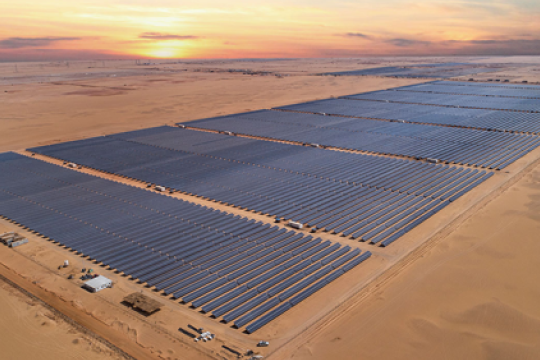
Norway’s Scatec inaugurated the first phase of its USD 590 mn, 1.1 GW Obelisk solarproject in Qena’s Nagaa Hamadi. The European Investment Bank is providing USD 150 mn in financing for the project, the largest hybrid solar facility in Africa, under an agreement it inked with Scatec during the inauguration ceremony, according to a statement (pdf) from the lender.

CIRA Education is bringing Canadian engineering expertise to Egypt

CIRA brings new accredited master’s to Egypt: EGX-listed education giant CIRA Education, alongside Badr Universities, signed an agreement with Ontario Tech University to launch new internationally-accredited master’s programs in Egypt, according to a press release (pdf). The partnership will initially focus on delivering advanced engineering degrees at Badr Universities in mechatronics, electrical, software, automotive, and nuclear engineering.

The move is a precursor to a wider branch campus rollout — CIRA plans to establish new Ontario Tech branch campuses in East Cairo and Damietta, pending final government approvals.

East Port Said to soon host cement silo courtesy of Sky Ports

Sky Ports has earmarked USD 50 mn for a cement silo project in East Port Said, the firm said at the groundbreaking ceremony for the project, according to Al Mal. The project is expected to have a major impact on the economy — by opening entirely new export lanes for Egyptian cement, Sky Ports Chairman Tarek Hussein told us back in November. The silos — which are being prepped in Denmark and Spain — are slated for delivery by the end of 2027.

Why does it matter? “This project is especially built to meet international standards that could enable [Egypt] to unlock new markets we have never reached before for this product, such as the United States, which will have a positive impact on Egyptian exports,” Hussein said.

(** Tap or click the headline above to read this story with all of the links to our background as well as external sources.)

6

PLANET FINANCE

Corporates drive GCC debt to records as sovereigns tap the brakes

GCC fixed income hit a record USD 207.1 bn in 2025, fueled primarily by private sector issuances, according to data from Kamco Invest (pdf). The record is just 0.1% above the previous all-time high set in 2024, but the composition of debt issuers changed significantly between the two years. Sovereign borrowing in the GCC actually fell by more than 20% y-o-y in 2025, but that dip was offset by a sharp rise in private sector issuances.

(** Tap or click the headline above to read this story with all of the links to our background and outside sources.)

Behind the sovereign issuance drop: Total bond issuance across the GCC rose 18% y-o-y to USD 125.4 bn last year, but sukuk issuances fell 18.8% y-o-y to USD 81.7 bn during the year. Saudi Arabia, the region's heavyweight, slashed its sovereign sukuk issuance from USD 48.6 bn in 2024 to just USD 10.5 bn in 2025.

The split: The GCC fixed income issuer market moved closer to a 55% sovereign, 45% corporate split. In Saudi Arabia, corporate sukuk issuance rose to USD 31.7 bn in 2025 from USD 21.0 bn the year before.

Kuwait and Egypt were the outliers

While the UAE saw bond issuances drop by USD 5.6 bn to USD 44.4 bn, other regional players went on a borrowing spree. Kuwait saw the most dramatic spike, with bond issuances jumping to USD 17.6 bn in 2025 from just USD 800 mn the year prior. Saudi Arabia ramped up bond issuance by some 30.8% to USD 40.1 bn, even as its sukuk issuances fell 39.4% y-o-y. Egypt also tapped the market aggressively, with bond issuances rising to USD 7.6 bn.

Despite Egypt’s increased activity, total bond issuance from non-GCC MENA countries declined overall in 2025.

What to expect in 2026: Cheaper money and deficit financing

Kamco expects issuances to remain “elevated” this year, supported by expectations that GCC will cut interest rates in line with the US Federal Reserve. Kamco estimates that around USD 85.4 bn of issuance in 2026 will be driven by maturity refinancing, with a further USD 60 bn linked to deficit financing, even as headline fiscal gaps narrow.

Expect Saudi Arabia and Kuwait to lead sovereign issuance volumes as they fund projected budget deficits. Saudi Arabia’s overall financing needs are projected to drop significantly to USD 58 bn in 2026, down from USD 107 bn in 2025. The Kingdom has already tested investor appetite early, raising USD 11.5 bn in the first week of 2026 after attracting more than USD 29 bn in orders — eventually pricing inside initial spread guidance.

MARKETS THIS MORNING-

Stronger expectations of a snap election in Japan pushed the Nikkei to fresh highs, with the index up 1.6% in early trading. Other Asia-Pacific markets are also broadly in the green, with the exception of South Korea’s Kospi, which is just below the flatline. Wall Street futures are also marginally in the red this morning, after financial stocks pulled the S&P 500, Dow Jones, and Nasdaq back from this week’s records. Investors will be keeping an eye out for more earnings results today from Bank of America, Wells Fargo, and Citigroup.

EGX30

43,684

+0.7% (YTD: +4.4%)

USD (CBE)

Buy 47.06

Sell 47.19

USD (CIB)

Buy 47.10

Sell 47.20

Interest rates (CBE)

20.00% deposit

21.00% lending

Tadawul

10,894

+1.4% (YTD: +3.8%)

ADX

10,090

+0.8% (YTD: +1.0%)

DFM

6,319

+0.8% (YTD: +4.5%)

S&P 500

6,964

-0.2% (YTD: +1.7%)

FTSE 100

10,137

0.0% (YTD: +2.1%)

Euro Stoxx 50

6,030

+0.2% (YTD: +4.1%)

Brent crude

USD 65.47

+2.5%

Natural gas (Nymex)

USD 3.39

-0.8%

Gold

USD 4,613

+0.3%

BTC

USD 95,423

+4.3% (YTD: +9.0%)

S&P Egypt Sovereign Bond Index

999.07

+0.2% (YTD: +0.6%)

S&P MENA Bond & Sukuk

151.60

-0.1% (YTD: -0.2%)

VIX (Volatility Index)

15.98

+5.7% (YTD: +6.9%)

THE CLOSING BELL-

The EGX30 rose 0.7% at yesterday’s close on turnover of EGP 5.8 bn (7.2% above the 90-day average). International investors were the sole net buyers. The index is up 4.4% YTD.

In the green: CIB (+4.5%), GB Corp (+3.3%), and TMG Holding (+0.9%).

In the red: Qalaa Holdings (-5.9%), E-finance (-5.0%), and Mopco (-4.5%).

7

HARDHAT

EGX-listed real estate still trades below its economic weight as investors favor cashflow and names with FX exposure

The EGX has yet to capture the full economic weight of Egypt’s real estate sector. “Real estate as an asset class remains under-represented on the EGX despite accounting for roughly 18.5% of GDP,” Bonyan CEO Tarek Abdel Rahman tells EnterpriseAM. Although real estate stocks provide the liquidity and price discovery that direct ownership lacks, Abdelrahman says the market is still figuring out how the sector should be priced in equity form.

DATA POINT- The real estate index ended 2025 up 39.6%, roughly in line with the benchmark EGX30, which gained 40.7%. Gains were led by Talaat Mostafa Group (+44.8%), followed by Orascom Development Egypt (+35.8%), and Palm Hills Developments (+24.0%).

“The question is not whether real estate deserves a place in portfolios…but whether listed real estate stocks can close the gap between how the asset class is used in the economy and how it is priced on the exchange,” Arab African International Securities Head of Research Mahmoud Gad tells us.

“We view this gap as a disconnect between market pricing and fundamentals rather than a reflection of operational performance,” Madinet Masr CEO and President Abdallah Sallam tells EnterpriseAM. He points to Madinet Masr trading at roughly 3-4x earnings versus sector averages of 5-6x. “Historically, such valuation gaps tend to close as execution and results continue to be delivered,” Sallam explained.

What investors want

#1- Cash-visibility: Reported earnings have become a weak signal for investors, as most developers recognize revenue only upon delivery, leaving current results reflective of sales made three to four years ago rather than today’s demand environment, Al Ahly Pharos Head of Research Hany Genena told EnterpriseAM in part one of this story. Investors want liquidity, not paper returns, he said. Okaz Asset Management Managing Director Randa Hamed agrees with this view, arguing that the market is rewarding cash-visibility. “Investors are increasingly focused on quality rather than scale,” she said, pointing to a growing preference for developers that can adapt to new ownership and funding models.

Think Bonyan: “Bonyan’s IPO is an important development, precisely because it is not a real-estate developer, but a real-estate investment company,” Hamed tells us. In a market where affordability has deteriorated and capital has become more selective, listed vehicles that provide recurring cashflows offer a form of access that development-led listings do not.

#2- FX revenue streams: Any re-pricing is likely to be selective, favoring developers with tourism exposure, secondary housing projects, and geographic diversification, Gad added. Underlying demand in those segments remains supported by foreign buyers, particularly in coastal and hospitality-linked products, such as branded residences, Talaat Moustafa Group (TMG) IR Head Sameh Abdelraouf tells EnterpriseAM. These assets help generate hard-currency inflows and can feed through to equity performance at a time when investors remain highly sensitive to FX dynamics, he added.

Who’s positioned to benefit

The strongest positioning within Egypt’s real estate sector is clearly tilted toward TMG, Acumen Asset Management Managing Director Rana Adawi tells us, citing its diversified exposure across real estate and a strong hospitality portfolio. She noted that hospitality assets are benefiting from record tourism revenues and the sector’s ongoing recovery. She added that Orascom Development Holding comes second in terms of attractiveness.

From an investment strategy perspective, Adawi said a long-term, buy-and-hold approach in selective names with upside potential makes sense, particularly for companies with exposure to tourism or those trading at attractive valuations.

CI Capital’s MENA top picks (pdf) underscore a clear preference for large-cap, scaled, cash-generating real estate platforms, with Emaar Properties and TMG standing out on valuation and upside. Emaar, rated overweight, trades at AED 13.3 versus a target price of AED 16.7, implying 25.5% upside, with a forward P/E of 6.8x and a dividend yield exceeding 7% by 2025. This reflects its mature, income-backed model and balance-sheet strength. TMG, also overweight, offers a more aggressive rerating case, trading at EGP 71 against a target price of EGP 152, implying 114% upside, with a 2025 P/E of around 11.6x.

“With top real estate companies trading at very attractive multiples, we are forecasting our selected companies to trade at single-digit P/E levels in 2026,” Hamed said, citing estimates that place TMG at around 11x earnings, Palm Hills Developments at roughly 5.2x, and Orascom Development Egypt at about 7.4x.

What 2026 has in store

Consensus expectations point to steady earnings growth for EGX-listed real estate developers over the medium term, with analysts forecasting around 14% annual growth, Al Ahly Sabour Real Estate Development Company Chairman and MD Ahmed Sabour tells EnterpriseAM. This backdrop would help sustain investor interest even as stock-level repricing remains uneven.

The macro picture: Easing interest rates over the medium to long term could support valuations, particularly if financing conditions improve and market liquidity deepens, Gad said. The maturity of high-yield certificates of deposit issued since early 2024 is expected to release liquidity back into the market, part of which could flow toward real estate, Abdelraouf tells EnterpriseAM.

(** Tap or click the headline above to read this story with all of the links to our background as well as external sources.)


2026

JANUARY

22 January (Thursday): ESBC SEEING webinar, From Zurich to Cairo: How Global Executive Research Shapes Tomorrow’s Leadership.

25 January (Sunday): Revolution Day / Police Day.

FEBRUARY

3 February (Tuesday): S&P Global to release PMI figures for January.

10 February (Tuesday): Capmas expected to release inflation data for January.

10-12 February (Tuesday-Thursday): Gitex Global’s AI Everything Middle East & Africa Summit

12 February (Thursday): Monetary Policy Committee’s first meeting of 2026.

19 February (Thursday): First day of Ramadan (TBC).

MARCH

15 March (Sunday): IMF to hold its seventh review of Egypt’s USD 8 bn EFF arrangement.

21 March: (Saturday): Eid El Fitr starts (TBC).

30 March - 1 April (Monday-Wednesday): Egypt International Energy Conference and Exhibition 2026 (EGYPES)

APRIL

2 April (Thursday): Monetary Policy Committee’s second meeting of 2026.

12 April (Sunday): Coptic Easter.

25 April (Saturday): Sinai Liberation Day.

MAY

1 May (Friday): Labor Day.

21 May (Thursday): Monetary Policy Committee’s third meeting of 2026.

27-29 May (Wednesday-Friday): Eid El Adha (TBC).

JUNE:

30 June (Tuesday): National holiday in observance of June 30 Revolution (TBC).

JULY

9 July (Thursday): Monetary Policy Committee’s fourth meeting of 2026.

23 July (Thursday): National holiday in observance of Revolution Day (TBC).

AUGUST

20 August (Thursday): Monetary Policy Committee’s fifth meeting of 2026.

26 August (Wednesday): National holiday in observance of Prophet Muhammad’s birthday (TBC).

SEPTEMBER

15 September (Tuesday): IMF to hold its eighth review of Egypt’s USD 8 bn EFF arrangement.

24 September (Thursday): Monetary Policy Committee’s sixth meeting of 2026.

27-29 September (Sunday-Tuesday): Global Conference on Population, Health and Human Development.

OCTOBER

6 October (Tuesday): Armed Forces Day.

29 October (Thursday): Monetary Policy Committee’s seventh meeting of 2026.

DECEMBER

17 December (Thursday): Monetary Policy Committee’s eighth meeting of 2026.

EVENTS WITH NO SET DATE

Early 2026: Passenger operations on the New Administrative Capital–Nasr City monorail scheduled to begin.

Early 2026: The government will launch the second package of tax breaks.

1Q 2026: Trial operations for the Ain Sokhna–Sixth of October section of Egypt’s first high-speed rail line scheduled to begin.

1Q 2026: Turkish President Tayyip Erdogan to visit Egypt

May 2026: End of extension for developers on 15% interest rates for land installment payments

2H 2026: Operations at Deli Glass Co’s new USD 70 mn glassware factory kick off.

2027

20 January-7 February: Egypt to host the African Games.

April 2027: Tenth of Ramadan dry port and logistics hub to begin operations.

EVENTS WITH NO SET DATE

2027: Egypt to host EBRD’s annual meetings.

2027: Egypt-EU Summit 2027

End of 2027: Trial operations at the Dabaa nuclear power plant expected to take place.

September 2028: First unit of the Dabaa nuclear power plant begins operations.

Now Playing
Now Playing
00:00
00:00