Get EnterpriseAM daily

Available in your choice of English or Arabic

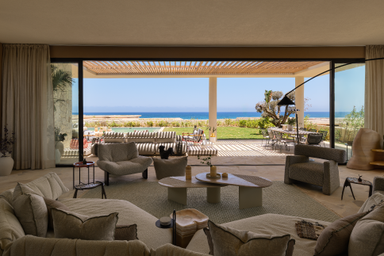
Tourism Development Authority reprices stalled Red Sea hotel plots

1

WHAT WE’RE TRACKING TODAY

QNB Egypt joins the tactical tightening club

Good morning, wonderful people. It is another warm day with no big story dominating the news cycle. The government pushed an EGP 451.8 bn injection through the Egyptian General Petroleum Corporation (EGPC) last year and just weeks ahead of the IMF’s November mission. This is essential to unlock the review of the country’s USD 8 bn IMF loan program.

In the world of hotels and resorts, PickAlbatros filed to acquire the 184-key Mövenpick Casablanca to join its four-hotel portfolio in Morocco’s economic capital. Here at home, the Tourism Development Authority (TDA) is pulling the plug on stalled Red Sea hotel projects, forcing lagging developers to repurchase undeveloped land at a steep USD 210 per sqm.

***

THANK YOU to everyone who filled out our first listener survey. If you’re seeing this for the first time, Morning Drive has been up and running for a while now, and we think it’s time for a quick check-in. So if you have a few minutes to spare, we’d love to hear from you, whether you’re a longtime listener, you’ve only just heard us, or you’re somewhere in between. AND — here’s today’s episode.

***

Joining the club

QNB Egypt joins the tactical tightening club, hiking interest rates on its certificates of deposits (CDs) by nearly 1% across the board, matching the yields currently offered by state-owned lenders, according to the bank’s website. The bank raised the return on its First Plus three-year CD to 17.50%, up from 17.25%, and significantly lowered the barrier to entry by slashing the minimum buy-in to EGP 500k from EGP 5 mn. Its standard three-year CDs also saw a 100 basis points jump to 17.25-17.40%, mind the payout frequency.

Why it matters: Private banks like QNB, Crédit Agricole, and CIB are fighting to protect their deposit franchises from being siphoned off by state banks like the National Bank of Egypt and Banque Misr. This sector-wide repricing aims to soak up excess EGP to contain inflation and curb dollarization without requiring the central bank to hike its formal corridor rate and raise the government’s debt-service burden.

New regulatory body?

The cabinet is mulling a move to standardize the real estate market through a new regulatory body that will categorize developers based on their financial and technical capabilities, according to a statement.

Why this matters: If implemented, this system would give heavyweights a “seal of quality” that makes their projects safer and more attractive to foreign buyers. On the other hand, it could also trigger a survival-of-the-fittest cycle where unqualified firms are squeezed out of prime land bids.

Plugging power into the grid

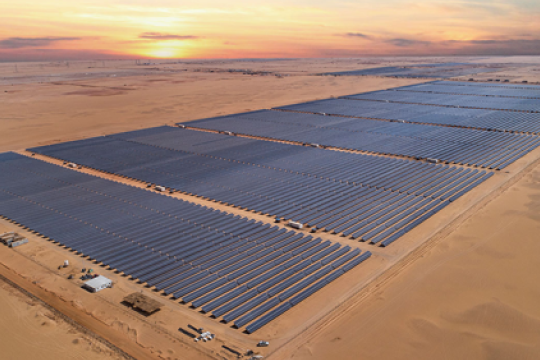
Norway’s Scatec will spend EGP 5 bn to build a 500 kV transformer substation and a 70 km transmission line in Minya by the end of 2027, the Arabic press reports, citing an unnamed government official. The renewables giant is fully funding the high-voltage network, which will transmit power from its planned 1.7 GW Energy Valley solar farm and 4 GWh of battery storage facilities.

Why this matters: We’ve done a good job attracting large-scale wind and solar investments, but projects are struggling to transport the energy from localized factories — wind in the Gulf of Suez, solar in Upper Egypt — to main consumption centers in Cairo and the Delta. Transmission capacity and grid stability are critical to the country’s renewable energy strategy.

Raising the roof on renewables

The government is rolling out a new initiative to install 1 GW of rooftop solar capacity across some 7k factories — about 10% of the country's certified industrial base, Industry Minister Khaled Hashem said at a cabinet meeting Monday.

The initiative will tap 7 mn sqm of available rooftop space, with an average installed capacity of around 150 kW per facility, to ease pressure on the national grid and reduce natural gas consumption.

Why it matters: The proposal follows a directive requiring new factories to source 25% of their electricity from renewable energy. Reducing the carbon footprint should help improve the competitiveness of Egypt’s exports and take a load off the country’s supply of natural gas and electricity.

Local players are on board, but they want the government to think bigger. Industry reps from the Sustainable Energy Development Association and the Cairo Chamber of Commerce’s Sustainable Energy Division are lobbying the government to hike the overall capacity to 5 GW, according to a statement (pdf). They also want to scrap the 150 kW baseline, pushing instead for a flexible scheme based on each factory’s needs.

PSA-

WEATHER- Weather is a bit nicer, though still warm in Cairo today, with a high of 34°C and a low of 22°C, according to our favorite weather app.

It’s a few degrees cooler in Alexandria, with a high of 31°C and a low of 20°C.


Riyadh to Mumbai. Abu Dhabi to Singapore. Dubai to London. Cairo to Shenzhen.

The most important business stories in MENA aren’t happening inside MENA anymore — they’re happening at the edges, where regional capital meets global ambition.

EnterpriseAM MENA+ is our new flagship newsletter, built to cover the flows of capital, people, and ideas across the Middle East — and beyond it. AI, geopolitics, the war for talent, sovereign wealth strategy, the changing energy economy, and the new corridors reshaping global trade.

Tap or click here to get your own copy delivered to your inbox every Monday, Wednesday, and Friday at 12pm UAE | 11am KSA | 11am Egypt.


The big story abroad

Today’s papers are buzzing with business updates. US inflation hit a three-year high in April, coming in at 3.8% thanks to the war-triggered rise in energy prices.

Wall Street is unsettled by these figures. Investors are wagering on continued inflation growth, expecting average annual inflation to level out at 2.7% over the next five years. Investors are hedging against this risk by trading standard US treasuries alongside treasury inflation-protected securities.

But US stock markets don’t seem rattled by the (seemingly endless) conflict. The S&P 500 has been hitting fresh high after fresh high, most recently crossing the 7.4k mark for the very first time at Monday’s close, even as oil prices stayed elevated. Some suggest the US market remains resilient against the Hormuz blockade due to oil independence and strong tech earnings as key drivers of investor confidence.

Markets will be closely watching the Trump-Xi summit. US President Donald Trump is kicking off his visit to Beijing today, during which he will meet Chinese President Xi Jinping to discuss trade relations and the ongoing crisis in the Strait of Hormuz.

GameStop’s eBay takeover is a no go: Online marketplace eBay turned down GameStop’s USD 56 bn acquisition bid, expressing concerns over financing and leverage, the video game retailer’s governance, and operational risks of the combined entity. GameStop CEO Ryan Cohen has been courting GCC sovereign wealth funds to bridge the equity gap for the transaction.

In the AI world, Anthropic is in early negotiations to raise over USD 30 bn in new funding, paving the way for its largest funding round yet. The round is expected to wrap up by the end of May, one source told Bloomberg.

JPMorgan Chase has pushed further into the crypto world, submitting paperwork to set up its second tokenized money market fund. The entity plans to issue digital tokens on the ETH blockchain to represent shares in its portfolio of treasuries and repurchase agreements.

*** It’s Hardhat day — your weekly briefing of all things infrastructure in Egypt:

In today’s issue: We unpack how inflation-squeezed buyers are driving a double-digit boom in Cairo’s rental market as property sales stall.

Sailors chasing the wind to Somabay shores.

From 14-16 May, the first-ever Somabay Sailing Festival 2026 brings together world-class regattas, elevated seaside experiences, and vibrant energies. Marking a new milestone for the destination and the future vision of GranMarina, the festival sets the tone for a new era of sailing experiences at Somabay.

Brought to you by Red Sea Sails.

Click here to explore the full experience.

2

Real estate

The price of delay

The Tourism Development Authority is taking back land from developers in Marsa Alam, South Sinai, and El Quseir over stalled hotel projects — and repricing the recovered plots at sharply higher rates, several investors tell EnterpriseAM.

Even developers with partially completed projects are being forced to repurchase the undeveloped portions of their plots at a new market rate of USD 210 per sqm to keep their land — a significant jump from the historical cap of around USD 130 per sqm.

Developer pushback: Investors argue they already absorb the cost of building basic infrastructure — roads, power, water — which the new rate doesn’t account for. They claim currency volatility and cost shocks have derailed their timelines, calling for additional incentives — like tax exemptions and more flexible implementation timelines — to support the completion of their projects.

A fee, not a repurchase: Investors prefer a “grace period fee” instead of facing a full repricing. “The price for purchasing a one-year extension is up to USD 5k, which is an acceptable figure compared to paying for a repricing of mns of meters,” head of the South Sinai and Marsa Alam Investors Association Atef Abdel Latif tells us.

Why it matters: The southern Red Sea is an underutilized asset, Abdel Latif tells us. This move suggests the authority wants to maximize financial return on state-owned lands while forcing developers to speed up construction — especially as major new projects like the Marassi Red Sea project and Bernice and Marsa Alam airports reshape the region’s tourism profile.

This publication is proudly sponsored by

3

Economy

Clearing the review

Fuel for the Fund: Weeks before the IMF’s November mission last year, the Finance Ministry moved EGP 451.8 bn in dues and guarantees to the Egyptian General Petroleum Corporation (EGPC), according to three government officials and a document seen by EnterpriseAM — in what seems to have been a necessary step to unlock the review of Egypt’s USD 8 bn loan program.

Subsidies, commitments, and IOUs: The bulk — EGP 166 bn — was unpaid fuel and electricity subsidy reimbursements the ministry itself owed EGPC, while more than EGP 98 bn were debt guarantees to the corporation, and a further EGP 13.6 bn was owed by the electricity and water ministries.

Why it matters: EGPC was trapped by unpaid government bills. Because other ministries were not paying their tabs, the corporation could not pay foreign partners to drill for more oil. By settling these historic dues and covering debt guarantees, the government is unclogging a major operational bottleneck that has historically choked off FDI, as well as satisfying IMF requirements.

IN CONTEXT- The IMF forced the government’s hand. During recent reviews (pdf), the Fund flagged EGPC as a fiscal liability, noting that sovereign guarantees for the corporation currently stands at 18% of GDP. The IMF noted that fixing the corporation’s finances requires a mix of higher production levels, energy price adjustments, and stronger collection mechanisms, which could reduce government guarantees to EGPC by 25% in the upcoming FY.

Foreign firms are stepping back up to the rig. The liquidity injection has allowed the corporation to slash its arrears to foreign energy firms to just USD 700 mn from a peak of USD 6.1 bn, with plans to clear the remaining balance next month. In response, global energy giants have already pledged to deploy USD 19 bn in new exploration and production over the next three years.

DATA POINT- Total state loans are expected to be EGP 6.2 tn for the current year, with EGPC currently accounting for 60% of these guarantees, a government official tells us. Guarantees are also set to jump to EGP 6.9 tn in the upcoming FY, representing 28.1% of the GDP.

What’s next: The Fund’s mission is arriving in Cairo on 15 June to conduct the combined seventh and eighth reviews. The government has submitted updates this week to the IMF, which include enforcing a hard budget constraint capping its sovereign guarantees, among other measures to ensure its ability to meet the Petroleum Authority’s dues.

And speaking of the IMF…

IMF Chief Kristalina Georgieva praised our commitment to economic reforms, fiscal discipline, and improving the business environment during a meeting with President Abdel Fattah El Sisi on the sidelines of an Africa-France summit, which was held in Nairobi over the past two days, according to an Ittihadiya statement. Georgieva “affirmed the IMF’s keenness to maintain close cooperation with the government in support of these efforts.”

4

M&A WATCH

Play it again, Sam

PickAlbatros has filed to acquire Mövenpick Casablanca from Casablanca-listed insurer Sanlam Morocco and its hotel-holding subsidiary Luxor, according to a notice (pdf) by the Moroccan competition watchdog. This is the second Casablanca acquisition in roughly a month — Sofitel Casablanca Tour Blanche was picked up for USD 47 mn from Risma in April — and the third hotel purchase tied to a USD 200 mn investment pipeline the group is deploying.

The 184-key acquisition covers both the hotel’s commercial and real estate assets and is being routed through Albatros Prestige Group, a Moroccan SPV set up for the transaction. Terms were not disclosed.

The Morocco book is filling up fast: If the transaction goes through, Mövenpick Casablanca will join four Marrakech properties the group acquired in 2024 — Savoy Le Grand Hotel, Aqua Fun Club Resort, Hôtel Du Golf Palmeraie, and Sungo Club — alongside the White Beach Resort in Taghazout and Palais Des Roses in Agadir, according to its website.

BACKGROUND- PickAlbatros signaled plans to expand its presence in Morocco three years ago, pledging USD 140 mn in investment through to 2025, likely to capitalize on the country’s booming tourism sector which saw a record 19.8 mn arrivals and USD 13.9 bn in revenues last year. Morocco is also hosting the 2030 World Cup, which will fill stadiums and hotels.

IN CONTEXT- The Mövenpick filing is part of a larger USD 200 mn investment pipeline for 2026. Earlier this week, the group snapped up the Oberoi Beach Resort Sahl Hasheesh from EBank in an EGP 3.8 bn allcash transaction. Three hotels in roughly five weeks, across two countries.

What’s next: The transaction is currently in a mandatory 10-day public comment period that began on 7 May.

5

Also on our Radar

TMG starts off the year with a 24% jump in income

Talaat Moustafa Group (TMG) saw its net income jump 24% y-o-y to EGP 5.5 bn in 1Q 2026, according to the real estate player’s latest earnings release (pdf). Revenues surged 39% y-o-y over the same period to EGP 13.1 bn, with growth attributable to a strong showing in the real estate and hospitality sectors and steady scaling of recurring revenue sources.

Behind the numbers: Real estate spearheaded topline growth, with segment revenue surging 61.6% y-o-y to EGP 6.1 bn, fueled by handovers at Madinaty, Privado, and Celia, plus revenue recognition at its first foray into the Saudi market, Benan, which contributed more than half of the developer’s real estate revenues for the three-month period. Contracted sales fell 36% y-o-y to EGP 49.1 bn.

Aside from real estate: Hospitality revenues climbed 21% y-o-y to EGP 4.3 bn, propelled by improved occupancy, average room rates, and sustained operational gains across the Legacy Hospitality portfolio. Occupancy rates rose 3 pps y-o-y to 63% during the quarter, whereas average room rates jumped 15% to EGP 13.7k.

Byit sets foot in the UAE

Homeborn proptech startup Byit has launched in the UAE, rolling out new AI-powered solutions intended to simplify cross-border property transactions, according to a statement (pdf). By establishing Byit Ventures in the Emirates, the company is hardwiring Egyptian real estate supply with GCC investors.

We knew GCC expansion was in the cards after the company said it would use the USD 1.1 mn raised last December to fund its Gulf expansion. The company plans to expand into Saudi Arabia “as part of its next growth phase.”

6

PLANET FINANCE

The black box of private credit valuations

A proper turf war is brewing between Pimco and Apollo over a simple question with big implications for the LPs of the world, GCC sovereign wealth funds — is the USD 1.8 tn private credit space essentially marking its own homework? Pimco strategist Lotfi Karoui says yes in a note to clients, arguing that the push toward more frequent marks does little to “address the market’s inherent structural constraints, including a lack of true price discovery.”

Apollo is all for standardizing the opaque: This comes a week after Apollo CEO Marc Rowan committed on a 1Q earnings call (pdf) to provide daily mark-to-market valuations across roughly USD 830 bn of its credit assets by the end of September. “We have never seen a market where enhanced liquidity and enhanced transparency does not result in tremendous growth for the asset class,” Rowan said, framing it as a land grab dressed as reform.

What’s daily marking again? It updates the estimated value of private loans every day rather than quarterly. Because these assets don’t trade, the marks come from internal models, comparable transactions, company performance, and credit spreads — and those valuations flow directly into the portfolio values investors see.

That’s where Pimco says the cracks start to show. Karoui’s point is that if three different managers are holding the exact same loan and arriving at three different valuations — averaging five points apart by year-end 2025 — then the issue isn’t how often you refresh the number. It’s that there’s no real price discovery underneath it in the first place. “They only increase the perception of liquidity without truly improving liquidity,” he wrote, adding that “at best, [daily marks] add marginal transparency and some reputational pressure that may rein in the most extreme mark outliers.”

Why we think Apollo still comes out ahead: Private credit didn’t grow into a USD 1.8 tn market because investors demanded perfect price discovery, it grew because LPs were willing to tolerate imperfect marks in exchange for yield and illiquidity premium. As the asset class grows, daily pricing can start to look less like a transparency exercise and more like the infrastructure layer needed to institutionalize the market — which naturally favors firms like Apollo who have the scale to make daily marks the industry norm, and the consolidation that follows.

Regional SWFs have real skin in the game here. Some of the world’s largest sovereign allocators (think PIF, Mubadala, Adia, QIA, and ADQ) are heavily exposed to the same private credit complex now debating how these assets should actually be valued, making this more than a technical fight between two US asset managers. The methodology Apollo and Pimco are arguing over today will ultimately shape how Gulf LPs measure returns and assess risk tied to some of the largest private credit plays in the market.

REMEMBER- PIF’s revised 2026-2030 strategy cuts international allocations to 20% from 30%, which means Gulf SWFs are simultaneously reducing international exposure and concentrating their remaining exposure into fewer mega-managers — at exactly the moment those managers’ valuation methodology is being publicly contested.

MARKETS THIS MORNING-

Asian stocks opened in the red this morning, mirroring losses on Wall Street after hotter-than-expected US inflation data. Analysts are bracing for a volatile couple of days as the market awaits ceasefire developments and the outcome of US President Donald Trump’s summit with his Chinese counterpart.

EGX30

54,059

-0.8% (YTD: +29.2%)

USD (CBE)

Buy 52.89

Sell 53.03

USD (CIB)

Buy 52.87

Sell 52.97

Interest rates (CBE)

19.00% deposit

20.00% lending

Tadawul

11,039

-1.1% (YTD: +5.2%)

ADX

9,699

-0.9% (YTD: -2.9%)

DFM

5,783

-0.6% (YTD: -4.4%)

S&P 500

7,401

-0.2% (YTD: +8.1%)

FTSE 100

10,265

0.0% (YTD: +3.4%)

Euro Stoxx 50

5,808

-1.5% (YTD: +0.2%)

Brent crude

USD 107.27

-0.5%

Natural gas (Nymex)

USD 2.83

-0.5%

Gold

USD 4,724

+0.8%

BTC

USD 80,666

-1.4% (YTD: -7.9%)

S&P Egypt Sovereign Bond Index

1,050

-0.1% (YTD: +5.7%)

S&P MENA Bond & Sukuk

151.19

-0.3% (YTD: -0.5%)

VIX (Volatility Index)

17.99

-2.1% (YTD: +20.3%)

THE CLOSING BELL-

The EGX30 fell 0.8% at yesterday’s close on turnover of EGP 12.1 bn (58.7% above the 90-day average). Local investors were the sole net buyers. The index is up 29.2% YTD.

In the green: Kima (+5.9%), Orascom Construction (+5.0%), and Egypt Aluminum (+4.6%).

In the red: Raya Holding (-2.5%), Palm Hills Developments (-2.4%), and CIB (-2.1%).

7

HARDHAT

Holding pattern

Cairo’s rental market is running double-digit increase while sales stall — and developers haven't repriced yet. Asking rents in Sixth of October and New Cairo rose 11.2% and 10.0% y-o-y in 1Q 2026 as inflation-squeezed buyers moved from purchase to lease, according to JLL’s quarterly report (pdf).

Sale prices grew at less than half that pace, 5.4% in Sixth of October and 3.1% in New Cairo in the secondary market. Major developers stretched payment plans and offered upfront-buyer discounts to keep volume moving; smaller ones, starved of liquidity, sat out new launches.

The supply numbers tell the same story. Only 8k units came onto a 333.5k-unit stock during the quarter — a quiet read for a market that until recently was running hard on new launches.

The bigger question is the office and commercial market, where the post-March EGP depreciation hasn’t yet shown up in prices. Prime and Grade-A asking rents rose just 1.8% and 2.3% y-o-y — well below the currency move — and landlords are “reassessing pricing strategies, particularly for local currency contracts,” according to JLL.

Savills Egypt’s Catesby Langer-Paget tells clients in a note (pdf) that developers are absorbing cost pressure rather than repricing, helped by buffers built in during the 2024 volatility.

Our take: The cost stack — EGP movement, energy costs, supply chain disruptions — is still moving, and the question isn’t whether the office market reprices, but when, and which landlords blink first.


2026

MAY

21 May (Thursday): Monetary Policy Committee’s third meeting of 2026.

27-29 May (Wednesday-Friday): Eid El Adha (TBC).

JUNE

15 June (Monday): Seventh review of the IMF’s Extended Fund Facility.

30 June (Tuesday): National holiday in observance of the June 30 Revolution (TBC).

JULY

9 July (Thursday): Monetary Policy Committee’s fourth meeting of 2026.

23 July (Thursday): National holiday in observance of Revolution Day (TBC).

AUGUST

20 August (Thursday): Monetary Policy Committee’s fifth meeting of 2026.

26 August (Wednesday): National holiday in observance of Prophet Muhammad’s birthday (TBC).

SEPTEMBER

15 September (Tuesday): IMF to hold its eighth review of Egypt’s USD 8 bn EFF arrangement.

24 September (Thursday): Monetary Policy Committee’s sixth meeting of 2026.

27-29 September (Sunday-Tuesday): Global Conference on Population, Health, and Human Development.

OCTOBER

6 October (Tuesday): Armed Forces Day.

29 October (Thursday): Monetary Policy Committee’s seventh meeting of 2026.

DECEMBER

17 December (Thursday): Monetary Policy Committee’s eighth meeting of 2026.

EVENTS WITH NO SET DATE

1Q 2026: Trial operations for the Ain Sokhna-Sixth of October section of Egypt’s first high-speed rail line scheduled to begin.

May 2026: End of extension for developers on 15% interest rates for land installment payments.

July 2026: British Prime Minister Keir Starmer set to visit Egypt.

2H 2026: Operations at Deli Glass Co’s new USD 70 mn glassware factory kick off.

2026: The Egyptian-American Economic Forum.

2027

20 January-7 February: Egypt to host the African Games.

April 2027: Tenth of Ramadan dry port and logistics hub to begin operations.

EVENTS WITH NO SET DATE

2027: Egypt to host EBRD’s annual meetings.

2027: Egypt-EU Summit 2027.

End of 2027: Trial operations at the Dabaa nuclear power plant expected to take place.

September 2028: First unit of the Dabaa nuclear power plant begins operations.

Now Playing
Now Playing
00:00
00:00