Get EnterpriseAM daily

Available in your choice of English or Arabic

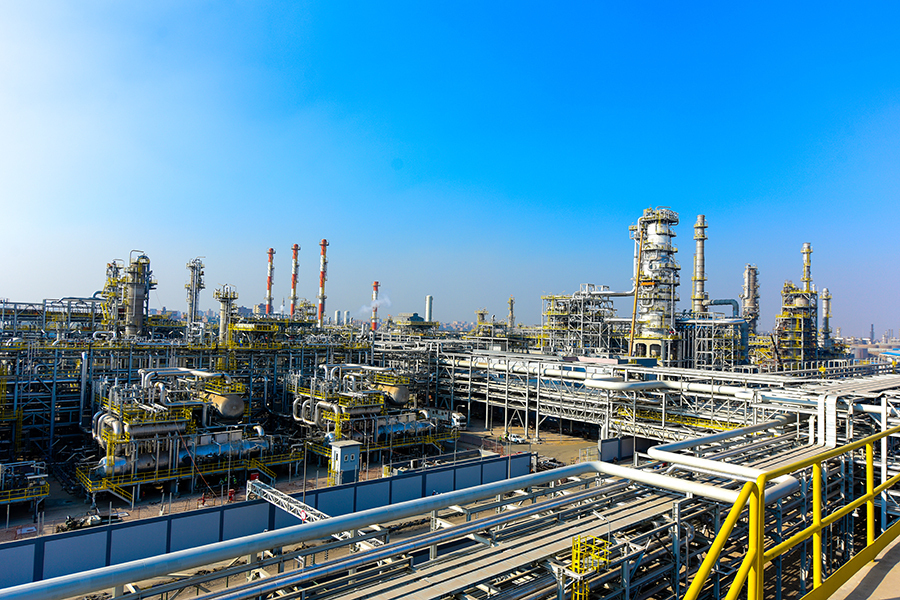
Taqa Arabia shares to be listed on EGX this week ahead of direct offering

1

What We're Tracking Today

It’s PMI day in Egypt

Monday is PMI day here in Om El Donia: S&P Global will release May’s PMI figures soon after we hit ‘send’ on this morning’s newsletter. Egypt’s non-oil private sector contracted at a slower pace in April as the stable exchange rate helped to alleviate inflationary pressures.

ALSO HAPPENING TODAY-

The Innoxera EdTech summit: Sponsored by Classera, the event will bring together experts, innovators, and entrepreneurs in the field of technology and education to discuss innovations in smart learning, with a specific focus on AI. The event will take place at the Royal Maxim Palace Kempinski Hotel in New Cairo. You can register here.

FY 2023-24 development plan Senate vote: The Senate will hold a final vote on the FY 2023-2024 socioeconomic development plan today. Senators began discussing the plan yesterday, during which Planning Minister Hala El Said gave a statement and a run-down of the key aspects of the plan for the coming fiscal year. The Senate Financial and Economic Affairs Committee approved the plan last week.

At the committees:

  • The Foreign Affairs Committee will open the file on Egypt's membership of the BRICSgroup;
  • The Industrial Committee will review policies designed to generate USD 100 bn fromexports per year by the middle of the decade;
  • The Energy Committee will look into the performance of the Egyptian General Petroleum Corporation (EGPC);
  • The Tourism Committee will discuss measures necessary to put the old city of Rosetta back on Egypt's tourism map.

Hamas and Islamic Jihad in Cairo for peace talks: High-level delegations from the Hamas and Islamic Jihad movements are in Cairo today to discuss the recent Egypt-brokered ceasefire with Israel and developments in the occupied territories, Al Arabiya reported yesterday. Israel’s assassination of senior Islamic Jihad commanders sparked five days of violence in Gaza last month, forcing Egypt to step in and mediate a ceasefire between the two sides.

Apple is set to debut its first AR/VR headset + new Macs and software upgrades today: Apple’s highly anticipated annual Worldwide Developer Conference (WWDC) kicks off today at 8pm Cairo time,bringing the company’s first new product category since the Apple Watch — a new mixed reality headset that’s expected to retail for USD 3k, Bloomberg reports. The device maker is also set to introduce a slew of new Mac models, including a 15-inch MacBook Air, a new Mac Studio line, and several software upgrades for its Apple Watch, iOS 17, iPadOS 17, and macOS 17.

The event is getting coverage in: TechCrunch| CNET| Reuters | The Verge.

HAPPENING THIS WEEK-

Africa Health Excon starts Wednesday: The four-day health conference will take place at the Egypt International Exhibition Center on Wednesday. Check out the agenda here.

THE BIG STORIES ABROAD-

There’s no single story dominating the global front pages this morning:

  • Oil supply cut: Saudi Arabia’s decision yesterday to voluntarily cut oil supply is everywhere in the financial press — more on this in Planet Finance, below: Bloomberg | Financial Times | Wall Street Journal | CNBC.
  • Tensions in East Asia:Reuters covers the rising US-China tensions in the South China Sea.
  • US politics:The Associated Press and the New York Times both have stories on the impact of politically polarized state legislators as the 2024 presidential race begins to heat up.

ICYMI-

Missed this week’s Inside Industry? In our weekly vertical exploring all things industry and manufacturing, we looked at what happened when a delegation from the African Association of Automotive Manufacturers visited East Port Said’s integrated industrial zone, and how the association sees Egypt taking the lead in Africa’s automotive market in the next decade.

CIRCLE YOUR CALENDAR-

IT’S A BRAND NEW MONTH: Here are some economic indicators to look out for over the coming weeks:

  • Foreign reserves: The central bank will publish foreign reserves figures for June this week.
  • Inflation: Capmas and the central bank should be out with May’s inflation data on 8 June.
  • Interest rates: The central bank will meet to review interest rates on 22 June.

Check out our full calendar on the web for a comprehensive listing of upcoming news events, national holidays and news triggers.

*** It’s Blackboard day: We have our weekly look at the business of education in Egypt, from pre-K through the highest reaches of higher ed.

In today’s issue: With rising inflation and other macroeconomic headwinds, private sector education players are finding it increasingly difficult to finance investment and expansion plans. We look at how alternative options — including leaning into private-public partnerships, and tapping debt instruments — could help drive new investments in the sector.

Solasi Wellbeing Festival has been lovingly created by Yes Yoga and Osana Family Wellness and takes place at the beautiful Somabay from 21-23 September.

Solasi brings you Sunrise Yoga, Sound Healing, Funky Classes, Morning Runs, Enlightening Workshops, Healing Treatments, Tai Chi, Meditation, Kids Activities, locally sourced food, and lots of dancing.

Don't miss your chance to take #ThreeDaysOff and flow with us at Solasi at Somabay. Head to www.solasifestival.com to find out more and book your pass today.

2

IPO

Taqa Arabia shares to be listed on EGX this week ahead of direct offering

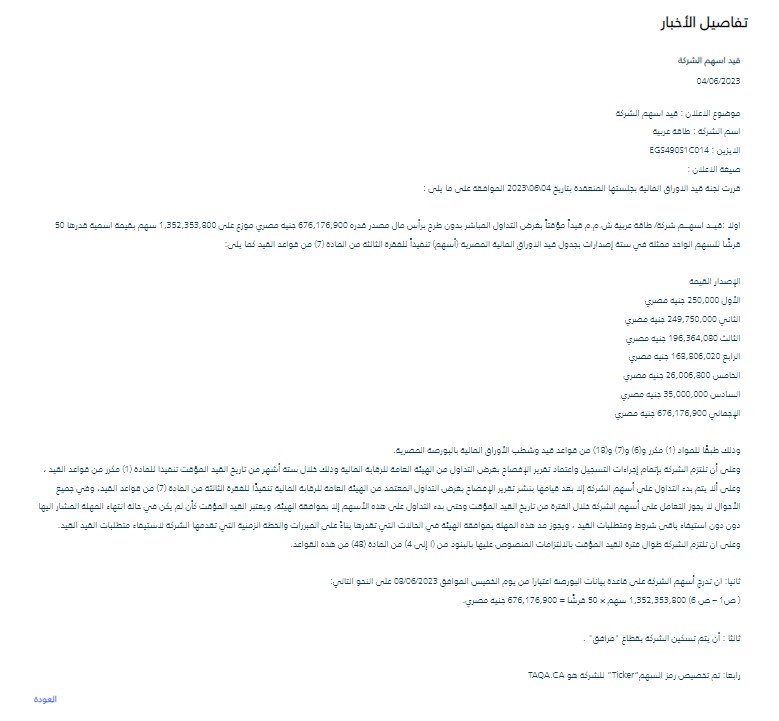
Taqa Arabia shares will be listed on the EGX on Thursday: The EGX’s listing committee has signed off on the temporary listing of Qalaa Holdings’ Taqa Arabia, the EGX said in a statement (pdf) yesterday. Shares will be listed on the bourse on Thursday after which the company will have six months to meet listing requirements and obtain regulatory approvals.

So this is the energy company El Dokany was talking about? EGX boss Ramy El Dokany said last week that an unnamed energy company was preparing to join the bourse. In an interview with CNBC on Wednesday, El Dokany said the EGX hopes to finish listing procedures within a week or two and for the company to debut on the exchange in the next two months.

This isn’t an IPO per se: The company will directly list its shares on the bourse, without offering shares to investors via subscription.

The details: The energy company will list over 1.352 bn shares on the bourse at a nominal value of EGP 0.50, giving it an issued capital of EGP 676.2 mn, the statement said. Trading will eventually take place under the ticker TAQA.CA.

What we don’t know: It remains unclear how much the company wants to raise, how many shares it is considering selling, and when it wants to go ahead with the offering. A company representative declined to comment on the matter when we reached out yesterday.

It’s been a long time coming: Taqa Arabia was initially planning to IPO back in 2020, before its plans were derailed by covid. Qalaa had reportedly planned to list 30-40% of the company in the first half of 2020. The company had reached a valuation and wrapped up all procedures for the sale prior to the pandemic, but had to conduct a new fair value study and revisit the size of the stake to list on the EGX.

Taqa Arabia is an attractive proposition: Taqa Arabia is one of the leading companies in the energy distribution and utilities. Its operations span the growing gas, renewable energy and power sectors, and has experienced consistent revenue growth in recent years, with revenues growing at a 13% compound annual growth rate in the five years to 2022, according to our math.

Taqa in 2022:Last year saw the company’s revenues hit a record EGP 10.7 bn, up 18% from 2021, with solid growth across all of its segments. Taqa Gas’ revenues rose 41% to EGP 2.7 bn on the back of the government’s rollout of natural gas-powered vehicles and new residential connections under the Hayah Karima program. Meanwhile, revenues from Taqa Arabia Power increased 12% to EGP 1.8 bn due to rising distribution and generation volumes.

Expansion plans: “We are keen on scaling up our investments, services and project portfolio in Egypt and the region. This requires finding sources of financing and increasing the group’s capital in the coming period,” Chairman Khaled Abu Bakr was quoted as saying in a statement (pdf) yesterday. The company is preparing to expand in Saudi Arabia via a joint venture with the Saudi Natural Gas Distribution Company.

3

Privatization

Egypt working on EDC, Elab stake sales -CNN

EDC + Elab being lined up for stake sales: The Egyptian government is in talks with strategic investors to sell a 49% stake in the Egyptian Drilling Company (EDC), CNN Arabic reported yesterday, citing an anonymous Egyptian government source. Negotiations with the strategics, the majority of which are Emirati, have already kicked off, the source said, adding that the government is aiming to complete the sale before the end of 3Q 2023. The government will retain a 51% stake in the company following the transaction.

Elab heading for the EGX? Egyptian Linear Alkyl Benzene (Elab) will be listed on the EGX this month, CNN’s source said. The government is reportedly seeking to sell more than 40% stake in the company via a public share sale on the EGX and private offerings to strategic investors, according to the report. It is unknown how much of the company would be allocated to strategics.

This would make sense: Elab was namedas the first company to go to market via the Sovereign Fund of Egypt’s (SFE) pre-IPO fund, fund head Ayman Soliman told local media in March, without disclosing any further details about the sale.

Oil and petrochemical companies dominated the government’s list of 32 state-owned companies that would be offered to investors under its rebooted privatization plans. Both EDC and Elab were namedwhen the list was released in February, although it wasn’t clear at the time which companies would be destined for the EGX and which were being earmarked for strategics. The government aims to raise USD 2 bn via asset sales by the end of June, and has so far raised some USD 147 mn by selling off Pachinand a 10% stake in Telecom Egypt.

Time is of the essence: The slow rate of progress in selling off state assets is increasing pressure on the country’s external position, raising concerns about the government’s ability to meet foreign debt repayments. The privatization program — a key component of the USD 3 bn IMF program — is key to ending the prolonged FX shortage and stabilizing the currency.

NI Capital expects two sales this month: Two of the seven state asset sales being worked on by NI Capital are expected to be completed before the end of June, CEO Mohamed Metwally previously told CNBC Arabic. Metwally declined to disclose names but said that it is working on selling shares in state-owned companies in the oil, petrochemicals and transport sectors.

AAIB REPORTS FINANCIALS-

One of the three banks up for privatization just reported its 1Q financials: The Arab African International Bank (AAIB) saw its profits increase 22% y-o-y in 1Q 2023 to reach EGP 1.22 bn, according to the bank’s standalone financial statements picked up by Al Borsa. AAIB – whose ownership is evenly split between the Central Bank of Egypt and the Kuwaiti sovereign wealth fund – is one of the three banks named on the government’s privatization list alongside United Bank and Banque du Caire,

4

M&A WATCH

Egyptian healthtech startup Rology acquires Saudi radiology firm

Rology enters Saudi health market: Cairo-based teleradiology startup Rology has acquired Saudi teleradiology provider Arkan United, it said in a press release (pdf) yesterday. The agreement will give Rology and its AI-assisted platform a foothold in the “key” Saudi market, which suffers from a lack of high-quality, private-sector radiology services, it said. The company did not specify the size of the transaction or how much of Arkan it acquired.

About Rology: Founded in 2017, Rology is a teleradiology platform that connects healthcare providers and hospitals with radiologists, matching them with cases based on expertise and availability. The platform automatically matches scans with the relevant radiologist, enabling diagnosis within 24 hours of the scan, which under normal circumstances could take up to three weeks. It was among our healthtech startups to watch in 2021.

What they said: “By combining Rology’s cutting-edge technology and network with Arkan's established expertise, we're poised to revolutionize the field of teleradiology and improve patient care in unprecedented ways,” Rology’s CEO Abodriaa said. “Rology has the right people and the right disruptive solution that the Saudi healthcare system truly needs. I am proud of what Arkan has done for the healthcare landscape in the kingdom, and I am eager to see Rology take it one step further,” Arkan CEO Baeshen added.

Rology has completed two funding rounds in the past three years, raising USD 860k in a pre-series A round in 2020 and an unspecified amount of pre-series A funding led by Egypt Ventures round last April.

5

Spotlight

SPOTLIGHT- Amr El Bahey, CEO and Egypt country head at Mashreq Bank

SPOTLIGHT- Amr El Bahey, CEO and Egypt country head at Mashreq Bank: Since launching here more than 50 years ago, Egypt has become a key market for Mashreq Bank. The Dubai-headquartered lender now derives 10% of its global revenues from Egypt, and it wants to maintain its upward trajectory. We recently sat down with Amr El Bahey (LinkedIn), the CEO and country head of Mashreq Egypt, to find out more about the bank’s growth strategy, why SMEs and exporters are among its key clients, and his outlook on the Egyptian economy.

Edited excerpts of our conversation:

ENTERPRISE: Where does Egypt fall within Mashreq’s global growth strategy?

El Bahey: Egypt is one of the top priorities for the Mashreq Group and that’s across multiple lines of business including corporate banking, retail banking, SMEs, and our strategy for financial inclusion. Mashreq has been making powerful strides and we’ve spotted growth potential in all of these areas in the local market and that has put Egypt top of the bank’s priority markets. In fact, Egypt constitutes 10% of the Mashreq Group’s global revenues, which is huge bearing in mind that we operate in multiple markets including Qatar, Bahrain, UK, United States, India, and Hong Kong, and we’ve just acquired a license in Oman and a digital banking license in Pakistan.

ENTERPRISE: How do you plan to keep that growth momentum going in the local market?

El Bahey: It is obviously the strategy of the group to increase the growth momentum in the local market and see Mashreq Egypt acquire a bigger share of the pie. I have such strong confidence in the Egyptian economy that I'm sure in the next few years the bank will continue to deliver high financial performance, proving our views in the group about Egypt’s high potential.

Our pipeline investments in the local market are very indicative of how Mashreq Egypt is taking a long position on the local market given that we are expecting Egypt’s share of the Group’s Capex to grow 4x in 2023 as compared to the previous year. We are really bullish on Egypt and that can be seen through growth in our investments and expansion plans.

We are planning to grow in sectors across the board. We are still going to grow our SMEs portfolio and our corporate portfolio is also top of the agenda. We are also looking at continued growth in retail and financial inclusion.

ENTERPRISE: How does Egypt compare against Mashreq’s regional markets, for example the UAE? Where and in what sectors are you seeing the majority of your business being done?

El Bahey: Egypt and the UAE are two very different markets, each with their own dynamics, population mix, and makeup of industries. The retail sector is more or less focused on the expat community in the UAE, whereas in Egypt, that’s not the case at all.

The sectors we’re more focused on in Egypt this year are telecoms, IT, F&B, pharma and SMEs, while in the UAE that would naturally be something along the lines of oil & gas, contracting, and finance, and in Dubai particularly, hospitality and leisure.

ENTERPRISE: SMEs are a cornerstone for the national strategy to develop the economy. How does Mashreq accommodate SMEs and contribute to the ecosystem’s growth?

El Bahey: We have an intense focus on SMEs and that has yielded very high results. Our engagements with the local SMEs ecosystem grew almost 4x since 2018. We have managed to deliver on the regulator’s quota that commits banks to allocating at least 25% of their loans portfolio to MSMEs during Q1 2023.

We believe that with the right tools and support, including banking services, the SMEs ecosystem could really take off and shine and hopefully help skew the country’s trade balance more in favor of exports.

ENTERPRISE: Which sectors within the SMEs ecosystem are of particular interest to Mashreq Egypt?

El Bahey: We really like manufacturers, including small-scale manufacturers. Exporters are also a top priority. You don’t have to own a fertilizers plant to grab our attention — you can export small spare parts or widgets and still receive a lot of support from Mashreq Egypt. Other sectors of interest include agrifood and pharma, of course.

ENTERPRISE: How’s Mashreq navigating the emerging fintech industry in the local market?

El Bahey: Mashreq Egypt is very open to investments in fintech and we collaborate with many fintech companies and startups by providing them with banking services. We’ve also made big contributions to the push for more card issuances, including the prepaid Meeza card. We are really progressive and excited about development in that area. It’s something we are actively pursuing and it ultimately feeds into our goal of expanding on financial inclusion.

We’re very excited to see a lot of innovation and talent through some of our engagements brewing in the local SMEs ecosystem, especially in fintech, and that’s inspiring us to explore more room for growth in that area.

ENTERPRISE: How are you positioning Mashreq to make strides in digitalization?

El Bahey: We have a lot of digital propositions in the pipeline for this year that will take our SME clients to the next level. We are certainly putting less emphasis on brick and mortar and more on digital tools and solutions. We believe that the proliferation of banking tools and services pave the way for and make financial inclusion an easier task.

ENTERPRISE: How has the rise of non-banking financial services (NBFS) and the emergence of startups offering services like buy-now-pay-later (BNPL) impacted your business and the industry at large? Do you consider them competition?

El Bahey: We all see these services popping up. Let me say that they can be considered competition only in the short term, because there's a certain pie and suddenly someone is chipping a portion of that. But the reality is you need to reimagine the pie and you need to reimagine the market with the full realization that that's going to be an ongoing part of the landscape. So the key differentiator is how you are going to adapt your products and propositions to flourish in this new landscape because they're not going away and they're only going to get better.

We are adapting by preparing to launch products and propositions that compete head-to-head in 2023, and we are optimizing existing products by offering them through a digital lens to appeal to the consumer who is attracted by fast, timely and simplified offerings.

ENTERPRISE: Who is your ideal client in today’s environment?

El Bahey: Again, we love exporters. They're our ideal clients because of their systemic importance to the economy. We are working with people who have critical success factors in their sector — people with a certain innovative edge. That could be a technology, a distribution network that works well, or even close proximity to the source material or an exporting hub. It really varies from one industry to another. We’re leaning towards sectors that have proven to be survivors of global economic crises rather than excluding any particular sector.

Enterprise: How has the bank adapted to the current macro environment?

El Bahey: The biggest thing that has allowed us to deal with the challenges is really knowing our customer. We take client selection very seriously and we onboard and work with people who are of added value and whose creditworthiness and financial capacity has been proven.

I'm not exaggerating when I say that we are highly confident that Egypt is capable of weathering the challenges triggered by global events. The makeup of the current local situation is largely a ripple effect of the global situation. And we are optimistic that the government and the central bank are addressing it the right way and are taking measures that will bear fruit. I'm also very optimistic about the privatization program and we're all hoping that it gets fast-tracked.

6

LAST NIGHT’S TALK SHOWS

The Suez Canal, Al Ahly’s win and the Mauritanian president’s visit all received coverage on Egypt’s talk shows

It was a mixed bag of nuts on the nation’s airwaves last night with talking heads covering everything from yesterday’s delays at the Suez Canal, to changes to landline packages and Al Ahly’s win against Wydad in the African Champions League final.

It was a busy evening for the head of the Suez Canal Authority: The chairman of the Suez Canal Authority, Osama Rabie, appeared on Salet El Tahrir (watch, runtime: 6:57) and El Hekaya (watch, runtime: 1:59 |3:00) to discuss yesterday’s events at the canal, where an oil tanker broke down, briefly blocking a single-lane section of the waterway. Al Hayah Al Youm (watch, runtime: 2:05) also had coverage.

Mauritanian President Mohamed Ould Ghazouani’s visit to Egypt garnered the attention of most talk shows last night, including Lamees Hadidi’s Kelma Akhira (watch, runtime:5:49), Al Hayah Al Youm (watch, runtime:4:15) and Salet El Tahrir (watch, runtime;2:36). We have more on the visit in this morning’s Diplomacy section, below.

Why doesn’t the government grant more tax and customs breaks to investors, El Hekaya’s Amr Adib asked, during his interview with Pyramids Tire Company Chairman Ibrahim Gouda (watch, runtime: 9:28), in which they discussed efforts to localize the industry and reduce reliance on imports. Adeeb pointed out that the cost of providing a single job ranges between EGP 80-90k, which the state can collect as compensation in the form of taxes or customs with the expansion of investment in Egypt.

Converting landlines to prepaid lines? You may have received such a message from Telecom Egypt. Landline phones have been linked to the prepaid system used by mobile and internet services, Telecom Egypt Vice President Mohamed Abotaleb explained on El Hekaya (watch, runtime: 7:32), allowing the company more flexibility to provide landline, mobile and internet service packages as well as giving customers greater control over consumption.

Also on the airwaves last night:

  • VAT is coming to Google:Google’s introduction of VAT on e-services got air time on El Hekaya (watch,runtime: 4:40), which featured an interview with Sayed Saqr, the Egyptian Tax Authority’s e-commerce head, to explain the changes.
  • Al Ahly are halfway to becoming African champions: Al Ahly’s 2-1 victory over Morocco’s Wydad in the first leg of the CAF Champions League finalin Cairo dominated coverage of several talk shows last night, including Kelma Akhira (watch, runtime: 1:10) and El Hekaya (watch, runtime: 1:17).
  • Details of Pope Tawadros II illness attracted significant attention: El Hekaya (watch,runtime: 2:44), Masa’a DMC (watch, runtime: 3:08) and Salet El Tahrir (watch, runtime: 1:14) all spoke with the Coptic Church’s spokesperson who confirmed that the Pope’s condition is stable.
  • “I am not fleeing,” says Baghdoda: Egyptian wrestler Ahmed Baghdoda, whose sudden departure from Egypt last month sparked speculation, thanked President El Sisi for inviting him to return to Egyptand confirmed that he has not fled the country in a video on his official Facebook page that caught the attention of Kelma Akhira (watch, runtime: 2:48) and Al Hayah Al Youm (watch, runtime:3:28).

This publication is proudly sponsored by

7

EGYPT IN THE NEWS

The Egypt-Israel border shooting is still dominating coverage in the int’l press

Saturday’s shooting incident at the Egypt-Israel border is still dominating the conversation in the foreign press this morning: Israeli Prime Minister Benjamin Netanyahu weighed in on the issue yesterday, calling the shooting — which claimed the lives of three Israeli soldiers and one Egyptian officer — a “terrorist attack,” and calling on Egyptian authorities to work with Israel on an “exhaustive and thorough” joint investigation. Israel said the fire came for an Egyptian policeman, while the Egyptian Armed Forces said the officer who crossed the border was chasing suspected narcotics smugglers. (Reuters | AFP | New York Times | The National | The Guardian | Times of Israel)

Libyan forces expel thousands of Egyptian migrants: Thousands of Egyptian migrants have been deported on foot across the land border to Egypt by eastern Libyan forces, Reutersreports, citing Egyptian and Libyan security sources. Of the 4k migrants Libyan authorities had detained, some 2.2k were in the country illegally, with the majority Egyptian nationals.

8

Also on our Radar

Saudi industry minister talks industry, mining on visit to Egypt. PLUS: Suez Canal blockage, Bank ABC to sell Blom unit,

MANUFACTURING-

#1- Egypt + KSA to up cooperation on non-oil exports and cars: The Egyptian and Saudi export development authorities have inked an MoU to enhance cooperation between the two countries in increasing non-oil exports, according to a Trade Ministry statement. The agreement was accompanied by a separate MoU between software developer Valeo Egypt and Saudi National Industrial Development Center to develop the automotive industry. This came during a meeting between Industry and Trade Minister Ahmed Samir and his Saudi counterpart Bandar Alkhorayef, who began an official visit to Egypt on Saturday to discuss potential cooperation with the government and the private sector on industry and mining.

Industry + mining tops agenda for Alkhorayef-Madbouly talks: Alkhorayef also held a separate meeting with Prime Minister Moustafa Madbouly and Samir yesterday during which they discussed investment opportunities in the two countries’ industrial and mining sectors, according to a cabinet statement. Integration of supply and production chains were top of Madbouly’s list of areas for partnership, while Samir pinpointed integration in food and drug security industries and export promotion to African markets.

“Saudi investors have a desire to increase their investments in Egypt,” AlKhorayef said, adding “we see the tremendous efforts made by the Egyptian government to build an industrial base as well as facilitate the investment climate.” Petrochemical, automotive and medical device industries were all named as of interest to the Saudi ministry. The Industry Ministry is conducting a three-day visit to Egypt, during which they will visit industrial sites and hold meetings with the private sector.

#2- Indian firm sets up shop at Orascom’s Sokhna industrial zone: Indian manufacturer ABDOS will invest EGP 220 mn to set up a factory for manufacturing personal care products at Orascom Industrial Parks’ (OIP) Sokhna complex, OIP said in a statement yesterday.

SUEZ CANAL-

Traffic in the Suez Canal returns to normal after stranded tanker fixed: An oil tanker that broke down in a single-lane channel of the Suez Canal yesterday has been fixed and is no longer blocking the waterway, the Suez Canal Authority said.

REGULATION-

Cabinet unit for startups: Prime Minister Moustafa Madbouly has cleared the way for the establishment of a permanent cabinet unit that proposes policies, laws and regulations designed to support the growth of startup companies in Egypt, cabinet said yesterday. Led by the CEO of the General Authority for Investment and Freezones, the unit’s members will include representatives from relevant ministers, the Central Bank of Egypt, the Financial Regulatory Authority and the Micro, Small and Medium Enterprise Development Agency (MSMEDA).

M&A -

Bank ABC to exit Blom unit: Arab Banking Corporation (Bank ABC) is looking to exit its stake in Blom Egypt Investments, an informed source told Enterprise yesterday, confirming a story originally published in Al Shorouk. The Bahraini lender wants to sell its entire 49% stake in the Blom subsidiary, our source said, adding that Blom Securities Trading Company — which owns the remaining 51% of the firm — is looking to sell.

Remember: Bank ABC acquired the local unit of Lebanon’s Blom Bank two years ago for USD 424 mn.

9

PLANET FINANCE

Saudi Arabia to further curb oil supply in bid to lift prices

Saudi Arabia will voluntarily cut oil production by 1 mn barrels per day after the OPEC+ group of oil producers failed to agree on new curbs during a tense meeting in Vienna yesterday. The reduction comes on top of its 500k b/d voluntary cut in April, and will see the kingdom’s production fall to its lowest level in several years. Speaking following the meeting, Saudi Energy Minister Prince Abdulaziz bin Salman said the kingdom “will do whatever is necessary” to stabilize the market. April’s supply cut has failed to support oil prices, which have been on a downward trend in recent weeks on fears of a global economic slowdown.

Oil prices are rising in Asia this morning following the news: Brent futures were up 0.8% to USD 77.05 a barrel while US crude was 1.4% higher.


Speculators bullish on tech, bearish on S&P 500: Speculative investors are anticipating a decline in the S&P 500 Index, while predicting growth in the tech-focused Nasdaq 100, according to data picked up by the Wall Street Journal. Growing negativity about the prospects for the broader stock market has resulted in investors acquiring their most bearish positioning since 2007. On the flipside, expectations for a tech rally are building: the seven big tech companies listed on the S&P 500 have been the difference makers in keeping the index from falling into negative this year. While the S&P 500 is up almost 12% this year, potential misfires from tech companies could leave the index vulnerable, says the WSJ.


A return to normalcy at the Turkish central bank? Turkey’s new finance minister, Mehmet Simsek, has pledged a return to “rational” policies, putting an end to years of unorthodox monetary policies pushed by the country’s president, Recep Tayyip Erdogan, the Financial Times reports. Simsek was appointed to the cabinet on Saturday following Erdogan’s reelection to a new five-year term last week. “The choice of Mehmet Simsek. . . increases the likelihood that monetary policy will shift towards a more orthodox direction,” Goldman Sachs analysts wrote in a note following his appointment.

EGX30

17,455

-0.4% (YTD: +19.6%)

USD (CBE)

Buy 30.84

Sell 30.96

USD at CIB

Buy 30.85

Sell 30.95

Interest rates CBE

18.25% deposit

19.25% lending

Tadawul

11,222

+1.9% (YTD: +7.1%)

ADX

9,406

+0.4% (YTD: -7.9%)

DFM

3,603

+0.6% (YTD: +8.0%)

S&P 500

4,282

+1.5% (YTD: +11.5%)

FTSE 100

7,607

+1.6% (YTD: +2.1%)

Euro Stoxx 50

4,324

+1.6% (YTD: +14.0%)

Brent crude

USD 76.13

+2.5%

Natural gas (Nymex)

USD 2.17

+0.7%

Gold

USD 1,969.60

-1.3%

BTC

USD 27,256

+0.6% (YTD: +64.9%)

THE CLOSING BELL-

The EGX30 fell 0.4% at yesterday’s close on turnover of EGP 2.84 bn.ِ Regional investors were net buyers. The index is up 19.6% YTD.

In the green: Ibnsina Pharma (+14.0%), Qalaa Holdings (+10.0%) and Fawry (+3.3%).

In the red: Abu Qir Fertilizers (-3.5%), Eastern Company (-3.3%), and Sidi Kerir Petrochemicals (-2.7%).

10

Diplomacy

El Sisi holds talks with Mauritanian president in Cairo

El Sisi meets Mauritanian counterpart in Cairo: President Abdel Fattah El Sisi talked cooperation on counter-terrorism in the Sahel as well as regional security regarding the situation in Sudan and the development of the GERD dispute with Ethiopia during Mauritanian President Mohamed Ould Ghazouani’s visit to Cairo yesterday, according to Ittihadiya.

11

AROUND THE WORLD

Sudan truce ends, bringing heavy fighting in Khartoum, Darfur

40 dead and dozens injured in North Darfur as Sudan violence intensifies: Fighting has intensified across Sudan following the end of the temporary ceasefire, with at least 40 people dead and dozens more injured in North Darfur state, reports Reuters.

Ceasefire, peace talks collapse: The Saudi and US-brokered truce expired on Saturday, a few days after the Sudanese army quit peace talks blaming the RSF for failing to respect the terms of the ceasefire. The two sides had been engaged in talks in Jeddah for more than three weeks. The talks allowed limited humanitarian aid access but failed to bring an end to the fighting in the nation’s capital.

Saudi Arabia, US not giving up: Saudi Arabia and the US yesterday called on both sides to return to the negotiating table and agree to a new ceasefire. In a joint statement, the two sides said they remain in daily contact with representatives of the army and the RSF, and are holding discussions about facilitating humanitarian relief and restarting peace talks.

12

BLACKBOARD

Tight macro conditions are pushing private education players to look more closely at PPP + alternative financing options

Will cost pressures and tightening economic conditions drive more PPP in education? WIth increasing financing pressures amid rising inflation and the weakening EGP, private education players have all but halted their expansion plans, while new investors are wary of the steep upfront costs. This dearth of fresh investments in the sector is creating a supply gap, particularly among the middle class segment, who stand at an estimated 2.5 mn students, according to participants at an education-focused investment conference held last week. Private sector players need to look to private-public partnerships (PPP) and search for alternative financing options to help cover that gap, industry players said.

IN CONTEXT- Schools looking to expand their footprint with new branches or adding capacity at existing campuses are struggling to cover the costs of new construction, which have jumped due to inflation and high prices of building materials. These hikes prompted some to accelerate implementation of their projects in order to avoid future increasesin costs, while others have had to put a complete halt to their new projects. Besides building costs, schools are facing other challenges like the government-imposed cap on annual tuition fee increases, and the burden of accommodating teachers’ salaries.

Financing represents the biggest challenge standing in the way of fresh investment in the education sector, with the high interest rate environment making it difficult for private sector players to access funding for capital expenditures on facilities and land purchases, Saint Fatima School board of directors member Saif Sameh said at the conference. Education and its sustainability depend on adequate access to capital for expansion to cover market demand, Sameh said. “Confidence in the operating model used in private and international schools, along with the preparation of adequate technical studies, is the main entry point for obtaining financing from banks,” according to Ghada Mostafa, the assistant managing director and head of the investment sector at United Bank.

Bank funding needs to be more accessible for private and international schools, which are a long-term investment: “Banks should loosen their lending criteria and make loans more accessible to support financial growth to educational institutions that make long-term investments whose lucrative returns are not achieved until after years of operation,” Zilla Capital Managing Partner Moustafa El Shenety told Enterprise.

That financing gap was the main culprit behind the stalling of the PPP schools program, according to Ater Hanoura, head of the Finance Ministry’s Private Partnership Unit. The government found that several education players who were interested in the program were unable to secure bank financing, prompting the government to reconsider the tendering process for the program and provide more incentives for prospective investors, Hanoura said.

PPP agreements require a clear contractual system that caters to all parties involved, participants at the conference agreed. The Education Ministry lacks the in-house know-how of managing partnership contracts with the private sector from the technical, legal, and financial perspectives, which limits the participation of the private sector in investing in the education sector, some speakers said. The provision of an attractive contractual system would encourage more investor appetite for partnership with the government, akin to what the Sovereign Fund of Egypt (SFE) is doing in the sector.

The SFE is pushing ahead with more private sector partnerships in the sector: As public investments are not enough to keep up with demand in education, the SFE is working to offer up more partnerships with private sector players to create “favorable options to sustain investments in the sector,” SFE CEO Ayman Soliman said.

But pulling in FDI requires a rethink of current legislation regulating the education sector, including stipulations that impose a 20% cap on foreign ownership of both private and international schools, El Shenety said. Reassessing these laws could unlock a significant amount of private investments in the education sector, he suggested. As it currently stands, private sector players account for c.11% of investments in the sector, while the government covers the remaining 89%, Mostafa said.

Private sector players also want to see a rethink of land pricing models: Land plots are allocated to schools at a unified price without taking into account the different educational models and their varying investment costs, according to Egypt Education Platform (EEP) CEO Ahmed Wahby. Land prices should be determined based on a tier system, particularly since the cost of purchasing land for a new school in upscale residential areas is a significant burden, Wahby said.

Meanwhile, education players need to get their governance ducks in a row: What’s really holding back most educational institutions is that they’re “lacking administrative governance, especially since most of them are family-owned, and many are managed by non-specialists,” El Shenety said. “This limits their chances of securing financing for expansion or attracting new investments, and tends to restrict M&A activity in the sector,” he said.

There are alternative financing solutions on the table: Private and international schools can take advantage of debt tools available in the market, such as future flow securitization — which our friends at CIRA Education became the first to tap last year with its EGP 800 mn issuance, noted CIB board member and former Financial Regulatory Authority head Sherif Samy. Future flow securitization issuances offer a cheaper alternative to expensive bank loans, as securitized bonds generally have lower interest rates than non-securitized bonds. This debt instrument could also give companies that struggled to secure growth capital access to immediate funds. New market entrants that are struggling with the high cost of entry could also tap into real estate investment funds to help move forward with their expansion plans, Samy suggested.


Your top education stories for the week:

  • Lighthouse Education eyes two acquisitions: Education investment platform Lighthouse plans to acquire stakes in two primary schools before the start of the next academic year.
  • Egyptian universities ft. sustainability: Thirty-seven Egyptian universities have been included in the Times Higher Education Impact Rankings 2023, which assesses some 1.6k institutions worldwide against the UN’s Sustainable Development Goals.
  • The Elsewedy University of Technology - Polytechnic of Egypt:Elsewedy plans to set up a polytechnic offering a range of specialized engineering qualifications, it said in a statement (pdf).
  • New visual arts education program in the works: CIRA Education is teaming up with Egypt-based Think Big Media Production and Canada-based the Center for Entertainment Arts (CEA) to offer accredited visual arts programs to students across a number of its campuses in East and West Cairo.
  • Higher teaching standards: The Professional Academy for Teachers and Arab Federation for Private Education have signed a cooperation protocol to develop the qualification and standards of teachers.

JUNE

June: Indian representatives to discuss prospect investments in the Suez Canal.

June: Egyptian-Saudi business forum.

5 June (Monday): Innoxera’s annual EdTech summit

6 June (Tuesday): National Dialogue.

7-10 (Wednesday-Saturday): Africa Health Excon, Egypt International Exhibition Center.

6-8 June (Tuesday-Thursday): Association for Iron and Steel Technology (AIST) MENA, Royal Maxim Palace Kempinski Hotel.

8 June (Thursday): National Dialogue.

10 June (Saturday): Thanaweya Amma examinations begin.

11 June (Sunday): House reconvenes.

11 June (Sunday): National Dialogue.

12 June - 15 July (Monday-Saturday): Thanaweya Amma exams.

13-14 June (Tuesday-Wednesday): Federal Reserve interest rate meeting.

13 June (Tuesday): National Dialogue.

15 June (Thursday): National Dialogue.

19-20 June (Monday-Tuesday): The forum for insolvency reforms and corporate restructuring in the Middle East and North Africa.

19-21 June (Monday-Wednesday): Egypt Infrastructure and Water Expo, Egypt International Exhibition Center.

19-21 June (Monday-Wednesday): Big 5 Construct, Egypt International Exhibition Center.

22 June (Thursday): Central Bank of Egypt’s Monetary Policy Committee meeting.

28 June-2 July (Wednesday-Sunday): Eid El Adha (TBC).

30 June (Friday): June 30 Revolution Day.

30 June (Friday): Egypt to exit Grains Trade Convention.

JULY

1 July: House of Representatives deadline to approve the FY 2023-2024 budget.

1 July: GAFI to launch the country’s first integrated electronic platform to facilitate setting up a business.

5 - 6 July (Monday - Tuesday): Gov’t to pay out subsidies to first wave of applicants under its sixth export subsidy program.

15 July (Saturday): Deadline for bids in EGPC’s mature oil fields tender.

18 July (Tuesday): Islamic New Year.

19 - 20 July (Wednesday - Thursday): Gov’t to pay out subsidies to second wave of applicants under its sixth export subsidy program.

20 July (Thursday): National holiday in observance of Islamic New Year (TBC).

23 July (Sunday): Revolution Day.

25-26 July (Tuesday-Wednesday): Federal Reserve interest rate meeting.

27 July (Thursday): National holiday in observance of Revolution Day.

Late July-14 August: 2Q2023 earnings season.

AUGUST

August: Hassan Allam Utilities + Agility to open Yanmu East logistics park.

2 - 3 August (Wednesday - Thursday): Gov’t to pay out subsidies to second wave of applicants under its sixth export subsidy program.

3 August (Thursday): Central Bank of Egypt’s Monetary Policy Committee meeting.

10 August (Thursday): Shalateen Mineral Resources gold mining tender closes.

22-24 August (Tuesday-Thursday): BRICS summit, Johannesburg, South Africa.

SEPTEMBER

September: Sustainable Debt Coalition Initiative agreed at COP27 to launch.

September: IDH to open first branch in Saudi Arabia.

9-10 September (Saturday-Sunday): G20 summit, New Delhi, India.

10-12 September (Sunday-Tuesday): The International Agricultural Exhibition for Africa and the Middle East, Sahara.

15 September (Friday): IMF to review USD 3 bn program.

15 September (Friday): Deadline for FX bureaus to comply with new capital requirements.

19-20 September (Tuesday-Wednesday): Federal Reserve interest rate meeting.

21 September (Thursday): Central Bank of Egypt’s Monetary Policy Committee meeting.

21-23 September (Thursday-Saturday): Narrative PR Summit, Somabay.

25 September (Monday): Nasdaq deadline for Swvl Holdings Corp to increase its market value of publicly held shares to a minimum of USD 15 mn.

25-26 September (Monday-Tuesday): Egypt to host the Asian Infrastructure Investment Bank’s annual board meeting, Sharm El Sheikh.

26 September (Tuesday): Prophet Muhammad’s birthday (TBC).

28 September (Thursday): National holiday in observance of Prophet Muhammad’s birthday (TBC).

OCTOBER

October: Deadline for ins. providers to link their databases with the FRA.

2-5 October (Monday-Thursday): ADIPEC 2023, Abu Dhabi National Exhibition Center.

6 October (Friday): Armed Forces Day.

9-11 October (Monday-Wednesday): Arabs Savings and Financial Literacy Conference, Four Seasons Hotel.

13 October- 20 October (Friday-Friday): The sixth edition of El Gouna Film Festival (GFF).

Late October-14 November: 3Q2023 earnings season.

15-17 October (Sunday-Tuesday): Egypt Automotive Aftermarket Exhibition, Cairo International Convention Center.

26 October (Thursday): Daylight saving time ends.

29-31 October (Sunday-Tuesday): Egypt Energy, Egypt International Exhibition Center.

29 October - 2 November (Sunday- Thursday): Cairo Water Week.

30-31 October (Monday-Tuesday): Intelligent Cities Exhibition and Conference, Dusit Thani LakeView, Cairo.

30-31 October (Monday-Tuesday): Global Business School Network (GBSN), American University of Cairo.

31 October - 1 November (Tuesday-Wednesday): Federal Reserve interest rate meeting.

NOVEMBER

November: Cairo to hostIntra-African Trade Fair.

2 November (Thursday): Central Bank of Egypt’s Monetary Policy Committee meeting.

14-15 November (Tuesday-Wednesday): Destination Africa, Royal Maxim Palace Kempinski Hotel.

15-24 November (Wednesday-Friday): Cairo International Film Festival, Cairo.

19-22 November (Sunday-Wednesday): Cairo ICT, Egypt International Exhibition Center.

23 November (Thursday): Worldview Education Fair, Cairo. (Register here)

DECEMBER

10-11 December (Sunday-Monday): eGlobe Expo, St. Regis Almasa Hotel, Cairo.

12-13 December (Tuesday-Wednesday): Federal Reserve interest rate meeting.

12-14 December (Tuesday-Thursday): Food Africa Expo, Egypt International Exhibition Center.

21 December (Thursday): Central Bank of Egypt’s Monetary Policy Committee meeting.

EVENTS WITH NO SET DATE

2023: The inauguration of the Grand Egyptian Museum.

Summer 2023: EGX to launch a shariah-compliant index.

1H 2023: GAFI roadshow set to launch to drum up foreign investment for golden licenses

1H 2023: Abu Dhabi Islamic Bank intends to launch a digital consumer finance company

2H 2023: Egyptian government expected to sign agreements with a consultant for the EuroAfrica electricity interconnector.

2H 2023: President Abdel Fattah El Sisi and Turkish President Recep Tayyip Erdogan expected to hold a summit.

3Q 2023: E-Finance to launch in Saudi Arabia.

4Q 2023: EGX to launch its new futures exchange.

End of 2023: A Developments’ first phase of the Lazoghly development completed.

2024: Standard Chartered Bank to open a branch in Egypt.

November 2024: Egypt to host the 12th session of the World Urban Forum (WUF12).

2Q 2025: Safaga Terminal 2 to initiate operations.

Now Playing
Now Playing
00:00
00:00