The S&P has finally come around and raised Egypt’s sovereign credit rating to ‘B’ from ‘B-’: S&P Global Ratings raised its long-term foreign and local currency sovereign credit ratings on Egypt to 'B' from 'B-’, with a stable outlook. “The stable outlook balances Egypt's falling current account deficit, decreasing inflation levels, and stronger growth prospects against risks from still-high fiscal deficits and a high stock of relatively short-dated government debt issued at high interest rates,” the ratings agency said in a statement (paywall). S&P forecasts GDP growth will reach 5.2% in FY2017-18 and is upping its expectation for growth over the next four years to 5.4% from 4.4%.
Rating hike underpinned by economic reforms: S&P sees that economic and fiscal reforms will underpin rising business confidence and sustain capital inflows. One of its key assumptions is that these inflows will lead to an increase in FX reserves, even as a large portion of the fiscal deficit will be financed through external borrowing. “In net terms, we project the key source of financing for the current account deficit will be net foreign direct investment averaging close to 3% of GDP per year over our outlook horizon.” The outfit sees Egypt experiencing a more broad-based recovery and a slight move away from a consumption-driven economy toward an increasing contribution from investment and net exports.
Upside risk: “We could consider a positive rating action if Egypt's growth significantly outperforms our forecasts, if larger-than-anticipated improvements in the current account position sharply reduce Egypt's external financing requirements and external debt levels, and if Egypt's reform program successfully lowers government debt.”
Downside risk: higher borrowing costs and insecurity: “Negative pressure on the rating could arise if Egypt's plan to gradually reduce government debt to GDP is derailed by fiscal slippages, higher borrowing costs, or more pronounced currency depreciation than expected, or if foreign exchange reserve levels were to fall significantly. We could also see negative pressure on the rating if the security environment worsens, hindering the recovery in investment and tourism.”
The ratings boost is a testament to the success of the economic reform measures and in the confidence investors have shown towards the Egyptian economy, Finance Minister Amr El Garhy said in a statement on Friday.
Related
Metro ticket prices more than triple over the weekend, to follow distance-based tier system: The Transport Ministry announced on Thursday a new tariff scheme for the Cairo Metro that saw ticket prices more than triple in some instances and changed the pricing scheme to a tier system based on distance traveled, according to a statement carried by Al Mal. The new tariff structure went into effect on Friday. “Commuters will be charged a base fare of EGP 3 (USD 0.17) for the first nine stops, EGP 5 for up to 16 stops, and a maximum of EGP 7 for anything more than 16,” Reuters says. The old system saw a standard EGP 2 ticket good for an unlimited number of stops. To mitigate the impact of the hike on metro regulars, “discounted rates will be maintained under the new system for students, the elderly, and those with special needs,” the newswire notes.
Background: Chatter about the new system had been in the works for the last several months. Transport Minister Hisham Arafat had given conflicting signals on when the hike would take place, at various times pointing to 4Q2018 and 2020. Ticket prices doubled under similar circumstances in March last year.
The hike is meant to make the Cairo Metro system sustainable, Assistant Transport Minister Amr Shaat tells Al Mal, explaining that ticket prices are still subsidized: The real price per ride, he said, is something near EGP 16.50. The company makes around EGP 1.2 bn a year and spends an average EGP 5.6 bn, according to Managing Director Khaled Sabra. Cairo Metro chief Ali Fadaly nodded along in agreement, telling the state news agency that the move — which Transport Minister Hisham Arafat said was “long overdue” — is necessary to help the company cope with its rising operational costs and continue working on upgrading and expanding the lines and network at the same time.
This comes as the Planning Ministry says that as much as EGP 6 bn will be invested in metro upgrades this year, including work on Lines 3 and 4.
MPs perform for the cameras: Angry MPs submitted urgent notes to House of Representatives speaker Ali Abdel Aal, asking him to summon Arafat to discuss the fare hike, which they said was too steep, according to Al Mal. Lawyers have also filed lawsuits to reverse the decision, according to Al Mal. One lawyer claimed in a complaint to the Egyptian Council of State (Maglis El Dawla) that the price hike is unconstitutional and that the Cairo Metro is not incurring losses, making the move unnecessary. A separate group of lawyers also filed a case with the Administrative Court.
Some 21 people were arrested yesterday as commuters protested at Metro stations, according to the Associated Press. Videos circulating on social media showed commuters chanting slogans demanding that the government rescind the price hikes, Al Arabiya reports. Some went as far as jumping over the ticket turnstiles to avoid paying for tickets at the new prices, according to Reuters. The outcry is a “rare display of public discontent as the government tightens spending and pushes austerity measures,” the newswire says.
Related
EXCLUSIVE- We had the chance to briefly speak last week with International Finance Corporation (IFC) Vice President for Middle East and Africa Sergio Pimenta, who gave us his thoughts on the Ismail government’s reform agenda, what the IFC likes about Egypt, and what more we can do to improve the investment climate. He statements to us come as the IFC officially announced last week that it and it partners will be investing USD 1.5 bn in Egypt in the 2018. In his own words:
We’re bullish on Egypt as reforms take hold: Egypt has been going through positive and interesting changes with its adoption of the economic reform program and we believe it is heading in the right direction. This is particularly true when it comes to monetary policy, which has helped bring stability to the country. Furthermore, we’re seeing the country begin to open up to the private sector. We like what’s already being done and what’s more important, we are starting to see results.
More reform, more private-sector involvement: On a macro level, we would like to see the government move deeper on structural reforms going forward. We would also like to see the private sector taking on a larger role, which the government can help bring about through simplifying administrative processes and improving governance regulations and bringing them to international best practices. Two things we can see helping bolster foreign direct investment if improved were issues surrounding cross-border trade and land ownership, especially concerning agricultural land.
What sectors does the IFC find attractive? Last fiscal year, we were very active on energy and particularly solar energy. We hope to replicate our approach last year to the energy sector in other sectors. The IFC is bullish on industries which it feels will have the biggest impact on job creation. This year, we have been very keen to invest across the entire agriculture value chain, including production and processing. We have also been focussing on supporting the financial sector, with particular attention paid to reaching out to SMEs and especially SMEs run by women. We’re also currently looking into infrastructure, water, and transportation, and hope to do more with them.
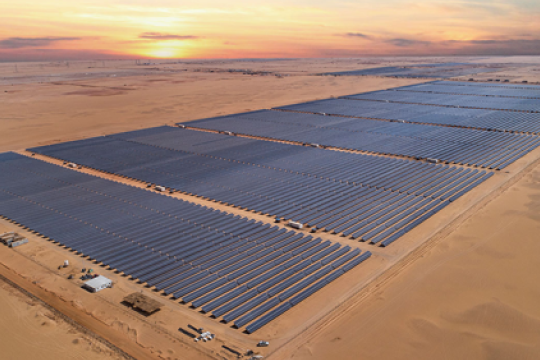
Speaking of the Benban solar park, we’re very happy with the progress of the project. The entire complex is very impressive in terms of size, scope and impact. The project had brought together all these investors on a giant undertaking in a very underdeveloped part of the country on a very short deadline. But more importantly is the opportunity such a project is creating among the local population. (we had noted recently that the IFC was in town to inspect progress on the Benban park.)
Related
EBRD to start accelerator program with Flat6Labs: The European Bank for Reconstruction and Development (EBRD) will be starting an accelerator program in Egypt in collaboration with our friends at Flat6Labs. The program will be similar to another that the EBRD is launching in Jordan with seed investment firm Oasis500. The programs will see EBRD extend support “through accelerating the development of their pipeline and start-up companies with a mix of practical workshops, connections to expert consultants and various business planning activities over a period of four years,” according to EBRD press release. Both programs will be funded through a EUR 2 mn package provided under a wider EBRD-EU initiative, “which includes a dedicated venture capital instrument to support trade and competitiveness in Egypt and Jordan.” The programs will focus on businesses in the ICT sector and target specific groups such as refugees, women, and youth.
Related
INVESTMENT WATCH- China’s Angel Yeast is planning to invest USD 55 mn in a new food additives plant in Beni Suef, according to a statement by the General Authority for Freezones and Investors (GAFI). The company aims to increase its production of dry yeast to 35,000 tonnes from the current 23,000 tonnes. In related news, the Egyptian Businessmen Association (EBA) is hosting 13 Chinese companies this week to discuss investments in the food and agriculture industries, CEO Mohamed Youssef tells Al Mal.
Related
M&A WATCH- TE to acquire OTMT’s MENA Cables in USD 90 mn transaction, obtain long-term USD credit facilities: Telecom Egypt (TE) announced on Thursday that its board of directors has signed off on the decision to acquire Orascom Telecom and Media Technology’s (OTMT) MENA Submarine Cables Systems in a USD 90 mn transaction. The acquisition, which had been kept under a semi-tight lid till now, will be financed through a shareholder loan from TE to its subsidiary cable business. TE had reportedly been close to tapping EFG Hermes to advise on the acquisition, sources had said last month, around the same time that businessman Naguib Sawiris announced in a conference that he was looking to pull himself out of the telecom industry.
TE’s board also approved a decision to obtain long-term USD credit facilities, including a USD 500 mn five-year syndicated loan, which will be arranged by Mashreq and First Abu Dhabi Bank. The company will also sign a one-year credit facility agreement with a maximum ceiling of USD 200 mn with the Abu Dhabi Islamic Bank and African Bank for Import and Export, as well as a four-year, USD 200 mn vendor finance agreement with Huawei. The amounts will be used to finance capex operations and make liquidity available for investments in 4G infrastructure. Reuters also has the story.
This came as TE reported a 48% y-o-y drop in net profit after tax in 1Q2018 to EGP 688 mn, according to the company’s earnings release (pdf). Consolidated revenues recorded EGP 4.8 bn, marking a 15.4% y-o-y increase.
Related
El Nasr Housing accepts Emaar’s EGP 100 mn settlement offer for Uptown Cairo dispute: State-owned El Nasr Housing and Reconstruction’s general assembly voted to accept Emaar’s EGP 100 mn settlement offer for their dispute over the Uptown Cairo project, El Nasr board member Ezzat Ibrahim tells Al Masry Al Youm. The company referred the case to the Public Enterprises Ministry to sign off on its approval of the offer, according to Ibrahim. El Nasr, which filed for arbitration in Cairo last July, had demanded Emaar pay EGP 1 bn and return 3 mn sqm of land in Mokattam it says Emaar has failed to develop since they acquired it in a 2005 agreement. El Nasr is also looking to retrieve 215k sqm it says are technically outside Uptown Cairo’s borders. Sources told us last month that Emaar had presented its settlement offer despite the ministry acknowledging that the company was not at fault for delays in moving ahead with the project.
Related
EARNINGS WATCH- Leading Automotive player GB Auto has returned to profitability, reporting a net profit after tax of EGP 33.5 mn in 1Q2018 compared to a net loss of EGP 154.5 mn in the same period last year, according to the company’s earnings newsletter (pdf). “We are now more than ever confident that customers have absorbed price increases as we see unit sales making a strong comeback in almost every automotive line of business,” our friend GB Auto CEO Raouf Ghabbour noted. “This quarter we have returned the Auto & Auto Related business to meaningful operating profitability. We’re no longer talking about keeping the business above water, but about how much we can continue to grow going forward as a transformed operation with two distinct business lines.” Citing improving appetite across the company’s product portfolio, Ghabbour said, “we believe our strategy is set to catapult us back to our historical levels of profitability.”
Related
IPO WATCH- Sky Light for Touristic Development is meeting with EGX’s listing committee today to discuss IPO requirements, says Adel Murad, IR Director at El Wadi Co. for Touristic Investment (ELWA), which owns 45% of Sky Light. This follows the end of a dispute between Sky Light and the Financial Regulatory Authority (FRA), which has finally accepted Sky Light’s appeal to resume its IPO process, according to a statement (pdf). FRA had suspended the company’s IPO process in October over legal issues involving its CEO, according to Murad.
Related
BUDGET WATCH- The Ismail Cabinet agreed to allocate an additional EGP 2.6 bn to the Health Ministry’s investment budget for FY2018-19, Health Minister Ahmed Rady reportedly said on Thursday, Al Mal reports. The amount will be provided through existing surplus at other ministries, according to Rady, who did not provide additional details. House representatives had last week made repeated calls asking the government to increase spending on healthcare and education.
In other news on the budget, the House Economics Committee concluded its review of the FY2018-19 budget for the agencies affiliated with the Trade and Industry Ministry and has concerns that the EGP 4 bn earmarked for export subsidies is insufficient, the newspaper also says. MP Mohamed Badrawy said that the government owes exporters at least EGP 7 bn in overdue subsidies. Meanwhile, the ICT Committee appears to have signed off on the ICT Ministry’s budget, while the House’s Budgeting Committee gave the Planning Ministry one week to revise some unspecified economic performance forecasts.
Related
Expect ties with Russia to get a major shot in the arm this week: Foreign Minister Sameh Shoukry and Defense Minister Sedki Sobhi are heading to Moscow tomorrow for talks with their Russian counterparts. Security issues, including terrorism and the conflicts in Syria and Libya, according to a Foreign Ministry statement.
Security meetings will precede the the Egyptian-Russian Economic Committee summit, where there’s a strong chance we’ll see headway on the Russian Industrial Zone (RIZ). Russia’s Deputy Industry and Trade Minister Georgy Kalamanov had said last month that he hopes the meeting will see the signing of the contracts for the RIZ, while Trade and Industry Minister Tarek Kabil had said the zone would top the agenda for meetings.
Trade between Cairo and Moscow could reach USD 10 bn this year, up from USD 6 bn last year, Russia-Egyptian Business Council Chairman Mikhail Orlov said, according to TASS. Bilateral trade has the potential to reach USD 25 bn if the two countries simplify financing procedures, reach consensus on quality standards for agricultural products, and “remove administrative barriers in the pharmaceuticals sector,” according to Orlov. Egypt had imported around USD 1.73 bn worth of food products from Russia last year, outpacing China as the world’s largest importer of Russian food.
Meanwhile, Russia Today catches flak over Halayeb poll: Russia Today’s Arabic website published on Friday a public opinion poll asking readers whether they believe the Halayeb Triangle is Egyptian or Sudanese territory. The State Information Service (pdf) and Foreign Ministry each issued a statement lambasting the website for the “insulting” poll, and summoned RT’s correspondents in Egypt to school them on the harm the poll inflicted on Egypt-Russia relations, SIS head Diaa Rashwan told Masaa DMC (watch, runtime: 6:14). The Foreign Ministry also relayed its dismay to the Russian authorities, spokesman Ahmed Abu Zeid said (watch, runtime: 3:52).
Related
The UAE’s Dana Gas appears to have reached a settlement agreement with holders of its USD 700 mn sukuk. “A committee representing sukuk holders, which include BlackRock Inc. and Goldman Sachs Group Inc., agreed to accept an immediate cash payout of USD 0.20 to the USD and to roll the rest into a three-year security,” sources with knowledge of the matter tell Bloomberg. The agreement would bring the Sharjah-based producer’s court case with its Islamic bond holders to an end.
Related


 Egypt Edition
  MENA+ Edition
  UAE Edition
  Saudi Edition
  MENA <> India Corridor
  Logistics (MENA)
  Climate (MENA)


 Share Issue