Egypt Edition
  MENA+ Edition
  UAE Edition
  Saudi Edition
  Logistics (MENA)


 Share Issue






Good morning, wonderful people. We’re starting the day with fresh momentum in our green economy. Qatar’s Green Sky Capital just locked in financing for its USD 200 mn sustainable aviation fuel plant in Ain Sokhna. On the macro front, the Finance Ministry is officially adjusting its math after regional shocks widened our upcoming financing gap to EGP 4 tn.
Also on our radar this morning, Banque Misr rolled out a new 19% variable CD featuring daily payouts, and the government is clearing outstanding arrears to pharma companies.
***
Got a few minutes to spare? We’d love to hear from you. Morning Drive has been up and running for about seven months, and we think it’s time for a quick check-in. We’ve put together a few questions that will help guide us as we grow to become a vital part of your morning routine. So, whether you’re a longtime listener, you’ve only just heard us, or you’re somewhere in between, please spare a few minutes to fill out this survey. AND — here’s today’s episode.***
Summer supplies shored up
The Oil Ministry is moving to ensure energy security for heavy manufacturers this summer, allocating five LNG cargoes per month to the industrial sector starting in June — up from just one previously, Al Arabiya reports, citing an unnamed government official it says has knowledge of the matter.
The details: The shipments — which average 750k cbm and are valued at USD 300-350 mn — will insulate the export-critical sector from power cuts with 16 bcf of gas pumped monthly into the national grid. Over 65% of the supply is earmarked for fertilizer, petrochemicals, and steel factories.
The government is shifting the bill to the private sector. With domestic gas production dropping 50% from its 2021 peak, the country is relying on a 40-cargo LNG procurement plan, mostly from US suppliers, to keep the lights on and factories running this summer — a move that will push our natural gas import bill up 26% to USD 10.7 bn in FY 2026/27. To offset the costs, the government hiked natural gas prices yesterday for energy-intensive sectors by USD 2 per mn British thermal units (Btu).
Margin squeeze on fertilizer exports
The Investment Ministry just slapped a USD 90 per ton export fee on all nitrogen fertilizers for the next three months, according to a decree published in the Official Gazette. Together with the natgas price hike, these moves squeeze producers by simultaneously raising domestic production costs — roughly 70% of which is attributed to natural gas — and taxing their final outbound shipments.
Why it matters: One of two things is in play here: Behind door number one: The government wants a larger slice of the windfalls local exporters are generating amid global supply chain shocks. With the Strait of Hormuz closed, our producers are filling the global gap and charging buyers up to USD 890 per ton for urea. — nearly double the pre-crisis price. Behind door number two: Food security concerns. Policymakers will be aiming to keep a bit more fertilizer at home to hedge against any further downstream price shocks.
Banque Misr joins liquidity squeeze
Banque Misr launched a new three-year variable-rate EGP certificate of deposit (CD) with an annual yield of up to 19% with daily payouts, according to a bank statement. The move comes on the back of the bank raising interest rates on its three-year fixed-interest CDs by 125 bps to 17.25% last month to soak up excess liquidity.
One step ahead: Banks are offering these higher-yield instruments to curb dollarization pressures and contain inflation risks without raising the state's debt-servicing costs through a rate hike. The CBE won’t review interest rates until 21 May and is effectively deploying “tactical tightening” to absorb liquidity through market instruments without adjusting official corridor rates, EG Bank board member Mohamed Abdel Aal previously told us.
Expect more of this: The state banks tend to set the tone and private lenders have already been following suit, like CIB rolling out new savings certificates, including products with a variable monthly return reaching 19.5% annually. We'll be keeping an eye out for more banks tweaking their offerings as the CBE's next policy meeting approaches later this month.
Data point
5.6 mn — that’s the number of tourists who packed their bags and headed to Om el Donia in 1Q 2026, a 43.5% y-o-y increase from the 3.9 mn recorded during the same period last year, Tourism Minister Sherif Fathi told a press pool on the sidelines of an event at the Grand Egyptian Museum yesterday. The surge in arrivals pushed quarterly tourism revenues to nearly USD 5.1 bn, up 34% y-o-y.
Keeping up the momentum: The government hopes to capitalize on a record-breaking 2025, which saw arrivals jump 21% to 19 mn and revenues hit nearly USD 24 bn. The goal is to reach 21 mn tourists by the end of the year, which would mark a 10.5% y-o-y increase.
PSA-
#1- All aboard: Phase one of the East Nile Monorail will start welcoming passengers tomorrow, according to a statement from the Transport Ministry. Phase one runs from El Mosheer Tantawy to the New Capital’s Justice City, and once fully operational, the monorail will run from Cairo Stadium in Nasr City to the New Capital.
#2- Canceled, then uncanceled: EgyptAir resumed its flights from Cairo International Airport to Dubai, Abu Dhabi, and Sharjah after a brief suspension triggered by the latest wave of Iranian attacks on the Emirates.
WEATHER- Don’t leave your sweaters at home just yet, as chilly and windy conditions remain in Cairo today, with a high of 24°C and a low of 14°C, according to our favorite weather app. Expect the mercury to slowly rise to 29°C as the weekend approaches.
It’s chillier in Alexandria, with a high of 21°C and a low of 13°C.

Riyadh to Mumbai. Abu Dhabi to Singapore. Dubai to London. Cairo to Shenzhen.
The most important business stories in MENA aren’t happening inside MENA anymore — they’re happening at the edges, where regional capital meets global ambition.
EnterpriseAM MENA+ is our new flagship newsletter, built to cover the flows of capital, people, and ideas across the Middle East — and beyond it. AI, geopolitics, the war for talent, sovereign wealth strategy, the changing energy economy, and the new corridors reshaping global trade.
Tap or click here to get your own copy delivered to your inbox every Monday, Wednesday, and Friday at 12 pm UAE | 11 am KSA | 11 am Egypt.
The big story abroad
The US-Iran war is once again dominating headlines after Iran attacked the UAE and the US sank Iranian boats crossing the Strait of Hormuz, casting doubts about an already shaky ceasefire.
The details: Iran launched a fresh wave of attacks across the UAE — its first since the ceasefire took place almost a month ago — most notably targeting the country’s Fujairah Oil Industry Zone. Meanwhile, the US said it sank several small Iranian boats and shot down missiles and drones launched from Iran as it pushed to open up the strait through its so-called Project Freedom.
It remains unclear what this means for peace negotiations, but it appears that they’re still on track. “As talks are making progress with Pakistan's gracious effort, the US should be wary of being dragged back into quagmire by ill-wishers. So should the UAE,” Iran’s Foreign Minister said on X earlier this morning.
Oil jumped following the exchange of attacks, with Brent futures rising some 6% to USD 114.44 per bbl.
Analysts don’t think investors are grasping the gravity of the situation, with some saying that the energy crisis could be pushing global economies into a big recession. “We think oil should be higher and the equity market should be a lot, lot weaker,” head of market intelligence at Energy Aspect Amrita Sen told CNBC, explaining that there is an “extremely misplaced euphoria.”

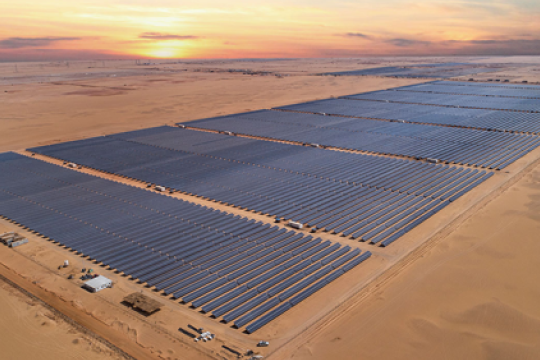
*** It’s Going Green day — your weekly briefing of all things green in Egypt: EnterpriseAM’s green economy vertical focuses each Tuesday on the business of renewable energy and sustainable practices in Egypt, everything from solar and wind energy through to water, waste management, sustainable building practices and how you can make your business greener, whatever the sector.
In today’s issue: We’re breaking down a new private sector proposal to fund the solar transition for factories and homes through a self-funding mechanism and targeted tax breaks.