Get EnterpriseAM daily

Available in your choice of English or Arabic

Gov’t eyes upping strategic reserves of basic commodities by 20%

1

What We're Tracking Today

Egyptian gov’t considering upping strategic reserves of basic commodities by 20%

Good morning, folks. After a busy last few days, the local business news is giving us all a well-earned break this fine morning. Fresh off the press this morning is news from Valu that it has completed an EGP 888 mn securitization issuance, a GCC alliance looking to snap up 25% of a local healthcare company, and an interview with EFG Hermes Co-CEO Karim Moussa to tell us about their new USD 300 mn education fund for Saudi Arabia.

But, be sure to watch this space, as we could be in line for some big economy news coming our way with the draft budget for the next fiscal year set to be sent to the House in the next few days.

So, when do we eat? Maghrib prayers are at 6:10 pm in the capital city, and you’ll have until 4:24 am tomorrow to hydrate and caffeinate ahead of fajr.

WATCH THIS SPACE-

#1- Gov’t to stock up on strategic reserves as it gears up for market intervention: Prime Minister Moustafa Madbouly has directed the government to study a plan to ramp up strategic reserves of basic commodities by 20%, according to a cabinet statement. The reserves would be imported and offered on the market “in the event of a crisis” in a bid to stabilize commodity prices.

ICYMI: The move comes a day after President Abdel Fattah El Sisi suggested that the government could earmark USD 1-3 bn to import essential commodities to compete directly with the private sector in a bid to lower prices.

#2- The House should receive next fiscal year’s draft budget within days: The House of Representatives is set to receive the draft budget for FY 2024-25 before the end of March, Budget Committee Deputy Chairman Yasser Omar said yesterday.

BOND WATCH-

Yields on EGP t-bills drop below pre-float levels: The Central Bank of Egypt — on behalf of the Finance Ministry — sold six-month and one-year EGP-denominated treasury bills worth EGP 108.6 bn on Thursday at yields of 27.723% and 28.253%, data on the CBE’s website showed. Prior to the float and the 600 bps hike, the six-month note was sold at 28.484% and the one-year one was sold at 29.913%, according to a note by NAEEM Brokerage seen by Enterprise.

High demand from foreign investors underpinned the downward trajectory of yields, NAEEM said. Thursday’s auction saw the t-bills oversubscribed 5.5x and received bids totaling EGP 333 bn.

The central bank also sold 3-month and 9-month EGP-denominated t-bills yesterday, worth a combined EGP 50 bn. The 3-month t-bills were oversubscribed 4x and had a yield of 25.596%, while the 9-month t-bills were oversubscribed 6x with a yield of 26.946%.

DATA POINT-

#1- SCZone racked up USD 2.8 bn worth of port and industrial zone investments in 9M FY 2023-24, spread between 127 projects, according to a cabinet statement. The authority has also brought in USD 894 mn in the same type of investments since the start of the calendar year with 37 new projects.

#2-Egypt — along with Iraq and the UAE — were listed among the top ten countries with the worst air pollution in 2023, with Iraq ranking sixth, the UAE ranking seventh, and Egypt ranking ninth, according to a report by Swiss air quality technology company IQAir.

FACT CHECK-

No price hikes for unsubsidized bread, says Supply Minister Ali El Moselhi. The minister dismissed claims that unsubsidized bread could soon increase 20% and 25% for fino bread, especially in light of a recent drop in flour prices, in comments to Asharq Business.

WAR WATCH-

UN head Antonio Guterres and El Sisi call for ceasefire amid Israel’s relentless war on Gaza: As Israel besieged the Al Amal and Nasser hospitals in Khan Younis and continued to launch deadly strikes on densely populated areas, President Abdel Fattah El Sisi met with UN General-Secretary Antonio Guterres yesterday to stress on the need to increase the flow of aid into the enclave and to establish an immediate ceasefire, according to a Ittihadiya statement.

WHILE IN THE RED SEA- Despite previous assurances that the group would not attack Chinese vessels, a Chinese owned and operated oil tanker was targeted by a Houthi missile attack in the early hours of Saturday morning, US Centcom said in a statement yesterday.

AND- Over 100 business associations — including US retail lobbying giants American Apparel& Footwear Association and the National Retail Federation that represent some of the world’s largest fashion brands — have called for stronger Red Sea security protocols in an open letter (pdf) from trade security advocacy group WeCare.

THE BIG STORY ABROAD-

It’s shaping up to be a relatively quiet, holiday-shortened news week. Friday-Monday are off in much of the Western world in observance of the Good Friday and Easter, while Indian markets are closed today as the nation celebrates Holi and markets in Greece are also closed today for Independence Day.

Today is deadline day for Donald Trump, who needs to raise a USD 464 mn guarantee in connection with his appeal of a fraud case. His Truth Social network is set to go public with a Spac that his supporters have pumped to the moon, but there’s no vote before Friday and a listing on NYSE would come a bit further down the road.

Sam Bankman-Fried will be sentenced on Thursday after his conviction on fraud charges and related charges. And oddly enough: FTX customers may still get all of their money back.

MEANWHILE-

  • China is moving to ban Intel and AMD chips in government PCs and servers (Financial Times)
  • US investment funds have pulled nearly USD 14 bn from BlackRock as part of an anti-ESG campaign. (Financial Times)
  • France has raised its terror alert to the highest level in the wake of this weekend’s Isis attack on Moscow. (Reuters)
  • The AI and clean-tech booms have made electricity a bull market for the first time in decades — and could “derail the power sector’s journey to net zero.” (Semafor)

Missed this week’s Inside Industry? In our weekly vertical exploring all things industry and manufacturing, we looked at how industry players hope government initiatives will help them resume operations at full capacity and unlock the advantage of a weakened EGP making local products for export more competitive.

*** It’s Blackboard day: We have our weekly look at the business of education in Egypt, from pre-K through the highest reaches of higher ed.

In today’s issue: We speak to EFG Hermes Co-CEO Karim Moussa about their new USD 300 mn education fund for Saudi Arabia set to launch in 2024,

Somabay set to make a splash again with World Aquatics triple event extravaganza: Somabay is hosting the World Aquatics series for the second year, featuring three events in March, May, and August. The series includes the World Aquatics Open Water Swimming World Cup 2024, World Aquatics Elite Beach Water Polo World Cup 2024, and the World Aquatics Under 18 Beach Water Polo Cup 2024.

2

DEBT WATCH

Egypt’s Valu raises EGP 888 mn from securitization issuance

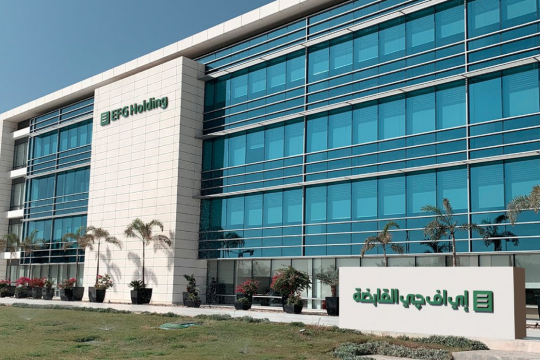
Valu back with another securitization issuance: EFG Holding’s fintech arm Valu has closed an EGP 888 mn securitized bond issuance, the company announced in a statement(pdf). The issuance was backed by an EFG for Securitization receivables portfolio with a six-month tenor tranche rated prime 1 and another 12-month tenor tranche rated prime 2.

No. 8: The issuance, which is part of an extended EGP 9 bn securitization program, brings Valu’s total securitizations to eight, following a EGP 953 mn issuance in December.

Valu is just getting started: The company plans to issue a total of EGP 4 bn worth of securitized bonds this year, Valu CEO Walid Hassouna said earlier this month.

Who subscribed? Arab Banking Corporation and Al Ahli Bank of Kuwait were among thesubscribers to the issuance. Our friends at EFG Hermes and the Arab African International Bank (AAIB) acted as underwriters.

Advisors: EFG Hermes was also the sole financial advisor and sole transaction manager. Baker Tilly acted as auditor, the AAIB was the custodian bank, and Dreny & Partners was counsel.

What they said: “By strengthening our financial base, we are reaffirming our commitment to cementing Valu as a leading financial technology powerhouse, delivering comprehensive financial solutions tailored to meet the evolving needs of our customers,” said Valu CFO Shokry Bidair.

ICYMI: Valu is also planning to offer up to 25% of its shares on the EGX within a year, Hassouna said last week. On top of this, the company also expects to launch its services in Jordan sometime between late 2024 and early 2025 and aims to increase its net income by 117% this year to EGP 500 mn. It also aims to increase transactions carried out through its platform to reach EGP 13 bn, up 41% from the year before.

DATA POINT: Companies have raised nearly EGP 7 bn from securitization so far this year,according to data tracked by Enterprise.

3

Commodities

Egyptian state-owned sugar producers hike prices 33% on the back of rising production costs following float

Sugar producers hike factory prices: State-owned sugar producers have ramped up their factory price of sugar by up to 33% to the Supply Ministry-imposed ceiling of EGP 32k per ton on the back of rising production costs triggered by the EGP float, Asharq Business reports, citing the three anonymous heads of state-owned sugar companies.

On supermarket shelves: The increase should bring the cost of sugar to the final consumer to EGP 35 per kg from government outlets. To ensure that retailers uphold that price, factories will reportedly be required to provide invoices that indicate the price at which they sold the sugar.

Remember: In response to the spiraling cost of sugar, the government listed sugar among six other items as “strategic commodities” in January, prohibiting traders from withholding them from the market and the month after imposed prison sentences and fines for food hoarding. Despite the government selling a kilogram of sugar through its outlets at EGP 27, the lack of enough sugar in the market has led to private shops and supermarkets hiking prices to over EGP 55 a kilogram.

ICYMI: The Trade Ministry last week extended its ban on the export of sugar for three months for the second time.


Gov’t secures 110k tons of wheat: State grains buyer GASC has awarded a tender to UAE’s Al Dahra and Bulgaria’s Buildcom to supply 110k tons of wheat, Al Borsa reported, citing a Supply Ministry official.

4

A MESSAGE FROM HSBC

Unlocking nature-based solutions for climate resilience in the MENA region

Global finance is pivotal in harnessing nature, one of our most formidable allies against climate change, and in recognizing natural capital as a crucial asset class. Nature's capacity to offset the impact of climate change while also boosting societal, economic, and biodiversity resilience is unparalleled. Research indicates that the protection, restoration, and sustainable management of ecosystems through nature-based solutions (NbS) could account for one-third of the global mitigation required to fulfill the Paris Agreement objectives.

NbS initiatives offer extensive sustainability impacts, benefiting people, the planet, purpose, and profits. These projects adopt a comprehensive approach because conserving natural habitats yields multiple advantages that include species protection, carbon sequestration, and socioeconomic opportunities for local communities. Yet, the financial returns from such investments often take time to materialize, with historical funding primarily coming from small-scale philanthropy or being predominantly public sector-driven.

The United Nations Environment Programme reports that investment needs to surge to USD 384 bn per year by 2025 and USD 484 bn per year by 2030 from the current USD 154 bn per year to achieve climate, biodiversity, and land degradation targets.

Shifting financial flows towards climate-nature projects is essential for our planet's future

Financial institutions — a catalyst for change: Financial institutions are uniquely positioned to propel NbS projects forward by providing capital, crafting innovative financial instruments, and ins. products in addition to advising on risk management and performance structures. They also serve as crucial intermediaries, uniting stakeholders — governments, NGOs, private sectors, and international bodies — to foster NbS projects. While governments and multilateral development banks predominantly support non-revenue-generating environmental initiatives, private capital gravitates towards profit-yielding projects.

Achieving net-zero targets necessitates a collaborative effort among governments, financial institutions, and businesses. Public-private partnerships exemplify such collaboration, with government support bolstering confidence among private investors and financial entities to co-invest in NbS projects. Governments can further attract private investment through incentives, guarantees, or subsidies. Blended finance tools are instrumental in drawing diverse financial actors and increasing investments across the NbS spectrum.

Policy frameworks, co-developed by governments and financial institutions, can eliminate barriers to sustainable investments. Global policies are increasingly recognizing the importance of finance and impact investments in achieving set goals. For instance, the Mangrove Breakthrough Community of Action, supported by civil society, governments, and the private sector, aims to expand global mangrove cover by 15 mn hectares by 2030, necessitating USD 4 bn in financing.

The potential of Islamic finance: Islamic finance, with its ethical and sustainable core principles, aligns closely with NbS. By structuring shariah-compliant financial instruments, a new avenue of Islamic capital opens up, catering to investors seeking to support environmental and sustainable projects. This approach is particularly relevant in the MENA region in addition to countries like Malaysia and Indonesia where it can significantly accelerate NbS financing.

UAE’s flagship NbS project: HSBC, in collaboration with the World Resources Institute and WWF, has initiated the Nature-based Solutions for Climate, Biodiversity, and People project in the UAE. This project aims to enhance the resilience of blue carbon coastal ecosystems, thereby supporting climate mitigation, biodiversity, and community benefits. Through initial funding for pilot NbS projects, the initiative seeks to demonstrate commercial viability, spark entrepreneurship, and preserve natural capital, thereby attracting further investment.

The UAE's leadership in setting net zero targets, a sustainable finance framework, and the recent hosting of COP28, has spotlighted climate issues in the region, potentially increasing the demand for sustainable finance solutions. HSBC's commitment to this cause, through strategic partnerships and flagship projects, underscores the growing momentum towards integrating nature-based solutions in financial strategies for climate resilience.

By David Ramos, Acting Head of Sustainability at HSBC Middle East.

** This article is part of a wider series to raise awareness about the powerful benefits of nature-based solutions. It features prominent voices of leaders who are advancing the UAE’s flagship NbS project as a key pathway to restore natural ecosystems and enhance climate resiliency.

** The “Nature-based Solutions for Climate, Biodiversity, and People” project is funded by HSBC and implemented in partnership between the Ministry of Climate Change and Environment, the Ministry of Economy, the Environment Agency – Abu Dhabi, the Government of Umm Al Quwain, Emirates Nature-WWF, and the International Center for Biosaline Agriculture.

5

Also on our Radar

EFG Hermes concludes advisory on Arafa Holding demerger. PLUS: GCC alliance eyes 25% stake in City Lab Egypt

CAPITAL MARKETS-

EFG Hermes concludes advisory on Arafa Holding demerger: Our friends at EFG Hermes have successfully concluded advisory on the demerger of Arafa Holding that took place last week, the investment bank said in a press release (pdf).

ICYMI: The demerger saw Arafa rebrand as Concrete Fashion Group for Commercial and Industrial Investment and spin off subsidiary GTEX Holding, and the two new firms began trading on the EGX yesterday.

** We spoke with newly-appointed deputy CEO Mohamed Talaat last week to find out what prompted the move and what’s next for Concrete, including its global expansion plans. You can read the full story here.

HEALTHCARE-

GCC alliance eyes 25% stake in City Lab: Medical diagnostic services company CityLab Egypt has received an offer from a Gulf consortium of medical companies that includes Premium Diagnostics’ Saudi, Emirati, US, and Egyptian arms to buy up to a 25% stake in the company for EGP 250 mn, according to a statement (pdf) from the company. The company’s board of directors will meet on Wednesday to discuss and vote on the proposal.

6

PLANET FINANCE

IMF chief calls on China to “reinvent itself” to end mounting property crisis

“China faces a fork in the road, rely on the policies that have worked in the past, or reinvent itself for a new era of high-quality growth,” IMF head Kristalina Georgieva said at the China Development Forum on Sunday, Reuters reported. Georgieva urged China to implement policies to “reinvent itself,” including measures that would boost domestic consumption and production rates and end the country’s mounting property crisis.

By the numbers: A more domestic consumption-centered policy mix could add USD 3.5 tn to China’s economy over the next 15 years, but this depends on “boosting the spending power of individuals and families,” reducing risks from local government debt, and completing abandoned housing projects, Georgieva said.

The Chinese economic miracle no more? Foreign direct investment to the world’s factory in 2023 hit its lowest level in three decades on the back of slow post-pandemic recovery and the property crisis continuing to worsen with the country’s largest property developer defaulting on a USD bond in October. The slowdown in China also led credit rating agency Moody’s to downgrade its outlook on the country’s sovereign credit rating to negative from stable in December.

ALSO WORTH NOTING-

  • OQ Oman taps advisors to upcoming IPOs: Omani state-owned oil and gas player OQ has tapped HSBC to help list the company’s exploration and production arm that could raise a record USD 1 bn — a record for the country. Morgan Stanley will help list the company’s methanol and liquefied petroleum gas business. (Bloomberg)
  • Bahraini wealth fund takes overUK’s McLaren: Bahraini sovereign wealthfund Mumtalakat has become the sole owner of the UK’s supercar maker McLaren Group after increasing its share to 100% from 60%. (BBC)

Asian markets are in the red and US and European futures largely unchanged as traders look ahead to a holiday-shortened trading week. Dow, S&P, and Nasdaq futures were all down by fractions of a percentage point. The Kospi, Hang Seng, Nikkei, and Shanghai Composite were all (just) in the red at dispatch time this morning.

EGX30

29,060

0.0% (YTD: +16.7%)

USD (CBE)

Buy 46.51

Sell 46.61

USD at CIB

Buy 46.54

Sell 46.64

Interest rates CBE

27.25% deposit

28.25% lending

Tadawul

12,796

-0.3% (YTD: +6.9%)

ADX

9,322

+0.4% (YTD: -2.7%)

DFM

4,280

+0.1% (YTD: +5.4%)

S&P 500

5,234

-0.1% (YTD: +9.7%)

FTSE 100

7,931

+0.6% (YTD: +11.2%)

Euro Stoxx 50

5,031

-0.4% (YTD: +11.3%)

Brent crude

USD 85.43

-0.4%

Natural gas (Nymex)

USD 1.66

-1.4%

Gold

USD 2,181.60

-1.1%

BTC

USD 66,499.80

+2.4% (YTD: +50.3%)

THE CLOSING BELL-

The EGX30 was almost flat at today’s close on turnover of EGP 3.3 bn (33% below the 90-day average). Local investors were net buyers. The index is up 16.7% YTD.

In the green: E-finance (+10.3%), Fawry (+7.2%), and AMOC (+4.7%).

In the red: Elsewedy Electric (-4.6%), Talaat Moustafa Group (-4.2%), and Delta Sugar (-3.0%).

CORPORATE ACTIONS-

Talaat Moustafa Group will hand out a total EGP 453 mn in dividends to shareholders, according to an EGX disclosure (pdf).

This publication is proudly sponsored by

7

BLACKBOARD

EFG Hermes is launching a USD 300 mn education fund for Saudi Arabia in 2024

A look at EFG Hermes’ planned education platform in Saudi Arabia: EFG Hermes is launching a USD 300 mn education fund in Saudi Arabia this year, replicating its successful model with the Egypt Education Platform (EEP) here in Egypt, EFG Hermes Co-CEO Karim Moussa told Enterprise Egypt. We recently sat down with Moussa to discuss EFG Hermes’ plans for the fund, and why the investment bank decided to move into the Saudi market with its second education fund.

Refresher: Launched in 2019, EEP Is an education management firm that counts EFG Hermesand the Sovereign Fund of Egypt among its anchor investors. EEP is now the largest education platform in Egypt, having raised USD 150 mn from a group of investors primarily in Saudi Arabia, the UAE, and Egypt. Today, EEP has deployed the entirety of the fund, and has aggregated 23 assets across schools, nurseries, and others. It owns a network of schools and nurseries as well as majority stakes in academic content provider Selah El Telmeez and Option Travel, which offers student transportation.

EEP has done well since its launch: In EGP terms, the investment cost was EGP 2.5 bn overthe past five years. This academic year, EEP expects to make EGP 3.5 bn of revenues and over EGP 1 bn of EBITDA, Moussa told us.

The new fund — named the Saudi Education Platform (SEP) — will be double the size of EEP, Moussa told us. EFG Hermes currently has a pipeline of investments that exceeds the size of that fund, Moussa said. “On the fund level, we’re happy to say that a big chunk of our existing Saudi and Emirati investors are very excited about our thesis and are subscribing,” according to Moussa.

The timeline: EFG Hermes expects a first close on the fund during the second half of the year,with the final close expected next year. The investment bank plans to begin deploying the fund “very soon,” probably in 2H 2024, Moussa said. “We’re already on due diligence with a few potential investments,” Moussa said, but declined to provide names of the target investments. SEP plans to kick off in Jeddah and Riyadh with a combination between new and existing facilities, Moussa told us.

EEP has a blueprint to follow from Egypt — with nuances to cater to the Saudi markets: At EEP, EFG Hermes created a central team run by Ahmed Wahby and his team, which is a unique model in Egypt. This provides all portfolio schools with central services, including procurement, HR, and IT. The schools are run with just the principals and very slim admin teams, which makes running them very efficient. “The EEP case study is quite relevant, and with the lessons learned in Egypt, we have several types of models — sometimes we own the land and real estate 100%, sometimes we enter into partnerships with the family that owns the schools, and other times we lease the land and real estate, or we only enter as a management team,” Moussa said.

How the student markets compare: The Egyptian student population is roughly 22 mn students, the lion’s share — around 90% — of which attend public schools, with the remainder attending private schools, according to Moussa. Saudi Arabia is the second-largest market in the region with a student population of 6.5 mn, 85% of which attend public schools and roughly 15% attend private schools. That translates to roughly 1 mn students across 8k private schools, Moussa explained. Students attending private schools are primarily expatriates, but the local population is also raising the demand and standards for education, he said.

In Saudi Arabia, there’s a gap in the middle segment of the educational market: The market currently has very expensive international schools, which diplomats’ children typically attend, and the mass market national schools, but in the middle there’s an opportunity to provide high quality education at an attractive price point. “We feel there is a nice entry point in the Saudi market, in the mid-market where we’re talking about tuition fees in the neighborhood of SAR 40k-60k per year and offer high standard curricula such as IB, with a high quality school,” Moussa said. EFG Hermes also sees an opportunity to replicate its combination between building new schools, investing in schools, and helping existing schools with the firm’s central management philosophy.

“A lot of the schools that we see have been built as family businesses, and we feel that there’s a chance for us to enter the market there and provide our management expertise,” Moussa said. There’s an operational element — EFG Hermes “isn’t just some private equity player entering into the Saudi market. We have very strong operations and a track record that we’d like to replicate,” he told us.

And the market for service providers also has similarities: “What’s very interesting is that the top four education companies in Saudi Arabia — most of which are listed — control only 10% of the market. The market is highly fragmented, which is similar to what we’ve seen in Egypt, so there’s room for a new entry into the market,” Moussa said. Providing high-quality, high-standard education at affordable prices is an appealing proposition, he said.

There are also lots of similarities between the Egyptian and Saudi curricula, which iswhere a platform like Selah El Telmeez — which has also begun going digital — will come into play to help SEP create a strong curriculum for its assets in Saudi Arabia, Moussa said.

The Saudi government has been very welcoming of EFG Hermes’ entry into the market: “We’re spending a lot of time on creating deep Saudi content to run with Saudi management,” Moussa said, stressing the importance of creating a bespoke formula that caters to the local market.


Your top education stories for the week:

  • Akhdar to develop educational content for Nahdet Misr: Homegrown book summary and education platform Akhdar will develop digital educational content for Nahdet Misr ’s platforms under a cooperation agreement inked between the two.
  • House approves USD 12 mn USAID education grant: MPs last week approved a USD 12 mn USAID grant to support basic English-language education, including reading, writing and learning, among primary and secondary school students.

2024

MARCH

28 March (Thursday): Industrial Development Authority to close applications for 1 mn sqm of land in 10 different governorates.

29 March (Friday): Egypt removed from JPMorgan Chase’s Emerging Local Markets Index Plus.

APRIL

1 April (Monday): Deadline to bid for 23 blocks in an international oil and gas tender.

2 April (Tuesday): President Abdel Fattah El Sisi swearing in ceremony, New Administrative Capital.

9 April (Tuesday): Eid El Fitr (TBC) (national holiday).

15-21 April (Monday-Sunday): The IMF / World Bank Spring Meetings.

25 April (Thursday): National holiday in observance of Sinai Liberation Day (TBC) (national holiday).

26 April (Wednesday): Clocks move forward one hour at midnight as daylight saving time starts.

28 April (Sunday): Grace period to ins. brokerage firms to comply with Law 215 for 2023 expires.

28-29 April (Sunday-Monday): Saudi Arabia hosts a World Economic Forum (WEF) meeting on ‘global collaboration, growth, and energy.’

29 April (Monday): The government’s car export scheme expires.

MAY

1 May (Wednesday): National holiday in observance of Labor Day (TBC) (national holiday).

2-5 May (Thursday-Sunday): Townhall Expo in Riyadh.

5 May (Sunday): Coptic Easter.

6 May (Monday): Sham El Nessim (national holiday).

20 May (Monday): Malaysian Palm Oil Forum in Cairo, with attendance from Malaysian Plantation and Commodities Minister Johari Abdul Ghani.

23 May (Thursday): Central Bank of Egypt’s Monetary Policy Committee meeting.

29 May (Wednesday): Virtual launch of Chicago Booth Executive Program.

JUNE

15-19 June (Saturday-Wednesday): Eid El Adha (TBC) (national holiday).

30 June (Sunday): June 30 Revolution Day (national holiday).

JULY

7 July (Sunday): National holiday in observance of Islamic New Year (TBC).

18 July (Thursday): Central Bank of Egypt’s Monetary Policy Committee meeting.

23 July (Tuesday): Revolution Day (national holiday).

SEPTEMBER

2-5 September (Monday-Thursday): Egypt International Airshow, El Alamein International Airport.

5 September (Thursday): Central Bank of Egypt’s Monetary Policy Committee meeting.

15 September (Sunday): National holiday in observance of Prophet Muhammad’s birthday (TBC).

25-26 September (Wednesday - Thursday): The Asian Infrastructure Investment Bank’s (AIIB) 2024 annual meeting, Samarkand, Uzbekistan.

OCTOBER

6 October (Sunday): Armed Forces Day.

17 October (Thursday): Central Bank of Egypt’s Monetary Policy Committee meeting.

21-27 October (Monday-Sunday): The World Bank and IMF annual meetings.

NOVEMBER

21 November (Thursday): Central Bank of Egypt’s Monetary Policy Committee meeting.

DECEMBER

26 December (Thursday): Central Bank of Egypt’s Monetary Policy Committee meeting.

EVENTS WITH NO SET DATE

January 2024: The Red Sea Ports Authority is set to finalize an agreement with the Abu Dhabi Ports Group for the operation and maintenance of the tourist passenger terminal in the Sharm El Sheikh Sea Port.

February 2024: Egypt will sign a USD 1.5 bn financing agreement with the International Islamic Trade Finance Corporation (ITFC).

February 2024: Funds from the Islamic Development Bank for the high speed electric railway will get the sign off.

April 2024: President Abdel Fattah El Sisi will visit Turkey.

1Q 2024: Egyptian-Qatari Joint Supreme Committee.

1Q 2024: Opening of the newly developed Pyramids Plateau in Giza.

1Q 2024: The government is set to finalize the sale of the Gabal El Zeit wind farm.

February-May: The Grand Egyptian Museum could officially open to visitors.

March 2024: The USD 2.7 bn MIDOR Refinery is set to begin full operations.

May 2024: Arab Finance Ministers’ meeting at Egypt’s administrative capital.

June 2024: Gov’t expects to finalize sale of Beni Suef combined-cycle power plant.

1H 2024: Gov’t expects to finalize sale of four water desalination plants.

1H 2024: The European Union is set to hold an investment conference in Egypt during spring.

2H 2024: Gov’t to launch the Cairo Ring Road BRT buses.

November 2024: Egypt to host the World Urban Forum (WUF12).

End of 2024: The launch of the high-speed train line linking Ain Sokhna with Al Alamein City.

2025

EVENTS WITH NO SET DATE

2Q 2025: Safaga Terminal 2 to start operations.

2027

20 January-7 February: Egypt to host the African Games

EVENTS WITH NO SET DATE

End of 2027: Trial operations at the Dabaa nuclear power plant expected to take place.

Now Playing
Now Playing
00:00
00:00