Get EnterpriseAM daily

Available in your choice of English or Arabic

Financial experts tell us what it will take to reignite investor confidence

1

What We're Tracking Today

Ongoing geopolitical tensions continue to hurt Suez Canal revenues

Good morning, all. We have a brisk issue for you this morning as the news flow slows down after a particularly busy weekend.

BUT BEFORE WE DIVE IN- We have a long weekend ahead: Public and private sector workers will have Sunday, 6 October off in observance of Armed Forces Day, Prime Minister Moustafa Madbouly announced yesterday.

DATA POINT-

Suez Canal revenues more than halve on the back of regional escalations: Ongoing geopolitical tension in the region have had a dire impact on Suez Canal revenues, which have seen a 50-60% drop — equivalent to USD 6 bn — over the past 7-8 months, President Abdel Fattah El Sisi said yesterday.

No surprise there: In July, Prime Minister Moustafa Madbouly said that Suez Canal revenues have dropped to around USD 300 mn a month, down 64.7% from USD 850 mn previously.

HAPPENING TODAY-

El Khatib in France to drum up investments: Investment and Foreign Trade Minister Hassan El Khatib is in Paris for a multi-day visit where he will meet with French investors interested in exploring potential investments in Egypt, particularly in the energy, automotive, and infrastructure sectors, according to a ministry statement. El Khatib will be accompanied by General Authority for Investment and Freezones (GAFI) head Hossam Heiba and Egyptian Commercial Representation Service head Yahya Al Wathiq Billah.

WATCH THIS SPACE-

New features coming to the Instapay app: The central bank’s digital payment platform Instapay will roll out new features allowing users to make purchases at points of sale and e-commerce platforms before the end of the year, banking sources in the know told Fintech Gate. This service would eliminate the need for physical bank cards for payments.

PSA-

WEATHER- It’s continuing to cool down in Cairo, with the capital looking at a high of 32°C and a low of 23°C, according to our favorite weather app.

It’s even cooler in Alexandria, with a high of 29°C and a low of 21°C.

** DID YOU KNOW that we now cover Saudi Arabia and the UAE?

** Were you forwarded this email? Tap or click here to get your own copy delivered every weekday before 7am Cairo time — without charge.

ICYMI- Missed this week’s Inside Industry? In our weekly vertical exploring all things industry and manufacturing, we looked at the impact of recent price hikes on industrial players. Check out the story here.

THE BIG STORY ABROAD-

It’s another morning with escalations in the region dominating headlines: Israel attacked Yemen’s Houthis yesterday, launching a wave of airstrikes on Ras Issa and the port city of Hodeida that killed four and wounded an additional 29 according to the Houthi-run health ministry. Commenting on Israel’s ongoing attacks on its allies, Iranian President Masoud Pezeshkian said that Israel should not be allowed to attack countries in the Iran-linked “axis of resistance” without consequence, saying that “a decisive reaction is necessary” and condemning Israel’s targeting of what he called “civilian infrastructure” in Hodeida.

Meanwhile, Israel’s brutal assault on Lebanon continued, with at least 105 people killed in Israeli strikes over the course of the day, according to the Lebanese Health Ministry. Hezbollah supporters and allies continued to mourn the loss of the group’s leader Hassan Nasrallah, while Israeli military officials vowed to “keep hitting Hezbollah hard.”

The strikes have led to what Lebanese Social Affairs Minister Hector Hajjar called a “humanitarian catastrophe” yesterday, underlining the difficulty the Lebanese caretaker government is having addressing the needs of the nearly 1 mn people that have been displaced since the conflict’s escalation.

AND IN BUSINESS NEWS- Former Japanese Defense Minister Shigeru Ishiba’s election as head of the country’s ruling Liberal Democratic Party has sent jitters through Japan’s stock market, as insiders express concern about his support for heavier corporate and investment income taxation.

*** It’s Blackboard day: We have our weekly look at the business of education in Egypt, from pre-K through the highest reaches of higher ed.

In today’s issue: We look at Egypt's plans to implement a “foundation year” system and how they’re going.

For the first time in Egypt, Somabay is thrilled to host the legendary Amy Winehouse Band live in concert. Prepare for an unforgettable evening filled with soul, jazz and iconic hits as the band performs live at Somabay’s breathtaking The Marina in The Theater Somabay on 5 October. Set against the stunning backdrop of the Red Sea, this exclusive event promises a magical night of music and entertainment in a unique setting. #TheAmyWineHouseBand #OneParadiseAllSeasons #SomabayRedSea

2

ENTERPRISE FINANCE FORUM

What will it take to reignite investor confidence in the Egyptian market?

What needs to be done to reignite investor confidence? Even after the float of the EGP and steps towards ambitious reforms underway, investors remain cautious about the local market, so what else needs to be done? We spoke to industry leaders to understand how recent reforms will shape the country’s financial landscape, which sectors they’re banking on, and more broadly their outlook for the coming years.

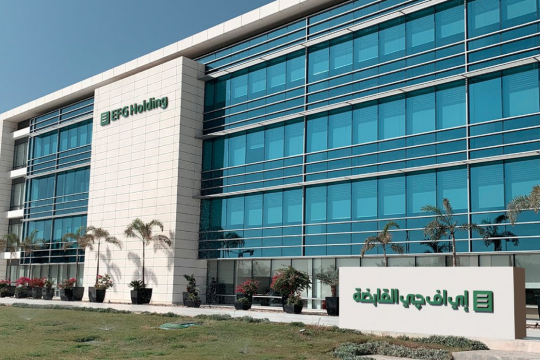
We brought together some of the country’s leading financial experts at this year’s EnterpriseAM Finance Forum — we spoke to Ahmed Issa, executive board member and deputy CEO of Banque Misr and former tourism minister, Helmy Ghazi, deputy CEO and head of global banking at HSBC Egypt, and Karim Awad, group CEO and chairman of the executive committee at EFG Holding to gain a clearer picture of Egypt’s economic trajectory.

Egypt's FX market is showing positive signs of stabilization and growth: The market is currently “clearing at the unified exchange rate,” according to Ghazi, with backlogs clearing and a liquid interbank market. Awad echoed this sentiment, highlighting that since the float, foreign investors were able exit large positions smoothly and with relatively few issues. Issa added that a “nascent healthy market” is emerging in Egypt, characterized by a trading range with fluctuations based on market dynamics.

So, what levels should we expect the greenback to change hands at next year? Our panelists couldn’t agree on a number, with Ghazi telling us that HSBC is penciling the USD as EGP 48 by the end of next year and Awad expecting the EGP to settle a "little bit higher."

And what about rates? “We're projecting a 1 percentage point drop in 2024, and a 6 percentage point drop in 2025,” Ghazi said. Ideally, this level of monetary easing should be enough to incentivize new investments, he added. The combination of lower interest rates in developed markets and wage levels that have not kept pace with inflation is setting the stage for an “interest rate reduction cycle expected to begin in the coming months,” Issa said.

What will it take for FDI inflows to pick up? “The Egyptian private sector has to invest first before we start seeing foreign direct investment coming in,” Awad said, highlighting that multinational companies already investing in Egypt are the biggest promoters of FDI. “It’s a game of patience. I don't think our expectation should be that FDI jumps right away.”

Foreign investors are interested: “We’re seeing a surge in inquiries, particularly from Asia and Europe,” said Ghazi. “There’s growing interest across industries like consumer goods and renewables, but it’s still early.”

Are expectations outpacing reality? “If you look at the numbers, Egypt has been the top recipient of FDI in all of Africa consistently for the past five years,” Issa said. Egypt is getting its fair share of foreign investments among emerging markets, so if it feels like our FDI inflows are below expectations that’s because we have “higher expectations of global shifts in capital, of global capital flows into the south in general,” according to Issa.

Investors want concrete evidence the state is pulling back: “It’s almost like a snowball effect…We need to see actual privatization and assets being sold,” Awad said. Traction on long-discussed transactions, particularly in the energy sector, would signal to investors that the government’s commitment to the privatization program is serious, he added. “The main impediment to privatization today will continue to be the valuations…I think at one point, you will have to make a decision: do I need to balance the valuation and the proceeds I'm getting versus the overall sentiment that I will create by undertaking that transaction or not.”

With minimal state intervention, how do we hit our renewables goals? Establishing USD-denominated offtake agreements is crucial for attracting international project financing, according to Ghazi, who highlighted the importance of public-private partnerships (PPPs) for large-scale projects, particularly in renewables and hydrogen.

It’s a long arduous process: “The structuring period takes around a year and putting a financial clause in place could take another two,” Ghazi explained, highlighting the complexity of PPPs. There are also significant challenges with social infrastructure projects, where cash flows are denominated in EGP while project costs are typically in USD, complicating fundraising efforts. Attracting funding for these large-scale projects necessitates long-term private equity and infrastructure investors, according to Awad.

What does all this mean for the banking sector? “We're expecting double-digit growth in both loans and deposits in 2025,” Ghazi said, noting that current loan growth in the banking sector has been primarily driven by working capital facilities. As more investors come in 2025, “we're hoping to see a mix of working capital and investment-driven loans, largely due to the anticipated drop in interest rates, which should incentivize further investments,” Ghazi added.

You can’t mention banking without bringing up NBFS: The non-banking financial sector is surprisingly resilient, Awad said, pointing to its low credit losses across leasing, factoring, microfinance, and consumer lending despite economic challenges. “You’d expect larger credit failures, but that hasn’t been the case,” he said.

Tourism: Egypt’s top national project. Awad called the tourism sector Egypt's “number one national project,” citing its potential to generate foreign revenue with minimal foreign currency input. While Issa echoed the optimism around tourism, he noted that the necessary infrastructure “required for a tourism industry to emerge were not there” until recent government initiatives.

The sector is growing quickly: “This calendar year will see the number of hotel rooms in Egypt rise by the fastest rate compared to the top 30 nations receiving tourism,” Issa said, expressing his confidence in the government's efforts to expand hotel room capacity, predicting that Egypt could attract 30 mn tourists by 2028-2032 if current growth trends continue.

3

Energy

New energy incentives aim to boost domestic production and foreign investment

Fresh oil and gas incentive package aims to boost foreign investment in the sector: The government is currently in talks with foreign partners over a new set of incentives for the oil and gas industry that aim to boost oil and gas production and reduce the growing gap between energy supply and demand, a government source told Enterprise.

(Tap or click the headline above to read this story with all of the links to our background as well as external sources.)

The details: The measures include increasing production sharing ratios with foreign companies in exchange for new investments, enhancing exploration efforts, and increasing extraction rates. The move aims to push foreign partners to invest more and boost Egypt’s oil and gas production.

We saw this coming: We first heard that Oil Minister Karim Badawi would be meeting with foreign energy players about increasing local production back in late August, with the ministry announcing that it would be rolling out a new package of incentives to ramp up output days later.

Remember: The government set aside USD 1.2 bn for energy imports summer of 2024 to help fill a supply gap and put a temporary end to blackouts during the hottest months of the year. After becoming a net exporter of LNG in 2018 and signaling its intention to become an important energy exporter to the region and Europe, production falls and rising domestic demand led to Egypt having to ramp up imports to bridge the supply gap.

Clearing arrears to foreign oil and gas players plays a big role in boosting foreign investments in the sector. The government is adhering to its schedule for paying arrears to foreign companies — a process that has already seen the government pay up over USD 2.8 bn in arrears since the float of the EGP in March. Further payments are to follow, the source said.

Where negotiations stand: The source noted that while each agreement will be considered on a case-by-case basis, players share a desire to boost foreign investments across the board.

DATA POINT- The private sector accounts for around 84% of the total investments in the sector, while public investments cover the remaining 16%.

This publication is proudly sponsored by

4

Startup watch

Beltone Venture Capital completes its first direct international investment in French VelyVelo

Beltone’s VC arm is undergoing a significant expansion: Beltone Holding’s venture capital arm, Beltone Venture Capital (BVC) has successfully completed its first direct international investment through a strategic investment in French e-bike rental company with a strong footprint in the Moroccan market VelyVelo, the company said in a statement(pdf). The investment is one of a number of other international strategic investments BVC aims to carry out before the end of the year as part of a wider expansion plan through which it looks to grow its portfolio well beyond Egypt.

Enterprise spoke with Beltone Venture Capital CEO Ali Mokhtar (LinkedIn) to learn more about the investment, BVC’s expansion plan moving forward, and what it has gotten done since its inception.

Enterprise: Beltone launched BVC a little over a year ago. How much of what you had set out to accomplish has already been done, and what still needs work? What are the growth prospects of Beltone’s local VC activity?

Ali Mokhtar: We started in April 2023. Since then, we finalized close to 13 different transactions, with a mix of equity and debt financing. At the beginning, the focus was mainly Egypt and mostly early stage startups, plus a couple of opportunistic growth equity investments.

We’re sector agnostic, so we carry out transactions across different sectors. We have invested in direct to consumer brands, like Ariika and Lychee, e-commerce platform WayUp Sports, and last mile delivery startup Bosta. We also invested in auto marketplace Sylndr, healthtech startup SehaTech, proptech company Bidnest, pharma platform Grinta, and trucking startup Trella.

Most of the startups we invest in have a plan to grow beyond Egypt — all offering high growth in Egypt but with regional expansion plans, and we work hand in hand with our portfolio companies to help realize this growth.

E: What markets outside Egypt are you looking at and what do they offer that makes you want to expand into them?

AM: VelyVelo operates in Morocco and in Europe. And we have another investment brewing in the Moroccan market in a logistics startup that operates in markets across North and West Africa, giving us access to more opportunities than our initial equity investments, which were mostly operating in Egypt and in the MENA region.

We’re also looking at an additional four opportunities in Morocco — some of which also operate in Europe and in Africa. One is a pure HR SaaS solution, one is a fintech company, and another is a direct to consumer brand.

And we’re closing an additional debt transaction in a company that mostly operates in Saudi, with business in Egypt and Iraq.

Morocco is like what Egypt was like maybe 5 or 6 years ago. The valuations are very reasonable and the funding rounds aren’t as big. With decent funding, you can get a very good entry point into the companies in the market. Because Morocco is a market that’s still gaining momentum, you can still have very good transactions at great entry points.

Another thing is that the founders are really solid. For us, Egyptian founders are the strongest in the region. They’re incredibly resilient, and are able to take more hits than founders anywhere else. Morocco is a bit similar in that they haven’t really been exposed to huge funding rounds, so they can build businesses with smaller amounts. All these factors make Morocco really attractive for us.

We see Morocco as a market with a lot of potential. The market is still taking off, and a lot of the opportunities there give you good exposure — many of the startups present in the country operate both in Morocco and in Europe and some others operate in Morocco and other African markets like Senegal and the Ivory Coast. So it really helps diversify your portfolio.

E: What kind of startups is BVC most interested in?

AM: We operate with a hybrid model, investing in both pure tech startups and tech-enabled, highly profitable companies. We believe this approach offers a great mix of early-stage startups with exponential growth potential in addition to established companies with strong profitability and proven track records.

We do have specific sectors that we find interesting, such as proptech and fintech — fintech is a really interesting space, it’s very crowded and the competition is high, but there’s still plenty of opportunities. Mobility is another one we find interesting, because it’s a sector that’s seeing a massive shift. SaaS companies are also something we’re looking at, and we want to expand our exposure to that sector in the future.

E: How do you decide on the startups you end up investing in?

AM: We have a score card that takes into account the team, the size of the addressable market, competition, the product market fit with unit economics and exit plan — and the company needs to have a very clear path for profitability, even if it’s an early-stage company. The company needs to be building something sustainable that will become profitable sooner or later. We’re against the concept of growth at any cost — we’re more fundamentally driven. It also has to be able to resist pressures that could come along the way.

E: Earlier this year, BVC announced its partnership with UAE’s Citadel International Holdings’ CI Venture Capital to manage a USD 30 mn fund backing fast-growing startups in the MENA region. Did this help you expand your footprint and expose you to more regional startups?

AM: We’ve already made 10 equity investments through this fund, some within Beltone’s portfolio companies and some outside of them. The investments included UAE-based fintech Qlub and Iraqi ride-hailing service Baly. We’re making our first exit from one of those ten companies soon, with a very decent return. Our first investment through the fund was a year ago and it was a fintech company that operates in a number of GCC markets. But we’ve also invested in a carbon credit company operating in Saudi and the UAE as well as a number of BVC portfolio companies.

E: Why is now the right time for Beltone Venture Capital to expand?

AM: We now have very solid traction in Egypt and the partnership with Citadel will give us even more traction across the region — the partnership has seen us co-invest with most of the top VCs in the region. So we have a very solid pipeline across the area, which makes it the perfect time to expand, be it in the MENA region or in other markets across Africa and Europe. If you combine our business in Egypt, Morocco, and the GCC countries, we have more than 15 companies in our pipeline, we’re expanding our team, and we’re looking to raise additional funds.

E: What’s BVC’s timeline for expansion?

AM: From now and until the end of the year, we’re set to close another 2-3 transactions, including another equity investment in Morocco, the debt financing firm in Saudi, and another transaction in Egypt. In 2025, we plan to expand even further beyond Egypt. Our growth equity investments are at an inflection point because they need additional funding to fully take off in terms of profitability and scale, so that’s something we aim to work on.

We’re also planning on launching two additional funds — one is a venture debt fund that will focus on Egypt and will lend in local currency and the other is a venture debt fund in USD that will target startups across the region.

Under our criteria, startups need to have at least 18 months of cash runway and it’s a bonus if an Egyptian company generates FX revenues.

E: Other than Morocco, what other markets are you interested in?

AM: We’re still very bullish on Egypt. We’re doubling down on all our companies in Egypt, and we’re still investing in Egypt quite a lot. Despite all the shocks the market has sustained, these companies still offer really decent growth prospects. Most of our investments will continue to be in Egypt, and it’s a huge plus if these companies can expand abroad. Other than Egypt, North Africa and being opportunistic across the region is what we’ll be focusing on in the near future.

5

LAST NIGHT’S TALK SHOWS

Egypt’s talk shows continue to cover Israeli aggression in the region

All about Israel’s attacks: The nation’s talking heads remain focused on the latest regional escalations, bringing us coverage of Israel’s attacks on Gaza, Lebanon’s south, and Yemen.

(Tap or click the headline above to read this story with all of the links to our background as well as external sources.)

Word to the wise: Ala Masouleety’s Ahmed Moussa called (watch, runtime: 4:33) on Yemen’s Houthis to respond in kind to Israel’s attacks on Yemen, saying that Hezbollah leader Hassan Nasrallah did not respond to Tel Aviv’s attacks and they killed him.

Speculation on the circumstances of Nasrallah’s death continues: Moussa also relayed a report from a French news outlet claiming that Nasrallah’s assassination had been facilitated by an Iranian spy within Hezbollah’s highest ranks. According to this report, the spy had informed Israel of Nasrallah’s whereabouts on the day he was killed, directly leading to the targeting of Hezbollah’s secretary-general and 20 other members of the group’s leadership (watch, runtime: 1:19).

6

Also on our Radar

More Egyptian-made BYD models to come?

AUTOMOTIVE-

More made-in-Egypt BYD models? BYD local agent Al Amal Auto is in discussions with the Industry Ministry over producing two new BYD models — a hybrid and a gasoline-powered — locally, AlMal reports citing an unnamed ministry official. EVs aren’t on the agenda at the moment seeing as Egypt still lacks the necessary infrastructure for them, the source said.

(Tap or click the headline above to read this story with all of the links to our background as well as external sources.)

Remember: The Madbouly government has been working to localize the auto industry, introducing the Egyptian Automotive Industry Development Program (AIDP) in 2022, which will offer incentives to auto players with the aim of localizing the industry and its feeder industries, with the aim of enhancing the country’s existing assembly and manufacturing capabilities — and of encouraging new investment to the sector.

INVESTMENT-

USAID to help us enhance the local investment environment: The Egyptian Private Equity & Venture Capital Association (EPEA) and USAID will work together to enhance the local investment environment and the efficiency and capacity of investors under a newly-inked MoU between the two sides, according to a statement. The two sides will work together to build staff capacity, develop a strategic plan, and push for policy reforms to strengthen Egypt's venture capital ecosystem.

M&A-

Premium Healthcare takes a step forward in its acquisition spree: Premium Healthcare — formerly City Lab — inked MoUs for five previously-announced acquisitions that will give its a 50% stake in a number of local and Gulf medical companies and full ownership of local lab operator Hassab Labs, according to an EGX disclosure (pdf).

That’s only part of it: The medical group announced plans last week to acquire 50% of fivemedical companies through a mix of capital increases and a direct share purchase and fully acquire four local labs operators.

MANUFACTURING-

#1- Kraft Heinz inaugurates USD 50 mn expansion to its factory in Egypt, adding seven new production lines and doubling its production capacity, according to a statement. The expansion will help the company increase its export percentage to 20% from 12% at the moment.


#2- How will FiberHome enter the local market? Chinese telecom equipment producer FiberHome is looking to enter the local market either through setting up its own fiber optic cables factory or acquiring a local player, AlMal reports, citing sources with knowledge of the matter. The company is currently looking into the matter and should have settled on a method of expansion before the end of the year.

Remember: Earlier this month, the company inked an MoU with the government to set up a fiber optic cables factory that will produce 1 mn core kilometers of fiber, 500k communication terminal devices, and 3k base station antennas annually. These products will serve both the local market and be exported to the Middle East and North Africa.


#3- Oppo’s USD 20 mn mobile phone factory should go live before the end of the year, Al Mal’s sources said. The factory has a production capacity of 4.5 mn phones annually and was initially expected to go online in H1 2024

INFRASTRUCTURE-

#1- Companies line up to take over rail project: Four consortiums have submitted bids to renovate the USD 285 mn Robeiky-Tenth of Ramadan-Belbeis freight and passenger railway line, Asharq Business reports citing three government sources. The 69-km rail line will link the 10th of Ramadan Dry Port to the main rail network and seaports, bypassing the Cairo railway junction and serving both freight and commuter traffic between Robeiky, 10th of Ramadan, and Belbeis. The railway received a EUR 40 mn loan from the European Bank for Reconstruction and Development back in 2022.The project is slated for completion within three years after contracts are finalized, according to one of the sources.

Who’s interested? The bidders include a consortium of France’s Alstom, Egypt’s Concrete Plus, and Rowad Modern Engineering; a consortium of CBS Group subsidiary GTS and Orascom Construction; and one including Hitachi, Italy’s Mermec and Salchef, and Egypt’s Hazeq ; and a solo offer from Dhaka Bangladesh Group.


#2- Who will carry out the expansion of the Gabal El Asfar water treatment plant? The Madbouly government will soon launch an international tender for the EUR 350 mn expansion of the Gabal El Asfar water treatment plant, Al Borsa reports. The selected company will design, install, and operate the first part of the third phase of the plant’s expansion plan. Phase three will raise the plant's capacity by 1 mn cubic meters per day to serve 17.5 mn people by 2040.

7

PLANET FINANCE

Risky assets rally as central banks pivot to easing

Wall Street's enthusiasm for risky assets is on the rise, fueled by glocal policy-easing, Bloomberg reports. Emerging-market equities, stocks closely tied to the economic cycle, and speculative technology investments are experiencing renewed interest as central banks in China and Europe — as well as the US Federal Reserve — begin to cut rates after holding them at decade highs for years.

(Tap or click the headline above to read this story with all of the links to our background as well as external sources.)

The biggest winners: The S&P 500 is on track to reach its best first three quarters since 1997, with a 20% YTD gain. Meanwhile, BlackRock’s momentum ETF hit record highs, up nearly 30% for the year, while the Societe Generale index is “flashing hot,” reaching its highest level in over a year, with the gauge only reaching those levels 5% or so of the time.

More signs of bulls in the market: Hedges are underperforming, while Goldman Sachs basket of most-shorted stocks is up 17% year-to-date, the business information service said.

Still, stretched valuations pose risks, market watchers warn, with some stressing the need for “tactical caution.” Momentum indicators suggest the current euphoria may be difficult to sustain in the short term.

CLOSER TO HOME- DFM's impressive growth faces headwinds from geopolitical risks, analysts warn: The Dubai Financial Market General Index surged 12% in 3Q 2024, reaching its highest level since 2014, driven by strong performances from companies like Emirates NBD Bank, Dubai Electricity and Water Authority, and Salik, Bloomberg reports. However, analysts warn that geopolitical risks and the challenge of finding appealing valuations may dampen future gains. In Abu Dhabi, the market advanced 5%, its best quarter since March 2022, while Saudi Arabia's Tadawul All Share Index climbed about 6%, marking the best quarter of the year so far.

Despite favorable earnings and a tourism-driven economy bolstering the market, investor sentiment remains cautious. Tellimer's emerging market equity strategist in Dubai notes that stocks will now be “more sensitive to any setbacks than further good news.” Reflecting this caution, HSBC strategists have shifted their stance on the UAE and Saudi Arabia from overweight to neutral, citing heightened geopolitical risk and low oil prices as potential headwinds. However, some analysts such as Daman Investment’s Divye Arora believe valuations remain attractive, with major Dubai companies offering appealing dividend yields exceeding 5% for 2025 amid declining bond yields.

MARKETS THIS MORNING-

Asian markets are having a rough start to the week, with Japan’s Nikkei down 4% in the wake of the ruling Liberal Democratic Party election on Friday. South Korea’s Kospi and the Kosdaq also fell around 0.5%. Meanwhile, Wall Street futures are flat going into the final day of 3Q 2024.

EGX30

31,459

+0.6% (YTD: +26.4%)

USD (CBE)

Buy 48.34

Sell 48.48

USD (CIB)

Buy 48.34

Sell 48.44

Interest rates (CBE)

27.25% deposit

28.25% lending

Tadawul

12,272

-0.8% (YTD: +2.5%)

ADX

9,469

-0.5% (YTD: -1.1%)

DFM

4,521

-0.1% (YTD: +11.4%)

S&P 500

5,738

-0.1% (YTD: +20.3%)

FTSE 100

8,321

+0.4% (YTD: +7.6%)

Euro Stoxx 50

5,067

+0.7% (YTD: +12.1%)

Brent crude

USD 71.98

+0.5%

Natural gas (Nymex)

USD 2.90

+5.4%

Gold

USD 2,668

-1.0%

BTC

USD 65,858

+0.3% (YTD: +55.7%)

THE CLOSING BELL-

The EGX30 rose 0.6% at yesterday’s close on turnover of EGP 4.3 bn (7.4% above the 90-day average). International investors were the sole net sellers. The index is up 26.4% YTD.

In the green: Abu Qir Fertilizers (+4.0%), EFG Holding (+2.7%), and Ezz Steel (+2.2%).

In the red: Eastern Company (-1.8%), Emaar Misr (-1.1%), and Telecom Egypt (-0.9%).

8

BLACKBOARD

How are Egypt's plans to implement a “foundation year” system shaping up?

A closer look at the education sector's preparations for the “foundation year” system: The Higher Education Ministry announced in May its plan to implement a foundation year system as an optional program to qualify high school graduates or those with degree equivalent to a high school diploma for enrollment in various faculties and academic programs at private and national universities. The system is also designed to prepare students for studying abroad at universities that require a foundation year.

(Tap or click the headline above to read this story with all of the links to our background as well as external sources.)

You heard it here first: A senior government source told Enterprise last year that the government is planning to introduce the foundation year system. The initiative is part of a bigger plan to internationalize the nation’s education sector and attract a greater number of both Egyptian and foreign students to enroll in Egyptian universities rather than pursuing their studies abroad.

What is the foundation year system? Students enrolling in British and other international universities are able to take an introductory “foundation year” to prepare them for undertaking an undergraduate degree. Over the course of the year, students study a variety of subjects in their chosen field of study — whether that’s accounting, business, humanities, or arts and design — helping them make the jump to university education. Foundation years are popular with mature students, international students, and students who didn’t achieve the requisite exam results.

How will it work here? This system requires legislative amendments, which are currently being drafted by a committee formed for this purpose, sources at the Higher Education Ministry told Enterprise. The amendments will incorporate the foundation year system into the admission process for Egyptian universities and potentially qualify students for study at foreign universities.

A boost to students' scores: Students who successfully complete foundation courses through university-administered tests will receive bonus points toward their overall scores, according to the source. While the exact number hasn't been finalized yet, it's expected to range between 5-10%. These extra points will allow students to enroll in colleges that they couldn't with their high school scores alone.

Students will have complete freedom regarding whether or not they want to do the foundation year. Foundation years will be optional to students who want to do them and not mandatory.

Higher demand for uni seats: Private and national universities will be granted the right to put together foundation years, which is poised to increase demand for college spots.

The catch: Students who complete the foundation year will not be eligible to apply to public universities, as the system is designed to increase demand for private and national universities, the source said.

It’s only a “year” figuratively: The foundation year will be based on a credit hour system that can be completed in just three months, according to the sources. This will allow students to enroll in their desired college during the same academic year.

Competitive pricing: The price tag for the foundation year will be “competitive” but won’t be low enough to maintain balance among universities that will be allowed to offer this course, a source from the Supreme Council of Universities told us.

When will this system kick off? The legislative amendments for foundation years will likely be submitted to the House in its new session, with the system expected to roll out starting the 2025-2026 academic year.

Four main study programs: The foundation years offered will focus on four programs: medicine, engineering, sciences, and humanities, the source explained to Enterprise.

Regulations will be put in place to match those adopted in international universities, ensuring that the course certificate is acceptable if the student wishes to complete their studies at one of the international universities. There's also potential to market this program to attract more international students to obtain the foundation year instead of traveling abroad, which would reduce the actual cost.

Remember: The government wants to see 200k international students enrolled in Egyptian universities in 2030, a move which will help it reach its goal of attracting USD 2 bn in education tourism revenues by then.

Centralized exams: The Supreme Council of Universities will supervise the source exams to ensure granting additional points to qualify for the specialization desired by students, the source confirmed to us.

Who will offer foundation years? Universities will have to meet certain requirements to be allowed to roll out their iterations of foundation courses, according to the sources.These requirements include the university's ranking based on domestic and international classifications, foreign partnerships with internationally-classified universities in specializations, and capabilities for the university to grant that course.

Seven international universities already offer foundation year courses, including the University of London, which offers these programs in its branch in the European Universities in Egypt in the new capital.

A boost for Egyptian higher education: Exploring the potential of the foundation year will add to the quality of Egyptian university education and work to put Egypt on the map of international universities, Future University Head, Abada Sarhan told Enterprise. He added that It will also work to reduce the volume of spending on education abroad by attracting students to complete that foundation course in Egypt instead of traveling abroad. Sarhan added that developing the university education system will qualify Egyptian universities to implement the foundation course, which in turn raises the international ranking of Egyptian universities.


Your top education stories for the week:

  • PHD’s Yasseen Mansour ups his stake in Taaleem: Egyptian businessman and Palm Hills Developments’ Chairman Yasseen Mansour bought an additional 10.1% stake in higher education outfit Taaleem in an EGP 773.2 mn transaction.
  • Nahdet Misr’s venture capital arm EdVentures has invested in eight new startups, expanding its investment portfolio to 22 companies. The selected startups are graduates of the VC’s recent business accelerator program.

2024

SEPTEMBER

30 September (Monday): Ban on sugar exports expiration.

30 September (Monday): Portfolio Egypt 2024, Nile Ritz-Carlton, Cairo.

30 September (Monday): Egypt Business Forum, Paris.

OCTOBER

1 October (Tuesday): Egypt Business Forum, Marseille.

1-3 October (Tuesday-Thursday): Cairo Sustainable Energy Week, Cairo, Egypt.

5-8 October (Saturday- Tuesday): Techne Summit Alexandria, Biblioteca, Alexandria.

6 October (Sunday): Official holiday in observance of Armed Forces Day.

7-11 October (Monday-Friday): Egyptian-Romanian Business Council Forum, Bucharest, Romania.

10-12 October (Thursday-Saturday): Egy Health Expo, Egypt International Exhibition Center, Cairo.

10-12 October (Thursday-Saturday): The FinExpo Conference and Exhibition, Cairo.

10-12 October (Thursday-Saturday): The EVs Electricity Egypt Expo and Conference.

13-17 October (Sunday-Thursday): Cairo Water Week, Water and Climate: Building Resilient Communities, Cairo, Egypt.

17 October (Thursday): Central Bank of Egypt’s Monetary Policy Committee meeting.

20-22 October (Sunday-Tuesday): Mediterranean Offshore Conference (MOC), Alexandria, Egypt.

21-25 October (Monday-Friday): The second iteration of the Global Forum for Population, Health, and Human Development.

21-27 October (Monday-Sunday): The World Bank and IMF annual meetings.

NOVEMBER

4-8 November (Monday-Friday): World Urban Forum, Cairo, Egypt.

11-15 November (Monday-Friday): Arab African Investment and International Cooperation Summit, Aswan, Egypt.

21 November (Thursday): Central Bank of Egypt’s Monetary Policy Committee meeting.

26-28 November (Tuesday-Thursday): Egypt Energy Show, Cairo, Egypt.

30 November (Saturday): Deadline to apply for renewable energy projects under the peer-to-peer (P2P) system.

DECEMBER

26 December (Thursday): Central Bank of Egypt’s Monetary Policy Committee meeting.

EVENTS WITH NO SET DATE

2H 2024: Gov’t to launch the Cairo Ring Road BRT buses.

3Q 2024: Egyptian-Armenian Joint Committee.

First week of November: Egypt-Turkey high-level trade consultation mechanism.

November 2024: Egypt to host the World Urban Forum (WUF12).

End of 2024: The launch of the high-speed train line linking Ain Sokhna with Al Alamein City.

2025

May 2025: Egyptian Exporters Association (Expolink) exhibition, Italy.

July 2025: The first operational trail of Egypt-KSA electricity interconnection line.

EVENTS WITH NO SET DATE

2Q 2025: Safaga Terminal 2 to start operations.

2027

20 January-7 February: Egypt to host the African Games

EVENTS WITH NO SET DATE

End of 2027: Trial operations at the Dabaa nuclear power plant expected to take place.

Now Playing
Now Playing
00:00
00:00