Get EnterpriseAM daily

Available in your choice of English or Arabic

Egypt Education Platform files to list on the EGX

1

WHAT WE’RE TRACKING TODAY

Crédit Agricole joins high-yield deposit war

Good morning, friends. Today’s issue is packed with news from the bourse. Egypt Education Platform is officially joining the IPO waiting room after filing a request to list some 199.4 mn shares on the main market.

And it couldn’t be better timing. The EGX completely erased its March war shock, surging 14.2% in April to add EGP 433 bn to its market cap — and the education sector was the frontrunner.

MEANWHILE- The local automotive sector saw a surprising 3.2% pump in March sales as buyers scrambled to secure inventory ahead of anticipated price hikes. We spoke to a who’s who of industry players and analysts to see what drove growth.

A quick programming note before we dive in: EnterpriseAM Egypt won’t be landing in your inbox tomorrow — we’re taking the day off in observance of the Labor Day holiday. Enjoy the long weekend, and we will be back in your inboxes bright and early on Sunday.

***

Got a few minutes to spare? We’d love to hear from you. Morning Drive has been up and running for about seven months, and we think it’s time for a quick check-in. We’ve put together a few questions that will help guide us as we grow to become a vital part of your morning routine. So, whether you’re a longtime listener, you’ve only just heard us, or you’re somewhere in between, please spare a few minutes to fill out this survey. AND — here’s today’s episode.

***

Another day, another CD

Credit Agricole Egypt joins the wave of private-sector lenders offering high-yield deposit products, with three-year certificates of deposit (CDs) including a fixed-rate 17.25% CD and a variable rate 18.5% CD, the bank said in a statement. Credit Agricole is matching the benchmark set by the National Bank of Egypt and Banque Misr.

Why it matters: Private-sector banks are raising rates on CDs to protect their deposit franchises after state bank alternatives including NBE and Banque Misr rolled out higher rates. The sector-wide repricing is effectively siphoning excess EGP to contain inflation and curb dollarization without the Central Bank of Egypt raising its formal corridor rate. The CBE will next meet to set interest rates on 21 May.

Petrojet is heading to Algeria

Petrojet has signed a USD 1.1 bn contract to lead development on the second phase of Algeria’s Hassi Bir Rekaiz oil field, according to a statement from the Oil Ministry. The signing finalizes the contract that the state-owned petroleum projects firm was awarded in late 2025 after beating out major international players in a competitive bid.

Why it matters:The signing is a proof of concept for the government’s push to turn its specialized firms into hard-currency earners. Petrojet has been leaning on its track record at home to expand in Saudi Arabia, Oman, and Jordan. Petrojet is on a list of high-profile oil and gas-related outfits that the Madbouly government could IPO on the EGX or otherwise partially privatize, we’ve previously reported. Others include GPC and Enppi.

PLUS- We’re lining up to buy Algerian crude. The Egyptian General Petroleum Corporation inked an MoU with Algeria’s state-owned Sonatrach, setting the stage for us to buy Algerian crude to meet domestic demand, according to a statement.

PSA

Just like the rest of us, the bourse is taking tomorrow off in observance of Labor Day. Trading will resume on Sunday, 10 May.

WEATHER- The mercury remains low today in Cairo, with a high of 24°C and a low of 16°C, according to our favorite weather app.

It’s two degrees chillier in Alexandria, with a high of 22°C and a low of 12°C.

And over the weekend, expect to see the mercury gradually rise in the capital to 29°C and 23°C for our friends on the Mediterranean.


Riyadh to Mumbai. Abu Dhabi to Singapore. Dubai to London. Cairo to Shenzhen.

The most important business stories in MENA aren’t happening inside MENA anymore — they’re happening at the edges, where regional capital meets global ambition.

EnterpriseAM MENA+ is our new flagship newsletter, built to cover the flows of capital, people, and ideas across the Middle East — and beyond it. AI, geopolitics, the war for talent, sovereign wealth strategy, the changing energy economy, and the new corridors reshaping global trade.

Tap or click here to get your own copy delivered to your inbox every Monday, Wednesday, and Friday at 12pm UAE | 11am KSA | 11am Egypt.


The big story abroad

The wavering ceasefire in the US-Iran conflict is in the headlines this morning. Despite Iran's strikes on the UAE, US Defense Secretary Pete Hegseth has maintained that the truce still holds. President Donald Trump announced a “short” pause on US efforts to escort ships out of the Strait of Hormuz “to see whether or not the Agreement can be finalized and signed.” Echoing sentiments of deescalation, Secretary of State Marco Rubio confirmed that the offensive stage of Washington’s campaign is over.

Could we bid farewell to quarterly earnings? The Securities and Exchange Commission isconsidering dropping the mandatory requirement of quarterly reporting, opting to keep disclosures a semi-annual occasion. The move by the US regulator coincides with Trump’s call for deregulation for Wall Street.

Meanwhile, in the world of AI: Meta is developing a personalized AI assistant designed to streamline daily tasks for its global user base. Sources with knowledge of the matter compared the initiative to services offered by OpenClaw, which enables users to deploy autonomous agents capable of executing complex tasks independently.

But is AI a bubble waiting to pop? JPMorgan CEO Jamie Dimon and BlackRock CEO Larry Fink say no. They have argued, in separate comments, that Wall Street’s massive investments in AI tech and infrastructure are justified. Fink argues that AI spending is the “opposite” of a bubble, saying that “we have supply shortages; demand is growing much faster than anyone has anticipated.”

*** It’s Hardhat day — your weekly briefing of all things infrastructure in Egypt: EnterpriseAM’s industry vertical focuses each Wednesday on infrastructure, covering everything from energy, water, transportation, and urban development, as well as social infrastructure such as health and education.

In today’s issue: We examine whether the Europe-Egypt-GCC land bridge, established as an emergency workaround for maritime disruptions, can transition into a permanent fixture of regional trade.

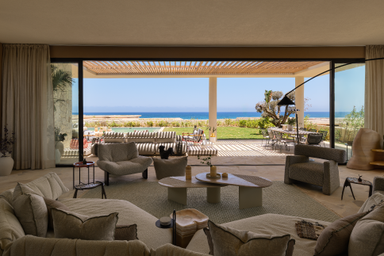
The Anantara x Somabay Strategic Partnership signing ceremony marked a key milestone for Somabay, as Somabay Hotel Company S.A.E officially signed its agreement with Minor Hotels to bring a luxury Anantara-branded resort and residences to the destination.

The ceremony underscored Somabay’s continued growth and long-term vision to position itself as a globally recognized luxury lifestyle hub, aligned with rising demand for experience-led hospitality, branded residences, and wellness-driven travel.

The planned development is set to introduce a luxury resort, branded residences, and Red Sea-inspired wellness experiences, reinforcing Somabay’s role in elevating Egypt’s luxury tourism offering while preserving its natural identity and sustainability vision.

2

The Big Story Today

Egypt Education Platform to IPO

Egypt Education Platform (EEP) is the latest education player to join the IPO waiting room, after filing a request yesterday for listing on the EGX. The private-sector vehicle — an EFG Hermes-backed venture that includes the Sovereign Fund of Egypt among its anchor investors — is looking to list some 199.4 mn shares on the main market.

We don’t know what’s on offer yet. The target float is still under wraps, though EEP will need to offer a minimum of 10% to the public to meet main market requirements. It is also unclear whether this will be a secondary offering (existing backers cashing out) or a primary offering (issuing new shares to raise capital).

It’s a good time to be an education stock. The defensive sector led an EGX rally in April posting a 51.7% monthly gain.

About the IPO-hopeful: EEP runs 25 assets across the country, including Cairo, Alexandria, and Somabay. Its portfolio includes Gems International Schools, Prime National Schools, Hayah Schools, Selah El Telmeez, and Montessori-based preschools Trillium and Petals, according to its website.

What’s next: EEP’s six-month listing window opens from yesterday’s filing date, putting the outer limit for a formal IPO application around November. The next procedural milestone is FRA approval of a prospectus, and tapping an arranger.

We sat down with Ahmed Wahby, CEO of EEP, on the sidelines of the EnterpriseAM Egypt Forum 2025 to discuss the company’s recent entry into Saudi Arabia, where he sees the strongest prospects in Egypt’s evolving economy, how he is budgeting for FY 2026/27, and why he remains firmly optimistic about the outlook for the education industry.

BACKGROUND- EFG Hermes was among the first in our region to push into education as an asset class for private equity, building out the Spark Education Platform, a K-12 portfolio that includes EEP. Spark recently rebranded as MindSpire and announced it was taking Egypt’s Hayah schools brand to Saudi Arabia, where MindSpire has built a significant portfolio of assets. Its other investments include Option Travel, curriculum and ed-tech outfit Selah El Telmeez, and management partnerships with GEMS Education and the Trillium & Petals preschool network.

This publication is proudly sponsored by

3

Capital markets

Bulls shrug off war clouds

The EGX has erased its March war shock. The benchmark surged 14.2% in April to 51.8k points, with local investors crowding into education, travel, and real estate names, according to the bourse’s latest monthly report (pdf). Market cap jumped EGP 433 bn — or 13.4% — to EGP 3.67 tn, recovering March’s 7.9% drawdown with room to spare.

Stocks accounted for just 8.4% of main market turnover, with the other 91.6% dominated by bonds and T-bills — not unusual.

ZOOMING OUT- The EGX30 was a regional standout: Saudi Arabia’s TASI shed 0.55% on profittaking, while the UAE’s bourses found some footing — with the DFM up 6.1% and the ADX up 2.7%, clawing back some of their earlier war-driven losses.

The headline somewhat flatters the data underneath. Local institutions led the rally with net purchases of EGP 3.3 bn, while regional institutions dumped shares worth EGP 905.4 mn. Appetite from foreign institutions managed was weak, with just EGP 100 mn in net buying.

So, what tempts the carry trade crowd back? “We haven't seen foreigners entering aggressively lately. We still need to see incremental inflows from foreign and regional investors,” CI Capital head of research Monsef Morsy tells EnterpriseAM. “It’s not necessarily weak conviction, but rather a result of the investor type and an outlook that isn't 100% clear,” he says, adding that certainty about the “dust having settled” regionally will bring foreign investors back.

Retail traders of all forms trimmed their positions: local investors were net sellers to the tune of EGP 1.1 bn, while regional traders trimmed EGP 1.06 bn, and international retail investors were off EGP 318 mn.

What moved the needle

Don’t credit April’s rally to the ceasefire, that impact actually showed up in May. “The session that most clearly showed the markets are betting on a ceasefire was Sunday’s session [early May], not April’s,” Al Ahly Pharos head of research Hany Genena tells us. For most of the month, the geopolitical risk premium was still being priced in.

This is more a macro story than anything: “April's performance reflected the decrease in the USD exchange rate and the rise in prices of oil, petrochemicals, urea, and so on,” Genena tells us, adding that EGP depreciation expectations “are not severe,” pointing to anchored CIB GDRs as evidence that the black-market fears of prior cycles aren’t driving the current bid.

The anatomy of a concentrated rally

Gains were anything but evenly distributed. Education services led at +51.7%, followed by travel & leisure (+32.3%) and real estate (+21%). Banks (+3.7%), energy (+3.9%), and textiles (+4%) brought up the rear. Meanwhile, shipping & transportation (-0.1%) was the only sector in the red.

Education’s gain was baked in by September. “Education was a top performer because it is a defensive sector whose performance is largely determined at the start of the academic year in September based on enrollment numbers,” Morsy tells us, meaning this year’s “results are already set,” regardless of how the macro played out.

For (a mid-cap) blue-chip like our friends at Cira, there’s a deleveraging factor at play. The sector’s surge also reflects a structural shift for education’s biggest players. “Cira is emerging from a long cycle of heavy debt,” CEO Mohamed El Kalla tells EnterpriseAM. After a “bold” borrowing spree to expand its university and schooling footprint, the company is now entering an exit phase of high leverage. “The bottom line is growing by multiple digits,” El Kalla says, noting that investors are piling in as the company delivers on its growth plans earlier than anticipated. Cira’s stock price was up 15.8% in April to EGP 19.80.

Real estate is a more complicated read. Both Morsy and Genena frame the sector’s 21% gain as largely stock-specific — think dividends here, a new project announcement there. Morsy describes it as “specific stock movement rather than a sector-wide deployment,” and Genena points to names like Talaat Mostafa Group and Palm Hills as the proximate catalysts. Morsy acknowledges a broader dynamic, but with a caveat — “real estate remains a USD hedge, though perhaps not with the same impact as previous years.”

OUR TAKE- That's partially right — and partially convenient. The company-specific narrative holds, but the macro setup is what makes the move clearer. Single-stock pops can’t fully account for a 21% sector gain in a year when investment-driven purchases had already fallen below 20% of demand — down from 55% in 2024 — signaling that speculative appetite was cooling. Real estate still functions as the market’s default macro hedge in uncertain periods, and a weaker EGP, elevated commodity prices, and a war next door create exactly the kind of environment that pushes money into property.

On the travel and leisure front, the 32.3% gain may be partly a real estate story in a different sector. Orascom Development — which hovered near record highs during the month — is one of the largest names on the index, and a master-developer of El Gouna, Makadi, and Taba Heights, which means it carries real estate exposure alongside its tourism business. To the extent the macro hedge logic driving real estate this year is also lifting Orascom Development, some of the index's movement could reflect the same dynamic rather than a standalone sector thesis.

REMEMBER- 5.6 mn tourists landed in Egypt in 1Q 2026, a 43.5% y-o-y increase from the 3.9 mn recorded during the same period last year. The surge in arrivals pushed quarterly tourism revenues to nearly USD 5.1 bn, up 34% y-o-y.

Where might investors be looking in May? Banks are the laggard with a re-rating case building. “Banks are lagging, but they should re-rate soon,” Morsy says. The higher-for-longer rate environment is keeping margins healthy, lending is growing, and 1Q results so far show profitability gains. “There wasn't a major trigger in April for a bigger move, but I expect a gradual re-rating due to healthy margins and the rate environment,” he adds.

The brokerage league table

In April: Thndr topped the EGX brokerage league table (pdf) last month with a market share of 15%, dethroning EFG Hermes’s brokerage arm (14.9%) and Mubasher (6.3%).

YTD: EFG Hermes retains the top spot with a 16.2% market share, followed by Thndr (12.9%) and Mubasher (6.6%), according to the bourse’s YTD ranking (pdf).

4

Automotive

Hitting a speed bump

Sales in Egypt’s automotive industry saw a steady increase in March, with the total market growing 3.2% m-o-m to 17.8k units, according to figures from the Automotive Marketing Information Council (Amic). Growth was driven by consumers rushing to buy cars ahead of anticipated price hikes amid regional tensions and a fresh wave of electric vehicle (EV) adoption due to persistently rising fuel costs, according to several industry experts who spoke to EnterpriseAM.

The commercial segments went in the opposite direction, with bus sales declining 15% m-o-m — dropping to 1.2k units in March — and trucks showing slight signs of cooling from February.

Imports outpace local assembly

The consumer market’s preference for completely built-up (CBU) imports over locally assembled (CKD) units persists. Despite a push for domestic assembly, imported CBU sales hit 8.2k units in March, surpassing the 5.9k units that rolled off local assembly lines. In the broader YTD figures, CBU growth hit 77.6%, compared to just 40.7% for local assembly.

IN CONTEXT- The gap comes as the Madbouly government pushes to make Egypt a regional manufacturing hub. The revamped Automotive Industry Development Program (AIDP) lowered the entry threshold for local components to 20%, targeting 60% value-added over time. The state has also folded the auto sector into its export subsidy scheme at 4.5-5.5%, matching high-value engineering. Mansour Group’s MAC for Mobility Manufacturing recently secured an EGP 2.7 bn loan for an assembly plant due in 1Q 2027.

What’s driving the split

The gap doesn’t signal a structural shift toward imported cars. CBU imports are gaining ground mainly because dealers are clearing inventory and local manufacturers misjudged how quickly demand would rebound, Khaled Saad, secretary-general of the Egyptian Association of Automobile Manufacturers, tells EnterpriseAM. “Local manufacturers did not expect sales to rise so suddenly after a six-month market standstill,” Saad says, adding that dealers are offloading accumulated CBU stock to make room for 2027 models.

Buyers are also prioritizing quick delivery, responding to “immediate availability and more stable pricing,” Tamer Kotb, vice president of Abu Ghaly Motors, tells EnterpriseAM. CKD volumes remain constrained by production cycles, localization limits, and supply chain dependencies, making local assembly less responsive to short-term demand spikes, he says.

The CBU-CKD split tracks price brackets and perceived quality, the high-profile industry analyst (and Cars with Maged Youtube host) Maged El Tawil says. “For entry-level cars like the Nissan Sunny or Hyundai Elantra, CKD remains the hottest seller because they are as cheap as they get,” he says. But as prices climb toward the EGP 1.5 mn benchmark for the average SUV, the math shifts. “People are willing to pay the extra thinking that local quality is not up to par,” he explains, and CBU becomes more competitive and trusted in that segment.

A race against inflation and a scramble for inventory: March sales cooled relative to February’s pre-war retail data, but supply-side pressure hasn’t eased. As Egypt’s economic outlook shifted early in the year, Saad describes recent activity as a scramble by importers to secure inventory before the war triggered anticipated shortages. “The major problem today is finding space on a cargo ship headed to Egypt … Everyone is pushing to bring in the largest quantities possible and secure their shipments at any price,” he says. Kotb notes that active consumers rushed to clear available stock to hedge against inflation, sensing imminent price hikes from FX volatility and importers’ announced increases.

EVs gain ground, but supply chains stay shaky

EVs still account for a small fraction of the passenger car market, but they're carving out a more visible niche. March data showed 290 units from Chinese automotive giants BYD, Zeekr, and Lynk&Co hitting the Egyptian market, Kotb tells us. Kotb, who forecast this rise in December, credits early adoption momentum, stronger value propositions like warranties and service packages, and rising consumer sensitivity to soaring gas prices. “The customer has begun to feel secure with EVs because they save about 60% of usual operating costs,” Saad says.

Supply chain disruptions from escalating global tensions still weigh on the market. EV and CBU growth reflects a market reacting to availability and pricing swings rather than a structural shift, Kotb tells us, citing “supply chain instability, increased shipping costs, and war risk ins. premiums” as ongoing challenges.

5

Investment Watch

Next year’s investment target locked in

The Madbouly government is looking to reel in USD 44 bn in private and foreign direct investment in FY 2026-2027, three government officials tell EnterpriseAM. The gov’t aims to secure investors by leaning on public-private partnerships, opening up new investment avenues, and drumming up funds through the state’s privatization program.

The breakdown: Officials think the lion’s share of the inflows will be into energy, real estate, and heavy industry, sources tell us. The oil and gas sector remains a primary magnet for capital after the government’s recent settlement of arrears to international oil companies; the state is preparing to tender new renewable energy, waste recycling, and water desalination projects.

Over 14% of the headline figure is expected to come in the form of FDI into the oil sector. The Arabic press cited an unnamed government official saying that the government wants to secure USD 6.2 bn in foreign direct investment for the oil sector next fiscal year to fund well development and boost domestic output.

Leveraging the clean slate: The government cleaned up its balance sheet over the past year, slashing the the debt pile to foreign energy firms from USD 6.1 bn in July 2024 to USD 714 mn as of April, with a strict mandate to zero out the balance by the end of June. Settling these debts is helping lure international capital back into exploration.

6

Economy

PMI drop

Egypt's non-oil private sector contracted at its fastest pace in over three years in April as the regional war drove input costs to their highest level since early 2023, according to S&P Global's latest PMI report (pdf). The headline reading fell 1.4 points to 46.6 — a fifth straight monthly decline and well below the 50.0 growth threshold, down from 48.0 in March.

Output, new orders, purchasing, and employment all weakened. Supplier delivery times lengthened for the first time this year on input shortages and shipping delays tied to the war.

After months of absorbing higher fuel and material costs, companies pushed selling prices up at their fastest pace since August 2024. Order books softened immediately in response, with manufacturing and wholesale/retail taking the heaviest hits.

Firms are pulling back on inputs and headcount. Job cuts were close to the survey's long-run average, but the direction is clear: caution on spending, caution on hiring.

Why it matters: The reading is consistent with annual GDP growth slowing to around 3.9%. S&P's David Owen warns the price acceleration suggests March's 15.2% headline inflation “may have further to run.”

What's next: Companies are hoping for the disruption from the Middle East conflict to ease and the market conditions to recover, but for now, the April reading shows the private sector starting 2Q with weaker demand, faster price increases, and a subdued outlook.

Tags:

7

Also on our Radar

Mopco taps Hassan Allam for urea plant revamp

Hassan Allam lands Mopco revamp contract

Hassan Allam Construction secured a contract to overhaul Mopco’s fertilizer complex in Damietta Freezone, taking over civil, mechanical, electrical, and instrumentation works for the facility, it said on LinkedIn. The project will involve revamping three existing urea plants to expand production capacity and build a new CO2 recovery unit.

Why it matters: This couldn’t have come at a better time. Global urea export prices skyrocketed up to USD 890 per ton in mid-March nearly double their pre-crisis baseline. While prices have dipped since then, Egyptian manufacturers are still well-positioned to help fill this massive global supply vacuum. Mopco's revamp and expansion will allow them to capture a larger slice of the export market and lock in hard currency windfalls.

Cooling the corridor

Algerian home appliances giant Condor is pouring an initial USD 25 mn into a new 15k sqm integrated air conditioning factory in Sixth of October City, Amwal Alghad reports, citing Commercial Director Ahmed Abdel Monem. The facility, slated for completion within three years, is designed to ramp up the company's local output to 100k units annually — capturing a targeted 5% share of Egypt’s 1.2 mn-unit market — while simultaneously serving as a launchpad for regional exports to Saudi Arabia and Sudan.

Why it matters: The Algerian firm — which currently manufactures Beko and Hisense air conditioning units for the local market — is using its access to Egypt's favorable trade agreements --- including lower tariffs and faster turnaround times--- to reach target markets like Saudi Arabia and Sudan. This means fresh FDI for us, an increase in localized manufacturing, and a stronger foothold in the Red Sea corridor as an industrial launchpad.

Bedaya closes securitization program

EFG Finance’s Bedaya Mortgage Finance completed an EGP 1.91 bn securitized bond issuance, according to a statement (pdf). The issuance --- which is the eighth since its inception and the sixth under its securitization program --- was structured across four tranches with tenors ranging from 13-81 months and credit ratings between AA and A-.

Advisors: Our friends EFG Hermes was sole financial advisor, issuance manager, bookrunner, underwriter, and arranger. NBE, Banque du Caire, CIB, SAIB, and ABK underwrote, with United Bank in the subscription. Banque du Caire was receiving bank, ADCB custodian, El Dereny & Partners counsel, Baker Tilly auditor.

The House greenlights JPY loan for Metro Line 4

The House of Representatives signed off on a JPY 100 bn (c.USD 630 mn) facility from the Japan International Cooperation Agency (JICA) to fund the fourth tranche — linking Sixth of October City to the Grand Egyptian Museum and the Pyramids — of Cairo Metro Line 4's first phase, according to a statement. The terms are concessional by any measure: 30-year tenor, 10-year grace period, and a 0.75% annual interest rate.

8

PLANET FINANCE

The USD 3.2 tn tension

Are Gulf SWFs the new underwriters of the intelligence economy? StateStreet CEO Ron O’Hanley, speaking at the Milken Institute Global Conference in Los Angeles this week, has described the GCC’s deployment of capital as “an enormous export of capital to lots of people in this room” reshaping how transactions play out globally.

The framing signals a shift in how Gulf capital is viewed on the global stage. Gulf sovereign wealth funds (SWFs) have graduated from LPs writing checks to driving allocation and shaping terms and structures. GCC governments and SWFs have deployed some USD 3.2 tn in capital globally.

Why this new reality is particularly fragile now: “The Iran war, and what that is triggering now, I believe will be a big realignment of capital flows,” O’Hanley said. Regional escalations risk forcing Gulf firepower to turn inward to focus on domestic defense and reconstruction, thus costing US tech firms and AI hyperscalers their primary underwriter, according to the Council on Foreign Relations ’ Rebecca Patterson. Saudi Arabia's PIF already cut international allocations to 20% down from 30% in April, and there’s no replacement pool.

The counter-narrative? Mubadala is bullish on the US. With 44% of its portfolio already stateside, Deputy Group CEO Waleed Al Muhairi calls it “the best risk-reward” globally and sees a “V-shaped recovery” ahead, with further upside in AI infrastructure, energy, and healthcare.

Not everyone at Mubadala agrees. CIO Oscar Fahlgren told the same audience the world is “standing just in front of the worst energy crisis we have seen in living memory” and that markets haven’t begun to price the Strait of Hormuz closure’s effect on the real economy.

The global finance elite is hungry for a bumper year regardless. Apollo, Blackstone, and Morgan Stanley executives at Milken all flagged expanding M&A pipelines and a reopening IPO window for quality issuers, with Apollo President Jim Zelter pointing to “the ocean of private capital in aggregate.” Private credit, in particular, seems to be back in favor, with Carlyle CEO Harvey Schwartz framing them as a healthier “distributor of risk.”

The catch? All of this rests on a market PGIM’s John Vibert called “priced to perfection” — with much of the actual geopolitical risk “not yet priced in.”

Could the yield chase be going global? “Emerging markets, a forgotten asset class for the last six, seven years, became now a considerable asset class for global portfolios,” BTG Pactual Chairman Andre Esteves said, while MUFG’s US macro strategy head George Goncalves flagged that global rates are finally offering “competition for the US for the first time.”

MARKETS THIS MORNING-

South Korea’s Kospi soared over 5% to hit fresh highs earlier this morning as markets jumped on hopes of easing regional tensions. Apart from the Kospi, Asia-Pacific markets are closed for public holidays. Wall Street is also set to open higher, with futures in the green.

EGX30

52,558

+1.1% (YTD: +25.7%)

USD (CBE)

Buy 53.68

Sell 53.82

USD (CIB)

Buy 53.67

Sell 53.77

Interest rates (CBE)

19.00% deposit

20.00% lending

Tadawul

11,007

-0.8% (YTD: +4.9%)

ADX

9,791

-0.3% (YTD: -2.0%)

DFM

5,729

-0.9% (YTD: -5.3%)

S&P 500

7,259

+0.8% (YTD: +6.0%)

FTSE 100

10,219

-1.4% (YTD: +2.9%)

Euro Stoxx 50

5,870

+1.8% (YTD: +1.3%)

Brent crude

USD 109.87

-4.0%

Natural gas (Nymex)

USD 2.78

-0.4%

Gold

USD 4,560

-0.2%

BTC

USD 81,177

+1.4% (YTD: -7.0%)

S&P Egypt Sovereign Bond Index

1,050

+0.5% (YTD: +5.7%)

S&P MENA Bond & Sukuk

151.40

0.0% (YTD: -0.3%)

VIX (Volatility Index)

17.38

-5.0% (YTD: +16.3%)

THE CLOSING BELL-

The EGX30 rose 1.1% at yesterday’s close on turnover of EGP 10.1 bn (36.2% above the 90-day average). Local investors were the sole net buyers. The index is up 25.7% YTD.

In the green: Heliopolis Housing (+3.8%), Egypt Aluminum (+3.3%), and Rameda (+2.7%).

In the red: Abu Qir Fertilizers (-2.5%), Edita (-1.2%), and ADIB (-1.1%).

9

HARDHAT

Will Egypt’s Gulf workaround stick around after the war?

Is Egypt’s emergency Gulf workaround no longer a one-off? While shipping through the Strait of Hormuz was still running at a fraction of normal levels in late April, a functioning Europe-Egypt-GCC corridor had already been established, with trailers arriving at Damietta, moving overland to Safaga, and then crossing by ferry to Saudi Arabia before continuing by road into Gulf markets.

The big question now is whether this route will endure once the security shock subsides. Current evidence suggests it will, but with a caveat. Rather than becoming the new default trade lane, it is more likely to be formalized as a strategic backup — a route which shippers, ports, and Gulf investors may want to preserve as ins. against potential future closures of the Hormuz chokepoint.

Why this matters: Egypt can position the route as an alternative layer of connectivity within its regional risk management system. With Suez Canal revenues under pressure during disruptions, the ability to capture even a small share of rerouted, time sensitive-cargo — and anchor it through ports and inland transport — would provide a welcome revenue stream.

The pitch

It’s fast: “Compared to traditional sea freight options, transit times via conventional routes remain longer,” Commercial Director at Pan Marine Ghada Samy tells EnterpriseAM. “Initially, customers were hesitant to adopt this model. However, due to urgency in their shipments, several chose to trial the solution,” Samy says.

By the numbers: Official figures put capacity on the Europe-Egypt leg at up to 420 trailers a week, while Pan Marine’s Safaga-Neom leg runs four fixed weekly sailings — each capable of carrying up to 130 trucks. This scale is significant for those shipping perishables, FMCG, industrial parts, and urgent cargo.

It’s live: “We successfully executed multiple shipments from different European origins, covering both dry and reefer cargo to GCC destinations which started to give more confidence to other customers,” Samy notes. Neom said last month that the full Europe-Egypt-Neom-GCC pathway was active and already being used by importers from European markets.

It’s reliable: “As a result, customers are increasingly relying on this model. It is helping them reduce safety stock levels and manage cashflow more efficiently,” Samy adds, noting that the 45-ft trailers provide higher cargo capacity compared to standard 40-ft containers, enabling more volume to be moved in less time.

It's a two way street: “Pan Marine also recently launched export flows from GCC to the EU, and supported shipments to North Africa via our hub in Damietta,” Samy highlights.

And it makes sense in the longer term — with a few caveats: “Under normal conditions, this route can make commercial sense when leveraging higher capacity of equipment, door-to-door service, and optimized transit time. As freight rates normalize, the cost gap narrows, making this corridor increasingly competitive,” Samy explains.

Interest exists for a more permanent route

“There is currently an ongoing discussion with customers to maintain this corridor beyond current disruption,” Samy tells us. “The focus is on securing standby or flexible capacity in Egypt as part of longer-term resilience planning rather than relying on it only at times of crisis,” she says, noting that “a wider customer base is now incorporating this route into their regular supply chain strategies.”

Capital has long been deployed around the idea that Egyptian nodes matter. AD Ports says it has invested some USD 469 mn in Egypt since 2022. Since then, it has secured IFC-backed financing for the Noatum Ports Safaga Terminal (which will come online by 3Q this year), signed an MoU for a logistics hub at Alexandria Port, and secured a 50-year renewable usufruct for the Kezad East Port Said industrial and logistics zone with the SCZone. The group also acquired stakes in Alexandria Container and CargoHandling Company, logistics firms TCI and Transmar, and maritime service provider Safina.

But the route has its drawbacks

Commercially, the route looks strongest in conditions where speed commands a premium. In peacetime, it still remains relevant for selected time-sensitive cargo.

But for low-margin, bulky, or non-urgent trade, the extra truck legs and hand-offs make the commercial case much thinner.

Inland execution is the make-or-break factor: The corridor’s performance will depend on trucking capacity, border discipline, and customs choreography. “Trucking availability remains a key pressure point, particularly given the combined demand from domestic Egyptian cargo and transit flows,” Samy notes.

That is where the regional warning lights flash: As land bridge routes took on more cargo, demand for trucking capacity surged well beyond available supply, with rates on some Gulf corridors quadrupling above pre-disruption levels, while fuel costs and fleet constraints added further pressure.

The inland layer needs depth, whether that be ensured trucking capacity, more drivers, stable fuel access, or tighter border performance. “High cargo volumes have intermittently led to congestion at ports and border crossings, impacting overall fluidity,” Samy says.

“At the beginning, ACI requirements were a major bottleneck; however, this was quickly addressed,” Samy added. The March customs notice exempted indirect transit shipments for Gulf destinations from ACI pre-registration for three months, granting them priority processing — a serious attempt to smooth out the Egyptian leg.

The three-month emergency exemption for transit cargo did the heavy lifting in making the corridor viable. If that expires without new exemptions to make the route more attractive, a big part of the route's competitiveness goes with it.

Our take

The underlying model is already changing: We are moving from an era of narrow optimization to an era of strategic redundancy, where resilient efficiency — not minimal cost — defines a well‑designed network. When the same lanes and chokepoints are repeatedly disrupted, building supply chains around a single “most efficient” route becomes a concentration of risk.

The future isn’t one dominant route — it’s a portfolio of corridors. Power in global trade is shifting from control of a single chokepoint to managing multiple alternatives when it fails.

(** Tap or click the headline above to read this story with all of the links to our background as well as external sources.)


2026

MAY

7 May (Thursday): Labor Day national holiday observed.

7 May (Thursday): CBE expected to release foreign exchange reserve data for April.

10 May (Sunday): Capmas expected to release inflation data from April.

21 May (Thursday): Monetary Policy Committee’s third meeting of 2026.

27-29 May (Wednesday-Friday): Eid El Adha (TBC).

JUNE

15 June (Monday): Seventh review of the IMF’s Extended Fund Facility.

30 June (Tuesday): National holiday in observance of the June 30 Revolution (TBC).

JULY

9 July (Thursday): Monetary Policy Committee’s fourth meeting of 2026.

23 July (Thursday): National holiday in observance of Revolution Day (TBC).

AUGUST

20 August (Thursday): Monetary Policy Committee’s fifth meeting of 2026.

26 August (Wednesday): National holiday in observance of Prophet Muhammad’s birthday (TBC).

SEPTEMBER

15 September (Tuesday): IMF to hold its eighth review of Egypt’s USD 8 bn EFF arrangement.

24 September (Thursday): Monetary Policy Committee’s sixth meeting of 2026.

27-29 September (Sunday-Tuesday): Global Conference on Population, Health, and Human Development.

OCTOBER

6 October (Tuesday): Armed Forces Day.

29 October (Thursday): Monetary Policy Committee’s seventh meeting of 2026.

DECEMBER

17 December (Thursday): Monetary Policy Committee’s eighth meeting of 2026.

EVENTS WITH NO SET DATE

Early 2026: Passenger operations on the New Administrative Capital-Nasr City monorail scheduled to begin.

1Q 2026: Trial operations for the Ain Sokhna-Sixth of October section of Egypt’s first high-speed rail line scheduled to begin.

May 2026: End of extension for developers on 15% interest rates for land installment payments.

July 2026: British Prime Minister Keir Starmer set to visit Egypt.

2H 2026: Operations at Deli Glass Co’s new USD 70 mn glassware factory kick off.

2026: The Egyptian-American Economic Forum.

2027

20 January-7 February: Egypt to host the African Games.

April 2027: Tenth of Ramadan dry port and logistics hub to begin operations.

EVENTS WITH NO SET DATE

2027: Egypt to host EBRD’s annual meetings.

2027: Egypt-EU Summit 2027.

End of 2027: Trial operations at the Dabaa nuclear power plant expected to take place.

September 2028: First unit of the Dabaa nuclear power plant begins operations.

Now Playing
Now Playing
00:00
00:00