Get EnterpriseAM daily

Available in your choice of English or Arabic

EBRD upgrades our 2025 growth forecast, slashes 2024 forecast

1

What We're Tracking Today

Arab central bankers are convening in Cairo this week

Good morning, friends. We are kicking off the business week with a packed issue, full of economy, investment, M&A, and real estate news.

PSA-

WEATHER- It’s another cool day in Cairo, with a high of 33°C and a low of 23°C, according to our favorite weather app.

It’s even cooler in Alexandria, with a high of 29°C and a low of 23°C.

** DID YOU KNOW that we now cover Saudi Arabia and the UAE?

** Were you forwarded this email? Tap or click here to get your own copy delivered every weekday before 7am Cairo time — without charge.

HAPPENING THIS WEEK-

Arab central bankers gather in Cairo: The Central Bank of Egypt is hosting the annual meetings of the Council of Arab Central Banks and Monetary Authorities' Governors on Tuesday, according to a statement. The meetings will bring together Arab central bank governors, heads of Arab and international financial institutions, senior officials, and banking experts to discuss pressing economic issues. Discussions will address monetary policy management, private sector debt impacts on financial stability, and central banks' role in addressing climate change.

THE BIG STORY ABROAD-

One story is on every front page this morning: Israel killed Hezbollah leader Hassan Nasrallah in Beirut over the weekend in an airstrike. Nasrallah, who led Hezbollah for 32 years, had been among the main targets of Israel’s bombardment of Lebanon.

Israeli forces killed at least 700 people in Lebanon last week, including 50 children. At least 30k people — mainly Syrians — have crossed into Syria from Lebanon since Wednesday and more than 200k people in Lebanon have been uprooted by the attacks.

Houthis attack Israel: Yemen’s Houthis said on Friday that they had launched missile and drone attacks on the Israeli cities of Tel Aviv and Ashkelon as well as three US destroyers stationed in the Red Sea. The Israeli army said that it managed to intercept a missile fired from Yemen, but the Houthis said that their operations would not stop until Israel ceases its offensives in Gaza and Lebanon.

Saudi Arabia formed a global alliance to push for a two-state solution to the Palestinian issue. The alliance will include a number of Arab and Muslim countries, as well as a few European countries. Meanwhile, Egypt continued to call for an immediate ceasefire in both Gaza and Lebanon, warning on Thursday that Israel’s practices and violations of international law threaten to plunge the region into a state of chaos.

AND IN BUSINESS NEWS- Beijing wants Chinese companies to ditch Nvidia chips: Chinese regulators are reportedly discouraging companies from purchasing US-based Nvidia’s H20 chips, in a bid to expand local chipmakers’ market share and to prepare local tech companies for more US restrictions that may be coming down the pike. The instructions have come as a guidance rather than an outright ban, as officials weigh the benefits of access to the world’s fastest chips for its burgeoning AI sector.

PLUS- HSBC to exit the South African market: HSBC will transfer its commercial and investment banking business in South Africa to local lender FirstRand as it exits the country and continues to shift its focus toward Asia, it said in a press release (pdf). Absa Bank has also been tapped to provide HSBC’s equities and securities finance clients with access to the South African market.

AND IN US ELECTIONS NEWS- Tehran comes under fire for election interference: The US Justice Department on Friday accused three members of Iran’s Islamic Revolutionary Guard Corps of hacking Donanld Trump’s election campaign, after they purportedly used fake emails to dupe Trump’s staff into clicking links that allowed the hackers to snag sensitive information like debate prep notes and VP shortlists. While the Iranian suspects are outside of US jurisdiction, Attorney General Merrick Garland emphasized the Justice Department's commitment to pursuing international cybercriminals, stating, “We will follow these people for the rest of their lives.”

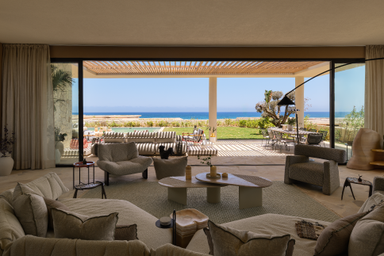
For the first time in Egypt, Somabay is thrilled to host the legendary Amy Winehouse Band live in concert. Prepare for an unforgettable evening filled with soul, jazz and iconic hits as the band performs live at Somabay’s breathtaking The Marina in The Theater Somabay on 5 October. Set against the stunning backdrop of the Red Sea, this exclusive event promises a magical night of music and entertainment in a unique setting. #TheAmyWineHouseBand #OneParadiseAllSeasons #SomabayRedSea

2

ENTERPRISE FINANCE FORUM

SME finance in Egypt: Who’s doing it and what’s missing in that sphere?

Who’s funding SMEs? Although small and medium enterprises (SMEs) make up around 98% of all Egyptian companies, contributing more than 43% of the country's GDP, and employing about 47 mn Egyptians, only a limited number of institutions have managed to crack the code of financing SMEs — which face a financing gap of around USD 46 bn. A decade ago, SMEs saw little financing through traditional methods due to their high risk and low profitability — however, central bank efforts to stimulate lending to SMEs have been game changing, leading to the rise of non-banking financial institutions and fintech firms that are reshaping the sector today.

We gathered a number of key players involved in SME financing during this year’s Enterprise Finance Forum — we spoke with Post for Investment CEO and Managing Director Ahmed Ali Abdelrahman, the National Bank of Egypt’s (NBE) General Manager for Business Development for SMEs Chantal Sabbagh, and non-banking financial services firm GlobalCorp Group CEO and Managing Director Hatem Samir, to take a look at the current market structure, the opportunities ahead, and how institutions are using tech solutions to grow their businesses and mitigate risks.

What do SMEs want? The basic needs of SMEs include access to affordable financing, good service, and digital solutions.

Lenders need to change things up: With the complexities that are present today, a one-size-fits-all approach from lenders is no longer feasible, Sabbagh said, calling on financing entities to change up their approach and look at SMEs’ business models based on the industry and sector they operate in.

Cracking the code to SME funding: Continuous follow up on the needs of SMEs has enabled the NBE and other financial institutions to crack the code of SME financing, Sabbagh said, explaining that although the financing gap for SMEs is large, it’s also a large market that continues to expand. The CBE spares no effort in updating its procedures for SME financing, integrating SMEs into the formal economy, and granting them access to financing — however, it ultimately comes down to these companies’ business models, she said.

By the numbers: The banking sector's lending portfolio amounts to about EGP 10-11 tn, with only half of that going to the private sector, and SME loans — be it provided by banking or non-banking sectors — ranged between EGP 87-90 bn in 2023, Abdelrahman said. Leasing portfolios amounted to roughly EGP 20 bn and the SME lending portfolio of NBFIs is estimated to range between EGP 15-20 bn.

Smaller financial institutions and NBFIs may be more effective when it comes to SME lending — they are more flexible, inclusive, and provide the range of products needed by these companies, including manual lending, asset-backed lending, tech-backed services, factoring services, or even manual underwriting, Samir said. Larger institutions such as banks offer highly specialized programs in areas that are not as effective as one would hope, but are more efficient when for corporate lending and large companies’ structures. “The size of the SME market requires restructuring strategies to help it out financially, while equally providing technical and technological support to help it grow,” Samir explained.

But does the entry of new players into the SME financing sector pose a threat to banks? The entry of new players into the market is not so much a source of competition as it is a source of market integration, said Sabbagh, adding that this requires more coordination among banks with an already established relationship that both parties stand to benefit from. This, in turn, will drive the geographical expansion of NBFIs, she added. Abdelrahman also agreed on the complementary relationship between banks and smaller financial institutions, explaining that NBFIs may serve as a channel for banks to expand their reach and respond more quickly and with greater flexibility to customer requests, allowing them to penetrate the SME sector more swiftly and efficiently.

Banks can achieve greater returns from financing NBFIs than financing small customers directly, Samir said, as banks carry much higher risk costs than NBFIs in these cases. Sabbagh pointed to the high cost of administering smaller customer accounts at banks — banks are also not opposed to having many NBFIs in the market, seeing as they invest significant amounts of money in them, rather than directly lending to consumers.

It's impossible to deny the role of banks in supporting NBFIs, though: “We have to acknowledge that one of the key factors for the success, growth, and prosperity of [the NBFI] industry is the multiplier effect provided by banks, without which the landscape would be entirely different,” Abdelrahman said. Sabbagh agreed with this view, saying that integration is profitable for both parties, especially in a large, unregulated market that is growing slowly, but where customers always prefer cheaper financing. The banking sector benefits in all cases, she said, whether by providing financing directly to the customer or through NBFIs.

The productive sectors, especially industry and agriculture, are among those struggling the most to secure financing at the moment, while the rapid turnover of goods has enhanced the trade sector’s ability to adapt to rising financing costs. The industrial sector has shown significant resilience by passing on the increased costs to consumers, but this does not negate the fact that all sectors are facing challenges, Sabbagh said. Looking at the other side of the equation, leasing, factoring, mortgage financing, and consumer finance have shown growth, but the impact of rising interest rates has resulted in a decline in the number of transaction and customers y-o-y, despite an increase in the size of transaction.

The high cost of financing might even be a bright spot in the long term, as it filters out unstable and non-scalable business models, Abdelrahman said. He explained that SMEs are more vulnerable to economic changes, especially rising interest rates, with World Bank data indicating that every 1% increase in interest rates sees a corresponding 3% decline in the growth of SMEs.

What will the next phase of SME financing look like? Looking at existing companies, we can expect specialization and segmentation of business models by sector, as not all NBFIs will be able to finance all sectors, Sabbagh said.

It's a game of technology, not finance, when we talk about the future. Reliance on technology will be the cornerstone of development in financing SMEs, as it provides better access to customers and the ability to innovate and develop suitable products, in addition to enhancing the synergy between banks and NBFIs to support these companies,” according to Sabbagh. She pointed out that the market moved faster than its players, with NBFS now essential for everyone to be able to lend more.

3

Economy

EBRD revises Egypt’s GDP growth for 2025 upward

The European Bank for Reconstruction and Development (EBRD) has slightly raised our growth forecast for 2025 to 4.5% from 4.4% in its April forecast, according to its latest Regional Economic Prospects report (pdf). The bank has left its forecast for the current fiscal year ending in June 2025 unchanged at 4.0%.

(Tap or click the headline above to read this story with all of the links to our background as well as external sources.)

The bank is less optimistic about 2024: The EBRD now sees the country growing at a 3.2% clip in 2024, down 0.7 percentage points from its April forecast. The multilateral lender has also trimmed its growth estimate for the last fiscal year ending in June 2024 to 2.7%, down 0.3 percentage points from its forecast earlier this year.

Thank sectoral growth for the optimistic medium-term outlook: “Growth in the retail and wholesale trade, agriculture, communications and real estate sectors counterbalanced sharp contractions in the gas and non-oil manufacturing industries,” the report said.

Energy sector disruptions and investment delays threaten Egypt’s outlook: Disruptions in the energy and electricity sectors and delays in the implementation of structural reforms under Egypt’s commitment to the IMF pose risks to the country’s economic recovery, according to the EBRD. The slow recovery of investment has also hindered economic progress. Egypt's external accounts, however, have seen improvement since the float of the EGP in March 2024 thanks to increased inflows from international investors and partners driving FX reserves to a five-year high.

Less optimistic than most: EBRD’s forecast for the current fiscal year is slightly below the 4.1% the IMF has penciled in for the year and the government’s 4.2% growth target.

The regional outlook: The EBRD sees the SEMED region growing at a 2.8% clip this year, down 0.6 percentage points from April’s forecast thanks to “the ongoing conflict in Gaza and Lebanon and severe droughts in Morocco and Tunisia.” Jordan’s economy is expected to grow 2.2% this year and Lebanon’s to contract by 1%. Morocco is expected to see growth of 2.9% in 2024 and 3.6% in 2025 due to improvements in manufacturing and tourism. Tunisia, however, continues to struggle with modest growth expectations of 1.2% in 2024 — which is expected to rise to 1.8% in 2025 — due to its current fiscal position and external debt, despite “stronger remittances, tourism receipts and lower imports.”

This publication is proudly sponsored by

4

Investment Watch

Al Mansour Automotive to invest USD 100 mn in the Egyptian market

Mansour Auto has big investment plans: Al Mansour Automotive plans to invest some USD 100 mn in the local market over the coming four years, COO Lotfy Mansour told Asharq Business. The company will use the funds to enhance its local manufacturing capabilities, he added.

(Tap or click the headline above to read this story with all of the links to our background as well as external sources.)

We have an idea where part of the funds may go: Late last year, the cabinet announced that the auto player is looking to set up a USD 35 mn car assembly and spare parts plant. While information about whether the potential factory will be assembling EVs or gasoline-powered cars hasn’t been made public, a year prior the company announced it was close to finishing feasibility studies to start assembling EVs in Egypt.

And also: The company is aiming to kick off production of a new MG model in 1Q 2025, with investments amounting to USD 20 mn.

Al Mansour is keeping busy: The company is now the official distributor of the Slovakian Matador Tires in Egypt under a newly-signed partnership agreement between the two sides, Al Borsa reports. Al Mansour will start off with distributing passenger car tires and at a later phase start distributing tires for light trucks.

Remember: The Madbouly government has been working to localize the auto industry, introducing the Egyptian Automotive Industry Development Program (AIDP) in 2022, which will offer incentives to auto players with the aim of localizing the industry and its feeder industries, with the aim of enhancing the country’s existing assembly and manufacturing capabilities — and of encouraging new investment to the sector.

Read more: We dove into the government’s efforts to localize the auto industry in an InsideIndustry published earlier this month.

5

A MESSAGE FROM VODAFONE

Fueling Egypt’s digital transformation: Vodafone’s strategic role in the BEBA mission

In mid-September, the British Egyptian Business Association (BEBA) kicked off a three-day mission, titled “Invest in Egypt: Your Gateway to Growth”. Spanning from 18-20 September, the mission aimed to navigate Egypt’s economic policy amid ongoing challenges, fuel investments for a seamless green transition and catalyze financing and digitalization efforts for sustainable growth.

The BEBA Business Mission 2024 spotlighted wide-ranging investment opportunities, emerging industries, and Egypt's business landscape. The expert-led events and seminars shed light on key sectors including renewable energy, financing the green economy, the Suez Canal Economic Zone, and more. The sessions featured Ministers and high-level officials, including, Finance Minister Ahmed Kouchouk, Investment and Foreign Trade Minister Hassan El Khatib, Chairman of the Financial Regulatory Authority (FRA) Mohamed Farid, Deputy Governor of the Central Bank Rami Aboul Naga, the SCZONE head Walid Gamal Eldin, and Chairman & CEO of the Administrative Capital for Urban Developments (ACUD) Khaled Abbas. Mohamed Abdallah, CEO of Vodafone Egypt, was also present with the officials. Offering valuable knowledge and real-world experiences, they deepened understanding of Egypt’s evolving economic landscape, paving the way for future business collaborations and growth.

Vodafone has consistently backed BEBA’s mission, highlighting its successful investment journey in Egypt’s market to both business and government entities. Since entering the market in 1998, Vodafone has made Egypt a cornerstone of its global operations, promoting networking opportunities for key stakeholders, pulling in fresh investments in the country. Vodafone’s investments in the country reached a total of EGP 100 bn since inception, with EGP 10 bn invested in 2024 alone.

Egypt stands at a pivotal moment in its economic transformation, with ambitious reforms underway and an influx of global investment interest. The recent IMF review, coupled with the upcoming BEBA Business Mission to the UK, underscores the synergy of these developments, providing a glimpse into Egypt’s promising economic future and positioning it as a key hub for international business in the region.

Vodafone is eyeing future growth in Egypt, remaining dedicated to further investments and expansions in the country. The group is anticipating additional investments to improve network infrastructure, as well as broaden their portfolio of digital services, boosting connectivity across Egypt. Vodafone aims to highlight key factors that are forecasted to enhance the investment landscape in Egypt.

Vodafone Egypt is set to join forces with stakeholders and the government to unlock the key enablers that will fuel growth in the telecom sector, realizing Egypt’s 2030 vision for digital transformation. Their journey has been one of dynamic growth and innovation, deeply embedded in their commitment to the Egyptian market.

6

Real estate

El Sisi reinstates the full provisions of the 2008 Building Law in a move aimed at reviving the construction sector

Construction licensing made easier: President Abdel Fattah El Sisi has directed the government to scrap the construction licensing requirements put forward in 2021 and reinstating the full provisions of the 2008 Building Law and its executive regulations, according to a statement from the Housing Ministry.

(Tap or click the headline above to read this story with all of the links to our background as well as external sources.)

The move aims to push more citizens to obtain their building permit by making the process easier, making it an 8-step process from 15 steps previously, according to another statement from the Local Development Ministry.

A speedy process: The move will allow citizens to receive their building permit in a swift 44-day period, which could go down to 26 days if there is no need for an ins. certificate, Local Development Ministry spokesperson Khaled Qasem told Enterprise. Citizens will also now be able to access responsive tech support and local administration units to guide them through the process of obtaining their permit, he added.

And a boost in the construction sector: The decision will ease barriers to accessing building permits and support and energize the construction sector in the process, Qasem said.

Background: The government in 2021 introduced fresh licensing requirements, including setting limits on building heights that vary with street width and standards for built-up areas depending on land size — limits that have been in place ever since. Those requirements were preceded by a construction ban in urban centers across the country including the whole of Greater Cairo and Alexandria that took place in 2020, which came as part of a government crackdown on building code violations and illegal construction.

7

M&A WATCH

Amoun wants a majority stake in EGX-listed Atlas

Amoun wants controlling stake in EGX-listed Atlas: Amoun for Real Estate and Tourism Development is looking to acquire 65.59% of EGX-listed Atlas for Investment and Food Industries, according to an offer sent to the Financial Regulatory Authority (FRA), according to a statement (pdf). The FRA is in the process of reviewing the offer.

(Tap or click the headline above to read this story with all of the links to our background as well as external sources.)

The details: Amoun has offered to purchase around 427.2 mn of Atlas’ shares for EGP 0.78 a piece in a mandatory tender offer, putting the transaction’s value at EGP 333.22 mn by our math. Amoun will need to acquire a minimum 51% stake of the target company for the offer to go through, with a maximum offering of 90% of shares, the FRA statement reads.

About Atlas: Launched in 1997, Atlas for Investment and Food Industries is an EGX listed company operating in real estate, agricultural development, and food production. Atlas focuses on land reclamation and agricultural processing.

Tags:

8

LAST NIGHT’S TALK SHOWS

Lebanon remained the focus of the talk shows as Israeli airstrikes devastated Hezbollah’s leadership

Last night’s talk shows were all about Lebanon, with the nation’s talking heads continuing their coverage of the ongoing Israeli attacks that killed a number of Hezbollah leaders, most notably the group’s secretary-general Hassan Nasrallah.

(Tap or click the headline above to read this story with all of the links to our background as well as external sources.)

The assassinations were carried out systematically and had likely been planned for many years, regional security analyst Mahmoud Mohieldin told Ala Masouleety’s Ahmed Moussa (watch, runtime: 6:51). The party’s expansion beyond Lebanon into countries like Yemen, Syria, and Iraq had made Hezbollah resemble a regional state rather than a domestic Lebanese political group, increasing its vulnerability to security threats across the board, Mohieldin said.

Cairo has expressed its solidarity with Beirut: Ala Mas’ouleety covered President Abdel Fattah El Sisi’s phone call with Lebanese Prime Minister Najib Mikati following the attacks, during which the president affirmed Egypt’s full support for Lebanon and rejected any compromise on its security, sovereignty, or territorial integrity. Moussa termed this the first strong Arab stance on the issue, and called on the rest of the Arab world to take a similar position (watch, runtime: 5:05).

9

EGYPT IN THE NEWS

Diving into the West’s relationship to Egyptian gas

Our gas sector continues to attract Western investment despite little hiccup: Despite arrears to foreign oil and gas companies pilling up, foreign partners continue to work with Egypt to carry out development and production plans for natural gas and crude oil fields, OilPrice writes in a piece diving into the importance of Egypt and its gas production to Western partners. Egypt has positioned itself as too important of a gas supplier “from the energy and geopolitical perspectives [for the US and its allies] to let it slide further into economic crisis.”

Our geographical location plays a part: Egypt has control over “major global shipping chokepoint” the Suez Canal — one of the few major transport points that China doesn’t control and through which 10% of the world’s oil and LNG flows — and the Suez-Mediterranean pipeline.

Tags:
10

Also on our Radar

Premium Healthcare wants to increase its capital

HEALTHCARE-

Premium Healthcare eyes capital increase: Premium Healthcare — formerly City Lab — is looking to increase its capital to EGP 1.7 bn from EGP 81 mn currently, Mahmoud Lasheen, the representative of the company’s largest shareholder Premium Diagnostics UAE, told Al Borsa. The company is considering raising its capital through share swaps with acquired entities.

(Tap or click the headline above to read this story with all of the links to our background as well as external sources.)

ICYMI: The medical group announced plans last week to acquire 50% of five medicalcompanies through a mix of capital increases and a direct share purchase and fully acquire four local labs operators.

More expansions in the pipeline: The medical lab operator also plans to add 37 branches to its local portfolio next year in an EGP 122 mn expansion plan, aiming to capture 10% of the local medical analysis market, according to deputy chairman Bishoy George. The company wants to expand its presence across all of Egypt’s governorates by 2027, up from the 14 it currently operates in. Premium Healthcare also plans to double its number of labs in Jordan to 12.

PLUS- Premium Healthcare is mulling a dual listing on the Tadawul and an Emirati stock exchange within the next 2-3 years, Lasheen told Amwal Al Ghad. It is also considering listing its Saudi subsidiaries on the Saudi Tadawul within the next three years.

ENERGY-

Japanese firms to support green energy projects in Egypt: The Japan Bank forInternational Cooperation (JBIC) unveiled its plans to finance green energy projects locally — whether through direct investment or in partnership with regional investment institutions, according to a General Authority for Investment and Freezones (GAFI) readout of a meeting between GAFI head Hossam Heiba and 24 Japanese renewable energy companies.

What to watch out for: JBIC Middle East representative Kenichiro Kitamura noted that the bank plans to finance green hydrogen and green ammonia projects, while Japanese firm Sojitz Egypt expressed its interest in investing in infrastructure related to the renewables sector, “in preparation for receiving significant flows of Japanese investments in this sector.”

In related news: The US International Development Finance Corporation (DFC) is interested in offering technical support and financial services to companies planning green fuel projects in the Suez Canal Economic Zone, according to a statement.

REAL ESTATE

Magnom Properties eyes Ras El Hekma: Saudi Arabia’s Magnom Properties, a subsidiary of Rawabi Holding Group, is interested in investing in Ras El Hekma, CIO Ahmed Kassem told Al Arabiya. Magnom is currently building the Forbes International Tower in the new administrative capital, which it said will be the world’s first zero-carbon emission tower, and plans to replicate the project in Saudi Arabia and UAE as part of a plan to invest USD 5 bn across the region, Magnom’s CEO Maged Marie told Al Arabiya last week.

11

PLANET FINANCE

M&As are up this year despite headwinds and heightened regulatory scrutiny

The volume of global M&A transactions rose 14% y-o-y to USD 846.8 bn by 25 September, signaling persistent appetite despite market headwinds, Reuters reports, citing Dealogic data.

(Tap or click the headline above to read this story with all of the links to our background as well as external sources.)

What the data shows: US M&A activity took a hit, dropping 8% y-o-y to USD 338 bn, largely due to regulatory scrutiny, market volatility, and high interest rates. Asia-Pacific led the charge with a 54% y-o-y surge in transaction volume to USD 273 bn, while Europe posted a 7% y-o-y increase, reaching USD 160 bn, the data showed.

Regulatory pressures put a damper on megadeals this year: Tougher antitrust scrutiny stalled megadeals surpassing USD 25 bn, with no transactions over USD 50 bn signed this year, according to the newswire. Increased scrutiny from antitrust watchdogs is partly to blame, analysts say.

The number of mid-sized M&A transactions increased 27% y-o-y, with 12 transactions ranging from USD 5 bn to USD 10 bn taking place so far this year, up from 10 in the same period last year, according to the data.

The biggest M&A transactions this year: Mars ’ USD 36 bn acquisition of snack-maker Kellanova, Blackstone ’s USD 16 bn buyout of AirTrunk, and Verizon ’s USD 9.6 bn purchase of Frontier Communications topped 3Q 2024’s largest transactions so far.

A slowdown in 4Q? Investors are expecting transactions to slow down ahead of the upcoming US elections, though analysts expect them to rebound early in 2025 as the US Federal Reserve’s interest rate cuts give a boost to the economy.

EGX30

31.277

+0.1% (YTD: +25.6%)

USD (CBE)

Buy 48.29

Sell 48.43

USD (CIB)

Buy 48.31

Sell 48.41

Interest rates (CBE)

27.25% deposit

28.25% lending

Tadawul

12,374

+0.3% (YTD: +3.4%)

ADX

9,469

-0.5% (YTD: -1.1%)

DFM

4,521

-0.1% (YTD: +11.4%)

S&P 500

5,738

-0.1% (YTD: +20.3%)

FTSE 100

8,321

+0.4% (YTD: +7.6%)

Euro Stoxx 50

5,067

+0.7% (YTD: +12.1%)

Brent crude

USD 71.98

+0.5%

Natural gas (Nymex)

USD 2.90

+5.4%

Gold

USD 2,668

-1.0%

BTC

USD 65,644

-0.3% (YTD: +55.2%)

THE CLOSING BELL-

The EGX30 rose 0.1% at Thursday’s close on turnover of EGP 4.6 bn (15.6% above the 90-day average). Regional investors were the sole net sellers. The index is up 25.6% YTD.

In the green: Cleopatra Hospital Company (+8.3%), Credit Agricole (+3.5%) and Alexandria Containers and Cargo Handling (+2.9%).

In the red: Fawry (-2.7%), Egypt Kuwait Holding-EGP (-2%) and B Investments Holding (-1.9%).

CORPORATE ACTIONS-

#1- Abu Qir Fertilizers will pay out a dividend of EGP 7.5 per share in three installments on its FY 2023-2024 earnings after its general assembly approved the move, according to an Oil Ministry statement.

#2- Eastern Company will pay out a dividend of EGP 2.7 per share on its earnings for the FY 2023-24 after its general assembly greenlit the move, according to a statement (pdf).

#3- Cairo Poultry will pay out a dividend of EGP 0.85 per share on its 2023 earnings, the company said in EGX disclosure (pdf).


2024

SEPTEMBER

28-29 September (Saturday-Sunday): Political Economy of the Global South Conference, AUC Tahrir, Oriental Hall, Cair.

29 September (Sunday): AmCham Egypt Real Estate Conference.

30 September (Monday): Ban on sugar exports expiration.

30 September (Monday): Portfolio Egypt 2024, Nile Ritz-Carlton, Cairo.

30 September (Monday): Egypt Business Forum, Paris.

OCTOBER

1 October (Tuesday): Egypt Business Forum, Marseille.

1-3 October (Tuesday-Thursday): Cairo Sustainable Energy Week, Cairo, Egypt.

5-8 October (Saturday- Tuesday): Techne Summit Alexandria, Biblioteca, Alexandria.

6 October (Sunday): Armed Forces Day.

7-11 October (Monday-Friday): Egyptian-Romanian Business Council Forum, Bucharest, Romania.

10-12 October (Thursday-Saturday): Egy Health Expo, Egypt International Exhibition Center, Cairo.

10-12 October (Thursday-Saturday): The FinExpo Conference and Exhibition, Cairo.

10-12 October (Thursday-Saturday): The EVs Electricity Egypt Expo and Conference.

13-17 October (Sunday-Thursday): Cairo Water Week, Water and Climate: Building Resilient Communities, Cairo, Egypt.

17 October (Thursday): Central Bank of Egypt’s Monetary Policy Committee meeting.

20-22 October (Sunday-Tuesday): Mediterranean Offshore Conference (MOC), Alexandria, Egypt.

21-27 October (Monday-Sunday): The World Bank and IMF annual meetings.

NOVEMBER

4-8 November (Monday-Friday): World Urban Forum, Cairo, Egypt.

11-15 November (Monday-Friday): Arab African Investment and International Cooperation Summit, Aswan, Egypt.

21 November (Thursday): Central Bank of Egypt’s Monetary Policy Committee meeting.

26-28 November (Tuesday-Thursday): Egypt Energy Show, Cairo, Egypt.

30 November (Saturday): Deadline to apply for renewable energy projects under the peer-to-peer (P2P) system.

DECEMBER

26 December (Thursday): Central Bank of Egypt’s Monetary Policy Committee meeting.

EVENTS WITH NO SET DATE

2H 2024: Gov’t to launch the Cairo Ring Road BRT buses.

3Q 2024: Egyptian-Armenian Joint Committee.

First week of November: Egypt-Turkey high-level trade consultation mechanism.

November 2024: Egypt to host the World Urban Forum (WUF12).

End of 2024: The launch of the high-speed train line linking Ain Sokhna with Al Alamein City.

2025

May 2025: Egyptian Exporters Association (Expolink) exhibition, Italy.

July 2025: The first operational trail of Egypt-KSA electricity interconnection line.

EVENTS WITH NO SET DATE

2Q 2025: Safaga Terminal 2 to start operations.

2027

20 January-7 February: Egypt to host the African Games

EVENTS WITH NO SET DATE

End of 2027: Trial operations at the Dabaa nuclear power plant expected to take place.

Now Playing
Now Playing
00:00
00:00