Get EnterpriseAM daily

Available in your choice of English or Arabic

CBE to keep rates unchanged on Thursday - Enterprise poll

1

What We're Tracking Today

MPs to vote on new cabinet’s policy on Thursday

Good morning, everyone. The news flow is showing no sign of slowing down as we sit tight waiting for the central bank’s Monetary Policy Committee to review rates and the House to vote on the new Madbouly government’s policy, both of which are scheduled for Thursday.

HAPPENING THIS WEEK-

#1- It’s interest rate week: The central bank’s Monetary Policy Committee will meet on Thursday to review rates after leaving key rates unchanged when it last met in May. It is looking like another uneventful meeting with all of the analysts we spoke to for our customary poll penciling in a hold. Read the full story in the news well, below.

#2- MPs to vote on new gov’t policy on Thursday: The House of Representatives will vote on the new Madbouly government’s policy on Thursday, after the vote was moved up from Sunday, 21 July. The ad hoc committee reviewing the new cabinet’s policy will wrap up its meetings today.

#3- Egypt Mining Forum to kick off tomorrow: The two-day Egypt Mining Forum kicks off tomorrow at the Nile Ritz-Carlton, bringing together over 4k attendees for 15 sessions with over 50 speakers. You can register to attend here.

Can’t wait until tomorrow to get your mining fix? One of the headline speakers for the event is LSE- and TSX-listed gold miner Centamin CEO Martin Horgan, who sat down with us for today’s issue to tell us more about the company’s operations in the country and its plans going forward. Check out the story in the news well, below.

WATCH THIS SPACE-

#1-Gov’t looks into leasing a second FSRU: The Oil Ministry is studying the possibility of leasing another floating storage regasification unit (FSRU) in Ain Sokhna to meet the need for additional quantities of natural gas, newly-appointed Oil Minister Karim Badawi told the House’s Parliamentary Committee while delivering his policy statement.

Higher demand: Our energy consumption has surpassed 37.3 GW a day, Prime Minister Moustafa Madbouly said. During the fiscal year 2022-2023, Egypt’s peak electricity consumption was at 34.2 GW.

Could renewables be the answer? “The real solution is working to introduce the largest possible amount of new and renewable energy into the national grid,” Madbouly said during a renewables-centered meeting with Emirati officials. “The Egyptian and Emirati sides are working to introduce some 4 GW of renewable energy into the national grid by next summer,” he added.

#2- An update on the Nile Fund for Industrial Investment: Cairo Capital Securities (CCS), the brokerage arm of Cairo Financial Holding, wants to launch its newly-launched Nile Fund for Industrial Investment on the EGX by the end of the year, CCS Head of Research Shady Sharaf told Al Borsa. The firm is currently in the final stages of setting up the company that will manage the industrial fund.

The details: The fund will be launched on the bourse with an initial value of EGP 2.5-3 bn and is currently eyeing 15 investments to be announced over the coming month, with a particular focus on motor manufacturing and the chemical industry, Sharaf told Borsa.

Remember: The fund was unveiled by CCS and the National Initiative for Developing Egyptian Industry (Ebda) in May, with the aim of investing in all industrial sectors to ramp up exports and lower the country’s import bill.

PSA-

WEATHER- It’s another warm day in Cairo, with a high of 35°C and a low of 25°C, according to our favorite weather app.

It’s cooler in Alexandria, with a high of 33°C and a low of 24°C.

** DID YOU KNOW that we now cover Saudi Arabia and the UAE?

** Were you forwarded this email? Tap or click here to get your own copy delivered every weekday before 7am Cairo time — without charge.

ICYMI- Missed this week’s Inside Industry? In our weekly vertical exploring all things industry and manufacturing, we looked at the state’s component-based scheme for export support to bolster localization efforts. Check out the story here.

CIRCLE YOUR CALENDAR-

#1- The first of our EU funds to land in state coffers over the coming months: The EUR 1 bn in macro-financial assistance we’re getting from the EU as part of our EUR 7.4 bn financing package should be arriving in September or October, EU Ambassador to Cairo Christian Berger told MENA news agency.

#2- Representatives from 23 local readymade garments exporters will be heading to Germany at the end of the month as part of a promotional tour aimed at tapping new export markets, Al Borsa reports, citing the head of the Apparel Export Council of Egypt Marie Bishara.

Check out our full calendar on the web for a comprehensive listing of upcoming news events, national holidays and news triggers.

DATA POINT-

Gold production was up nearly 16.5% y-o-y to 559k oz in the last fiscal year and the Oil Ministry is planning to increase it further to 800k oz by 2030, the ministry said in a statement.

THE BIG STORY ABROAD-

The attempted assassination of former US President Donald Trump is getting a lot of play in the foreign press, while sports is everywhere as major summer tournaments wrap.

US President Joe Biden addressed his nation from the Oval Office to condemn the attack, saying the country needs to “lower the temperature in our politics” after the FBI suggested Donald Trump’s shooting was a one-man show and did not seem to be part of a larger plot. (The New York Times)

Trump seemed to be in good shape as he landed in Milwaukee, where he will be formally declared the Republican candidate for the presidency. The Republican National Convention gets underway today and runs through Thursday.

IN SPORTS NEWS- Spain clinched the Euro 2024 title after a late goal from Mikel Oyarzabal, handing England its second final defeat in three years. (FT | Reuters | The Guardian)

A good day for Spaniards everywhere: 21-year-old Carlos Alcaraz also bagged his second Wimbledon title in a row — and his fourth Grand Slam — after a dominant showing against Novak Djokovic. (Washington Post | The Guardian)

The Copa America final is underway after a delay of over 75 minutes due to trouble from fans outside of the stadium. The match remains goalless as of dispatch time.

IN THE BUSINESS PRESS- Google parent Alphabet is in advanced talks to acquire Israeli cybersecurity startup Wiz for USD 23 bn in what would be its biggest acquisition yet, the Wall Street Journal reports. This comes weeks after a potential takeover of online software marketing firm Hubspot fell through.

It’s a busy week for earnings: BlackRock and Goldman Sachs will report 2Q results today, with Bank of America, Morgan Stanley, BHP, Netflix, Novartis, Burberry, and Schlumberger among the many expected to follow suit through Friday.

And in data: We’ll see consumer inflation figures from Canada (Tuesday) and the EU and UK (both Wednesday).

The European Central Bank will make its interest rate decision on Thursday.

CLOSER TO HOME- Hamas has reportedly not withdrawn from ceasefire talks despite Israel’s deadly attacks in Gaza over the weekend, which Israel claimed targeted the group’s military head, Mohammed Deif. (Reuters)

*** It’s Blackboard day: We have our weekly look at the business of education in Egypt, from pre-K through the highest reaches of higher ed.

In today’s issue: We continue our deep-dive into language programs offered by embassy-sponsored cultural institutes in a part II looking into how they leverage market trends, deal with headwinds, and their road ahead.

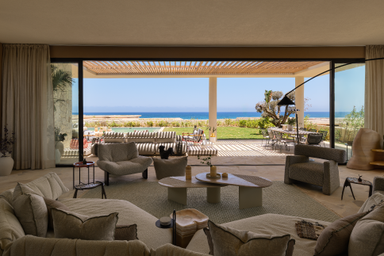
DISCOVER SOMABAY: Embark on a journey of discovery in the heart of Somabay, where crystal-clear waters meet golden sands and luxury meets serenity. Experience a world of adventure, relaxation, and natural beauty like no other. From thrilling water sports to world-class golf, Somabay offers it all. Explore vibrant coral reefs, unwind in luxurious spas, and savor exquisite cuisine. Your dream destination awaits, where every moment is a discovery.

2

POLL

Egypt’s central bank expected to leave interest rates unchanged when it meets later this week

The Central Bank of Egypt (CBE) is expected to leave interest rates unchanged when it meets on Thursday as inflation continues to ease, according to our interest rate poll. All 13 of the analysts and economists we surveyed see the Monetary Policy Committee (MPC) holding rates steady.

(Tap or click the headline above to read this story with all of the links to our background as well as external sources.)

Where rates currently stand: The overnight deposit rate stands at 27.25%, the overnight lending rate at 28.25%, and the main operation and disc. rates at 27.75%. The MPC delivered a jumbo 600 bps rate hike following a surprise monetary policy meeting in March, which coincided with the float of the EGP and a bigger package from the IMF. The central bank left rates unchanged when it last met in May, citing a slowdown in growth rates and cooling inflation.

The rationale: “June’s inflation figures were more positive than anticipated. We expected the impact of subsidized bread price hikes to be harsher,” Al Ahly Pharos analyst Esraa Ahmed told Enterprise.

Remember: Annual headline inflation cooled for the fourth consecutive month in June, hitting a 17-month low of27.5% in urban areas, down from 28.1% in May. This came despite fears of renewed inflationary pressures following a historic increase in subsidized bread prices.

If inflation data is so positive, why a hold and not a cut? “Although inflation has decreased, it remains relatively high,” Esraa said. The CBE is likely waiting to see further slowdown in inflation rates as it “monitors the impact of expected subsidy cuts on fuel and electricity in the short term,” EFG Hermes chief economist Mohamed Abu Basha told us. CI Capital’s Sara Saada expects inflation to fall within the CBE’s target of 7% (±2%) in 1H 2025.

Apart from inflation, recent positive shifts in remittances and foreign investments in debt instruments, following the landmark Ras El Hekma agreement and commitments from international partners — the IMF, the EU, and the World Bank — support the case for keeping rates unchanged, according to Zilla Capital’s Aya Zoheir. “I believe this momentum will continue as international rating agencies improve their outlook on the Egyptian economy,” Zohair told Enterprise.

Not the right time for rate cuts yet: Most of the analysts we spoke to see the CBE easing monetary policy in late 2024 or early 2025. “Our base case is for the CBE to start the easing cycle in 2025, but we don't rule out a rate cut in 4Q 2024,” Ahmed Hafez, Beltone Holding’s head of research, told us. “We’re penciling in a 700-bps cut in 2025, but there could be room for more aggressive easing up to 10 percentage points,” Hafez added.

What would push the CBE to start cutting rates? Economist Hany Abou El Fotouh outlined several factors that could influence the CBE’s decision to start cutting interest rates — should inflation continue to ease and the exchange rate remains stable — global interest rates, commodity prices, and economic growth. “A decrease in global interest rates may encourage the central bank to cut rates as well,” he told Enterprise, adding that stable or dropping global commodity prices could also alleviate inflationary pressures, further pushing the central bank towards the path to monetary easing. Meanwhile, strong economic growth will translate to more Egyptian exports.

Also playing a role: Domestic factors such as “government spending, taxes, and structural reforms affect inflation and economic expectations, indirectly influencing the central bank's decision on interest rates,” Abo El Fotouh explained.

This publication is proudly sponsored by

3

Coffee With

Coffee With: Martin Horgan, CEO of Centamin

Coffee With: Martin Horgan, CEO of Centamin: LSE- and TSX-listed gold miner Centamin is a major player in the Egyptian gold mining industry and operates the Sukari mine in the Eastern desert — the country’s largest.

We sat down with CEO Martin Horgan (LinkedIn) to discuss the company’s plans inside and outside of Egypt, the prospects for Egypt’s mining sector, as well as what’s on the horizon for gold markets. Our conversation with Horgan took place in the run-up to the two-day Egypt Mining Forum that kicks off on Tuesday, where Horgan, along with other industry heavyweights and government officials, will be taking to the stage.

(Tap or click the headline above to read this story with all of the links to our background as well as external sources.)

Enterprise: After announcing encouraging results from Centamin’s exploration in the Eastern desert, what are your plans to develop and broaden your business in the coming years?

Martin Horgan: We’re developing our business in two areas. First, we have the Sukari gold mine itself, which we operate in a joint venture with the Egyptian state. And then we have exploration around our new licenses — not so new anymore, two years down the line — which are issued under the new mining regime, which is hopefully due for approval in the coming weeks.

At Sukari, we're continuing to focus on our investment there to optimize and increase gold production, extend the mine’s life, and ensure that we do so at as low a cost of production as possible. One of the great facets of the Sukari gold mine is that we're in an economic partnership with the government. Every USD of profit that comes out of that mine is split 50-50 between Centamin as the operator and foreign direct investor and the state. And really importantly, of course, we sell the gold in USD, and therefore we're contributing USD to the Egyptian economy.

We also have our exploration ground. This is a fairly new initiative, but we believe there is very good potential geologically for Egypt to host more mining projects.

More internationally, one of the areas we’re looking at is Saudi Arabia. We see a similar journey there in terms of a change in economic, fiscal, and regulatory regime, and are really trying to encourage the kickstarting of the sector there. Geologically, Egypt and Saudi Arabia are basically the same package of rocks, so we believe our 20 years of experience operating in Egypt will be incredibly useful as we look to potentially work in Saudi. We also have projects in West Africa, but at the moment, Egypt is our home.

E: What are Centamin’s plans to increase gold production in Egypt itself?

MH: So, we've just been through what was effectively a full re-evaluation of the Sukari mine. It's been producing since 2009, so as we head into its fifteenth year of production, we see at least another decade of production ahead of us. Sukari genuinely is a world class asset, given its quality and scale.

Right now, we are focusing on extending the mine’s life. Can we find more gold within our mining concession? Can we mine that at an increased rate? I think the key area is making sure that we do so at the lowest possible cost so that we can really generate cash flow.

E: What are we looking at in terms of the size of new investments, both in exploration and other areas?

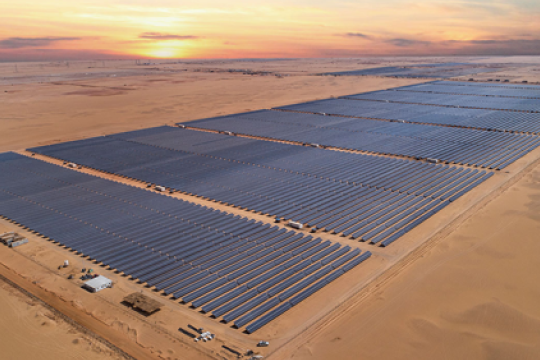
MH: Within Sukari itself, there are a number of programs. We built a 36 megawatt solar plant about 18 months ago and we're currently evaluating our ability to extend that solar farm — on the order of USD 15-20 mn. Another thing we're looking at now is a connection to the national power grid generation system, on the order of USD 50 mn in expenditures. We're also looking at adding some technology to the back-end of our processing facility on the order of USD 10-15 mn.

In the exploration block, at this stage we're talking on the order of USD 5-10 mn. If that starts to be successful, then that could very quickly become USD 50-100 mn of evaluation work for both drilling and technical studies. If we were to be successful and find a standalone mine, that could be on the order of USD 500 mn-plus in capital expenditures.

E: Does Centamin have plans to participate in upcoming tenders for gold exploration?

MH: Yes, certainly. We're always very interested to see where we can grow our portfolio within Egypt. After being awarded our blocks from the last tender and that exploration cycle coming to its natural conclusion, we will have the human resources and funding to start looking at new areas.

E: In terms of mining operations themselves, what sort of challenges does Centamin face, and how do you plan to improve the efficiency of your operations in Egypt and elsewhere?

MH: Egypt is, in a sense, a relatively immature mining sector. In a more mature mining jurisdiction, you tend to find multiple service providers, be that for equipment, consulting services, and so on. With us being the only significant gold producer in Egypt, you don't have that same depth of support that you would get in a more established jurisdiction.

Having said that, what Egypt does benefit from significantly is a deep pool of human capital and good infrastructure. On the human capital side, we see a number of high quality candidates coming out of various walks of life, so while these people might not have specific mining expertise, we're able to train them very quickly.

E: Turning to the gold market itself, what are your expectations for gold prices in the coming years? And what risks does Centamin face from the fluctuation in these prices?

MH: I always love this question — and it's impossible to answer. Gold in one sense is a currency, in another sense is a hedge against geopolitical risk, and gold also has a use for fabrication in jewelry — so there are a lot of different drivers of gold prices.

The best thing that we can do is make sure that we are as low-cost a producer as possible and really focus on our bottom line. When we see gold prices are high, we should be making good returns. When we see that gold prices are low, we can continue operating and still generate good cashflow because we're in the lower half of the cost curve.

Having said that, I do think that the macro outlook today is broadly supportive of the gold price. I don't think we're going to see gold retreat back to the levels of a decade ago. The macro outlook feels supportive in the short term, and the longer it stays at these prices, the more they get locked in.

E: How have rising production costs affected Centamin’s bottom line?

MH: The macro-inflationary period from around 2022 through to the end of 2023 affected everything from steel to consumables to fuel. I think the mining industry is in part a funder of that inflation, but also suffers from that inflation as well.

I'm delighted to say that despite that macro-inflationary environment, we've actually been able to reduce our costs. Back in 2022, our costs topped out at nearly USD 1.4-1.5k per oz, and last year we got that down to just about 1.2k per oz — we've been able to deliver in excess of 20% in cost savings in that inflationary environment.

E: In terms of government regulation and incentives, what kinds of incentives would you like to see Egypt offer in order to attract more investors?

MH: We believe that the reset mining regime that's being implemented right now is a key catalyst for foreign companies to come in, and as the established mining company in the country, we see it as our role to help lead that foreign direct investment into Egypt. There's a great road, power, and port network, there’s a fantastic wealth of human capital in terms of quality, and we think with this new code, there's real potential for Egypt to take off and start to have significant mining sector development over the coming decade.

4

Investment Watch

Egypt’s GAFI requests land plots to set up three new investment zones

A triad of investment zones is in the works: The General Authority for Investment and Free Zones (GAFI) has requested the New Urban Communities Authority (NUCA) to allocate plots of land for the establishment of three new investment zones, GAFI head Hossam Heiba told Hapi Journal.

(Tap or click the headline above to read this story with all of the links to our background as well as external sources.)

The what: The zones, ranging from 150 to 200 feddans each, will include both industrial and service facilities and will bring together a range of activities, including textile industries, automotive feeder industries, and logistics services, said Heiba.

The where: GAFI has proposed about six locations, including New Alamein, for the establishment of these zones.

The when: The allocation process is expected to wrap up within two months, with marketing for the zones slated to kick off before the end of the year.

The how: The first proposed investment model would see NUCA entering the project as a developer and taking care of setting up utilities before attracting investors. The second model involves partnering with specialized developers to set up the zones. The third model would see an industrial investor set up a project that can attract a large number of complementary industries, who all would receive a mark down in land costs in exchange for setting up their own utilities at the site.

Foreign investors have already taken an interest: A Chinese industrial investor has made an offer to partner with GAFI under the third proposed investment model, while Turkish and European investors have also expressed interest in the project, Heiba said.

AND- A new batch of golden licenses in the wings? GAFI is reviewing nine applications for golden licenses in the sectors of education, industry, logistics, and tourism, Heiba said.

5

Manufacturing

China’s Hengsheng begins construction of USD 70 mn textile factory in Egypt’s SCZone

Construction is underway at the West Qantara Industrial Zone’s first project: China’s Zhejiang Hengsheng Dyeing and Finishing Company has laid the foundation stone for its dyeing, processing, and textile manufacturing project in the Suez Canal Economic Zone’s West Qantara Industrial Zone, with investments amounting to USD 70 mn, according to an SCZone statement.

(Tap or click the headline above to read this story with all of the links to our background as well as external sources.)

The details: The Chinese textile giant will develop the factory in two phases on a 200k sqm plot of land in Qantara with plans to begin the first stage of production during 1H 2026. Hengsheng is looking to achieve annual sales worth USD 300 mn and says that the factory is expected to create some 1.5k direct jobs.

Déjà vu? The company initially signed a usufruct contract with the SCZone for the project back in October of last year, as part of a set of textile projects agreed upon with Chinese companies at the time.

The first of many companies to head to Qantara West: The SCZone has so far received offers from 15 companies that have indicated interest in implementing projects in the area — projects that, when completed, will add 18k jobs to the market, SCZone head Walid Gamal El Din said. Of the 15 companies, six have already inked final contracts for the projects, Gamal El Din added. The SCZone is aiming to export 80% of the companies’ output.

Chinese investment is an important part of the SCZone’s investment landscape: “The SCZone succeeded in attracting 128 projects worth USD 6 bn in the past two years, of which Chinese investments represent 40%,” Gamal El Din said in May. There is a “legitimate ambition” to bring up the number of Chinese companies with operations in the SCZone to 1k by 2030, Gamal El Din added.

6

EGYPT IN THE NEWS

Disqualification of cyclist from Egypt’s Olympics team ahead of Paris games is catching the attention of the int’l press

Egypt is already making it into Olympic news before the games even begin: News that Egyptian cyclist Shahd Saied has been disqualified from the upcoming Paris Olympics by Egypt's Olympics Committee is starting to get picked up by the international press. Despite being named by the Egyptian Cycling Federation to represent the country, a video appearing to show her deliberately knocking a competitor off her bike during a competition in April spurred many on social media to call for her to be kicked off the team on the back of her perceived lack of sportsmanship and one-year ban from local competitions.

Tags:
7

Also on our Radar

Egypt’s cabinet now has an Economic Ministerial Group

CABINET WATCH-

Introducing the cabinet’s Economic Ministerial Group: Prime Minister Moustafa Madbouly issued a directive forming the Economic Ministerial Group to steer the country’s economic and financial policies, according to a cabinet statement.

(Tap or click the headline above to read this story with all of the links to our background as well as external sources.)

Who’s on board: Headed by Madbouly, the group will include Central Bank Governor Hassan Abdalla, Planning and Economic Development Minister Rania Al Mashat, Finance Minister Ahmed Kouchouk — who will serve as the group’s spokesperson — Supply Minister Sherif Farouk, and Investment and Foreign Trade Minister Hassan El Khatib.

The group’s mission: The group is tasked with formulating the overall framework for economic and financial policies, promoting growth and employment, and ensuring financial sustainability and economic stability. It will meet weekly — or as needed — and can invite experts to its meetings to make use of their expertise.

RETAIL-

Eastern Company hikes smoke prices for the third time this year: State-owned tobacco giant Eastern Company on Friday bumped up the prices of its cigarettes by up to EGP 0.50 after the company’s board approved the decision a day earlier, according to two EGX disclosures (here and here, pdf). The price of all its 20-cigarette packs, including Cleopatra, now stands at EGP 34.72, while its higher-end Viceroy and Pall Mall has maintained its price of EGP 55. The Box 10 — the pack including 10 cigarettes — saw the biggest jump in price, now going for EGP 25 a pack from EGP 24.5. This marks the company’s third price hike this year, following earlier increases in April and February.

The rationale: “The price hike complies with the Universal Health Ins. Law,” Eastern CEO Hany Aman told Hadret El Mowaten last night (watch, runtime: 1:40).

ENERGY-

Infinity to set up its first ever projects in Cameroon: Our friends at renewables firm Infinity Power inked an MoU with the Cameroon West Regional Council that will see the firm develop 4 GW-worth of renewable energy projects by 2035, with the projects likely to include “solar, battery storage, wind, hydro and biomass plants,” the company said in a press release (pdf).

REAL ESTATE-

Madinet Masr, HDD sign agreement to develop project in New Heliopolis: Madinet Masr will co-develop two plots in New Heliopolis alongside Heliopolis Housing and Development (HHD) under an agreement inked between the two sides, Madinet Masr (pdf) and HHD (pdf) said in separate statements. Madinet Masr made a contract payment of EGP 1.1 bn upon signing. The project is expected to generate some EGP 194.7 bn in revenues over the 12-year period — the project is expected to launch before the end of 2024, Madinet Masr CEO Abdallah Sallam said earlier this year.

8

PLANET FINANCE

Markets are digesting the attempted assassination of Donald Trump

From FX to stocks and wagers on the chances that Donald Trump will return to the Oval Office, it’s a very US-centric morning on planet finance as markets digest the attempted assassination on the presumptive Republican candidate’s life. Trump will be formally nominated this week at the Republican national convention.

The USD rose against other currencies yesterday and overnight and BTC climbed to USD 60k. “For us, the news does reinforce that Trump’s the frontrunner,” said Mark McCormick, global head of foreign-exchange and emerging-market strategy at Toronto Dominion Bank. “We remain USD bulls for the second half and early 2025.”

(Tap or click the headline above to read this story with all of the links to our background and outside sources.)

The downside: The shooting underscores the risk of political violence in the US, which could finally cool major US equities benchmarks if investors rotate even temporarily to safer assets. “Political risk is binary and hard to hedge, and uncertainty was high as it is with the close nature of the race. This adds to volatility. I think it further increases the chance of a Republican sweep.”


ALSO ON PLANET FINANCE- US inflation and interest rates could remain higher for longer than many expect forecasts despite some signs of cooling inflation, CNBC reports JPMorgan Chase boss Jamie Dimon as saying. “There has been some progress bringing inflation down, but there are still multiple inflationary forces in front of us: large fiscal deficits, infrastructure needs, restructuring of trade and remilitarization of the world,” Dimon said. “Therefore, inflation and interest rates may stay higher than the market expects.”

In context: Monthly US inflation in June for the first time in over four years, prompting some to expect the Federal Reserve is more likely to start cutting rates in September. Fed Chair Jerome Powell told Congress last week that he has “some confidence” that inflation will cool to 2%. He also said that the Fed doesn’t necessarily need to wait for inflation to fall to 2% before moving on interest rate cuts, adding to the speculation that the first cut could come this fall.

MARKETS THIS MORNING-

Major Asian benchmarks are flat this morning as investors mull the attempted assassination of Donald Trump and the start later today of China’s Third Plenum meeting. The policy meeting of the Chinese Community Party takes place about once every five years and was expected last fall. Kickstarting the economy is at the top of the list of topics, but don’t expect CCP officials to dive too deeply into the rot that is the domestic real estate industry. (Markets are closed in Japan in observance of the Marine Day holiday.)

Futures suggest we’ll see something of a relief rally on Wall Street, where futures for the major equities benchmarks were up in overnight trading. European futures, meanwhile, are mixed as we head toward dispatch time this morning.

EGX30

28,042

-0.9% (YTD: +12.6%)

USD (CBE)

Buy 47.88

Sell 48.02

USD (CIB)

Buy 47.9

Sell 48.0

Interest rates (CBE)

27.25% deposit

28.25% lending

Tadawul

11,882

+0.8% (YTD: -0.7%)

ADX

9,143

-0.1% (YTD: -4.5%)

DFM

4,104

+0.3% (YTD: +1.01%)

S&P 500

5,615

+0.6% (YTD: +17.7%)

FTSE 100

8,253

+0.4% (YTD: +6.7%)

Euro Stoxx 50

5,043

+1.3% (YTD: +11.5%)

Brent crude

USD 85.03

-0.4%

Natural gas (Nymex)

USD 2.33

+2.7%

Gold

USD 2,421

-0.1%

BTC

USD 60,823

+3.8% (YTD: +44.0%)

THE CLOSING BELL-

The EGX30 fell 0.9% at yesterday’s close on turnover of EGP 2.3 bn (45.4% below the 90-day average). Foreign investors were net buyers. The index is up 12.6% YTD.

In the green: ADIB (+2.7%), Qalaa Holdings (+2.2%), and Heliopolis Housing (+2.2%).

In the red: GB Corp (-4.1%), Talaat Moustafa Group (-3.9%), and Fawry (-3.9%).

9

BLACKBOARD

The market trends, economic headwinds, and road head for language programs at embassy-sponsored cultural institutes - Part II

A dive into the market forces that cultural institutes must navigate: Embassy-affiliated cultural institutes — such as the UK’s British Council, Germany’s Goethe-Institut, and France’s Institut Français — offer robust language courses as part of their mandate to promote their culture and help cultivate diplomatic relationships. In part one, we looked at why language instruction is an integral part of their mission, what sets them apart in the market, and what their business models look like. In part two, we’ll delve into how these players are leveraging market trends and demand to expand their operations, as well the setbacks that they face along the way.

(Tap or click the headline above to read this story with all of the links to our background as well as external sources.)

THE TRENDS-

Following the urban sprawl: To meet growing demand for learning French, the French Institute is strategically expanding in locations where new urban centers are emerging. “We try to reach people who can no longer come to our original locations because they’ve moved to newer neighborhoods,” said Nancy Ibrahim, the director of the French Institute’s language center in Egypt’s Mounira office. “Our buildings in Mounira and Alexandria are old and very chic, with beautiful architecture, but they’re located in old neighborhoods,” Ibrahim explained, adding that the “building in Alexandria is in the city’s downtown, where it can be hard to park.” To address these demographic shifts, the institute has opened branches in the Fifth Settlement and El Sheikh Zayed and is in the process of opening another branch in Alexandria.

Rolling out customized courses: Officials from both the Goethe-Institut and the French Institute have stated that they have responded to growing demand by offering customized language courses tailored to the objectives of different groups, such as academics embarking on postgraduate studies abroad or Egyptian employees hired by foreign companies. The rise of job openings across Africa has led to a surge in requests from firms — chiefly in the fields of engineering and communications — looking to sponsor French courses for their employees, Ibrahim said. While English is often the primary language of work for these employees, French is essential for navigating daily life in many African countries. For this cohort, the French Institute offers customized programs that are typically faster-paced and focused on workplace-related language, she explained.

Ditching the rigid schedules: One way in which the British Council has responded to the evolving needs of its learners is through its main adult program, MyClass, said Kevin McLaven, the organization’s MEA cluster and country lead for English teaching. “The program recognizes that people have very busy lives and are increasingly time-poor,” he said. “It’s very different from a traditional program — students are able to book classes on the days they want, at the times they want, and with the teachers they want. A student could, for example, choose to attend three classes this week and no classes at all next week.”

Building robust partnerships:The Goethe-Institut works with the Education Ministry to train school teachers and provide them with scholarships to train abroad, and is prepared to help the ministry with its plan to roll out German as an elective second foreign language in public schools for students in grade seven and above starting September, Nivin El Sioufy, head of the Language Department at the institute's Cairo office, told Enterprise. The Goethe-Institut also struck an agreement with the Supreme Council of Universities in 2019 to help teach German to all doctors and engineers in Egypt’s public universities as part of a presidential initiative, El Sioufy said. Since then, the institute has been training lecturers and assistant lecturers to teach the language, and the project will continue for another three years.

Leveling up to the digital age: Digitalization is one of the most significant ways in which cultural institutes have evolved over the years, all of our sources told us. The institutes offer a range of formats to suit the preferences and needs of different students, including online courses and blended learning. “Goethe-Institut had a digital platform for remote learning ten years before Covid, but students preferred face-to-face learning. It was only after the pandemic that doubts about online learning started to dissipate and people became more receptive to the idea,” said El Sioufy.

THE HEADWINDS-

Sourcing the right teachers is a major challenge: Both Ibrahim and El Sioufy cited difficulty finding qualified language teachers as one of the biggest challenges faced by their institutes. Both institutes, as well as the British Council, pride themselves on providing extensive training to their language teachers. However, finding instructors who possess not just the skills, but also the passion for teaching can be difficult, said Ibrahim. “Language proficiency alone is insufficient,” said El Sioufy, adding that a rare blend of professional competencies is required. Instructors hired by Goethe-Institut receive a preliminary training that’s about a year and half in duration. In tandem, they can start teaching within six months.

Cultural institutes are feeling the squeeze from the float and inflation: Pricing courses and exams in a way that strikes a balance between the institute’s income and students’ ability to pay has been challenging given today’s inflationary environment, said El Sioufy. Following the EGP float, Goethe-Institut was obliged to hike up the prices of its exams by nearly 40%, but was able to apply a smaller increase to the prices of its courses, El Sioufy said, adding that the institute thought very carefully about these decisions.

FX restrictions are a sticking point, too: Due to FX restrictions on debit cards, some students are unable to register for courses on the Goethe-Institut’s online shop, said El Sioufy. “As a result, we’ve had to increase the number of on-site personnel to accommodate the people who pay in person at the institute, where we charge the EGP equivalent of EUR fees.”

Some students are opting out of language courses: “Because of the current economic climate, learning foreign languages is not a priority for everybody,” said Ibrahim. While children and university students are still flocking into language courses, the institute has seen less demand from some of the older student segments, she explained. “For example, after Covid, the cohort of mothers who attended courses in the morning has completely disappeared. That’s because other online courses and cheaper alternatives by small private language centers, while often subpar, are available in abundance.”

But, overall demand remains robust: “Despite the economic challenges, we're still seeing year-on-year growing demand for our English courses, and that's both from adults and from the young learners,” said McLaven. “One of our concerns two years ago was that nobody would be able to afford to take an English class. But I think simply because it's recognized that if you want a better job — or a job in the Gulf, for example — you have to have the best possible qualifications, you're going to have to somehow find a way to get a decent English language education.”

THE ROAD AHEAD-

How will these institutes evolve over the next few years or decades? “I think, without doubt, it's going to be technology, technology, technology,” said McLaven. “I'm not suggesting that face-to-face interactions will disappear completely. But, technology just offers so much in the way of opportunity, efficiency, flexibility, choice. The education market will have to respond to those technological advancements.”


Your top education stories for the week:

  • SEIC to conclude due diligence on CIRA before September: The Saudi Egyptian Investment Company (SEIC) should wrap up its due diligence ahead of its acquisition of CIRA Education by the end of August.
  • Amendments to the US-Egypt Higher Education Initiative got the greenlight at last week’s cabinet meeting. The USD 250 mn initiative provides high-achieving Egyptians with access to higher education locally and in the US.
  • EEP to launch two new schools by 2025: The Egypt Education Platform (EEP) plans to set up two new schools in Alexandria and Somabay by September 2025.
  • Prime Minister Moustafa Madbouly staked out education as a key priority for the new government during his address to the House of Representatives last week, with the prime minister saying that he would give priority to setting up new schools in densely populated and remote areas.

2024

JULY

9-18 July: Act Financial IPO subscription period for institutional investors.

9-23 July: Act Financial IPO subscription period for retail investors.

16-17 July (Tuesday-Wednesday): The Egypt Mining Forum, Cairo, Egypt.

18 July (Thursday): Central Bank of Egypt’s Monetary Policy Committee meeting.

23 July (Tuesday): Revolution Day (national holiday).

AUGUST

4-5 August (Monday-Tuesday): Egypt Expat Forum.

SEPTEMBER

3-5 September (Tuesday-Thursday): Egypt International Airshow, El Alamein International Airport.

5 September (Thursday): Central Bank of Egypt’s Monetary Policy Committee meeting.

15 September (Sunday): National holiday in observance of Prophet Muhammad’s birthday (TBC).

25-26 September (Wednesday-Thursday): The Asian Infrastructure Investment Bank’s (AIIB) 2024 annual meeting, Samarkand, Uzbekistan.

OCTOBER

6 October (Sunday): Armed Forces Day.

17 October (Thursday): Central Bank of Egypt’s Monetary Policy Committee meeting.

13-17 October (Sunday-Thursday): Cairo Water Week, Water and Climate: Building Resilient Communities, Cairo, Egypt.

21-27 October (Monday-Sunday): The World Bank and IMF annual meetings.

30 September (Monday): Ban on sugar exports expiration.

NOVEMBER

4-8 November (Monday-Friday): World Urban Forum, Cairo, Egypt.

21 November (Thursday): Central Bank of Egypt’s Monetary Policy Committee meeting.

26-28 November (Tuesday-Thursday): Egypt Energy Show, Cairo, Egypt.

DECEMBER

26 December (Thursday): Central Bank of Egypt’s Monetary Policy Committee meeting.

EVENTS WITH NO SET DATE

June 2024: Gov’t expects to finalize sale of Beni Suef combined-cycle power plant.

1H 2024: Gov’t expects to finalize sale of four water desalination plants.

2H 2024: Gov’t to launch the Cairo Ring Road BRT buses.

3Q 2024: Egyptian-Armenian Joint Committee.

November 2024: Egypt to host the World Urban Forum (WUF12).

End of 2024: The launch of the high-speed train line linking Ain Sokhna with Al Alamein City.

End of 2024: Shalateen Mining Company to launch a gold exploration tender in the Eastern Desert.

2025

July 2025: The first operational trail of Egypt-KSA electricity interconnection line.

EVENTS WITH NO SET DATE

2Q 2025: Safaga Terminal 2 to start operations.

2027

20 January-7 February: Egypt to host the African Games

EVENTS WITH NO SET DATE

End of 2027: Trial operations at the Dabaa nuclear power plant expected to take place.

Now Playing
Now Playing
00:00
00:00