Get EnterpriseAM daily

Available in your choice of English or Arabic

Apis Partners closes third fund at more than double its predecessor

1

WHAT WE’RE TRACKING TODAY

Travco targets 4Q launch for new private airline

Good morning, ladies and gents. It’s a capital flow type of morning.

Apis Partners has closed its third fund at USD 1.23 bn, and we have two exits worth watching: Beltone VC and Citadel out of Bosta at a 75% IRR, and NBE picking up 20% of Scatec's Obelisk solar project. Different stories, same underlying theme — assets here at home are clearing at prices the market is willing to pay.

Also on deck: Travco close to launching a new private airline, and our Coffee With BCG X’s Adham Abouzied on why most AI projects don’t pay off.FIRST, A SMALL CLARIFICATION- The new stamp tax is replacing the long-delayed capital gains tax on EGX-listed securities transactions — not capital gains tax across the board, as it may have sounded in our coverage of the news in yesterday’s issue. Capital gains made outside EGX trading remain subject to the relevant tax treatment.

***

Got a few minutes to spare? We’d love to hear from you. Morning Drive has been up and running for about seven months, and we think it’s time for a quick check-in. We’ve put together a few questions that will help guide us as we grow to become a vital part of your morning routine. So, whether you’re a longtime listener, you’ve only just heard us, or you’re somewhere in between, please spare a few minutes to fill out this survey. AND — here’s today’s episode.***

Cleared for takeoff

Keep an eye on the sky for a new private airline before the end of this year. Tourism giant Travco Group expects to wrap up the necessary licensing by August, Chairman Hamed El Chiaty tells EnterpriseAM. The company plans to kick off the USD 150 mn venture in October or November with a fleet of three Airbus aircraft, with a target of scaling up to four planes in the first year of operations, Civil Aviation Minister Sameh El Hefny said at a press conference recently.

The target market: The airline will focus on running charter flights to funnel inbound traffic from Europe and other global markets, the Arabic press reports. The Airbus fleet, which will feature a capacity of 180-220 seats per plane, is set to operate directly out of Egypt’s primary tourism hubs — Sharm El Sheikh, Marsa Alam, and Matrouh.

But there's some turbulence: Despite recent historic highs, the company may defer its launch by six months to a full year due to regional instability. “If the issue of the war and oil is not resolved, there is a very high probability that we will postpone the company’s opening until operating conditions are better,” El Chiaty warns. “The tourist will not be willing to pay an extra USD or EUR 180 due to the high cost of ins. and fuel.”

BACKGROUND- The plans confirm news teased by Hefny last month of a new local airline. Travco’s launch lines up with a broader state push to crowd private capital into the local aviation sector, following recent regulatory amendments designed to slash red tape, digitize services, and streamline the licensing process for new private airlines.

Endowed with potential investments

The government plans to offer 20 new public-private partnership investment prospects from the Endowments Authority’s property portfolio in 2H 2026, a government official tells EnterpriseAM. “The new investment [prospects] will include land for real estate investment, partnerships with real estate developers, residential units, and buildings that will be offered for conversion into hotel units or private hotels,” especially within the Historic Cairo masterplan, we’re told.

The authority manages the largest real estate portfolio in the country — valued at 137 EGP bn — but deploying that capital is a logistical headache. A significant chunk of these properties is still locked in the “old rent” system, our source tells us. Also, the government is still bogged down in clearing ongoing land encroachments and resolving judicial disputes over certain endowments.

CBE revises down our growth forecast

TheCentral Bank of Egypt now sees the economy growing at a 4.9% clip this fiscal year, down from its pre-war prediction of 5.1%, it said in its Monetary Policy Report (pdf) for 1Q 2026. As for next fiscal year, the bank now expects real GDP growth to come in at 4.8%, down from February’s forecast of 5.5%.

It’s a war-triggered downgrade: The CBE said the growth downgrade “reflects the repercussions of the conflict between Iran and the US on economic activity,” pointing to the war’s impact on tourism and Suez Canal revenues.

Inflation is on track to rise, the CBE says. The central bank expects annual headline inflation to average 16-17% in 2026 — the bank had previously expected inflation to reach its target of 7% (± 2%) in 4Q 2026. Next year’s inflation is expected to average 12-13%.

Happening tomorrow

Contemporary art gallery Tam.Gallery is hosting its Artists of Tomorrow exhibition on Tuesday, 12 May at the Grand Egyptian Museum. The invite-only opening at the museum’s Glass Court will bring together over 100 local artists, collectors, and cultural figures. EFG Holding is backing the event as art patron, alongside Ulter by Valu as financial partner.

PSA

WEATHER- Summer is getting serious in Cairo today, with a high of 34°C and a low of 21°C, according to our favorite weather app.

It’s also warm in Alexandria, though a few degrees cooler, with a high of 30°C and a low of 20°C.


Riyadh to Mumbai. Abu Dhabi to Singapore. Dubai to London. Cairo to Shenzhen.

The most important business stories in MENA aren’t happening inside MENA anymore — they’re happening at the edges, where regional capital meets global ambition.

EnterpriseAM MENA+ is our new flagship newsletter, built to cover the flows of capital, people, and ideas across the Middle East — and beyond it. AI, geopolitics, the war for talent, sovereign wealth strategy, the changing energy economy, and the new corridors reshaping global trade.

Tap or click here to get your own copy delivered to your inbox every Monday, Wednesday, and Friday at 12pm UAE | 11am KSA | 11am Egypt.


The big story abroad

The US-Iran stalemate crowds the front pages once again. President Donald Trump dismissed Iran’s response to Washington’s latest proposal, calling the demands “totally unacceptable.” Tehran reportedly floated moving a portion of its highly enriched uranium reserves to a separate nation and refused to decommission its nuclear infrastructure — this account was later denied by Iran’s semi-official outlet Tasnim.

Pakistan-Iran talks seem to have made some headway, with Qatar managing to export itsfirst LNG cargo — bound for a Pakistani port — through the Strait of Hormuz since the conflict started. Islamabad reportedly expects three more vessels to ship Qatari LNG through the waterway in the coming days.

The regional conflict is set to dominate the agenda during Trump’s summit with Chinese President Xi Jinping in Beijing later this week. Both leaders have good reasons to resolve the Iran war, as it is taxing Trump’s domestic popularity and straining Beijing’s reliance on low-cost Iranian oil. Washington’s worries over AI and a proposed new dialogue with China are also reportedly on the table.

Meanwhile, in the world of AI: Alphabet has rapidly evolved into an AI powerhouse, significantly narrowing the valuation gap with chipmaking giant Nvidia. Analysts suggest that the strength of the Gemini model, combined with Google Search, Cloud, YouTube, and Waymo, positions the company as the primary contender to lead the next era of tech growth.

In a retrospective piece on the outgoing Federal Reserve Chair, Bloomberg chronicles Jerome Powell’s long battle to maintain the institution’s independence. Powell’s term saw heavy criticism from Trump, a probe from the Justice Department, and an unusual decision to stay on after his successor stepped up to assume the mantle.

*** It’s Blackboard day: We have our weekly look at the business of education in Egypt, from pre-K through the highest reaches of higher ed.

In today’s issue: We explore how the “university degree or bust” mindset is shifting in Egypt as short-term certifications and micro-credentials become the go-to way for professionals to stay relevant in a fast-moving, AI-dominated job market.

Sailors chasing the wind to Somabay shores.

From 14-16 May, the first-ever Somabay Sailing Festival 2026 brings together world-class regattas, elevated seaside experiences, and vibrant energies. Marking a new milestone for the destination and the future vision of GranMarina, the festival sets the tone for a new era of sailing experiences at Somabay.

Brought to you by Red Sea Sails.

Click here to explore the full experience.

2

Investment Watch

Double the money

Apis Partners has closed its third fund at USD 1.23 bn — more than double its predecessor, the firm said in a statement — a vote of confidence in the London-based PE outfit’s sector-focused wager on tech-enabled financial services. Existing LPs accounted for around half of the capital raised, the firm said.

New backers include sovereigns, supranationals, banks, insurers, and pension funds. Apis has already deployed around USD 400 mn from Fund III across seven investments, including continued backing of Egyptian-born fintech MNT-Halan, UK digital wealth manager MoneyBox, prepaid digital goods platform Coda Recharge, and Singapore-headquartered cross-border payments firm Thunes.

Closing a fund of this size in a year of regional war is no small thing. “Closing 23% above target and with over 70% of our existing investors increasing their commitments, this is a clear reflection of the confidence our diversified LP base places in our sector-specific strategy and our ability to generate returns,” our friend Hossam Abou Moussa, partner at Apis, tells us. The firm ranked second globally — and was the highest-ranked European PE firm — in the 2025 HEC Paris-Dow Jones Growth Equity Investor Ranking.

That ranking, Hossam says, reflects consistency rather than novelty. “The partners at Apis bring decades of sector-focused experience in financial infrastructure and services — across payments, ins., lending, and the platforms that connect them across global markets,” he says. “We apply the same disciplined approach to every transaction: investing in profitable, proven businesses, working hands-on with management teams and sharing the benefits of our deep global networks,” building in from day one value creation plans with specific strategic buyers in mind.

The Egypt “headline inside the headline” is MNT-Halan: Apis first invested in 2021, when Mounir Nakhla’s MNT-Halan was an Egyptian fintech with what Hossam calls “an audacious mission: to revolutionize financial access for mns of unbanked and underbanked people.” It is now one of the largest fintech unicorns in MENA+, operating across Egypt, Turkey, Pakistan, and the UAE — and Fund III is backing it again. “This partnership is a living example of why we remain deeply committed to Egypt and the broader region,” Hossam says. “The talent is here, the ambition is here, the progressive regulatory framework is here, and the [potential] to build world-class financial infrastructure businesses is as compelling as anywhere in the world.”

This publication is proudly sponsored by

3

M&A WATCH

Bosta's last mile with Beltone

Beltone VC and Citadel have offloaded Bosta stakes at 75% IRR — just as the logistics player eyes the EGX. Beltone Venture Capital and UAE-based Citadel International Holdings exited their stake in Egyptian last-mile logistics player Bosta, netting a 75% internal rate of return, Beltone said (pdf). The buyer and valuation were not disclosed.

Why it matters: A 75% IRR is a real number in a climate where the devaluation has eaten through a lot of returns over the past three years. It also comes at a useful moment for Beltone VC, which has now booked five exits since its 2023 launch and two from its joint fund with Citadel.

What’s next: Bosta is reportedly preparing for a USD 170 mn IPO on the EGX later this year. It’s worth watching to see if the unnamed buyer is positioning ahead of that listing or whether this is a clean pre-IPO secondary.

Tags:
4

M&A WATCH

NBE catches some rays

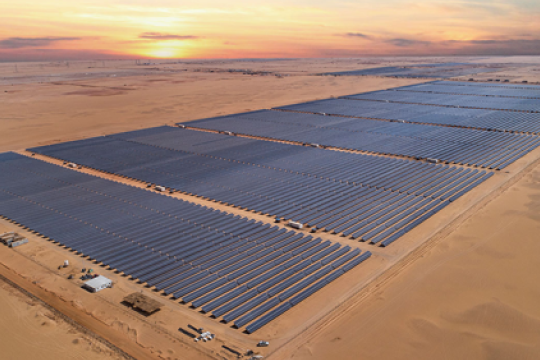
Power play: The National Bank of Egypt (NBE) bought a 20% stake in Norwegian developer Scatec’s 1.1 GW Obelisk solar project in Nagaa Hammadi for an undisclosed sum, the company said in a statement last week.

Where it stands: The transaction makes state-owned NBE — Egypt’s largest commercial bank — a co-owner of the USD 600 mn solar-plus-storage plant, alongside Norwegian state-run investment fund Norfund and French state-owned EDF Power Solutions. Each holds a 20% stake in the project's operating company after signing on in December 2025.

Scatec maintains control: NBE’s entry brings Scatec’s share down to 40%, though the Norwegian developer retains majority control — it has 75% of Obelisk’s holding company, with Norfund holding the remaining 25%. This structure allows Scatec to maintain decision-making authority while partners hold economic stakes — the right to receive income and bear losses — at the operating company level.

Obelisk at a glance: The plant is Africa’s largest hybrid solar and battery storage facility. Scatec broke ground in May 2025 under a 25-year, USD-denominated power purchase agreement with the Egyptian Electricity Transmission Company. The plant is being developed in two phases: the first 561 MW — along with 100 MW / 200 MWh of battery storage — reached commercial operation in February 2026, and the second 564 MW phase is due this summer.

The debt stack: Before selling down equity, Scatec secured a non-recourse debt package covering roughly 80% of the project’s capex. The financing was provided by a consortium of international development institutions, including the European Investment Bank, the African Development Bank, the European Bank for Reconstruction and Development, and British International Investment.

This is the capital-recycling playbook in action. Scatec develops the project, derisks it through construction and partial operation, then sells down equity to make money available for the next one. For NBE, the move marks a shift from debt provider to equity owner in the renewables space.

ADVISORS- Matouk Bassiouny & Hennawy advised Scatec on the transaction, according to a statement(pdf).

5

Coffee With

BCG’s Adham Abouzied on why most AI projects don't pay off

Coffee With Adham Abouzied, managing director and partner at BCG X: BCG X — the tech, AI, and software-building arm of Boston Consulting Group — is accelerating its presence in Egypt as companies race to adopt AI and rethink how they operate. Leading the push is Adham Abouzied (LinkedIn), managing director and partner at BCG X and BCG globally, who returned to Egypt four years ago after helping build BCG X’s presence in Casablanca. We sat down with Abouzied to discuss Egypt’s AI potential, why most companies still struggle to create value from AI, and how organizations will need to rethink the way they do business in the AI era.

EnterpriseAM: What is BCG X and how’s it different from your other services?

Adham Abouzied: BCG global launched BCG X 10-12 years ago as a Tech and AI division built from within the consultancy — engineers, data scientists, software developers, and designers. We've recently decided to accelerate BCG X in Egypt across recruitment and client service.

BCG and BCG X usually work together. The presence of a BCG consultant ensures what BCG X builds aligns with company vision, strategy, and value creation, and avoids disconnect — one of the major risks in these investments.

EnterpriseAM: Is it just AI and digital transformation?

AA: Our model is differentiated from typical software vendors. We work on IP creation where IP does not exist — almost every project is first-of-a-kind, where software either doesn’t exist or needs are too tailored for standard solutions.

We embed in client squads, develop their teams, and grow talent. We create IP with their teams — not in-house and thrown at them. They build it with us, carry it over, and run with it. Talent capacity building is a key differentiator.

EnterpriseAM: Which sectors do you see benefiting the most from tailored AI solutions?

AA: Every sector has huge AI potential — not only to consume AI but to create bespoke applications. Financial services stand out, especially banks. Also travel, tourism, infrastructure, real estate, and industrial goods.

EnterpriseAM: Why accelerate BCG X in Cairo now?

AA: What differentiates Egypt is the chance to build new, world-class IP and breakthroughs. My KPI isn’t team size or revenue — it’s creating a success story with globally renowned IP. The combination of Egyptian companies undergoing transformation and world-class talent through BCG X is the winning formula.

EnterpriseAM: What advice do you have for companies onboarding entry-level staff in the AI era?

AA: I'll answer wearing my emerging market hat. Every company in Egypt has a growth imperative, and despite a huge supply of talent, it's insufficient to meet growth targets. In our situation, productivity improvements fuel growth — not bottom-line savings on entry-level jobs.

Every company needs double-digit growth to survive. When we build AI business cases with clients, it's to fuel the growth engine.

EnterpriseAM: How is AI adoption in emerging markets different?

AA:First is data. It exists but is fragmented across organizations, in different formats and languages. Significant effort is needed on classification — what’s highly sensitive, critical, personally identifiable, or less so — and the policy for each class. With proper security and clear policies on what's allowed on premise, on cloud, or in LLM prompts, it becomes a fast lane for adoption.

Second is potential. Emerging markets are high-potential for talent. People say talent is mobile and can work remotely — true — but working on cutting-edge projects at home is priceless. That’s a core engine for adoption.

EnterpriseAM: Do companies treat AI as a silver bullet?

AA:A recent BCG X report, The Widening AI Value Gap, found only 5% of companies say they're realizing clear bottom-line returns from AI.

The challenge is that AI requires major transformation of core processes — reimagining and reengineering them, which is difficult given legacy and organizational constraints. You're not just changing processes, but organization, staffing, incentives, KPIs, governance, and controls. The breakdown is clear: 10% algorithms and engineering, 20% data and technology architecture, and 70% organizational transformation. That’s why it’s difficult.

EnterpriseAM: We’re past the stage where leaders recognize AI’s potential. What are the key concepts business leaders today need to understand?

AA: Today your organizational chart has people and teams; tomorrow it has teams and AI agents — and they come with their burden, the same way humans do. They don’t have a salary, but you pay for tokens, API costs, and infrastructure. Every call costs money — and sometimes carbon emissions and water consumption. With hundreds of agents, it's a new science in the organization.

Then there’s quality and ethics. Can you use AI in recruiting? It’s a tough question. Policies are ramping up, but you might replicate biases that should be governed. How do you oversee that? The last bit is cyber risk. The more you deploy client-facing AI, the more your exposure surface increases.

EnterpriseAM: As AI adoption increases, will we talk about AI strategy or just strategy?

AA: It evolves — it becomes part of life, an augmentation of the organization. It becomes your strategy. This happened before with digital, more slowly. Now it’s happening on steroids. You still need governance, compliance, talent, value proposition, vision, and ethics. But planning like in the digital era — with a three-year roadmap — doesn’t work. It becomes planning under uncertainty. That’s why we tell clients: doing an AI strategy for months and producing a document has little value — by the time it’s done, things have changed.

EnterpriseAM: Is BCG X the future of consulting?

AA:BCG X is a specific type of team and offering. We don’t produce documents or slides — we produce products, code, and software. We work at the frontier of technology, serving global leaders like Amazon Web Services and Foxconn.

AI is also transforming how consultants work. Today consultants operate completely differently from one or two years ago — with major investments in agents. Human judgment and business strategy remain, but expectations on productivity, speed, and output are much higher.

Tags:
6

A MESSAGE FROM VODAFONE

Decisions are no longer only human. Vodafone is enabling AI to drive what comes next

AI is becoming central to how organizations operate, advancing from experimentation into everyday decision-making. Vodafone Business is playing an active role in this shift by expanding its local offering to include GenAI agents, intelligent assistants, and professional services to help businesses move past automation toward more precise, data-driven decisions.

In manufacturing-based industries, Vodafone Business delivers AI-driven solutions such as predictive maintenance and production scheduling to improve operations and asset performance. By converting real-time data into forward-looking insights, these technologies reduce downtime and improve equipment reliability, helping align production with demand. Vodafone’s AI-powered video analytics also supports health and safety compliance by monitoring high-risk areas and PPE usage, enabling faster response to risks.

A similar shift is taking place closer to the customer, where Vodafone Business is helping retail, real estate, and e-commerce leaders refine customer insights and respond more quickly to market signals. Tools such as video analytics and social media listening translate in-store behavior and online sentiment into merchandising and marketing decisions. Meanwhile, Vodafone’s AI systems also automate data extraction from unstructured invoices and reports, while GenAI chatbots provide round-the-clock engagement and streamline customer support.

As organizations scale these capabilities, Vodafone Business focuses on integrating these solutions into connected systems to enable faster, more accurate decision-making. AI is moving from standalone tools to more connected environments, allowing businesses to act with greater agility. By embedding AI into operational workflows, Vodafone Business is enabling organizations to translate data into decisions at scale.

7

Moves

FRA head Islam Azzam now has a seat on GAFI’s board

Financial Regulatory Authority (FRA) Chairman Islam Azzam has joined the board of the General Authority for Investment and Freezones (GAFI) as an expert member, following a decree from Prime Minister Mostafa Madbouly.

What does that mean? Azzam now has a seat on almost every government institution that engages with the private sector. Besides his role as head of the FRA, he sits on the cabinet’s Economic Group and the Ministerial Committee for Entrepreneurship.

REMEMBER: GAFI just welcomed a new head. Last month, Mohamed Awad was tapped to serve as the authority’s CEO for a one-year period.

New Americana COO for multi-brands

Americana Restaurants appointed company veteran Hesham Talaat (LinkedIn) as chief operating officer for multi-brands, according to a statement (pdf). Talaat, who has been with the group for over three decades, will now oversee operations for Hardee’s, Krispy Kreme, and Baskin Robbins franchises across the Middle East. He will also maintain his current mandate as general manager for the company’s critical Egypt and Iraq markets.

8

Also on our Radar

Andalusia Health gets a booster shot from Banque Misr

Andalusia Health secured an eight-year, c.EGP 643 mn dual-currency loan from Banque Misr to fund the expansion of its Maadi hospital, according to a statement (pdf). The package includes an EGP 300 mn tranche and USD 6.5 mn (c.EGP 343 mn) facility, earmarked to fund a 70-bed addition to the hospital.

Why it matters: Healthcare is a high-growth, defensive sector that remains a favorite for local lenders. The loan’s dual-currency structure allows Andalusia to secure the USD needed for imported specialized medical equipment while covering its local construction costs in EGP, as the group looks to better manage its USD 1 bn in assets under management.

The Oberoi Sahl Hasheesh has a new owner

We have a name for the mystery buyer behind the massive Sahl Hasheesh divestment. Hospitality giant PickAlbatros snapped up the Oberoi Beach Resort and its surrounding 800k sqm land bank in an EGP 3.8 bn allcash transaction, the Arabic press reports. Owned by b’naire Kamel Abou Aly, the group acquired the Red Sea properties from subsidiaries of the Export Development Bank of Egypt (EBank), in line with the goal of deploying its targeted USD 200 mn investment pipeline for this year.

REFRESHER- EBank initially announced the divestment back in August 2025 (pdf), but kept the buyer’s identity under wraps. The lender’s subsidiaries cleanly offloaded their Sahl Hasheesh stakes at a solid premium back in February (pdf), securing an EGP 3.8 bn final price against a fair value assessment of EGP 3.3 bn.

Baraka moves to swallow Tawfeeq Leasing

Al Baraka Bank’s shareholders signed off on its plans to launch a mandatory tender offer for up to 90% of Al Tawfeeq Leasing (AT Lease) via share swap with nocash option, it said in a bourse filing (pdf). The transaction values Al Baraka at EGP 26 per share and AT Lease at EGP 4.99 apiece, maintaining a swap ratio of 0.19 Al Baraka shares for every AT Lease share. The acquisition will see Al Baraka issue up to 63.2 mn new shares to AT Lease shareholders.

REMEMBER- This acquisition has been brewing since last October, when the bank notified the Financial Regulatory Authority of its intention to raise its existing 7.6% holding in the leasing firm. In December, it was granted a 60-day extension to formally submit its tender.

9

PLANET FINANCE

It’s a chip off the Abu Dhabi block

The largest US tech IPO of 2026 — a UAE-backed AI chipmaker — will price an already overflowing book this week. Cerebras’ offering of 30 mn shares is already 20x covered, with the California-based business expected to raise its price range by USD 35 per share to USD 150-160 as early as today, Reuters reports, citing people it says are in the know. The top of the rumored range implies a market cap of roughly USD 34 bn at listing (up from USD 23 bn in February) and IPO proceeds of about USD 4.8 bn (up from USD 3.5 bn originally), by our math.

Read this as the moment US capital markets put a number on Abu Dhabi's AI thesis. UAE entities make up 86% of the AI chipmaker’s revenue. Mohamed bin Zayed University of AI, the research anchor of the UAE's entire AI strategy, accounted for 62% of the firm's 2025 top line, and Abu Dhabi-backed AI firm G42 accounted for 24%, according to the prospectus. G42 alone drove 85% of Cerebras’ revenue in 2024.

ICYMI- The AI chipmaker first filed to go public in 2024, but the Committee on Foreign Investment in the US opened a formal investigation into G42’s minority position over concerns that G42’s ties to Chinese tech companies could undermine US export controls and give Beijing access to advanced AI chips. The move was ultimately cleared after Cerebras restructured G42’s equity stake into non-voting shares with no board influence, following some diplomatic lifting by UAE national security advisor Tahnoun bin Zayed Al Nahyan.

The commercial tie-up runs deeper than any shareholding anyway. The semiconductor firm is also deploying AI infrastructure inside the UAE’s Stargate project — the cluster being built alongside Nvidia, OpenAI, and Oracle, which is set to be operational this year with an initial 200 MW capacity, ITP reports, making the case for Cerebras as the compute backbone of a sovereign AI strategy.

The pitch? Cerebras is a credible Nvidia alternative with wafer-scale chips, backed by OpenAI compute demand and AWS. The business printed headline net income last year — driven by a non-operating accounting gain — with its top line up 20-fold in three years, according to ITP. Whether the market is right to price in a smooth transition to a more global revenue mix — implied by the OpenAI and AWS agreements but not yet visible in the financials — is the open question underneath the 20x book.

A live test case for the model: If Cerebras’ IPO prices well and trades above offer, it validates Abu Dhabi's early wager on AI infrastructure and gives the UAE-backed play a clean read-through in public markets, ITP’s Pavneet Kaur argues. It also sets the “template” moving forward that GCC participation comes with tighter guardrails around control and access to sensitive US tech.

ADVISORS- Morgan Stanley, Citigroup, Barclays, and UBS are quarterbacking the transaction, among others.

MARKETS THIS MORNING-

Asia-Pacific markets are mixed in early trading this morning as investors try to digest rising geopolitical tension and rising crude prices. The Nikkei is down over 0.3%, while South Korea’s Kospi is looking at gains that pushed it to fresh highs. It remains unclear how Wall Street will open, with futures fluctuating between gains and losses.

EGX30

54,629

+1.9% (YTD: +30.6%)

USD (CBE)

Buy 52.51

Sell 52.65

USD (CIB)

Buy 52.50

Sell 52.60

Interest rates (CBE)

19.00% deposit

20.00% lending

Tadawul

11,115

+0.8% (YTD: +6.0%)

ADX

9,840

-0.4% (YTD: -1.6%)

DFM

5,902

-0.5% (YTD: -2.4%)

S&P 500

7,399

+0.8% (YTD: +8.1%)

FTSE 100

10,233

-0.4% (YTD: +3.0%)

Euro Stoxx 50

5,912

-1.0% (YTD: +2.0%)

Brent crude

USD 105.06

+3.7%

Natural gas (Nymex)

USD 2.76

-0.4%

Gold

USD 4,529

-0.1%

BTC

USD 81,636

+1.3% (YTD: -6.8%)

S&P Egypt Sovereign Bond Index

1,050

+0.1% (YTD: +5.8%)

S&P MENA bond & sukuk

151.88

-0.1% (YTD: 0.0%)

VIX (Volatility Index

17.19

+0.6% (YTD: +15.0%)

THE CLOSING BELL-

The EGX30 rose 1.9% at yesterday’s close on turnover of EGP 12.3 bn (63.0% above the 90-day average). Regional investors were the sole net sellers. The index is up 30.6% YTD.

In the green: Raya Holding (+11.2%), Palm Hills Developments (+8.4%), and Ibnsina Pharma (+6.3%).

In the red: Heliopolis Housing (-1.6%), Misr Cement (-1.5%), and Valmore Holding -EGP (-1.2%).

10

BLACKBOARD

Why your next hire might not need a master’s degree

A university degree is no longer the only ticket to a career. Employers across the globe — and increasingly in Egypt — are placing more emphasis on practical skills and targeted expertise, fueling demand for short courses, professional certifications, and micro-credentials that offer faster and cheaper avenues into the labor market.

Short courses, big gains: Micro-credentials — short, skills-focused programs granting a verified certificate or digital badge — are gaining ground in fast-changing sectors like tech, digital marketing, AI, cybersecurity, and data analytics. Programs span local training from the Information Technology Institute and the Digital Egypt Pioneers Initiative (DEPI) to global options like Google Career Certificates on Coursera and Udacity Nanodegrees, iCareer founder and CEO Akram Marwan tells EnterpriseAM.

The shift reflects a broader rethink of education — less a one-time university experience, more a continuous process of reskilling. As technologies evolve faster than universities can adapt, workers and employers want cheaper, targeted ways to build job-ready skills, Marwan says. Lower-cost online programs and funded initiatives like DEPI are also widening access beyond Cairo and Alexandria, potentially expanding the pool for remote and digital jobs.

Employers are paying attention. 97% of surveyed UAE employers said they're more likely to hire a candidate with a micro-credential, Coursera CEO Greg Hart previously told EnterpriseAM.

But Egypt is still early. An AUC report covered in a previous Blackboard deepdive found just 27% of surveyed organizations were familiar with micro-credentials and only 21% had adopted them. Those that have report flexibility and affordability as the major advantages.

Trust is the bottleneck. Certifications backed by global names — AWS, Cisco, Google, Meta, PMP, SHRM — carry weight, but the market remains fragmented with varying quality standards and little formal regulation, Marwan says.

The degree still anchors hiring. Micro-credentials function as a supplement, not a replacement — employers view them as specialization layered on top of formal education, Marwan says. The emerging model is hybrid, not disruptive.

Sector uptake is uneven. In tech, digital marketing, design, UI/UX, product management, and digital sales, employers increasingly prioritize portfolios and practical certifications over academic background, Marwan says. GitHub repositories, portfolios, and project-based work are becoming important signals. In regulated sectors — medicine, engineering, law — degrees remain mandatory and licensing frameworks leave little room for alternatives.

What's next for universities? The implication may be less about replacement than redefinition. Universities are expanding executive education, launching shorter professional programs, and experimenting with stackable credentials students can build over time. The likely split: foundational knowledge and critical thinking from universities; rapidly evolving technical skills from shorter credentials.


2026

MAY

21 May (Thursday): Monetary Policy Committee’s third meeting of 2026.

27-29 May (Wednesday-Friday): Eid El Adha (TBC).

JUNE

15 June (Monday): Seventh review of the IMF’s Extended Fund Facility.

30 June (Tuesday): National holiday in observance of the June 30 Revolution (TBC).

JULY

9 July (Thursday): Monetary Policy Committee’s fourth meeting of 2026.

23 July (Thursday): National holiday in observance of Revolution Day (TBC).

AUGUST

20 August (Thursday): Monetary Policy Committee’s fifth meeting of 2026.

26 August (Wednesday): National holiday in observance of Prophet Muhammad’s birthday (TBC).

SEPTEMBER

15 September (Tuesday): IMF to hold its eighth review of Egypt’s USD 8 bn EFF arrangement.

24 September (Thursday): Monetary Policy Committee’s sixth meeting of 2026.

27-29 September (Sunday-Tuesday): Global Conference on Population, Health, and Human Development.

OCTOBER

6 October (Tuesday): Armed Forces Day.

29 October (Thursday): Monetary Policy Committee’s seventh meeting of 2026.

DECEMBER

17 December (Thursday): Monetary Policy Committee’s eighth meeting of 2026.

EVENTS WITH NO SET DATE

1Q 2026: Trial operations for the Ain Sokhna-Sixth of October section of Egypt’s first high-speed rail line scheduled to begin.

May 2026: End of extension for developers on 15% interest rates for land installment payments.

July 2026: British Prime Minister Keir Starmer set to visit Egypt.

2H 2026: Operations at Deli Glass Co’s new USD 70 mn glassware factory kick off.

2026: The Egyptian-American Economic Forum.

2027

20 January-7 February: Egypt to host the African Games.

April 2027: Tenth of Ramadan dry port and logistics hub to begin operations.

EVENTS WITH NO SET DATE

2027: Egypt to host EBRD’s annual meetings.

2027: Egypt-EU Summit 2027.

End of 2027: Trial operations at the Dabaa nuclear power plant expected to take place.

September 2028: First unit of the Dabaa nuclear power plant begins operations.

Now Playing
Now Playing
00:00
00:00