Get EnterpriseAM daily

Available in your choice of English or Arabic

And our carbon market is live

1

What We're Tracking Today

Yield on three-month t-bills hits five-month high

Good morning, folks. It is a fairly quiet morning led by the launch of our carbon market — Africa’s first — and a lot of earnings.

DEBT WATCH-

CBE soaks up more liquidity: The Central Bank of Egypt (CBE) yesterday accepted 30 bids for EGP 938.8 bn in fixed-rate deposits at a rate of 27.75% during its weekly fixed-rate auction, according to data on its website.

SPEAKING OF CBE AUCTIONS- Yield on three-month t-bills hits five-month high: The Finance Ministry raised some EGP 50.3 bn worth of three-month t-bills earlier this week at an average yield of 28.3%, according to central bank data.

Remember: Last week, foreign investors sold some USD 600 mn — 7-8% of total foreign investment in the market, according to Prime Minister Moustafa Madbouly — worth of local debt instruments amid a global sell-off.

WATCH THIS SPACE-

#1- A bundle of tax incentives is in the works: The Finance Ministry is developing a comprehensive set of tax incentives to streamline services, enhance relations between investors and the Tax Authority, and modernize the tax system through new technologies, according to an Ittihadeya statement. The mechanisms were discussed during a meeting between President Abdel Fattah El Sisi, Prime Minister Moustafa Madbouly, and Finance Minister Ahmed Kouchouk held to follow up on budget targets.


#2- A new committee to oversee oil and gas production: The Oil Ministry has formed an advisory committee to manage oil reserves and boost production, the ministry said in a statement.

HAPPENING TODAY-

#1- A Thanaweya Amma overhaul? Prime Minister Moustafa Madbouly and Education Minister Mohamed Abdellatif will hold a presser later today to unveil a revamped Thanaweya Amma system, Al Masry Al Youm reports, citing unnamed sources from the ministry. The proposed changes include reducing the number of subjects and modifying evaluation and examination methods.


#2- Sudanese peace talks in Geneva today: US Special Envoy Tom Perriello confirmed that negotiations to end Sudan's 16-month civil war will proceed despite limited signs of commitment from either the Sudanese army or the Rapid Support Forces, Reuters writes. The Swiss-hosted talks, scheduled to start today and potentially extending to 24 August, will include observers from Egypt, the African Union, UAE, and the UN, with the location undisclosed for security reasons, Bloomberg reports.

PSA-

WEATHER- It’s still warm in Cairo today, with a high of 35°C and a low of 27°C, according to our favorite weather app.

It’s nearly the same in Alexandria, with a high of 33°C and a low of 25°C.

** DID YOU KNOW that we now cover Saudi Arabia and the UAE?

** Were you forwarded this email? Tap or click here to get your own copy delivered every weekday before 7am Cairo time — without charge.

CIRCLE YOUR CALENDAR-

IDH share buyback kicks off Sunday: Integrated Diagnostics Holding (IDH) shareholders can sell their shares under the company’s delisting buyback program next week, between 18 and 22 August, according to an EGX bulletin. The sales will be conducted via the special operations market (OPR). The company is paying EGP 20 per share after the initial price of EGP 18.62 was deemed too low.

Remember: IDH decided to delist its shares from the EGX due to “limited trading activity” and the “absence of any investment potential in maintaining the listing on the secondary market.”

Check out our full calendar on the web for a comprehensive listing of upcoming news events, national holidays and news triggers.

THE BIG STORY ABROAD-

It’s a busy day in the international business press this morning, giving us a mix of business and political headlines.

FIRST UP- Starbucks has replaced its CEO, Laxman Narasimhan, a year and a half into his tenure after facing pressure to make changes in the business from activist investor Elliott Management and former CEO Howard Schultz. The coffee chain has tapped Brian Niccol — currently Chipotle’s chief executive — as its new CEO to execute a turnaround strategy after the business suffered falling sales this year and its shares have faltered. During his tenure at Chipotle since 2018, Niccol has helped lead the company’s revamped performance, driving sales up and leading its shares to rise more than threefold.

MARKET REAX- Starbucks’ shares closed up 24.5% yesterday, while Chipotle’s shares fell 7.5%. (Reuters | Financial Times | Wall Street Journal | Bloomberg)

Ukraine is pushing forward with a significant cross-border advance into Russia’s Kursk region, where it surprised Russia last week to land “its biggest battlefield gains since 2022.” Ukrainian soldiers have captured an unspecified number of Russian troops, which Kyiv says can be exchanged for Ukrainian prisoners. Russia has also reportedly withdrawn some of its forces from Ukraine, although it remains unclear how many or where they will be repositioned. (Washington Post | Reuters | Wall Street Journal | New York Times)

AND- Hamas may not participate in tomorrow’s ceasefire negotiations, brokered by Qatar and Egypt, with a senior official from the group saying that Israel’s approach to the talks is hampering progress. Benjamin Netanyahu has reportedly “quietly made new demands in recent weeks, additions his own negotiators fear have created extra obstacles to [an agreement],” according to the New York Times.

A lot is riding on this round of talks: Iran will be watching closely the ceasefire negotiations scheduled for tomorrow and only an agreement will stop it from retaliating against Israel, senior Iranian officials tell Reuters.

The US take: “Something could happen as soon as this week by Iran and its proxies … That is a US assessment as well as an Israel assessment,” White House spokesperson John Kirby said earlier this week.

Iran has its mind set, rejecting western calls not to retaliate against Israel for its assassination of Hamas’ Ismail Haniyeh in Tehran. “Such demands lack political logic, are entirely contrary to the principles and rules of international law, and represent an excessive request,” Iranian Foreign Ministry spokesperson said.

AND- Israeli officials storm Al Aqsa: Israel’s National Security Minister, accompanied by other cabinet members and supporters, stormed Al Aqsa Mosque yesterday, where they were heard reciting Jewish prayers.

Egypt condemns Israeli actions at Al Aqsa mosque: The Foreign Ministry condemned the Israeli officials’ actions and urged the international community to take action to end these transgressions.

*** It’s Hardhat day — your weekly briefing of all things infrastructure in Egypt: Enterprise’s industry vertical focuses each Wednesday on infrastructure, covering everything from energy, water, transportation, and urban development, as well as social infrastructure such as health and education.

In today’s issue: We take a look at three proposals to expand EV charging infrastructure, straight from the industry itself.

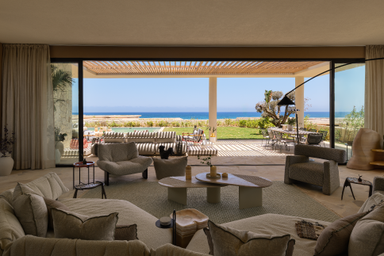
Dive into the enchantment of Somabay's underwater world. Encounter playful dolphins and captivating coral reefs, where each plunge unveils a new marvel. #SummerStoriesBegin #OneParadiseAllSeasons #SomabayRedSea

2

Capital markets

Egypt launches Africa’s first carbon market

Africa’s first carbon market has landed: Egypt yesterday launched its voluntary carbon trading market — the first in the country and in Africa, according to a statement by the Planning Ministry. The market allows companies to issue and trade voluntary carbon certificates in Egypt and Africa, which can be bought by other companies wanting to offset their emissions.

(Tap or click the headline above to read this story with all of the links to our background as well as external sources.)

** There’s a lot more to it: We have everything you need to know about the carbon market in a Going Green published earlier this month.

Remember: The Financial Regulatory Authority (FRA) this week wrapped up all the necessary requirements and procedures to register carbon emissions-reducing projects and kick start the market. A few weeks before that, the FRA rolled out the requirements for brokerage firms looking to trade carbon certificates.

Isis Organic has already dipped its toes in the market: Food producer Isis Organic has purchased carbon credits representing 500 tons of carbon dioxide from 10 farms through the Egyptian Biodynamic Association (EBDA), according to a statement (pdf) from Beltone Securities Brokerage, which executed the transaction. The credits were certified under EBDA's “Economy of Love” standard, which aims to support small-scale farmers as they switch to organic and biodynamic farming methods.

And Daltex is supporting agroforestry in India: Local agriculture firm Daltex has purchased 1.5k carbon credits from an agroforestry project in India’s Punjab through VNV Advisory, which runs the project, it said in a statement (pdf) yesterday. The project aims to promote sustainable farming practices in rural India while utilizing income from carbon credits to improve the livelihoods of small farmers.

More to come: Another local emission-reducing project has been registered within the market, FRA head Mohamed Farid told Asharq Business (watch, runtime: 5:22), adding that the FRA is looking to add another 6-7 projects to the market in the near future.

That’s not all: The next phase will see renewable energy certificates traded on the new market, according to Hapi Journal.

It’s been a long time coming: The EGX first announced its plans to set up the continent’s first voluntary carbon market in 2022.

ICYMI- Officials from seven companies have expressed their intention to apply for the FRA’s approval to trade in carbon emissions reduction certificates and futures contracts in the voluntary carbon market, including Mubasher Financial Services, Arab African International Securities, Bank Audi’s Arabeya Online brokerage, Pioneers Brokerage, and Cairo Financial Holding’s brokerage arm Cairo Capital Securities. CI Capital got the greenlight to start trading in carbon certificates earlier this week.

This publication is proudly sponsored by

3

EARNINGS WATCH

TMG Holding, Contact Financial, Fawry report earnings

A whole lotta earnings: Yesterday saw a fresh batch of 1H earnings published — we have earnings from Talaat Moustafa Group Holding, Contact Financial, and Fawry.

FAWRY’S NET INCOME MORE THAN DOUBLE-

Fawry’s net income jumps 122%: EGX-listed fintech giant Fawry saw its bottom line jump 122.1% y-o-y to EGP 628.8 mn in 1H 2024, according to its latest earningsrelease(pdf). The company’s top line grew 59.2% y-o-y during the period to record EGP 2.3 bn “driven by the expansion and diversification of the company’s business offerings, which alongside effective cost control measures resulted in robust profitability margins.”

(Tap or click the headline above to read this story with all of the links to our background as well as external sources.)

Growth across all segments: Fawry’s banking services segment saw its revenues jump 70.2% y-o-y to EGP 932.1 mn, contributing 41% of the firm’s revenues for the six-month period. It was followed by the alternative digital payments segment, which saw its revenues grow 31.3% y-o-y to EGP 765.1 mn. Financial services came in third, recording EGP 377.7 in revenues, a 113% y-o-y growth, while revenues from supply chain solutions surged 66.8% y-o-y to EGP 160.1 mn.

Looking at 2Q: The firm saw its revenues growth 57.7% y-o-y during the second quarter of the year to sit at EGP 1.2 bn. Net income during the quarter rose 101.3% y-o-y to EGP 321.7 mn.

Looking ahead: “As we progress into 2024, our strategic focus remains sharply centered on innovation and the expansion of services to meet the diverse needs of our customer base. Concurrently, we have placed a strong emphasis on increasing our reach to Egypt's unbanked and underserved populations,” said CEO Ashraf Sabry.

TMG HOLDING REPORTS “UNPRECEDENTED” RESULTS-

An unprecedented half for TMG: Real estate player Talaat Moustafa Group Holding saw its revenue grow 59% y-o-y during the first half of the year to record EGP 17 bn, according to the company’s report on its earnings(pdf). Net income saw a “remarkable” 308% y-o-y growth to EGP 6.4 bn during the six-month period.

Driving the growth: “This surge was driven by significant double and triple-digit increases in hospitality income,” the release said, citing the landmark agreement that saw the real estate giant acquire a majority stake in a group of seven historic hotels. The company also pointed to growth in “other recurring income segments, the development segment, and foreign currency gains.”

Property sales were also on the rise: TMG Holdings’ property sales hit a “record-high” EGP 391 bn during the first seven months of the year thanks to two “record-breaking” projects — its first foray into the Saudi market the mixed-use Benan City project and its first venture into the North Coast the EGP 1 tn SouthMed project. The group’s sales were up 6.5x in comparison to the EGP 60 bn recorded during the same period last year.

CONTACT FINANCIAL SEES DIP IN REVENUES, INCOME -

Contact Financial’s bottom line dipped: Non-banking financial services firm Contact Financial’s normalized net income dipped 44% y-o-y to EGP 216 mn during 1H 2024, the company said in its latest earnings release (pdf).

In detail: Net income at the NBFI’s financing division fell 62% y-o-y to EGP 109 mn during the six-month period on the back of the company’s “decision to delay part of its portfolio transfer activities, a revenue line that has historically contributed significantly to the division’s profitability, in light of the current interest rate environment.” Additionally, unfavorable interest rate environment and fluctuating consumer products prices were behind decreases at Contact’s Auto and Consumer Finance segments, pushing new financing down 40% y-o-y to EGP 4.8 bn.

Ins. division saw growth: Net income from Contact’s ins. division was up 155% y-o-y to 97 mn in 1H 2024 thanks to growth at Sarwa Life and Sarwa Ins., whose total gross written premiums grew an average of 44.5% y-o-y.

On a quarterly basis: Contact saw its normalized net income fall 23% y-o-y to EGP 158 mn in 2Q 2024 thanks to of a fall in income from the company’s financing division,

4

LAST NIGHT’S TALK SHOWS

The Egyptian government has plans to make Egypt a regional industrial hub

Transport and Industry Minister Kamel El Wazir took to the airwaves, joining Bel Waraqa Wal Qalam’s Nashat Al Dahi (watch, runtime: 14:41) to give us an overview of his plans for the ministry.

(Tap or click the headline above to read this story with all of the links to our background as well as external sources.)

A big plan for industry: The government has a comprehensive plan to position Egypt as a regional industrial hub by the end of the year, El Wazir said, adding that the state aims to do so by increasing local production, rationalizing imports, and ramping up exports. The plan rests on seven key pillars, including setting up more factories, upgrading existing ones, reviving idle and struggling facilities, and elevating the standard of Egyptian products, El Wazir said.

Digitalizing procedures: The ministry will soon launch the Egypt Digital Industrial Platform, which will streamline the investment process, enabling investors to secure industrial land and building permits within just one week, the minister said. It will also allow investors to pay their fees online.

5

EGYPT IN THE NEWS

A fresh artifact discovery in Egypt

A new archaeological discovery in Damietta has bought Egypt a piece of the international limelight, with the Associated Press reporting on a trove of ancient artifacts found in tombs that had been discovered last month in Damietta city. The artifacts include gold, jewelry, and statues from the Late and Ptolemaic periods — and may be coming to museums near you in the future.

6

Also on our Radar

Egypt is still looking to secure a big wheat buy

COMMODITIES-

A big wheat buy in our future? State grain buyer GASC is in discussions over directly purchasing up to 1.8 mn tons of wheat from international suppliers, Reuters reports. This comes hot on the heels of an unsuccessful wheat tender where the GASC was looking to purchase some 3.8 mn tons — in a bid to capitalize on falling commodity prices — and ended up securing only 280k.

(Tap or click the headline above to read this story with all of the links to our background as well as external sources.)

The price tag: The fresh wheat buy could cost us around USD 248 a ton, according to what traders told the newswire.

MANUFACTURING-

#1- Eroglu Holding begins building USD 40 mn denim factory: Turkish clothing firm Eroglu Holding has broken ground on its USD 40 mn denim factory in the Qantara West Industrial Zone. The factory, which is slated to come online in January 2025, aims to produce 7 mn denim garments annually when operating at full capacity — some 70% of the factory’s production will be exported. The company also plans to expand the project in a second phase.

Remember: DNM Textile for Spinning, Weaving and Dyeing — an investment venture of Eroglu Holding — in March received the government’s approval to move forward with the factory in addition to an industrial complex for spinning, weaving, clothing, mattress, and furniture production.


#2- Haier to kick off refrigerator production in September: Chinese appliance manufacturer Haier will begin producing refrigerators and deep freezers at its eco-industrial park in Tenth of Ramadan City in September, according to a cabinet statement. Haier inaugurated the eco-industrial park back in May. The first phase of production at the park — which primarily targets the local market — kicked off in March, rolling out ACs and TV sets.

The industrial complex carries a USD 280 mn price tag: The first and second phases cost some USD 165 mn, the third phase comes with a USD 65 mn price tag, and an additional USD 50 mn is needed to manufacture other products for export.


#3- Kima taps Bilfinger Tebodin for nitric acid project: State-controlled Egyptian Chemical Industries (Kima) has tapped German engineering firm Bilfinger Tebodin to manage its nitric acid and ammonium nitrate project, according to an EGX disclosure (pdf).

Refresher: Kima last summer contracted Italian contractor Maire Tecnimont and Orascom Construction to construct the project. Construction was scheduled to start this summer with the plant expected to kick off operations in 2026. Once operational, it will produce some 600 tons of nitric acid and 665 tons of ammonium nitrate a day.

REAL ESTATE-

#1- Another real estate player heads to KSA: Local construction company Concrete Plus is setting up a SAR 2 bn mixed-use real estate project in Saudi’s Riyadh in partnership with Saudi-based firm Zahran Holding, Concrete Plus CEO Tarek Youssef reportedly told Asharq Business, adding that the final contract should be signed this quarter. The tower project will include hotel, administrative, and commercial units.

The beginning of a wider expansion plan? While Concrete Plus has a sizable presence in the Egyptian market, it is currently prioritizing expanding, with a particular focus on the Saudi and Libyan markets.


#2- Another mixed-use development incoming? Real estate player Memaar Al Morshedy will set up an EGP 40 bn mixed-use project in the Sixth of October after purchasing a EGP 1.5 bn, 150-feddan plot in the area, Asharq Business reports.

M&A-

#1- Sinai Cement exits Sinai White Portland Cement: Vicat Egypt’s EGX-listed subsidiary Sinai Cement has sold its entire 25.4% stake in Sinai White Portland Cement to white cement manufacturer Aalborg Portland Holding (Sinai White Portland’s parent company) for some EUR 30 mn, according to an EGX disclosure (pdf). The transaction pushed Aalborg Portland Holding’s ownership of Sinai White Portland Cement to 96.4%, up from 71% previously.


#2- Al Ahly for Development taps new advisor for Cairo Financial exit: Al Ahly for Development and Investment has appointed Financial Advice Corporate Transactions (FACT) as its new independent financial advisor to determine the fair value of Cairo Financial Holding, before it starts receiving offers for its 17.1% stake in the company, it said in an EGX disclosure (pdf). The move comes after Moore Stephens Egypt withdrew from the role, citing licensing issues with the Financial Regulatory Authority.

INVESTMENT-

Local pesticides manufacturer wants to head to KSA: Homegrown pesticides and fertilizers player Atta for Agricultural Development’s Kafr El Sheikh for Pesticides is planning to set up a USD 5 mn plant in Saudi Arabia, Chairman Talaat Ataa told Al Borsa. The company will take its first steps setting up the project before the end of 2024.

FINANCIAL SERVICES-

Easy Lease eyes regional expansions: Local financial leasing firm Easy Lease is looking into expanding its operations into a number of markets across North Africa, with an eye on the Tunisian, Moroccan, Libyan, and Algerian markets, Al Borsa reports, citing CEO Ahmed El Kholy.

Also in the pipeline: The company wants to make its EGX debut in 2027, El Kholy said, adding that it will work toward gradually raising its capital to EGP 350 mn over the coming years — up from EGP 200 mn currently. The firm is also looking to add mortgage finance services to its line of services.

STARTUPS-

Beltone SMEs + Abou Hashima: Beltone SMEs is set to extend up to EGP 50 mn in funding to winners of a startup competition organized by Abou Hashima ElKheirFoundation and the Micro, Small, and Medium Enterprise Development Agency (MSMEDA) under an agreement it inked with the charity organization, it said (pdf) yesterday. The Startup Power competition, now in its third iteration, targets 50 startups in the fields of green economy, artificial intelligence, and the agrifood sector.

7

PLANET FINANCE

A recap of the MENA region’s IPO activity over the last quarter

MENA IPO activity raised some USD 2.6 bn last quarter: IPO proceeds in the MENA region climbed 45.3% y-o-y to USD 2.64 bn in 2Q 2024 as IPO activity was buoyed by increased liquidity spurred by higher oil prices and positive market sentiment, according to an EY press release dissecting its MENA IPO Eye report. The proceeds were raised across 14 listings — up from the 13 listings regional bourses saw in the same period last year — in Saudi Arabia, UAE, and Kuwait.

(Tap or click the headline above to read this story with all of the links to our background as well as external sources.)

KSA captured some 60% of the pie: Eleven out of the 14 listings that took place in the region during the quarter were in Saudi Arabia. The listing raised a combined USD 1.6 bn — c. 60% of the region’s proceeds from IPO activity. The IPO of Fakeeh Care Group raised the lion’s share with USD 764 mn, followed by Saudi Manpower Solutions Company (SMASCO) at USD 240 mn and Rasan Information Technology Company at USD 224 mn. Five companies — including the top three contributors — listed on the Tadawul main market, while the other six IPOed on Nomu.

The UAE came in second: The UAE saw two IPOs over the last quarter — Alef EducationConsultancy and Spinneys raised a combined USD 890 mn from their IPOs after listing on the Abu Dhabi Securities Exchange and the Dubai Financial Market, respectively.

Kuwait saw its first listing following a dry spell: Kuwait’s Beyout Investment Group raised USD 147 mn from taking a 30% stake to the Kuwait Stock Exchange in June, marking the country’s first IPO since 2019.

Where are they now? “Eight out of the 14 MENA IPOs listed in Q2 2024 had shown a positive return as of the 30 June share price in comparison with their IPO price, with [the Saudi] Miahona Company achieving the highest gain of 90.4% within the period,” the release said.

AT HOME- While Egypt saw no IPOs during the quarter, local bus service provider GoBus got the greenlight to IPO, according to the report. Earlier this year, CEO Fady Nassif announced the company’s plans to list 30% of its shares on the EGX within the next two years. We saw our first IPO of the year in July, when investment management firm Act Financial took a 32% stake to market.


OIL WATCH- Global oil demand to slow: The International Energy Agency maintained its oil demand growth forecast for this year but trimmed its 2025 forecast to 950k bpd — down 30k bpd from last month’s forecast — pointing to a slowdown in China.

MARKETS THIS MORNING-

Asian markets are mixed in early trading this morning, with the Nikkei and Kospi up and the Hang Seng and Shanghai Composite in the red. Futures for major US equities benchmarks were mostly unchanged overnight.

EGX30

29,331

-1.3% (YTD: +17.8%)

USD (CBE)

Buy 49.31

Sell 49.44

USD (CIB)

Buy 49.3

Sell 49.4

Interest rates (CBE)

27.25% deposit

28.25% lending

Tadawul

11,797

+0.5% (YTD: -1.4%)

ADX

9,175

-0.4% (YTD: -4.2%)

DFM

4,185

-0.4% (YTD: +3.1%)

S&P 500

5,434

+1.7% (YTD: +13.9%)

FTSE 100

8,235

+0.3% (YTD: +6.5%)

Euro Stoxx 50

4,695

+0.5% (YTD: +3.8%)

Brent crude

USD 80.69

-2.0%

Natural gas (Nymex)

USD 2.15

+0.3%

Gold

USD 2,506

-0.1%

BTC

USD 60,985

+3.4% (YTD: +44.4%)

THE CLOSING BELL-

The EGX30 fell 1.3% at yesterday’s close on turnover of EGP 4.0 bn (12.7% above the 90-day average). Local investors were the sole net buyers. The index is up 17.8% YTD.

In the green: EFG Holding (+1.5%), B Investments (+0.5%), and Cleopatra Hospitals (+0.4%).

In the red: Elsewedy Electric (-6.4%), Ezz Steel (-4.6%), and Eastern Company (-2.4%).

CORPORATE ACTIONS-

B Investments will pay out a dividend of USD 0.02 per share on its 2023 earnings, the company said in an EGX disclosure (pdf). Dividends will be paid out on 29 August.

8

HARDHAT

EV companies want to expand charging infrastructure — but how can they do it?

Infrastructure development for EVs is at the top of the docket for the auto industry: As the new Madbouly government embarks upon an ambitious plan to green the Egyptian economy, industry players are giving EV infrastructure expansion another look. A meeting of the Cairo Chamber of Commerce auto division recently saw discussions with representatives from companies specializing in EV charging put forth three new proposals aimed at developing EV charging infrastructure and overcoming obstacles to the spread of EVs. One in particular caught the attention of industry insiders — a proposal to allow charging stations to operate via multiple charging protocols rather than a single, unified protocol.

(Tap or click the headline above to read this story with all of the links to our background as well as external sources.)

The proposal: Currently, each EV charger has two outlets that operate on the European protocol. If the proposal were to be accepted, just one of the outlets in a given charger would have to adhere to the European standard, while the second outlet could follow American, Chinese, Japanese, or other protocols, depending on each company’s investment goals.

It would also entail more flexible pricing: The proposal would also allow firms to set the prices for charging based on their own investment costs rather than the mandatory pricing system currently in place, while the cost of purchasing electricity is kept at the same price. Companies currently purchase electricity at a fixed cost of EGP 1.2 per KW and sell it at EGP 1.9 for slow charging (AC) and EGP 3.75 for fast charging (DC).

Why it makes sense: Diversifying charging protocols would mean that firms and EV users wouldn’t be restricted to the European standard for charging EVs, head of the clean energy at the auto division Ahmed Zein told participants. Instead, a more diverse range of protocols would allow charging station operators to choose specifications from different countries while unifying the standards for chargers in accordance with international requirements.

Chinese EVs’ expanding market share is a key push-factor: "I've personally been using an EV for nine years now,” Zein tells us. “Initially, American and European brands dominated, so the available chargers were mostly from there, and they were the only type of charger sanctioned under the current regulations. However, the countries from which we import EVs have become more diverse in recent years, with China now holding 75% of the EV market. But most people who use Chinese EVs have to charge their vehicles at home due to the lack of infrastructure for their vehicles.”

Diversifying charging protocols would attract new investments and expand existing ones in the sector. It would also help ensure that the market doesn’t become monopolized by the two largest charging companies, which currently hold a large share of the market. While there are six other firms interested in further investing in EV charging infrastructure, they are struggling to expand their operations due to the ban on using non-European chargers. Indeed, the one company that has invested in Chinese charging stations has seen its investments brought to a halt by the Egyptian Electric Utility and Consumer Protection Regulatory Agency (Egyptera), Zein tells Enterprise.

Six of the EV charging companies that attended the meeting agreed to the proposal, while two firms opposed it — however, the two companies that were in opposition currently hold a combined 90% share of the market, raising concerns over potentially monopolistic practices, a source from the auto division said on condition of anonymity. The division’s board of directors also expressed its support for the proposal, with the head of the Federation of Chambers of Commerce's auto division Nour Darwish saying that it could reshape the market’s future for the better.

The two firms that refused the proposal offered counter arguments for having multiple charging protocols:

#1- Infinity — which holds the largest market share in the EV charging market — was one of the companies that refused the proposal. Infinity’s head of government relations Khaled Salah compared the situation to the mobile phone market, where charging protocols are gradually heading toward a unified type of charger. “EVs are a lot more valuable than mobile phones, and their charging infrastructure represents a large investment that can’t be easily replaced, unlike mobile phone chargers,” he added.

#2- EGX-listed MB Engineering's EV charging subsidiary Sha7en — the firm with the second largest market share in the EV charging market — was the other firm to refuse the proposal, with the firm’s senior operations manager Ahmed Nawwar saying that all countries currently operate using a unified protocol, regardless of the protocol’s country of origin. “I honestly don’t understand the need to adopt protocols that aren’t followed internationally, when the company prefers to invest in a single protocol — the one in which it initially started investing,” he said.

Concerns over monopolistic practice exist on both sides: Nawwar argues that the proposal could lead to a different kind of monopoly — one that favors the cheapest market source, particularly China. In this view, protocol diversification would allow for China to export vehicles to Egypt with Egyptian specifications rather than global ones. Moreover, he added, the Chinese protocol is currently directed to the local Chinese market, and not for export. “If, say, India produced cars at a third of the cost and exported them to Egypt, importers would favor these vehicles and their presence in the Egyptian market would see a surge, which would then force charging companies to adapt to the new car’s charging protocols — putting the Chinese protocol in the same position as the European one, and bringing us back to point zero,” Nawwar said.

The two firms were also against the idea of flexible pricing, which Nawwar said would lead to significant disruptions in the market. He compared it to the telecom market, in which companies aren’t free to set their own pricing plans and are instead subject to the National Telecom Regulatory Authority (NTRA), saying that the EV charging market should operate under similar regulated procedures in order to protect competition.

The new proposal also throws a wrench in existing investment plans: The firms who rejected the proposal have already invested in and have made future investment plans based upon a unified protocol — therefore, newer firms will be given an advantage in the market if the proposal were to be applied.

Two other proposals were discussed during the meeting, the first of which involved issuing legislation to require all new service buildings like hotels and large restaurants to allocate space for EV chargers — a proposal that was unanimously agreed upon by the companies attending. However, the companies unanimously rejected the final proposal, which called for issuing legislation that would allow existing gas stations to allocate space for EV chargers — which the companies said would undermine their existing investments in charging infrastructure.

The proposals still have a long way to go: The companies that participated in the meeting have each been instructed to issue a memorandum in which they detail their reasoning for accepting or rejecting each proposal, with these memoranda to be submitted to Egyptera before being raised to the relevant government bodies for a final decision, Darwish said. The goal for the division is to combat any monopolistic practices that could negatively affect consumers, especially as EVs become more widely available locally, Darwish adds.

Until then, industry players still have ambitious expansion plans in the pipeline: There are currently around 1.2k charging points across 300 charging stations in Egypt that serve European and American EVs, which make up about 20% of the local EV market, with around 11k vehicles currently in use, according to estimates from the auto division. Infinity is currently working to increase its number of stations to 350 from 180 currently by the end of 2025, Salah tells us. Meanwhile, Sha7en is looking to increase its stations to 180 from 80 currently by the end of the year, Nawwar said.

More EV usage and the expansion of EV imports could cut Egypt’s fuel import bill by a significant amount, which amounts to bns of USD annually, according to Amir Helali, the head of the importers committee at the auto division. Many industry players are also preparing to invest bns in EV chargers, Helali added, saying that this necessitates reinstating the Advance Cargo Information (ACI) system and the issuing of ACID numbers for passenger cars — which he said would allow import operations to return to normal.

The auto shipping crisis needs to be solved quickly: Helali’s sentiments regarding the need to bring back vehicle imports were echoed by the deputy head of the auto division Osama Abu Al Magd, who said that “stopping the import of cars would shrink the market, which would lead to the inability of companies to invest in chargers and the state incurring potential losses of bns of EGP that have already been invested at a time when the world is heading towards clean energy.”


Your top infrastructure stories for the week:

  • Dabaa nuclear power plant to get another USD 418 mn worth of construction work: Arab Contractors and Russian state-owned nuclear developer Rosatom have inked a USD 418 mn contract to build two breakwaters, a sedimentation basin, and marine life protection facilities at the Dabaa nuclear power plant. (Statement)
  • Electricity Ministry + Elsewedy Electric: Representatives of the Electricity Ministry and Elsewedy Electric discussed potential collaboration in the energy sphere, between reducing electricity losses and theft and making electricity distribution more efficient. (Statement)

2024

AUGUST

August 2024: Shalateen to announce gold exploration tender winner.

SEPTEMBER

3-5 September (Tuesday-Thursday): Egypt International Airshow, El Alamein International Airport.

5 September (Thursday): Central Bank of Egypt’s Monetary Policy Committee meeting.

15 September (Sunday): National holiday in observance of Prophet Muhammad’s birthday (TBC).

24 September (Tuesday): Enterprise Finance Forum, Cairo, Egypt

25-26 September (Wednesday-Thursday): The Asian Infrastructure Investment Bank’s (AIIB) 2024 annual meeting, Samarkand, Uzbekistan.

25-28 September (Wednesday-Saturday): Cityscape Egypt, Egypt International Exhibition Center, Cairo.

30 September (Monday): Ban on sugar exports expiration.

OCTOBER

1-3 October (Tuesday-Thursday): Cairo Sustainable Energy Week, Cairo, Egypt.

6 October (Sunday): Armed Forces Day.

10-12 October (Thursday-Saturday): Egy Health Expo, Egypt International Exhibition Center, Cairo.

17 October (Thursday): Central Bank of Egypt’s Monetary Policy Committee meeting.

13-17 October (Sunday-Thursday): Cairo Water Week, Water and Climate: Building Resilient Communities, Cairo, Egypt.

21-27 October (Monday-Sunday): The World Bank and IMF annual meetings.

NOVEMBER

4-8 November (Monday-Friday): World Urban Forum, Cairo, Egypt.

12-15 November (Tuesday-Friday): Arab African Investment and International Cooperation Summit, Aswan, Egypt.

21 November (Thursday): Central Bank of Egypt’s Monetary Policy Committee meeting.

26-28 November (Tuesday-Thursday): Egypt Energy Show, Cairo, Egypt.

DECEMBER

26 December (Thursday): Central Bank of Egypt’s Monetary Policy Committee meeting.

EVENTS WITH NO SET DATE

2H 2024: Gov’t to launch the Cairo Ring Road BRT buses.

3Q 2024: Egyptian-Armenian Joint Committee.

September 2024: Turkish-Egyptian Business Council meeting in Turkey.

September 2024: US-Egypt Strategic Dialogue, Cairo.

November 2024: Egypt to host the World Urban Forum (WUF12).

End of 2024: The launch of the high-speed train line linking Ain Sokhna with Al Alamein City.

End of 2024: Shalateen Mining Company to launch a gold exploration tender in the Eastern Desert.

2025

July 2025: The first operational trail of Egypt-KSA electricity interconnection line.

EVENTS WITH NO SET DATE

2Q 2025: Safaga Terminal 2 to start operations.

2027

20 January-7 February: Egypt to host the African Games

EVENTS WITH NO SET DATE

End of 2027: Trial operations at the Dabaa nuclear power plant expected to take place.

Now Playing
Now Playing
00:00
00:00