LEGISLATION WATCH- Banking Act will be ready in June: The Banking Act will be ready and presented to the Ismail Cabinet on 1 June, CBE Governor Tarek Amer said in at workshop on the economy held by Al Ahram. The law would reduce the power of the CBE governor by giving the central bank’s board expanded oversight powers, said Amer. He did not speak on the ways the law would impact banks beyond reiterating that the CBE would have expanded an regulatory role. Amer had previously said that the law would give the CBE greater teeth in regulating boards at banks, but that it no longer contained provisions to limit the terms of bank managing directors. A tithe on bank profits to benefit an industry development fund has also been scrapped.
Amer noted that total inflows reached USD 120 bn since the EGP float, including portfolio investment, foreign direct investment, tourism receipts and remittances. Portfolio inflows reached a total of USD 35 bn, with inflows into Egypt’s sovereign debt over the last period rising to USD 25 bn, with some USD 10 bn having been invested in the stock market, he added.
Exchange rate against greenback stable and CBE doesn’t want to have to prop up the EGP: Inflows have helped keep the FX rate stable, the governor said, adding that strong reserves allow foreign companies to repatriate profits. He warned that while the CBE has no intention of manipulating the exchange market, it could step in if rates get out of control.
It’s the second time in less than two weeks that Amer has mused about intervening in the FX markets if the exchange rate goes out of an ‘acceptable’ corridor (see the second paragraph of Last Night’s Talk Shows on 8 May, here.)
His comments yesterday came as remittances from Egyptian expatriates rose 11.6% y-o-y to USD 2 bn in February 2018, compared to USD 1.8 bn in February 2017, the central bank said yesterday (pdf). Remittances recorded USD 17.3 bn during the eight months from July 2017 to February 2018, marking a 24.1% increase from the same period a year earlier.
On foreign debt, Egypt plans to pay international oil companies USD 850 mn, said Amer without noting the timeline for the disbursement. Oil Ministry sources had stated earlier this month that Egypt will pay IOCs USD 200 mn in June. Amer stated that the country’s overall debt levels are within comfortable bounds, saying that while Egypt’s debt is growing, so is the economy. What’s helping keep the situation stable are the fact these debts are long-term, ranging from 15-60 years.
Related
IPO WATCH- Qalaa plans to list some of its subsidiaries on the EGX beginning 2H2019: Qalaa Holdings is planning to list multiple subsidiaries on the EGX while retaining stakes in them, our friend Ahmed Heikal tells Al Shorouk. The Qalaa founder and chairman said he expects to begin listing these companies as of 2H2019, noting that all of Qalaa’s subsidiaries are “expanding significantly,” which supports the company’s optimistic mid-term outlook for its business. Heikal admitted that Qalaa has become “difficult for many investors to understand,” adding that the listing of subsidiaries should make the underlying investment thesis clearer.
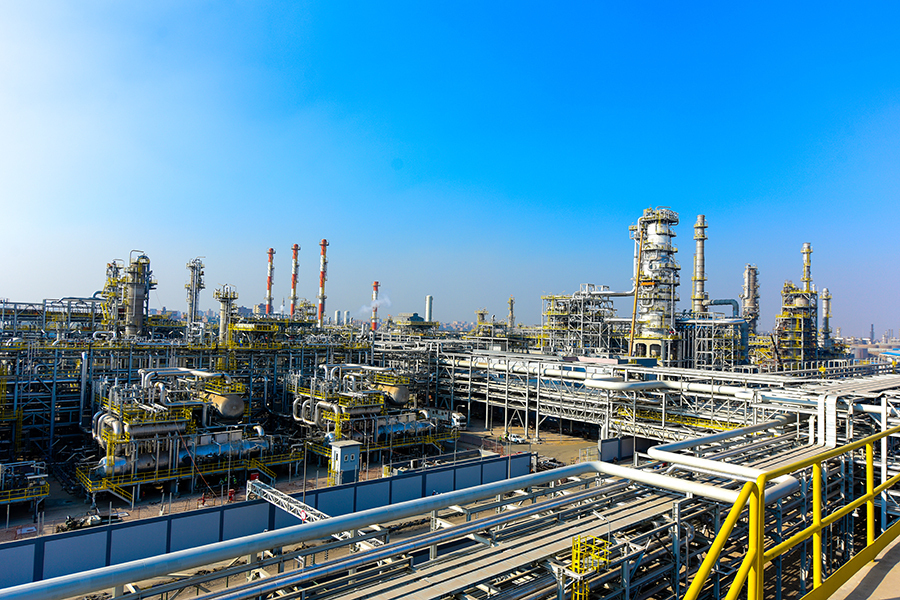
Qalaa’s USD 4.3 bn Egyptian Refining Company in Mostorod should start trial operations by November 2018 and is currently around 97% complete, according to Heikal. Trial operations will span six months. Once the facility is up and running, it will produce 4.7 mn tonnes of petroleum products and derivatives, which will plug 14% of Egypt’s overall supply needs. The project’s cost has risen from an initial estimate of USD 3.7 bn on the back of a 22-month delay due to financing issues. Qalaa had announced in March that ERC took on new finance and equity commitments. Rising oil prices will help make ERC more profitable than originally expected, as will new demand for the low-sulphur diesel ERC will produce: Global environmental regulations bar ships’ use of high-sulfur diesel.
More investments in the pipeline: Once the Mostorod facility is up and running, Qalaa plans to invest at least EGP 500 mn in waste recycling projects over the next two years. Qalaa will also invest EGP 4 bn over the next four years to expand operations at three of its factories in Sadat City. The company is also looking into expanding its business with projects in several other sectors, including the construction of an Alexandria-Damietta railway line that is currently under study, Heikal said.
Heikal sees Qalaa becoming one of Africa’s 10 biggest companies within five years, by which time the company is expected to have EGP 80-100 bn worth of annual business.
Related
EXCLUSIVE- Knock Mart completes acquisition of Dina Farms retail stores: Online grocery delivery specialist Knock Mart has completed the acquisition of 100% of Qalaa Holdings’ Arabian Company for Services and Trade, the parent company of supermarket chain Dina Farms, Knock Mart Chairman Ahmed Taher tells Enterprise. He did not disclose the price tag for the transaction, but noted that it has been executed. The sale does not include Dina Farms’ core dairy business, Qalaa tells us. Dina has c. 15k head of cattle, making it one of Africa’s largest dairy farms. Under the terms of the sale, Knock Mart will be required to stop using the Dina Farms brand name, which remains Qalaa’s intellectual property, later this summer. The acquisition of Dina Farms’ 17 stores brings Knock Mart’s retail footprint to 20 locations and comes as part of the latter’s strategy to grow its retail stores alongside its online sales, said Taher. Knock Mart had made its intentions to acquire Dina Farms known in October 2017.
Advisors: Pharos Holding executed the transaction on the OTC market. Knock Mart was advised by Haykala Investment Managers and Matouk Bassiouny acted as legal counsel.
Related
M&A WATCH- Dr. Oetker looks set to acquire Cook’s Industries in EGP 1 bn transaction: German food producer Dr. Oetker is reportedly in the final stages of talks to acquire full ownership of Cook’s Industries in a transaction valued at more than EGP 1 bn. Emerging markets private equity giant Actis, which rumor had it had begun conducting due diligence, appears to have dropped out of the race, sources close to the agreement tell Al Mal. We had reported in February that Cook’s owners, the Paraskevas family, are interested in selling their entire stake in the venture.
Advisors: We were told that Dr. Oetker tapped CI Capital to advise on the acquisition, with Arqaam Capital advising on the sell-side.
Related
M&A WATCH- TE to finalize MENA Cables acquisition within a week: Telecom Egypt (TE) expects to finalize the details of its USD 90 mn acquisition of MENA Submarine Cables Systems within a week, TE CFO Mohamed Shamroukh reportedly said yesterday, Al Mal reports. TE is currently confluding negotiations with Orascom Telecom and Media and Technology, which is looking to sell 100% of MENA Cables, and will soon begin seeking the National Telecommunications Regulatory Authority sign off on the agreement. TE announced last Thursday that it would finance the transaction through a shareholder loan to its subsidiary cable business. We had heard that TE was close to tapping EFG Hermes to advise on the transaction.
Related
INVESTMENT WATCH- Are Eni and Lukoil investing in USD 700 mn gas plant the in Western Desert? Italy’s Eni and Russia’s Lukoil plan to invest USD 700 mn to develop a natural gas processing plant in the Western Desert, said Mohamed El Kaffas, chairman of Eni joint venture AGIBA. The plant is expected to have a capacity of 100 mcf/d with plans to ship the processed gas to Alexandria through a 200 km pipeline, he tells Egypt Today. The plant is expected to be completed in three years. AGIBA plans to drill 28 wells in the Western Desert concessions in tandem with the development of the plant.
Caveat emptor: We have not seen this story covered anywhere else in the press and we await comment from Eni confirming the project.
Related
NBE to arrange USD 1 bn for Al Ghurair Group’s Al Canal Sugar refinery: The National Bank of Egypt (NBE) is arranging a USD 1 bn syndicated loan for the UAE’s Al Ghurair Group’s Al Canal Sugar refinery, sources with knowledge of the matter tell Al Shorouk. The NBE is currently in talks with a number of local banks to form a consortium to finance construction of Ghurair’s new sugar beet processing facility. The company reportedly asked the NBE to arrange first a USD 500 mn bridge loan until it can finalize procedures for the full amount, of which the company will use USD 550 mn to plant 181k feddans of sugar beets, and USD 450 mn to build its processing plant. We had reported back in February that the NBE was arranging a USD 400 mn for Al Ghurair’s project, which Investment Minister Sahar Nasr had said should help Egypt reach self-sufficiency in sugar production. NBE’s Investment banking arm, Al Ahly Capital, is financial advisor to the UAE-based company.
Related
One step closer to launching the Automotive Directive? The Trade and Industry Ministry plans to hold a meeting today with a number of auto companies to discuss an order issued by minister Tarek Kabil last month on local content that is widely considered to be a forerunner to the Automotive Directive, said Tamer El Shafei, head of the auto components division of the Federation of Egyptian Industries. The meeting brief the companies on the order and start a dialogue. The order mandates that 46% of the components of a domestically-assembled car be sourced locally, and that 28% of a car has to be assembled in Egypt for it to qualify as an “assembled in Egypt” vehicle. This portion will be reduced by 1% every year following implementation of the decision. Twelve car assemblers will reportedly take part in the meeting, among them our friends at GB Auto as well as Bavaria Auto Group, and Nissan Auto Egypt.
Toyota Egypt throws its weight behind the Automotive Directive: Toyota Egypt CEO Ahmed Monsef expressed his support for last month’s order amending domestic component quotas. The order’s timing is also significant as the long-awaited Automotive Directive has yet to be issued, he added.
There are 231 days left until 1 January 2019. That’s when customs on vehicles imported from the European Union are set to fall to zero. The domestic auto assembly sector runs the risk of major downsizing if it hits 1 January without the protections mandated in the Automotive Directive, which would offer assemblers incentives to move up the value chain into manufacturing.
Related
OCI subsidiary to receive USD 380 mn from EBRD, IFC: The Egyptian Fertilizers Company (EFC) has signed loan agreements with the European Bank for Reconstruction and Development (EBRD), International Finance Corporation (IFC), and several local and international banks worth a combined USD 380 mn and EGP 1.12 bn, parent company Orascom Construction Industries (OCI) announced on Thursday. EFC will use the loans to refinance existing debts it was due to repay in October 2019. The facilities include USD 100 mn from the IFC and USD 60 mn from the EBRD, according to an EBRD statement.
Related
Nine companies, including Orange Egypt, face mandatory delisting by mid-June: Nine companies have yet to meet the EGX’s listing requirements on the minimum required number of shareholders, shares, or shares in freefloat, according to a statement from the EGX (pdf). Three of these companies — El Shams Pyramids for Hotels and Touristic Projects, Nile City Investments, and Alex Container and Cargo Handling — are currently making progress on meeting the requirements. Union National Bank, Samcrete, Al Orouba Company for Mining & Trading, Incolease, and Rowad Misr Tourism Investment are at risk of mandatory delisting, which the bourse will decide on at a meeting on 12 June if they fail to meet the requirements. The lawyers are still looking at Orange Egypt: The mobile network operator had said back in January it is “examining all options” to increase its freefloat to at least the minimum, which the company said is dependent on market conditions.
Related
Early sign that Cabinet is getting serious about import substitution? The government has ordered a study of the total import of goods and services over the last three years, Prime Minister Sherif Ismail told representatives of a number of business and investor associations. The study will help the government set policy priorities for which goods can be manufactured by the private sector here, a move he says will help reduce unemployment and the current account deficit while relieving strain on FX reserves, Ismail said, according to a statement.
Related
Railway ticket prices to rise 30-45% after Ramadan? The Ismail Cabinet is reportedly days away from signing off on a decision to hike railway ticket prices by 30-45%, Al Mal reports. The hike, which will be implemented on VIP and first- and second-class tickets, would come into effect immediately after the end of Ramadan (around mid-June). Transport Minister Hisham Arafat had previously said that ticket prices would rise at the start of the new fiscal year in July. Ticket prices will continue to rise gradually over the years as railway services are upgraded and developed under the government's plan to overhaul the sector, sources tell the newspaper.
Commuters, companies still adjusting to hike in Cairo Metro ticket prices: This comes just days after the Transport Ministry raised ticket prices for the Cairo Metro by more than 3x, which officials said was necessary to meet rising costs and continue working on metro system upgrades. Cairo saw small, impromptu protests over the weekend, leading authorities to deploy police inside and outside metro stations yesterday, Reuters reports. Some private companies are subsidizing Metro tickets for their employees salaries are adjusted to help them deal with rising transport costs, Al Masry Al Youm reports.
On a related note, Arafat has been discussing additional funding for railway and river transport projects with a World Bank delegation that is currently in town, according to Al Mal. The World Bank is already providing Egypt with more than USD 500 mn in separate loans for railway development projects.
Related
LEGISLATION WATCH- Finance Ministry working on law to ease transition to cashless economy: The Finance Ministry and central bank are working together to draft legislation to help ease the the state with its goal to transition to a cashless economy, government sources reportedly said yesterday. The law, which could go into effect during FY2018-19, would set limits on the amount of cash that government agencies can receive or pay in a single transaction. A suggestion currently under study sets a ceiling of EGP 20,000 per transaction, according to the sources. The government has been taking steps to gradually decrease the rate of cash transactions, based on a number of resolutions adopted during a National Payments Council meeting last year, which included drafting legislation to govern non-cash payments and transactions, developing a strategy for e-governance, and making e-payment options available to public sector employees. The move is part of the state’s wider financial inclusion strategy.
In other legislative news yesterday, the House of Representatives gave a preliminary nod to the law establishing the Upper Egypt Development Authority, as well as that governing clinical trials.
Laws on public surveillance, road management recalled from House: House Speaker Ali Abdel Aal also announced that the Ismail Cabinet has recalled two pieces of legislation it had sent to Parliament for review, including one on public surveillance and another on road network management, saying that both are covered by other, existing laws, Al Masry Al Youm reports.
Also yesterday: The House Housing Committee resumed its review of a temporary law to settle building code violations, Al Shorouk reports. Members of the committee disagreed over Article 1 of the legislation, which would not allow settlements for buildings erected on agricultural land. Some suggested including exceptions for land in new urban communities, but the committee ultimately did not reach consensus on the issue. It remains unclear why the committee is currently discussing the legislation, after having agreed in February that it cannot pass without amendments to the Unified Building Code. Both laws would have to pass together as they are too closely intertwined, the committee said at the time.
Related
EARNINGS WATCH- Credit Agricole Egypt reported a jump in net profit to EGP 601 mn in 1Q2018, up from EGP 467 mn in the same period last year, according to a regulatory filing.
Related


 Egypt Edition
  MENA+ Edition
  UAE Edition
  Saudi Edition
  MENA <> India Corridor
  Logistics (MENA)
  Climate (MENA)


 Share Issue