Get EnterpriseAM daily

Available in your choice of English or Arabic

Our USD 35 bn gas export agreement with Israel hits another speed bump

1

WHAT WE’RE TRACKING TODAY

Egypt will soon receive EUR 1 bn of EU macro-financial support

Good morning, friends, and welcome to the first full workweek of 2026. We have a pretty compact issue for you this morning after last week’s Christmas lull, leading with news (once again) from the oil and gas industry.

Israel is demanding provisions in our USD 35 bn natural gas import agreement that would give it the unilateral right to slash how much gas it sells us. As you might expect, the terms — first made public in a regulatory filing — aren’t going down well with officials here in Cairo.

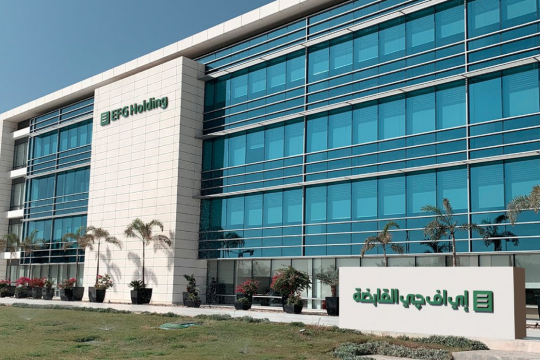
Meanwhile, our fellow finance nerds will want to keep an eye on EFG Holding shares over the coming days and weeks as El Garhy family looks to accumulate another 5% of the region’s premier financial services firm. The family’s diversification drive, which has seen it rotate away from manufacturing and into financial services and real estate, could see it become one of EFH Holding’s two largest shareholders, on par with France’s Natixis.

Also making headlines this morning: We have the inside track on the government’s plan to make tax breaks for newly-listed companies contingent on the size and liquidity of their EGX free float. And a stable inflation reading for December should give the central bank even more confidence to push ahead with rate cuts this year. The bank has its first interest-rate meeting of the year on 12 February.

^^ We have all of that and more in this morning’s news well, below.

WEATHER- Cairo is in for a foggy morning and a high of 20°C today, according to our favorite weather app. After the sun sets, the capital will see a low of 10°C. We’re looking at a cooler week ahead, with daytime highs in the 17-20°C range through Saturday.

Watch this space

TREASURY — A EUR 1 bn tranche of macro-financial support from the EU will land in state coffers “during the coming days” following the completion of the fifth and sixth reviews of our USD 8 bn extended fund facility program from the IMF, Foreign Minister Badr Abdelatty said Thursday in a joint presser with European Commission VP Kaja Kallas (watch, runtime: 46:50). The upcoming tranche will be the first of several scheduled to dispense the remaining USD 4 bn of a EUR 5 bn macro-financial assistance package pledged in 2024.


SPORTS

The Pharaohs have secured their spot in the Afcon semi-finals after a 3-2 victory against defending champions Côte d’Ivoire. The national team is set for a high-stakes showdown against Senegal in the semis this Wednesday.

Data point

298.5% — that’s the rate at which the country’s net foreign assets rose in the 12-month period ending November, according to data from the Central Bank of Egypt (pdf). Net foreign assets came in at USD 23.8 bn in November, primarily driven by an uptick in net foreign assets held by commercial banks, while the central bank’s holdings remained stable.

** DID YOU KNOW that we cover Saudi Arabia, the UAE and the MENA-IndiaCorridor?

** Were you forwarded this email? Tap or click here to get your own copy delivered every weekday before 7am Cairo time — without charge.

The big story abroad

No single story has captured the attention of the global business press, but there are a handful worth noting.

US President Donald Trump is already moving to ringfence Venezuela’s oil wealth, following last week’s abduction of the country’s president, Nicolas Maduro. Trump signed an executive order to block creditors and courts from seizing Venezuelan oil revenue held in US Treasury accounts, declaring the funds sovereign property held for diplomatic use.

The news comes as US oil majors showed signs they’re not big on Venezuela, with Exxon CEO Darren Woods reportedly having told Trump that Venezuela “ is uninvestable.”

CLOSER TO HOME- Anti-government protests in Iran are growing, with clashes between civilians and security forces having left at least 65 dead and over 2.3k arrested. Demonstrations that began over a currency collapse have evolved into a nationwide demand to topple the clerical system.

What to watch for this week: Tuesday’s US inflation data could show a “false” heating up after November’s “muddy” figures. Economists expect the December Consumer Price Index to tick up to 2.7% y-o-y, primarily as a technical correction to November data that was distorted by the Federal government’s shutdown.

ALSO WORTH READING- Nvidia has become the poster child of a shifting AI boom, but the Financial Times asks if its USD 4.5 tn valuation rests on what some criticize as a “Ponzi scheme” of circular transactions.

A year defined by ambition, energy, and global connection.

From elite performance to community-driven experiences, we continue to shape environments where sport goes beyond competition. Creating moments that inspire, connect, and endure at Somabay!

2

The Big Story Today

Egypt refuses to accept new ‘Israel-first’ clauses in USD 35 bn Leviathan natural gas deal

Egypt is in a high-stakes standoff with Israel over our USD 35 bn gas agreementas Cairo refuses to accept what amount to new “Israel first” clauses inserted by the Israeli government, reports industry publication Mees. Although Israeli Prime Minister Benjamin Netanyahu finally greenlit the stalled agreement last month, a disclosure (pdf) from Leviathan partner NewMed shows that the Israeli government inserted new conditions that would give wide-ranging powers to the Israeli state to slash exports to Egypt to protect its own domestic grid.

The new conditions include the power to unilaterally slash quantities shipped to Egypt. Starting in 2036, the Israeli Ministry of Energy and Infrastructure would have unilateral power to cut export volumes by up to 60% so that it can satisfy Israeli demand first, according to the disclosure. The supply of any quantity to Egypt is also now subject to the Leviathan operators first meeting their full quotas for Israeli consumers, with an emergency trigger that allows for an immediate reduction in exports if the Israeli market is undersupplied for more than 28 days. Egypt has yet to accept the clauses.

This would effectively transform Egypt from a primary customer with guaranteed volumes into a secondary recipient of whatever surplus remains. A contract that gives a foreign regulator the right to cut supply by more than half would leave manufacturers and households alike vulnerable to the domestic policy shifts of a neighbor with whom relations have become increasingly strained since Israel’s war on Gaza.

The terms would give NewMed the right to sell half of any additional future production increase over 2.1 bcf / day to Egypt at spot-market prices and requires them to apply for regulatory approval to boost the maximum quantities they might sell us.

A traditional gas sale agreement would give the buyer more leverage to set daily, monthly, or annual quantities they want to buy — giving the seller the obligation to meet the ask, Mees notes.

Why it matters

Egypt is positioning itself as the premier East Mediterranean energy hub on the back of factors including the return to growth of domestic oil and gas production, the consistent buildout of renewable energy infrastructure, bunkering facilities in the Suez Canal, and our gas-export infrastructure. Importing gas to power domestic manufacturers and keep the lights on for households one of the keys to that drive.

Our take

In years past, Egypt might have been forced to swallow the terms to keep the lights on, but our LNG import infrastructure gives us room to negotiate. Having four floating regasification plants in place gives Egyptian negotiators an LNG safety net, allowing them to tell Tel Aviv that we’d rather pay a premium for global LNG than tether energy security to a contract that the Israeli government can override at will.

What to watch for next: The USD 2.4 bn project to boost by 75% the Leviathan field’s capacity to increase exports to Egypt remains in limbo as Cairo withholds the final signature needed to move the needle on a final investment decision. Leviathan partners Chevron and NewMed are working toward a three-times-extended 31 January deadline to iron out any differences.

“Teams from Israel are in Cairo this week” to try to work it out, Mees reports, speculating that partner Chevron, in particular, would “likely be unhappy” if Egyptian negotiators say it would pay less for Israeli gas as a result of the clauses.

(** Tap or click the headline above to read this story with all of the links to our background as well as external sources.)

This publication is proudly sponsored by

3

ECONOMY

Egypt inflation was flat in December — does that set up the next rate cut?

Annual urban inflation was unchanged at 12.3% in December, the same pace at which prices rose the month before. This came even as the price of food and beverages rose 1.5% year-on-year last month compared to 0.7% y-o-y in November, according to data from state statistics agency Capmas.

Beyond food, the data shows “not just deceleration in inflation rates, but outright deflation in durable prices, whether that is real estate or automobiles” as the Central Bank of Egypt’s interest rate policy helped choke inflation, Al Ahly Pharos Head of Research Hany Genena tells EnterpriseAM.

This structural cooling is being paired with a tactical government effort to manage food and beverage prices, which saw a paradoxical split this month. Although the annual food inflation figure ticked up to 1.5% y-o-y, the month-on-month change in prices was actually a drop of 0.7%. This was driven by a sharp reversal in poultry and egg prices, which Genena notes “do have a material impact on the index” and “cause swings in the inflation rate on a month-on-month and year-on-year basis.”

Why it matters: With inflation concerns now increasingly in the rearview mirror, the central bank should be emboldened to push ahead with its easing cycle — and give the Finance Ministry breathing room on its debt-service costs. Genena expects the central bank to cut rates by 200 bps when it next meets in mid-February, pointing to how “high interest rates are causing pressure on the Finance Ministry” and the need to address interest payments on debt, which effectively consumed over 96% of the state’s total budget between July to November with a EGP 1.06 tn bill.

What to watch for next: Policymakers will be closely watching January’s inflation reading, out early next month. Sahar Al Damati, the veteran banker and former chair of Banque Misr, told us last month that the bulk of imports for Ramadan was already accounted for, suggesting that the traditional inflationary impact of the holy month (set to start around 19 February) may already be priced-in.

(** Tap or click the headline above to read this story with all of the links to our background as well as external sources.)

4

Capital markets

The end of ghost listings? Egypt mulls tying tax breaks to actual liquidity in major EGX overhaul.

The Madbouly government might use the tax code as part of a bid to solve one of the EGX’s most long-standing issues — liquidity. A package of tax reforms currently being finalized would see the exchange introduce a tiered, performance-based tax system that rewards companies based on their actual trading volumes and freefloat size, a senior government official tells EnterpriseAM.

Why this matters: For years, the EGX has been home to ghost listings — companies that list the bare minimum required for regulatory or prestige reasons but keep 90-95% of their shares locked up. This results in dry stocks that institutional investors can’t touch. Officials hope that by tying tax breaks to the volume of shares actually hitting the market, companies would be encouraged to take decisions that keep their shares liquid.

Why does it matter? Liquid shares give current and future investors the confidence they need to comfortably build and later exit large positions.

If it is adopted, the new framework would link the size of a company’s tax break to the size of its offering and its free-float percentage. Large corporations entering the exchange would receive an initial three-year tax exemption. Companies would be put on a sliding scale, with the percentage of shares being offered and trading activity helping determine which incentive bracket they fall into.

Boards would be scored on how much they invest in their businesses, too: The hook is in the extension — a further three-year grace period would only be available if the company delivers tangible results in both capital expenditure and trading volume.

PLUS- The proposed overhaul isn’t limited to traditional stocks. To diversify the market’s DNA, the Financial Regulatory Authority and the EGX are working to reclassify gold and silver certificates, along with renewable energy and carbon credits, as formal financial instruments. This reclassification would allow these newer asset classes to fall under the same tax-incentive umbrella — a strategic move intended to draw a different breed of commodity- and ESG-focused traders (such as remain on our planet in this first year of Trump II) to the bourse.

AND- Officials are serious about the EGX itself becoming a publicly-traded company. They’re drafting proposed amendments to the Capital Markets Law that would turn the exchange from a public entity into a joint-stock company. Financial Regulatory Authority chief Mohamed Farid said at the end of last month that the EGX was gearing up for life as a public company, a path previously taken by regional peers including the Dubai Financial Market and Saudi’s Tadawul.

(** Tap or click the headline above to read this story with all of the links to our background as well as external sources.)

5

ECONOMY

Fiscal indicators improve in 1H 2025-2026 as debt costs cool

The Finance Ministry is signaling a turning point in Egypt’s fiscal health as the primary surplus — which excludes interest payments — rose to EGP 383 bn (1.8% of GDP) in 1H FY 2025-2026, up from 1.3% of GDP a year earlier, according to a statement. The primary surplus stood at EGP 306.8 bn during the first five months of the current fiscal year, signaling a rapid acceleration in fiscal consolidation between November and December.

The key drivers: The improvement was driven by a 32% y-o-y jump in tax revenues during the period, which helped keep the overall budget deficit stable at 4.1%. Total revenue rose more than 30% in 1H, outpacing the growth rate of expenses during the same period, according to the statement.

More importantly for investors, the ministry flagged a significant drop in risk premiums. Egypt’s five-year credit default swaps (CDS) — the cost of ins. against sovereign default — dropped below 270 bps on 6 January, marking its lowest level since 2020. At the same time, yields on international bonds fell by 300-400 bps y-o-y. The shift suggests that the market is finally pricing in a “lower-for-longer” risk profile for the state, which will eventually translate into lower borrowing costs.

Beyond the numbers: Revenue growth outstripped the growth in spending, which has effectively lowered the debt-to-GDP ratio and net borrowing requirements. The Finance Ministry expects even stronger performance in the second half of the fiscal year (ending June 2026), as the January-June window typically sees peak tax inflows.

The outlook: With the conclusion of our IMF program due by year-end, the figures suggest the Finance Ministry is still on track to hit its 4% annual primary surplus target without needing to make any sharp policy changes.

(** Tap or click the headline above to read this story with all of the links to our background as well as external sources.)

6

ALSO ON OUR RADAR

El Garhy family is after an additional 5% of EFG Holding

El Garhy family wants a bigger piece of EFG Holding

A group of shareholders led by members of El Garhy family have notified the Egyptian Competition Authority of their intention to acquire an additional 5.0% stake in EFG Holding, according to a statement from the authority. The group — which includes El Garhy Steel and several family members — held 7.6% at the end of October, according to an EFG Holding regulatory filing

If they’re successful, the Garhy family’s total stake would rise to 12.7%, putting them on par with France’s Natixis as one of the financial services giant’s two largest shareholders. Natixis held 12.3% as of October.

El Garhy is diversifying from its industrial roots, with its latest play mirroring a previous move to up its holding of Arab Developers to nearly 20%. While diversifying its asset base into real estate and financial services, the manufacturing-focused family also divested a 26.3% stake in Misr National Steel to Al Organi Group for EGP 1.9 bn in March.

B.Tech’s fintech arm closes securitized bond issuance

B.Tech’s fintech arm mylo closed an EGP 1.8 bn securitized bond issuance, its second ever, according to a statement (pdf). The offering, which consisted of tranches with a 12-month maturity, is set to fuel the company’s expansion, including plans to “grow its user base, expand its merchant and brand partnerships, and further invest in the platform’s technology infrastructure.”

ADVISORS- EG Bank acted as the custodian.

Four new oil and gas discoveries

Egypt will add 4.5k barrels of crude oil and 2.6 mmcf of gas to its daily production output through four new oil and gas discoveries by Tharwa Petroleum, Khalda Petroleum, and Borg El Arab Petroleum, according to a statement from the Oil Ministry. Initial production from the wells has already begun, and further testing is underway.

(** Tap or click the headline above to read this story with all of the links to our background as well as external sources.)

7

PLANET FINANCE

World’s 500 richest add USD 2.2 tn in record-breaking 2025, fueled by Big Tech

The 500 richest people in the world had a record-breaking 2025, adding USD 2.2 tn to their wealth piles and bringing their total net worth to a staggering USD 11.9 tn, according to Bloomberg ’s B’naires Index.

A quarter of the USD 2.2 tn came from just eight people, with major gainers including:

  • Tesla CEO Elon Musk — with a yearly gain of USD 190.3 bn and a net worth of USD 622.7 bn;
  • Alphabet co-founder Larry Page — with a net worth of USD 257.8 bn;
  • Amazon founder Jeff Bezos — with a net worth of USD 251.4 bn;
  • Oracle Chairman Larry Ellison— with a yearly gain of USD 57.7 bn and with a net worth of USD 249.8 bn.

By region: The wealth creation was heavily concentrated in the US and Canada, accounting for nearly half of the total at USD 1.1 tn. Asia and Oceania came in second with gains of USD 550.7 bn. Europe added USD 386.5 bn, while Latin America saw USD 159.5 bn. The Middle East and Russia added USD 39.3 bn, and Africa contributed USD 21.9 bn.

What drove the gains? Big Tech companies and US mega-cap stocks were the main engines of the massive wealth accumulation, dominating the stock market through sustained investments in artificial intelligence infrastructure.

Other sectors providing a boost included global equities and precious metals, the latter of which recorded its best year. Copper and rare earth metals also surged in value. Their emergence as commodities yielding significant geopolitical power added bns of USD to industry heavyweights like Australia’s Gina Rinehart, whose net worth rose by USD 12.6 bn to USD 37.7 bn.

The crypto market experienced more volatility, delivering massive returns as BTC’s value skyrocketed on the back of Donald Trump’s re-election at the end of 2024, before a steep slide in October saw the market wipe out gains and significantly reduce the added wealth of crypto-focused b’naires like Michael Saylor.

(** Tap or click the headline above to read this story with all of the links to our background as well as external sources.)

EGX30

41,857

+0.8% (YTD: +0.1%)

USD (CBE)

Buy 41.20

Sell 47.34

USD (CIB)

Buy 47.22

Sell 47.32

Interest rates (CBE)

20.00% deposit

21.00% lending

Tadawul

10,473

+0.2% (YTD: -0.2%)

ADX

10,010

-0.3% (YTD: +0.2%)

DFM

6,226

-0.4% (YTD: +3.0%)

S&P 500

6,966

+0.7% (YTD: +1.8%)

FTSE 100

10,125

+0.8% (YTD: +2.0%)

Euro Stoxx 50

5,997

+1.6% (YTD: +3.6%)

Brent crude

USD 63.34

+2.2%

Natural gas (Nymex)

USD 3.17

-7.0%

Gold

USD 4,501

+0.9%

BTC

USD 90,538

0.0% (YTD: +3.3%)

S&P Egypt Sovereign Bond Index

997.21

+0.1% (YTD: +0.4%)

S&P MENA Bond & Sukuk

151.72

+0.1% (YTD: -0.1%)

VIX (Volatility Index)

14.49

-6.2% (YTD: -3.1%)

THE CLOSING BELL-

The EGX30 rose 0.8% on Thursday on turnover of EGP 5.7 bn (7.8% above the 90-day average). Local investors were the sole net sellers. The index is up 0.1% YTD.

In the green: Telecom Egypt (+5.3%), ADIB (+3.6%), and EFG Holding (+3.6%).

In the red: Egypt Aluminum (-5.9%), Beltone Holding (-3.7%), and Rameda (-2.7%).


2026

JANUARY

22 January (Thursday): ESBC SEEING webinar, From Zurich to Cairo: How Global Executive Research Shapes Tomorrow’s Leadership.

25 January (Sunday): Revolution Day / Police Day.

FEBRUARY

3 February (Tuesday): S&P Global to release PMI figures for January.

10 February (Tuesday): Capmas expected to release inflation data for January.

10-12 February (Tuesday-Thursday): Gitex Global’s AI Everything Middle East & Africa Summit

12 February (Thursday): Monetary Policy Committee’s first meeting of 2026.

19 February (Thursday): First day of Ramadan (TBC).

MARCH

15 March (Sunday): IMF to hold its seventh review of Egypt’s USD 8 bn EFF arrangement.

21 March: (Saturday): Eid El Fitr starts (TBC).

30 March – 1 April (Monday-Wednesday): Egypt International Energy Conference and Exhibition 2026 (EGYPES)

APRIL

2 April (Thursday): Monetary Policy Committee’s second meeting of 2026.

12 April (Sunday): Coptic Easter.

25 April (Saturday): Sinai Liberation Day.

MAY

1 May (Friday): Labor Day.

21 May (Thursday): Monetary Policy Committee’s third meeting of 2026.

27-29 May (Wednesday-Friday): Eid El Adha (TBC).

JUNE:

30 June (Tuesday): National holiday in observance of June 30 Revolution (TBC).

JULY

9 July (Thursday): Monetary Policy Committee’s fourth meeting of 2026.

23 July (Thursday): National holiday in observance of Revolution Day (TBC).

AUGUST

20 August (Thursday): Monetary Policy Committee’s fifth meeting of 2026.

26 August (Wednesday): National holiday in observance of Prophet Muhammad’s birthday (TBC).

SEPTEMBER

15 September (Tuesday): IMF to hold its eighth review of Egypt’s USD 8 bn EFF arrangement.

24 September (Thursday): Monetary Policy Committee’s sixth meeting of 2026.

27-29 September (Sunday-Tuesday): Global Conference on Population, Health and Human Development.

OCTOBER

6 October (Tuesday): Armed Forces Day.

29 October (Thursday): Monetary Policy Committee’s seventh meeting of 2026.

DECEMBER

17 December (Thursday): Monetary Policy Committee’s eighth meeting of 2026.

EVENTS WITH NO SET DATE

Early 2026: Passenger operations on the New Administrative Capital–Nasr City monorail scheduled to begin.

Early 2026: The government will launch the second package of tax breaks.

1Q 2026: Trial operations for the Ain Sokhna–Sixth of October section of Egypt’s first high-speed rail line scheduled to begin.

1Q 2026: Turkish President Tayyip Erdogan to visit Egypt

May 2026: End of extension for developers on 15% interest rates for land installment payments

2H 2026: Operations at Deli Glass Co’s new USD 70 mn glassware factory kick off.

2027

20 January-7 February: Egypt to host the African Games.

April 2027: Tenth of Ramadan dry port and logistics hub to begin operations.

EVENTS WITH NO SET DATE

2027: Egypt to host EBRD’s annual meetings.

2027: Egypt-EU Summit 2027

End of 2027: Trial operations at the Dabaa nuclear power plant expected to take place.

September 2028: First unit of the Dabaa nuclear power plant begins operations.

Now Playing
Now Playing
00:00
00:00