Get EnterpriseAM daily

Available in your choice of English or Arabic

Our first onshore regasification plant will kick off operations in two years

1

What We're Tracking Today

Investors want FinMin to scrap fines on previous tax dues

Good morning, friends and happy almost-Thursday to you all. The news cycle shows no signs of slowing down even as we barrel toward the weekend, with news of our very own regasification unit and fresh tax incentives leading the news well.

ALSO IN TODAY’S ISSUE- Car prices continue to fall, seeing dips reaching 20% as dealers look to reignite demand in a paralyzed market and we dive into the real estate sector’s performance throughout the first six months of the year.


PSA-

WEATHER- It’s another cool day in Cairo, with a high of 31°C and a low of 22°C, according to our favorite weather app.

It’s a touch cooler in Alexandria, with a high of 29°C and a low of 22°C.

WATCH THIS SPACE-

#1- MAF swaps Carrefour for HyperMax in two regional markets — but keeps Egypt. Majid Al Futtaim (MAF) has rebranded its Carrefour stores in Bahrain and Kuwait to its new homegrown brand HyperMax, Majid Al Futtaim Retail CEO Günther Helm told Dubai Eye 103.8. The move follows the replacement of its Carrefour stores in Oman and Jordan with HyperMax stores last year.

It was MAF’s decision to break with the French retail giant, which Helm says was done to better suit the needs of customers. The HyperMax brand responds to the “growing demand for locally sourced products and services in a number of our markets,” a MAF official told EnterpriseAM.

But don’t expect to see HyperMax replace Carrefour here in Egypt anytime soon, as “at present, there are no immediate plans to expand HyperMax across other markets,” we were told.


#2- The Investors Union is calling on the Finance Ministry to cancel fines on previous tax dues that have been fully settled, Vice President Sobhi Nasr told Al Borsa. The union is calling for the measure to be part of the second set of tax facilities currently being put together.

Writing off these fines would help businesses operate at full capacity and increase their exports, argued Nasr. It would also help settle around 70% of tax disputes before the courts, he added.

HAPPENING TODAY-

#1- It’s day one of the 2025 Egyptian Entrepreneurial Sector Diagnostic Report launch summit. Organized by Entlaq in partnership with El Gouna — which is hosting the event — the three-day summit will bring together government officials, investors, development partners, and startup founders to discuss the findings of the report on the country’s entrepreneurial community.

What to expect from the report? The report “maps macro indicators, legal frameworks, access to finance and markets, institutional enablement, and regional dynamics — delivering actionable, evidence-based recommendations benchmarked against peer markets such as Morocco, Kenya, and India.”


#2- Attention real estate players, the country’s largest real estate exhibition is in town. Cityscape Egypt kicks off today at the Egypt International Exhibition Center. The expo is expected to welcome 40k visitors over its four-day run and host more than 80 developers showcasing over 1k projects.

HAPPENING TOMORROW-

The Egyptian-German Business Forum kicks off tomorrow in Munich and Frankfurt, hosted by the German-Arab Chamber of Industry and Commerce, according to a Finance Ministry statement. The two-day event will bring together government officials, representatives from German companies, and investors to explore opportunities for strengthening bilateral relations.

What’s on the agenda? Finance Minister Ahmed Kouchouk will present Egypt’s latest tax incentives and fiscal policies designed to support production and exports, while also promoting priority investment opportunities for German companies. The forum will also highlight joint government efforts to cut trade costs, streamline procedures, and boost competitiveness.

** DID YOU KNOW that we cover Saudi Arabia and the UAE?

** Were you forwarded this email? Tap or click here to get your own copy delivered every weekday before 7am Cairo time — without charge.

THE BIG STORY ABROAD-

Global headlines this morning are focused on Trump’s latest regarding the Russia-Ukraine war. In a sharp shift from earlier comments urging territorial concessions, US President Donald Trump said that Kyiv could “win all of Ukraine back” shortly after meeting Ukrainian President Volodymyr Zelenskiy on the sidelines of the UN General Assembly. “With time, patience, and the financial support of Europe and, in particular, NATO, the original Borders from where this War started, is very much an option,” Trump wrote in a post on his Truth Social platform. (Reuters | Associated Press | Financial TImes | The Guardian | BBC | Washington Post | Axios)

AND IN MARKETS NEWS- Fed boss Jay Powell cooled Wall Street’s hopes for a rapid easing cycle, warning that while last week’s 25 bps cut took some pressure off the job market, moving too aggressively could leave the inflation fight unfinished. He flagged upside risks to prices and downside risks to employment, striking a more cautious tone. US equities slipped on the remarks — the tech-heavy Nasdaq led declines, falling 1.0%, with Nvidia down 2.8%, while the S&P 500 shed 0.6%. (Financial Times | CNBC | The Guardian | CNN | New York Times | Reuters | Bloomberg)

ALSO WORTH READING THIS MORNING- Bloomberg takes a deep dive into how researchers and campaigners who warned of superintelligent systems wiping out humanity are losing clout as tech giants race ahead.

*** It’s Hardhat day — your weekly briefing of all things infrastructure in Egypt: EnterpriseAM’s industry vertical focuses each Wednesday on infrastructure, covering everything from energy, water, transportation, and urban development, as well as social infrastructure such as health and education.

In today’s issue: We dive into the real estate sector’s performance during the first half of the year.

As the Sahel summer winds down, the Red Sea is just getting started. Say hello to Somabay, a year-round seaside escape where tranquil waters, world-class diving, kitesurfing, golf, and wellness come together in one breathtaking destination. This September, it also hosts the ITF World Tennis Tour, bringing world-class tennis to the coast. Somabay is the perfect next stop, a place where the season never ends, and every day feels like the first day of summer.

2

Energy

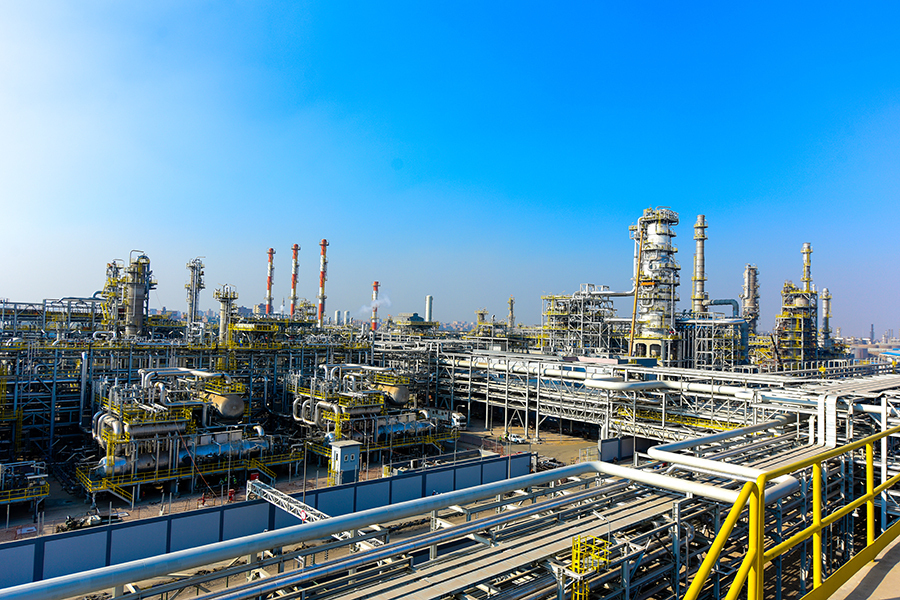
Egypt’s first onshore regasification plant will be operational by 2027

The country’s very own USD 200 mn onshore regasification unit will begin operating in August 2027, a government source told EnterpriseAM. The unit will be set up at the idle Idku liquefaction facility in partnership with Shell and Petronas.

(Tap or click the headline above to read this story with all of the links to our background as well as external sources.)

BACKGROUND- We first heard about the project in May — at the time it was said that the plant will have an initial capacity of around 750k cubic meters per day, which will increase to 1 mn cubic meters per day at a later stage.

Why do we need one of our own? The plant will help cut down on the cost of importing energy and will reduce the country’s reliance on leased regasification units. Egypt will have four regasification vessels leased by the end of 2026, with a combined capacity of 3 bn cubic feet per day, to help meet rising energy demand — the cost of leasing a regasification unit exceeds USD 200 mn a year, making it more feasible to set up one of our own.

Who owns what: Shell and Petronas together control about 71% of Idku and hold operating rights under a 25-year contract expiring in 2029. The government — represented by EGPC and EGAS — holds 24%, while France’s Engie owns the remaining 5%.

The state plans to take over sooner than expected: Shell and Petronas will receive utilization fees for two years after the plant is up and running in exchange for their stakes in the facility, after which full operating rights for both the Idku plant and the new regas unit will revert to the Egyptian state, the source added.

A change in Idku’s function: The plant had been used to liquefy gas for exports since it came online back in 2005, but operations halted due to a shortage of feed gas.

Still a liquefaction plant, for now: Shell and Petronas recently exported an LNG cargo from the Idku liquefaction plant and have a second shipment slated for next month, a government source told us. The Madbouly government believes the move to resume LNG exports will encourage international firms to increase their investment in the sector.

SOUND SMART- Regasification warms imported LNG from its super-cooled liquid form into a gaseous state, which can then be fed directly into the grid for domestic use. Liquefaction does the opposite, cooling natural gas to shrink it into liquid form (LNG) for storage and export.

3

Tax

Egypt to introduce new tax incentives targeting e-commerce platforms

A little nudge to encourage e-commerce players to join the tax system: The Finance Ministry is planning to introduce new incentives to encourage local and foreign e-commerce platforms operating in the country to join the tax system, government sources told EnterpriseAM. The move comes as part of a major push by the ministry to tighten its grip over the e-commerce sector.

As things stand: VAT revenue collected from e-commerce activities came in at EGP 21 bn last fiscal year, marking a 101% increase from the previous FY.

REMEMBER- The Finance Ministry introduced regulatory amendments to the VAT Law in 2023, subjecting non-resident service providers to a value added tax of 14%. The amendments apply VAT on transactions made on “electronic distribution platforms” which includes websites, internet portals, e-stores or other internet marketplaces connecting suppliers with clients.

The move proved fruitful: Taxing these platforms generated some EGP 13.7 bn in e-commerce tax revenue over the past two fiscal years — a significant increase from the EGP 85 mn recorded the year prior to their taxation, according to one of the sources.

So did the move to tax content creators: There is a growing trend among content creators to join the tax system, one of the sources said. These content creators can join the simplified tax system, which is part of the first package of tax relief measures. The Finance Ministry plans to expand these incentives to further encourage creators to join the formal economy, the source said.

The blogger tax is fairly new, first introduced in 2021 — all YouTubers and content creators must pay income tax, while those who earn over EGP 500k a year via local platforms must also charge VAT. In the fiscal year 2023-2024, the state collected EGP 2.1 bn in taxes from content creators.

ICYMI- The Finance Ministry kick-started earlier this month community dialogue sessions on the second package of tax facilities set to launch in 4Q 2025. Meetings were held with major accounting and tax consultancy firms to identify problems and challenges facing large local and foreign companies in preparation to address them in the new package.

The Madbouly government plans to raise its tax revenue to reach 15% of GDP by the fiscal year 2028-2029, according to a government document seen by EnterpriseAM.

This publication is proudly sponsored by

4

Automotive

Car prices fall further in Egypt as dealers race to clear inventory

Egypt’s car market sees further price cuts: Car prices are seeing reductions of 10-20% on top of last month’s dip in prices as auto dealers look to reignite demand.

(Tap or click the headline above to read this story with all of the links to our background as well as external sources.)

REMEMBER- Car prices had fallen by 25-30% last month, as the market began correcting after years of overpricing. That round of cuts came as local assembly picked up and distributors looked to clear out aging stock. At the time, sources warned that further price cuts could continue if inventory remained unsold.

2026 models are now going for less than 2025 models: Several distributors are offering 2026 models at lower price points than the 2025 stock in an effort to spur demand — a move some market players told us could backfire. Many consumers are now delaying purchases in anticipation of further markdowns, a dynamic that is fueling continued price instability.

Prices could fall even more: Auto marketplace Karcel COO Hany El Kholy expects the trend to persist until at least June 2026, saying the market will remain in flux until a pricing structure tied to real production costs is established. Meanwhile, Federation of Chambers of Commerce’s auto division member Montasser Zaytoon told us reductions will likely persist through the end of the year as dealers work to offload surplus inventory.

Part of the reason is that recent local auto localization news and competitive pricing are pushing companies and distributors to lower prices, Egyptian Auto Feeders Association’s Khaled Saad told us. El Kholy said that customers who recently bought cars at higher prices are already lodging complaints, adding that dealers should have diversified their promotional offerings to include maintenance packages or service offerings instead of resorting to price reductions.

The result? A paralyzed market: Saad and Zaytoon both agreed that heavy reductions have stalled the market, with buyers adopting a wait-and-see approach. The arrival of large volumes of stock amid fears of renewed FX volatility has worsened the problem, with 2026 models now more widely available — and cheaper — than some 2025 models.

USED CARS STRUGGLE TO KEEP UP-

Lack of price logic hits used cars: Used car prices have collapsed by as much as 50%, El Kholy told us. A used Range Rover that sold for EGP 1.6 mn just months ago is now fetching closer to EGP 1 mn. The problem? There’s no pricing benchmark — just what sellers are willing to accept and what buyers are willing to pay. Saad added that the used car market, which saw a run-up in prices during the FX crunch, is now facing a correction.

To make matters worse: Many used car owners are holding onto their vehicles to avoid selling at a loss, further freezing activity.

DON’T COUNT ON RATE CUTS TO BOOST SALES-

Auto loans aren't tempting buyers just yet: While the CBE is expected to continue cutting interest rates, El Kholy and Zaytoon say this won’t be enough to revive demand for auto financing — not until car prices stabilize. “Auto loans used to account for 70% of market sales,” El Kholy says, “but with these steep price cuts, buyers would rather wait than finance at a slightly lower rate.”

Automakers are trying to sweeten the pot, with some throwing in extended warranties of up to seven years or 250k kms, free maintenance packages, more flexible payment plans, and better after-sales service — but it hasn’t been enough to increase demand.

NEW COMPONENT PLANT IN THE WORKS-

A US-Turkish auto component plant? American auto seating company Adient and Turkish auto components firm Diniz Holding will set up an auto component production complex in Ismailia, according to a statement.

The details: The joint venture — Diniz Adient — will start with a first phase spanning 3k sqm to produce car seats and seating mechanisms, creating some 800 jobs. The second phase will include a USD10 mn, 15k sqm factory, which will create 3k additional jobs.

Tags:

5

Trade

Egypt’s trade deficit hikes up 20% y-o-y in 2024 to USD 50 bn

Egypt’s trade deficit rose 20.2% y-o-y in 2024 to record USD 50 bn, according to state statistics agency Capmas data (pdf). Exports rose 6.5% y-o-y to USD 45.3 bn, while imports climbed up 13.2% y-o-y to USD 95.3 bn.

It's shaky everywhere, even on a global scale. Trade policy uncertainty “has escalated to unprecedented levels,” driven by industrial policy, rising competition for raw materials and concerns over trade imbalances, according to UNCTAD’s latest Global Trade Update (pdf). To build resilience to the trend of growing uncertainty, export markets need to diversify and actively participate in international agreements, the report warned.

A closer look: Non-oil exports rose 14.4% y-o-y to USD 39.3 bn in 2024 — making up the brunt of the country’s total exports. Non-oil imports increased almost 9.2% to USD 79.2 bn during the same year. On the flip side, oil and gas exports amounted to USD 5.5 bn in 2024 — decreasing nearly 29% y-o-y — while oil and gas imports surged nearly 38.3% y-o-y to USD 16.1 bn.

Manufactured goods stood out as our top export product — with fully manufactured goods amounting to 54.1% of all non-petroleum goods exported. Of this, gold and gold-plated platinum came in first at USD 3.2 bn, followed by ready-made clothing and accessories at USD 2.8 bn, then plastics and iron products tied in third place both valued at USD 2.3 bn.

A number of key imported goods decreased in total value. Corn imports fell 8.5% y-o-y last year to record USD 2.3 bn, imports of wood and wooden products fell 2.4% y-o-y to USD 1.2 bn, and crude oil imports plummeted by nearly half to USD 900 mn. Intermediate goods led the way in terms of imports, making up 35.8%, followed by fuel at 17.3%, and non-durable consumer goods at 16%.

KSA stood out as a key player in both departments — receiving nearly 7.7% of our total exports (USD 3.5 bn) and accounting for 8.3% of all imports (USD 7.9 bn). Looking East, China was our top import source, responsible for some 16.5% of Egypt's total imports — recording a total of USD 15.7 bn. Turkey held a near 7.6% share of total exports — recording a total of USD 3.4 bn. The US also deserves an honourable mention — delivering 8% of total imports.

Alexandria Port stood out as our top operating port, accounting for some 31.1% of Egypt’s total exports and 22.1% of our total imports last year. This was followed by Cairo’s airports — which sent out 14.8% of exports and received 20.8% of total imports. Ain Sokna Port followed in the way of imports, hauling in 12.3%, while the Tenth of Ramadan Dry Port came in third in terms of exports, having sent out 10.4% of exports last year.

Tags:
6

Macro picture

Global economy cools with diverging regional outlooks

The world economy is losing momentum heading into the final months of 2025, with major regions diverging in performance, according to Julius Bar’s Market Outlook Year-End 2025 report.

(Tap or click the headline above to read this story with all of the links to our background as well as external sources.)

The US is slowing under the weight of consumer fatigue, softer job creation, tariffs, and persistent policy uncertainty. Household consumption — which typically drives some 70% of US GDP — has been noticeably weaker this year, though easing inflation has given the Federal Reserve scope to resume rate cuts. That monetary shift is expected to erode the USD’s yield advantage and re-establish its long-term weakening trend.

China is also contending with weak domestic demand, along with structural vulnerabilities, leaving the economy heavily dependent on exports. That reliance is not only fueling global deflationary pressures but also keeping policymakers on alert for the need to roll out more stimulus measures.

But not all countries are in the same boat, including many nations in Europe, as the region is benefiting from lower inflation, lower interest rates, and an incoming wave of fiscal stimulus, putting it in what the report describes as a rare “sweet spot” for growth, inflation, and policy support.

Policy matters more than ever. With the US no longer acting as a reliable growth engine, investors are being urged to broaden their exposure to other regions. The report highlights Europe, Japan, China, and India as offering more compelling valuations and stronger policy backdrops. India, in particular, is facing headwinds from US tariffs, but retains a positive long-term equity story thanks to double-digit earnings growth, tax cuts, and monetary easing. Japan, for its part, is benefiting from corporate reforms, robust shareholder returns, and the gradual normalization of monetary policy.

On the commodities side, gold is forecast to reach new highs — potentially above USD 3.5k an ounce — as safe-haven demand rises on the back of geopolitical uncertainty, central bank buying, and a weaker USD. Oil, in contrast, is oversupplied, weighed down by both record US production and weaker Chinese consumption, keeping prices under pressure.

investors should view volatility or weak macroeconomic data as times to buy, rather than exit signals. In fixed income, they see a favorable backdrop as the Fed resumes rate cuts and credit markets stabilize. Corporate bonds — particularly in the five-to-seven-year maturity range — stand out, with investors able to benefit from both steady coupon income and potential capital gains by rolling down the yield curve. Low default rates, strong corporate fundamentals, and robust demand are reinforcing the case for investment-grade and BB-rated corporate debt, while emerging market corporates in USD or EUR offer additional diversification without exposing investors to emerging markets currency risk.

Momentum in global stock markets is still strong, though leadership is shifting away from the US toward more attractively valued regions. European industrials and financials, German mid-caps, and select Japanese and Indian companies are worth taking note of. In Japan, reforms and buybacks are boosting shareholder value, while India’s long-term growth story remains intact despite near-term tariff headwinds. China also remains constructive, with mainland-listed shares expected to recover relative to Hong-Kong-listed shares as domestic liquidity improves. Alternative assets such as private equity and hedge funds are also expected to play a larger role, providing diversification and access to high-growth themes in areas like AI, digital infrastructure, and the energy transition.

Beyond equities, alternative assets are expected to play a larger role in portfolio construction. Private equity offers exposure to innovative firms still in their high-growth phase, while hedge funds — particularly those focused on relative value, credit, and event-driven strategies — provide diversification and resilience in volatile conditions. Sectors tied to transformative growth themes such as AI, digital infrastructure, healthcare, and the energy transition are highlighted as particularly attractive avenues for long-term investors.

But the outlook is tempered by several “wild cards.” Policy missteps, geopolitical escalations, systemic issues in shadow banking, potential credit crunches, and even infrastructure disruptions could all derail the fragile balance. Still, the report stresses that portfolios built around geographic diversification, corporate credit, safe-haven assets like gold, and selective exposure to alternatives are best placed to navigate year-end volatility and turn uncertainty into openings.

7

Moves

e-finance appoints Ahmed Sobhy as Deputy Managing Director for Investment and Financial Affairs:

E-finance has appointed Ahmed Sobhy (LinkedIn) as its new deputy managing director for investment and finance, the state-owned fintech giant said in a statement(pdf). Sobhy previously served as the chief investment officer at Banque Misr and led its fintech investment drive. Sobhy also held key positions at Morgan Stanley and Ezdehar Fund Management.

(Tap or click the headline above to read this story with all of the links to our background as well as external sources.)

What they said: “We are thrilled to welcome Ahmed Sobhy to our leadership team. His deep expertise in investment and finance, coupled with his proven track record of driving growth and creating value, will be invaluable as we continue to expand our role in Egypt’s digital economy,” said Chairman Ibrahim Sarhan.

8

Also on our Radar

CIRA gets green light to extend MTO for CAED

M&A WATCH -

#1- The Financial Regulatory Authority has approved CIRA Education’s request to extend the validity of its MTO for Cairo Educational Services by 10 business days, according to an EGX disclosure (pdf). The MTO period is now valid until 13 October, instead of 28 September.

(Tap or click the headline above to read this story with all of the links to our background as well as external sources.)

REMEMBER- Last month the authority cleared CIRA’s bid to raise its stake in Cairo Educational Services to 90% through a mandatory tender offer covering 20.6% of the company at EGP 32.7 per share, valuing the transaction at EGP 80.8 mn.


#2- The Crédit Agricole Egypt-owned Egyptian Housing Finance Company has acquired 100% of the consumer finance company Just Finance, according to a disclosure (pdf) to the EGX. The company did not disclose the value of the acquisition but stated that it is less than 0.75% of Crédit Agricole's net worth as per last June’s financials.

TECHNOLOGY-

Homegrown AI and robotics company Marses and UAE-based Mulk Holdings’ Mulk International launched a new robotics joint venture — dubbed Mulk Marses Robotics — according to a statement. The JV aims to help the global construction sector bypass labor-intensive methods and instead use robotic manufacturing to improve operational and cost efficiency.

The companies plan to launch “fully-automated modular construction factories” in the UAE, the US, and Europe to produce wall panels, pods, and modular housing systems. The two are also set to establish the Construction Automation Training Academy, looking to secure a talent pipeline.

DIPLOMACY-

Egypt, Rwanda sign MoUs during Kagame’s visit: Egypt and Rwanda inked several MoUs during Rwandan President Paul Kagame time in Cairo, according to an Ittihadiya statement. The MoUs — which came following talks with President Abdel Fattah El Sisi — span water resources management, reciprocal allocation of land for logistics and trade, housing, and investment promotion and protection.

Also on the agenda: The two leaders also discussed boosting joint investment in pharma, medical supplies, food industries, and construction.

9

PLANET FINANCE

OECD revises up global growth outlook for 2025

OECD’s global growth forecast upped to 3.2% in 2025: Global GDP is set to grow at a faster rate than previously expected, with the Organisation for Economic Co-operation and Development revising up its forecast to 3.2% from its previous 2.9% prediction, according to its Interim Economic Outlook report (pdf). Its forecast for 2026 remains at 2.9%.

The rationale: Global GDP outperformed expectations during 1H 2025, with the growth and investment in the AI sector coupled with front-loading production in anticipation of levies offsetting incoming tariff-induced headwinds. The prediction still marks a slowdown from 3.3% growth in 2024, as tariffs and a climate of uncertainty weigh on trade and investment.

Markets aren’t clear of tariffs yet, with the real effect of the levies yet to be felt and “significant risks” remaining. The hard data showing signs of tariffs effects is starting to be felt through job figures and prices after firms absorbed the initial brunt through their margins.

Sovereign yield curves have steepened in the US and France, while refinancing risks are mounting in emerging markets with heavy maturities due before 2026. Crypto assets are also surging, which OECD says increases financial stability risks. OECD data shows crypto’s market cap at USD 3.9 tn in September, up nearly 5x since 2023.

Labor markets are softening: Unemployment is edging up in the US, Canada, Germany, and France, as job vacancy ratios are falling. Nominal wage growth has slowed, though it still exceeds inflation-consistent levels in the US, Eurozone, and UK.

Disinflation has lost steam, as food inflation has once again driven up goods prices and services inflation remains sticky, offsetting easing housing costs. Headline G20 inflation is projected to fall to 2.9% in 2026 from 3.4% in 2025, though US inflation will stay above target, as tariffs push import costs into consumer prices.

On the interest rate front, central banks can cut baseline rates further following the US Federal Reserve’s cut earlier this month if inflation expectations remain under control and look set to moderate, the report said. However, the OECD urged vigilance and awareness of risks regarding inflation, adding that fiscal discipline and agility was needed to control debt levels and react to any market shocks.

MARKETS THIS MORNING-

Asian markets are a sea of red this morning, after Wall Street also suffered a losing session yesterday on remarks from Fed Chair Jerome Powell that equity values are stretched. Hong Kong’s Hang Seng and China’s CSI 300 were flat at the open. Over on Wall Street, futures point to a muted open.

EGX30

35,329

+0.3% (YTD: +18.8%)

USD (CBE)

Buy 48.14

Sell 48.28

USD (CIB)

Buy 48.15

Sell 48.25

Interest rates (CBE)

22.00% deposit

23.00% lending

Tadawul

10,876

+0.6% (YTD: -9.6%)

ADX

10,109

-0.3% (YTD: +7.3%)

DFM

5,959

-1.1% (YTD: +15.5%)

S&P 500

6,657

-0.6% (YTD: +13.2%)

FTSE 100

9,223

0.0% (YTD: +12.9%)

Euro Stoxx 50

5,472

+0.6% (YTD: +11.8%)

Brent crude

USD 67.94

+0.5%

Natural gas (Nymex)

USD 2.87

+0.5%

Gold

USD 3,795

-0.5%

BTC

USD 112,097

-0.5% (YTD: +19.8%)

S&P Egypt Sovereign Bond Index

924.70

+0.2% (YTD: +18.9%)

S&P MENA Bond & Sukuk

150.57

+0.1% (YTD: +7.6%)

VIX (Volatility Index)

16.64

+3.4% (YTD: -4.1%)

THE CLOSING BELL-

The EGX30 rose 0.3% at yesterday’s close on turnover of EGP 3.7 bn (15.1% below the 90-day average). Regional investors were the sole net sellers. The index is up 18.8% YTD.

In the green: E-finance (+3.9%), Eastern Company (+3.4%), and Juhayna (+3.4%).

In the red: Misr Cement (-2.5%), Ibnsina Pharma (-2.3%), and Orascom Development (-2.1%).

CORPORATE ACTIONS-

Edita’s general assembly greenlit canceling the snackmakers' London-listed global depositary receipts, according to a disclosure (pdf).

10

HARDHAT

Egypt’s property sector is still delivering eye-catching sales figures — but the surface strength masks deeper growing pains.

The country’s top ten developers reported a 47% y-o-y jump in contracted sales in 1H 2025 to EGP 651 bn, according to The Board Consulting’s (TBC) 1H real estate report. But add in Talaat Moustafa Group’s landmark SouthMed project sales last year — which were not included in 1H sales comparisons from the company this year — it’s a different story. Factoring in SouthMed’s EGP 180 bn worth of sales recorded in TBC’s report for 1H 2024, the top ten developers recorded sales reached EGP 621 bn — meaning that 1H 2025 sales are only up 3%. Despite the marginal gains under this count, the year still stands as one of the biggest years for the market from a sales perspective, TBC Managing Director and Co-Founder Ahmed Zaki told EnterpriseAM.

(Tap or click the headline above to read this story with all of the links to our background as well as external sources.)

The top ten real estate players sold almost 40k units in 1H 2025, up 3% y-o-y, with the average ticket price rising to about EGP 17 mn — 7% above last year's prices. The sales value and unit count figures highlight a widening gap in market performance — where large developers are capturing growth despite broader affordability and demand pressure, Zaki said. “We usually say that big fish eat small fish. We now see that big fish eat medium-sized fish.”

TMG maintained its lead as Egypt’s top developer by sales in 1H 2025, booking EGP 211 bn in contracted sales. Palm Hills Development came second with EGP 143 bn, while Emaar Misr surged into third place with EGP 78 bn. Mountain View (EGP 65.7 bn) and La Vista Developments (EGP 32 bn) rounded out the top five. Brand equity has become the decisive factor for customers, pushing buyers toward developers with established reputations for delivery and stability, Zaki said.

Emaar delivered the biggest leap, more than tripling its contracted sales with a 234.8% y-o-y increase. Palm Hills followed in second, more than doubling its sales for a 118.3% y-o-y jump. TMG, still firmly in the lead by value, saw its sales expand — when excluding SouthMed sales — a strong 58% y-o-y increase. Mountain View booked solid gains of 74.1% y-o-y, while La Vista saw sales rise 37.9% y-o-y

While the giants are reporting blockbuster results, mid- and smaller-sized developers are facing an uphill battle. Sales are underperforming as affordability issues, investor pullback, and overpriced units weigh heavily on demand, were told. The resale market remains clogged by limited liquidity and rigid cash requirements, leaving smaller players especially exposed to the slowdown.

The sector is entering a more disciplined phase, with delivery, facility management, and customer service now the main benchmarks of developer success, Zaki told EnterpriseAM. After several years of outsized sales growth — AB-class sales rose from EGP 200 bn in 2020 to EGP 1.8 tn in 2024 — the focus is turning to execution and client centricity. Sales growth of 50-100% y-o-y is no longer feasible, and 2025 is likely to close slightly below last year as blockbuster North Coast sales from 2024 prove difficult to replicate, Zaki added.

Looking ahead, North Coast and Red Sea projects are emerging as the next frontlines of Egypt’s real estate race. Modon is positioning itself as a city-scale developer with a bold sales target of EGP 300 bn for 2025, backed by its Ras El Hekma project Wadi Yemm. The report notes that Modon spans “an area 1.6 times the size of Barcelona, aiming to transform the North Coast into a year-round living destination.” Meanwhile, Emaar’s Marassi Red is expected to elevate the Red Sea market, raising the bar for rivals in Somabay and Makadi bay, and attracting foreign and expatriate buyers. The report highlights a fresh niche too, with “senior home living solutions… expected to be one of the winning cards in the Red Sea with the presence of solutions like Qwell that are created to address this underserved market.”

Gulf sovereign wealth also continues to pour into Egypt’s property sector. The Board Consulting notes that Qatar is negotiating a USD 4 bn investment in Alam El Rum at Marsa Matrouh, Kuwait is lining up USD 4 bn in potential direct investments, and Saudi Arabia’s PIF is directing USD 5 bn to Egypt as part of a broader USD 10.3 bn package. The consultancy says these flows are reshaping prime areas such as Ras El Hekma, with “significant investments from Gulf nations poised to boost both the wider economy and the real estate sector.”

At the same time, Egyptians are increasingly turning outward. Surging local prices — now “approaching UAE levels,” according to the report — are pushing buyers to diversify portfolios in Dubai, Abu Dhabi, Greece, and Oman. Developers in the UAE are capitalizing by holding exhibitions in Cairo and offering extended payment plans, making their products more accessible to Egyptian investors. Analysts quoted in the report suggest Egypt could benefit from adopting aspects of the UAE model — a mix of incentives, strategic marketing, and targeted policies that has positioned the Emirates as a global hub.

Recent amendments to Egypt’s Old Rent Law are set to release a wave of supply back into the market. President Abdel Fattah El Sisi signed the amendments into law in August, giving tenants a seven-year transition to vacate residential units and five years for non-residential, after which all old rent contracts will expire. Cabinet-approved committees will now inventory and classify properties by location, condition, and services, with more than 3 mn units falling under the scope of the law. The Board Consulting warns this could trigger “a wave of vacancies… as original owners move to either sell or re-lease their units at market value,” while also creating a parallel challenge of relocating some 2 mn families. Zaki said while some of the houses will be absorbed by government programs, a portion will spur fresh demand for premium housing, with 300k-400k wealthier households expected to seek new homes. He expects developers to repurpose some of the freed stock — particularly in Downtown and other historic neighborhoods — into hotel apartments and serviced living units.

The effect of the New Urban Communities Authority’s new rules and fees for North Coast projects is still yet to be seen. The authority introduced stiffer penalties for delivery delays and fees of up to EGP 1k per sqm for local developers and USD 20 per sqm for foreign developers. The report notes that while the measures aim to “strengthen market regulation,” they have already sparked “panic of immediate liquidity stress for developers with limited cashflow.” Zaki described the new rules as both a shock and a threat, warning that while some players like Mountain View have already paid dues, others will be unable to meet the obligations and could face a liquidity crunch.

Cashflow is now the single biggest risk facing developers. Zaki said many firms forecast sales of EGP 10-20 bn this year, but are falling far short, leaving gaps in funding for previously sold projects. This could drive consolidation and force smaller players out of the market. On the flip side, possibilities remain in the Red Sea, where rising expat demand could create a parallel market to Spain, which sold 83k units to foreign buyers in 2024.


Your top infrastructure stories for the week:

  • Sawiris-backed Orascom Construction and OCI Global are exploring a potential merger that would combine the Cairo-born contractor and the Dutch-listed fertilizer player to create a single global infrastructure and investment platform based out of and listed in Abu Dhabi.
  • Egypt awarded the construction and operation of five electrical transformer stations to private sector companies, including Kharafi National, XD-EGEMAC, and Al Gammal Contracting. The projects will collectively require EGP 18 bn of investments.
  • An Egyptian-Saudi consortium is looking into setting up a USD 1 bn Downtown Cairo redevelopment project. The consortium includes Saudi’s Sumou Holding, its subsidiary Adeer International, and local players Midar and Hassan Allam.

SEPTEMBER

24-26 September (Wednesday-Friday): The launch of the 2025 Egyptian Entrepreneurial Sector Diagnostic Report at El Gouna.

24-27 September (Wednesday-Saturday): Cityscape Egypt 2025, Egypt International Exhibition Center

29-30 September-6 October (Monday-Tuesday): Techne Summit Cairo, Sultan Hussein Kamel Palace, Cairo

29 September-6 October (Monday-Monday): Egypt Innovation Week

30 September (Tuesday): The Egypt-South Korea Economic Cooperation and Partnership Forum.

The Egyptian-Moroccan Business Council to send a delegation of 23 local companies to Rabat.

The Engineering Export Council of Egypt will ship a commercial delegation to Russia to ramp up exports to European markets.

Egypt Education Platform (EEP) to launch two new schools in Alexandria and Somabay.

Egypt Otsuka’s nutritional products factory in Tenth of Ramadan to begin operations, with exports to Gulf countries expected by January 2026.

OCTOBER

1 October (Wednesday): IMF mission expected to visit Egypt for talks on combined fifth and sixth reviews of the EFF arrangement.

1 October (Wednesday): Applications for alternative housing for old rent tenants will open through an online platform or at post offices nationwide.

2 October (Thursday): Monetary Policy Committee’s sixth meeting.

4-6 October (Saturday-Monday):Techne Summit Alexandria, Alexandria Bibliotheca, Alexandria

7 October (Tuesday): The 2025 EnterpriseAM Egypt Forum.

7-8 October (Tuesday-Wednesday): HACE-Hotel Expo, Egypt International Exhibitions Center.

7-9 October (Tuesday-Thursday): EgyMedica Exhibition, Cairo International Convention Center.

12-16 October (Sunday-Thursday): Cairo Water Week, Cairo.

19-20 October (Sunday-Monday): Egypt to host the fifth edition of the Aswan Forum.

19-22 October (Sunday-Wednesday): Arab African Investment and International Cooperation Summit.

23-25 October (Thursday-Saturday): Stone Africa Expo, Cairo International Conference Center.

October: The third iteration of the Export Smart Exhibition and Conference.

Mid-October: Capmas to publish the findings of its 2023-2024 income and expenditure survey.

NOVEMBER

1 November (Saturday): The official opening of the Grand Egyptian Museum.

16-19 November (Sunday-Wednesday): Cairo ICT 2025, Egypt International Exhibition Center

20 November (Thursday): Monetary Policy Committee meeting.

23-25 November (Sunday-Tuesday): NEBU Expo 2025 gold and jewelry exhibition, Egypt International Exhibitions Center, New Cairo.

November: Egypt to join the EU’s Horizon Europe research and innovation program.

DECEMBER

1-4 December: Egypt Defence Expo (EDEX), Egypt International Exhibition Center.

4-7 December (Thursday-Sunday): Egy Stitch & Tex Expo 2025, Cairo International Conference Center.

25 December: (Thursday): Monetary Policy Committee meeting.

EVENTS WITH NO SET DATE

Mid-2025: EGX launches sustainability index.

3Q 2025: Nasr Automotive begins locally manufacturing passenger cars.

3Q 2025: Polaris Parks to finalize contracts for two new industrial zones in the new capital and Sadat City.

Mid-2025: The Administrative Capital for Urban Developments to roll out the second phase of offering industrial plots to investors

2H 2025: Potential visit by Chinese President Xi Jinping to Egypt

4Q 2025: The beginning of construction works on China’s State Grid two solar projects.

4Q 2025: GB Auto starts assembling one of China’s Great Wall Motor models in 4Q 2025.

4Q 2025-1Q 2026: Kasrawy Group to launch first Avatr EV models in Egypt.

2025: The InterAcademy Partnership assembly.

2025: Nile Basin States Summit, Cairo, Egypt.

2025: Release of the government’s Startup Charter document.

Before 2025-end: The government will launch two ro-ro shipping lines with Saudi Arabia and Turkey.

2026

Early 2026: Passenger operations on the New Administrative Capital–Nasr City monorail scheduled to begin.

1Q 2026: Trial operations for the Ain Sokhna–Sixth of October section of Egypt’s first high-speed rail line scheduled to begin.

1 January: European Union’s Carbon Border Adjustment Mechanism (CBAM) to fully come into effect.

10-12 February (Tuesday-Thursday): Gitex Global’s AI Everything Middle East & Africa Summit

15 March 2026: IMF to hold its seventh review of Egypt’s USD 8 bn EFF arrangement.

May 2026: End of extension for developers on 15% interest rates for land installment payments

15 September 2026: IMF to hold its eighth review of Egypt’s USD 8 bn EFF arrangement.

2H 2026: Operations at Deli Glass Co’s new USD 70 mn glassware factory kick off.

2027

20 January-7 February: Egypt to host the African Games.

April 2027: Tenth of Ramadan dry port and logistics hub to begin operations.

https://entlaq.com/events/2

EVENTS WITH NO SET DATE

2027: Egypt to host EBRD’s annual meetings for 2027.

End of 2027: Trial operations at the Dabaa nuclear power plant expected to take place.

September 2028: First unit of the Dabaa nuclear power plant begins operations.

Now Playing
Now Playing
00:00
00:00