UAE Edition
  MENA+ Edition
  Egypt Edition
  Saudi Edition
  AI + Innovation (MENA)
  Logistics (MENA)


 Share Issue




Good morning, everyone. This weekend’s theme was: whiplash. The Strait of Hormuz opened and closed more times than we could track, with Iran opening the Strait early Friday only to close it hours later, due to what it said was a US breach of the truce (namely its blockade of Iranian ports). Reports of shots fired at ships and tens of tankers sent back followed.
Plus: Trump’s Truth posts have been more frequent and more confusing than ever, with claims that the Strait will be open per an agreement with Iran, and later, more threats to bomb Iran’s power plants and bridges.
At least some crude made it out: A Pakistani-flagged Aframax tanker exited the Strait of Hormuz on Thursday — carrying around 440k barrels of Abu Dhabi’s Das Blend crude, after loading earlier last week at an Adnoc terminal. It was one of two Pakistani tankers that entered the strait last Sunday to lift crude and oil products.
It’s a mix of bad news (if you’re in the tourism business) and lackluster data (if you’re in capital markets) in today’s issue — but on the positive side, dealmaking is still taking place, with Lunate acquiring a stake in an Aussie credit manager. We have everything you need to know on those stories, and more, in this morning’s news well, below.
WEATHER- It’s getting warmer: Expect a high of 34°C and a low of 24°C in Dubai, while Abu Dhabi will see a high of 35°C and a low of 23°C.
It's official. MENA+ is live.
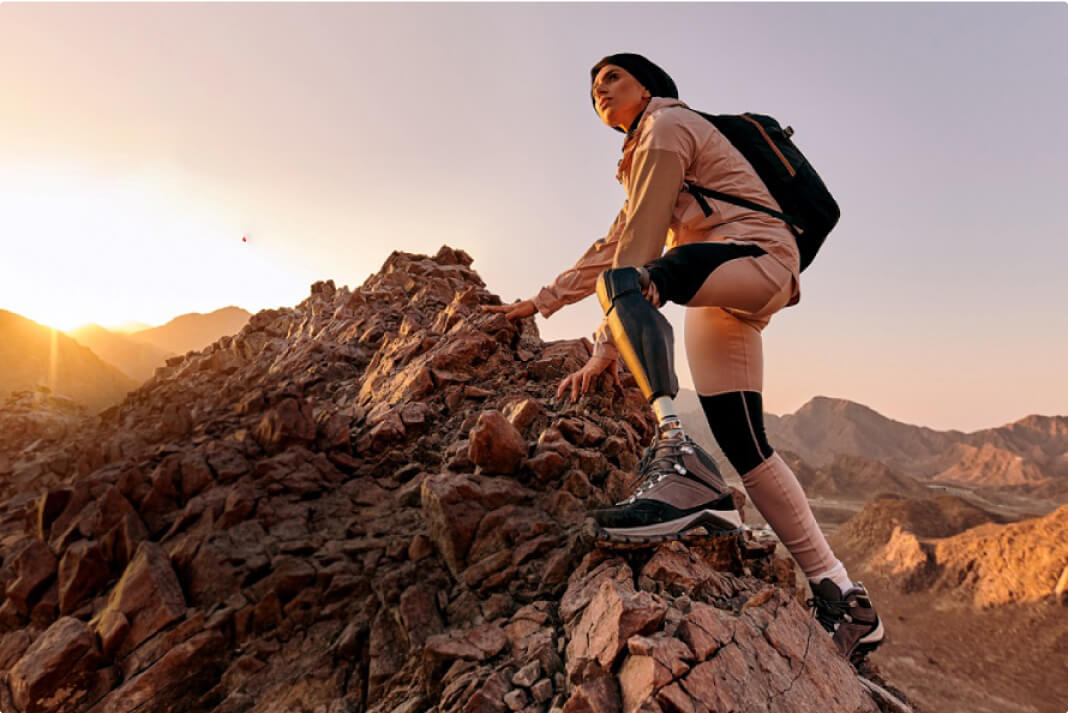
Our new regional flagship covers the flows of capital, people, and ideas across the Middle East — and beyond it. MENA+ covers AI and tech — and geopolitics, the war for talent, which BSD is on top (and who's gunning for them), the changing energy economy, new corridors to India and China, and much, much more.
What’s with the “+” in MENA+? We think one of the most powerful stories in the region is the *export* of ideas and capital not just to neighboring regions (Asia, the Stans) but to international financial centers. MENA countries are jockeying for position in the new global economy now taking shape, and we're going to shape that conversation.
Delivered to your inbox every Monday, Wednesday, and Friday before 12pm UAE.

Watch this space
Cracks in Dubai’s tourism sector are starting to show: Several hotels in Dubai are heading into refurbishment mode, with closures that could signal opportunistic upgrades or a quieter warning on demand, The National reports.
What’s happening? The St. Regis has taken parts of the property offline since mid-April for refurbishment while continuing operations. Radisson Blu Media City will fully close on 30 April for renovations, with catering services running through year-end and a relaunch under a new operator expected from 2027, Hotelier reports.
They’re joining a broader pipeline: Jumeirah Burj Al Arab has shut down for an 18-month restoration, while Park Hyatt Dubai is preparing to close in May before reopening later this year. Armani Hotel Dubai has also temporarily closed from 1 April for a full-scale refurbishment, with plans to reopen in 4Q 2026, according to a statement.
They’re not all refurbishing. Anantara World Islands Dubai Resort said it has ceased operations entirely, but stopped short of blaming it on the war. Its operator Minor Hotels said it was due to a “combination of external factors” in statements to the media.
In context: Tourism is among the hardest-hit sectors since the war started. Economy and Tourism Minister Abdulla Bin Touq Al Marri said earlier this month that a sector-specific support package is in the works, while Dubai has already started rolling out support measures for the sector as part of its AED 1 bn stimulus package, including deferrals of sales fees and AED tourism payments.
Hotel occupancy plunged to 16% as of 17 March, plummeting from peak-season averages of 90%. High-end restaurants and clubs are also seeing similar drops in demand, with some sending staff to sister outlets abroad. Some hotels have been slashing prices, cutting staff hours, and offering some incentives for guests to spend.
INVESTMENT WATCH — Abu Dhabi may put its China investments under one roof: Abu Dhabi is considering folding China-focused assets held across Mubadala and L’Imad Holding into a new jointly owned investment vehicle, Bloomberg reports, citing people familiar with the matter. The objective is to stop multiple Abu Dhabi entities chasing the same investment windows as the emirate looks to deepen exposure to the world’s second-largest economy, a source told the business news information service.
Why now: The emirate’s investment giants have all been building China positions. Mubadala has invested more than USD 20 bn across over 100 transactions since 2015, while L’Imad inherited additional exposure through ADQ-linked assets transferred earlier this year. Mubadala has also said it wants Asia to account for roughly 25% of its portfolio by decade-end.
What it signals: If approved, the vehicle would suggest Abu Dhabi wants a bigger China footprint, but fewer competing logos at the table. Pooling holdings and resources may also point to an aim for greater efficiency when it comes to the speed and execution of agreements.
The backdrop: UAE-China ties might be accelerating after Crown Prince Khaled bin Mohamed’s Beijing visit last week, with the two sides signing 24 agreements spanning trade and investment, which included potential joint funds, investment platforms, and third-country investment vehicles.
And consolidation has been the name of the game recently. The past few months have seen some of Abu Dhabi’s biggest names consolidating and merging their holdings. IHC recently formed Judan Financial, its financial services powerhouse with over AED 870 bn in AUM, while at the end of last year it folded three of its subsidiaries together. ADQ was also consolidated under L’imad Holding, the UAE’s newer sovereign investment platform, at the start of this year.
In other investment news, Emirati capital is still eyeing Morocco’s tourism boom: An Egyptian-Emirati consortium, which includes UAE-based Al Nowais Group, is planning to invest EUR 200 mn in the first phase of a large-scale tourism project in Essaouira, Morocco, Asharq Business reports, citing people familiar with the matter. The consortium also reportedly includes Egyptian hospitality group Sunrise and b’naire Samih Sawiris.
The details so far: The 2.5 mn sqm development is set to include 800 hotel rooms, retail and entertainment space, golf courses, and boutique hotel units, with capital to be deployed over five years. The first 270-room hotel is slated to be ready by the end of next year, with another 350-room hotel set to be built within four years.
Why Morocco? The Kingdom’s tourism momentum is doing much of the selling. Morocco welcomed a record 19.8 mn visitors in 2025, up 14% y-o-y, and is targeting more than 26 mn tourists before 2030. Even amid regional tensions last month, tourist arrivals rose 18%.
UAE-Morocco capital ties are already deepening: Emirati-backed ambitions have stretched into Western Sahara, including plans for a “Dubai of Africa” coastal hub. UAE firms were also in talks on USD 10 bn worth of wind projects there, after the two sides signed a USD 14 bn investment agreement last year covering water and energy infrastructure.
ECONOMY — A financial backstop from the US? UAE officials are reportedly in talks with the US over a financial backstop if the regional conflict persists, unnamed US officials told the Wall Street Journal. UAE Central Bank Governor Khaled Mohamed Balama floated the idea last week of launching a currency-swap line during a meeting with US Treasury Secretary Scott Bessent and Treasury and Federal Reserve officials. No formal requests have been made, the officials said.
But, why? According to the Wall Street Journal, UAE officials emphasized that the US-Iran war could jeopardize the UAE’s standing as a global financial hub and put its foreign reserves under pressure. As of mid-March, our foreign reserves stood at over USD 270 bn.
Data point
118.4k — that was the number of new rental contracts signed in Dubai in 1Q 2026, alongside 135.6k renewals, according to Dubai Land Department data picked up by Dubai Media Office. Cancelled contracts fell 25% over the period, pointing to a calmer leasing cycle after years of churn, and despite regional uncertainty.
Total rental contract value reached AED 32.2 bn, up 1%. The steadier rental picture mirrors Dubai real estate more broadly. As we recently reported, prices largely held firm in 1Q even as sales hit a record AED 251 bn, with analysts describing the market as showing “business continuity” and entering a more measured cooling phase despite regional volatility.
PSA
We now have a live food price tracking platform: The Economy and Tourism Ministry has launched the Essential Goods Prices Platform to give consumers live visibility on staple food prices and help guide purchasing decisions, state news agency Wam reports.
The platform covers 33 products in its first phase, split across basic and key consumer goods. Prices are updated daily and pulled electronically from 12 major retail outlets, showing both minimum and maximum prices to allow direct comparison across stores.
ICYMI- Abu Dhabi recently cracked down on price gouging after reports of unjustified price hikes as supply chains started to be disrupted by the war.
The big story abroad
The US seized an Iranian cargo ship for allegedly attempting to breach its naval blockade, which President Donald Trump previously said will remain in full force until a peace agreement is signed. Tehran pledged to strike back and said it will not take part in a second round of ceasefire talks, upending Washington’s plans to kick off a fresh round of negotiations before the ceasefire expires tomorrow.
Oil markets jittered at the development, with Brent crude futures jumping over 5% to USD 94.90 a barrel. And we expect the rally that pushed the S&P 500 to fresh highs last week to reverse course when markets open later today as hopes of easing tensions unravel. US futures were broadly in the red this morning.
Seemingly undaunted by the turmoil, Asian markets are up in early trading this morning, with Japan’s Nikkei rising by around 1% and South Korea’s Kospi gaining around 1.3%.
Economists are warning that the conflict’s aftermath will surely harm the US economy, triggering long-lasting inflation, the Financial Times reports. “What we see is that short-term inflation expectations have moved up here in the US,” IMF Managing Director Kristalina Georgieva told the FT.
And in the world of tech and sports, Chinese-made humanoid robots clinched a victory over their human competitors in a half-marathon race in Beijing yesterday. A synthetic marathoner made by Chinese smartphone brand Honor — a Huawei spinoff — managed to break the world record for the half-marathon, signalling vast improvements from last year’s trial which most of the robots failed to complete.
Get Enterprise daily
The roundup of news and trends that move your markets and shape corporate agendas delivered straight to your inbox.
***
You’re reading EnterpriseAM UAE, your essential daily roundup of business, economics, and must-read news about the UAE, delivered straight to your inbox. We’re out Monday through Friday by 7am UAE time.
EnterpriseAM UAE is available without charge thanks to the generous support of our friends at Mashreq and Hassan Allam Properties.
Were you forwarded this email? Tap or click here to get your own copy of EnterpriseAM UAE.
Want to send us a story idea, request coverage, ask for a correction, or otherwise get in touch? Reach out to us on [email protected] .
DID YOU KNOW that we also cover Egypt, Saudi Arabia, and the MENA logistics industry?
***
Circle your calendar
Check out our full calendar on the web for a comprehensive listing of upcoming news events, national holidays, and news triggers.