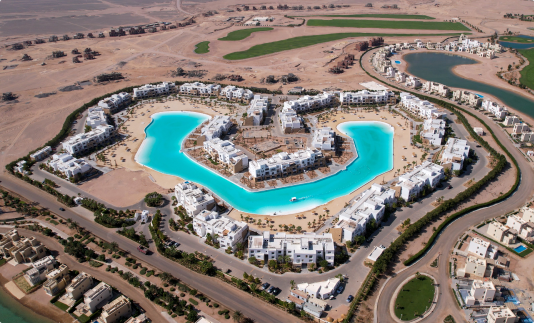
Dubai warehouse tenants are staying put and waiting out the war

1

WHAT WE’RE TRACKING TODAY

THIS MORNING: Mubadala says Man City saga won’t get in the way of UK investments + Adnoc L&S eyes a stake in Abu Dhabi offshore services firm

Good morning, wonderful people. For months, the UAE has watched the war from a slight distance. This week, that distance is starting to close.

The fallout from the attacks on Saudi Arabia is beginning to spill over to the UAE after Riyadh’s King Khalid International Airport said it would stay closed until 17 October. International airlines such as Air France are delaying Dubai flights to the end of October, alongside delays to flights to Riyadh, and some events looking quieter than usual. The Airport Show at DWTC, which wraps up today, has been noticeably quiet this week, with fewer agreements coming out of the floor than is typical, a source tells us.

Reuters has also pushed back its Reuters NEXT Gulf conference, which was set for 21 October, to October 2027. Officially, the delay is about aligning with other regional events and building out a fuller program. The conference will still take place in Abu Dhabi, with the Department of Economic Development acting as host city partner.

Abu Dhabi is closing ranks with Riyadh: Foreign Minister Sheikh Abdullah bin Zayed called his Saudi counterpart to pledge the UAE’s full solidarity with the Kingdom, according to state news agency Wam. It’s the latest sign of warming ties between the two capitals.

None of this is a crisis here at home. Markets are steady, business is getting done, and banks are returning to debt markets (Read: today’s Debt Watch). But the uncomfortable closeness of what’s happening in the Kingdom is starting to be felt.

That’s the backdrop for today’s big story: how the war is reshaping where companies store their goods, and why some are looking to Fujairah to get around Hormuz.

Emirates Islamic’s sukuk is 2.4x covered on day one

Emirates Islamic opened books yesterday on a USD 500 mn, five-year sukuk and has already drawn more than USD 1.2 bn in orders, excluding lead managers, Zawya reports, citing IFR data. Initial price guidance is 115 bps over US Treasuries. The Fitch-rated A+ lender is issuing fixed-rate, senior unsecured notes under its USD 4 bn certificate issuance program.

REMEMBER- That matches the full order book of its last offering, with books still open. Emirates Islamic raised USD 500 mn through a sustainability-linked sukuk in September 2025, priced at 4.54%, or 95 bps over Treasuries, on USD 1.2 bn in orders. This time, initial guidance is 20 bps wider than where the 2025 offering priced, though guidance usually tightens as books build.

The backdrop is tougher: Gulf bond and sukuk issuance fell 17.5% in 3Q as higher borrowing costs bit.

ADVISORS- Our friends at Mashreq are joined by Abu Dhabi Islamic Bank, Arab Bank, Citi, Emirates NBD Capital, ICBC, KFH Capital, and Standard Chartered as joint lead managers and bookrunners.

Man City saga won’t hamper UAE-UK investments

Mubadala sees UAE-UK investments as separate from Man City saga: It’s good news for UAE-UK investment ties as a Mubadala Investment Company exec says the recent ruling against Manchester City won’t hamper investments bound for the UK, Bloomberg reports, citing Deputy Group CEO Waleed Al Muhairi. The football club, which is owned by one of Abu Dhabi’s most senior royals, has filed an appeal against the verdict.

IN CONTEXT- Some feared the case would put pressure on UAE-UK ties that have been improving following a strained period in the wake of the Telegraph saga. The Emirates has been vocal about its desire for a specific UAE-UK trade agreement that’s separate from the GCC’s. The two countries also agreed in April on a new cooperation framework spanning defense, trade and investment, AI, and energy transition.

What they said: Al Muhairi described the bilateral investment relationship as “its own separate process,” adding that the sovereign wealth fund “[has] been and continue[s] to deploy” in the UK. Mubadala has already said it’s sticking to its aggressive deployment approach across other markets and looking to replicate last year’s AED 39 bn worth of investments this year, with a particular focus on upping its Asia exposure.

Mubadala already has significant investments to protect in the UK, having bought into the UK-Ireland power link this summer, backed the take-private of the UK’s Intertek, and committed fresh funds to UK telco CityFibre, to name a few.

Adnoc L&S eyes another takeover

Adnoc L&S is in talks to buy a stake in Abu Dhabi offshore services firm HEA Energy at a valuation of up to USD 3 bn, The Wall Street Journal reports, citing people it says are familiar with the matter. The stake could be a minority or a controlling one, and the talks could still fall through, the sources said.

HEA would add a different kind of asset. Founded in 2022, it operates self-elevating barges for offshore wind and oil and gas maintenance. Its revenue more than doubled this year to about USD 100 mn, according to the Journal.

It would extend a buying pattern. Adnoc L&S’ acquisition of Zakher Marine in 2022 added 24 jack-up barges and 38 offshore support vessels on undisclosed terms. In January 2025, it completed a USD 1.04 bn acquisition of an 80% stake in Navig8, adding 32 tankers and expanding its international footprint.

The talks follow a blowout half for Adnoc L&S’ shipping business. The company’s net income rose 179% to USD 1.2 bn in 1H on higher charter rates and chartering activity as Adnoc moved crude through Hormuz.

A stake in HEA could take Adnoc L&S into the North Sea and the US, adding to a business that supports offshore drilling and operates more than 100 ships transporting crude, LNG, and refined products. The company’s order commitments this year reached roughly USD 2.7 bn by late August for vessel acquisitions and newbuild orders, including VLCCs, VLGCs, and LNG carriers.

Dubai wants to put buses underground too

RTA eyes underground transport network for Dubai: Think Etihad Rail, the Dubai Loop, and the metro expansion were enough? Think again. Dubai could soon be rolling out an integrated underground transport network, The National reports, citing comments by director general of Dubai’s Roads and Transport Authority (RTA) Mattar Al Tayer. The project is still at the conception stage, with authorities examining what a network could look like in practice, and no investment ticket or timeline has been specified yet.

Going above and below: The new system is an effort to tackle what the RTA sees as unnecessary congestion on Dubai’s roads and create a more integrated public transport system that will take more of the movement off the roads and out of sight, Al Tayer says. Currently, 11 mn journeys are made on Dubai’s roads per day, he adds.

Things are moving underground already: The RTA didn’t specify whether a new network would fit alongside or be integrated with The Boring Company’s (TBC) AED 2 bn Dubai Loop. TBC is also exploring underground transport systems for Abu Dhabi.

IN CONTEXT- New public transport projects are moving at breakneck speed, with authorities pushing on developments across rail and metro simultaneously, as well as autonomous transport. The RTA is aiming for one in four journeys to be autonomous by 2030.

PSA

WEATHER- Dubai will see highs of 38°C today before cooling to 30°C overnight, while temperatures in Abu Dhabi will hit 37°C and see overnight lows of 30°C, according to our favorite weather app.

The gas crunch gave Egypt every reason to speed up its energy transition, and the question now is who builds it and who pays for it.

Power Trip, our four-part signature series, turns this week to the transition and the private developers now building much of Egypt’s new power.

Issue II looks at how the deals behind these projects work, who is lending to them, and why the country is building a nuclear plant at El Dabaa alongside its solar and wind farms. We also look at whether the regional crisis has finally pushed industry toward renewables, and at the factories Egypt is counting on to build its own panels, batteries, and turbines.

Tap here to subscribe to the Egypt edition and get Power Trip delivered straight to your inbox today.


The Gulf’s sovereign funds and largest companies are committing bns to AI infrastructure at home and to AI companies in the US and beyond. EnterpriseAM AI + Innovation reports on where that capital goes, who controls it and what it is actually buying.

Every Tuesday and Thursday, we also cover the startups and established firms across MENA putting AI to work, and how it is changing jobs, education and the way business runs.

It’s sharp, analytical and skeptical journalism that ignores hype and is laser-focused on informing our readers, not pleasing our sources.

Sign up here to be among the first to get it straight to your inbox.

The big story abroad

US authorities arrested a Saudi OpenAI employee for allegedly planting a recording device at the company's San Francisco headquarters. A security team found the device hidden in toilet paper behind a TV in an executive meeting room at its headquarters on 30 September. OpenAI fired the employee and said it found no sign that customer data, source code, or model weights had been stolen.

The US Treasury Department fined Bank of America more than USD 1 bn for violating anti-money laundering and sanctions laws and failing to report over USD 5 bn in suspicious activity. This included “suspicious transactions indicative of Chinese Money Laundering Networks, fraud, and potential trade-based money laundering with a substantial nexus to the southwest border,” the Treasury Department said.

Google released its flagship AI model Gemini 4 Argon to developers and businesses worldwide. The model is billed as particularly effective at complex, multi-step work across coding, finance, legal affairs, cybersecurity, and scientific research.

***

You’re reading EnterpriseAM UAE, your essential daily roundup of business, economics, and must-read news about the UAE, delivered straight to your inbox. We’re out Monday through Friday by 7am UAE time.

EnterpriseAM UAE is available without charge thanks to the generous support of our friends at Mashreq and Hassan Allam Properties.

Were you forwarded this email? Tap or click here to get your own copy of EnterpriseAM UAE.

Want to send us a story idea, request coverage, ask for a correction, or otherwise get in touch? Reach out to us on [email protected].

DID YOU KNOW that we also cover Egypt, Saudi Arabia, and the MENA logistics industry?

***
This publication is proudly sponsored by

Rise every day
From OUR FAMILY to YOURS
2

THE BIG STORY TODAY

Dubai warehouse tenants are staying put — and riding out the war before committing to more space

The war hasn’t killed demand for warehouse space in the UAE — but it is redrawing where companies want it. Warehouse renewals jumped 21.6% to a record high in 1H 2026, even as rents climbed another 12.4% and new warehouse contracts fell 51.8% y-o-y, according to Cavendish Maxwell data we reported in September. Industrial and logistics requirements reached 12.3 mn sq ft, up 7% y-o-y, according to August data.

The reason? Demand hasn’t shifted, but what has isra occupiers’ willingness to move, expand, or lock themselves into another long lease while rents remain high and regional trade routes are unsettled.

“The demand is still there. It’s just that it’s redistributed,” JLL Head of Industrial Advisory for MEA Abhishek Mittal tells EnterpriseAM. Renewals make more sense for some tenants, while others are eyeing new locations they haven’t before.

“Suitable space is genuinely hard to find,” CBRE MENA Associate Director for Leasing and Sales Ana Worboys tells EnterpriseAM. Add fit-out, racking, downtime, and workforce disruption, and moving can easily wipe out the savings from a cheaper unit. Unless an alternative is both better and future-proofed, “extending a lease for a few years is often the more pragmatic choice.”

The war gave tenants another reason to avoid fresh commitments: Some smaller retailers have temporarily routed requirements through 3PLs and cargo aggregators instead of leasing more space directly while they reassess their supply chains, Mittal says. Others are squeezing more out of existing warehouses or outsourcing overflow rather than adding another box. “The most common pattern is deferral rather than withdrawal,” Cavendish Maxwell Research Manager Ali Siddiqui says. Occupiers are right-sizing or delaying additional capacity until they have better visibility on business volumes.

Following the cargo

Rerouted shipments are changing the logic of location: Cargo diverted through northern ports has made facilities closer to those entry points more practical for some operators, Mittal says. He sees it as demand shifting around the map, not leaking out of the market.

Fujairah is the most direct hedge, serving a specific set of users who want east coast port access and routes that cut their dependence on Hormuz. Sharjah remains the most obvious alternative to Dubai for its proximity and lower rents, while Ajman is gaining traction.

The space is there, and it’s getting cheaper: More than 10 mn sq ft of marketed warehouse space opened across the Northern Emirates in 1H, including 5.2 mn sq ft in Umm Al Quwain, while rents there fell 18.5% y-o-y, according to our August report. That reversed the previous year’s surge, when companies displaced by shortages in Dubai and Abu Dhabi helped push Northern Emirates rents up around 40%.

The conflict is also creating demand for storage: Some manufacturers are holding more inventory locally and near-sourcing inputs to protect against supply chain interruptions, Mittal says. Vacancies initially created by disrupted imports were quickly absorbed as companies adjusted.

The habit predates the conflict: New warehouse leasing was already down 60.2% y-o-y in 3Q 2025 while renewals jumped 62.2%, according to Cavendish Maxwell figures we reported in January. Average rents were up 16.8% at the time as suitable stock became harder to replace. The war has reinforced the instinct to stay put.

And Dubai is still hard to replace — its ports, airports, freezone ecosystem, and depth of logistics networks mean alternatives remain secondary for many occupiers, Siddiqui says. If Jebel Ali access, airport proximity, or last-mile delivery is essential, paying the Dubai premium can still make sense.

High rents make that rethink easier to justify: CBRE says industrial and logistics rents had been rising by around 20% annually in recent years — particularly painful for 3PLs operating on thin margins. Growth has now moderated to around 12.3% in Dubai, giving occupiers some breathing room without actually making space cheap. And trading down to lower-cost options is not necessarily a bargain: older warehouses can come with poorer layouts, lower eaves, or weaker loading capacity that eat into savings.

Landlords still hold the cards

That slowdown hasn’t reached the top of the market: Mittal estimates only around a fifth of Dubai’s warehouse market qualifies as Grade A, and rents on high-efficiency stock have not meaningfully softened.

New money is coming, but not fast enough: Octo and GFH launched a USD 300 mn UAE-Saudi logistics platform in June, Lunate and Blackstone unveiled a USD 5 bn GCC logistics platform last October, and projects from Aldar-DP World, Sweid & Sweid, and others are in the pipeline. But much of that stock is pre-committed or built-to-suit. “Uncommitted supply — the kind that genuinely creates negotiating room — remains limited,” Siddiqui says. Mittal expects large-format projects to lift supply over the next one to two years.

Don’t expect rent cuts first: Siddiqui expects landlords to defend headline rents and offer concessions before they lower asking prices, through rentfree periods, more flexible lease structures, or other incentives. Some areas are already seeing rents stabilize q-o-q, but neither Cavendish Maxwell nor CBRE sees enough available stock to put tenants in the driving seat.

A rise in uncommitted, ready-to-occupy space in core logistics corridors could shift the balance

What would shift the balance? A meaningful rise in uncommitted, ready-to-occupy space in core logistics corridors, Siddiqui says. Until then, watch for incentives becoming standard rather than selective and rental growth slowing further. Rising vacancy would be the clearest sign landlords have lost their grip, but it’s likely to come last.

For now, the war is doing what new supply can’t: giving occupiers a reason to look beyond Dubai. Whether that becomes real leverage depends on how long the disruption lasts and how much of the new space arrives empty. Until occupiers can credibly threaten to leave, landlords won’t have to blink.

3

DEBT WATCH

FAB goes local with debut digital AED green bond as Mashreq eyes Dim Sum market

Two of the UAE’s biggest lenders are stepping outside the usual USD benchmark playbook this week: one by going home to the AED market and the other by heading east to offshore CNH.

First, FAB: First Abu Dhabi Bank (FAB), the UAE’s largest lender by assets, has priced its first benchmark-sized, digitally native green bond in the local currency market rather than in USD, Zawya reports. The three-year AED-denominated green notes, priced at 75 bps over the three-year AED swap rate, settle on 15 October 2026. The exact issuance size and coupon have yet to be disclosed.

The fixed-rate Reg S notes carry expected ratings of Aa3 from Moody’s and AA- from S&P and Fitch, in line with FAB’s issuer ratings. They are expected to list on the Abu Dhabi Securities Exchange (ADX). Emirates NBD Capital, FAB, HSBC, ICBC (Asia), and Standard Chartered are joint lead managers and bookrunners, with Standard Chartered serving as billing and delivery bank.

Why it matters: Most Gulf bank green paper is printed in USD and listed offshore for international investors. A benchmark-sized green issuance in AED, issued digitally and listed on the ADX, adds depth to a domestic AED bond market that has so far been thin and establishes a new reference point on the local swap curve.

Meanwhile, Mashreq is eyeing the dim sum market: Our friends at Mashreq are testing the offshore CNH market, Zawya reports separately, citing IFR. The bank has mandated a group of banks to arrange investor calls for a three-year Dim Sum bond offering. Arrangers, size, and pricing guidance have not yet been made public.

Why it matters: Dim Sum bonds are denominated in offshore RMB (CNH) and issued outside mainland China, and Gulf issuers have dipped into them occasionally since Emirates NBD became one of the region’s first, an issuance analysts at the time said could open a new source of funding for GCC companies. Mashreq’s timing fits a broader revival: bankers have described the market as moving from a niche funding channel into a more mainstream financing option on the back of a firmer CNH. Newcomers this year include Portugal, which issued its first Dim Sum bond in April. For Mashreq, the issuance diversifies its investor base and deepens ties with Asian capital, in keeping with growing UAE-China trade and financial links.

4

EARNINGS WATCH

SIB’s net income slips 1.7% in 3Q as fee income drops despite financing growth

Lower fee income and higher expenses weighed on Sharjah Islamic Bank’s (SIB) bottom line in 3Q 2026, with net income slipping 1.7% y-o-y to AED 401.3 mn despite a 1.7% increase in total operating income to AED 695.1 mn, according to the bank’s consolidated financials (pdf). The weaker quarter slowed cumulative earnings growth: 9M net income rose 9% y-o-y to AED 1.2 bn, against 15.3% growth reported in 1H, while 9M operating income climbed 13.6% to AED 2.1 bn, according to the lender’s management discussion and analysis report (pdf).

Behind the slowdown: Net fee and commission income almost halved in 3Q to AED 105.6 mn from AED 210.9 mn a year earlier, while general and administrative expenses climbed 17.7% to AED 251.4 mn. Those pressures outweighed an 18.1% increase in net financing and investment income to AED 478.6 mn, leaving income before tax down 1.2% at AED 442.9 mn.

Lending picked up: SIB’s net Islamic financing portfolio expanded 18.9% YTD to AED 54.1 bn at the end of September, outpacing an 8.4% increase in customer deposits to AED 60.4 bn. The divergence lifted the bank’s financing-to-deposit ratio to 89.7%, up from 81.8% at the end of 2025. Liquid assets accounted for 21.3% of the total.

Asset quality is also still holding up: Asset quality continued to improve, with the non-performing financing ratio falling to 3.2% at the end of 9M, down from 3.8% at the end of 2025.

REMEMBER- SIB’s lending expansion follows its AED 2.59 bn rights issue in May, which was 3.2x oversubscribed and aimed at strengthening the bank’s capital base to support asset growth. Its capital adequacy ratio stood at 19.4% at the end of September, up from 16.2% at the end of 2025.

5

ALSO ON OUR RADAR

ADID settles FAB case, China deepens UAE push + Edge doubles down on Brazil, du paves the way for 6G, Botim moves into business lending

ADID settles a six-year-old FAB enforcement case

Abu Dhabi National Investment and Development (ADID) — formerly Bildco — signed a settlement agreement with First Abu Dhabi Bank (FAB) over debt the bank has been trying to collect through the courts since 2020, according to an ADX disclosure (pdf). The company’s board approved the agreement on 13 September, with ADID expecting a positive impact on its 4Q 2026 financial statements, subject to the settlement’s implementation and accounting treatment. The company did not disclose the debt amount or the repayment terms.

REMEMBER- ADID has been working through creditor disputes for years. The company reached a restructuring agreement with FAB in May 2024, securing a AED 35 mn debt reduction and an eight-year repayment schedule. It then secured a court order in September 2024 lifting asset attachments imposed by FAB and Emirates NBD, before settling a separate debt dispute with Ajman Bank that December. It remains unclear whether this agreement covers the same FAB debt restructured in 2024.

China Securities deepens its UAE push

The Investment Ministry signed an MoU with China Securities to cooperate across asset management, capital markets, and investor connectivity, according to a statement (pdf). The ministry will act as a “federal gateway” for the Beijing-based investment bank, offering regulatory guidance and introductions to authorities and investor networks as it builds out its UAE presence. China Securities said the framework will support Chinese companies expanding into the region and Middle Eastern capital investing in Chinese assets.

BACKGROUND- China Securities opened a DIFC office last month. The firm joins a cluster of Chinese lenders and brokers in the financial center, including Bank of China, ICBC, China Construction Bank and CICC. UAE-China economic ties also got a boost in April during Abu Dhabi Crown Prince Sheikh Khaled bin Mohamed bin Zayed’s visit to Beijing, when the two countries agreed to ramp up investments. China is the fourth-largest source of FDI stock in the UAE, with close to USD 4 bn in cumulative greenfield capex between 2021 and 2025.

Botim moves into business lending

Botim Business launched an SME lending product for UAE micro and small businesses, offering financing of AED 10k to AED 500k with repayment terms of up to 12 months, according to a statement. The platform is partnering with Geidea to extend the offer to eligible firms across Geidea’s UAE merchant network, with the first rollout expected to reach more than 30k merchants. Botim says it will assess risk using transaction data, cashflow insights, and credit behaviour, either from onboarding or from participating ecosystem partners. Financing will be provided by Botim Finance.

The launch adds to a growing wave of embedded SME lending in the UAE, where SMEs make up c. 94% of businesses but account for only c. 10% of bank credit to the business sector, according to central bank data.

Forget 5G, du is paving the way for 6G

Du says it launched the world’s first commercial end-to-end U6GHz service on a live 5G+ network, using commercially available customer equipment across 350 MHz of spectrum in the 6775-7125 MHz band, Wam reports. The extra spectrum is meant to add capacity for mobile broadband and fixed wireless access, with du also pointing to cloud AI and other data-heavy applications.

This is still 5G-Advanced — just with one more piece of the 6G puzzle in place: Du rolled out the region’s first 5G-Advanced network last year, while the UAE is targeting nationwide 6G adoption before 2030. Du says U6GHz helps bridge those two stages by putting more spectrum into a customer-ready commercial network now.

The practical bit is capacity: Customers can use the service with real-world equipment today, making this more than a lab demo and giving du more headroom for fixed wireless, broadband, and other high-bandwidth applications ahead of 6G rollout.

Edge, Brazil look for closer cooperation

State defense firm Edge is doubling down on its Brazilian ties after inking an agreement with both the UAE Defense Ministry and the Brazilian Army to expand military cooperation, according to a statement.

Inside the agreement: The agreement includes joint initiatives across military, technological, industrial, commercial, and governmental activities. More specifically, it will focus on solutions that the Brazilian Army can use to strengthen its military industry base.

Edge’s existing footprint is already extensive, with recent moves including a radar systems MoU with Indra in Brazil, the takeover of a Brazilian aerospace manufacturer, a 51% holding in Brazil-based Condor, and a 50% stake in Brazilian arms firm Siatt.

6

PLANET FINANCE

IMF slashes MENA growth as Hormuz closure disrupts oil and shipping

The Middle East and North Africa is set to contract 3.8% growth in 2026 before rebounding next year to an 8.0% clip, as the Gulf war disrupts hydrocarbon production, shipping, and economic activity, according to the IMF’s October 2026 World Economic Outlook (pdf). The Fund cut its 2026 MENA growth forecast by 4.8 percentage points from April, while raising its 2027 projection by 3.1 points.

The IMF updated its forecasts almost at the last minute to reflect higher oil prices, IMF Deputy Director of Research Petya Koeva Brooks said at the WEO press briefing in Bangkok. Risks remain tilted to the downside, particularly for Gulf exporters, where the shock is also spilling into non-oil activity.

What’s driving the downturn? The closure of the Strait of Hormuz has disrupted a route that carried around 20 mn barrels of oil daily before the war — roughly a quarter of global maritime oil trade. Infrastructure damage, shipping restrictions, and higher freight and ins. costs have curtailed exports and weighed on tourism and transport.

Refinery outages and damage in the Gulf and Russia have removed an estimated 20% of internationally traded refined oil product supply, leaving prices 70-95% above prewar levels. Diesel and gasoline face particularly severe pressures.

Gulf economies face steep contractions: Oil exporters in the IMF's broader Middle East and Central Asia grouping are expected to shrink 3.8% this year before growing 7.4% in 2027. Higher oil prices are not enough to offset lost production and exports.

Kuwait’s economy is forecast to contract 16.7% in 2026 before rebounding 17.1% next year. Iraq is expected to shrink 16.0% before growing 19.0%, Qatar to contract 15.6% before expanding 18.8%, and Bahrain to shrink 11.3% before recovering 13.9%.

Saudi Arabia and the UAE face smaller contractions of 3.3% and 3.9%, respectively, followed by growth of 7.9% and 7.7% in 2027. Saudi Arabia benefits from alternative oil export routes, although the IMF warned that non-oil activity is also slowing in some Gulf economies.

Elsewhere, Oman (+4.1%), Algeria (+3.8%), and Libya (+3.3%) are expected to grow this year, while Iran is forecast to contract 7.6%, with inflation reaching 78.6%.

Oil importers are holding up better: The IMF forecasts 4.7% growth in both 2026 and 2027 for importers in its broader Middle East and Central Asia grouping, compared with 4.3% in 2025. The Fund had modestly upgraded the outlook, citing resilient domestic demand, remittances, and tourism, despite higher energy and food import bills, IMF Director of Research Silvana Tenreyo said.

Egypt’s growth forecast has been upgraded for both 2026 and 2027, driven by recovering Suez Canal activity and oil-related sectors, the IMF official said at the briefing. The Fund expects growth of 5.1% this year, up from 4.4% in 2025, before slowing to 4.7% in 2027 as the delayed impact of the Gulf conflict weighs on activity. Risks remain tilted to the downside, including from further regional shipping disruptions.

Egyptian inflation is forecast to ease from 20.4% in 2025 to 13.3% this year before rising to 14.8% in 2027. The current account deficit is projected to widen from 4.2% of GDP in 2025 to 4.4% this year and 4.9% next year.

Morocco is expected to grow 4.5% in 2026 and 4.2% in 2027, Jordan 2.7% and 3.1%, and Tunisia 2.4% and 2.0%, respectively.

Hormuz reopening scenarios: The IMF’s baseline assumes reopening will begin in March 2027, with conditions broadly returning to prewar levels by October 2027. This is a forecasting assumption, not a prediction of when the war will end. The Fund assumes average oil prices of USD 95.74 / bbl in 2026 and USD 87.39 in 2027.

What if the conflict drags on? In a downside scenario with hostilities continuing through June 2027 and further infrastructure damage, oil prices reach USD 130 per barrel in late 2026 and early 2027. OPEC production falls 22% below the 2027 baseline. Combined with tighter financing conditions and higher inflation expectations, the scenario would cut global growth by 0.5 percentage points and raise inflation by 1.1 points in 2027.

The global economy’s resilience has limits: Higher production outside the Gulf, inventory drawdowns, alternative supplies, and energy efficiency have cushioned the shock. Without these adjustments, global growth would have been 2.5% rather than the projected 3.1% in 2026, IMF Economic Counsellor Silvana Tenreyro said. But inventories and other buffers are running thin.

AI-related investment and trade have also supported global growth, although the benefits are concentrated in technology supply chains, leaving many energy importers more exposed to the shock.

What does the IMF recommend? Temporary, targeted support for vulnerable households rather than broad subsidies, rebuilding fiscal buffers, and strengthening energy security. Central banks should keep inflation expectations anchored while weighing the impact of higher prices on economic activity.

MARKETS THIS MORNING-

Asian markets were in the green in early trading. South Korea’s Kospi was up around 1%, and Japan’s Nikkei was up roughly 0.4%. US equities were broadly in the red.

ADX

9,794

+0.3% (YTD: -2.0%)

DFM

5,859

+0.4% (YTD: -3.1%)

Nasdaq Dubai UAE20

4,789

+0.6% (YTD: -2.0%)

USD : AED CBUAE

Buy 3.67

Sell 3.67

EIBOR

3.5% o/n

5.0% 1 yr

TASI

10,318

+0.3% (YTD: -1.6%)

EGX30

51,265

-0.7% (YTD: +22.5%)

S&P 500

7,806

+0.0% (YTD: +14.0%)

FTSE 100

10,650

-0.1% (YTD: +7.2%)

Euro Stoxx 50

6,167

-0.6% (YTD: -6.4%)

Brent crude

USD 107.10

+1.3%

Natural gas (Nymex)

USD 3.33

+1.3%

Gold

USD 4,176

+0.0%

BTC

USD 83,273

+0.2% (YTD: +5.0%)

Lunate JP Morgan UAE Bond UCITS ETF

AED 3.50

+0.0% (YTD: -2.0%)

S&P MENA Bond & Sukuk

147.23

+0.2% (YTD: -3.1%)

VIX (Volatility Index)

15.27

+0.4% (YTD: +2.1%)

THE CLOSING BELL-

The DFM rose 0.4% yesterday on turnover of AED 351.8 mn. The index is down 3.1% YTD.

In the green: Talabat Holding (+2.4%), Islamic Arab Ins. Company (+1.4%), and Commercial Bank of Dubai (+1.4%).

In the red: United Foods Company (-5.0%), Dubai Islamic Ins. and Reinsurance Co. (-3.5%), and National General Ins. Company (-2.8%).

Over on the ADX, the index fell 0.3% on turnover of AED 1.1 bn. Meanwhile, Nasdaq Dubai was up 0.6%.


OCTOBER

12-14 October (Monday-Wednesday): Airport Show, Dubai World Trade Center, Dubai.

14-15 October (Wednesday-Thursday): Sharjah Investment Forum, Jawaher Reception and Convention Center, Sharjah.

13-15 October (Tuesday-Thursday): Annual Meeting of Global Future Leaders, Dubai.

20-22 October (Tuesday-Thursday): Future Health Summit, Adnec Center Abu Dhabi.

27-28 October (Tuesday-Wednesday): Arab Competition Forum, Dubai.

27-28 October (Tuesday-Wednesday): Federal Open Market Committee (FOMC) meeting.

30 October (Friday): Large businesses achieving annual revenues equal to or above AED 50 mn must appoint an accredited service provider for e-invoicing implementation.

Signposted to happen sometime in October 2026:

  • Abu Dhabi Space Week, Abu Dhabi.

NOVEMBER

2-5 November (Monday-Thursday): Adipec, Adnec Center, Abu Dhabi.

2-6 November (Monday-Friday): Dubai Future Finance Week, Dubai.

4 November (Wednesday): Digital Transformation Summit, Sofitel, Abu Dhabi.

4-16 November (Wednesday-Monday): ADIB rights trading period.

9-10 November (Monday-Tuesday): Annual government meetings, Abu Dhabi.

9-12 November (Monday-Thursday): EMEA Council on Hotel, Restaurant and Institutional Education Conference, Dubai College of Tourism, Dubai.

9-13 November (Monday-Friday): World Congress of Military Med, Adnec Center, Abu Dhabi.

10-12 November (Tuesday-Thursday): Dubai International Electric Vehicle Exhibition & Conference, Dubai World Trade Center.

10-24 November (Tuesday-Tuesday): ADIB rights issue subscription period.

16-18 November (Monday-Wednesday): World Police Summit, Dubai World Trade Center, Dubai.

18-19 November (Wednesday-Thursday): Touchdown Middle East 2026, Conrad Abu Dhabi Etihad Towers, Abu Dhabi.

25-26 November (Saturday-Sunday): Doers Summit, Dubai Silicon Oasis, Dubai.

DECEMBER

2-4 December (Wednesday-Friday): UN Water Conference, UAE.

4-6 December (Friday-Sunday): Formula 1 Abu Dhabi Grand Prix, Abu Dhabi.

8-9 December (Tuesday-Wednesday): Capital Market Summit, Madinat Jumeirah, Dubai.

8-9 December (Tuesday-Wednesday): Federal Open Market Committee (FOMC) meeting.

7-10 December (Monday-Thursday): Abu Dhabi Finance Week, Al Maryah Island, Abu Dhabi.

8-10 December (Tuesday-Thursday): Abu Dhabi Water & Power Week, Adnec Center, Abu Dhabi.

8-10 December (Tuesday-Thursday): Middle East & North Africa Business Aviation Association Show, DWC, Dubai Airshow Site.

Signposted to happen sometime in 2027:

  • 1 January: Deadline for large businesses to implement e-invoicing;
  • 14-17 January (Thursday-Sunday): MOC27 Motor, Outdoor & Camping Festival, Dubai Sevens Stadium, Dubai.
  • 1Q 2027: Completion of the first phase of Hassyan seawater desalination project;
  • 1-3 February (Monday-Wednesday): World Governments Summit;
  • 31 March: Small businesses with annual revenues of less than AED 50 mn are obliged to contract with an accredited service provider for e-invoicing implementation;
  • 31 March: Government entities are required to appoint an accredited service provider for e-invoicing implementation;
  • 21-22 April (Wednesday-Thursday): Token2049, Dubai;
  • 31 May-2 June (Monday-Wednesday): RailX Dubai, Dubai World Trade Center, Dubai.
  • 1 July: Deadline for small businesses to implement e-invoicing;
  • 1 October: Deadline for governments to implement e-invoicing;
  • Abu Dhabi’s solar and battery energy facility, combining 5.2 GW of solar capacity and 19 GWh of battery storage, is set for commissioning.

Signposted to happen sometime in 2028:

Signposted to happen sometime in 2029:

  • Sibos 2029 organized by the Society for Worldwide Interbank Financial Telecommunication (SWIFT), Dubai;
  • Annual Meetings of the World Bank Group and the International Monetary Fund, Abu Dhabi;
  • The commissioning of the seventh phase of Mohammed bin Rashid Al Maktoum Solar Park.
Now Playing
Now Playing
00:00
00:00