Arada crosses the border into Saudi

1

WHAT WE’RE TRACKING TODAY

THIS MORNING: MGX comes back for OpenAI’s latest funding round + Mubadala eyes UK wealth management firm takeover

Good morning, everyone. Companies are raising and deploying funds in equal measure in today’s issue, both at home and overseas.

Arada is making its Saudi debut with a USD 3.8 bn residential project in Riyadh as it looks to tap into an expected rise in home ownership on the back of a government push. At the same time, the developer is moving to refinance its 2027 sukuk and preparing a new issuance.

Meanwhile, Taqa has made its first trip to debt markets since delisting from the ADX, raising USD 1.75 bn across two tranches. Final orders topped USD 5.7 bn, signaling there’s appetite for Abu Dhabi utility paper under L’imad’s full ownership.

On the funding front: MGX is among the existing backers in talks to join an OpenAI round of about USD 30 bn that could value the company at more than USD 1.4 tn as the AI giant looks to reach a close ahead of Anthropic’s expected mid-November listing.

Plus: We look at how regional trade disruption is allowing RAK Ceramics to gain ground at home as exporting becomes harder.

MGX comes back for OpenAI

Abu Dhabi AI investor MGX is among the existing OpenAI backers in talks to join a fundraising round for OpenAI of about USD 30 bn that could value the ChatGPT maker at more than USD 1.4 tn, Reuters reports, citing two people it says are familiar with the matter. OpenAI wants to close the round before rival Anthropic’s expected public listing in mid-November, as both AI firms tap similar investors. SoftBank is also in talks to take part. A USD 1.4 tn mark would be c. 64% above the USD 852 bn OpenAI was valued at in March.

The competition is heating up: OpenAI is pitching USD 50 bn in annualized revenue and expects USD 70 bn by year-end. Anthropic’s annualized revenue was roughly USD 65 bn by July, and its quarterly revenue rose to USD 16.8 bn in 3Q from USD 11.6 bn in 2Q. The two also count revenue differently. OpenAI reports net of partners’ shares and has accused Anthropic of inflating revenue by booking cloud-resold contracts at gross value. Anthropic says it follows established accounting practices.

Why it matters for Abu Dhabi: If it closes, this would be the second OpenAI round MGX backs this year, after it co-led the USD 122 bn round that closed in March. It would also have money on both sides of what one capital markets lawyer called a two-horse race. It co-led Anthropic’s USD 30 bn Series G in February and came back for its USD 65 bn Series H in May at a roughly USD 965 bn valuation. Both rounds happened as the market for AI listings got harder. Some Anthropic backers are now arguing for a debut valuation closer to USD 1.5 tn rather than the USD 2 tn it wanted, after its 3Q results disappointed. The Philadelphia Semiconductor Index has also shed USD 1.6 tn in under two weeks, and several AI infrastructure IPOs have been pulled or paused.

AIX wants investors to wait until 2031

Dubai’s AIX Investment Group is asking the clients it stopped paying to sign up for a court-led restructuring, offering three options that include a four-year plan with a 16% annual coupon and principal repaid in January 2031, the Financial Times reports, citing an announcement to investors on Monday. AIX had promised investors an update by 12 October after bringing in restructuring advisers.

The plan faces a rival process offshore: An investor represented by Harneys petitioned the Grand Court of the Cayman Islands late last month to wind up the AIX entity there that manages its bond-like products. AIX has told investors that the case could complicate its recovery plans. Meanwhile, the firm has sold its Formula 2 and Formula 3 racing team and is pledging property and a private jet as collateral to raise new funds, the salmon-colored paper says. Former employees and investors told the paper that AIX kept taking deposits for 11 months after it stopped paying coupons. AIX declined to comment, citing legal sensitivities.

REMEMBER- We first reported on investors’ claims against AIX at the DIFC Courts last month.

UAE, France ink defense pact

Defense ties with Paris are getting closer, with the UAE and France inking a strategic defense partnership agreement during an official visit by French President Emmanuel Macron to Abu Dhabi, according to Wam.

There’s already momentum there: Emirati state defense firm Edge set up its European headquarters in Paris, following a separate defense cooperation agreement inked between the UAE and France earlier this year. As part of the expansion, a facility in Bordeaux will function as the group’s engineering and manufacturing core in France. The state defense firm has also been eyeing Italy and Spain as it looks to establish its European footprint.

UK wealth draws Mubadala in

Mubadala eyes UK wealth management arm takeover: Sovereign wealth fund Mubadala is reportedly in talks to take over financial services firm Canaccord Genuity Group’s UK wealth management division as part of a wider consortium, Bloomberg reports. The takeover group would be led by New York-based private equity firm Centerbridge Partners. This comes after previous buyout talks with other PE players like Warburg Pincus and CD&R fell through.

About the target: Canaccord’s UK wealth management arm had previously been valued at GBP 1 bn. Despite being UK-based, its operations are still international, offering wealth advisory services and financial and investment planning and management to private clients offshore and in the UK.

Mubadala has already backed one of the UK’s biggest take-privates earlier this year when it committed GBP 500 mn alongside Adia’s GBP 1 bn to take over UK testing and certification group Intertek in a GBP 9.3 bn transaction.

Diesel diplomacy

The UAE, along with Saudi Arabia and Bahrain, has pledged diesel to France. The UAE and Bahrain will each supply 100k tons — roughly 746k barrels — a month for an unspecified period, while Saudi Arabia has pledged 95k tons monthly for October and November, with the possibility of extension, Bloomberg reports, citing the French presidency. TotalEnergies will sign a supply agreement “dedicated to France” with national oil companies, CEO Patrick Pouyanne said, adding that the arrangement would ensure the country has enough diesel this winter.

IN CONTEXT- European diesel prices have more than doubled this year, trading at almost USD 200 a barrel, up from around USD 80 at the start of the year, amid the Middle East conflict and Ukrainian attacks on Russian refineries. European refiners were already running near maximum capacity in late September, while Gulf diesel and gasoil exports averaged roughly a quarter of pre-war levels in August.

Abu Dhabi’s next export: Government services

Abu Dhabi takes its e-government global: Abu Dhabi wants to sell its one-stop government app to the world. It launched TAMM Global, a private company that will license the AI-powered platform, which bundles 1.2k+ services, to other countries, The National reports. No buyers have been announced yet.

Empower to restructure debt

District cooling provider Empower is planning on replacing its current credit lines by issuing new facilities worth as much as AED 5.5 bn, the company said in a disclosure (pdf). The board is expected to sign off on a final decision by Friday.

IN CONTEXT- The AED 5.5 bn ceiling matches the bank debt Empower already carries. At the end of 1H, its total bank borrowings stood at around AED 5.5 bn, according to its balance sheet. The firm’s operational expansion was a main driver of its 1H results, which saw its net income rise on the back of lower finance costs despite a downturn in revenue. It also inked contracts for 73.4k refrigeration tons during the period, meaning its total contracted capacity ended up at over 2 mn.

Data point

86 — that's how many Dubai homes priced at USD 10 mn or more changed hands in 3Q 2026, down 16.5% y-o-y from 103 transactions, Bloomberg reports, citing Knight Frank data. The pullback follows a record 500 sales in 2025 as the regional war continues to weigh on buyer confidence. Still, 13 homes fetched at least USD 25 mn each during the quarter, totaling around USD 500 mn.

The ultra-rich haven’t entirely left the building: Palm Jumeirah and Emirates Hills accounted for much of the high-end activity, even as prices softened. Knight Frank estimates Palm Jumeirah values fell 9% over the past year, with prices averaging AED 4k per sq ft — giving new buyers an easier entry into the prime locations.

Luxury is taking a smaller hit: Dubai's broader residential market saw transaction volumes drop 38% y-o-y in 3Q, according to Cavendish Maxwell — more than twice the decline in USD 10 mn-plus home sales. While the figures come from different research providers, they suggest the super-prime segment is holding up better than the wider market as buyers pull back amid the war.

PSA

WEATHER- Top temperatures will hit 38°C in Abu Dhabi and 37°C in Dubai, with overnight lows of 28°C in both emirates, according to our favorite weather app.

Happening today

Abu Dhabi Crown Prince Sheikh Khaled bin Mohamed bin Zayed Al Nahyan arrives in Greece today to meet with the country’s Prime Minister Kyriakos Mitsotakis, according to Wam. Talks will focus on expanding cooperation across shared priority areas. Previous talks between the countries centered on boosting ties in advanced tech, AI, renewables, and food security, as well as energy and defense.

The big story abroad

SpaceX and Tesla have set up special committees to explore a merger, Elon Musk, chief executive of both companies, said during a SpaceX earnings webcast. A deal is expected to be the largest corporate merger ever. Musk said he will not take part in the discussions because of a conflict of interest, and added that the negotiators have yet to reach an agreement.

More blockbuster moves: Blackstone and Warburg Pincus are weighing a sale of deposit network operator IntraFi in a deal that could put its worth above USD 10 bn. IntraFi runs what it calls the biggest reciprocal deposit network in the US, enabling banks to distribute client funds across multiple banks to extend federal deposit insurance to balances over USD 250k. The sale is in early stages, with Morgan Stanley and Guggenheim Securities advising IntraFi.

Netflix and chilled expectations? Netflix reported its slowest revenue jump since 2023 and forecast further slowing in 4Q, amplifying doubts about the streaming giant’s performance. Sales grew 12% y-o-y to USD 12.9 bn in 3Q, matching Wall Street expectations, while net income increased 44% to USD 3.7 bn.

***

You’re reading EnterpriseAM UAE, your essential daily roundup of business, economics, and must-read news about the UAE, delivered straight to your inbox. We’re out Monday through Friday by 7am UAE time.

EnterpriseAM UAE is available without charge thanks to the generous support of our friends at Mashreq and Hassan Allam Properties.

Were you forwarded this email? Tap or click here to get your own copy of EnterpriseAM UAE.

Want to send us a story idea, request coverage, ask for a correction, or otherwise get in touch? Reach out to us on [email protected].

DID YOU KNOW that we also cover Egypt, Saudi Arabia, and the MENA logistics industry?

***
This publication is proudly sponsored by

Rise every day
From OUR FAMILY to YOURS

2

THE BIG STORY TODAY

Arada makes Saudi debut with USD 3.8 bn Riyadh project, targets 100k homes

Sharjah developer Arada is making its Saudi debut with a USD 3.8 bn residential project in Riyadh. The company plans to develop 100k homes across the Kingdom over the next three to five years, with further projects planned in Jeddah and Makkah, CEO Ahmed Alkhoshaibi told The National. That’s half of Arada’s target to develop 200k homes across its markets over the same period. Arada is co-owned by Saudi businessman Prince Khaled bin Alwaleed’s KBW Investments and Sharjah-based Basma Group.

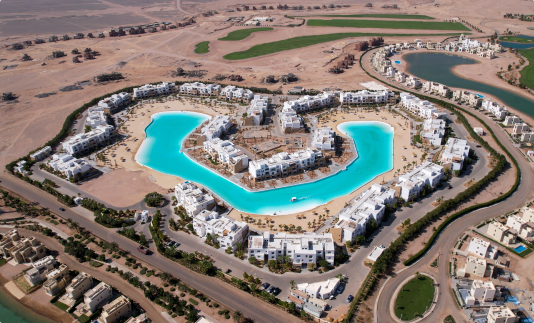
First stop, Riyadh: The developer’s debut project will span 2.5 mn sqm in the capital’s Al Rimal district, with 3.5k villas and townhouses, alongside retail, education, and leisure facilities. Construction is expected to begin in mid-2027, with completion targeted within five years.

Arada KSA, formed in partnership with Saudi property investor Xtopia, has access to a 10 mn sqm landbank across Riyadh, Jeddah, and Makkah valued at AED 49 bn.

Al Rajhi Capital will fund most of the project: The project will be financed through a CMA-regulated fund managed by Al Rajhi Capital. Arada will put in some equity, but most of the funding will come from the fund and the bank, Alkhoshaibi, who chairs the joint venture, said.

Why it matters: Saudi Arabia is pushing to raise homeownership among citizens to 70% by 2030, up from just over 66% at the end of last year. It also opened designated zones in Riyadh and Jeddah to foreign buyers earlier this year. Alkhoshaibi says demand from Saudis, backed by the government’s homeownership push, is the main draw.

What’s next: Alkhoshaibi expects to announce another Saudi project before the end of the year.

REMEMBER- Arada has been on an expansion spree: Earlier this month, Arada partnered with Aldar on an AED 15 bn partnership marking its entry into Abu Dhabi’s residential market. It’s also expanding in Australia, where it has a AED 5 bn Gold Coast project in the pipeline, alongside a USD 7 bn planned development in Syria and a growing London portfolio. Its total development pipeline now stands at AED 185 bn across five markets, comprising more than 70k homes.

MEANWHILE- Arada is refinancing its 2027 sukuk: Arada is offering to buy back, at face value, its outstanding USD 411.7 mn of trust certificates due 2027, according to a tender offer announcement (pdf). The buyback depends on a new USD sukuk that Arada expects to price before the tender closes on 26 October. Arada will retire up to the size of the new issuance minus USD 200 mn, so the transaction raises at least USD 200 mn in new money on top of the refinancing. Holders have until 26 October to tender, and settlement is expected on 2 November. In September, holders approved a new call right, so Arada can redeem any certificates that aren’t tendered. Emirates NBD, Mashreq, and Standard Chartered are transaction managers.

3

DEBT WATCH

Taqa raises USD 1.75 bn as it works toward AED 75 bn in capex by 2030

Abu Dhabi National Energy Company (Taqa) raised USD 1.75 bn from its dual-tranche USD bond yesterday, and strong demand allowed it to price both tranches 32 bps tighter than initial guidance, Zawya reports. Final orders topped USD 5.7 bn, excluding joint lead manager interest. This is Taqa’s first trip to the debt market since L’imad subsidiary Abu Dhabi Power Corporation bought out its minority shareholders and delisted it from the ADX.

The green tranche took the bigger share: The USD 1.1 bn, five-year green note priced at a 5.875% coupon, 98 bps over US Treasuries, against initial price thoughts of around 130 bps. Orders exceeded USD 3.3 bn, about three times the issue size. The USD 650 mn, 10-year tranche priced at 6.125%, or 108 bps over Treasuries, compared with around 140 bps at launch. Its books passed USD 2.4 bn and peaked above USD 2.7 bn during marketing.

How it’s structured: The notes are issued under Taqa’s USD 20 bn medium-term note program and will be listed on the London Stock Exchange. Moody’s is expected to rate them Aa3 and Fitch AA-, in line with Taqa’s own ratings. They settle on 26 October and mature in April 2032 and October 2036.

Where the money goes: Proceeds from the green tranche will fund or refinance projects that qualify under Taqa’s green and blue finance framework, while proceeds from the 10-year tranche will go toward general corporate purposes.

Why it matters: At c. AED 6.4 bn, the raise covers less than a tenth of Taqa’s AED 75 bn capex plan through 2030. That plan breaks down into AED 40 bn for transmission and distribution and AED 35 bn for power generation and desalination. Taqa is also the first major non-bank UAE issuer in a recent wave of transactions that has so far been dominated by lenders, including Emirates Islamic, FAB, and Mashreq.

ADVISORS- ADCB, Citi, Emirates NBD Capital, FAB, HSBC, ICBC, JPMorgan, Standard Chartered, and our friends at Mashreq were joint bookrunners and joint lead managers. Citi, HSBC, and Standard Chartered structured the green tranche.

4

SPOTLIGHT

RAK Ceramics gains ground at home as trade disruption raises cost of selling abroad

The same trade disruption making it harder for RAK Ceramics to export is bringing new customers to its doorstep. Suppliers from Italy, Spain, and India have struggled to deliver to the UAE, creating an opening for the local manufacturer of tiles and bathroom products to gain market share, Group Chief Marketing Officer Leonardo De Muro tells EnterpriseAM UAE. Meanwhile, its own overseas business faces sharply higher transportation costs.

At home, projects reaching completion are keeping orders coming: “The construction industry didn’t stop,” De Muro says, adding that developers have accelerated work to finish existing projects. Tiles arrive during fit-out, toward the end of construction, allowing RAK to capture demand from that pipeline. He describes an increase in sales and new customers without quantifying either. (For context, UAE revenue rose 22.7% y-o-y to AED 298.2 mn in 2Q, as we reported in August.)

De Muro also sees continued willingness to pay among its customers: Buyers who can afford higher-priced tiles are still purchasing them, while those with tighter budgets seek cheaper alternatives, he says. RAK’s position is “premium affordable”: it stays out of the entry-level segment without aiming to be the most expensive option. He says the disruption hasn’t affected showroom business from a pricing perspective, although he doesn’t specify whether RAK has changed its prices.

The domestic gains haven’t insulated the wider business: European revenue fell 35.7% y-o-y in 2Q, while group revenue slipped 0.5% to AED 822.8 mn. Europe remains an important market, but transportation costs have risen sharply, and RAK has sometimes routed shipments through Saudi Arabia, De Muro says. The GCC — its second market after the UAE — remains accessible, albeit with difficulties.

REMEMBER- Alternative routes keep goods moving but add expense: As we reported last week, east-coast ports are handling more diverted cargo, with the additional inland journey adding costs and putting pressure on transport infrastructure. RAK’s experience illustrates the trade-off for local manufacturers: less competition from imports can support domestic sales, while the same disruption weighs on exports.

Alongside those delivery challenges, RAK is using designer partnerships to strengthen its positioning and reach new markets. Its collaborations with Elie Saab and Roberto Cavalli serve both purposes, De Muro says. He points to Elie Saab and Karl Lagerfeld residential developments as examples of the commercial potential: “A big part of construction is now branded construction.” RAK is preparing a Roberto Cavalli presentation during Design Week.

The property market shows why developers keep reaching for a brand name: Binghatti announced a AED 30 bn Mercedes-Benz-branded development in Meydan, extending the trend beyond fashion houses. Dubai’s branded residences commanded a 56% premium over comparable non-branded homes in 1H 2026, according to Morgan’s International Realty data we covered in September. But transaction volumes fell 21% y-o-y — the premium remains attractive, while demand is under pressure.

Beyond the region, De Muro identifies the US as a market where RAK should do more. He gives no investment figure or expansion timetable, framing it as a window to strengthen the company’s presence. “We need to find the right moment,” he says.

For now, investment continues while the planning horizon stays short: Product development and improvements in RAK’s plants remain priorities despite the disruption, De Muro says. Asked about the next few years, he instead emphasizes responding to immediate conditions: “You have only to think very short term and try to figure out what is needed in this moment,” he says. “And live it day by day.”

5

MOVES

Janus Henderson taps Charles Ejiogu as executive director for Client Group MEA

Janus Henderson is adding a new name to its Client Group MEA team, tapping Charles Ejiogu LinkedIn as executive director, according to a press release. Ejiogu will be based in Dubai in the new role and work with the firm’s Africa-based partners. He joins the firm from Goldman Sachs, where he most recently served as executive director for asset management and institutional sales in Doha.

6

ALSO ON OUR RADAR

More UAE-France cooperation, M42, Adia, Hotpack lock in overseas, BlackRock + Emirates NBD take their partnership to retail

Abu Dhabi makes a new AMI in Paris

Abu Dhabi lines up behind former Meta AI scientist’s AI lab: Three Abu Dhabi entities — G42, Mohamed bin Zayed University of Artificial Intelligence (MBZUAI), and G42 subsidiary Analog — signed separate MoUs yesterday with Paris-based AMI Labs during French President Emmanuel Macron’s visit, the Abu Dhabi Media Office says.

AMI? AMI is the world-model startup founded by former Meta chief AI scientist Yann LeCun. It raised USD 1.03 bn at a USD 3.5 bn valuation in March, Europe’s largest-ever seed round, wagering on AI that learns from video and the physical world rather than from language. Each MoU covers a different area: G42’s covers cloud infrastructure and AI models; MBZUAI’s covers research; and Analog’s covers putting AMI’s models into robots and other physical AI.

On the energy side, Adnoc signed the agreements with actual contracts: Adnoc Refining signed two contracts with Technip Energies, one for a project to expand refining capacity and one for a sustainable aviation fuel project. Adnoc Gas also signed an MoU with Schneider Electric to assess technology for improving its operations. No values were disclosed for any of the agreements.

BlackRock’s CLO desk, now for Emirates NBD retail clients

Emirates NBD and BlackRock take their partnership to retail: Emirates NBD Asset Management and BlackRock launched two income funds for the bank’s retail and wealth clients, marking a year since they partnered to offer alternative investments to professional investors, according to a press release.

The breakdown: The FundStar Emirates CLO AA Fund, sub-managed by BlackRock, invests in investment-grade CLOs backed by US and European corporate loans and targets an average AA rating. The Emirates Systematic Income and Growth Fund, with BlackRock as adviser, targets a 7% annual payout net of fees, paid quarterly. The partnership’s first-year products drew USD 350 mn in assets under management.

SOUND SMART- A collateralized loan obligation (CLO) bundles hundreds of corporate loans, usually to companies with sub-investment-grade ratings, and slices them into tranches. The top tranches get paid first and carry high ratings. The AA fund sits near the top of that structure.

Adia snaps up 2.96% in Jio’s IPO

The Abu Dhabi Investment Authority secured 2.96% of the total shares allotted for anchor investors at Jio Platforms’ USD 3.2 bn IPO, according to a BSE filing (pdf). Some 1.3 mn shares, or 1.85% of the anchor investor allotment, came via its India-focused unit Monsoon for nearly INR 1.5 bn, while Adia Stable secured 1.11%, or 804.3k shares, for just shy of INR 900 mn. BlackRock and Fidelity also took anchor positions.

Why it matters: The check is small, but it protects Adia’s position. Its existing 1.16% stake is worth c. INR 115.8 bn at the top of the price band (Kotak Neo), so this purchase adds only about 2% to its holding. Jio is issuing only new shares, with no offer-for-sale, which means every existing shareholder gets diluted. By our math, the c. 2.1 mn shares Adia picked up in the anchor round win back most of that dilution. That leaves its stake at c. 1.15% after listing, compared with c. 1.13% had it stayed out.

ICYMI- The institutional tranche of the offering saw around USD 25 bn in orders, making it nearly 30x oversubscribed. Anchor investors were allocated 72.5 mn shares, or 30% of the total offering, with shares priced at INR 1.119 each. Adia already holds a 1.16% stake in Reliance’s telecom and digital arm, which is on track to become one of India’s four most valuable listed firms should it pull off the remainder of the IPO successfully.

More from M42 in Bahrain

M42 is following up its Bahrain entry with a new multidisciplinary facility covering 20 specialties, according to a press release. Mubadala Health Bahrain will be developed in partnership with Bahrain-based entity HealthVision, and M42 also inked an agreement with Bahraini sovereign wealth fund Future Generation Reserve to secure the land plot for the development. No timeline or investment ticket has been disclosed yet.

ICYMI- G42’s healthcare arm initially entered the country last December with a specialized hospital in a move that saw it collaborate with Bahrain’s sovereign wealth fund Mumtalakat.

Hotpack packs up for Oman

UAE-based packaging manufacturer Hotpack acquired a major stake in Oman’s Pride Packaging, with plans to develop an integrated packaging complex in Barka, according to a company statement. Pride Packaging, a subsidiary of Omani fisheries group Sea Pride, specializes in corrugated cartons, while the planned complex will bring multiple packaging production lines under one roof. The stake size, transaction value, and construction timeline weren’t disclosed.

From selling to making: Hotpack has been operating in Oman since 1998, but the move would give it its first manufacturing foothold in the country. That would put production closer to local customers and reduce reliance on supplying the market from abroad. The company already operates 25 manufacturing facilities worldwide, including 13 in the UAE, and exports to 107 markets.

And Oman isn’t the last stop: The move comes under Hotpack’s AED 1 bn expansion program launched in 2023, which has already seen it push into Saudi Arabia, India, the US, and Malaysia. We’ve previously covered its food packaging industry project in Saudi Arabia , while Jordan is among the markets earmarked for further investment over the next five years.

7

PLANET FINANCE

GCC debt issuance fell in 3Q as the market narrowed to fewer, bigger deals from its strongest borrowers

The GCC’s primary debt market raised less last quarter than a year earlier, and did it through far fewer, far larger issuances. Gulf issuers sold USD 34.8 bn of bonds and sukuk in 3Q, down 13.5% from a year earlier, while the number of transactions fell much harder, to 45 from 136, a 66.9% drop, according to Markaz’s GCC Fixed Income report (pdf). The average transaction, however, more than doubled, to USD 773 mn from about USD 296 mn over the same period.

Markaz reads it as a more selective funding market, one where established borrowers could still land large benchmark deals despite the regional geopolitical climate, while smaller and more frequent issuance thinned out.

Underneath the totals, the market shifted from companies to governments. Sovereign issuance rose 39.7% y-o-y to USD 18.15 bn and took 52.2% of the market, up from 32.3% in 3Q 2025, while corporate supply fell 38.8% y-o-y to USD 16.64 bn. Financial institutions — usually the backbone of corporate supply — cut issuance by 49%, though they stayed the largest non-government source at USD 10.84 bn. Between them, governments and financials accounted for 83.4% of the quarter’s value and 38 of its 45 issuances.

The pricing backdrop turned against borrowers: Secondary-market prices fell through the quarter, with the Bloomberg GCC Aggregate index down 4.01% and the S&P MENA Bond & Sukuk index down 4.22%, and five-year sovereign CDS spreads widened across every GCC market except Dubai, by as much as 39.6% for Qatar and 31.2% for Bahrain over the three months. Rising risk premiums make new issuance costlier and more selective, which is why the transactions that got done clustered among sovereigns, big banks, and investment-grade names, and why smaller or lower-rated borrowers largely stayed out. Saudi Arabia was the one sovereign whose CDS ended the period tighter than it began the year.

Saudi Arabia and Kuwait together made up 70.3% of issuance. Saudi stayed the largest market at USD 15.73 bn and 45.2% of the total, even as its own volume fell 21.5% — a drop of roughly USD 4.3 bn that was the biggest single-country drag, according to a press release. Kuwait was the counterweight, more than doubling to USD 8.73 bn, up 106%, to take second place at 25.1%; its surge owed much to the single largest deal of the quarter, a USD 3 bn Kuwaiti government bond.

Other markets mostly pulled back: The UAE held about flat at USD 5.56 bn, down 2.0%, across 11 issuances, the most of any market after Saudi. Qatar fell 52.9% to USD 3.18 bn through just 3 issuances, Bahrain dropped 47.9% to USD 1.33 bn, and Oman raised a single USD 260 mn issue. The quarter’s biggest corporate trade came out of Saudi Arabia, a USD 2.7 bn perpetual sukuk from Riyad Bank, while the Saudi government priced the largest sukuk at USD 2.8 bn.

Issuers avoided the dated long end: Paper maturing in under 5 years and in 5 to 10 years came in almost even, at USD 13.92 bn (40.0%) and USD 13.26 bn (38.1%), so about 78% of the value matured inside a decade. The 10-to-30-year bucket drew just USD 1.08 bn across two transactions (3.1%), and nothing priced beyond 30 years. The exception to the short bias was perpetual paper, which raised USD 6.53 bn across 12 deals, close to 19% of the quarter, and the largest of those came from banks — Riyad Bank, Arab National Bank, Alinma Bank, and Commercial Bank of Dubai among them — using perpetual structures as regulatory capital they can call and refinance later.

Two more features stood out: Sukuk again edged conventional bonds, at 52.9% of value, and the USD stayed the dominant funding currency at 63.4%, ahead of the SAR at 21.8%. Credit quality was more mixed: investment-grade paper accounted for 57.8% of total issuance and the rated universe was almost entirely investment grade at 97.6%, but the share of issuance carrying no rating at all rose to 40.7% from 34.5% a year earlier, much of it government sukuk and bank perpetuals.

MARKETS THIS MORNING-

Asian markets were in the green earlier today. Japan’s Nikkei was up roughly 1.5% and South Korea’s Kospi was up roughly 3.0%. US equities were broadly in the green at closing

ADX

9,829

+0.5% (YTD: -1.7%)

DFM

5835

-0.3% (YTD: -2.6%)

Nasdaq Dubai UAE20

4,828

-0.0% (YTD: -1.2%)

USD : AED CBUAE

3.67

3.67

EIBOR

3.6% o/n

4.8% 1 yr

TASI

9,952

-1.7% (YTD: -5.1%)

EGX30

52,089

+1.9% (YTD: +24.5%)

S&P 500

7,713

+0.3% (YTD: +12.7%)

FTSE 100

10,733

-0.3% (YTD: +8.1%)

Euro Stoxx 50

6,122

-0.4% (YTD: +5.6%)

Brent crude

USD 109.54

+0.7%

Natural gas (Nymex)

USD 2.97

+0.2%

Gold

USD 4,134

-0.2%

BTC

USD 82,847

+1.0% (YTD: -5.4%)

Lunate JP Morgan UAE Bond UCITS ETF

AED 3.52

0.0% (YTD: -6.0%)

S&P MENA Bond & Sukuk

147.94

-0.4% (YTD: -2.6%)

VIX (Volatility Index)

17.31

-6.1% (YTD: +15.8%)

THE CLOSING BELL-

The ADX rose 0.5% yesterday on turnover of AED 866.2 mn. The index is down 1.6% YTD.

In the green: United Arab Bank (+14.6%), Abu Dhabi Commercial Bank (+2.8%), and Fujairah Cement Industries (+2.5%).

In the red: Emirates Ins. Co. (+5.0%), Space42 (+4.9%), and Al Buhaira National Ins. Company (+4.8%).

Over on the DFM, the index fell 0.3% on turnover of AED 478.6 mn. Meanwhile, Nasdaq Dubai remained flat.


OCTOBER

20-22 October (Tuesday-Thursday): Future Health Summit, Adnec Center Abu Dhabi.

21-22 (Wednesday-Thursday): World Green Economy Summit, Dubai World Trade Center, Dubai.

26-27 October (Monday-Tuesday): Dubai AI Festival, Dubai World Trade Center, Dubai.

27-28 October (Tuesday-Wednesday): Arab Competition Forum, Dubai.

27-28 October (Tuesday-Wednesday): Federal Open Market Committee (FOMC) meeting.

30 October (Friday): Large businesses achieving annual revenues equal to or above AED 50 mn must appoint an accredited service provider for e-invoicing implementation.

Signposted to happen sometime in October 2026:

  • Abu Dhabi Space Week, Abu Dhabi.

NOVEMBER

2-5 November (Monday-Thursday): Adipec, Adnec Center, Abu Dhabi.

2-6 November (Monday-Friday): Dubai Future Finance Week, Dubai.

4 November (Wednesday): Digital Transformation Summit, Sofitel, Abu Dhabi.

4-16 November (Wednesday-Monday): ADIB rights trading period.

9-10 November (Monday-Tuesday): Annual government meetings, Abu Dhabi.

9-12 November (Monday-Thursday): EMEA Council on Hotel, Restaurant and Institutional Education Conference, Dubai College of Tourism, Dubai.

9-13 November (Monday-Friday): World Congress of Military Med, Adnec Center, Abu Dhabi.

10-12 November (Tuesday-Thursday): Dubai International Electric Vehicle Exhibition & Conference, Dubai World Trade Center.

10-24 November (Tuesday-Tuesday): ADIB rights issue subscription period.

16-18 November (Monday-Wednesday): World Police Summit, Dubai World Trade Center, Dubai.

18-19 November (Wednesday-Thursday): Touchdown Middle East 2026, Conrad Abu Dhabi Etihad Towers, Abu Dhabi.

25-26 November (Saturday-Sunday): Doers Summit, Dubai Silicon Oasis, Dubai.

DECEMBER

2-4 December (Wednesday-Friday): UN Water Conference, UAE.

4-6 December (Friday-Sunday): Formula 1 Abu Dhabi Grand Prix, Abu Dhabi.

8-9 December (Tuesday-Wednesday): Capital Market Summit, Madinat Jumeirah, Dubai.

8-9 December (Tuesday-Wednesday): Federal Open Market Committee (FOMC) meeting.

7-10 December (Monday-Thursday): Abu Dhabi Finance Week, Al Maryah Island, Abu Dhabi.

8-10 December (Tuesday-Thursday): Abu Dhabi Water & Power Week, Adnec Center, Abu Dhabi.

8-10 December (Tuesday-Thursday): Middle East & North Africa Business Aviation Association Show, DWC, Dubai Airshow Site.

Signposted to happen sometime in 2027:

  • 1 January: Deadline for large businesses to implement e-invoicing;
  • 14-17 January (Thursday-Sunday): MOC27 Motor, Outdoor & Camping Festival, Dubai Sevens Stadium, Dubai.
  • 1Q 2027: Completion of the first phase of Hassyan seawater desalination project;
  • 1-3 February (Monday-Wednesday): World Governments Summit;
  • 31 March: Small businesses with annual revenues of less than AED 50 mn are obliged to contract with an accredited service provider for e-invoicing implementation;
  • 31 March: Government entities are required to appoint an accredited service provider for e-invoicing implementation;
  • 21-22 April (Wednesday-Thursday): Token2049, Dubai;
  • 11-13 May (Tuesday-Thursday): Middle East Energy, Expo City, Dubai.
  • 31 May-2 June (Monday-Wednesday): RailX Dubai, Dubai World Trade Center, Dubai.
  • 1 July: Deadline for small businesses to implement e-invoicing;
  • 1 October: Deadline for governments to implement e-invoicing;
  • November: HR Tech, Abu Dhabi.
  • Abu Dhabi’s solar and battery energy facility, combining 5.2 GW of solar capacity and 19 GWh of battery storage, is set for commissioning.

Signposted to happen sometime in 2028:

Signposted to happen sometime in 2029:

  • Sibos 2029 organized by the Society for Worldwide Interbank Financial Telecommunication (SWIFT), Dubai;
  • Annual Meetings of the World Bank Group and the International Monetary Fund, Abu Dhabi;
  • The commissioning of the seventh phase of Mohammed bin Rashid Al Maktoum Solar Park.
Now Playing
Now Playing
00:00
00:00