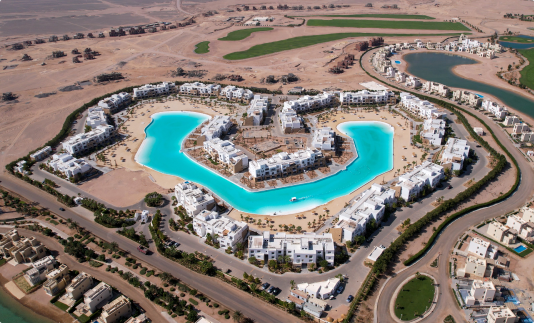
A UAE market for trading secondaries is growing fast

1

WHAT WE’RE TRACKING TODAY

THIS MORNING: Indian, Emirati regulators talk FX deposit friction + Dubai’s property market continued to soften in June

Good morning, friends. It’s been a turbulent few days, and we’re keeping an eye on the ongoing US-Iran tit-for-tat. The bad news for us is — Europe’s aviation safety regulator reinstated its warning on GCC airspace, including the UAE, less than a week after it had lifted the same advisory, feeding the jitters surrounding the region after they had finally subsided in the past couple of months.

PLUS- Dubai’s property market is still cooling, if more gently than it was in the spring. The UAE just lost its crown as the Gulf’s busiest projects market to Saudi Arabia, largely because regional tensions kept a lid on new contract awards.

Our Big Story today looks at another trend, one less-touched by the war, but still not exempt — a fast-growing market for making illiquid private assets tradable.

WEATHER- It’s still really hot no matter where you’re sitting. The mercury is reaching 45°C in Dubai and 44°C in Abu Dhabi, with both seeing lows of 32-33°C.

Indian, Emirati regulators talk FX deposit friction

The Central Bank of the UAE and India’s central bank met in Dubai last week to iron out friction over India’s moves to pull USD deposits out of non-resident Indians in the UAE, Bloomberg reports, citing people familiar with the private talks. The UAE side flagged concern that freezone banks would prioritize India’s fundraising over their local customer base and has separately warned some smaller banks against extending aggressive leverage to Indian lenders, wary of outsized capital outflows.

Also on the table: Easing the due-diligence timeline that UAE-based banks run on wealthy customers, the people said.

REMEMBER- CBUAE recently tightened rep-office rules for foreign banks, restricting the onboarding support Indian lenders usually lean on, including documentation support, business facilitation, and cross-selling.

Why it matters: The Gulf is expected to supply more than 70% of India's targeted foreign-currency deposit inflows under RBI's rate-subsidized scheme.

Alabbar in Syria

Mohamed Alabbar has shared fresh details on his planned USD 20 bn investment in Syria, saying the two flagship developments will be spearheaded by Abu Dhabi-based Eagle Hills, with the projects ultimately owned by a new company bringing together the Syrian government, Gulf investors, and Syrians themselves, Bloomberg reports. The government is expected to contribute the land, while Alabbar said he wants Syrians to hold a majority stake in the company, with Eagle Hills acting as an anchor investor.

The developer also revealed the location of the second project, confirming it will be a large-scale beachfront development in Latakia alongside another mixed-use scheme in Damascus. Together, the developments will include tens of thousands of homes, hotels, retail, offices, schools, and hospitals.

Alabbar said construction could begin within months as funding arrangements are finalized. He also said he is considering setting aside part of the developments for affordable housing or contributing USD 5k-10k from every home sold toward rebuilding housing for lower-income Syrians.

BACKGROUND- In December 2025, DP World began implementing its USD 800 mn investment in Tartus port, while AD Ports Group announced acquiring a 20% stake in the Latakia International Container Terminal in November 2025.

Dubai holds its shipping lane

Dubai held on to its fifth-place global ranking in the 2026 Xinhua-Baltic International Shipping Center Development Index, according to the report cited by The Maritime Executive. The emirate held a top-five spot for the eighth year running, scoring 77.13 behind Singapore, Shanghai, London, and Hong Kong.

Behind the ranking: Jebel Ali handled a record 15.6 mn TEUs in 2025, edging above its 2024 record of 15.5 mn and marking its highest throughput since 2015. Dubai’s import and export volumes rose around 9% y-o-y, while vehicle handling climbed 18% to around 1.5 mn vehicles, Al Bayan reports. The index also looks beyond port scale, factoring in maritime services, finance, ins., counsel services, logistics, digital government, and the business environment.

Data point

1% — that’s how much Dubai residential values fell m-o-m in June, a marginally softer decline than May’s 1.2% drop and well below March’s 5.9% correction, according to ValuStrat’s latest VPI report (pdf). The index slipped to 220 points, bringing the cumulative drop since 28 February to 10%, while annual growth was almost flat at 0.1%.

Where the pressure is: Apartments are doing more of the correcting, with values down 0.6% m-o-m and 3% y-o-y. Villas fell 1.2% m-o-m but are still up 2% annually, with older freehold villa communities still 188% above post-pandemic levels and 76% above the 2014 peak. Prime apartments remain under pressure: Burj Khalifa values are down 16.7% y-o-y and JBR is down 13%.

Sales bounced in June, but off a weak base: Ready-home transactions rose 46.8% m-o-m — the strongest monthly rise in three years — while off-plan registrations climbed 32% and still accounted for 75% of residential sales. On an annual basis, though, ready-home transactions were 23% lower y-o-y, while off-plan was 16% lower. ValuStrat notes official transactions likely reflect sales agreed upon from March onward.

Prime buyers aren't waiting for the correction to bottom out: 19 ready-home transactions topped AED 30 mn in June, including five above AED 50 mn, concentrated in Palm Jumeirah, Dubai Hills Estate, Emirates Hills, Al Barari, Jumeirah Islands, Downtown Dubai, and DIFC.

Meanwhile, over in Sharjah, transaction values climbed 9.3% y-o-y to AED 29.5 bn in 1H 2026, according to Sharjah Real Estate Registration Department data picked up by Sharjah24. The volume of transactions also grew 4.7% y-o-y.

PSA

The Museum of the Future is closing its doors mid-September ahead of a major relaunch scheduled for 1Q 2027. The overhaul of the Dubai landmark will replace all of its original exhibitions, marking the biggest refresh since its opening in February 2022, The National reports. The museum says the revamp was always part of its long-term plan to ensure experiences evolve rather than remain static. The exact closure and reopening dates have not been announced.

The big story abroad

The US continued to strike Iran yesterday in efforts to force the reopening of the Strait of Hormuz. US officials say that US President Donald Trump is considering a significant expansion of military operations in the Islamic Republic that could include escalating airstrikes, deploying ground forces to seize strategic Iranian islands near the strait, and bombing a heavily fortified site that could host covert nuclear development.

That being said, Trump said yesterday that Tehran wants to return to the negotiating table and make a deal. Trump claimed that Iranian leaders “want to settle so badly,” yet defense analysts speaking to CNBC say they see no realistic path toward settlement.

Oil markets are already reacting to the closure of Hormuz, with traders warning that the latest flare up threatens a fresh crude supply crunch. The market now lacks the reserves that helped absorb price shocks earlier in the war — “we’ve burned through all of the buffers we had. Everything,” the FT quotes one trader as saying. “All of that’s now gone.”

IN OTHER NEWS- Anthropic is moving ahead with its planned IPO and plans to begin meeting with prospective investors over the coming weeks, according to people with knowledge of the matter. The Claude developer is looking to make its market debut as soon as October, joining a growing list of AI players going public.

PLUS- Argentina and Spain will face off in the 2026 World Cup final on Sunday, after Argentina secured its spot following a dramatic 2-1 comeback victory against England last night. England will take on France hours earlier in the third place play-off.

***

You’re reading EnterpriseAM UAE, your essential daily roundup of business, economics, and must-read news about the UAE, delivered straight to your inbox. We’re out Monday through Friday by 7am UAE time.

EnterpriseAM UAE is available without charge thanks to the generous support of our friends at Mashreq and Hassan Allam Properties.

Were you forwarded this email? Tap or click here to get your own copy of EnterpriseAM UAE.

Want to send us a story idea, request coverage, ask for a correction, or otherwise get in touch? Reach out to us on [email protected].

DID YOU KNOW that we also cover Egypt, Saudi Arabia, and the MENA logistics industry?

***

Circle your calendar

Check out our full calendar on the web for a comprehensive listing of upcoming news events, national holidays and news triggers.

This publication is proudly sponsored by

Rise every day
From OUR FAMILY to YOURS
2

THE BIG STORY TODAY

UAE private assets are getting more tradable — slowly, but surely

A liquidity layer for private assets — spanning private equity stakes and venture positions, real estate fund interests, and infrastructure holdings — is growing fast in the UAE, mirroring a global shift. Secondary-market volumes worldwide crossed USD 160 bn in 2025 and could approach USD 200 bn by year-end, according to Jefferies data cited by The Platinum Capital. The UAE’s answer to that has been on display over the past few months, if not years: Abu Dhabi Investment Authority and Ardian are pushing into real estate secondaries, Shuaa and Key Capital have set up a VC secondaries fund, and Stake has rolled out a secondary transfer platform for fractional property investors.

SOUND SMART- A secondary sale is exactly what it sounds like: an investor sells their existing stake in a fund, property, or company to another buyer, rather than waiting for the asset itself to be sold or the fund to wind down, the company to IPO or get acquired, or the property to be sold outright.

The shift has been years in the making, and it’s being driven by a confluence of factors. One is that the investor base is widening. Historically, private equity investors were large LPs and families that were less focused on interim liquidity, Ismail Badereldine, founder of private-market technology platform Finbursa, tells EnterpriseAM UAE. But as smaller investors and newer private-market participants enter the asset class, they are more likely to want flexibility before a fund reaches full liquidation or a direct investment reaches IPO.

The same logic is showing up in real estate: The traditional UAE model of buying, holding, and selling through a single bilateral transaction remains dominant, Matthew Green, CBRE MENA head of research, tells EnterpriseAM UAE. But there is an emerging appetite for “partial or staged exits” and faster routes to liquidity “without necessarily having to sell an entire asset.”

Green notes that the new buyer is more liquid-minded: These structures appeal to “the newer breed of younger international investors,” Green says — investors who are “globally mobile, multi-market focused, and more accustomed to the liquidity standards of equities and alternative asset platforms.” Badereldine also sees interest from family offices, funds, angel investors, and smaller individual investors — “it’s coming from pretty much everywhere,” he says.

It’s also about accessibility: “Historically, private markets were like a closed gate,” Badereldine says. Secondary trades were often possible, but they ran through closed networks and personal relationships rather than transparent infrastructure. “It was available, but it wasn’t as democratic or easily available,” he says.

…and flexibility: Badereldine says investors increasingly want the option to adjust exposure when risks shift across sectors or geographies. “[Investors think] maybe I need to rebalance. So I will sell and buy something else,” he explains.

Key Capital Managing Partner Basil Moftah echoed those statements in an interview with EnterpriseAM UAE earlier this year. “With everything happening around the world, liquidity is an ever-growing need […] it’s always been a necessary tool for people to manage their portfolios, but now with everything happening globally, especially companies taking longer to go public and investors holding onto companies for longer, we see an even bigger [window] in the region,” he adds. Longer private equity hold periods, selective IPO windows, and tougher strategic-sale exits are key reasons secondaries are becoming more mainstream, industry insiders tell us.

The current backdrop

Geopolitics is not the whole story, Badereldine says. “I don’t think it is relevant at all,” he says, downplaying the role of recent geopolitical uncertainty as the main driver of the broader trend. “It’s been the trend for the last few years and it will continue to be a big trend.”

But for real estate, it might be. “The shift in the regional environment is certainly now raising more questions about the need for diversification and limiting overall portfolio overexposure to investments in a single market or asset class,” Green says.

Rates add another layer: Green says uncertainty around the direction of interest rates, regional geopolitics, and inflationary pressure in the US could test long-term hold strategies in UAE real estate. That does not mean investors are rushing for the exits, but it does make flexible exit routes more valuable.

But there are obstacles

Retail is not here at scale yet: Fractional ownership and secondary transfer platforms remain narrow for now, Green says. “At this stage, retail participation has not materialized at scale.” Over time, he expects a broader base to emerge, including retail investors, regional family offices, institutional capital, and international private wealth — but only as supply, asset quality, portfolio size, and market liquidity improve. A lot of the secondary platforms are also new: Key Capital and Shuaa’s VC secondaries fund is only the first in the region.

The biggest bottleneck may not be capital: Badereldine says the real constraint has often been operational friction — finding buyers, matching sellers, processing trades, and giving investors visibility on available secondary openings. Technology can help investors stop relying on “one advisor you work with to try to find you a buyer or a seller,” he says.

Finbursa’s wager is that AI can cut the admin drag: Badereldine says platforms like Finbursa are using technology “to help with faster processing time” for secondary buying and exits while giving investors more information about available transactions.

Price discovery is also still thin: For real estate, Green says the biggest challenge is the lack of transaction volumes and transparent pricing. “Without volumes and public price discovery, it remains difficult for secondary market buyers to properly price fractional interests with confidence,” he says. Without reliable comparable data, bid-ask spreads can widen enough to stop transactions from progressing.

Supply is the other constraint: Assets being fractionalized or structured for secondary transfer remain a small share of the overall real estate market, Green says. “Any market to function well requires sufficient participants and sufficient product.” Until there is enough product on offer, genuine liquidity will remain hard to build.

Of course, optionality has a price: Secondary sellers often need to accept a discount, particularly in private company stakes, Badereldine says.

Plus: Regulation is still catching up. Green points to fragmentation across onshore, DIFC, ADGM, and other frameworks, each with their own rules for investment structures, transfers, and investor protections. Harmonizing those frameworks could improve efficiency and investor confidence, he says. Badereldine also says regulators need to protect both sides of transactions and reduce risks of “mistreatment or potential fraud” — too little protection would damage trust before liquidity has a chance to scale.

What comes next?

Private-market secondaries could become business-as-usual: “That’s the trend,” Badereldine says when asked whether secondaries will become a standard part of private-market portfolio management. The right digital infrastructure and regulatory oversight still need to develop, but he expects secondaries to become “more and more business-as-usual” in private-market portfolio management.

Real estate may take longer: Green expects more liquid and tradable forms of UAE real estate investment to become a lasting part of the market in the long term, but he says “the timeline will likely be longer than many market participants would like.”

Regional headwinds don’t help: “New asset classes will likely face stronger pushback than they [did] pre-conflict, with fractional ownership models and tokenization still much less understood,” Green says.

3

INFRASTRUCTURE

UAE project awards slide as Saudi Arabia retakes GCC lead

The UAE lost its crown as the Gulf’s busiest project market in 2Q 2026 as regional tensions weighed on contract activity, with new project awards falling 56.6% q-o-q to USD 20.5 bn, according to Kamco Invest’s GCC Projects Market Update (pdf). Saudi Arabia overtook the Emirates after more than doubling its project awards during the quarter.

Year-on-year, the UAE’s pullback was much milder — down just 5.4% from USD 21.6 bn in 2Q 2025.

The slowdown left the UAE with 34.4% of all GCC project awards in 2Q 2026, down from 47.3% a year earlier. Across the region, contract awards fell 25.4% q-o-q to USD 59.4 bn as the Iran war weighed on economic activity, although total awards remained 30% higher than a year earlier thanks to strong growth in Saudi Arabia and Oman.

The UAE’s decline was broad-based. Seven of the country’s eight project sectors recorded lower award values than a year earlier, led by gas, where awards collapsed to USD 30 mn from USD 5.3 bn in 2Q 2025.

Oil was the clear exception. The sector accounted for more than half of all projects awarded in the UAE during the quarter, reaching USD 11.5 bn, compared with just USD 230 mn a year earlier.

That momentum could continue. Adnoc said it plans to award USD 54.4 bn worth of contracts between 2026 and 2028 as part of its USD 150 bn, five-year capital spending program. Around 70% of that spending is earmarked for upstream oil and gas projects, with the remainder allocated to downstream developments.

While the latest quarter marked a slowdown, the longer-term pipeline remains substantial. Meed estimates there are around USD 2.1 tn worth of projects planned across the GCC, with the UAE accounting for 26.1% of the regional pipeline, second only to Saudi Arabia. Construction represents the largest share of upcoming projects, followed by transport and power.

BACKGROUND- The war’s impact on the UAE’s projects market first became clear in March when the number of contracts awarded fell to 16 from 52 in February, while the value of awards dropped 26% m-o-m to USD 9.7 bn. BMI still ranked the UAE as MENA’s most attractive infrastructure market in a report earlier this month, arguing that the country’s deep capital markets, strong foreign investor base, and sizable project pipeline continue to support its long-term appeal.

4

MOVES

Azura Partners taps Credit Suisse banker for Abu Dhabi growth + Bin Sulayem takes control of Malaysia’s MMC Ports after DP World exit

Azura Partners brings in a former Credit Suisse banker to lead Abu Dhabi growth. Yousef Hajjar (LinkedIn) has been appointed CEO of Azura Partners’ Abu Dhabi operations, as the Lunate-backed wealth advisory firm looks to deepen its footprint in the UAE capital, Bloomberg reports. Hajjar relocated from Monaco, where he had been a partner at Azura since 2020, after spending roughly 10 years at Credit Suisse. He will lead the firm’s Abu Dhabi growth plans and work on expanding its offering for ultra-high-net-worth clients.

Background: Azura Partners advise around USD 5 bn in assets and has expanded across major wealth hubs, including Abu Dhabi, Dubai, Zurich, and Singapore. The firm moved its headquarters to Abu Dhabi after Lunate acquired a stake in it last year.

Bin Sulayem now at helm of Malaysian port: Sultan Ahmed bin Sulayem (LinkedIn), who stepped down as chairman and CEO of DP World in February following scrutiny over his connection to Jeffrey Epstein, has taken charge of Malaysia’s MMC port, the largest port operator in Malaysia, Reuters reports, citing an internal memo it has seen. Bin Sulayem, who remains executive chairman of MMC Ports, will oversee the group’s operations after CEO Azman Shah Mohd Yusof’s (LinkedIn) departure.

REMEMBER- Bin Sulayem was a key figure in DP World’s global expansion, serving as chairman for nearly two decades and CEO during a period of major international growth for the ports and logistics group. His latest move shifts his focus toward Southeast Asia’s port infrastructure market, where MMC Ports operates a network of major terminals.

5

ALSO ON OUR RADAR

Adia’s India shopping spree continues, Revolut gets crypto greenlight, and Parkin enters Sharjah

Adia picks up stake in Indian steel supplier

The Abu Dhabi Investment Authority (Adia) acquired a stake in Indian building materials and steel supplier SG Mart, continuing its recent run of investments across India’s industrial and financial sectors, Zawya reports. The SWF purchased 1.1 mn shares worth INR 730 mn (USD 7.6 mn) through an open-market transaction at INR 650 apiece.

The SG Mart stake comes a day after Adia emerged as a key anchor investor in SBI Funds Management’s USD 1.2 bn IPO. It is also part of Adia’s broader strategy to build diversified exposure to India’s growth story — from infrastructure to renewables, tech, and the industrial supply chains that underpin these sectors.

Revolut can soon offer crypto services in the UAE

Revolut is closer to offering crypto broker-dealer, management and investment, and exchange services in the UAE — clearing the way for UAE customers to eventually buy, sell, and hold crypto through its retail app and standalone exchange, Revolut X, pending final sign-off, it said in a statement. The green light from the Virtual Assets Regulatory Authority comes weeks after Revolut secured its Stored Value Facilities and Retail Payment Services licenses from the Central Bank of the UAE — the last formal hurdle before its consumer launch in the country.

Parkin brings smart paid parking to Arada's Aljada

Dubai-listed Parkin has partnered with master developer Arada to roll out its first smart paid parking system at Aljada, Sharjah's flagship mixed-use megaproject, according to a statement. The system, which went live yesterday, uses automatic number plate recognition technology to provide ticketless parking across designated on-street, off-street, and retail parking areas. Residents will retain parking allocations included in their property agreements, while additional spaces will fall under the new paid parking system.

BACKGROUND- Parkin has been working on broadening its footprint in private developments — in December 2025 it signed a five-year agreement with Damac Properties to manage around 3.6k parking spaces across its portfolio in Dubai and Abu Dhabi.

6

PLANET FINANCE

SpaceX closes below IPO prices, less than a month later

The biggest IPO ever just went underwater: SpaceX shares broke below their USD 135 IPO price for the first time yesterday, falling as much as 2.9% to USD 132.15, a month after the rocket, satellite, and AI company raised a record USD 86 bn in its June debut, Bloomberg reports. The stock is now down some 40% from its 16 June peak of USD 225.64, after surging nearly 50% in its first three days of trading and then shedding a quarter of its value over the next three sessions.

Some of the early froth was mechanical, not fundamental: A Nasdaq rule change let SpaceX join the Nasdaq-100 just 15 trading days after listing, pulling in an estimated USD 5.4 bn of forced index-fund buying, per Bloomberg Intelligence. Strip that out, and what remains is a market growing wary of a SpaceX focused on its xAI ambitions, with returns “too far removed from immediate cashflow,” as SLC Management's Dec Mullarkey put it.

The knock-on for the AI listings queue: OpenAI and Anthropic have both confidentially filed, CNBC reported. The three listings were estimated back in June at a whopping USD 3.6 tn to US exchanges. A listing this size trading below issue complicates pricing for everyone behind it, though it could equally push capital-hungry AI labs to sprint for the window before it narrows, Reuters noted.

The sell side is still bullish: More than 80% of analysts rate the stock a buy, with an average target near USD 238, roughly 78% above current levels. Much of that coverage landed only after the quiet period ended for banks that worked on the IPO.

Why this matters for us

Gulf sovereign capital was all over this book. The Public Investment Fund and the Kuwait Investment Authority each reportedly placed orders of USD 1-5 bn, with the Qatar Investment Authority also in for a sizable allocation. All in all, the book ran roughly 4x oversubscribed at some USD 250 bn in orders.

The Gulf’s pre-IPO exposure runs deeper still: PIF-backed Humain put USD 3 bn into xAI’s Series E in February, a stake that converted into SpaceX shares after the merger. Kingdom Holding’s rolled-over X position became SpaceX stock the same way, while Abu Dhabi’s MGX, Alpha Dhabi, IHC, and the Oman Investment Authority all hold direct or indirect positions.

What’s next

Starship Flight 13 launches today, and a successful flight could be a catalyst, UBS said, holding a USD 210 target for SpaceX. The bigger date is SpaceX’s first earnings report in the coming weeks, which triggers the first lockup expiries. That’s when the Gulf’s pre-IPO holders — Humain, Kingdom Holding, and the rest — face their first real decision: hold, or take what’s left of the gain.

MARKETS THIS MORNING-

Asian stock markets opened lower as renewed regional hostilities and a selloff in semiconductor shares pushed equities lower. South Korea’s Kospi is down over 6.5%, and Japan’s Nikkei is trailing behind (-3.1%). Investor sentiment could shift after South Korea’s central bank raised rates for the first time in over three years this morning in an effort to fight inflationary pressures — we’ll be closely watching to see how regional markets react to the news.

ADX

9,831

-0.2% (YTD: -1.6%)

DFM

5,911

+0.4% (YTD: -2.2%)

Nasdaq Dubai UAE20

4,703

-0.3% (YTD: -3.8%)

USD : AED CBUAE

Buy 3.67

Sell 3.67

EIBOR

3.5% o/n

4.1% 1 yr

TASI

10,705

-0.1% (YTD: +2.0%)

EGX30

52,558

+0.5% (YTD: +25.7%)

S&P 500

7,572

+0.4% (YTD: +10.6%)

FTSE 100

10,516

-0.1% (YTD: +5.9%)

Euro Stoxx 50

6,266

-0.2% (YTD: +8.1%)

Brent crude

USD 84.95

+0.3%

Natural gas (Nymex)

USD 2.92

-0.2%

Gold

USD 4,067

+0.4%

BTC

USD 64,816

-0.1% (YTD: -26.0%)

Chimera JP Morgan UAE Bond UCITS ETF

AED 3.65

-1.4% (YTD: -2.7%)

S&P MENA Bond & Sukuk

151.53

+0.1% (YTD: -0.2%)

VIX (Volatility Index)

15.67

-5.0% (YTD: +4.8%)

THE CLOSING BELL-

The DFM rose 0.4% yesterday on turnover of AED 583.3 mn. The index is down 2.2% YTD.

In the green: Emirates Reem Investments (+7.1%), Tecom (+2.1%), and Islamic Arab Ins. (+1.5%).

In the red: International Financial Advisors (-5%), Emirates REIT (-1.9%), and Dubai Taxi (-1.8%).

Over on the ADX, the index fell 0.2% on turnover of AED 930 mn. Meanwhile, Nasdaq Dubai fell 0.3%.


JULY

28-29 July (Tuesday-Wednesday): Federal Open Market Committee (FOMC) meeting.

SEPTEMBER

1-3 September (Tuesday-Thursday): Middle East Energy, Dubai World Trade Center, Dubai.

7-9 September (Monday-Wednesday): AIM Congress, Dubai World Trade Center.

7-9 September (Monday-Wednesday): International Property Show, Dubai World Trade Center, Dubai.

12-13 September (Saturday-Sunday): Emirates International Congress on AI & Visionary Leadership in Transforming Healthcare, Adnec Center Abu Dhabi.

14-17 September (Monday-Thursday): Arabian Travel Market, Dubai World Trade Center, Dubai.

15-16 September (Tuesday-Wednesday): Federal Open Market Committee (FOMC) meeting.

17-19 September (Thursday-Saturday): International Real Estate & Investment Show (IREIS), Adnec, Abu Dhabi.

29-30 September (Tuesday-Wednesday): AFCM Annual Conference, Abu Dhabi.

OCTOBER

4-10 October (Sunday-Saturday): World Space Week, Abu Dhabi.

5-7 October (Monday-Wednesday): AI Everything Global, Adnec Center, Abu Dhabi.

12-14 October (Monday-Wednesday): Airport Show, Dubai World Trade Center, Dubai.

14-15 October (Wednesday-Thursday): Sharjah Investment Forum, Jawaher Reception and Convention Center, Sharjah.

13-15 October (Tuesday-Thursday): Annual Meeting of Global Future Leaders, Dubai.

20-22 October (Tuesday-Thursday): Future Health Summit, Adnec Center Abu Dhabi.

27-28 October (Tuesday-Wednesday): Arab Competition Forum, Dubai.

27-28 October (Tuesday-Wednesday): Federal Open Market Committee (FOMC) meeting.

30 October (Friday): Large businesses achieving annual revenues equal to or above AED 50 mn must appoint an accredited service provider for e-invoicing implementation.

Signposted to happen sometime in October 2026:

  • Abu Dhabi Space Week, Abu Dhabi.

NOVEMBER

2-6 November (Monday-Friday): Dubai Future Finance Week, Dubai.

4 November (Wednesday): Digital Transformation Summit, Sofitel, Abu Dhabi.

9-10 November (Monday-Tuesday): Annual government meetings, Abu Dhabi.

9-12 November (Monday-Thursday): EMEA Council on Hotel, Restaurant and Institutional Education Conference, Dubai College of Tourism, Dubai.

10-12 November (Tuesday-Thursday): Dubai International Electric Vehicle Exhibition & Conference, Dubai World Trade Center.

16-18 November (Monday-Wednesday): World Police Summit, Dubai World Trade Center, Dubai.

18-19 November (Wednesday-Thursday): Touchdown Middle East 2026, Conrad Abu Dhabi Etihad Towers, Abu Dhabi.

25-26 November (Saturday-Sunday): Doers Summit, Dubai Silicon Oasis, Dubai.

DECEMBER

2-4 December (Wednesday-Friday): UN Water Conference, UAE.

4-6 December (Friday-Sunday): Formula 1 Abu Dhabi Grand Prix, Abu Dhabi.

8-9 December (Tuesday-Wednesday): Capital Market Summit, Madinat Jumeirah, Dubai.

8-9 December (Tuesday-Wednesday): Federal Open Market Committee (FOMC) meeting.

8-10 December (Tuesday-Thursday): Abu Dhabi Water & Power Week, Adnec Center, Abu Dhabi.

Signposted to happen sometime in 2027:

  • 1 January: Deadline for large businesses to implement e-invoicing;
  • 1Q 2027: Completion of the first phase of Hassyan seawater desalination project;
  • 1-3 February (Monday-Wednesday): World Governments Summit;
  • 31 March: Small businesses with annual revenues of less than AED 50 mn are obliged to contract with an accredited service provider for e-invoicing implementation;
  • 31 March: Government entities are required to appoint an accredited service provider for e-invoicing implementation;
  • 21-22 April (Wednesday-Thursday): Token2049, Dubai;
  • 1 July: Deadline for small businesses to implement e-invoicing;
  • 1 October: Deadline for governments to implement e-invoicing;
  • Abu Dhabi’s solar and battery energy facility, combining 5.2 GW of solar capacity and 19 GWh of battery storage, is set for commissioning.

Signposted to happen sometime in 2028:

Signposted to happen sometime in 2029:

  • Sibos 2029 organized by the Society for Worldwide Interbank Financial Telecommunication (SWIFT), Dubai;
  • Annual Meetings of the World Bank Group and the International Monetary Fund, Abu Dhabi;
  • The commissioning of the seventh phase of Mohammed bin Rashid Al Maktoum Solar Park.
Now Playing
Now Playing
00:00
00:00