Inside the UAE’s crypto boom — and the threats facing it

1

WHAT WE’RE TRACKING TODAY

THIS MORNING: Not one, but two potential India plays from Adia, Emirates NBD

Good morning, friends. It’s been a slow week for developments on the ground, but the backdrop keeps doing the work for us: UAE markets have closed lower in every session this week, with the ADX and DFM sliding again on Tuesday as the exchange of fire between Washington and Tehran intensified around the Strait of Hormuz, and as two of the UAE’s own tankers were targeted last night.

The Hormuz story took a turn overnight. Trump has dropped his 20% “reimbursement fee” on cargo transiting the strait — the one he floated Monday — and says he’ll take trade and investment agreements from Gulf states instead. “Those Investments will be MASSIVE,” he posted, without naming a single commitment.

Incidentally: UAE capital flowing into the US is one of our headlines this morning, as ePointZero closes its USD 2.3 bn acquisition of stakes in two major US gas pipelines.

Also on deck today: The UAE’s crypto boom has a fraud problem to match its growth (today’s Big Story), Dubai Islamic Bank’s 2Q barely moved, Adia takes a slice of India’s SBI Funds ahead of its IPO, and reports of Emirates NBD potentially circling IDBI again.

Buying the fee pool

Abu Dhabi Investment Authority (Adia) just took a slice of India’s biggest asset manager. SBI Funds Management allocated 46.4 mn shares worth INR 26.63 bn (about USD 279 mn) to anchor investors ahead of its USD 1 bn IPO, according to a filing (pdf). Adia, Norway’s sovereign wealth fund, and BlackRock funds each bought 1.6 mn shares (about 3.4% of the anchor book) at INR 574, the top of the IPO price band, while Singapore’s government was allocated 2.7 mn shares.

ICYMI- We reported earlier this week that Adia had joined a more than 20x-covered anchor book alongside GIC, Norges, BlackRock, Fidelity, Capital Group, and Goldman Sachs Asset Management. The offer is entirely an offer-for-sale by State Bank of India and Amundi, meaning SBI Funds itself will not receive fresh capital from the listing. It runs until 16 July, with the stock expected to list on 21 July.

Why it matters: This gives Adia a liquid stake in India’s household-savings boom. Mutual funds now account for around 10% of Indian household financial savings — twice their share a decade ago — with SBI Funds managing around USD 131 bn in average mutual fund assets and holding a roughly 15% market share, according to Global SWF.

The investment is the latest in a much broader Adia push into India. In the past few months alone, it committed around USD 675 mn to a Kotak real estate fund, backed Rajasthan-based KRN Heat Exchangers’ USD 36.8 mn QIP, and participated in Acme Solar's USD 328 mn equity raise.

IDBI, take two

Is Emirates NBD back in the running for IDBI? That’s what Reuters is suggesting, although Bloomberg reports it might have already lost the bid despite sweetening its offer this time around. Canada’s Fairfax Financial, which has been in the running for the combined 60.7% stake in IDBI held by the government and state-run LIC, is close to receiving approval from India on a possibly sweetened bid, the business news service reports, citing people it says are familiar with the matter. Reuters says the process is expected to wrap within a month.

IN CONTEXT- India shelved the sale in March after bids from Emirates NBD and Fairfax fell short of the government’s price expectations, but it restarted the process this month. The privatization push began in 2022, while LIC has controlled IDBI since 2019 after stepping in to rescue the lender.

Why it matters: If Emirates NBD manages to get in on the bid, a stake in IDBI would offer it even more scale in India’s tightly guarded banking market, after it completed, a few weeks ago, its USD 2.8 bn acquisition of a 60% controlling stake in RBL Bank — India’s largest-ever FDI in its banking sector.

A tale of two coasts

Egypt’s tanks draw more Emirati interest: Fujairah International Oil and Gas Corporation is in talks with the Egyptian General Petroleum Corporation (EGPC) to lease crude and petroleum-products storage on Egypt’s Red Sea coast. This is the second time in recent months that an Emirati entity has made a move like this — AD Ports made a similar pitch for Red Sea storage back in April. The targeted facilities, capacity, and commercial terms were not disclosed.

Why it matters: The interest tracks the scramble for storage west of Hormuz. Disruption in the strait is pushing Gulf producers and traders to secure alternative routes and storage outside the waterway — and Egypt is positioning to catch that flow. It has around 29 mn barrels of spare storage across its main ports, part of an infrastructure base of 19 commercial ports (14 under development), and nearly 79 petroleum storage facilities built or upgraded in recent years. In March, it put up 10 storage facilities at Ain Sokhna and Ras Badran for lease to monetize that spare capacity.

Now both coasts: Fujairah is already on the Mediterranean side. It’s partnering with Wepco on a USD 457 mn expansion of Al Hamra Port, set to double crude storage to 5.3 mn barrels from 2.5 mn and add a 130k-ton petroleum-products complex.

PSA

Emirati retirees and Nafis beneficiaries just got a better shot at qualifying for loans: The Etihad Credit Bureau has expanded its Individual Credit Report to include verified pension income from the General Pension and Social Security Authority (GPSSA) and eligible Nafis financial support alongside salary data, giving banks a fuller income picture to work with when assessing credit applications, state news agency Wam reports.

WEATHER- It’s a sweltering day, with the mercury rising to 45°C in Dubai and 44°C in Abu Dhabi. Expect a low of 33°C in both emirates.


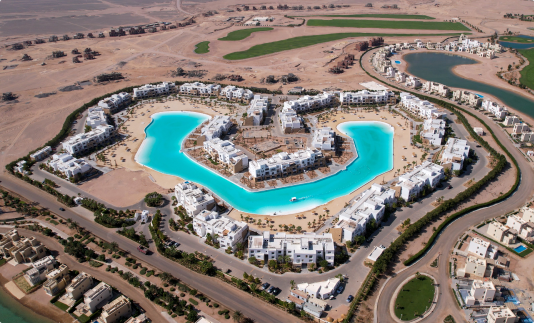
Destination Sahel is back for a second edition — and this year, it's not just about the beach.

Gulf sovereign wealth funds are pouring billions into the North Coast, Gulf buyers keep showing up despite regional headwinds, and a new 400km master plan could reshape the whole coastline before summer’s out.

Over this season’s series, stay tuned to see who's really buying Sahel, where the money's coming from, and what could still go wrong.

Plus, the hotels, restaurants, and openings worth checking out this summer.

Tap or click here to subscribe to the Egypt edition, coming out today in your inbox.

The big story abroad

International dailies have their hands full with geopolitical and business updates this morning. Here are the biggest developments.

Trump withdraws Hormuz cargo tax: Pressure from Gulf states prompted US President Donald Trump to walk back his proposed 20% fee on cargoes transiting the Strait of Hormuz, announcing that it would be replaced by direct Gulf investments in the US. The US military confirmed that its naval blockade on Iran took effect yesterday and that it launched fresh strikes on the Islamic Republic.

That’s not all — the US is also leading talks to revive a long-defunct Iraq-Syria oil pipeline to circumvent the Hormuz bottleneck and undermine Tehran’s leverage over global energy supplies. Washington is in talks with Baghdad, Damascus, and Chevron.

OpenAI’s first device will be an AI companion — a mobile, screenless speaker designed to answer questions, play media, and help control smart-home appliances. The product is still under development and is intended to be personalized and proactive, used primarily in users’ homes.

Could drugs be a new frontier for AI? Startup Chai Discovery, which specializes in using AI to pioneer new drugs, has secured USD 400 mn in fresh funding, valuing the company at USD 3.8 bn. The company also works with established pharma giants to help them to become post-AI companies, founder and president Jack Dent said.

US writers object to Warner Bros takeover: The Writers Guild of America has become the latest in a long line of challengers to Paramount’s Gulf-backed USD 110 bn acquisition of Warner Bros, insisting that the merger will harm competition and film and television writing quality. This week, 12 US states filed an antitrust lawsuit on similar grounds.

And over at the World Cup, Spain bested France 2-0 last night, marking its second time to book a spot in the tournament’s final showdown. They will play either Argentina or England in Sunday’s final in New Jersey.

***

You’re reading EnterpriseAM UAE, your essential daily roundup of business, economics, and must-read news about the UAE, delivered straight to your inbox. We’re out Monday through Friday by 7am UAE time.

EnterpriseAM UAE is available without charge thanks to the generous support of our friends at Mashreq and Hassan Allam Properties.

Were you forwarded this email? Tap or click here to get your own copy of EnterpriseAM UAE.

Want to send us a story idea, request coverage, ask for a correction, or otherwise get in touch? Reach out to us on [email protected].

DID YOU KNOW that we also cover Egypt, Saudi Arabia, and the MENA logistics industry?

***

Circle your calendar

Check out our full calendar on the web for a comprehensive listing of upcoming news events, national holidays and news triggers.

This publication is proudly sponsored by

Rise every day
From OUR FAMILY to YOURS
2

THE BIG STORY TODAY

The UAE's crypto boom is turning it into one of the region's biggest fraud targets

The UAE’s rise as a global digital-asset hub has come at a cost — it’s now a bigger target for scammers and hackers. The threats are the same ones fueling the sector’s growth in the first place — and the same ones we reported on earlier this month that have been affecting the UAE's wider financial sector. Gallagher’s Jamie Gee flagged the same shift crypto-sector sources describe below: AI-generated communications are now near-impossible to distinguish from the real thing. Crypto is where that dynamic is sharpest, precisely because of its efficiency and anonymous nature.

From hacks to AML exposure: The primary security threats facing the crypto and blockchain sectors include attacks on exchanges and custodians, smart contract vulnerabilities, social engineering and phishing, financial crime and AML exposure, third-party and supply-chain compromises, and weaknesses in wallet and private key management, Oliver Sykes, Partner in PwC Middle East's blockchain, technology, and cybersecurity practice, tells EnterpriseAM.

Why it matters: As the UAE scales up digital-asset activity, robust cybersecurity, secure custody, and operational resilience aren't nice-to-haves — they're what keeps customer trust in the system intact, Sykes said.

Positioning the country as a global crypto hub “naturally paints a massive regulatory and economic bullseye” on its digital infrastructure, Raed Ahsan, founder of cybersecurity firm Rtelligenc, tells us. Roughly 60% or more of fraud globally is now facilitated through digital assets in some form, Jonathan Benton, founder and CEO of UK-based forensic investigation firm specializing in digital assets iSanctuary, which serves clients in the UAE, tells us. A former head of the UK’s International Corruption Unit, Benton also led the UK Asset Recovery Task Force following the Arab Spring.

Who’s attacking? “Many [global] incidents [of crypto-related fraud] are attributed to organized cybercriminal groups and, in some cases, state-affiliated actors, although attribution is often complex and not always conclusive,” Sykes says.

And who’s the most exposed?

Nine times out of 10, it’s the private sector getting hit, not government or critical infrastructure, Benton says. “They will attack where they think they can get the quickest return, and commercial entities are much easier.”

Financial services carry the heaviest exposure as exchanges, custodians, banks, and payment providers all hold or move digital assets directly, Sykes said. But government, real estate, logistics, and healthcare are increasingly adopting blockchain for tokenization, digital identity, and supply-chain tracking, which widens the target list as adoption grows. In practice, any organization that stores, transacts in, or relies on digital assets is fair game — with fallout that goes beyond financial loss to operational disruption, data compromise, and reputational damage.

SMEs are especially exposed: Many lack the ins., the rapid-response playbook, or the resources to fight back, which pushes them toward paying up just to get data or system access back, Benton said. The real numbers are likely worse than reported — firms often stay quiet about attacks for fear of reputational damage or regulatory scrutiny, which, perversely, can invite repeat attacks, he added.

What makes crypto extra vulnerable?

Crypto's speed and cross-border reach make it an easy vector. “Defrauding someone on the east coast of the US, moving it to a virtual asset service provider in Dubai, all while operating out of Thailand, can take seconds” — and that speed is what makes life hard for law enforcement, Benton said. Anonymity has historically been crypto's biggest shield for bad actors, he said — though there are tools that exist — including those built by iSanctuary — to identify who's behind a wallet and roughly where in the world they are.

Irreversibility is the core risk, according to Dr. Mohammad Reza Beheshti, chief AI and innovation officer at CyberSiara: “Unlike traditional finance, crypto transactions are often immediate and irreversible. A compromised private key, weak access control, an insider threat, or a failure in custody infrastructure can result in rapid and significant financial loss.”

Once an attack happens, responders are working in minutes, not hours. “There’s a finite window before the [funds] start to become so obfuscated,” Benton says, as a transaction deliberately splinters across multiple wallets to hide its trail. The upside: that same on-chain trail creates real potential for detection and recovery, particularly at the off-ramp — the point where stolen crypto gets converted back into banknotes.

Risk depends less on the type of digital asset and more on how it's issued, stored, and managed, Sykes says. Cryptocurrencies are mainly exposed to private key theft, exchange compromise, and fraud, while DeFi applications add exposure through smart contracts, protocol design, and decentralized governance. Tokenized assets, on the other hand, carry the risk of the underlying asset itself, plus whatever platform is used to issue and custody the token. Custody arrangements, identity and access management, and smart contract security tend to matter more than the asset class alone, he says.

AI has become the attacker’s force multiplier, letting bad actors produce near-perfect copies of real communications far faster than before. “The current trend is a move from 'system hacking' to 'trust hacking,'” Beheshti says. “Attackers are no longer only asking, 'How can we break the system?' They're asking, 'How can we make the system trust us?'”

Ahsan sees the same shift in tactics: away from noisy, disruptive attacks and toward “low and slow” stealth infiltrations built to go undetected while quietly siphoning assets. He groups the threats into three buckets: advanced social engineering and adversary-in-the-middle phishing capable of bypassing standard multi-factor authentication; automated smart contract exploits; and custodial theft via compromised wallets and infrastructure.

The preparedness gap is structural, not just technical: Crypto firms often have security tools without a complete security architecture behind them, and traditional awareness training alone no longer cuts it, Beheshti says. A lot of it depends on the firm’s maturity, Ahsan says. He says tier-one exchanges and regulated custodians are building fast-evolving defenses, while younger firms chasing growth over governance tend to still lean on reactive incident response instead of proactive resilience.

The positives: The UAE’s regulatory framework for crypto is ahead of many others

The UAE built one of the world's most comprehensive digital-asset regulatory regimes early and was home to the first regulator dedicated specifically to virtual assets, with rules now covering everything from exchange-traded derivatives to security and commodity tokens. Sykes says that the risk-based framework, covering licensing, governance, custody, cybersecurity, and AML controls, gives investors real protection and supports market integrity, even though no regulatory regime eliminates fraud risk entirely.

Regulation, he says, will need to keep adapting alongside new technology and an evolving threat landscape. Benton agrees that the UAE is “significantly further ahead than many other jurisdictions” — but adds, “that doesn't mean it's immune to exploitation.”

What defense looks like now

Some of the fixes are technical. Authentication tools like FIDO2 and WebAuthn protect against adversary-in-the-middle phishing by shifting the trust burden from the human to the device, Ahsan says.

SOUND SMART- FIDO2 and WebAuthn swap passwords for hardware-based verification — a security key or a biometric check tied to your device — making it much harder for a phishing site to intercept a login, even if it perfectly mimics the real one.

Some of it comes down to governance: Dedicated risk committees and independent security boards to slow down rushed security sign-offs, plus regular audits and penetration testing, Ahsan says.

And some of it is a mindset shift — away from endpoint detection and toward forensic readiness that can spot on-chain anomalies in real time and trigger asset freezes or tracing the moment something looks wrong, he adds.

3

M&A WATCH

ePointZero acquires Traverse Midstream in USD 2.25 bn transaction

ePointZero is making its biggest move yet into the US energy market, closing a USD 2.25 bn acquisition of Traverse Midstream Partners, giving it minority stakes in two major US natural gas pipeline systems and marking its first investment in American gas infrastructure, according to a press release (pdf).

The allcash agreement gives ePointZero a 35% stake in the Rover Pipeline and a 25% stake in the Ohio River System, both operated by US midstream giant Energy Transfer. The assets sit in the Appalachian Basin, North America's largest natural gas-producing region, and connect production to key demand centers, including LNG export facilities, power plants, and industrial users.

BACKGROUND- This has been on the cards since March. ePointZero, the decarbonization arm of 2PointZero, first disclosed plans to acquire 100% of US-based Traverse Midstream Partners for around USD 2.3 bn, subject to regulatory approvals.

4

EARNINGS WATCH

Dubai Islamic Bank’s profit barely moved in 2Q — even as revenue jumped 5%

Dubai Islamic Bank’s (DIB) net income was essentially flat in 2Q 2026, growing just 0.2% y-o-y to AED 1.94 bn, even as total income rose 5.2% to AED 6.1 bn, according to the bank’s financial statements (pdf).

The 1H figures tell the same tale: Total income for the six months climbed 9.6% y-o-y to AED 12.4 bn — in line with the 10% gross revenue growth DIB flagged in its own investor materials — while net income for the group crept up just 0.2% to AED 3.7 bn.

Behind the flat growth: Impairment charges on Islamic financing and investing assets jumped to AED 489 mn in 1H, nearly double the AED 256 mn booked a year earlier. DIB’s own disclosures say geopolitical developments in the region were one factor considered in its expected credit loss modeling for the period, though the bank stopped short of tying the impairment increase directly to the war.

REMEMBER- DIB isn’t alone in taking a bigger provisioning hit this year. We reported in April that most banks booked elevated impairment charges in 1Q, with some explicitly citing overlays for heightened geopolitical risk. DIB’s own quarterly breakdown suggests a similar front-loaded pattern: Its 1Q impairment charge was roughly AED 420 mn, according to our math, against just AED 69 mn in 2Q — meaning most of the 1H’s near-doubling happened early in the year, not as a build-up into the second quarter.

5

MOVES

Deutsche Bank expands Dubai private banking team with Standard Chartered hires

Deutsche Bank brings in Standard Chartered bankers to boost Dubai wealth push: Deutsche Bank has hired Managing Director Eleftherios Sachanidis (LinkedIn) and three other private bankers from Standard Chartered to expand Dubai operations, Bloomberg reports, citing an internal memo it has seen. Sachanidis will report to Mubashar Ayoob (LinkedIn), Deutsche Bank’s head of the Gulf, with the team tasked to expand client coverage and strengthen the bank’s wealth management capabilities across emerging markets.

REMEMBER- The hires are the latest piece of a broader Gulf build-out. Deutsche Bank is taking on additional office space in the DIFC as part of the center’s expansion, and has signed an agreement with Dubai's Economy and Tourism Department aimed at drawing more family offices and ultra-high-net-worth individuals to the emirate. That's on top of a regional headquarters license in Saudi Arabia secured earlier this month — putting it alongside JPMorgan, Goldman Sachs, and Morgan Stanley in Riyadh's RHQ club — plus a newly announced research hub in Doha.

6

PLANET FINANCE

Rate-hike wagers rebuild across the Fed, BOE, and ECB

Western central banks are edging toward tighter policy as an oil spike revives inflation fears on both sides of the Atlantic. Markets now put the odds of a July Fed hike at roughly even, up from less than 10% at the start of the month, with the two-year Treasury yield holding above 4.25%, widening its premium over the Fed’s policy rate, Bloomberg reports.

Early Fed signals fueled the shift: Odds firmed after Fed Governor Christopher Waller said the central bank should consider raising rates “in the near term” if core inflation delivers “another hot reading.”

Inflation is expected to cool for the first time since January: Economists see June CPI easing on both the headline and core measures for the first time since the start of the year, with annual inflation slowing to 3.8% from 4.2% and core to 2.8% from 2.9%. Headline prices are forecast to drop 0.1% m-o-m; core to rise 0.2%.

Traders want tightening anyway: Softer projections notwithstanding, the market reads higher rates as the price of getting inflation to target. Two forces are doing the work — crude climbing toward USD 90 a barrel as US-Iran tensions escalate, and Fed Chair Kevin Warsh’s refusal to signal his hand ahead of his semiannual testimony to Congress this week.

Markets see the tightening running well into next year: Rate futures now price one Fed hike by year-end and a second by mid-2027. Columbia Threadneedle’s Ed Al Hussainy expects more — a full unwind of all three quarter-point cuts the Fed made over the final four months of last year against a softening labor market, further than the market is pricing. Hike wagers have driven open interest in August fed funds futures up about 23% this month.

The Bank of England (BOE) and the European Central Bank (ECB) face the same pressure, with the oil run-up reviving inflation concerns across Europe. Markets are fully pricing a quarter-point BOE hike by September and another before year-end; the ECB is seen raising 25 basis points in September, with a second move by year-end all but locked in, Bloomberg reported separately.

Europe's exposure runs through energy imports: Swaps priced less than a quarter-point of combined BOE and ECB tightening through next year as recently as the start of this month. The blockade on shipping through the Strait of Hormuz changed that, leaving the import-dependent UK and Euro area squarely in the path of oil-driven inflation.

Conviction may not hold, though. BMO’s Ian Lyngen expects the market’s belief in a July move to soften after this week’s CPI print and Warsh’s testimony, held up only by Warsh's aversion to guidance. ING strategist Padhraic Garvey makes the threshold case: at today's crude levels, another hike is a high bar, but sustained higher oil would make one “more of a baseline outcome.”

What to watch: The July 29 FOMC meeting is where the market expects Warsh’s first hike to land (if it comes).

MARKETS THIS MORNING-

Asia-Pacific markets opened higher this morning as an unexpected drop in US inflation cooled interest rate hike fears, while oil stabilized following Washington’s move to drop a shipping levy it had threatened in Hormuz. South Korea’s Kospi led the regional rally, gaining 6.3%, while Japan’s Nikkei is up 0.7%.

ADX

9,852

-0.5% (YTD: -1.4%)

DFM

5,891

-1.3% (YTD: -2.6%)

Nasdaq Dubai UAE20

4,717

-1.2% (YTD: -3.5%)

USD : AED CBUAE

Buy 3.67

Sell 3.67

EIBOR

3.5% o/n

4.1% 1 yr

TASI

10,716

-0.8% (YTD: +2.1%)

EGX30

52,299

-0.6% (YTD: +25.0%)

S&P 500

7,544

+0.4% (YTD: +10.2%)

FTSE 100

10,529

+0.3% (YTD: +6.0%)

Euro Stoxx 50

6,280

+0.2% (YTD: +8.4%)

Brent crude

USD 85.60

+1.0%

Natural gas (Nymex)

USD 2.92

+0.4%

Gold

USD 4,060

-0.2%

BTC

USD 64,851

+3.7% (YTD: -25.9%)

Chimera JP Morgan UAE Bond UCITS ETF

AED 3.70

0.0% (YTD: -1.3%)

S&P MENA Bond & Sukuk

151.53

+0.1% (YTD: -0.2%)

VIX (Volatility Index)

16.50

-3.9% (YTD: +10.4%)

THE CLOSING BELL-

The ADX fell 0.5% yesterday on turnover of AED 1 bn. The index is down 1.4% YTD.

In the green: RAK Co. for White Cement & Construction Materials (+3.1%), United Arab Bank (+3.1%), and Fertiglobe (+2.3%).

In the red: Phoenix (-3.8%), Invest Bank (-3.3%), and AD Ports (-3%).

Over on the DFM, the index fell 1.3% on turnover of AED 518 mn. Meanwhile, Nasdaq Dubai was down 1.2%.


JULY

28-29 July (Tuesday-Wednesday): Federal Open Market Committee (FOMC) meeting.

SEPTEMBER

1-3 September (Tuesday-Thursday: Middle East Energy, Dubai World Trade Center, Dubai.

7-9 September (Monday-Wednesday): AIM Congress, Dubai World Trade Center.

7-9 September (Monday-Wednesday): International Property Show, Dubai World Trade Center, Dubai.

12-13 September (Saturday-Sunday): Emirates International Congress on AI & Visionary Leadership in Transforming Healthcare, Adnec Center Abu Dhabi.

14-17 September (Monday-Thursday): Arabian Travel Market, Dubai World Trade Center, Dubai.

15-16 September (Tuesday-Wednesday): Federal Open Market Committee (FOMC) meeting.

17-19 September (Thursday-Saturday): International Real Estate & Investment Show (IREIS), Adnec, Abu Dhabi.

29-30 September (Tuesday-Wednesday): AFCM Annual Conference, Abu Dhabi.

OCTOBER

4-10 October (Sunday-Saturday): World Space Week, Abu Dhabi.

5-7 October (Monday-Wednesday): AI Everything Global, Adnec Center, Abu Dhabi.

12-14 October (Monday-Wednesday): Airport Show, Dubai World Trade Center, Dubai.

14-15 October (Wednesday-Thursday): Sharjah Investment Forum, Jawaher Reception and Convention Center, Sharjah.

13-15 October (Tuesday-Thursday): Annual Meeting of Global Future Leaders, Dubai.

20-22 October (Tuesday-Thursday): Future Health Summit, Adnec Center Abu Dhabi.

27-28 October (Tuesday-Wednesday): Arab Competition Forum, Dubai.

27-28 October (Tuesday-Wednesday): Federal Open Market Committee (FOMC) meeting.

30 October (Friday): Large businesses achieving annual revenues equal to or above AED 50 mn must appoint an accredited service provider for e-invoicing implementation.

Signposted to happen sometime in October 2026:

  • Abu Dhabi Space Week, Abu Dhabi.

NOVEMBER

2-6 November (Monday-Friday): Dubai Future Finance Week, Dubai.

4 November (Wednesday): Digital Transformation Summit, Sofitel, Abu Dhabi.

9-10 November (Monday-Tuesday): Annual government meetings, Abu Dhabi.

9-12 November (Monday-Thursday): EMEA Council on Hotel, Restaurant and Institutional Education Conference, Dubai College of Tourism, Dubai.

10-12 November (Tuesday-Thursday): Dubai International Electric Vehicle Exhibition & Conference, Dubai World Trade Center.

16-18 November (Monday-Wednesday): World Police Summit, Dubai World Trade Center, Dubai.

18-19 November (Wednesday-Thursday): Touchdown Middle East 2026, Conrad Abu Dhabi Etihad Towers, Abu Dhabi.

25-26 November (Saturday-Sunday): Doers Summit, Dubai Silicon Oasis, Dubai.

DECEMBER

2-4 December (Wednesday-Friday): UN Water Conference, UAE.

4-6 December (Friday-Sunday): Formula 1 Abu Dhabi Grand Prix, Abu Dhabi.

8-9 December (Tuesday-Wednesday): Capital Market Summit, Madinat Jumeirah, Dubai.

8-9 December (Tuesday-Wednesday): Federal Open Market Committee (FOMC) meeting.

8-10 December (Tuesday-Thursday): Abu Dhabi Water & Power Week, Adnec Center, Abu Dhabi.

Signposted to happen sometime in 2027:

  • 1 January: Deadline for large businesses to implement e-invoicing;
  • 1Q 2027: Completion of the first phase of Hassyan seawater desalination project;
  • 1-3 February (Monday-Wednesday): World Governments Summit;
  • 31 March: Small businesses with annual revenues of less than AED 50 mn are obliged to contract with an accredited service provider for e-invoicing implementation;
  • 31 March: Government entities are required to appoint an accredited service provider for e-invoicing implementation;
  • 21-22 April (Wednesday-Thursday): Token2049, Dubai;
  • 1 July: Deadline for small businesses to implement e-invoicing;
  • 1 October: Deadline for governments to implement e-invoicing;
  • Abu Dhabi’s solar and battery energy facility, combining 5.2 GW of solar capacity and 19 GWh of battery storage, is set for commissioning.

Signposted to happen sometime in 2028:

Signposted to happen sometime in 2029:

  • Sibos 2029 organized by the Society for Worldwide Interbank Financial Telecommunication (SWIFT), Dubai;
  • Annual Meetings of the World Bank Group and the International Monetary Fund, Abu Dhabi;
  • The commissioning of the seventh phase of Mohammed bin Rashid Al Maktoum Solar Park.
Now Playing
Now Playing
00:00
00:00