Logistics (MENA)
  MENA+ Edition
  Egypt Edition
  UAE Edition
  Saudi Edition
  AI + Innovation (MENA)

 Share Issue




Good morning, friends. It’s a metal-and-money kind of morning — planes, ships, and capital in between. Dubai Aerospace Enterprise is teaming up with Neuberger Specialty Finance on a new co-investment platform, Mustang Aerospace, targeting c. USD 6 bn in aircraft-leasing investments over the medium term. Safeen Drydocks is on the other side of the ledger — building, not leasing. The Abu Dhabi shipbuilder just landed AED 1.3 bn in vessel-construction orders from AD Ports and Nigeria’s Oilbank Logistics Services.
And in case you needed a reminder that the map is quietly redrawing itself: Maersk and Hapag-Lloyd are rerouting their AE15 Asia-Mediterranean-Europe service back through the Suez Canal — putting Egypt’s Port Said and Damietta ports back on a direct Asia-Europe loop for the first time since the war on Iran broke out.
Adnoc gets its house in order
Adnoc has folded its LNG marketing and trading operations into a single platform, merging Adnoc Gas’s and XRG’s marketing arms with Adnoc Trading’s trading desk, according to a press release (pdf). The platform is targeting a combined marketable LNG portfolio of 47 mtpa by 2035.
How it works: Abu Dhabi becomes the hub for long-term LNG marketing, while Adnoc Trading remains the counterparty for trading activity — leaving existing customer relationships and Adnoc Gas’ current commercial LNG arrangements completely unaffected.
Why it matters: The launch marks the latest step in Abu Dhabi’s strategy to build an integrated global LNG business spanning upstream gas production, liquefaction, shipping, trading, and marketing. Bringing these functions together should give Adnoc greater flexibility to redirect cargoes, optimize routes, and capture value across the global LNG markets.
Suez, we’re (sort of) back
The long way home is getting shorter again: Shipping giants Maersk and Hapag-Lloyd will reroute their AE15 Asia-Mediterranean-Europe services through the Suez Canal instead of around the Cape of Good Hope, with Majestic Maersk making the first sailing on the route, according to a press release. The service links ports in China, South Korea, and Malaysia with Egypt (via Port Said and Damietta) before continuing to Sri Lanka and Singapore. This puts Egyptian ports back on a direct Asia-Europe loop, rather than the longer Africa diversion, for the first time since the outbreak of the US-Israeli war on Iran.
A step, not a stampede: The carriers framed the switch as “a step towards a gradual return to the trans-Suez corridor” following a security assessment of the Red Sea — with more changes to their Gemini network in the pipeline. But the move remains conditional on continued Red Sea stability, and Maersk and Hapag-Lloyd say contingency plans to revert to the Cape route remain in place if the situation deteriorates again.
The return comes as canal revenues recover: Suez Canal revenues rose in April to their highest monthly level since February 2022. Suez Canal Authority chairman Osama Rabie said in an interview (watch, runtime: 7:37) that FY 2025/26 revenues rose 23% y-o-y to USD 4.8 bn from roughly USD 3.8 bn a year earlier, and transits increased 10%. That is still well below the USD 10.2 bn recorded in 2023, with the authority targeting USD 8 bn in revenues by the second half of 2027, Rabie said.
But this recovery is reversible. “Most major liner operators have only recently started cautiously reintroducing some Suez transits, and any escalation could delay or reverse that process,” Antonella Teodoro, senior transport consultant at MDS Transmodal, previously told EnterpriseAM, after Yemen’s Houthis announced a renewed ban on Israeli-linked vessels’ navigation in the Red Sea last month.
Region tensions have lessened, not disappeared. Earlier this week, a cargo vessel sent a distress alert saying it was under attack by unknown armed assailants 30 nautical miles southwest of Al Hodeidah, Yemen, Bloomberg reports. The UK Maritime Trade Operations didn’t identify the vessel and said it was investigating, urging ships in the area to transit with caution.
Cargo, interrupted
QatarEnergy has halved its scheduled LNG deliveries to Bangladesh for 2026, Reuters reports, citing Petrobangla acting chairman Abdul Mannan. The move is pushing Dhaka to seek replacement volumes through additional sport purchases and government-to-government supply agreements. Qatar was Bangladesh’s largest LNG supplier last year — providing almost 4.2 mn tons of the nearly 7 mn tons the country imported.
The shortfall reflects the lasting Hormuz disruption. No Ras Laffan-loaded cargo has reached Bangladesh since the war began around five months ago, despite 19 Qatari cargoes arriving under long-term contracts earlier this year. It has instead imported 35 sport cargoes since March, while at least 14 LNG cargoes loaded at Ras Laffan have exited Hormuz without reaching Bangladesh.
The constraint is now logistics — and lost capacity. QatarEnergy said in June it could restore output from undamaged Ras Laffan facilities within a month — but bringing ships back to the export system and loading them quickly once Hormuz reopens will determine how fast delivery can normalize. Still, two of Qatar’s 14 LNG trains remain damaged, taking around 17% of the country’s LNG export capacity offline.
Working every angle
TotalEnergies puts Iraqi crude on delivered terms: French oil major TotalEnergies is offering Basrah Medium and Basrah Heavy to Asian refiners on a delivered basis — collecting cargoes from Iraq and placing them with buyers in South Korea, Taiwan, and China, Bloomberg reports. Basrah Medium is going for more than USD 1 / bbl above Dubai outside China, while Chinese buyers are being offered the grade several greenbacks below ICE Brent, freight included. The major is chartering VLCCs of around 2 mn barrels for July and August liftings, with more expected later.
Why it matters: Somo has been selling on a loading basis, leaving buyers to arrange their own vessels into the Gulf — a real deterrent when Asian refiners have no shortage of other options. TotalEnergies’ delivered offers remove that hurdle, which could help Iraq place barrels faster and close the gap with exports from other Gulf producers.
Baghdad is chasing a parallel fix on land: The Iraqi government has approved a preliminary agreement for Basra Oil Company to study two pipeline routes — Basra-Haditha-Kirkuk-Ceyhan and Basra-Haditha-Baniyas — with a consortium including Capital TI, Chevron, and Qatar’s UCC, Reuters reports, with KBR advising on the Basra-Haditha line. The Iraqi cabinet indicated that the agreement does not create final financial or contractual obligations for the Oil Ministry.
Market watch
Oil prices edged up this morning as supply and demand concerns capped gains, Reuters reports. Brent crude futures increased USD 0.38 to USD 72.37 / bbl, while West Texas Intermediate (WTI) climbed up USD 0.30 to USD 68.85 by 03.50 GMT.
The Baltic Index extends its climb: The Baltic Exchange’s dry bulk index — which tracks rates for the capesize, panamax, and supramax vessel segments — was up 2.94% to 2,797 on Monday.
Data point
53.3 — that’s Saudi Arabia’s PMI in June, up from 52.8 in May and the Kingdom’s highest reading in four months, according to S&P Global and Riyad Bank’s latest Purchasing Managers’ Index (PMI) report (pdf). The rebound is driven by stronger domestic demand and improving business confidence — though the reading still trails the survey’s long-run average of 56.8, leaving some room to close before the sector is back to full strength.
Get Enterprise daily
The roundup of news and trends that move your markets and shape corporate agendas delivered straight to your inbox.
*** YOU’RE READING EnterpriseAM Logistics, the essential MENA publication for senior execs who care about the industry that connects producers and retailers to global markets. We’re out Monday through Thursday by 10:15am in Cairo and Riyadh, and 11:15am in the UAE.
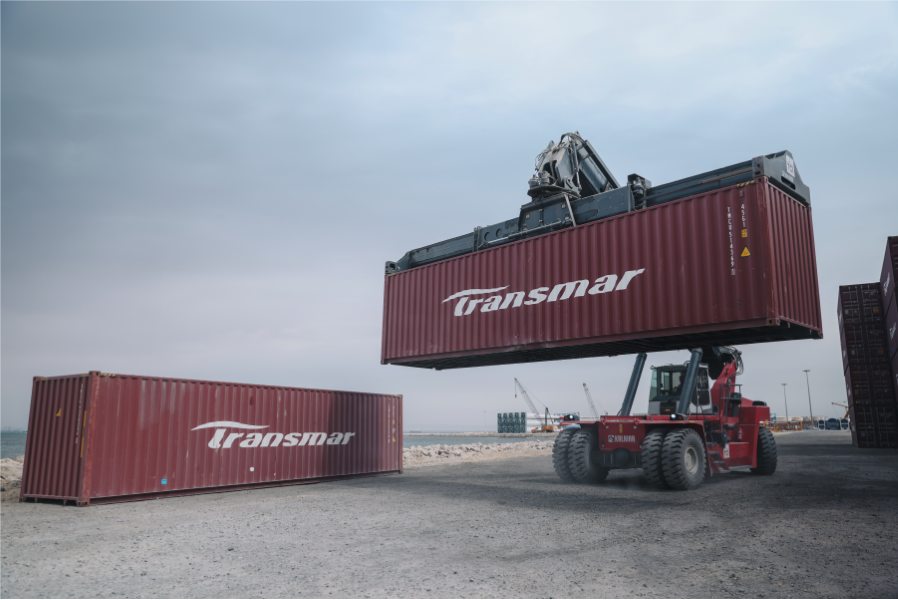
EnterpriseAM Logistics is available without charge thanks to the generous support of our friends at Hassan Allam Utilities and Transmar.
Were you forwarded this email? Tap or click here to get your own copy of EnterpriseAM Logistics.
Want to send us a story idea, request coverage, ask for a correction, or otherwise get in touch? Reach out to us on [email protected].
DID YOU KNOW that we also cover Egypt, Saudi Arabia, and the UAE? ***