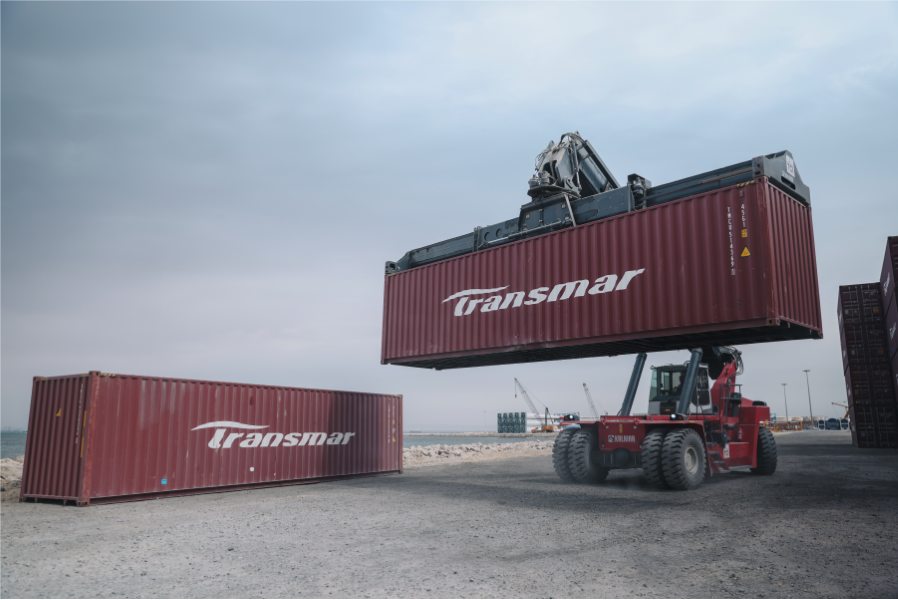
Alexandria gets a dry port to help its seaports handle a surge in transit cargo

1

WHAT WE’RE TRACKING TODAY

TODAY: Egypt’s Alexandria gets its first dry port + Gulf crude transfers spill into India's Gulf of Kutch

Good morning, nice people. It’s Forum Day in Cairo. The EnterpriseAM Egypt Forum: The AI Edition is kicking off in two hours, bringing together 500+ of the people who run the Egyptian economy. We have a couple of dozen business leaders joining us on stage to discuss the pertinent questions of our era — what does AI really mean for your business and your people, and what do you do about it? Follow us and stay tuned for coverage on Instagram and LinkedIn.

Also, we launched the latest publication under our umbrella earlier this morning: EnterpriseAM AI + Innovation. Our latest must-read vertical covers what works in this burgeoning sector, who is leading the game, and what is changing and evolving by the week. We’ll help you sort the real threats and prospects from the noise: AI news from MENA and around the world, how it’s reshaping our economies, and how businesses across the region are actually using it. We’ll go deep on the innovation economy too, from chip design to biotech. Edited by Joseph Marks (LinkedIn) — formerly of The Washington Post and Politico — the edition will start off on a twice-a-week cadence and is brought to you with the support of our friends at MNT-Halan. Tap or click here to sign up.

In today’s issue: Alexandria's ports are carrying more of Egypt's trade, so the city is building an overflow lot for them. El Amreya Dry Port, Alexandria's first, is set to open on 11 October, CEO Ahmed Abul Hassan tells EnterpriseAM. Meanwhile, Ship-to-ship transfers of Gulf crude have spread to the Gulf of Kutch as the waters off Oman and the UAE fill up.

PLUS- Iran won't reopen the strait until Washington meets the seven conditions set out in June's interim agreement, Mohammad Baqer Qalibaf, parliament speaker and chief negotiator, said, Reuters reports.


We’re honored to welcome Dr. Ahmed Heikal as a guest speaker at the 2026 EnterpriseAM Egypt Forum.

Dr. Heikal founded Qalaa Holdings in 2004, building it into Africa’s largest private equity firm with investments spanning 15 countries and 15 industries, before leading its transformation into a holding company spanning energy, cement, transportation & logistics, agrifoods, and mining. Along the way, he built more than 80 businesses across Egypt and Africa, including the Egyptian Refining Company, Egypt's largest private-sector-led infrastructure project, and has since exited more than 20 of them. He also founded the Qalaa Holdings Scholarship Foundation in 2007, which has supported more than 70k beneficiaries.

Earlier in his career, Heikal joined EFG Hermes in 1992 and played a key role in transforming the small financial consultancy into the leading investment bank in the Arab world and emerging markets, holding senior roles across asset management, investment banking, brokerage, and private equity before becoming an executive board member and Managing Director.

Registration is now closed. Thank you to everyone who registered. We look forward to welcoming you today.

Back at the pump

Fujairah is rebuilding its fuel oil supply after the Iran war cut it off from its usual Gulf suppliers, letting the port ramp ship refueling and exports to Asia back up, Reuters reports, citing industry sources and shipping data. UAE fuel oil imports more than tripled q-o-q to 2.6 mn tons in 3Q, up from 845k tons in 2Q, according to Kpler — a drop that came on the back of disruptions hitting Gulf refiners once the war started. September imports rose to 856k tons from 715k tons in August — still roughly half of February’s 1.7 mn tons.

Why it matters: Fujairah is one of the world's biggest bunkering hubs and the Gulf's main refueling stop outside Hormuz.

The supply map has been redrawn: Saudi Arabia replaced Kuwait, Fujairah's biggest supplier before the war, as the top source in July and August, and Russia was a key supplier in September. Producers are moving fuel oil out of the Gulf through shuttle runs and ship-to-ship transfers, Kpler senior research manager Emril Jamil said.

Exports are recovering even faster: UAE fuel oil exports topped 1.4 mn tons in September, their highest level in more than a year, with most heading to Southeast Asia. That put the UAE back ahead of Syria as the region’s largest fuel oil exporter by volume — after Iraq’s diversion of shipments to Syria’s Baniyas port temporarily pushed Syria into first place in 2Q.

The recovery still has gaps: Fujairah’s marine fuel sales have picked up in recent weeks but remain below pre-war levels, traders said. Onshore residual fuel inventories averaged 4.5 mn barrels in September, up from 3.9 mn barrels in August but still half the roughly 9 mn barrels held before the war.

UAE eyes more rail links to Central Asia

The UAE has signed on to study a rail line from Kazakhstan and Uzbekistan through Afghanistan to Pakistan's seaports, with the Energy and Infrastructure Ministry signing the memorandum with the two countries' transport ministries, according to a statement.

Emirati port operators already sit at both ends of the route: In the north, AD Ports and Kazakhstan Railways’ KTZ Express launched their GulfLink JV last year to build Central Asian cargo routes through markets including Pakistan. In the south, DP World is investing USD 400 mn in the rail corridor linking Pakistan’s Karachi Port with the Pipri marshalling yard near Port Qasim.

For landlocked Kazakhstan and Uzbekistan, the line is another way to the sea: It would give both countries a route to Pakistan’s Arabian Sea ports alongside existing options such as the Middle Corridor, the Caspian Post reports. Pakistan could pull more Central Asian cargo through its ports in return, with Afghanistan as the transit link.

The Gulf’s sovereign funds and largest companies are committing billions to AI infrastructure at home and to AI companies in the US and beyond. EnterpriseAM AI + Innovation reports on where that capital goes, who controls it and what it is actually buying.

Every Tuesday and Thursday, we also cover the startups and established firms across MENA putting AI to work, and how it is changing jobs, education and the way business runs.

It’s sharp, analytical and skeptical journalism that ignores hype and is laser-focused on informing our readers, not pleasing our sources.

The newsletter launches Monday, 5 October, at the EnterpriseAM Egypt Forum's AI edition.

Sign up here to be among the first to get it straight to your inbox.

Market watch

Oil prices edged lower this morning as rising Middle East exports and G7 stockpile releases eased supply concerns, Reuters reports. Brent crude futures dipped USD 0.66 to USD 101.59 / bbl by 02.40 GMT, while West Texas Intermediate (WTI) slipped USD 0.95 to USD 90.12 / bbl.


The Baltic Index moves in opposite directions: The Baltic Exchange’s dry bulk index — which tracks rates for the capesize, panamax, and supramax vessel segments — rose 0.3% to 3,148 points on Friday. The capesize index gained 0.6% to 5,042 points, while the panamax slipped 0.3% to 2,372 points. The smaller supramax fell 0.3% to 1,789 points.


The Drewry World Container Index fell 1% to USD 4,434 per 40-ft container last week, according to the latest index readings. Transpacific rates were steadier — Shanghai-Los Angeles rose 1% and Shanghai-New York was unchanged. Asia-Europe remained under pressure, with Shanghai-Genoa down 3%, and Shanghai-Rotterdam down 2%. China’s Golden Week factory closures are weighing on cargo flows, while rising Suez Canal transits are adding effective capacity to Asia-Europe routes. Hormuz disruptions and uncertainty around Houthi activity are still clouding operations, although the extended US-China trade truce could support a rebound in US-bound demand after the holiday. Drewry expects the market to remain volatile in the near term as demand, capacity shifts, and geopolitical risks continue to move rates.


Aramco is charging more for cooking gas this month. The oil giant raised its October official selling prices for liquefied petroleum gas (LPG) by 9-11% on the back of higher oil prices and increased demand, Reuters reports, citing traders. Propane is now USD 680 per ton (+USD 55), while butane costs USD 730 per ton (+USD 70). Aramco’s monthly LPG prices are widely used as a benchmark for Middle East LPG exports to the Asia-Pacific market.

***

YOU’RE READING EnterpriseAM Logistics, the essential MENA publication for senior execs who care about the industry that connects producers and retailers to global markets. We’re out Monday through Thursday by 10:15am in Cairo and Riyadh, and 11:15am in the UAE.

EnterpriseAM Logistics is available without charge thanks to the generous support of our friends at Hassan Allam Utilities and Transmar.

Were you forwarded this email? Tap or click here to get your own copy of EnterpriseAM Logistics.

Want to send us a story idea, request coverage, ask for a correction, or otherwise get in touch? Reach out to us on [email protected].

DID YOU KNOW that we also cover Egypt, Saudi Arabia, and the UAE? ***
This publication is proudly sponsored by

2

The Big Story Today

El Amreya Dry Port opens to take storage and clearance work off Alexandria and Dekheila

Alexandria’s seaports are carrying more of Egypt’s trade than they were a year ago, and the city’s about to get an inland site to take on some of that load. El Amreya Dry Port, Alexandria’s first and Egypt’s second after Sixth of October, opens on 11 October with officials from the Finance and Transport ministries in attendance, CEO Ahmed Abul Hassan tells EnterpriseAM. Container traffic through Alexandria and Dekheila rose 14% to 2.59 mn TEUs in FY 2025-26, according to official figures seen by EnterpriseAM. Transit led the growth as shippers leaned on Mediterranean gateways while geopolitical tensions affected Red Sea ports.

Why it matters: Dry ports move part of a seaport’s storage, handling, and customs work inland, so containers spend less time on the quay and goods move faster and more cheaply between factories, ports, and markets. El Amreya is the first dry port to serve Alexandria directly, and one of 33 dry ports and logistics zones the Transport Ministry wants nationwide.

What’s inside

It’s built as a logistics hub: Safety Navigation and Transport, which was awarded the tender to build El Amreya, sees it as an integrated logistics corridor serving exporters and every link in the supply chain, Chairman Ahmed Mustafa tells EnterpriseAM. The port has separate yards for loaded, refrigerated, empty, and hazardous-goods containers, and a vehicle and equipment. The site includes an MTS logistics center to organize procedures and operations within the port, Abul Hassan says, giving access to cargo owners across different services within the same facility.

Cold storage is a big part of the offer: El Amreya has four cold storage with 16 chambers of up to 625 units each, rated for goods that need very low temperatures. Its two dry warehouses hold up to 1.1k units each.

It opens plugged in: El Amreya will open with a connection to Nafeza, Egypt’s national single window for foreign trade, to process customs procedures digitally. The facility will also integrate with the national railway network, with the combined setup targeting a 15-20% reduction in cargo transport costs.

Why Alexandria needs the room

Transit is doing the heavy lifting: Transit containers jumped 74% in FY 2025-26 to 553.4k TEUs from 317.4k a year earlier, with transit tonnage up 62% to 5.78 mn tons. Loaded containers serving the local market grew more slowly, up 6% to 1.59 mn TEUs from 1.50 mn, while empties slipped 1.3% to 446.5k TEUs. Total container tonnage rose 11% to 28.31 mn tons.

The ships followed: Container vessel calls increased 7% to 2.1k, while RoRo calls climbed 26% to 221. Liquid bulk calls rose 5% to 658, while dry bulk held flat at 818. Egypt is also working as an overland bridge for some of that traffic, with shippers routing Europe-GCC cargo through Egypt: trailers land at Damietta, move overland to Safaga, and cross to Saudi Arabia.

How it fits the national plan

The ministry wants a network: The Transport Ministry’s 33 dry ports and logistics zones aim to link manufacturing, agricultural, and mining centers to seaports and consumer markets by road and rail. They sit along seven corridors, which include Arish-Taba, Sokhna-Alexandria, Cairo-Alexandria, Tanta-Mansoura-Damietta, Gargoub-Salloum, Cairo-Aswan-Abu Simbel, and Safaga-Qena-Abu Tartour.

More are in the pipeline: Sky Ports is developing a dry port in Alexandria’s New Borg El Arab, with technical studies due for submission early this month. Medlog’s USD 130 mn Tenth of Ramdan dry port and logistics hub is meanwhile expected to begin operations in 2027.

OUR TAKE- Opening day will show the facility is ready. The real test comes a few months in: whether container dwell times at Alexandria and Dekheila start to come down, and whether trucks are picking up boxes that have actually cleared. If El Amreya can make that work in a port as busy as Alexandria, it’s a good sign for the rest of the ministry’s list.

3

Shipping + Maritime

Ship-to-ship transfers of Gulf crude spill over to India's Gulf of Kutch

Ship-to-ship transfers of Gulf crude have spread as far as the Gulf of Kutch off India's western coast, as the waters off Oman and the UAE used for post-Hormuz handoffs fill up, Bloomberg reported. Two VLCCs recently moved Gulf crude onto other supertankers there, and the receiving ships sailed on toward Singapore and South Korea.

Why it matters: The handoff system Gulf exporters have leaned on through the war is getting slower and more expensive. Transferring a full VLCC now takes about five to six days, Vortexa estimates, making STS work one of the biggest sources of delay on Gulf-to-Asia routes. Volumes have grown as Houthi threats to the Red Sea route pushed more Saudi barrels back toward Hormuz, and VLCC freight costs are now above USD 1 mn a day.

REMEMBER- Iraqi marketer Somo has started offering Basrah crude for ship-to-ship pickup near Oman, moving the handoff outside the Gulf even though much of Iraq's export system still depends on Hormuz.

Meanwhile, Indian refiners are sending their own tankers in

Indian refiners are going the other way, hiring tankers to cross Hormuz and collect crude themselves, Bloomberg reported. Indian Oil, Reliance, Bharat Petroleum, and HPCL-Mittal have recently bought Iraqi barrels on a free-on-board (FOB) basis, which leaves the buyer responsible for finding a ship and moving the cargo. Sinokor and Dynacom have already won tanker tenders under the new setup.

That reverses the caution refiners showed earlier in the war. India's direct Hormuz-linked crude imports fell from nearly 2.8 mn bbl / d in February to just 179k bbl / d in May, while volumes through alternatives such as Yanbu and Fujairah more than doubled between March and May.

Deep Iraqi price cuts help explain the change: Iraq has cut its October prices by as much as USD 37 per barrel, Bloomberg reported. That makes it more attractive for refiners to carry the shipping risk themselves than to pay someone else to take it on.

Buyers now carry the freight fill

Indian Oil has bought 2 mn barrels of Iraqi crude for October on an FOB basis. That means it has to secure a tanker, send it into the Gulf to load, and carry the freight and transit risk on the way back. Reliance took on the same setup earlier this year, booking a Sinokor VLCC to lift 2 mn barrels of Basrah crude for USD 23-25 mn, against roughly USD 2 mn before the war.

What's next: Iraq's November pricing will show whether the price cuts that drew Indian refiners back into Hormuz are holding.

4

Disruption Watch

A Saudi-backed ground push to reopen Bab Al Mandab could start within weeks

Saudi Arabia is preparing an offensive to take Bab Al Mandab back from the Houthis and get ships moving through the Red Sea's southern gate again. Yemeni troops would do the fighting under Saudi air cover, with a start date anywhere from next week to after the US midterms in early November, regional and Western officials told Reuters.

Why it matters: The Houthis pushed down the coast last month and took Bab Al Mandab, the southern entrance to the Red Sea and the route to the Suez Canal. Holding the strait gives the group leverage in any future talks, and Riyadh has decided it can't negotiate a new peace while they keep it, Western diplomats and a Gulf official said.

Expect a limited operation focused on the coast, a former US ambassador to the Kingdom says. Michael Ratney told Reuters he expects something far smaller than the Saudi-led campaign that set out to rout the Houthis a decade ago. Riyadh wants the group beaten, he said, but above all, it needs to recover the coastline around Bab Al Mandab and reopen it to shipping.

REMEMBER- Aramco has been leaning on Egypt to avoid Bab Al Mandab. Since the Houthi threats began in July, Aramco has offered extra spot cargoes from Sidi Kerir, shipping crude north from Yanbu to Ain Sokhna and across Egypt through Sumed. Saudi crude loaded at Sidi Kerir more than doubled to nearly 2.3 mn bbl / d in August, though Sumed can carry only about half of the 5 mn bbl / d of the East-West Pipeline delivered to the Red Sea for export.

And more crude is now reaching the Red Sea than that route can carry: Aramco is running the East-West Pipeline above 80% capacity, leaving about 4.5 mn bbl / d to export from the Red Sea, Bloomberg reports. Sumed tops out at 2.5 mn bbl / d.

The Houthis are still hitting Saudi energy and power sites: Smoke rose near an Aramco facility in Riyadh yesterday after it was hit in a Houthi missile and drone attack, Reuters reports. The Yemeni Coalition also said a Houthi strike on the Taibah distribution station in Madinah — which feeds the Prophet’s Mosque — took one power transformer offline without affecting the wider grid. The Houthis have denied this.

What’s next? The Makkah Defense Pact of Saudi Arabia, Turkey, and Pakistan will hold an emergency meeting in Riyadh this week to weigh an Iranian proposal to engage the Houthis politically, Pakistani Foreign Minister Ishaq Dar said. Iran has distanced itself from the Houthis and Iraqi militias, Dar said, adding that both Iranian President Masoud Pezeshkian and Foreign Minister Abbas Araqchi want the matter settled.

5

Also on Our Radar

ONE launches new Poland-Egypt container service + Nakilat starts receiving its latest newbuilds

Baltic to Alex

Ocean Network Express (ONE) launched a new weekly container service linking Alexandria to Poland and northern Europe, effective 15-17 October, according to a company statement. The Poland Egypt Express (PEX) will run a southbound-only rotation from Poland’s Baltic port city, Gdansk, through Germany’s Bremerhaven to Alexandria.

IN CONTEXT- The expansion adds a second dedicated northern Europe gateway into Egypt, complementing its existing Levant Express service, which already connects Tilbury, Rotterdam, Bremerhaven, and Antwerp to Alexandria and Damietta on a weekly loop.

Nakilat adds more muscle to its fleet

Nakilat’s ammonia fleet takes shape: Qatar Gas Transport Company (Nakilat) has taken delivery of Energy North, the first of four 88k cbm LPG and ammonia carriers it ordered from South Korea’s HD Hyundai Samho, the company said in a press release. Once the remaining three arrive by 2027, Nakilat's LPG fleet will double to eight ships.

One down, five to go. Energy North is the first of six vessels Nakilat ordered from Hyundai Samho in early 2024 — four LPG/ammonia carriers and two LNG carriers — with deliveries running through 2027. The order sits inside a much wider fleet expansion that is expected to take the company to 112 vessels once its outstanding newbuilds are delivered, including 27 conventional LNG carriers and nine QC-Max ships.


OCTOBER

12-14 October (Monday-Wednesday): The Airport Show, Dubai, UAE.

20-22 October (Tuesday-Thursday): TOC Americas, Cartagena, Colombia.

21-22 October (Wednesday-Thursday): Global Ports Forum, Singapore.

26-29 (Monday-Thursday): Air Cargo Forum, Miami, US.

27-29 October (Tuesday-Thursday): Routes World, Riyadh, Saudi Arabia.

NOVEMBER

2-5 November (Monday-Thursday): ADIPEC Maritime and Logistics Exhibition and Conference, Abu Dhabi, UAE.

10-11 November (Tuesday-Wednesday): TOC Asia, Singapore.

10-12 November (Tuesday-Thursday): Intermodal Europe, Rotterdam, Netherlands.

11-13 November (Wednesday-Friday): Logitrans, Istanbul, Turkey.

18-19 November (Wednesday-Thursday): Breakbulk Asia, Singapore.

FEBRUARY 2027

10-12 February (Wednesday-Friday): Routes Americas, San Juan, Puerto Rico.

MARCH 2027

16-18 March (Tuesday-Thursday): CMA Shipping, Houston, US.

16-18 March (Tuesday-Thursday): Routes Asia, New Delhi, India.

APRIL 2027

20-22 April (Tuesday-Thursday): Routes Europe, Antalya, Turkey.

26-29 April (Monday-Thursday): Transport Logistic and air cargo Europe, Munich, Germany.

26-29 April (Monday-Thursday): Saudi Smart Logistics, Riyadh, Saudi Arabia.

Now Playing
Now Playing
00:00
00:00