Logistics (MENA)
  MENA+ Edition
  Egypt Edition
  UAE Edition
  Saudi Edition
  AI + Innovation (MENA)

 Share Issue





Good morning friends, and happy Thursday. We're closing out the week with a busy one for anyone who moves goods for a living. Egyptian exporters are getting two new routes into the Balkans, DP World has committed to Luanda until 2051, and Saudia is weighing what would be its biggest-ever aircraft order.
Our big story today looks at the two new routes for Egyptian cargo into the Balkans, and what they change for exporters trying to reach Southeast Europe without going the long way around.
Down in Angola, DP World is putting down deeper roots. The firm is investing USD 90 mn to keep running the port of Luanda until 2051.

The Gulf’s sovereign funds and largest companies are committing billions to AI infrastructure at home and to AI companies in the US and beyond. EnterpriseAM AI + Innovation reports on where that capital goes, who controls it and what it is actually buying.
Every Tuesday and Thursday, we also cover the startups and established firms across MENA putting AI to work, and how it is changing jobs, education and the way business runs.
It’s sharp, analytical and skeptical journalism that ignores hype and is laser-focused on informing our readers, not pleasing our sources.
Sign up here to be among the first to get it straight to your inbox.
Slot machine
Saudia Group is lining up what could be its largest aircraft order yet, with deliveries from 2031 to 2040: The group has settled on the size of the order, Sanjiv Kapoor, Saudia Group's executive VP of strategy and Flyadeal's acting CEO, told Bloomberg.
The last figure on the table was at least 150 jets: Saudia declined to give a number. In February it was in early talks with Airbus and Boeing over at least 150 narrowbody and widebody aircraft, which would be its biggest order in its history. Its current fleet is 196 jets.
Slots held back its last order: Saudia's USD 19 bn order for 105 Airbus narrowbodies in 2024 fell short of its needs. We “need more than 180 aircraft but there are no slots,” spokesman Abdullah Alshahrani said at the time, adding that Airbus couldn't offer additional deliveries before 2032.
IN CONTEXT- Engine shortages are still slowing deliveries across the industry. Engine shortages and other production bottlenecks are delaying new jets and forcing carriers to keep older aircraft flying for longer. Saudia has 39 firm 787s on order from 2023, and the 787 is one of the programmes hit by those constraints.
The board has the next say: Saudia will issue a formal tender once its board approves the plan. The firm hasn’t decided whether to place one large order or split into tranches.
Eurasia, open for business
The UAE’s trade agreement with the Eurasian Economic Union (EAEU) came into force yesterday, giving UAE exporters preferential access to Armenia, Belarus, Kazakhstan, Kyrgyzstan, and Russia, according to a statement. It covers about 86% of tariff lines and roughly 96% of the value of current trade between the two sides. The agreement is goods-only: it cuts or removes customs duties and simplifies customs procedures, but doesn’t touch services or investment.
The target is about USD 50 bn in annual trade by 2032, up from USD 33.6 bn in non-oil trade last year. That 2025 figure was up 16% y-o-y and more than four times the 2021 level. Momentum has cooled since, though: non-oil trade rose just 6.2% y-o-y to USD 14.3 bn in 1H 2026.
Why it matters: The UAE mostly trades with the bloc as a middleman. Of last year’s USD 33.6 bn, USD 17.8 bn was imports from EAEU countries and USD 13.7 bn was re-exports. That leaves only around USD 2 bn of UAE-made non-oil exports. Lower tariffs should help re-exporters and logistics players most, along with the handful of UAE manufacturers that sell into the bloc. Foreign Trade Minister Thani Al Zeyoudi singled out food security, agriculture, automotive, and precious metals as sectors set to benefit.
Market watch
Oil prices rose this morning as Gulf shipping attacks heightened Middle East supply concerns, Reuters reports. Brent crude futures increased USD 1.33 to USD 101.53 / bbl by 01.16 GMT, while West Texas Intermediate (WTI) gained USD 1.11 to USD 89.39 / bbl.
The Baltic Index inches lower: The Baltic Exchange’s dry bulk index — which tracks rates for the capesize, panamax, and supramax vessel segments — fell 0.3% to 2,994 points on Tuesday. The capesize index eased 0.9% to its lowest since 21 August. The indices measuring panamax and supramax inched up 0.8% and 0.3%, respectively.
PSA
Jazan Port has extended its storage-fee exemption for transit general cargo to 60 days, effective yesterday, the Saudi Ports Authority (Mawani) said on X. Mawani had previously extended storage-fee exemption at Dammam and Jubail by 90 days in August, and Jazan had offered fee reductions of up to 50% in April. Longer grace periods give importers room and help ease port congestion as disruptions stretch transit times.
***
YOU’RE READING EnterpriseAM Logistics, the essential MENA publication for senior execs who care about the industry that connects producers and retailers to global markets. We’re out Monday through Thursday by 10:15am in Cairo and Riyadh, and 11:15am in the UAE.
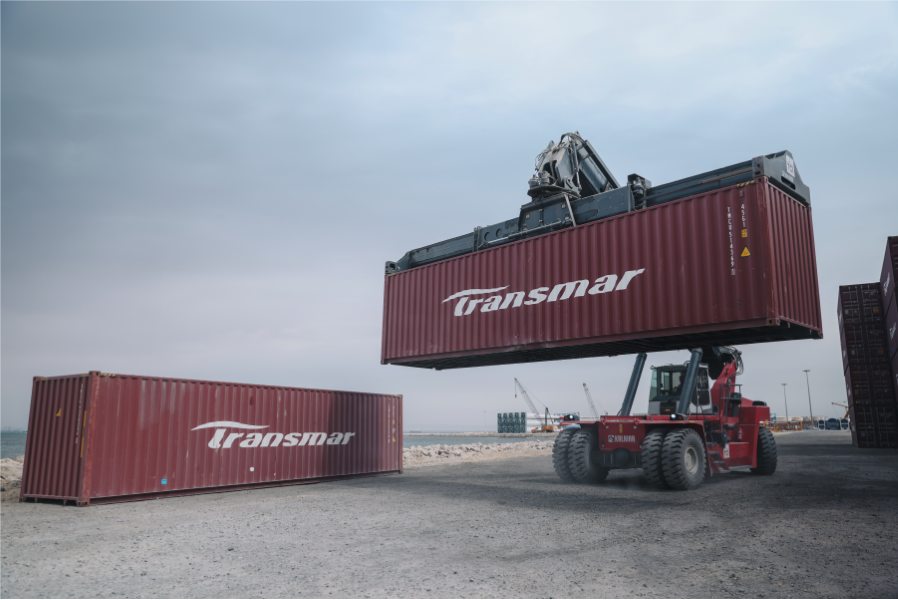
EnterpriseAM Logistics is available without charge thanks to the generous support of our friends at Hassan Allam Utilities and Transmar.
Were you forwarded this email? Tap or click here to get your own copy of EnterpriseAM Logistics.
Want to send us a story idea, request coverage, ask for a correction, or otherwise get in touch? Reach out to us on [email protected].
DID YOU KNOW that we also cover Egypt, Saudi Arabia, and the UAE? ***