Logistics (MENA)
  MENA+ Edition
  Egypt Edition
  UAE Edition
  Saudi Edition

 Share Issue





Good morning, nice people. Today's theme: control what you can, when you can't control the rest. Egypt's cabinet has confirmed the fire that knocked the Energos Winter offline on Wednesday was a drone strike. To fill the gap, Egypt shifted an LNG shipment to Jordan and pulled more gas from Israel — now at the max the pipelines can handle. Meanwhile, Adnoc is buying ships to keep control of its own exports.
PLUS- A fresh strike near Hormuz is complicating Qatar's LNG restart. The Gaslog Shanghai, carrying a Qatari LNG cargo, was hit by an unknown projectile transiting the strait and stopped transmitting near its western entrance last weekend — just days after the Al Areesh became Qatar's first LNG carrier to cross with its transponder on since the Al Rekayyat attack three weeks earlier.
Conflict-wary Opec+ raises output
Opec+ greenlit an additional hike of 188k bbl / d for September, marking the bloc’s sixth consecutive monthly increase and fully rolling back the 1.65 mn bbl / d in voluntary cuts agreed upon in 2023, according to a statement. The decision mirrors identical quota increases for August, July, and June, which followed an oil output boost of 206k bbl / d for May.
The Kingdom will contribute 62k bbl / d for the hike, raising its required production level to around 10.5k bbl / d for September 2026.
The conflict weighs heavy: In a separate meeting yesterday, the alliance’s Joint Ministerial Monitoring Committee expressed renewed concern over attacks on energy infrastructure amid the US-Iran war, noting that the costly and prolonged repairs required for such damage threaten global supply.
REMEMBER- Despite rising quotas, Opec+’s actual output has yet to fully recover from war-related export disruptions, with May production dropping m-o-m to 33.1 mn bbl / d — well below pre-war levels of 42.7 mn — before starting a gradual recovery in June.
What’s next? The bloc maintains a foundational layer of production cuts affecting the majority of its members — a restriction of 2 mn bbl / d originally enacted in 2022 that is scheduled to remain in effect through the end of the year, Reuters reports.
Cutting the cord from Murban
Adnoc is scrapping the pricing system it built five years ago: Every grade of Adnoc crude, including flagship Murban, will price off the regional Platts Dubai benchmark instead of ICE Futures Abu Dhabi's Murban contract starting 1 November, the company said in a statement. Pricing will also be set a month before loading rather than two months out, tightening the window between price and delivery.
This follows a two-step rollout: Adnoc first consulted with refiners and traders on repricing three offshore grades — Upper Zakum, Das, and Umm Lulu — against Dubai in late June, with no timeline attached. By mid-July, those same three grades were being priced against Dubai for ship-to-ship cargoes transferred outside Hormuz at Fujairah, while cargoes picked up at the usual terminals stayed priced at parity with Murban
IN CONTEXT- The Murban contract was Abu Dhabi's signature play to become a global pricing benchmark. That contract cracked wide open in March, when Hormuz disruptions sent Murban futures above USD 160 a barrel at one point, even as Brent stayed below USD 130.
REMEMBER- Adnoc's August Murban price, set under the old system, came in at USD 80.01 a barrel, a cut of more than USD 21 from July, itself a sign the benchmark was struggling to hold a stable read on the market even before this week's move.
What's next: ICE will wind down Murban futures, suspending contracts with no open interest immediately and letting the rest run to expiry, meaning a benchmark barely five years old effectively shuts down by the time Adnoc's new system takes effect in November.
GCC weighs region-wide logistics platform
The GCC General Secretariat is reviewing a proposal to create a unified digital platform linking logistics services across the six member states, the Kuwait Chamber of Commerce and Industry told Al Eqtisadiah after it submitted this proposal. The proposal has been referred to ministerial committees for review before any implementation decisions.
What it would do: The platform would connect shipping companies, importers, exporters, warehouse operators, ports, and logistics zones, while providing real-time data on port capacity, transport costs, customs procedures, storage availability, and freezones. It would also include AI-powered route and service matching, allowing users to compare logistics options across sea, land, and air. A pilot phase is planned before any wider rollout.
Why it matters: The Hormuz crisis has highlighted the lack of a coordinated Gulf logistics system, with cargo rerouted through ad hoc bilateral arrangements and emergency measures. A shared platform could make capacity and routing options more transparent across the GCC, although the proposal must first clear ministerial review, and GCC integration projects have often taken years to move from agreement to implementation
Market watch
Oil prices slid more than USD 4 a barrel this morning after Trump paused plans for a fresh strike on Iran, Reuters reports. Brent crude futures decreased USD 4.49 to USD 83.44 / bbl by 04.08 GMT, while West Texas Intermediate (WTI) dipped USD 4.90 to USD 79.77 / bbl.
The Baltic Index edges higher: The Baltic Exchange’s dry bulk index — which tracks rates for the capesize, panamax, and supramax vessel segments — rose 2.2% to 2,732 points on Friday. The capesize index climbed 3.1% to 4,296 points, while the panamax gained 2.3% to 2,087 points. The smaller supramax to 1,609 points.
The Drewry World Container Index fell 3% to USD 4,255 per 40-ft container last week, according to the latest index readings. The decline came as transpacific and Asia-Europe rates moved lower, led by drops on Shanghai-Genoa (3%), Shanghai-Los Angeles (2%), while Shanghai-New York was unchanged. Geopolitical tensions in the Middle East have pushed several carriers to impose emergency fuel surcharges from August, while blank sailing and service adjustments are being used to control capacity across major trade lanes. Uncertainty surrounding trade policies, geopolitical developments, and port congestions are expected to steer freight rates in the coming weeks.
Get Enterprise daily
The roundup of news and trends that move your markets and shape corporate agendas delivered straight to your inbox.
***
YOU’RE READING EnterpriseAM Logistics, the essential MENA publication for senior execs who care about the industry that connects producers and retailers to global markets. We’re out Monday through Thursday by 10:15am in Cairo and Riyadh, and 11:15am in the UAE.
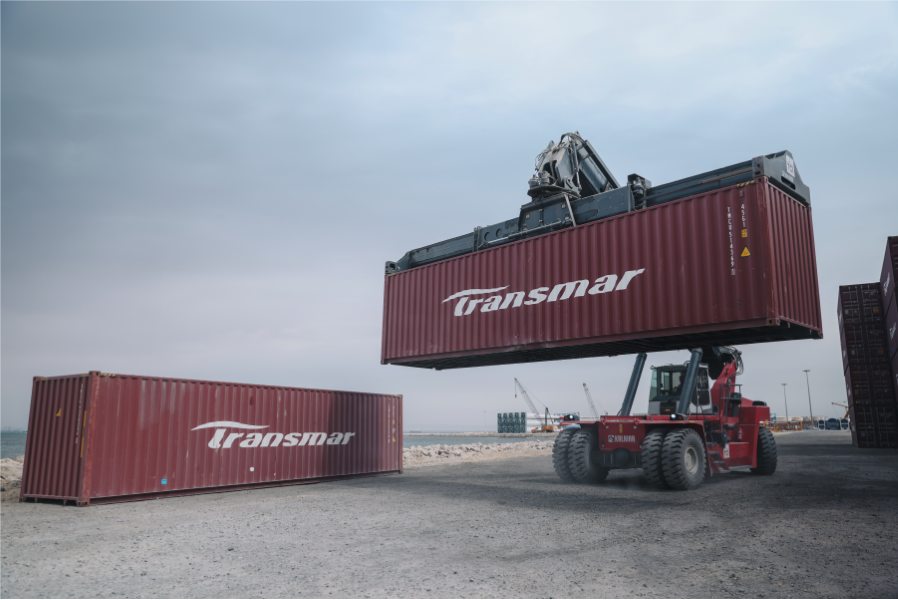
EnterpriseAM Logistics is available without charge thanks to the generous support of our friends at Hassan Allam Utilities and Transmar.
Were you forwarded this email? Tap or click here to get your own copy of EnterpriseAM Logistics.
Want to send us a story idea, request coverage, ask for a correction, or otherwise get in touch? Reach out to us on [email protected].
DID YOU KNOW that we also cover Egypt, Saudi Arabia, and the UAE? ***