Egypt activates the TIR transit system after a five-year delay

1

WHAT WE’RE TRACKING TODAY

TODAY: UN-backed TIR now has a guarantor in Egypt

Good morning, ladies and gents. Today’s issue has a big Egyptian flavor. Our top story: TIR finally has someone to vouch for it. The UN-backed transit system has sat dormant in Egypt since 2021 for want of exactly one thing — a guarantor. Now it has one, which means sealed cargo can cross the country in a single bonded run instead of getting unpacked and repacked at every border.

Plus: Egypt is having a moment on both coasts and one gas pipeline. Fujairah wants in on Red Sea crude storage (the second Emirati suitor this year), Jordan and Egypt are now splitting an FSRU at Aqaba, and Egytrans Nosco's board is still weighing AGL's offer.

Meanwhile, it’s been a minute since we’ve had to lead with an airport getting hit. Houthi missiles targeted Abha on Monday — the first direct strike on Saudi soil since the 2022 truce — and while air defenses say they handled it, we’re watching for flight disruptions and how carriers route around it.

A tale of two coasts

Egypt’s tanks draw more Emirati interest: Fujairah is in talks with Egyptian General Petroleum Corporation to lease storage capacity for crude oil and petroleum products at Egypt’s Red Sea port. It’s the second such approach by an Emirati entity in recent months — AD Ports made a similar pitch for Red Sea storage back in April. The facilities targeted, lease capacity, and commercial terms were not disclosed.

Why this matters: The offer has gained strategic relevance as disruption in Hormuz pushes Gulf producers and traders to look for alternative routes and storage capacity outside the waterway. Egypt has around 29 mn barrels of spare storage across our main ports, with 19 commercial ports, 14 under development, and nearly 79 petroleum storage facilities built or upgraded in recent years. The country has put up 10 storage facilities for lease at Ain Sokhna and Ras Badran} in March as the country aims to monetize spare capacity and attract oil flows from Gulf producers.

Now both coasts: Fujairah is already on the Mediterranean side. It’s partnering with Wepco on a USD 457 mn expansion of Al Hamra Port, set to double crude storage to 5.3 mn barrels from 2.5 mn and add a 130k-ton petroleum-products complex.

Sharing is caring

A new floating storage and regasification unit (FSRU) has arrived at Jordan’s Aqaba port to be shared by Egypt and Jordan to help meet their gas demands through the end of the year. The Excelerate Acadia — owned by US-based Excelerate Energy — is being connected to Aqaba’s LNG facilities for commissioning tests.

How the gas will be split: Under the Egypt-Jordan arrangement at 750 mmcf/d, Egypt will be able to draw up to 450 mmcf/d through the Arab Gas Pipeline, depending on demand, while Jordan will receive around 300 mmcf/d.

A vessel reshuffle: The Excelerate Acadia replaces the previously shared Energos Force, which has moved from Aqaba to Ain Sokhna and will remain there until its charter expires at the end of August.

BACKGROUND- Excelerate signed a nine-month charter agreement with Jordan’s National Electric Power Company in May to deploy the vessel at Aqaba. The FSRU was originally built for Excelerate’s planned LNG import terminal in Iraq, but was reassigned temporarily after the Iraqi project was delayed.

IN CONTEXT- Egypt now has five FSRUs physically stationed at its ports: the soon-to-be replaced Hoegh Galleon, Energos Eskimo, Energos Power, Energos Winter, and newly arrived Energos Force — alongside the Excelerate Acadia, shared with Jordan. The country recently tendered a floating storage unit and is expected to contract another FSRU ahead of the summer demand peak.

Not yet, but not no

Egytrans Nosco isn’t ready to decide on AGL’s buyout offer just yet. The board tasked management with studying French logistics group Africa Global Logistics’ (AGL) offer to acquire up to 100% of the EGX-listed firm and will revisit the offer for a final decision once the review wraps, according to a statement (pdf). No timeline was given.

ICYMI- AGL made a non-binding indicative offer earlier this month at EGP 11.25-12.25 per share. The top-of-the-range valuation for the integrated transport and project-logistics operator is EGP 2.76 bn — an 18.4% premium to the stock’s last close before the news broke. AGL has also pledged to keep key executives on for at least four years post-acquisition.

The road to delisting: AGL’s planned mandatory tender offer (MTO) is conditional on securing at least 75%, though it says it is prepared to buy out all shareholders, with voluntary delisting being the eventual aim. The French group says it already has the liquidity in hand and could settle in USD or EUR rather than EGP — all pending approvals from both the Financial Regulatory Authority and the Central Bank of Egypt.

REMEMBER- Egytrans Nosco was formed last September in the EGX’s first reverse merger, combining listed Egytrans (70.2%) and the then-unlisted Nosco (29.8%).

The nominations are thinning out

Saudi crude is struggling to make China’s August buying slate. At least two refiners have requested no term shipments next month, while others that sought cargoes have yet to receive provisional allocations, Bloomberg reports. Final volumes remain fluid as Aramco and buyers discuss ad-hoc spot sales, but the early nominations extend a sharp decline, with Saudi sales to China set at just 10-20 mn barrels over the past three months.

The pullback started earlier: Saudi allocations to China halved to around 20 mn barrels in May from 40 mn in April as China’s refiners turned to commercial inventories instead, with drawdowns estimated at up to 1 mn bbl / d through April-June.

This is no longer only a supply problem: China imported 29.3 mn tons of crude in June, down 41.3% y-o-y to its lowest level in almost a decade. Even Aramco’s decision to price its flagship Asian grade at a lower cost for the first time since 2020 hasn’t fully revived demand, with buyers saying competing prompt cargoes remain cheaper. Meanwhile, Rongsheng’s Petrochemical, which holds a long-term supply contract with Aramco, bought at least 6 mn barrels of Saudi crude on a spot basis for prompt arrival — a sign that buyers are becoming more selective about price, timing, and delivery terms.

Market watch

Oil prices increased this morning as renewed US-Iran tensions fueled supply concerns, Reuters reports. Brent crude futures increased USD 0.99 to USD 85.72 / bbl by 04.00 GMT, while West Texas Intermediate (WTI) gained USD 0.64 to USD 79.98 / bbl.


The Baltic Index posts further gains:The Baltic Exchange’s dry bulk index — which tracks rates for the capesize, panamax, and supramax vessel segments — rose 0.7% to 2,980 points on Tuesday, buoyed by increases across all vessel segments. The capesize index jumped 1% to 4,751 points, while the panamax index increased by 0.1% to 2,251 points. The smaller supramax index edged up 0.2% to 1,710 points.

Data point

17 mn tons — that’s how much cargo the Port of Casablanca handled in 1H 2026, up 7% y-o-y. Imports accounted for 75% of the total to reach around 12.8 mn tons, while exports reached 4.3 mn tons. Container throughput rose 5% to 762.6k TEUs and ro-ro volumes jumped 35% to 93.8k units.


Destination Sahel is back for a second edition — and this year, it's not just about the beach.

Gulf sovereign wealth funds are pouring bns into the North Coast, Gulf buyers keep showing up despite regional headwinds, and a new 400-km master plan could reshape the whole coastline before summer’s out.

Over this season’s series, stay tuned to see who's really buying Sahel, where the money's coming from, and what could still go wrong.

Plus, the hotels, restaurants, and openings worth checking out this summer.

Tap or click here to subscribe to the Egypt edition, coming out today in your inbox.


*** YOU’RE READING EnterpriseAM Logistics, the essential MENA publication for senior execs who care about the industry that connects producers and retailers to global markets. We’re out Monday through Thursday by 10:15am in Cairo and Riyadh, and 11:15am in the UAE.

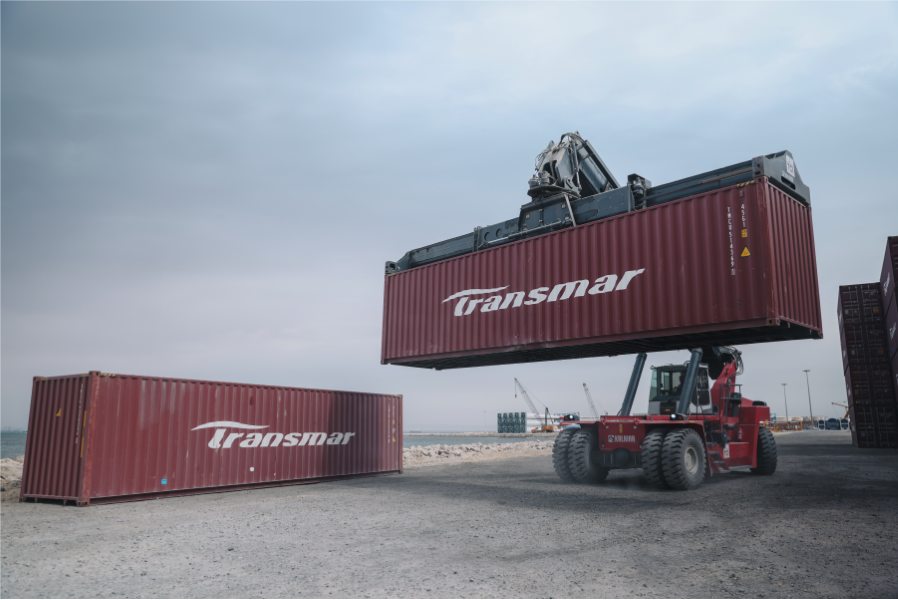
EnterpriseAM Logistics is available without charge thanks to the generous support of our friends at Hassan Allam Utilities and Transmar.

Were you forwarded this email? Tap or click here to get your own copy of EnterpriseAM Logistics.

Want to send us a story idea, request coverage, ask for a correction, or otherwise get in touch? Reach out to us on [email protected].

DID YOU KNOW that we also cover Egypt, Saudi Arabia, and the UAE? ***

This publication is proudly sponsored by

2

The Big Story Today

UN-backed International Road Transport now has a guarantor in Egypt

TIR now has a guarantor in Egypt: The Egyptian Customs Authority and the Federation of Egyptian Chambers of Commerce signed an agreement activating the UN-backed International Road Transport (TIR) system, according to a statement. The agreement names the Federation as Egypt’s national TIR association — the body that issues TIR documents and backs the guarantee mechanism, the missing piece that makes the system operational.

BACKGROUND- Egypt joined the TIR Convention in 2020, and the treaty took effect in 2021, but the system never went live. As recently as last year, officials and the International Road Transport Union (IRU) were still discussing implementation, which the IRU said could link Egypt’s Ro-Ro routes to Italy and Turkey and open corridors to the Gulf and Africa.

SOUND SMART- TIR lets sealed shipments cross multiple countries under a single customs document and guarantee, cutting repeated inspections and covering any duties that become due if cargo is diverted. The IRU says it can cut border transit times by up to 92% and transport costs by up to 50% — savings the government expects to widen exporters' access to Arab, African, and European markets.

Where it fits: TIR underpins Egypt's plan for two Europe-Arab trade corridors. The northern route connects Europe with Jordan, Iraq, and Syria via Arish-Taba; the southern route moves cargo between Europe and the Gulf via Safaga and Saudi's Neom — two of eight logistics corridors under development, according to a Transport Ministry statement.

The industry view: TIR could cut transport costs and shorten trailer turnaround times, allowing trailers to return to service faster and improving fleet availability, Pan Marine Commercial Director Ghada Samy tells EnterpriseAM. The benefits would extend beyond Gulf routes to freight links with North Africa, she adds, noting that it could also help Egyptian trailers have access to more than 100 countries (TIR members) — including European markets — but reaching that point remains a work in progress and requires meeting a “long checklist” of requirements.

Transit trade is already growing: Our transit trade is up 40% since March, with the Europe-Egypt-GCC route gaining importance during the war, Finance Minister Ahmed Kouchouk said yesterday. Goods passing through Egypt — and the services provided to them — are exempt from VAT under the second tax-facilitation package, he added.

3

Disruption Watch

Airlines reassess Saudi airspace risk after Houthi strike on Abha airport

Houthi ballistic missiles and drones targeted Saudi Arabia’s Abha International Airport on Monday, the first direct attack on Saudi territory since the truce froze the Yemen war in 2022. Coalition spokesperson Turki Al Malki said air defenses dealt with ballistic missiles launched toward the southern region, and no casualties were reported. Houthi military spokesperson Yahya Saree declared the “de-escalation phase” over and warned the strikes “will not go unanswered or unpunished.”

What set this off? Yemen’s internationally recognized government said it cratered the Sanaa airport runway to stop an Iranian aircraft from landing, after failing to persuade the Houthi delegation returning from Ayatollah Khamenei's funeral in Tehran to fly home on national carrier Yemenia instead, Agence France-Presse reports.

Flights were grounded within hours: At least 10 departures from Abha were canceled yesterday, including five Saudia services and two Flyadeal flights, while Flydubai canceled its Abha and Najran services after diverting an Abha-bound flight to Taif. Egypt’s Air Cairo has also canceled all flights to and from Abha after the closure of Abha International Airport yesterday.

Containment is the base case — for now: The immediate impact should remain contained if the attack proves isolated, with heightened security, temporary disruption at Abha, and tactical rerouting around southern Saudi airspace more likely than a nationwide closure, Wouter Dewulf, professor of air transport management and economics at the University of Antwerp, tells EnterpriseAM.

It’s not just missiles airlines are pricing in now: The attack will force carriers to reassess their exposure not only to a direct strike, but also to interceptions, falling debris, and possible misidentification, Dewulf says. Although striking an aircraft at cruising altitude would require sophisticated capabilities, some airlines may still avoid southern or western Saudi Arabia or extend suspensions as a precaution, he adds.

Carriers are boxed in: “KLM is already looking at alternative routings for flights from India, which shows how challenging the situation has become. European airlines are already avoiding several corridors through Ukraine, Iran, Iraq, Yemen, and Russia, so the remaining alternatives are limited and often involve longer flight times and higher fuel costs,” Dewulf argues.

Escalation is the thing to watch: A single attack followed by de-escalation would likely mean only temporary rerouting, Dewulf says, but repeated strikes, a Saudi retaliation, or attacks closer to Jeddah, Riyadh, Dammam, or the main Gulf aviation corridors could turn a localized disruption into a much wider regional airspace shock, he adds.

4

Also on Our Radar

Asyad adds six tankers + SAL’s new SF Airlines contract

Asyad expands its product fleet with OMR 119 mn order

Asyad bags another order: Oman’s Asyad Shipping signed an OMR 119 mn shipbuilding agreement with Hyundai Heavy Industries for six 50k-dwt medium-range product tankers, according to a press release (pdf). Deliveries will begin in 2029, with all six vessels backed by five-year time-charter contracts with an unnamed global energy company.

The wider fleet play: The order builds on Asyad’s OMR 1 bn five-year fleet expansion program, which includes two LNG carriers, four crude tankers, and two oil-derivative tankers entering service across 2026/2027. The company ordered three dual-fuel VLCCs for USD 389 mn earlier this year, with deliveries scheduled for 2028/2029.

Out with the old, in with the new: The expansion is running alongside the disposal of older gas tonnage. The firm sold its 2001-built Sohar LNG carrier for USD 23 mn in June, after agreeing to offload four other partially owned LNG carriers late last year.

Product tankers are already Asyad’s biggest fleet segment. Asyad operated 35 product tankers at the end of March, compared with 17 crude tankers, 17 dry-bulk vessels, five container ships, and three gas carriers. With two more product tankers already on order, the six-vessel Hyundai agreement takes its committed product fleet to 43.

SAL takes on SF Airlines’ Saudi operations

SAL adds SF Airlines to its roster: Saudi Arabia’s SAL has signed a one-year agreement to handle China’s SF Airlines cargo and ramp operations in the Kingdom, according to a bourse filing. SAL will provide cargo handling, aircraft loading and offloading, and other ramp services. The agreement has no fixed value, with the Chinese carrier paying for services as needed at the rates set under the contract.

The China footprint: SAL entered China last year through a strategic partnership with Tam Group to strengthen bilateral air-cargo flows. Its outbound expansion has since accelerated through a planned SAR 123 mn acquisition of Belgian handler Aviapartner Liège and the establishment of an Amsterdam-based subsidiary to lead its international ground-handling push.


AUGUST

30 August-1 September (Sunday-Tuesday): Air Cargo Middle East, Riyadh, Saudi Arabia.

30 August-1 September (Sunday-Tuesday): Saudi Warehouse and Logistics Expo, Riyadh, Saudi Arabia.

SEPTEMBER

16-17 September (Wednesday-Thursday): Saudi Maritime & Logistics Congress, Dammam, Saudi Arabia.

22-23 September (Tuesday-Wednesday): Breakbulk Americas, Houston, US.

22-24 September (Tuesday-Thursday): Seamless Middle East, Dubai, UAE.

28-30 September (Monday-Wednesday): Transport Logistics Middle East, Riyadh, Saudi Arabia.

OCTOBER

12-14 October (Monday-Wednesday): The Airport Show, Dubai, UAE.

20-22 October (Tuesday-Thursday): TOC Americas, Cartagena, Colombia.

21-22 October (Wednesday-Thursday): Global Ports Forum, Singapore.

26-29 (Monday-Thursday): Air Cargo Forum, Miami, US.

27-29 October (Tuesday-Thursday): Routes World, Riyadh, Saudi Arabia.

NOVEMBER

2-5 November (Monday-Thursday): ADIPEC Maritime and Logistics Exhibition and Conference, Abu Dhabi, UAE.

10-11 November (Tuesday-Wednesday): TOC Asia, Singapore.

10-12 November (Tuesday-Thursday): Intermodal Europe, Rotterdam, Netherlands.

11-13 November (Wednesday-Friday): logitrans, Istanbul, Türkiye.

18-19 November (Wednesday-Thursday): Breakbulk Asia, Singapore.

FEBRUARY 2027

10-12 February (Wednesday-Friday): Routes Americas, San Juan, Puerto Rico.

MARCH 2027

16-18 March (Tuesday-Thursday): CMA Shipping, Houston, US.

16-18 March (Tuesday-Thursday): Routes Asia, New Delhi, India.

APRIL 2027

20-22 April (Tuesday-Thursday): Routes Europe, Antalya, Turkey.

26-29 April (Monday-Thursday): Transport logistic and air cargo Europe, Munich, Germany.

26-29 April (Monday-Thursday): Saudi Smart Logistics, Riyadh, Saudi Arabia.

Now Playing
Now Playing
00:00
00:00