Beyond the ticket

1

WHAT WE’RE TRACKING TODAY

THIS MORNING: Event pipeline continues thinning out

Good morning, friends. The CMA has put a package of amendments to its investment funds rules out for a 30-day consultation, and the part that’s most worth paying attention to is that private funds would have to report what they hold, asset by asset.

For real estate funds that means every holding named — type, location, latest valuation, how far along the development is, occupancy where it applies. Private equity and venture funds would list each investee, the size of the stake and what it is marked at, with exits reported down to the realized value and the return.

Webook is going the other way, outward. The company built on Saudi Arabia’s entertainment seasons has moved past ticketing into flights, hotels, visas, dining and attractions and is now heading into Europe, with Nadeem Bakhsh making the case for a “super app for fun” with the Kingdom at its center.

Meanwhile, the event pipeline is looking thinner: Two of the Kingdom’s biggest construction-sector trade shows, Saudi Build and Saudi Elenex, have been postponed from their original 2-5 November in Riyadh to 1-4 November 2027, because of ongoing Middle East tensions. Organizer Riyadh Exhibitions Company said the decision puts the “safety and well-being” of stakeholders first and gives more time to facilitate international participation, partnerships and trade transactions.

Conserving fire

Saudi Arabia has cut the number of interceptors it fires at each incoming missile from five to seven down to a couple, conserving stocks as it presses Europe for more air defense hardware, military and defense sources tell The National. A western diplomatic source said Saudi Arabia is pushing hard for “more UK involvement.”

What Europe has to give is limited. Any new Sky Sabre batteries would have to be redirected from the Baltics, a former military intelligence officer said, warning that gaps there could make Russia “even more kinetic.” A UK defense source put it plainly: “We have very little left in the locker to give.” Britain could offer a few Rapid Ranger systems, though “we’ve only got a couple of dozen” and some are already in the Kingdom, Defense Eye editor Francis Tusa said. London is also expected to share satellite imagery and intelligence on the Houthis.

The demand side keeps growing. The coalition intercepted two ballistic missiles fired toward Khamis Mushait and drones over Riyadh and the Eastern region, while the UKMTO reported two incidents off Jubail, with one tanker hit by an unknown projectile and another by a grenade. On the Yemeni front, the Houthis encircled Taiz, Yemen’s third-largest city, and could use it to open a route toward Aden.

The air campaign continues. Saudi warplanes carried out 110 airstrikes and missile attacks over the past 24 hours, targeting civilian sites in Sanaa, Hodeidah, Taiz, Amran, Hajjah, Saada, Al Jawf, Dhale and Marib, Houthi spokesperson Yahya Saree said on Sunday. The strikes involved the use of F-15 and Typhoon fighter jets flying from the Khamis Mushait and Taif bases, along with missiles fired from Najran. The Houthis put the total number of Saudi airstrikes and missile attacks since the start of the current round of fighting at 2,652. Saudi Arabia has not yet commented on the Houthi statement.

Europe might be out, but other partners are stepping up to form a defensive front: Egypt’s National Defense Council pledged full support to Saudi Arabia, announcing its intention to provide “complete standing and solidarity” with Saudi Arabia and on providing “all necessary forms of support” to defend the kingdom’s security. Turkey and Pakistan also committed forces for deployment inside the Kingdom, though Ankara ruled out joining any offensive operations.

Riyadh airport reopens to restore some normality, but airlines remain wary: King Khalid International Airport reopened yesterday, yet most foreign carriers have not resumed flights. Cathay Pacific extended its Riyadh suspension to 31 January, and Delta pushed the launch of its Atlanta-Riyadh route to March. Lufthansa suspended Riyadh flights until 18 November, Philippine Airlines until 29 November, and KLM and SalamAir until 31 October. Air France, Air India, Akasa and IndiGo are also grounded until around 24 October.

Time to reassess

The World Bank says this is a good time for Riyadh to reconsider some of the investments launched under its diversification drive and redirect resources toward more pressing needs. The Kingdom still has enough fiscal space to cushion the war-driven energy shock, but that buffer is shrinking, World Bank chief economist for MENAAP Roberta Gatti told Asharq Business (watch, runtime 6:12). She urged the government to measure the results of its investments regularly, cautioning that “the urgent should not completely overshadow the important.”

The OECD is more upbeat on the headline: Saudi Arabia’s economy is “in a far more resilient position than most other countries in the region,” Secretary-General Mathias Cormann told Asharq Business in a separate interview (watch, runtime 5:11), with growth of about 4% expected in 2027. He pointed to the Kingdom’s alternative oil export routes, saying it “has more options than others,” and noted that higher crude prices have offset part of the sharp drop in export volumes.

That forecast comes with a condition attached: “We are obviously assuming the conflict ends,” Cormann said, adding that prolonged or escalating fighting with energy prices staying high would force the OECD to revise its outlook. The organization remains “cautiously optimistic.”

ICYMI- The IMF expects the Saudi economy to shrink 3.3% in 2026 before rebounding 7.9% in 2027, a milder hit than most Gulf peers, citing the alternative export routes as the cushion after the closure of the Strait of Hormuz took out a route carrying around 20 mn bbl / d before the war.

Made in KSA

Bahri plans a second IMI order next year: The National Shipping Company (Bahri) will place a second order with the shipbuilder International Maritime Industries (IMI) in 2027, CEO Ahmed Alsubaey told Asharq Business without giving order’s size or value. Bahri is also moving to own LR1 and LR2 product carriers, and is eyeing new segments, including Suezmax and Aframax crude tankers, and additional gas cargoes beyond LPG and ammonia. The company will also add two vessels by year-end, taking its fleet to 109 from 82 four years ago.

IMI’s yard will build most of the new ships: Bahri has a 10-year agreement with IMI, in which it holds a near 20% stake, covering 53 vessels and has committed to building most of its new ships at the yard, Alsubaey said. The first order, a SAR 762 mn contract with IMI for six dry bulk carriers, is for delivery between 2028 and 2029.

REMEMBER- Bahri has been riding the tanker boom: The company’s net income surged 574% y-o-y to nearly SAR 2.8 bn in 2Q 2026, while revenue jumped 156% to SAR 6.3 bn on higher freight rates and Bahri chartering in more tankers to meet customer demand.

Tamimi expanding plans

Tamimi Energy Group is planning three new factories in the Eastern Province, with partnerships involving companies from China, India, and Italy, CEO Adel Al Shouraim told Aleqtisadiah. The group has localized nine factories so far, primarily in Dammam’s industrial city, with additional agreements under negotiation that could lead to new manufacturing facilities in the coming months.

REMEMBER- The company has separately been working on an IPO for more than a year and expects a Tadawul listing within two to three years.

Data point

SAR 20 bn — that’s how much the cybersecurity sector contributed to GDP at current prices in 2025, up from nearly SAR 18.5 bn in 2024, according to the National Cybersecurity Authority. The market was valued at SAR 16.3 bn in 2025, growing 7.2% y-o-y, with the private sector accounting for SAR 11.2 bn and government entities spending SAR 5.1 bn.

***

You’re reading EnterpriseAM Saudi, your essential daily roundup of business, economics, and must-read news about Saudi, delivered straight to your inbox. We’re out Sunday through Thursday by 7am Riyadh time.

EnterpriseAM Saudi is available without charge thanks to the generous support of our friends at Tas’heel and Hassan Allam Properties.

Want to send us a story idea, request coverage, ask for a correction, or otherwise get in touch? Reach out to us on [email protected].

DID YOU KNOW that we also cover MENA+, Egypt, the UAE, and the MENA logistics industry?

Were you forwarded this email? Tap or click here to get your own copy of EnterpriseAM Saudi delivered every weekday.

***

The big story abroad

Europe takes to the streets: Protests have erupted across the continent, from Spain, France and Portugal to Italy, Belgium and Albania, fueled by frustration over social and economic problems. School conditions and the cost of living, particularly housing, are among the main drivers of the unrest.

Accenture weighs China sale: Accenture has hired JPMorgan to conduct a strategic review of its China business, which could lead to a sale worth up to USD 1.5 bn. The IT consultancy wants to focus on its fastest-growing operations and show investors it can adapt to AI. Private equity firms and strategic buyers are expected to show interest. Accenture may keep a significant minority stake to facilitate continuity for customers.

Daiichi Life Group launched a bid to acquire the remaining 79.5% of shares in Challenger for roughly AUD 7.9 bn (USD 5.5 bn). Daiichi Life Group, a Japanese ins. firm, is offering to pay AUD 11.80 per share, roughly 20% higher than Friday’s closing price.

This publication is proudly sponsored by

Easier life with Tasheel
The Luxury of Certainty
2

BUSINESS

Webook eyes Europe as it expands from tickets into flights, hotels, and visas

Webook.com wants to be a global booking platform, built on what it learned running Saudi Arabia’s biggest entertainment seasons. The Saudi-born company has moved beyond ticketing into flights, hotels, visas, dining and attractions, and is now expanding into Europe.

We spoke with co-founder and CEO Nadeem Bakhsh about the move beyond ticketing, how AI could change the way customers discover and book experiences, competition in the Kingdom’s digital ticketing market, and the ambition to build a “super app for fun” with Saudi Arabia at its core. (Editor’s note: This interview was conducted before the attacks on Riyadh’s King Khalid International Airport. Bakhsh declined to disclose country-level revenue or transaction mix, or a market-share target.) Edited excerpts of our conversation:

EnterpriseAM: How has webook.com’s role in the Saudi market evolved since launch?

Nadeem Bakhsh: Our story began with digitizing a grassroots football community that was managed on paper. We built a community platform first, with ticketing following as users sought an easier way to discover and book experiences. Today it is a technology platform and digital infrastructure partner for live experiences, extending beyond ticketing into flights, hotels, visas, dining, attractions and community features. Through webook PRO and white-label solutions, partners can deliver these services under their own brands while keeping access to their sales and audience data.

E: How large is the Saudi market you’re targeting?

NB: Invest Saudi expects the Kingdom’s entertainment market to grow 18% annually and exceed SAR 23 bn by 2030, while Vision 2030 data show the sports market grew from SAR 8.7 bn in 2022 to SAR 13.8 bn in 2023. Those are separate measures, but both point to significant opportunity before accounting for adjacent tourism and travel services. For webook, the opportunity lies in providing the digital infrastructure behind this activity — discovery, payments, secure ticketing, venue access, resale and travel services.

E: What does your data show about consumer behavior around Saudi events?

NB: What has changed is the scale, variety and frequency of experiences available, which raises expectations for instant, reliable access. During Riyadh Season 2025/26, webook processed more than 3 mn tickets by late December, including more than 2.5 mn for family and cultural experiences and zones. Major entertainment seasons and sporting events amplify existing demand and bring more consumers onto the platform. The customer journey is also expanding beyond the ticket into secure resale, venue entry and travel planning.

E: How do you view growing competition in the Kingdom’s digital ticketing market?

NB: Competition raises standards for organizers and customers. We bring together high-demand virtual queues, identity-linked ticketing, AI-enabled controls against bots and fraud, controlled resale, venue access, fan engagement and integrated travel services, tested across major Saudi entertainment seasons, concerts, motorsport, football and esports. Individual features can be replicated, but building that end-to-end operating capability is harder.

E: Do you expect AI assistants to become a primary booking channel?

NB: AI can shorten the distance between customer intent and a bookable option. Users can describe an occasion, location, group or timing in natural language, and our AI Booking Assistant matches that against live inventory. The assistant is available on X, Instagram and WhatsApp, with TikTok planned. We expect AI assistants to become a primary discovery and booking channel for open-ended searches, though traditional search and browsing will remain important, and availability, pricing and terms will continue to be confirmed through the official booking flow.

E: Through the Saudi Package Visa service, are you turning event bookings into a gateway for inbound tourists?

NB: Yes, although an event is optional within the service. Eligible travelers from seven countries can combine a confirmed round-trip flight and qualifying hotel with their visa application in one digital journey, then add an event or experience if they choose. Visa issuance remains subject to government review and approval. We aim to make a live experience a potential starting point for a complete trip rather than treating the ticket as an isolated transaction.

E: What’s the international ambition?

NB: Our expansion now extends beyond Gulf and Arab markets into Europe, including the UK and Portugal. High-demand events quickly expose weaknesses in payments, access, identity, inventory and customer support, so our approach is to deliver, prove it, and earn the next, bigger one.

We’re also building what we call “Super App for Fun”: one place to discover what to do and complete the journey around it. The goal is not to add categories for their own sake, but to reduce friction between discovery, booking, travel, payment and access. The ticket remains the entry point to live entertainment and sport, while the services around it make the overall experience easier.

3

CAPITAL MARKETS

CMA wants private funds to disclose what they hold and what they made on the way out

The Capital Market Authority wants private funds to show what’s under the hood. The CMA has put a package of draft amendments (pdf) to its investment funds rules out for a 30-day public consultation on Istitlaa, and under the renumbering sits new asset-level reporting demands on real estate, private equity, and venture funds.

What they own, what it’s worth, what they made: Real estate funds would report holding by holding, disclosing the type of asset, its city or neighborhood, its latest valuation, how far development has progressed, and occupancy rates, where applicable, according to the draft. Private equity and venture capital funds would disclose each investee company, the fund’s stake in it, and the latest valuation — and, on any exit, the value realized, the share divested, and the return the fund made.

Closed-ended traded funds would flag agreements sooner. The threshold at which they must disclose a material transaction falls to 5% of net assets, from 10%.

Conflicts of interest get a dedicated disclosure regime. Managers would publish a summary of each conflict, naming the parties, the impact, and the action taken, then sign an acknowledgement that they have disclosed all of them.

The bigger picture: This draft is the latest in a run of CMA moves since Mazen Al Sudairi took over as chairman, all pulling toward a market whose numbers investors can rely on and whose capital pools run deeper. Last month the regulator moved to rewire the IPO process, requiring banks to firmly underwrite offerings and large book-building bids to be backed by verified cash, after a year in which heavy oversubscription kept failing to carry through to aftermarket performance. Weeks earlier it capped public money market funds’ offshore holdings at 5% of net assets, steering liquidity into local deposits, murabaha, sukuk, and short-term paper.

Read together, the three target the two things Saudi needs to draw bigger flows: credibility and depth. The disclosure and underwriting rules make prices and valuations mean more; the offshore cap builds the domestic capital that buys them.

4

A MESSAGE FROM VISA

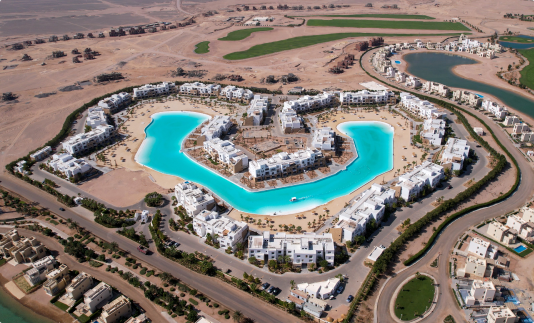
El Gouna Red Sea runs on a five-year clock

Most business plans wait for demand. El Gouna Red Sea built a hospital before it had patients and a school before it had students.

That tells you something about the clock Mohamed Amer and his team work on. In the latest episode of Access Tomorrow, Leila Serhan, Visa’s senior vice president and group country manager for North Africa, Levant and Pakistan, sits down with El Gouna’s CEO, Mohamed Amer, to talk about what happens when you build a complete town over decades, put patient capital behind the vision, and invest years before the demand shows up.

Getting people to El Gouna Red Sea is only half the job. The business model depends on turning traffic into belonging. Amer describes the team’s job simply: drive “relevant traffic” — get people to visit, experience the town, and eventually want to become part of the community. But keeping that funnel moving gets tougher as affluent consumers become harder to impress and easier to lose. Taste is shifting away from extravagance and toward experience and “quiet luxury.” Amer’s shorthand for what El Gouna is ultimately selling is simpler: happiness.

Technology now has to protect that feeling rather than interrupt it. For Amer, the line on AI is between “curated” and “surveilled”: use data to make the guest experience more relevant without making people feel like they are living inside an algorithm. The same principle applies to payments. At a restaurant, the customer should be thinking about the food and the conversation — not the transaction. The payment should effectively disappear.

Click here to watch the full episode of *Access Tomorrow*, presented by Visa.

5

EARNINGS WATCH

Nadec 3Q net income falls 72.5% due to a cost squeeze

Protein surge lifts Nadec’s revenue, but a cost squeeze guts the bottom line: National Agricultural Development Company (NADEC) saw net income fall 72.5% y-o-y to SAR 30.4 mn in 3Q 2026 even as revenue rose 7.8% y-o-y to SAR 909.7 mn, led by a doubling of protein sales and dairy and food processing edging up 1.2%, according to its earnings (pdf).

The gap is from supply chain disruptions cutting into costs: Despite increased revenues from its protein and dairy and food processing, gross margin shrank to 26.7% from 34.6% as feed and shipping costs and maritime-disruption surcharges hit the quarter to the tune of SAR 56 mn, and distribution expenses pushed selling and marketing costs up 12.9%. A SAR 10.9 mn drop in treasury income weighed further, partly cushioned by a SAR 9.2 mn reversal of a 2021-2023 Zakat provision.

Watch the comprehensive line: Nadec actually posted a total comprehensive loss of SAR 24.7 mn for the quarter, despite the reported net income, after a SAR 55.1 mn fair-value loss on its stake in Arabian Mills ran through other comprehensive income.

The nine-month read was largely the same. Net income fell 42.7% y-o-y to SAR 188.7 mn. Meanwhile, revenue was essentially flat, up 0.7% to SAR 2.7 bn, as 69.1% protein growth offset a 49.8% collapse in agriculture and a 1.7% dairy dip. The same cost pressure dominates: feed, shipping, and related costs cost SAR 107.1 mn over the period, alongside lower treasury income and a SAR 15 mn share of losses from the Al Raie National Livestock JV.

What’s next? The story into 4Q and 2027 is execution on the protein pivot. With the Haradh slaughterhouse now operational, NADEC still targets a year-end 2026 launch of its own-brand packaged red meat across major retail channels, backed by the Hilton Foods JV. As for the cost pressures, management expects relief once the regional environment normalizes, adding “we do not expect this environment to alter Nadec’s mid-to-long-term strategic plans,” CEO Solaiman bin Abdulaziz Al-Twaijri said.

6

ALSO ON OUR RADAR

Mouwasat faces SAR 335.4 mn lawsuit over a disputed hospital stake transfer

Mouwasat Medical Services is facing a SAR 335.4 mn lawsuit over the transfer of a 32.42% stake in Jeddah Doctors Company to Mouwasat, where it already holds 51% of the hospital operator, it said in a Tadawul filing. The suit, filed by Doctors Company for Medical Projects at the Commercial Court in Dammam, seeks to transfer 5.63 mn shares to Mouwasat. The company said no sale agreement has been signed, it is taking legal measures to defend its interests, and the potential financial liability remains undetermined.

Skopje courts Riyadh

North Macedonia plans to open an embassy in Riyadh in early 2027 as it looks to attract Saudi investment and build closer ties with the Kingdom, Foreign Minister Timcho Mucunski told Arab News on the sidelines of the World Economic Forum in Dubai. The two countries are looking at opportunities in energy and ICT, with plans to bring their chambers of commerce together to identify potential deals.

Trade between Saudi Arabia and North Macedonia remains modest and heavily skewed toward Saudi imports. The Kingdom imported SAR 32.6 mn worth of goods from the Balkan country in 2025, up 14.1% y-o-y, according to Data Saudi. Saudi exports to North Macedonia, meanwhile, totaled just over SAR 570k.

From berth to border

CEVA Almajdouie is teaming up with Port of Neom to move cargo inland. The logistics venture of CMA CGM and Saudi Arabia’s Almajdouie group has signed an MoU with the Red Sea port at Oxagon to pair its sea terminals with CEVA’s cross-border trucking, bonded warehousing and customs clearance, with the aim of carrying freight from the quay into Saudi Arabia and on to Egypt, the GCC, Iraq and Europe, it said in a statement. It would span containers, RoPax, bulk and heavy-lift project cargo. The agreement is early-stage, with no volumes or value attached.

REMEMBER- An existing Europe-Egypt-Gulf corridor already uses trucking and ferry services to move European cargo through Egypt and Neom into GCC markets. We reported in April that the route was already serving markets including the UAE, Kuwait, Iraq and Oman.

Rules for rent-a-boat

The Saudi Red Sea Authority has issued a licensing regime governing who can rent out leisure vessels in the Kingdom’s Red Sea territorial waters — small craft up to 10 tons and 11 metres — requiring owners to put their boats to work through licensed marine-tourism operators or tourist marinas rather thn renting privately, according to Umm AlQura.

How to apply: Operators will apply through the authority’s Rasa platform for 12-month licenses, with trips cleared via Zawl sailing permits and no-objection sign-offs from Neom and Red Sea International where their waters are involved.

The rules take effect 180 days after publication in the Official Gazette, with a 365-day grace window for operators already in the water.

7

PLANET FINANCE

Investors turn on the debt behind the AI build-out

The debt financing the world’s AI build-out is being repriced for a reckoning. Bonds backing some of the largest data centers have fallen well below par, a run of marquee listings has been pulled, and the debt of the “neocloud” providers at the center of the boom is trading where markets park distress. The common thread is investors have stopped assuming AI revenue will arrive fast enough to service the tns being borrowed to build the capacity.

“Data center bonds are having their Darwin moment, where the weakest credits struggle to survive,” Allianz CIO Ludovic Subran told the Financial Times. Spreads blew out after a wave of power and construction delays, he argued, proof the debt had been “priced too tight for execution risk.” The market, in other words, has started to separate the survivors from the casualties, and is doing it fast.

The sell-off has reached almost everything with AI exposure. Debt behind the Meta-anchored “Hyperion” project, issued through a Blue Owl and Meta-backed vehicle called Beignet Investor, has slid from above par in early July to just under USD 0.92. Bonds for two Hut 8 sites — one in Louisiana, a Texas campus leased by Nvidia — sit near USD 0.94 and USD 0.92; Blackstone’s QTS Project Excalibur in Georgia, leased to Microsoft, is below USD 0.88. Roughly USD 18 bn of loans tied to Oracle’s Project Jupiter in New Mexico have slipped into stressed territory after power-permitting delays, and debt for Oracle’s Michigan campus has fallen to USD 0.87 from par in July.

The neoclouds have been hit hardest, because they borrowed hardest. CoreWeave — a crypto miner four years ago, now the best-known of the breed — watched one of its unsecured bonds sink below USD 0.80, dragging yields toward 15%, while the shares dropped nearly 25% over the week. Nebius lost 18%. Even Nvidia, which has poured tens of bns into the sector’s start-ups, gave up about USD 270 bn of market value in a week.

Why it matters: The math stops working at these prices. Tech consultancy Gartner reckons AI data center owners need USD 8.5 tn of revenue by the end of 2030 to cover capital and financing costs and still clear a healthy return, against the USD 3.6 tn it expects consumers and companies to actually spend on AI services. Stay on the current path, it warns, and more than USD 4 tn of asset value is exposed to writedown risk through 2032, with 80% of neoclouds set to “cease independent operations” by 2030.

Confidence cracked on a run of soft demand signals. OpenAI pushed its IPO into next year, and its annualized revenue came in around USD 20 bn below what it had guided. Anthropic’s 3Q sales growth also fell short of expectations, slowing down from the year’s start. A Bank for International Settlements study added to the unease, finding “a significant portion” of AI financing and commercial ties are self-referencing. That means chipmakers bankrolling the clouds that buy their chips and labs backing the developers that house their models.

The equity window has all but shut. Firmus, the Nvidia- and Blackstone-backed operator, pulled what would have been Australia’s second-largest listing earlier this month, a float valuing it at AUD 44 bn (USD 30.5 bn), roughly double the valuation set three months earlier, the FT reports. AirTrunk scrapped a Singapore REIT days later, SoftBank’s SB Energy mothballed a USD 50 bn listing, and Nvidia-backed Nscale is still chasing a USD 35 bn New York debut that bankers say is a hard sell right now. CoreWeave chief Mike Intrator said the troubles at Firmus, AirTrunk, Lambda Labs, and Nscale were “bleeding into the narrative” around his company, in a memo seen by the FT.

The physical world is pushing back, too. At least 47 large projects have been delayed, withdrawn or blocked in 2026 — a “conservative” count, says regulatory-intelligence firm RegLayer — and more than 1k US communities have moved to curb AI infrastructure this year. Bernstein estimates only about 35% of the planned US pipeline is credible. Utility regulators are now withholding grid connections unless a project brings its own power, and every slipped deadline hands Big Tech tenants a contractual door to walk through.

The builders’ own numbers show how stretched the model is. SB Energy, majority-owned by SoftBank and backed by OpenAI and Nvidia, has yet to finish a single data centre but carries USD 174 bn in capital needs against USD 430 bn of future contracts, most of them with OpenAI. Nebius CEO Arkady Volozh told a Citi conference in September that his 5 GW plan needs some USD 250 bn in financing: “So far, we financed maybe 20% of that.” Nscale had 25k advanced chips running in August against the roughly 500k it plans to operate. Anthropic can walk away from a USD 45 bn deal with Nscale if the start-up misses its financing and delivery dates.

Not everyone is heading for the exit. Nvidia’s Jensen Huang said he doesn’t expect CoreWeave to need a backstop, telling Bloomberg “their cost of capital is actually decreasing,” and talked up Nscale in London as a possible “most valuable UK company” created in the decade.

Anthropic is the cleaner bull case: Kroll Bond Rating Agency handed it a BB+ in June, the top speculative-grade score and one notch below investment grade, ahead of a USD 35 bn chip financing led by Apollo, in a rating the Financial Times saw. Its revenue rose nearly 50% to USD 16.8 bn in 3Q and it has been profitable on an adjusted basis for two straight quarters, though growth has slowed from its earlier pace and landed below the summer’s most bullish forecasts.

MARKETS THIS MORNING-

Asian markets were in the red earlier today. Japan’s Nikkei fell around 1% and South Korea’s Kospi slipped around 0.4%. MSCI's broadest index of Asia-Pacific shares excluding Japan was down 0.3% amid growing unease over AI's massive funding needs, which undermined confidence ahead of a week packed with earnings.

TASI

10,190

+0.8% (YTD: -2.9%)

MSCI Tadawul 30

1,375

+0.9% (YTD: -0.8%)

NomuC

22,186

+1.6% (YTD: -4.8%)

USD : SAR (SAMA)

USD 3.75 Sell

USD 3.75 Buy

Interest rates

4.25% repo

3.75% reverse repo

EGX30

50,896

-2.6% (YTD: +21.7%)

ADX

9,808

0.0% (YTD: -1.9%)

DFM

5,867

+0.6% (YTD: -2.1%)

S&P 500

7,659

-1.1% (YTD: +11.9%)

FTSE 100

10,882

+0.4% (YTD: +9.6%)

Euro Stoxx 50

6,204

+0.6% (YTD: +7.0%)

Brent crude

USD 109.01

+3.72%

Natural gas (Nymex)

USD 3.05

-2.3%

Gold

USD 4,181

+0.3%

BTC

USD 81,127

0.0% (YTD: -7.4%)

Sukuk/bond market index

893.37

+0.9% (YTD: -2.8%)

S&P MENA Bond & Sukuk

148.50

+0.2% (YTD: -2.2%)

VIX (Fear gauge)

19.99

+21.5% (YTD:33.7%)

THE CLOSING BELL: TADAWUL-

The TASI rose 0.8% yesterday on turnover of SAR 2.4 bn. The index is down 2.9% YTD.

In the green: Arabian Contracting Services (+10%), Ladun Investment (+9.9%), and Saudi Vitrified Clay Pipes (+7.2%).

In the red: Watani Iron Steel (-8%), Najran Cement (-2.3%), and Saudi Arabian Cooperative Ins. (-2.1%).

THE CLOSING BELL: NOMU-

The NomuC rose 1.6% yesterday on turnover of SAR 15.6 mn. The index is down 4.8% YTD.

In the green: Knowledge Tower Trading (+25.3%), Alfakhera for Mens Tailoring (+25.1%), and Taqat Mineral Trading (+22.8%).

In the red: Knowledge Net (-9.8%), Asas Makeen Real Estate Development and Investment (-9.3%), and Aqaseem Factory for Chemicals and Plastics (-5.6%).


21 October - 30 December (Wednesday-Wednesday): Riyadh Season, Riyadh.

25-26 October (Sunday-Monday): The Global Proptech Summit, Mandarin Oriental Al Faisaliah Hotel, Riyadh.

26-28 October (Monday-Wednesday): ACHEMA Middle East, Riyadh International Convention & Exhibition Center.

26-29 October (Monday-Thursday): The Future Investment Initiative, King Abdulaziz International Conference Center, Riyadh.

28-29 October (Wednesday-Thursday): Procurement and Supply Chain Futures Forum, Mandarin Oriental Al Faisaliah Hotel, Riyadh.

28-29 October (Wednesday-Thursday): Real Estate Supply Chain Forum, Mandarin Oriental Al Faisaliah Hotel, Riyadh.

30 October-1 November (Friday-Sunday): The New Global Sport Conference, Sofitel Hotel & Convention Centre, Riyadh.

NOVEMBER

11-12 November (Wednesday-Thursday): Aluminum Arabia, The Arena, Riyadh.

16-19 November (Monday-Thursday): Cityscape Global, Riyadh Exhibition and Convention Centre (Malham), Riyadh.

29 November-1 December (Sunday-Tuesday): The UN Trade and Development Global Supply Chain Forum, Riyadh.

29 November-1 December (Sunday-Tuesday): The Global Logistics Forum, King Abdulaziz International Convention Centre, Riyadh.

Signposted to happen sometime in 2026:

2027

JANUARY

12-14 January (Tuesday-Thursday): The Future Minerals Forum (FMF), Riyadh.

FEBRUARY

1-3 February (Monday-Wednesday): Energy Regulators Regional Association annual conference, Riyadh.

MARCH

21-25 March (Sunday-Thursday):The World Water Forum, Riyadh.

22–24 March (Monday-Wednesday): Capital Markets Forum, Four Seasons Hotel, Riyadh

APRIL

26-29 April (Monday-Thursday): World Energy Congress, Riyadh.

JUNE

1-3 June (Tuesday-Thursday): The Saudi Entertainment and Amusement Expo, Riyadh Front Exhibition and Conference Center.

Signposted to happen sometime in 2027:

  • The Ocean Race finishes in Amaala on the Red Sea;
  • Riyadh-Kudmi transmission line to be completed;
  • Aero Middle East and Sand & Fun takes place in Thumamah Airport, Riyadh.

Signposted to happen sometime in 2Q 2027:

  • The Hail Region Water Networks Project is expected to be completed.
Now Playing
Now Playing
00:00
00:00