Get EnterpriseAM daily

Available in your choice of English or Arabic

War pushes USD closer to the EGP 50 mark

1

What We're Tracking Today

New drilling incentives aim to bridge the output gap

Good morning, wonderful people. Our first report as we start day four of this regional war is from the Department of Histrionics: The United States wants its citizens to pull out of Egypt.

Wait, Enterprise, out of Egypt? Yep, Egypt. A post on the X account of Assistant Secretary for Consular Affairs Mora Namdar is urging American citizens to pull out now from more than a dozen countries in MENA, including Egypt, the UAE, Saudi Arabia, Jordan, Qatar, and Oman, citing “serious safety risks.”

So, what’s the latest on the war on this cold March morning? Well, nothing’s up in Omm El Donia, for starters. The same, unfortunately, cannot be said of the Gulf, where Qatar has turned off LNG production (a risk to which policymakers in Egypt will be paying careful attention) and two Iranian drones targeted Saudi Arabia’s Ras Tanura refinery, which shutdown after debris from the drones’ interception fell near the facility, causing a fire.

The US embassies in Saudi Arabia and Kuwait have been hit by Iranian drones, but no casualties have been reported. Markets in Asia opened lower on the news. Iran, meanwhile, “officially” said it has closed the Strait of Hormuz — and the United States is warning that the “hardest hits are yet to come,” promising that the “next phase will be even more punishing on Iran than it is right now.”

***

WISH THIS MORNING’S ISSUE was a podcast? We’ve got you. Tap or click here to listen to Morning Drive, a 10-minute version of today’s issue crafted for you to enjoy with your morning coffee, while getting the kids ready for school, or while stomping around the house wondering where the [redacted] you left your [redacted] reading glasses.***

Watch this space

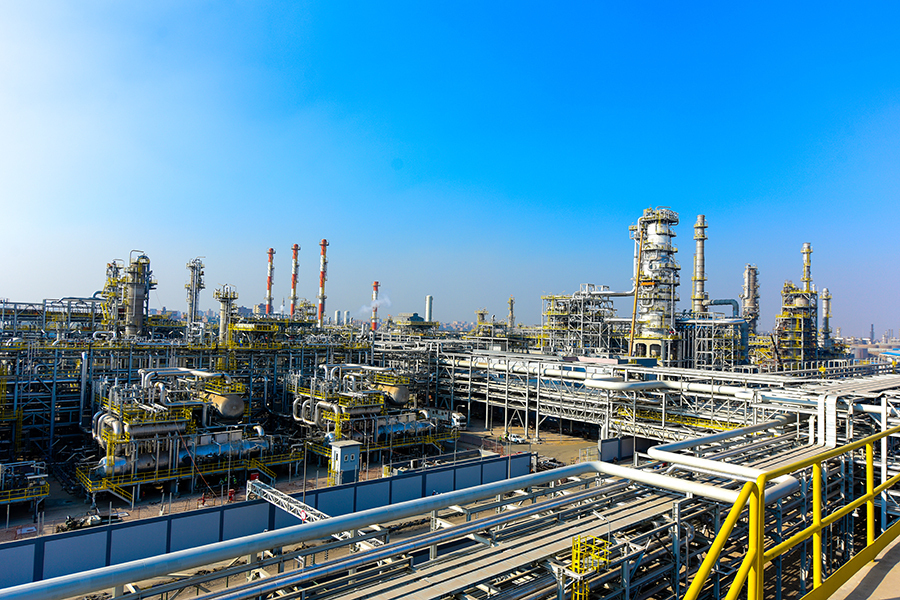
ENERGY — The Oil Ministry will adopt a new fiscal regime for upstream partners, moving toward incentive-based contracts to encourage the use of expensive unconventional drilling technologies, according to a ministry statement, citing Oil Minister Karim Badawi in a meeting with industry players. The next five years will focus on scaling oil and gas output through horizontal drilling and hydraulic fracturing — methods common in US shale, but underutilized in Egypt’s mature basins.

Why it matters: For years, the technical limits of conventional vertical wells have led to declines in Egypt’s aging reservoirs. However, the capex required for fracking and horizontal rigs didn’t make sense under old cost-recovery models. By introducing incentives — likely better profitsharing or revised gas prices — the ministry is trying to make Egypt’s difficult barrels economically viable again for operators.


INVESTMENT WATCH — The Madbouly government unveiled a nine-step plan to boost private investment, which includes supporting startups, proactively targeting high-value-added productive investments, maximizing the role of the Sovereign Fund of Egypt, boosting the capital market through legislative amendments and more state IPO offerings, and launching specialized financial tools to support priority sectors.

Why this matters: The state is looking to have private investments make up 70% of total investments by 2030.

** DID YOU KNOW that we cover Saudi Arabia, the UAE and the MENA-IndiaCorridor?

** Were you forwarded this email? Tap or click here to get your own copy delivered every weekday before 7am Cairo time — without charge.

Happening today

The private sector is eagerly awaiting S&P Global’s Purchasing Managers’ Index report for February, due out later this morning, amid hopes that non-oil activity will move back up into the green after dipping to 49.8 in January. The country’s headline rate sits just below the all-important 50.0 mark is the threshold separating contraction from growth — a barrier the country has only passed four times since November 2020.

Data point

USD 29.5 bn — that’s Egypt’s net foreign assets at the end of January, rising USD 4.0 bn in a single month to record an all-time high, according to data (pdf) from the Central Bank of Egypt. January’s increase was driven by foreign liabilities declining at both the central bank and commercial banks, in addition to foreign assets growing by USD 1.7 bn at commercial banks and remaining broadly stable at the CBE.


PSA-

WEATHER- It’s set to be a sunny but cool day in Cairo today, with a high of 21°C and a low of 10°C, according to our favorite weather app.

Scattered clouds are forecast for Alexandria, with a high of 20°C and a low of 11°C.

The big story abroad

The world’s front pages are all about the widening regional war for the third day running. Two updates are topping headlines this morning:

#1- US President Donald Trump vowed to do “whatever it takes” in Iran, saying that US-Israeli attacks on the country could go on for over a month.

#2- Iran officially closed the Strait of Hormuz, threatening to fire at any ship trying to pass through — effectively halting 20% of the world’s oil supply.

THE HOMETOWN ANGLE- We dive into what this all means for us at home in the news well, below.

t

*** It’s Going Green day — your weekly briefing of all things green in Egypt: EnterpriseAM’s green economy vertical focuses each Tuesday on the business of renewable energy and sustainable practices in Egypt, everything from solar and wind energy through to water, waste management, sustainable building practices, and how you can make your business greener, whatever the sector.

In today’s issue: We take a look at how Egypt’s construction boom is creating a waste problem — but also a window.

Somabay at ITB Berlin 2026. Where vision meets the Red Sea.

Somabay returns to ITB Berlin 2026 with a destination that continues to move forward: purposefully, confidently, and with scale.

Rooted in the Red Sea and shaped by a long-term vision, Somabay brings together iconic hospitality, championship sport, restorative wellness, and a fully integrated lifestyle community. From refined resorts and a dynamic marina to world-class leisure and year-round sunshine, every element is designed to create enduring value and meaningful experiences.

We look forward to welcoming you and sharing what’s next for Somabay.

Hall 6.2B | Stand 317 — 3-5 March 2026

2

The Big Story Today

War tests EGP’s post-float strength

The greenback edged closer to the EGP 50 mark on Monday for the first time in 10 months as geopolitical tensions set off a familiar pressure cycle. Foreign investors accelerated their exit from local debt while importers rushed to secure letters of credit for oil, wheat, and essential food supplies. The squeeze briefly rattled sentiment — until the market staged an unexpected pivot.

By the end of the day, foreign appetite had shifted toward longer-dated debt. A treasury bond auction targeting EGP 28 bn drew a striking EGP 117 bn in bids, signaling that while short-term money was heading to the door, longer-term investors were positioning for yield. At the National Bank of Egypt, the greenback was changing hands between EGP 49.17 and EGP 49.27. At private lenders, the selling rate climbed as high as EGP 49.85.

Interbank activity surged past USD 730 mn, up from USD 600 mn on Sunday, as banks met both import demand and investor exits. Secondary market outflows slowed to USD 297 mn. “The market is being led by the wisdom of ‘buy during war and sell during peace’,” a senior banker told EnterpriseAM, pointing to the rebound in equity and debt markets by the third day of the conflict.

Still, few believe the 50-mark will hold indefinitely if tensions escalate. Another banker said the exchange rate could soon “test levels beyond EGP 50” if the war in the Gulf continues. Outflows have already climbed from USD 600-700 mn mid-last week to around USD 1.3 bn, possibly increasing to USD 1.6 bn. EG Bank board member Mohamed Abdel Aal estimates that in this scenario, the exchange rate could move toward the EGP 50-51 range. In severe escalation, daily outflows could approach USD 2 bn, pushing the rate toward EGP 52-53.

Others see a wider trading band: Sahar El Damaty, an industry veteran and former deputy chair of Banque Misr, suggests the rate could fluctuate between EGP 47-53 depending on the conflict’s trajectory.

REMEMBER- This is healthy — it’s the system working the way it is supposed to. The exchange rate is a shock absorber that helps the economy cope with external shocks. We think policymakers including the Central Bank of Egypt have learned their lesson and aren’t going to release reserves or put quiet pressure on the banks. It’s when we refuse to let the FX rate float freely that imbalances build and we wake up one morning to find there’s a black market for hard currency.

The parlor game right now: Speculating about if, when, and how the Central Bank of Egypt might respond as the EGP faces its most significant test since the March 2024 float.

What to watch for: The business community will want to see the central bank (a) delay a response for as long as possible, letting market dynamics work themselves out, and (b) for any intervention to be 100% in the open. Instead, the smart policy move is to use fiscal policy — including direct support to industries or low-income citizens impacted by what’s going on in the Gulf — to address the war’s impact on Egypt.

Banking expert Hani Abu El Fotoh described the CBE’s role as a “seatbelt” — present, but only deployed in moments of acute danger. Should the EGP come under sharp pressure or record daily losses of 2-3%, the CBE could step in to calm markets and prevent panic, not to defend a specific rate, Abu El Fotoh argued.

Emergency tools are ready, but not yet in motion. Sources tell us the CBE is monitoring the developments closely and could convene an extraordinary Monetary Policy Committee meeting if needed. If circumstances warrant it, a 100-200 bps rate hike could bolster real interest rates and lure back hot money, partially reversing the 825 bps in cumulative cuts delivered in recent months. The catch? It would send borrowing costs for the state back up.

Holding the line: Both El Damaty and Abdel Aal still think the April 2026 interest rate meeting will see the CBE leave rates on hold unless the inflationary impact from supply disruptions becomes clearer.

Flexibility — not defense — is the anchor. Abdel Aal argued that allowing the exchange rate to move helps absorb temporary shocks and encourages foreign inflows to return, while preventing the re-emergence of a parallel market for FX, which he stressed the CBE “will not tolerate at all.” Another banker we spoke with argued that a flexible currency offers investors “greater upside potential at current entry levels” than a rigid regime would.

That logic appeared to play out in Monday’s bond auction. While foreign investors reduced exposure to short-term treasury bills, they flooded into two-year notes, submitting EGP 97 bn in bids for an EGP 8 bn target. A government official described the shift as a vote of confidence in Egypt’s medium-term outlook once geopolitical tensions subside, with investors locking in high yields between 26-28%. For the second day running, the Finance Ministry declined to accept higher-yield offers, holding firm at its current rates.

Analysts argue this is not a replay of the 2022 crisis — our structural position is a hell of a lot stronger than it was during the Russia-Ukraine shock. Since early February, we’ve recorded USD 1.9 bn in net foreign outflows from the secondary market for T-bills, alongside a 4.4% depreciation.

A smooth exit is a good thing: HC Securities’ Nemat Choucri points out that the orderly nature of the exits will reinforce investor confidence in the long run, proving that funds can leave smoothly even in volatile conditions.

Foreign portfolio investments now stand at USD 45 bn and are managed in separate accounts to avoid systemic disruptions, Abdel Aal noted. Egypt now holds USD 52.6 bn in foreign reserves, while net foreign assets show a surplus of USD 29.5 bn — a liquidity cushion designed precisely for moments like this.

The macro picture remains sensitive. Rising geopolitical risks and the effective closure of the Strait of Hormuz have pushed oil prices toward USD 80 / bbl, El Damaty noted. Suez Canal traffic has improved but remains below its USD 10 bn annual revenue target, and regional aviation is pressuring tourism — the sector El Damaty identifies as the most vulnerable to the current crisis. Liquidity is a means of maneuver, not an endless fortress, Abu El Fotoh warns.

The bottom line: While Egypt has the tools to absorb short-term shocks, prolonged tensions may force a choice between delaying the monetary easing cycle or accepting higher inflationary risks. What matters is that any policy response is made in the open, not through quietly relayed verbal instructions.

(** Tap or click the headline above to read this story with all of the links to our background as well as external sources.)

This publication is proudly sponsored by

3

Energy

Between the Hormuz Strait and a hard place

Oil touching the psychologically important USD 100 per-barrel mark is looking more possible with each passing day, with JPMorgan Chase & Co analysts warning in a note that Gulf producers only have 25 days before they run out of storage space. Wood Mackenzie said in a note that prices could exceed the USD 100 mark “if tanker flows are not quickly restored,” while Bernstein sees Brent crude reaching USD 150 in the event of a prolonged conflict.

Adding urgency to the warning was a drone strike on Aramco’s Ras Tanura facilities, which halted operations at Saudi Arabia’s largest oil refinery in what appears to be the first direct strike on oil infrastructure in this round of hostilities.

The situation “has already moved from geopolitical noise to actual impact,” Rabobank Energy Strategist Florence Schmit tells EnterpriseAM, as energy infrastructure across the region has been targeted and Israel has already curtailed gas production as a precaution.

With the Hormuz Strait effectively closed, there are few other options to get output to global markets, with the Saudi East-West pipeline moving 5 mn bbl / d — equivalent to just a quarter of what usually passes through the strait.

The cost of LNG and our reliance on it also moved up policymakers’ worry list after QatarEnergy announced yesterday it has stopped producing LNG. The decision came after an Iranian drone hit Ras Laffan, the world’s largest export facility, which produces some 20% of global supply.

As disruptions continue, the mismatch between demand and supply could send prices upward. “It’s a matter of the duration of this crisis,” Wideangle LNG Consulting Director Jean-Christian Heintz tells us. “As a rule of thumb, if we are talking about one week of shortage, you see that this already translates into 2% of annual LNG production.”

LNG flow disruptions are expected to “reignite competition between Asia and Europe for available cargoes,” according to Wood Mackenzie Gas and LNG Research Vice President Massimo Di Odoardo.

Israel is making things worse for us: Its decision to cut off gas supplies to Egypt will pile on pressure at the same time as the 24 LNG shipments from QatarEnergy we have scheduled for the summer are uncertain. That could push the Madbouly government to try to secure additional LNG shipments — likely at much higher prices than it had originally penciled in.

Shipping rates for all types of goods and the end-cost for consumers are also set to rise, with shipping lines facing higher fuel costs — which usually account for 40% of total costs — and war-risk premiums doubling to 0.5% coming on top of a 15-20 days longer transit around the Cape of Good Hope while lines avoid the Suez Canal. There are also limited overland corridors able to handle anywhere near the amount of TEU capacity and diverted traffic.

Why it matters: The disruption is an immediate and unbudgeted inflationary shock. The doubling of war-risk premiums for shipping and the extension of transit times mean that the landed cost of everything from grain to industrial components is set to spike. For the Madbouly government, the crisis creates a pincer move: we’re bidding on the expensive global spot market for LNG to keep the lights on, even as Suez Canal revenues face a sustained hit from diverted traffic.

To keep energy supplies stable, the Oil Ministry is working to import three mazut shipments to make up for a shortfall in Israeli gas, a government official tells EnterpriseAM. Plans are also underway to diversify power generation by relying on both fuel oil and natural gas to keep stations running, our source added.

No gas is leaving Idku: The state has pressed pause on LNG shipments flowing out of the Idku liquefaction facility, Asharq Business reports, citing what it says is an unnamed government official. Shell and Petronas usually receive some 350 mmcf/d of LNG for export from the Idku facility, the source said, adding that the last shipment out of Idku was at the end of February.

A precautionary move: A government crisis committee has suspended natural gas export approvals for Shell, Petronas, and Eni through April, prioritizing domestic energy security, a senior government official told us, noting that further steps to safeguard foreign exchange markets and tighten regulatory oversight are also expected.

(** Tap or click the headline above to read this story with all of the links to our background as well as external sources.)

4

Tourism

Egypt’s travel industry has so far been spared mass cancellations

Egypt’s tourism industry has so far escaped the fallout from the war in the Gulf largely unscathed — with European visitors still arriving on schedule and hotel cancellations limited to guests who simply can’t get flights out of the GCC. “We’ve had many no-shows and a few cancellations, especially from the Gulf and Saudi Arabia,” a senior exec in the Egyptian hospitality sector tells EnterpriseAM.

Importantly, this isn’t because of a lack of appetite, but a lack of flights. While the cancellation of flights from the GCC had caused some disruption, visitors from elsewhere kept coming uninterrupted. “We had no cancellations from Europe. We have group holidays. They’re still coming in,” we were told.

Tourism Minister Sherif Fathy said much the same, noting that “regional developments and current geopolitical events in the region have not affected the incoming tourism [flows],” according to a ministry statement.

The outlook: When airspace reopens, visitors from the Gulf should come back, with traffic expected to pick up “as much as the airplanes can [handle],” we were told.

It’s a very different situation in the Gulf

The situation for hotels elsewhere in the region is very different, with “Egypt being the least affected,” we were told. The impact of videos of hotels being struck by drones and appearing in flames will take time to fade before tourism picks up again. “It will take time, but definitely not three years — I think a maximum of one year.”

Industry participants say it's too early to talk about whether strategic investors could shy away from the sector. “It’s a bit too early to decide or to say if investments will be affected,” our source in the hospitality sector tells us, explaining that much rests on how long the conflict will continue. But if the war ends soon, investment interest could tick up shortly after, as “people and investors forget quickly.”

Flights still grounded

Most of the region’s major air hubs remain shut on day four of the conflict, with thousands of flights canceled and hundreds of thousands of passengers stranded. Air traffic seems to be showing few signs of returning, with flight tracker FlightAware clocking in 2.8k cancellations on the day that war started, 3.3k the day after, and 3.1k yesterday.

A handful of flights are set to leave the UAE today as officials there look to repatriate travelers stranded by the outbreak of war.

The almost complete shutdown of air traffic in the Gulf had seen Riyadh emerge as an exit point for those stranded. High-net-worth individuals, senior executives, and their families were reportedly driving from Dubai to Riyadh and boarding private planes for as much as USD 350k a trip to get out of the region or simply make business trips.

Less well-heeled travelers have traveled by land and sea as far as Egypt to fly out of the region, with the Arab Bridge Maritime Company — which operates ferries connecting Egypt and Jordan — increasing the number of scheduled trips to accommodate the uptick in demand, according to a Transport Ministry statement.

Travel stocks are taking a hit

Traders have voted with their wallets, with the stocks of the region’s few listed airlines closing deep in the red. Saudi Arabia’s Flynas fell 6.4% on the Tadawul yesterday, while Jazeera Airways fell 5.5% on Boursa Kuwait. Attention will move today to budget airline Air Arabia as the Dubai Financial Market reopens following a two-day pause in trading in response to the start of the war.

Shares of listed hotel groups and travel companies — almost all of which have a sizable footprint in the Gulf — seem to have taken a hit, too, as Western markets opened yesterday for their first day of trading since strikes on Iran began. Fairmont brand owner Accor saw its share price fall 8.9% on the Euronext Paris after images emerged of the French hospitality group’s Fairmont The Palm hotel in Dubai in flames.

You didn’t have to be a direct target of the attacks to feel the pinch, with German travel company Tui — which has a sizable presence in the region and especially in Egypt — seeing its shares fall 9.9% yesterday on the Deutsche Börse. Shares of InterContinental Hotels Group fell 4.2% on the London Stock Exchange. Hilton Worldwide was down 2.2% and Marriott International was down 3.3%.

(** Tap or click the headline above to read this story with all of the links to our background as well as external sources.)

5

A MESSAGE FROM VISA

From biometric checkouts to cash’s exit: top 2026 payments trends, part 2

In 2026, manual guest checkout continues to decline as biometric authentication becomes more common. Typing 16-digit card numbers is increasingly replaced by fingerprint or facial verification. Guest checkout now represents 16% of Visa online transactions, down from nearly 50% in 2019.

Cash usage continues to narrow as digital payments gain share. In 2026, half of global consumer payments are made with card credentials, marking a 50/50 split between digital and cash.

Consumer expectations are accelerating the shift toward digital-first banking. More than 70% of consumers say they would switch banks for a better digital experience, increasing pressure on institutions to improve speed, usability, and service delivery.

6

Tech

Data is the new oil — and it’s under fire too

If you’ve had a hard time opening a favorite website, placing an order online, or getting into your bank accounts the past couple of days, odds are you can thank the ongoing regional war — two major regional data centers experienced outages, with one appearing to have come after it was hit by falling debris from a drone or missile interception.

Abu Dhabi Commercial Bank confirmed yesterday that “regional IT disruptions” were behind problems clients were having accessing its mobile banking and contact center services. We were also impacted: EnterpriseAM.com is one of the many services hosted on AWS out of the UAE, and our site was down for more than a day after the incident, forcing us to use a backup in another jurisdiction.

Why it matters: Data center outages in the UAE and Bahrain were a wake-up call for the digital economy, exposing centralized data centers as a critical infrastructure vulnerability that businesses across MENA had previously ignored. The attacks on data centers will also challenge the Gulf’s image as a secure hub for AI infrastructure — and could yet force a reassessment of physical security risks amid multi-bn-USD data center investments in both the UAE and Saudi Arabia.

What happened?

An Amazon Web Services (AWS) data center in Dubai caught fire on Sunday morning after being struck by unspecified “objects,” prompting the local fire department to cut power to the facility, including backup generators. The incident occurred on the same day Iranian ballistic missiles struck targets across the GCC, including the UAE and Bahrain.

Is it really that simple? AWS services are designed to withstand a single data center failure, but the outage spread to a second group of data centers, triggering a double failure that bypassed standard redundancies.

At the same time, a power failure in Bahrain knocked out a single zone, taking other racks offline.

As of Monday night, we understand that full restoration of the two damaged data center zones will take at least another day, with both physical cooling and power systems undergoing repairs.

Who else was affected?

AWS, businesses, and banks love to talk about their infrastructure when they ink contracts, flooding journalists’ inboxes with press releases. (They’re not alone — we’re looking at you, Microsoft.) They’re quieter about details of setups, citing infrastructure security concerns.

Still, we know the division of Amazon is a partner of choice for multiple banks, financial institutions, digital platforms, local government agencies, and logistics companies across the region, with many relying heavily on key AWS services. The outage in Dubai and Bahrain is causing many to report that key services are offline, while others are seeing service quality degraded.

Why it matters

Data centers and their supporting energy infrastructure are now targets of war on par with oil and gas facilities. Taking them down is a fast way to disrupt government services, businesses, and financial institutions, raising the cost of the conflict — something Tehran seems keen to do.

Hindsight is 20/20: Companies should now be acutely aware of the importance of multi-region deployment of their apps and services to avoid impact in the future, Engagesoft CTO Tareq Tahboub tells us. Case in point: Enterprises and government entities that have backup services on AWS infrastructure in multiple regions were unaffected by the outage.

The data center landscape is highly centralized, Saudi semiconductor design company Rimal’s CEO Houssam Salem tells EnterpriseAM, adding that a handful of companies control most on-the-ground capacity.

Regulations (and quiet pressure) on data sovereignty help keep things that way. Governments across the region have a host of reasons for wanting data about their country (and their residents and businesses) to stay within borders. In our corner of the world, the big issue of the day isn’t “data privacy” as it is in the west, but where data lives and who has access.

Simple economics also mean that clusters of data centers make good sense — until they don’t. The economics of hyperscale AI “push states toward establishing AI hubs which concentrate massive power supply, cooling capacity, and fiber connectivity co-located in a single campus to maximize efficiency,” Rihla Research & Advisory CEO Jesse Marks said in a note. While this is more economically viable, a single strike can take down an entire AI stack, as is evident by the AWS outage, calling into question how builders of AI clusters currently under construction will help harden infrastructure and design fallbacks.

Salem argues this centralization is going to change in the near future as more data centers come online across the region. Gulf states could also resort to embedding frameworks in their existing contracts with hyperscalers, allowing critical systems to be shifted to secure facilities in allied countries within minutes of a disruption, Marks suggests.

The context

Considering security risks to AI infrastructure is now a pressing priority if the UAE and Saudi want to become global hubs of compute. The GCC data center market is projected to hit USD 9.5 bn by 2030, buoyed by sovereign capital flows into hyperscale, AI-native infrastructure by the UAE’s G42 and Saudi PIF’s Humain. Humain’s data centers — currently under construction — were set to come online this year.

Regional stability is among the top selling points for those looking to attract AI investment to our part of the world. “The challenge now is to ensure that the digital infrastructure [countries in MENA] are building commands the same strategic protection they have long afforded their energy assets,” says Marks.

7

Also on our Radar

Oriental Weavers counts carbon to clear new green trade hurdles

Oriental Weavers wagers on carbon audits to stay competitive

Oriental Weavers secured independent verification of its carbon footprint, providing the baseline data required to navigate the increasingly protectionist “green” trade barriers emerging across its key export markets, it said in a statement (pdf).

Why it matters: For a global exporter like Oriental Weavers, carbon data is shifting from just green PR to a matter of green compliance. By verifying its footprint across 27 factories, the company is letting investors know that it is getting ahead of looming green trade barriers in some of its key markets. In a similar way to how investors now dive deep into company earnings releases, they may soon also be digging just as deep into company reports on green credentials to assess return expectations and decide where best to put their capital.

Valmore Holding sees revenues rise 24% y-o-y in 2025

Valmore Holding — FKA Egypt Kuwait Holding — saw broadly flat net income of USD 186 mn in 2025, as the absence of a one-off USD 54.5 mn FX gain booked the previous year offset underlying operational improvements, according to its latest earnings release (pdf). Revenues rose 24% y-o-y to USD 685 mn over the same period, supported by growth across portfolio companies, improving operating conditions, and continued portfolio optimization.

4Q performance remained solid, with revenue increasing 15% y-o-y to USD 166 mn and net income rising 7% to USD 49.4 mn, despite coming off a high 4Q 2024 base that was similarly inflated by non-recurring items.

(** Tap or click the headline above to read this story with all of the links to our background as well as external sources.)

8

PLANET FINANCE

Global investors turn sour on EMs after record-setting rally amid regional war

Emerging market currencies and stocks have taken a beating as the war in the region prompts a sell-off of riskier assets, snapping a record-setting rally that had taken hold amid fears of an AI bubble in the West and a desire to diversify from the USD, Bloomberg reports. Haven trades are back in charge, with investors rotating toward Treasuries, the CHF, and investment-grade emerging markets, excluding the Gulf, as we wrote yesterday.

By the numbers: A gauge of developing-nation FX fell 0.9% after touching all-time highs last week as the USD strengthened. Meanwhile, EM stocks dropped as much as 1.9% — the steepest slide in a month, led by tech and consumer discretionary names. Pakistan’s market plunged enough to trigger an hour-long halt, marking its biggest drop on record.

Local-currency bonds of net oil-importing countries saw yields rise as Brent crude jumped 8.6% to around USD 79 / bbl — its highest in more than a year — while gold rallied alongside the greenback.

JPMorgan also slashed its overweight recommendation on EM currencies and local bonds by half on the back of the sell-off.

Central banks moved fast: Indonesia and India intervened in FX markets, while Turkish lenders reportedly sold about USD 5 bn to steady the TRY. “There’s panic selling at first, then normalization,” said Osmanli Portfoy CEO Mehmet Gerz.

The bigger risk is inflation: Barclays warned that sustained higher oil prices could delay rate cuts across easing-cycle economies like South Africa, Poland, Turkey, and Hungary. Bloomberg Economics sees crude potentially climbing as high as USD 108 / bbl if tensions intensify.

(** Tap or click the headline above to read this story with all of the links to our background as well as external sources.)

MARKETS THIS MORNING-

Asia-Pacific markets opened in the red this morning as the escalating regional war enters its fourth day. South Korea’s Kospi is down over 3.6% — despite defensive sector gains — and Japan’s Nikkei is down 2.2%. Over on Wall Street, indices are set to open in the red today, with futures down across the board.

EGX30

47,692

-0.6% (YTD: +14.0%)

USD (CBE)

Buy 49.16

Sell 49.30

USD (CIB)

Buy 49.17

Sell 49.27

Interest rates (CBE)

19.00% deposit

20.00% lending

Tadawul

10,489

+0.1% (YTD: 0.0%)

ADX

10,454

-1.3% (YTD: +4.6%)

DFM

6,504

-1.8% (YTD: +7.6%)

S&P 500

6,882

0.0% (YTD: +0.5%)

FTSE 100

10,780

-1.2% (YTD: +8.5%)

Euro Stoxx 50

5,987

-2.5% (YTD: +3.4%)

Brent crude

USD 77.76

+6.7%

Natural gas (Nymex)

USD 2.96

+3.5%

Gold

USD 5,312

+1.2%

BTC

USD 69,349

+6.3% (YTD: -20.8%)

S&P Egypt Sovereign Bond Index

1,033

+0.1% (YTD: +4.0%)

S&P MENA Bond & Sukuk

153.89

+0.1% (YTD: +1.3%)

VIX (Volatility Index)

21.42

+8.0% (YTD: +55.0%)

THE CLOSING BELL-

The EGX30 fell 0.6% at yesterday’s close on turnover of EGP 4.7 bn (26.4% below the 90-day average). Local investors were the sole net buyers. The index is up 14.0% YTD.

In the green: Egypt Aluminum (+5.9%), Misr Cement (+5.9%), and Heliopolis Housing (+5.7%).

In the red: Raya Holding (-4.9%), TMG Holding (-2.4%), and EFG Holding (-1.9%).

9

Going Green

The EGP-bn play in construction waste

On the drive across Cairo, the problem announces itself before anyone names it. Piles of rubble sit where sidewalks should be. Broken concrete hugs overpasses. Bricks, mortar, and dust line side roads like permanent fixtures. With the real estate boom happening, construction never really stops in Egypt — and neither does demolition.

“We have a big city, and our big city — fortunately — is considered a construction site all the time,” Adham El Mahdy, sustainability director at Lafarge Egypt and general manager of its waste arm Geocycle, tells EnterpriseAM, arguing that demolition never really stops either. The issue isn’t unique to Egypt, but it’s more pronounced here because construction is relentless — bridges, roads, compounds — and capital keeps flowing into real estate.

Construction and demolition “waste” — or, as the industry prefers to call it, “materials” — begins as raw input, yet instead of re-entering the construction cycle, it is often treated as a burden to be disposed of. “Tens of mns of [tons] of waste remain unmanaged and underutilized,” El Mahdy said. Compounding the problem is the lack of a clear national baseline: estimates of annual waste generation vary widely, and there is no recent, publicly available official data. That data gap complicates policymaking, weakens enforcement, and deters investment in a sector that relies on scale and predictability to function efficiently.

Reuse isn’t the problem — economics is. After sorting and crushing, pure concrete waste can partially replace aggregates in new ones, while mixed demolition waste can be reused as construction aggregates. Steel rebar is already recycled back into iron production. Other fractions can be used as raw material inputs in cement manufacturing. “The market today never rejects a material as long as it performs […] unless the economics don’t work,” El Mahdy tells us.

!_Subhead_! In today’s market, the cheapest option always prevails

High costs of transporting and processing these materials tilt the balance against recycling. “When logistics alone add a fixed cost per ton, recycled material can easily lose its price competitiveness versus virgin alternatives,” El Mahdy explains. “Once you account for collection, transport, and processing, recycled materials must compete in a market where virgin inputs are often structurally cheaper,” he adds. Moreover, Egypt’s construction market is not regulated like Europe’s, where mandates force the use of recycled, low-emission materials, which means sustainability alone doesn’t move purchasing decisions.

The fix is to make dumping expensive enough that recycling becomes competitive. “If waste continues to be treated as having negligible value, the system will never finance itself,” El Mahdy argues. Today, contractors can dispose of waste for as little as EGP 15-50 per ton, and, in some cases, recyclers even pay a token amount to take it off their hands. Raising disposal fees to around EGP 400 per ton would flip that logic, turning what is now lost to landfills or informal dumping into the gate fee that flows to recyclers — directly or via the state — helping cover processing and transport costs and making recycled materials commercially viable.

A missed window for the state? If properly priced and managed, El Mahdy estimates that construction and demolition waste represents a window for bns of EGP — capable of financing new recycling infrastructure, creating jobs, and supplying the market with cheaper alternatives. The wider economics reinforce the case: reduced reliance on quarries, less mining activity, lower fuel and equipment use, fewer permits, and slimmer transport bills. “All the matters indicate that the general interest is to reconsider the business model of this problem,” he said — framing it not as waste management, but as a missed industrial prospect.

The risk of ignoring it becomes alarming when looking next door: The war in Gaza has generated some 60-68 mn tons of rubble, mostly concrete, bricks, and metal from destroyed buildings. “It can’t be exported — it must be recycled in place,” El Mahdy noted. That reality, he argues, demands a clear financing framework — one backed by donors or public financing — because there are simply no alternatives.

!_Subhead_! What needs to be done

The solution starts with creating steady demand. The government could require a gradual increase in the share of recycled materials used in concrete, then extend similar rules to bricks, paving stones, and road projects. At the same time, disposal fees need to reflect the real cost of dumping. Higher fees would discourage landfill use and make recycling financially viable. With clear price signals and ensured demand, recycling facilities would have the confidence to invest and expand. A phased rollout — starting with reporting requirements and moving toward binding targets — would give companies time to adapt.

The bigger challenge is coordination. The construction sector operates in silos, even though costs and emissions are shaped across the entire chain. Design choices alone determine much of the building’s long-term footprint. Materials used during construction account for about 30% of emissions, while energy after completion accounts for the remaining 70%. Unless designers, regulators, developers, and suppliers work within the same framework, progress toward greener and more efficient buildings will remain slow and uneven.

(** Tap or click the headline above to read this story with all of the links to our background as well as external sources.)


2026

MARCH

3 March (Tuesday): S&P Global to release PMI figures of February.

10 March (Tuesday): Capmas expected to release inflation data for February

15 March (Sunday): IMF to hold its seventh review of Egypt’s USD 8 bn EFF arrangement.

21 March: (Saturday): Eid El Fitr starts (TBC).

30 March - 1 April (Monday-Wednesday): Egypt International Energy Conference and Exhibition (EGYPES).

APRIL

2 April (Thursday): Monetary Policy Committee’s second meeting of 2026.

12 April (Sunday): Coptic Easter.

25 April (Saturday): Sinai Liberation Day.

MAY

1 May (Friday): Labor Day.

21 May (Thursday): Monetary Policy Committee’s third meeting of 2026.

27-29 May (Wednesday-Friday): Eid El Adha (TBC).

JUNE:

30 June (Tuesday): National holiday in observance of the June 30 Revolution (TBC).

JULY

9 July (Thursday): Monetary Policy Committee’s fourth meeting of 2026.

23 July (Thursday): National holiday in observance of Revolution Day (TBC).

AUGUST

20 August (Thursday): Monetary Policy Committee’s fifth meeting of 2026.

26 August (Wednesday): National holiday in observance of Prophet Muhammad’s birthday (TBC).

SEPTEMBER

15 September (Tuesday): IMF to hold its eighth review of Egypt’s USD 8 bn EFF arrangement.

24 September (Thursday): Monetary Policy Committee’s sixth meeting of 2026.

27-29 September (Sunday-Tuesday): Global Conference on Population, Health, and Human Development.

OCTOBER

6 October (Tuesday): Armed Forces Day.

29 October (Thursday): Monetary Policy Committee’s seventh meeting of 2026.

DECEMBER

17 December (Thursday): Monetary Policy Committee’s eighth meeting of 2026.

EVENTS WITH NO SET DATE

Early 2026: Passenger operations on the New Administrative Capital-Nasr City monorail scheduled to begin.

Early 2026: The government will launch the second package of tax breaks.

1Q 2026: Trial operations for the Ain Sokhna-Sixth of October section of Egypt’s first high-speed rail line scheduled to begin.

1Q 2026: Turkish President Recep Tayyip Erdogan to visit Egypt.

May 2026: End of extension for developers on 15% interest rates for land installment payments.

2H 2026: Operations at Deli Glass Co’s new USD 70 mn glassware factory kick off.

2027

20 January-7 February: Egypt to host the African Games.

April 2027: Tenth of Ramadan dry port and logistics hub to begin operations.

EVENTS WITH NO SET DATE

2027: Egypt to host EBRD’s annual meetings.

2027: Egypt-EU Summit 2027.

End of 2027: Trial operations at the Dabaa nuclear power plant expected to take place.

September 2028: First unit of the Dabaa nuclear power plant begins operations.

Now Playing
Now Playing
00:00
00:00