Get EnterpriseAM daily

Available in your choice of English or Arabic

Valu enters the EGX today with Amazon poised to become its newest direct shareholder

1

What We're Tracking Today

EGP weakens against the USD as interbank transactions jump on foreign exits

Good morning, folks. In a very welcome distraction from recent geopolitical events that have been keeping us up at night, the bourse will kick off trading today by welcoming Valu to its ranks. And on top of that, the fintech giant is also poised to welcome Amazon as a direct shareholder during trading today. We’ve got a rundown of the listing, a one-on-one interview with Valu CEO Walid Hassouna, encouraging sukuk updates, not-so encouraging energy updates, and more in today’s issue.

PSA-

Banks will also be getting this Thursday and the next off, the Central Bank of Egypt said in a notice seen by EnterpriseAM. Banks — along with the rest of us — will be getting two long weekends in a row with Thursday, 26 June off in observance of Islamic New Year and Thursday, 3 July off to commemorate the twelfth anniversary of the 30 June Revolution.

And that includes us too at EnterpriseAM Egypt, who will be taking a break from your inboxes for the next two Thursdays.


WEATHER- It’s set to be a hot and humid day in Cairo, with a high of 35°C, a low of 23°C, and partly cloudy skies, according to our favorite weather app.

Alexandria is also in store for a humid day, accompanied by a high of 28°C, a low of 20°C, and partly cloudy skies.

** DID YOU KNOW that we cover Saudi Arabia and the UAE?

** Were you forwarded this email? Tap or click here to get your own copy delivered every weekday before 7am Cairo time — without charge.

ICYMI- Missed this week’s Inside Industry? In our weekly vertical exploring all things industry and manufacturing, we dove into the Environment Ministry’s Green Sustainable Industries program. Check out the story here.


Sahel – what was once Egypt's summer escape has become an economic hub, social ecosystem, and regional travel hotspot. And we’re going to help you decode its rapid evolution with EnterpriseAM Destination Sahel.

In a special four-part summer series we’re taking the insights you’ve come to expect of us seaside. Think everything from Ras El Hekma's impact and investment opportunities to exclusive interviews with key players. And it wouldn’t be Sahel season without a sprinkling of what’s shaking up socially.

Expect us in your inbox tomorrow.

See you, Sahel-side.


EGP WATCH-

The EGP weakened against the greenback again yesterday, falling around EGP 0.13-0.15 by the end of trading. The USD was sold for around EGP 50.85-50.87 and bought for EGP 50.73-50.75 at state and private banks following trading. Local banks were surprised by a significant amount of outflows this morning at the start of trading amid growing fears of regional escalation following the US’ strike on key Iranian nuclear facilities the night before, a source in the banking sector told EnterpriseAM.

The surge in USD demand pushed Interbank USD transactions yesterday to an unprecedented level, after having already jumped to around USD 2.5 bn over the week — considerably higher than the weekly average of nearly USD 1 bn, the source said. Although foreign investors briefly returned to our debt market on Tuesday and Wednesday for speculative trading and securing gains, renewed fears over further escalation resulted in partial foreign investment outflows, the source noted.

DEBT WATCH-

The Central Bank of Egypt sold just 19.4% of its EGP 90.0 bn target for an auction yesterday of three- and nine-month EGP-denominated t-bills, according to data from the central bank. The bank sold EGP 15.0 bn worth of three-month t-bills at an average yield of 29.11% and EGP 2.5 bn worth of nine-month bills at an average yield of 27.18% as the bank couldn’t meet the high yields demanded by investors.

HAPPENING TODAY-

Investment Minister Hassan El Khatib is in China to talk trade and investment with senior officials, including Commerce Minister Wang Wentao, Chinese Development Bank Executive Vice President Wang Peng, and China-Africa Development Fund Chairman Wang Shao Dan, according to a statement from the ministry. The minister will also meet with representatives from Chinese water desalination, clothing, energy, fiberglass, automotive, and battery companies during his trip.

El Khatib will also join Planning and International Cooperation Minister Rania Al Mashat for the World Economic Forum’s annual New Champions meeting, which is set to kick off tomorrow in Tianjin. Also on El Khatib’s schedule is the Egyptian-Chinese Forum and a roundtable organized by the Egyptian Commercial Office in Beijing.

THE BIG STORY ABROAD-

With the world’s press still processing the US’ strikes on Iran the day before, the question everyone is trying to answer is: what happens next? Regional security and the global economic outlook now depend on how Tehran decides to respond, with the possibility of Iran choosing to close the Strait of Hormuz or target US assets and personnel already sending diplomatic efforts and energy markets into a spin — although not by as much as some had feared.

So far, Iran’s response has been limited to continuing to exchange missiles with Israel. Iranian Supreme Leader Ayatollah Ali Khamenei has allegedly decided not to retaliate against the US directly and “risk a harsher response that wreaks more destruction on the republic,” Iranian government insiders told the Financial Times .

But if Iran does decide to close the Strait of Hormuz, crude oil prices could soar past USD 130 per barrel, with the cutting off about 30% of the world’s daily oil supply and 20% of global LNG trade violently ramping up energy costs across the globe, according to Bloomberg analysts. In response to Iranian state TV reports that the country’s parliament had voted to approve the closing of the energy corridor, US Secretary of State Marco Rubio urged Beijing to pressure Iran to keep the passage open. (Bloomberg | Reuters | New York Times | Financial Times | Wall Street Journal | Guardian)

*** It’s Blackboard day: We have our weekly look at the business of education in Egypt, from pre-K through the highest reaches of higher ed.

In today’s issue: We look at the country’s summer training initiatives for students.

Whether you’re diving into turquoise waters, catching golden hour from your terrace, or just letting time drift by — Somabay is summer, redefined. Your ultimate escape, every single time.

2

Capital markets

Valu kicks off trading on the EGX today with Amazon set to become its newest direct shareholder

The EGX will soon be one company stronger, with U Consumer Finance — which owns and operates the Valu brand — set to begin trading on the EGX within just a few hours. The local fintech giant will begin trading under the ticker VALU.CA at a reference price of EGP 0.777.

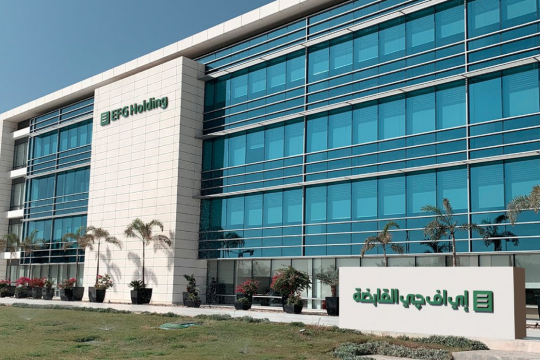
But remember, this isn’t an IPO. EFG Holding is taking U Consumer Finance public by giving its shareholders stock in U equivalent to about 20.5% of the company. The financial services giant gave its shareholders stock in U as a dividend in lieu of a traditional payout. The “move unlocks value for EFG Holding shareholders by crystallizing the true market worth of a key asset,” EFG Holding Group CEO Karim Awad told us when the transaction was first announced in March.

When Valu starts trading today, shareholders can either cash out by selling their shares on the open market or hold onto the dividend in equity form. In its first session, the share price will be allowed to move between a floor of EGP 0.10 and a ceiling of EGP 7.40, with no temporary trading halt mechanisms in place.

In total, EFG Holding shareholders are in line for EGP 3.2 bn. U is valued at EGP 15.6 bn, according to a report by independent financial advisor BDO Keys Financial Consulting. EFG Holding is distributing U shares representing about 20.5% of the company, valuing the transaction at roughly EGP 3.2 bn.

The ringing of the bell will also welcome Valu’s newest shareholder — US multinational giant Amazon. The world’s second largest company revenue and fifth biggest by market cap will soon be able to boast a 3.95% stake for EGP 6.04 per share, exercising a three-year-old option play, according to a statement (pdf) from Valu. The transaction will be executed during Valu’s first trading session today through the block trade after getting the necessary approvals.

REMEMBER- Amazon had purchased USD 10 mn worth of EFG Hermes’ London-listed GDRs back in 2022. The agreement included an option to convert them into a c.4.3% stake in Valu based on a market cap of USD 235 mn in the event of a third-party investment, IPO, or other liquidity event. With Valu’s listing now imminent, Amazon opted to convert, landing a seat at the fintech giant’s table.

The move hands Amazon a small but strategic entry into one of the region’s fastest-growing BNPL and consumer lending platforms, as Egypt’s fintech scene gears up for a rare entrance to the EGX with foreign interest. Valu’s listing is one of the most closely watched EGX listings in recent years, offering a stress test for investor appetite amid macro headwinds.

What they said: “Amazon’s decision to acquire a direct stake in Valu [is] a testament to EFG Holding’s proven ability to build greenfield ventures that evolve into pioneering market leaders,” said Awad. Valu CEO Walid Hassouna called it a “powerful testament” to the resilience and adaptability of Valu’s business model, one that he says continues to evolve to meet the needs of clients and partners.

ADVISORS- EFG Hermes is quarterbacking the transaction as EFG Holding and Valu’s sole financial advisor.

This publication is proudly sponsored by

3

Coffee With

Valu CEO Walid Hassouna on how the fintech outpaces its rivals ahead of EGX listing

Today is a big day for Valu — with the local leading fintech not only joining the EGX, but welcoming Amazon as a direct shareholder too. In the run-up to the big day, EnterpriseAM sat down with Valu CEO Walid Hassouna (LinkedIn) to find out more about the reasons behind the company’s success and what to look out for from the company going forwards.

ICYMI- In part one of our conversation, we touched on how the fintech became a household name and what's still to come. You can check it out here.

In part two, EnterpriseAM heard from Hassouna about how the company stands out and succeeds in a crowded consumer finance market, what’s driving profitability and revenues, and more. Edited excerpts from our conversation, below:

EnterpriseAM: What’s driving revenue growth on the one hand, and profitability on the other?

Walid Hassouna: For sustainable revenue growth, customers will not come to you unless you have a real hook — that’s why you often see strategies like limited-time offers, steep discounts, or cashback promotions. When a customer engages with us for the first time, we make sure that they gain significant value, even if it means we take a short-term loss. The key, of course, is to manage this carefully. It's about getting new customers on board and then selling them on doing more with us.

For example, if a customer starts by purchasing electronics through us, we’ll introduce them to other categories like fashion, where we can offer better margins, or travel, where we’re the exclusive partner with EgyptAir. Our unique partnerships with platforms like Amazon and Noon further strengthen our position in the market, allowing us to provide unparalleled value, while driving long-term engagement.

In practice, our solution offers customers a revolving credit limit, which operates much like a credit card. While regulatory constraints in Egypt require us to issue a prepaid card, rather than a credit card directly, the functionality mirrors that of a credit card seamlessly. Customers can transfer funds from their app to the prepaid card and use it just as they would a credit card, enjoying the same flexibility and convenience. This innovative approach allows us to deliver a credit-like experience within the current regulatory framework.

From there, we become your go-to payment solution for everything, whether you’re ordering meals on Talabat, shopping on Amazon, or booking a ride-hail. We want to be our customers' preferred payment method and then keep them for life.

For us as a consumer finance business, profitability hinges on two major factors. The first is access to commercial debt, and the second is the ability to effectively manage risk. Along with a couple of key players in the market, we enjoy excellent access to commercial debt. The banking sector in Egypt is highly advanced compared to others in the region, and it helps that banks are now very accustomed to working with NBFIs. We’ve been able to raise debt with no recourse to our shareholders. So everything that we have raised in commercial debt since inception remains on our books and under our own risk. To date, we have 22 banks lending to Valu, with facilities totalling EGP 8.2 bn.

E: And what about securitization?

WH: We are one of the biggest issuers of securitized bonds — we’ve done EGP 14 bn worth of securitizations in the past three years. We've also started offloading with banks and discounting with other banks, all of this with no recourse on Valu.

If you have real access to credit, that reduces costs significantly and enables you to scale — it makes your economies of scale work, right? If we now sell USD 1.2 mn or USD 1.3 mn a day, it's because we have this capacity to raise debt and use it.

E: You also mentioned risk management a moment ago?

WH: Because we maintain very low risk, minimal NPLs, and limited provisions, profitability stems from our ability to scale effectively while managing risk. Of course, our revenue streams are diverse. We generate income through interest rates, fees, and rebates from merchants. Additionally, we have non-lending revenue sources, such as offering the largest gift card program in Egypt, affiliate marketing partnerships with Amazon, and collaborations with other players. We also offer pay products, Valu Business, salary advances, and more. While we have multiple revenue streams, the key to our success lies in our very low risk profile and strong access to financing, which enable us to scale efficiently and drive profitability.

E: There are something like 45 consumer finance companies in Egypt, and no real consolidation in sight that we can see today. What’s your moat?

WH: The market grew 30% last year — Valu grew 70%. We’ve outgrown the market over the past three years despite rising competition, and some players are just burning money. It helps that we have the biggest network — that’s one of our big edges alongside turnaround time. Consumers may consider having a second company, but they’ll choose Valu first because it’s the most widely accepted — it’s accepted everywhere with a point-of-sale machine. We have the biggest, most inclusive network, from utility bills up to boats, homes, and luxury travel.

I believe our boldness and unwavering commitment to innovation have been the driving forces behind our success. From the very beginning, EFG Holding recognized that one of the biggest risks in launching Valu was the possibility that other market players such as major retailers and traditional consumer finance companies might replicate our model. This challenge pushed us to stay ahead by constantly evolving, thinking about versions 2.0, 3.0, and beyond. It enabled us to expand from the foundational revolving credit limit, which is fast and instant, to a diverse range of offerings, including online solutions, gift cards, cashback programs, C2C platforms, loans, boats, and big-ticket items. This relentless focus on innovation has been key to our growth and differentiation in the market.

E: Looking three years down the road, what’s driving growth?

WH: We want to focus more on non-revolving facilities, particularly for big-ticket items. This approach isn’t groundbreaking, it aligns with what banks already do — they have credit cards and personal loans. Currently, our products lean more toward the credit card model, but we’re actively exploring ways to develop our own unique take on the personal loan concept.

E: Is that where Ulter comes in?

WH: Ulter, yes, but also Shift, our car-finance product, which is a key part of our strategy for the next couple of years. During this period, we aim to expand the use of our prepaid card beyond Valu customers, as it is the fastest-growing card in Egypt. Allowing other customers to use it is a priority for us, and we’ve already submitted an application to the FRA for a fintech license to enable this.

And, of course, we think it's very important to our ecosystem to be able to lend to our merchants. Our affiliate marketing business is growing very well right now. We are adding a significant number of customers. We’re also preparing to launch our own marketplace for affiliate marketing soon. Another focus area is our expansion into Jordan, as we aim to enter markets where we can establish a strong presence and truly own the space.

E: Why Jordan?

WH: Our approach is closely aligned with EFG Holding’s strategy, as we aim to be a top player in every market we enter. That’s why we’re selective about where we operate. Competing in markets like Saudi Arabia or the UAE, where giants like Tabby and Tamara dominate, doesn’t align with our vision. For example, while Tabby handles USD 10 bn annually, the entire Egyptian market of 45 companies collectively sells around USD 1 bn. Instead, we’re focusing on Jordan, where we can build a strong presence and establish ourselves as a leader. This targeted approach allows us to concentrate our resources and maximize our impact.

Jordan is our focus for this year. Additionally, we’re exploring opportunities in one Asian market and one North African market, with plans to possibly enter in the second half of 2026. We prioritize markets with low credit card penetration, limited consumer finance options, and gaps in the products currently offered — areas where we can make a meaningful impact.

E: What’s keeping you awake at night right now?

WH: Customer complaints. While it might seem unconventional, I still make it a point to read customer complaints. I know it’s not the most efficient use of time, but it keeps me directly connected to our customers and provides invaluable, firsthand insights into where we may genuinely fall short or be able to do better.

Additionally, I often find myself lying awake at night thinking about new products. We’re working on something truly disruptive, and it’s fascinating and sometimes consuming how much it occupies my thoughts during those quiet hours. I am deeply invested in driving innovation and want to ensure we stay ahead in the market.

4

DEBT WATCH

First sovereign sukuk to go ahead as scheduled despite current events, Kouchouk says

The government is set to move forward with its plan to issue the first sovereign sukuk denominated in EGP at the beginning of FY 2025-2026 “despite current events,” Finance Minister Ahmed Kouchouk told EnterpriseAM.

Kouchouk declined to disclose the size of the issuance, but expressed optimism over its success. We were told last month that the Finance Ministry was working to complete an issuance of USD 1.5-2 bn worth of sukuk that will help repay some USD 1.5 bn of maturing ten-year bonds issued back in June 2015, with the issuance expected to come before the second half of this month.

What we know so far: The issuance will be done in tranches and will be directed toward government entities that are part of the sovereign sukuk program, a senior government source told EnterpriseAM. The issuance aims to finance public investments outside of the general budget, the source said. The issuance also comes as part of the Finance Ministry’s strategy to avoid a rise in interest rates, Kouchouk told us.

Different types of sukuk are being considered to finance the state’s development projects, including ijara (leasing), murabaha (cost-plus financing), and istisnaa (construction/manufacturing).

“We aim to create a balanced sovereign financing framework with lower costs than traditional borrowing, whether domestic or external, to support the comprehensive structural reform plans targeting deficit reduction, continued development efforts, and a rapid decline in public debt levels through the use of various tools,” our source said.

AND- The country has managed to reduce the external debt of budget entities by an estimated USD 1-2 bn annually, according to an Ittihadeya statement, citing preliminary indicators.

5

DEBT WATCH

Aman closes EGP 665.5 mn securitization issuance

Aman wraps securitized bond sale for its consumer finance arm: Aman Holding — a wholly-owned subsidiary of EGX-listed Raya Holding — raised EGP 665.5 mn in its latest securitized bond issuance for its consumer finance arm Aman Consumer Finance, according to a statement(pdf). This is the firm’s third transaction executed via Aman Securitization.

A three-tranche issuance: The offering’s six-month tranche of EGP 307 mn and 12-month tranche of EGP 222 mn were rated as Prime 1 by the Middle East Ratings and Investor Service (MERIS), according to a separate statement (pdf) from issuance manager CI Capital. The offering’s 23-month tranche of EGP 136.5 mn received a rating of A - from MERIS.

IN CONTEXT- The move falls under the group’s securitization program, which launched in February 2023. It comes a little over six months after an EGP 1.08 bn securitized bond issuance for Aman Consumer Finance and nine months following an earlier EGP 1.29 bn issuance.

What they said: “Since the launch of our securitization program, we have successfully completed issuances totaling nearly EGP 9.7 bn to date, which stands as a testament to our commitment to sustainable growth” Aman Holding Co-CEO of Business and Commercial Affairs Hazem Moghazi said.

ADVISORS- CI Capital acted as a financial advisor, lead arranger, general coordinator, issuance manager, and placement agent on the issuance. Zaki Hashem & Partners was appointed as the legal advisor, and United Auditors for Audit, Tax, Consultancy, and Services served as the financial auditor.

6

Also on our Radar

Israel presses pause on Egypt gas exports following US strikes on Iran. PLUS: Yacht tourism initiative, GE Healthcare + Al Safi Group

ENERGY-

Israel once again put a halt to Egypt-bound natural gas exports yesterday morning, coinciding with the US’ strikes on Iranian nuclear sites only a few hours before, Asharq Business reports, citing an unnamed government source.

Israel had only just resumed gas exports on Thursday after a six-day pause, although most of this made its way to Jordan, with Egypt receiving only “tiny volumes,” an Israeli Energy Ministry source told Reuters last week.

The initial halt in flows followed Tel Aviv’s decision to start bombing Iran earlier in the month, which led to the shuttering of its Leviathan field as well as the Karish field, taking away 800 mcf/d from our national gas grid. Reduced gas flows from Israel not only mean an increased reliance on significantly more expensive LNG or mazut imports, but also put a significant strain on Egypt's efforts to keep the lights on ahead of high-demand summer months.

TOURISM-

Gov’t launches global digital campaign to promote yacht tourism: The Tourism Ministry rolled out a two-month international campaign called Sail to Egypt to showcase the country’s yacht tourism offering, according to a ministry statement. The campaign will feature on online platforms and in-print publications, highlighting Egypt’s Red Sea and Mediterranean coastlines, modern marinas, resorts, and coastal cities to attract luxury travelers.

REMEMBER- The government has been working to boost Egypt’s yacht tourism for years now. And over the past year, the Suez Canal Authority rolled out fresh incentives and facilities for yachts passing through the waterway.

REGULATION-

New rules for PSPs + PSOs are out: The Central Bank of Egypt issued new licensing and registration rules for payment service providers (PSPs) and payment system operators (PSOs), it said in a statement (pdf). The framework, which aims to keep pace with rapid developments in digital payments, outlines licensing conditions and procedures for both local and foreign entities offering payment services or operating payment systems in Egypt. It covers activities including issuing payment instruments and sending and receiving remittances.

PSPs and PSOs already operating in Egypt will have 12 months to comply with the new regulations — including capital requirements, which range between EGP 10-500 mn — and submit licensing requests.

DIVE DEEPER- Check out the 34-page document outlining the news rules on the CBE’swebsite.

MANUFACTURING-

Egypt’s first ultrasound, MRI machines factory in the works: US healthcare giant GE Healthcare and Al Safi Group’s Medinova are setting up the country’s — and also the region’s — first factory for locally manufacturing ultrasound and MRI machines, according to a cabinet statement. The facility will produce 2.5k ultrasound units and 40-50 MRI systems annually, with a portion set for export to Africa. The site will house a total of 25 production lines covering other electronics, including telecom equipment and display screens, and is expected to create 3k direct and indirect jobs.

7

PLANET FINANCE

Institutional appetite for BTC picks up

Corporate BTC uptick reshapes crypto trading activity: Companies worldwide — many unrelated to crypto — are upping their BTC trading volumes, mirroring a strategy that ignited explosive stock rallies for early adopters. The uptick of holdings by institutions is evidenced through the decline in BTC trading transactions despite a sustained rise in settlement values, Bloomberg reports.

By the numbers: Network transactions this year are down from as much as 700k per day in 2024 to 500k per day, the business news information service said, citing data from Glassnode analysts. However, the value traded is roughly the same, with 2025 seeing about USD 7 bn traded everyday. This points to less people trading more, and signals institutional dominance.

“[A] lot of appetite from all types of institutions from family offices to asset managers to pension funds to sovereign wealth fund[s],” are behind the uptick, XBTO Trading LLC trader George Mandres said. Opting into an ETF is more likely when it comes to individual investors, he added.

The cryptocurrency has clawed back post-tariff losses from the spring and has climbed over 50% since US President Donald Trump’s inauguration, the Financial Times reports. The salmon-colored paper also noted its rising popularity and acceptance amongst investors and regulators, making the case for it being classified as a “mainstream asset.”

Elsewhere, the FT reported a 170% uptick over the past year in the number of BTC tokens held by firms, according to data from BitcoinTreasuries.net. A handful of companies, like software firm MicroStrategy, account for the majority of this, though it’s yet to be seen whether the holdings would weather a sustained price downturn. Companies using debt to buy BTC could be especially susceptible to potential price pressures.

The big names: Today, over 130 public companies hold USD 87 bn worth of the token, or about 3.2% of BTC’s eventual total supply. Tesla, Twenty One Capital, Metaplanet, and — predictably — Trump Media & Technology Group, which is planning a USD 2.5 bn BTC treasury, are also among the global firms with the largest numbers of BTC holdings.

MARKETS THIS MORNING-

Asian markets are firmly in the red amid fears of a wider conflict following the US’ attacks on Iranian nuclear sites. South Korea’s Kospi leads losses with a 1.05% decline, while Japan’s Nikkei lost 0.6% and China’s CSI 300 sank 0.4%. Over on Wall Street, futures are also declining following the weekend’s events.

EGX30

31,056

+2.7% (YTD: +4.4%)

USD (CBE)

Buy 50.73

Sell 50.87

USD (CIB)

Buy 50.75

Sell 50.85

Interest rates (CBE)

24.00% deposit

25.00% lending

Tadawul

10,574

-0.3% (YTD: -12.2%)

ADX

9513

+1.0% (YTD: +1.0%)

DFM

5352

+1.6% (YTD: +3.7%)

S&P 500

5968

-0.2% (YTD: +1.5%)

FTSE 100

8775

-0.2% (YTD: +7.4%)

Euro Stoxx 50

5234

+0.7% (YTD: +6.9%)

Brent crude

USD 78.29

+1.7%

Natural gas (Nymex)

USD 3.90

+1.4%

Gold

USD 3,397.20

+0.3%

BTC

USD 99,454.50

-2.0% (YTD: +6.3%)

S&P Egypt Sovereign Bond Index

878.77

+0.1% (YTD: +13.0%)

S&P MENA Bond & Sukuk

144.12

-0.1% (YTD: +3.0%)

VIX (Volatility Index)

20.62

-7.0% (YTD: +18.9%)

THE CLOSING BELL-

The EGX30 rose 2.7% at yesterday’s close on turnover of EGP 3.1 bn (33.9 % below the 90-day average). Local investors were the sole net buyers. The index is up 4.4% YTD.

In the green: EFG Holding (+6.6%), Beltone Holding (+6.3%), and Fawry (+5.9%).

In the red: Edita (-0.6%) and Emaar Misr (-0.3%).

CORPORATE ACTIONS-

MM Group for Industry and International Trade (MTI) will distribute bonus shares at a rate of 0.25 per share on its 2024 earnings, after its general assembly approved the move, according to a disclosure (pdf) to the EGX.

8

BLACKBOARD

A look at Egypt’s summer training initiatives for students

Summer training initiatives are on the rise: The CIT Ministry is working to enhance technical training among students to better prepare them for the needs of the labor market. The upgraded summer training program for university students recently launched by the Information Technology Industry Development Agency (ITIDA) plays a part in this initiative to position Egypt as a global hub for IT and cross-border services.

The private sector is stepping up: The ministry has partnered with the National Telecommunications Institute (NTI) and Motorola distributor Systel to provide summer training for university students. This program aims to bridge the gap between education and market needs by offering specialized, comprehensive courses that align with the ICT industry. The government is aiming to make Egypt a go-to destination for international tech firms seeking expansion, which is already taking shape with the various tech companies investing in the country, ITIDA CEO Ahmed Elzaher told EnterpriseAM.

DATA POINT- Over 760k graduates enter Egypt’s job market each year, including some 50k ICT grads, 171k who studied finance and accounting, and 21k grads in STEM-related fields, Elzaher said. Around 80% of the workforce speaks at least one foreign language, giving Egypt a competitive edge in global service delivery.

Meeting market demand: The summer program was revamped to include 120 hours of training — 90 hours of technical instruction and 30 hours on soft skills to match the needs of employers. The program has also expanded to accommodate more students due to strong demand in previous years. Elzaher emphasized the significance of Egypt’s young talent as a competitive advantage, adding that upgrading the summer training initiatives ensures a workforce that can innovate and attract investments.

What does the program offer? The training program covers a number of in-demand tracks — cybersecurity, software development, UI/UX design, AI and data analysis, cloud computing, systems administration, electronics, digital arts, and digital marketing.

Who qualifies? Students coming from the faculties of engineering, computer science, business information systems, media, fine arts, applied arts, and art education are eligible to apply. The program is targeting some 10k students this year, with applicants also gaining access to discounted international certifications through NTI, reaching up to 70% off exam and certification fees.

That’s not all: ITIDA and Systel are also offering a tech training program for 250 students, which includes 120 hours of training across two tracks — 90 hours of technical instruction in fiber optics, broadband communication, surveillance systems, and satellite communication and 30 hours of soft skills development. The program is free and open to university students across the country in their first, second, or third year.

School students are not left out: The ministry also launched a summer training program under the Digital Egypt Cubs Initiative to boost younger students’ skills when it comes to digital technologies, initiative Executive Director Walid Al Engbawy told EnterpriseAM, adding that applications are now open.

The details: The program is open to middle and high school students who scored over 90% in English, math, or science in the previous academic year. Those accepted into the program receive intensive training and a certificate, qualifying them for more advanced levels of the initiative. The ministry expects to expand the number of students enrolled this year, depending on application volume and partner capacity, Al Engbawy said.


JUNE

MPs approveextension of tax dispute resolution window until 30 June 2025, with potential for further extension

JULY

10 July 2025 (Thursday): Monetary Policy Committee’s fourth meeting

15-16 July 2025 (Tuesday-Wednesday): Egypt Mining Forum

July 2025: The first operational trail of Egypt-KSA electricity interconnection line

Etihad Airways to launch twice-weekly flights to Alamein

AUGUST

28 August 2025 (Thursday): Monetary Policy Committee’s fifth meeting.

Tourism Development Authority to waive late payment penalties for land purchases if full installments are paid

SEPTEMBER

The Engineering Export Council of Egypt will ship a commercial delegation to Russia to ramp up exports to European markets.

Egypt Education Platform (EEP) to launch two new schools in Alexandria and Somabay

Egypt Otsuka’s nutritional products factory in Tenth of Ramadan to begin operations, with exports to Gulf countries expected by January 2026

OCTOBER

2 October 2025 (Thursday): Monetary Policy Committee’s sixth meeting.

12-16 October (Sunday-Thursday): Cairo Water Week, Cairo.

19-22 October (Sunday-Wednesday): Arab African Investment and International Cooperation Summit.

NOVEMBER

16-19 November 2025: Cairo ICT 2025, Egypt International Exhibition Centre.

20 November 2025 (Thursday): Monetary Policy Committee’s seventh meeting.

November: Egypt to join the EU’s Horizon Europe research and innovation program.

DECEMBER

1-4 December: Egypt Defence Expo (EDEX), Egypt International Exhibition Centre.

25 December: (Thursday): Monetary Policy Committee’s eighth meeting.

EVENTS WITH NO SET DATE

Mid-2025: EGX launches sustainability index.

2Q 2025: Financial Regulatory Authority (FRA) to introduce derivatives on the EGX

2Q 2025: Safaga Terminal 2 to start operations

1H 2025: EGX launches a sharia-compliant sustainability index.

1H 2025: Digital Financial Identity Company will launch an electronic bank account opening service

1H 2025: The Egyptian-US Investment Forum.

1H 2025: The Egyptian Mineral Resources Authority will relaunch a global tender for gold exploration through Shalateen Mineral Resources company.

3Q 2025: Nasr Automotive begins locally manufacturing passenger cars.

Mid-2025: The Administrative Capital for Urban Developments to roll out the second phase of offering industrial plots to investors

2025: The InterAcademy Partnership assembly

2025: Nile Basin States Summit, Cairo, Egypt

2025: Release of the government’s Startup Charter document

2026

Early 2026: Passenger operations on the New Administrative Capital–Nasr City monorail scheduled to begin.

1Q 2026: Trial operations for the Ain Sokhna–Sixth of October section of Egypt’s first high-speed rail line scheduled to begin.

1 January: European Union’s Carbon Border Adjustment Mechanism (CBAM) to fully come into effect

May 2026: End of extension for developers on 15% interest rates for land installment payments

2027

20 January-7 February: Egypt to host the African Games.

April 2027: Tenth of Ramadan dry port and logistics hub to begin operations.

EVENTS WITH NO SET DATE

2027: Egypt to host EBRD’s annual meetings for 2027.

End of 2027: Trial operations at the Dabaa nuclear power plant expected to take place.

September 2028: First unit of the Dabaa nuclear power plant begins operations.

Now Playing
Now Playing
00:00
00:00