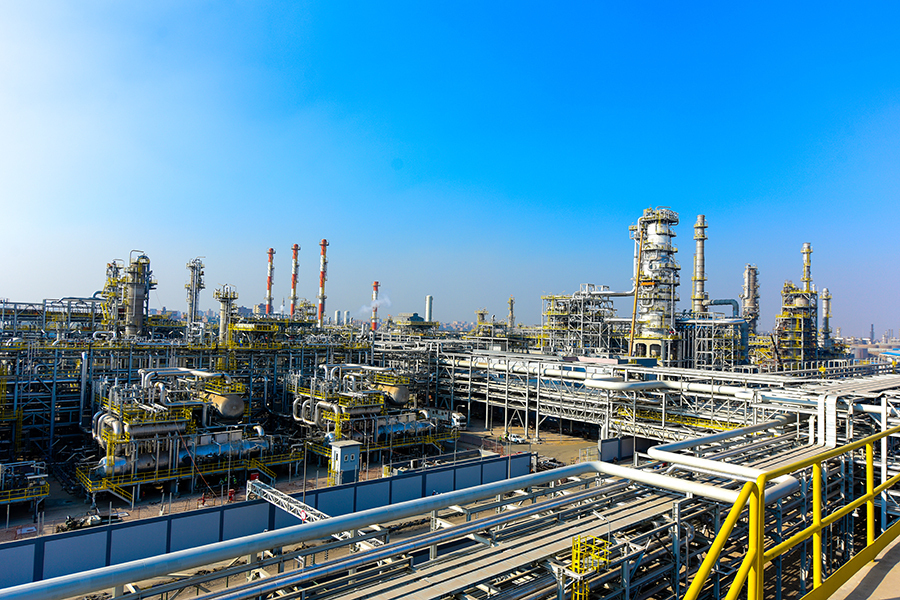
Today’s forecast: sunny, with a drizzle of roz: The Industrial and Commercial Bank of China (ICBC) is set to provide Egypt with USD 20 bn in financing over the next 10 years, ICBC’s Africa General Manager Ivy Tsai said at a meeting with Investment and International Cooperation Minister Sahar Nasr, Al Masry Al Youm reported. The financing will be geared towards large scale projects such as the New Administrative Capital, the USD 8.6 bn Hamrawein “clean coal” power plant, a phosphate complex, and a Huawei-run smart city. The funding will be part of a wider USD 35 bn financing program for projects in Africa, of which Egypt will receive the lion’s share. This is would be the biggest investment pledge announced from the Chinese since China Fortune Land Development Company announced a USD 20 bn investment in the new capital, showing us once again that when it comes to the Chinese, it’s go big or go home. Tsai also extended an official invitation to Nasr to visit Beijing in May, to attend a summit on that nation’s One Belt, One Road initiative.
Related
Egypt has begun the road to a free and growing economy, says PricewaterhouseCoopers in a recent, glowing report on the Egyptian economy and its prospects issued last Thursday. The crux of PwC’s argument is that Egypt’s road to economic recovery is split into “pre-float” and “post-float” phases, saying the decision to let the interbank market set the FX rate has and will continue to attract foreign investment and make Egyptian exports more competitive. The real flood gates of investments will open up once investors feel that the USD / EGP rate has reached equilibrium, ending a period characterized by speculation and high volatility. “For now, the devaluation has resulted in a valuation gap due to the large decrease in business values compared to previously stated USD terms; valuation adjustments will therefore have to be made, resulting in a delay before [contracts] are sealed,” said our friend Maged Ezzeldeen, Egypt Senior Partner and Deals Leader at PwC Middle East, according toCPI Finance.
Beyond the float, PwC sees Egypt’s fundamentals as having improved through the government’s commitment to the reform agenda, which has become apparent in 2016. Legislative reforms such as the Investment Act, the upcoming Bankruptcy Act, and others will continue to drive investor confidence. Efforts to strengthen capital markets, including the program to IPO state-owned businesses, will help drive capital growth to reach EGP 3 tn from EGP 600 mn. Efforts by the government on the international front, including the eurobond issuance, will also drive growth. The report’s conclusion: This is a good time for investors to explore new investment opportunities in Egypt, as the market is beginning to settle down and absorb the post devaluation impact. You can check out PwC’s landing page for the report here or download the 4pp report in pdf.
…On the flipside, Global Risk Insights is taking a look at the possible economic and political risks to this anticipated take-off of the economy. The underlying factor most investors will look for is political stability as inflation rates spike, a continued high budget deficit, rising public debt, and subsidies reform prove unpopular (something to look out for as we hit presidential elections in 2018). Investors will be looking at the government’s response to this unpopularity, according to the report. Terrorism and security continues to loom over any economic progress, writes Cecil Gueren.
Related
Egypt’s eurobonds are doing well on the secondary market: Yields on the eurobonds Egypt sold last month have tightened by 0.5-0.6% since issuance, according to BNP Paribas’ weekly debt capital markets report. This reflects tangible appetite on the secondary market as well as liquidity. The report also shows that Egypt’s eurobonds are trading tighter, with narrow bid-ask spreads, than Tunisia’s issuances despite the three-notch credit ratings differential in favour of Tunisia. They are also trading tighter than other African sovereigns including Ghana, Kenya, Angola, and Ethiopia.
Related
Egypt's decision to float its currency can already be declared a success, but it will take time for investment flows to return and revive the nation’s economy, says Orascom Development Holding boss Samih Sawiris. “Now the investment appetite has become bigger...people will start looking at the various opportunities given to them,” he tells Reuters’ Ahmed Aboulenein, but warns that we should not be over-enthusiastic or over-emotional.
Sawiris said that confidence in the flagging tourism sector is all about marketing from both the government and private sector. “We just need to spend a lot more trying to annihilate this bad image that was forcibly spread.”
The interview delved into Orascom’s low-income housing projects, where Sawiris had less than complimentary things to say about the government’s sidelining of the private sector. “Once the government goes into the market, everybody leaves the market because the government doesn't make money, they spend money,” he said. “I believe governments should be regulators, not competitors. It's quite sad.”
Related
Are the Russians winking at us to get Daba’a signed before we worry about tourism? “The construction of [Daba’a nuclear power plant] with Russia’s participation is much more important for Egypt than return of Russian tourists,” Russian state-owned news agency TASS quotes Tarek Heggy saying, positioning the former oil industry executive as an Egyptian “political thinker and international petroleum strategist.” TASS uses Heggy to deliver a not-to-subtle message: “Egypt will face an energy catastrophe if the country abandons building the [plant]” Heggy downplayed Egypt’s energy reserves and the giant Zohr gas field, sharing none of the optimism about Egypt that major IOCs had demonstrated during the Egypt Petroleum Show 2017.
And as if to hammer the point, TASS also ran statements yesterday by Russian Deputy Foreign Minister Oleg Syromolotov, who said that no timeline has specified for the resumption of flights to Egypt. Yesterday’s stories are just the latest in a drumbeat of pieces through which Moscow has alternately held out carrots and sticks on the resumption of direct flights. The Electricity Ministry is planning to announce the terms of the Daba’a contract this Saturday.
Related
Inching toward an oil agreement with Iraq: Egypt is on the verge of signing an agreement with Iraq’s State Oil Marketing Organization (SOMO) to import a 1 mn barrels of crude oil each month, Iraq’s Ambassador to Cairo Habib Hady Al Sadr tells Al Ahram. Iraq has already signed the contracts and sent them to Egypt, he adds, and the first shipment should arrive in the last 10 days of March.
Related
CBE gets props for helping settle pre-float LC crisis: The Central Bank’s intervention to help companies settle their pre-float LCs received praise on Wednesday from QNBA Chairman Mohamed El Dib, who told Al Masry Al Youm that the banks are in favor of the agreement as it will keep clients in good standing. Companies with LCs under USD 5 mn will repay the debt in local currency at a 12% interest rate over a two-year stretch, while those with larger debts will be dealt with on a case-by-case basis, El Dib says.
Related
The House of Representatives will be voting on the Compensation Act at a plenary session next week, MP and Federation of Egyptian Industries Chief Mohamed El Sewedy said, according to Al Borsa. The remarks come one day after contractors threatened to suspend work on government projects until the legislation — which would compensate suppliers and contractors for FX losses incurred after the float and has been in the works since December — is enforced. The bill is now being reviewed by Egypt’s State Council.
Related
Tax Authority to chat about VAT with EGPC: Tax Authority officials will meet with the Egyptian General Petroleum Corporation (EGPC) next week to discuss further exemptions from the value-added tax for the industry. International oil companies are seeking VAT rebates for their equipment and machinery suppliers, Tax Authority Deputy Head Mohamed Abdel Sattar said on Wednesday, according to Al Borsa. IOCs are exempt from the tax under the terms of their production-sharing agreement with the EGPC, but contractors are not.
Related
The new Ismail cabinet approved a presidential decree to streamline the property registration process and impose a standard schedule of registration fees, according to a statement. Other decisions at the new cabinet’s first policy-making meeting included:
- Approving an EGP 10 mn grant from the AfDB for slum development;
- Approving amendments to allow the president to delegate decisions related to the expropriation of properties for public utilities;
- Approving amendments to the traffic law on transferring ownership of vehicles.
Related
Peugeot-Citroën, which had made the automotive directive a condition for its investment in Egypt, has now added the Investment Act to the bundle, Ahram Gate says. The company’s Middle East and Africa Executive VP Jean-Christophe Quémard picked-up the same line other company executives had carried in Cairo in December, telling Trade Minister Tarek Kabil that they would continue to monitor the situation closely before they make the call.
Meanwhile, five French companies are planning on investing in Egypt within three months, Egypt-France Business Council Chairman Fouad Younes tells Al Borsa. Younes declined to name the companies, but said they are in the solar power, athletic supplies, auto manufacturing, and auto component industries. Trade and Industry Minister Tarek Kabil said athletic supplies manufacturer Decathlon is looking into setting up in Egypt, according to Al Mal.
Related
LG Egypt has doubled exports from its 10th of Ramadan factory, with 80% of the plant’s output geared towards foreign markets, unnamed sources told Al Borsa. The company now exports 100k televisions to the African and Gulf markets every month and allocates 15% of the factory’s output to the local market.
Related
Orange Egypt reported a consolidated net loss of EGP 2.55 bn in 2016 from a profit of EGP 10 mn in 2015, according to a regulatory disclosure. FX revaluation charges cost the mobile network operator EGP 2.3 bn in 2016. Orange Egypt says its loss owes primarily to rising prices and operational costs, the impact of the EGP float on the company’s import bill, the increase in the central bank’s basic interest rates, and weak tourist arrivals which reduced roaming income.
Related
The spat between Naguib Sawiris and the Free Egyptians Party has come to a head: The FEP (of which Sawiris is a founder) dismissed Naguib from the party after he did not show up to a hearing with the party’s disciplinary committee, Al Shorouk reports. Sawiris had been summoned for questioning about his “slanderous” remarks, alleged use of “sectarian” language, and giving the impression that he speaks for the party. In the words of Board of Trustees undersecretary Ragy Soliman, this is “a new episode of a satire show about a group that has limited insight into anything.”
Related
Aramco has selected JPMorgan Chase, Co and Morgan Stanley, and HSBC as the lead underwriters for its planned IPO, sources told The Wall Street Journal (paywall). Other unnamed sources told Reuters that only JPMorgan and Morgan Stanley were tapped to assist with the IPO, but that Aramco “could call on another bank with access to Chinese investors.” Reuters’ sources add that HSBC is said to be the leading contender for a role among a list of five banks that could provide a pipeline to Chinese investors, but that the final lineup for banks could still be adjusted. JPMorgan, Morgan Stanley, and maybe HSBC would be joining boutique investment bank Moelis & Co in the IPO transaction that is expected to be worth nearly USD 100 bn.
Related
Is Noble Energy getting cold feet in its development of Israel’s Leviathan gas field? In a piece for Globes, Amiram Barkat asks why has there been no official and binding decision to develop the Leviathan gas reservoir. He says the key behind the delay is that the development of Leviathan depends on “a single strategic gas agreement,” particularly the one with Jordan, “which has not yet been closed.” Barkat adds “there is no progress in the deal with Egypt, and forget about Turkey. Sales of gas to Greece and Italy are a wonderful idea that could be realistic in a world of higher prices.” He says the absence of an export agreement is the “obvious” reason why Noble Energy is unwilling to take an investment decision.
Related


 Egypt Edition
  UAE Edition
  Saudi Edition
  MENA <> India Corridors
  Logistics (MENA)
  Climate (MENA)


 Share Issue