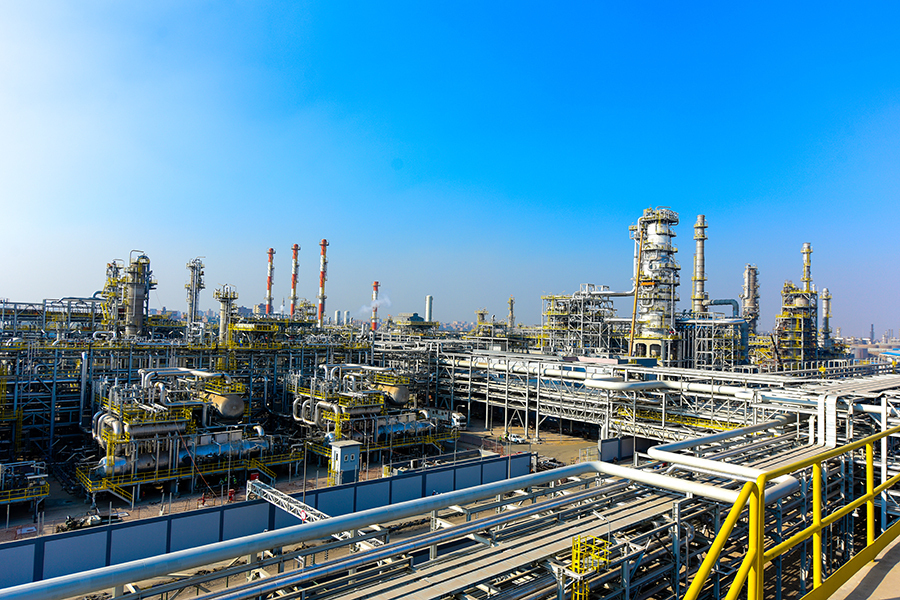
Saudi Aramco has resume shipments of petroleum products to Egypt, which received shipments on both Friday and Saturday, Oil Minister Tarek El Molla told CBC’s Lamees El Hadidi last night (watch, runtime 9:47). The next two shipments are scheduled to arrive on 25 and 26 March and will then return to a regular schedule from next month. Egypt is set to buy c. USD 320-340 mn each month at today’s prices. El Molla had told Reuters’ Arabic service on Thursday that the shipments were expected to resume by the end of March or in early April. The resumption of shipments — part of a USD 23 bn, five-year supply agreement halted last year amid rising tensions between Cairo and Riyadh — was announced last Wednesday.
Commitments to other fuel import agreements putting financial strain on the EGPC:The agreement to import 1 mn barrels of crude oil per month from Iraq is still on and was not a replacement for Saudi oil, El Molla added. Sources from the Oil Ministry said the Iraq contract will go into effect by mid-April at the latest, according to Iraq Tradelink News Agency. The Oil Ministry had confirmed last week that Egypt remains committed to oil import agreements signed during the spat with Saudi, prompting a cash squeeze at the Egyptian General Petroleum Company (EGPC), according to its CEO Tarek Al-Hadidi. The EGPC issued international tenders and sought deals “with more than 50 international suppliers” after Aramco suspended shipments in October, he told Ahram Weekly. The international tenders required the EGPC to pay for shipments within one month of delivery, whereas the Aramco agreement allows Egypt to pay for the shipments in instalments over 15 years.
In another sign of warming ties between Cairo and Riyadh, the Saudi-Egyptian businesscouncil is preparing to hold an investment conference in Cairo this May, with 200 Saudi businessmen expected to attend, the council’s vice president Abdallah bin Mahfouz tells Al Borsa. According to Mahfouz, none of the agreements signed between the Saudi and Egyptian governments during King Salman’s visit to Cairo last year have been suspended. Bin Mahfouz says the Kingdom’s private sector has continued to invest in Egypt despite “economic hardships” at home.
Has Trump been playing marriage counselor? Analysts speaking to the Financial Times say Donald Trump had focused Egyptian and Saudi minds on a rapprochement. “Because of the Trump factor and the new Saudi strategy to counter Iran, we are back into a ‘forgive and forget policy,’” said Abdullah Alshammri, a former Saudi diplomat. “Riyadh’s policy towards Egypt can be described as emergency diplomacy — it is time to work only against Iran, and we need Cairo.” Ziad Akl, an analyst at Cairo’s Al-Ahram Center for Political and Strategic Studies, said neither country could afford a prolonged rift.
Saudi is also kicking up the rhetoric about the Muslim Brotherhood being the root ofall evil, playing music to Egypt’s ears. A long statement released by a senior advisor to Saudi Crown Prince Mohamed bin Salman after the latter’s meeting with Trump notes: “Osama Bin Laden … was among Muslim Brotherhood since he was a college student, and Al-Zawahiri himself was a member of the Muslim Brotherhood as well.”
Related
Cairo’s ties to Washington will be in the global media spotlight over the coming month. President Abdel Fattah El Sisi is heading to Washington, DC, in the first week of April to meet with US President Donald Trump, state-owned daily Al Ahram reports. The news comes as speculation mounts that Trump is playing ‘peacemaker’ between Cairo and Riyadh, as we note above, and will also take place as regional governments that receive about 62% of US foreign aid (30% is earmarked to MENA and 32% to sub-Saharan Africa) wonder what looming US budget cuts mean to them.
Could Trump’s budget cuts impact aid to Egypt? US President Donald Trump’s proposed fiscal budget for 2018 has included cuts to foreign aid and other diplomatic initiatives, which could possibly impact Egypt. Details on the cuts remain scant, but reports from the Wall Street Journal suggest that USAID, which funds a substantial amount of humanitarian aid to Egypt from the US, will see its budget allocation reduced. Funding for other humanitarian and climate change focused NGOs is also on the chopping block. The Trump administration has stated that it will shield the USD 3.1 bn in annual aid Israel receives from the US, but it is still evaluating what it will do with aid to Egypt and Jordan, Reuters reports. The US is committed to assistance to both Egypt and Israel under the Camp David peace accords, though the threat of suspension of that aid to Egypt had popped up a few times under the Obama administration. Aid from the US to countries had been anchored on fighting terrorism, according to Bloomberg, something which Trump has praised President Abdel Fattah El Sisi for. US support for the UN and its missions will also see a decline.
One person who could play a role in shaping where aid is cut is Egypt-born Dina Habib Powell, Trump’s deputy national security adviser for strategy, Politico reports. Powell is US President Donald Trump’s senior counselor for economic initiatives. In her new role, “Powell is expected to work closely with national security adviser H.R. McMaster and focus on long-term issues. She is also expected to help lead an interagency policy process working with Secretary of State Rex Tillerson, CIA Director Mike Pompeo and Defense Secretary James Mattis.”
Of particular local interest on the budget cut front is a hint in the New York Times a US Navy laboratory in Egypt could be on the chopping budgetary block. We’re taking this to mean the US Naval Medical Research Unit three (NAMRU-3), part of the US’s network of global sentinels against infectious diseases. NAMRU’s site was down at dispatch time, but you can learn more here about the history of the Cairo outpost (dating back to 1946).
And speaking of things that make America happy: We a have a permanent diplomatic mission to NATO now. President Abdel Fattah El Sisi issued a decree establishing an Egyptian permanent mission to NATO, Ahram Online reports. The decree followed a visit by NATO Military Committee Chairman Petr Pavel to Egypt earlier this month. Expect the news to be closely followed in Moscow, where officials are working overtime to regain market share in the global arms trade. The Wall Street Journal had a nice piece on that subject over the weekend, noting that Russia has made particular inroads with traditional US allies including Egypt and the UAE.
Still not enough coverage of US foreign policy for you? Go read Bloomberg or the Wall Street Journal on US Treasury Secretary Steven Mnuchin’s visit to the G-20 this weekend, were the US made it clear that protectionism is going to be a hallmark of its trade policy going forward. It’s going to be an interesting few years, folks.
Related
Foreign investors’ holdings of Egyptian treasury bills by foreign investors have almost tripled since January, Bloomberg’s Ahmed Feteha reports. Overseas holdings of T-bills amounted to EGP 60.8 bn (USD 3.3 bn) as of March 14, the Finance Ministry’s head of public debt Samy Khallaf said in an interview. The number was EGP 22 bn at the end of January. “Foreign investors also bought [EGP 3.8 bn] of six- and 12-month notes in a finance ministry auction on Thursday,” according to Khallaf. Yields on six-month notes rose by 73 basis points to 19.39% and by 69 points on 12-month notes to 19.24%, he added.
Related
Egypt’s reform agenda and the IMF loan will positively impact its credit ratings in the medium term, said Stephen Dick, Vice President of sovereign risk at Moody’s. He tells CNBC Arabia in a short interview (watch, runtime: 1:02) that he expects Egypt’s GDP growth to come in at up to 5% in the medium term, depending on the government’s commitment to the reform program and whether foreign investors continue to buy in to Egypt.
Related
Are cuts to the bread subsidy system still a red line for the Ismail government? That’s the opinion hinted at by a number of traders speaking to Reuters, who note that Egypt is ratcheting up its wheat purchases on the global market at a more aggressive pace to keep up with rising consumption rates. The General Authority for Supply Commodities has purchased nearly 1 mn tonnes of wheat over the past two weeks, over 20% more than what it bought all of last year. More recently, Egypt purchased 420k tonnes of wheat from Russia, Ukraine, and France on Thursday, at an average price of USD 209.54 per tonne, according to BlackSeaGrain. Traders noted that consumption in Egypt increased from 700K tonnes to 900K tonnes since the EGP float in November as costs of other staples were allowed to increase. This, coupled with how fast the government backtracked on a minor attempt to reform the bread subsidies system after protests, suggests that conventional wisdom on bread subsidies still prevails.
These purchases, however, could also improve Egypt’s already-commanding positionon the international market. CNS Canada is noting that Egypt’s rejection of three wheat shipments from Russia and Argentina over quality of the grain — coming from a need to ensure that all FX spent on wheat is worth it — is driving speculation in the market. Other elements in the global market to look out for is Turkey suspending licenses for Russian wheat imports. Sputnik notes that Turkey is one of Russia’s three main wheat export customers, and this suspension raises the latter’s dependence on Egyptian purchases.
Related
Five major shipping lines reportedly ceased operations in the port of East Port Said last Wednesday in response to the Transportation Ministry’s raising of port fees late last year, according to sources from the Suez Canal Economic Zone. The lines include Hapag-Lloyd, K Line, Yang Ming Marine Transport, Mitsui O.S.K. Lines, and the NYK Group. Sources tell Al Masry Al Youm that the Suez Canal Authority has responded over the weekend by slashing transit fees for large container ships by half.
Related
Naguib Sawiris told Investment and Cooperation Minister Sahar Nasr he will ramp up new investments in Egypt within three months. Nasr met with Naguib on Thursday to discuss increasing his investments here at home and views on how to improve the business climate. Nasr told Sawiris her role is to resolve problems facing investors. On that front, Nasr was credited for moving along CIB’s sale of investment bank CI Capital to a consortium of investors, with a source close to the transaction saying “she’s being very hands on — a nearly year-old transaction is closing because she is making the clearing of hurdles a priority.” Naguib’s OTMT-owned subsidiary Beltone Financial had bid for CI Capital last year and fell short of the mark after EFSA effectively declined to give the acquisition regulatory clearance.
Related
Some companies want better terms on agreement to settle pre-float LCs and demand loans: Some companies have reportedly refused a settlement agreement on pre-float LCs brokered by the Central Bank and the Union of Egyptian Investors Associations (UEIA). The complainers will be meeting with the UEIA this week to discuss alternate solutions and present a list of demands to the CBE’s Deputy Governor Gamal Negm in a few days, Al Borsa says. The central bank had reached an agreement with the UEIA in February.
Related
Two Egyptian startups were among the 70 winners of the French Tech Ticket season two competition: GBarena and SunCity Energy. GBarena is an online gaming community that connects the gamers to global tournaments and challenges, providing the tournament organizers with a platform that helps them manage and organize their tournaments by automating the whole process through an integrated APIS. SunCity Energy develops, builds and commercialize mobile solar pumps for small farmers. The French Tech Ticket is a program designed for entrepreneurs from all over the world who want to create their startups in France. The full list of winners can be found here. The French Ticket has been renewed until 2020 and applications for next season will open in June.
Related
The Roman Catholic Church’s Pope Francis will be visiting Egypt on 28-29 April tomeet with religious counterparts, including Pope Tawadros II and Al Azhar Grand Imam Ahmed El Tayeb, an emailed statement from Ittihadiya says. The pontiff will also visit St. Mark’s Cathedral in Cairo, which was the site of a deadly attack last year that claimed dozens of lives. Western media is presenting the story as a chance for the Pope to “mend ties” between Catholics and Muslims (cf: Reuters).
Related


 Egypt Edition
  UAE Edition
  Saudi Edition
  MENA <> India Corridors
  Logistics (MENA)
  Climate (MENA)


 Share Issue