Get EnterpriseAM daily

Available in your choice of English or Arabic

Sukuk seeks a second life on the EGX

1

WHAT WE’RE TRACKING TODAY

Red Sea jitters derail Alghanim plans for Berenice Port

Good morning, friends, and a happy Thursday to you all. Closing out this week’s set of issues is news that the Finance Ministry and the EGX are preparing to activate a secondary market for sovereign sukuk, moving the instruments from the primary market to open exchange trading, a senior government official tells us.

Also catching our attention in today’s unusually automotive-focussed issue is news of a localization lag as vehicle sales increased nearly 70% in 2025, Piaggio tapping Abou Ghaly Motors to distribute — and one day manufacture — the iconic Italian brand’s two wheelers, new export rules target carbon accounting for Egypt’s biggest industries, and much, much more.

***

WISH THIS MORNING’S ISSUE was a podcast? We’ve got you. Tap or click here to listen to Morning Drive, a 10-minute version of today’s issue crafted for you to enjoy with your morning coffee, while getting the kids ready for school, or while stomping around the house wondering where the [redacted] you left your [redacted] reading glasses.
***

Watch this space

LOGISTICS — Could Red Sea jitters be disrupting Egypt’s port ambitions? Kuwait’s Alghanim Group will no longer be in charge of developing the Berenice International Port, with the Transport Ministry, instead, effectively taking over the project, a senior government official tells EnterpriseAM.

The ministry decided to take the reins of the project due to a lack of progress on infrastructure and the submission of technical proposals, despite interest and requests from shipping agencies and international shipping lines to operate within the port, which was lined up to become a trade and transit hub, the source added.

The reasons for Alghranim’s withdrawal were not disclosed, but our source hinted that several factors could be to blame, including uncertainty regarding the Suez Canal waterway, the timeline for recovery of traffic through the strait, and the return of international shipping agencies to the Bab El Mandeb region.

We can expect a decision on the fate of the port before the end of 1H, the source noted.

Negotiations are currently underway with several undisclosed international consortia, including US firms, to re-tender the project for the port’s infrastructure development and management — part of a broader trend we’re keeping a close eye on.


IPO — Gourmet’s public offering was 55.8x oversubscribed, according to an EGX announcement (pdf) following the end of the subscription period. The high-end food retailer, which temporarily listed on the EGX last month, priced its shares at EGP 6.9 apiece — the top end of the range it was guiding on — after its private placement was 12.2x covered.

What’s next? Shares will start trading on Monday. The company is looking to raise some EGP1.3 bn by floating a 47.6% stake.


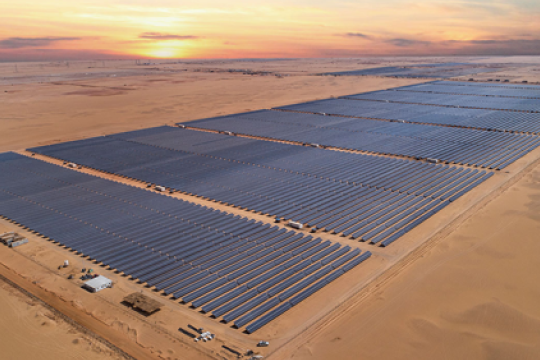
INVESTMENT — Scatec is doubling down on our renewable energy sector, earmarking USD 5 bn for future investments, CEO Terje Pilskog told Asharq Business. The figure does not include the USD 600 mn already tied to the company’s hybrid solar and battery storage in Naga Hamadi — Obelisk.

Remember: The 1.1 GW project inaugurated its first phase last month. The Norwegian player’s Obelisk will wrap construction this summer, Pilskog said.

There’s already more in the pipeline: Scatec is setting up a solar and battery storage facility in Minya, which will produce some 1.95 GW of solar power and 3.9 GWh of battery storage.

The roundup of news and trends that move your markets and shape corporate agendas delivered straight to your inbox.

Subscribe here

** DID YOU KNOW that we cover Saudi Arabia, the UAE and the MENA-IndiaCorridor?

Happening today

The region’s startup ecosystem is gathering at the Grand Egyptian Museum today for the start up RiseUp Summit, which will run through Saturday under the theme, The Turning Point. The event is expected to draw up to 20k attendees for three days of talks, workshops, and high-stakes networking across the technology, capital, and creative sectors.

Data point

USD 1.1 bn — that’s how much Egyptians spent on video games in 2024, up 11.5% from the year before, according to a study (pdf) by Galal & Karawi Management Consulting and Orient Planet Group. The average revenue per user came in at USD 61.76, with mobile phones — which will be no surprise to anyone with teenagers in the family — accounting for 76.4% of the total.


PSA-

WEATHER- It’s heating up in Cairo today, with a high of 24°C and a low of 18°C, according to our favorite weather app.

The mercury is also rising a few degrees in Alexandria, with a high of 24°C and a low of 15°C.


CORRECTION- In yesterday’s edition of EnterpriseAM we mistakenly referred to Nissan as a Korean company as we rushed to wrap up the issue. The automaker is, of course, Japanese. The story has been updated on our website.

The big story abroad

The US and Iran agree to talks — with no set agenda: The US and Iran agreed to meet on Friday in Oman. Washington insists that negotiations zero in on Iran’s missile arsenal, its backing of proxy groups in the region, and its response to protests at home. The Islamic Republic is only willing to discuss its nuclear program.

MEANWHILE, IN MARKET NEWS- The tech selloff continues: Fears that rapid advances in AI could undermine software business models have resulted in USD 1 tn in losses over the past week. Stocks and bonds of Silicon Valley players of all sizes saw hundreds of bns in losses in just two days.

^^ We have more on the software selloff in the news well, below.

Amid AI hubbub Alphabet steps up spending: Google parent Alphabet is doubling its capex for the year to up to USD 185 bn as it doubles down on AI, it said in its latest earnings release (pdf). The figure is well above the USD 120 bn penciled in by analysts and the USD 91 bn spent last year.

A year defined by ambition, energy, and global connection.

From elite performance to community-driven experiences, we continue to shape environments where sport goes beyond competition. Creating moments that inspire, connect, and endure at Somabay.

2

The Big Story Today

Finance Ministry and EGX prepare to list sovereign sukuk for exchange trading

The Finance Ministry and the EGX are preparing to activate a secondary market for sovereign sukuk, a senior government official tells EnterpriseAM. The move to shift sukuk from the primary market to open exchange trading is designed to maximize returns and attract fresh liquidity as Egypt’s Islamic finance market matures.

Why it matters: Egypt’s EGP 200 bn sovereign sukuk program has seen softened demand lately, with yields at 21% trailing the 25–26% offered by conventional debt, following seven issuances since the program’s launch last November.

Listing sukuk for trading will not impact the state’s ultimate ownership of the underlying assets, such as the Ras Shukeir land plot backing the current program, according to our source. The assets underpinning the issuance will not be transferred or the ministry’s right to reclaim the assets at maturity limited, with only the usufruct rights transferred for the duration of the sukuk.

The ministry also plans to introduce a variable-rate sovereign sukuk to broaden the investor base, in line with its broader debt strategy to reduce borrowing costs and extend the average maturity of public debt to 4.5–5 years, up from the current 1.7 years.

The local sukuk program is also expected to be extended through FY 2026-27, alongside new instruments like fractional, zero-coupon, and fixed-rate bonds.

Egypt is also planning to return to the international bond market in the coming period, with a target of USD 2–2.3 bn in the first half of 2026, our source told us. The move follows a tactical delay of an issuance originally planned for February, which the Finance Ministry put on hold to wait out a period of global market volatility to secure better pricing.

We should also soon see the launch of the country’s first ever retail bonds in the first six months of the year, allowing individuals to invest in government debt instruments without having to go through intermediaries, we were told.

This publication is proudly sponsored by

3

TRADE

GOEIC to build carbon database for heavy industry exporters as Egypt eyes CBAM compliance

The Investment Ministry and General Organization for Export and Import Control (GOEIC) are tightening oversight on exports of fertilizers, cement, steel, and appliances to ensure Egyptian goods don’t lose access to international markets over environmental standards, according to a government decision reviewed by EnterpriseAM.

Under the new decree, exporters must now provide the GOEIC with carbon emissions reports before obtaining prior approval to export. This data will go towards a national database of exporters’ carbon emissions put together by the authority.

Why this matters: This isn’t just about bureaucracy — this is about the Carbon Border Adjustment Mechanism. The EU — a primary destination for our fertilizers and steel — is increasingly requiring rigorous carbon accounting. By centralizing this data, the government is trying to stay ahead of the curve by securing the data so it knows where to act to maintain market access.

4

Automotive

Auto sales were up 69.9% in 2025, but imports outpaced locally assembled vehicles at an increased rate

The automotive market staged a significant recovery in 2025, with total sales up 69.9% y-o-y to 173.8 k units, according to figures from the Automotive Marketing Information Council (Amic) seen by EnterpriseAM. The rebound after a punishing two-year slump was driven by a 53.6% increase in bus sales, a 64.4% increase in passenger car sales, and a notable 108.4% increase in truck sales — signaling that corporate Egypt is finally moving to replace aging fleets.

While it was certainly a good year for the market, it was a reality check that our auto localization efforts still have a long way to go. With many of the projects to expand local assembly announced over previous months and years yet to start rolling out vehicles from the factory floor, the growth in auto demand was mostly captured by vehicles imported whole.

Sales of vehicles imported whole rose 12.1 percentage points faster than those assembled locally, with completely-built-up vehicles registering a 77.1% y-o-y growth in sales, while completely knocked-down vehicles clocked in a 65.0% y-o-y increase. But on the plus side, a 65.0% y-o-y increase in sales is still something to note, and hopefully, the total yearly growth in sales is a decent sign to automakers looking to set up shop that there’s a local market looking to buy.

Why this matters: The recovery is real, but it’s a victory for importers, not yet for local industry. While a nearly 70% jump in sales suggests the slump is over, the fact that sales of imported whole vehicles outpaced locally assembled units by 12.1 percentage points proves that Egypt’s localization push is still in the announcement phase rather than the production phase. The data is a reminder that demand is ready, but the local supply chain isn’t yet capturing the value

The more than doubling of truck sales is a sign that the private sector has now decided it’s time to put capital into upgrading fleets, after a tough last few years led companies to put off modernizing ageing fleets, Egyptian Automobile Manufacturers Association Secretary-General Khaled Saad tells EnterpriseAM.

The uptick in passenger car sales towards the end of the year was also notable, with the “final months of last year [seeing] strong growth in passenger car sales supported by a wave of discounts launched by agents and distributors,” Saad noted.

And looking ahead, the uptick looks set to continue, as “a larger percentage of prospective buyers [than in the last part of 2025] postponed their decision until the first quarter of this year to secure the lowest possible price,” Saad tells us.

A caveat to the numbers: Amic figures are sourced from member distributors, representing the bulk — but not the entirety — of the industry.

5

Automotive

Piaggio taps Abou Ghaly Motors to distribute — and one day manufacture — the iconic Italian brand’s two-wheelers

Abou Ghaly Motors is now the official importer and distributor of Piaggio Group’s iconic Vespa, Piaggio, Aprilia, and Moto Guzzi brands in Egypt under an agreement inked between the two, according to a statement (pdf).

But more importantly, the two companies confirmed future plans to localize the assembly of several models of the Italian brand in Egypt, which will serve as a manufacturing and export hub for the MENA and Africa regions.

The move targets a gap in the market for efficient, low-cost transport for students and young professionals as urban areas expand and traditional commuting costs rise.

What’s next? Abou Ghaly will roll out a network of showrooms and service centers. Financing for the bikes will be handled in-house via Abou Ghaly Finance to further lower the barrier to entry for the mass market.

6

Kudos

Beltone’s data science and AI arm Robin looks to AUC to build AI talent

Robin and the American University in Cairo will “collaborate on talent development, academic engagement, and applied research in data science and AI,” under a one-year MoU inked between the two, Beltone Holding’s data science and AI arm said in a statement (pdf). The partnership, led by AUC’s Department of Mathematics and Actuarial Science, will focus on internships, joint research supervision, and curriculum input to bridge academic theory with real-world data challenges, according to a separate statement (pdf) from the university.

Why this matters: Whether we like it or not, AI is set to shake up economies around the globe. To keep competitive in this new economy, Egypt and companies based here are going to need a workforce with the necessary tools to stay ahead — and it’s initiatives like these that mark a “strategic step in building a sustainable pipeline of data science and AI talent,” Robin Managing Director Basma Rady said.

7

ALSO ON OUR RADAR

Egypt and Turkey agree to boost cooperation across sectors

What went down during Erdogan’s time in Egypt?

Egypt and Turkey inked MoUs to boost cooperation across defense, investment, trade, and agriculture during a meeting of their High-Level Strategic Cooperation Council co-chaired by President Abdel Fattah El Sisi and his Turkish counterpart Recep Tayyip Erdogan in Cairo yesterday. The meeting also resulted in the launch of a National Committee for the Promotion and Follow-up of Turkish Investments, whose purview includes facilitating procedures to court more Turkish investments. The two sides also reiterated their target to boost annual trade between them to USD 15 bn by 2028, up from USD 9 bn.

And speaking of Turkish investments: Turkey is looking into opening up industrial zones in Borg El Arab, Al Alamein, and Gargoub under an MoU inked between the Federation of Egyptian Chambers of Commerce and its Turkish counterpart, according to a federation statement. Joint Egyptian-Turkish logistics centers could also be in the cards, with the two looking to establish hubs in Africa.

The agreement will also see the two study the expansion of air and maritime links, including via a direct air freight route from Alexandria and the Turkish city of Bursa, and the use of Transports Internationaux Routiers (TIR) certificates for land freight.

Dice establishes new ready-made garments company with Italian partners

Local clothing manufacturer Dice partnered with two Italian companies to set up a ready-made garments manufacturing joint venture, it said in a disclosure (pdf) to the EGX. The move follows the company’s founding family announcing their intentionto boost Dice’s exports and step into new markets across the region when they regained their majority stake in the company back in 2023.

Yet another Chinese auto brand set to enter the local market

Nissan Egypt will soon sell Dongfeng Motor’s Venucia brand under an agreement inked with the Chinese automaker, according to a statement from the company. The brand stems from a JV between two companies under the name Dongfeng Nissan that has historically focused on the domestic Chinese market.

Palm Hills wraps first issuance of EGP 30 bn securitization program

Palm Hills Developments closed a EGP 2.0 bn securitized bond issuance, the first under its newly launched EGP 30 bn securitization program, according to a joint statement (pdf) from developer and financial advisor EFG Hermes. The issuance came in four tranches with tenors ranging between 13 and 84 months, rated AA+ to A-.

ADVISORS- In addition to acting as the sole financial advisor, our friends at EFG Hermes served as the sole bookrunner and were among the underwriters. ALC Alieldean Weshahi & Partners provided counsel, while KPMG acted as auditor. The National Bank of Egypt participated as underwriter and placement agent, while the Suez Canal Bank acted as underwriter and custodian. The Arab Banking Corporation and Emirates NBD subscribed to the issuance.

8

PLANET FINANCE

Software selloff deepens as AI worries rattle markets

A new AI productivity suite caused a stir in global markets, pushing stocks of software and analytics companies down in the US and Europe amid concerns that AI could disrupt their revenue models.

What happened?

Investors reacted sharply to the launch of Anthropic’s AI productivity tools for its Claude Cowork platform, which can automate regulatory work and other corporate tasks, the Financial Times reports. The market took the launch as a signal that companies whose business models rely on professional services and data analytics could see their work reliably automated by AI tools soon.

US tech stocks led the sell-off, with Nasdaq falling 1.4% and S&P 500 shedding 0.8%. The JPMorgan index tracking US software stocks also lost 7%, taking its YTD decline to 18%.

The rout was fueled by fears that even market heavyweights like Microsoft, Nvidia, and Oracle could be vulnerable. Nvidia fell 2.8%, Microsoft lost 2.9%, and Oracle dropped 3.4% as investors digested the implications of AI-driven efficiency gains for corporate clients. “All the software players are clients of the hyperscalers,” such as Amazon, Microsoft, and Alphabet, and these companies stand to be affected by the disruption, Jones Trading’s Mike O’Rourke told the salmon-colored paper.

There’s also the concern about rising costs in AI hardware. AMD shares fell 8% despite beating revenue estimates and forecasting USD 9.8 bn in sales for the quarter. The company was “entering 2026 with strong momentum,” led by “rapid scaling” of its data center business, CEO Lisa Su said. However, soaring memory chip prices have raised worries over margins, affecting not just AMD but also Intel and Apple.

Europe and Asia were not spared: The selloff also extended to European stocks, with the LSEG losing 12.8% and advertising firms such as Publicis and WPP seeing declines of 9% and 12%. Over in Asia, Indian IT companies such as Tata Consultancy Services and Infosys lost 6-7.1%, while Xero Ltd in Australia fell 16% in Sydney trading, Bloomberg reports.

What’s next?

The sell-off is being framed as a moment for the market to separate AI winners from losers, and investors are weighing their next moves carefully as software and analytics firms face both growth prospects and potential disruptions from AI. “Our sense from investor discussions is that general appetite to step in remains generally low,”JP Morgan analyst Toby Ogg told Reuters.

MARKETS THIS MORNING-

The tech selloff is continuing to echo through markets, as investors ditch their tech stocks for cyclical stocks. Asia-Pacific Indices opened in the red this morning, led by South Korea’s Kopsi.

EGX30

49,632

+1.3% (YTD: +18.7%)

USD (CBE)

Buy 46.86

Sell 46.99

USD (CIB)

Buy 46.85

Sell 46.95

Interest rates (CBE)

20.00% deposit

21.00% lending

Tadawul

11,341

+0.1% (YTD: +8.1%)

ADX

10,542

+0.7% (YTD: +5.5%)

DFM

6,662

+0.7% (YTD: +10.2%)

S&P 500

6,883

-0.5% (YTD: -0.5%)

FTSE 100

10,402

+0.9% (YTD: +4.7%)

Euro Stoxx 50

5,970

-0.4% (YTD: +3.1%)

Brent crude

USD 69.46

+3.2%

Natural gas (Nymex)

USD 3.47

+0.1%

Gold

USD 5,028

+1.6%

BTC

USD 72,992

-3.6% (YTD: -16.6%)

S&P Egypt Sovereign Bond Index

1,016

+0.1% (YTD: +2.3%)

S&P MENA Bond & Sukuk

151.49

+0.1% (YTD: -0.3%)

VIX (Volatility Index)

18.86

+4.8% (YTD: +27.8%)

THE CLOSING BELL-

The EGX30 rose 1.3% at yesterday’s close on turnover of EGP 8.8 bn (54.3% above the 90-day average). International investors were the sole net buyers. The index is up 18.7% YTD.

In the green: Ibnsina Pharma (+7.2%), Kima (+5.0%), and Juhayna (+3.3%).

In the red: Palm Hills Developments (-2.1%), Abu Qir Fertilizers (-1.7%), and Heliopolis Housing (-1.4%).

9

My Morning Routine

My Morning Routine: Mohamed Okasha, managing partner at Distruptech Ventures

Mohamed Okasha, managing partner at Disruptech Ventures: Each week, My Morning Routine looks at how a successful member of the community starts their day — and then throws in a couple of random business questions just for fun. Speaking to us this week is Disruptech Ventures Managing Partner Mohamed Okasha (LinkedIn). Edited excerpts from our conversation:

My name is Mohamed Okasha. I come from an IT and telecoms background and have worked in several companies, including Raya and Vodafone Egypt. In 2009, I left Vodafone to start Fawry with a couple of other co-founders. We had quite the journey and listed the company on the EGX in 2019. But at the start of 2020, I stepped down from my role as Fawry’s managing director to launch the venture capital fund Disruptech.

Disruptech was first born as an idea in 2020 and officially established in 2021. In 2022, we closed its first funding round, and so far, we’ve invested in about 25 startups. The fund’s idea was built around establishing an early-stage, pre-seed fund. We invest in Egyptian companies, or companies founded by Egyptians, that need funding and support during their initial, 18-month development phase. This is the idea upon which we built Disruptech.

As the name Disruptech implies, we look for tech startups that create disruption through the use of technology. Fintech is our main focus, and most of our investments are in this crucial sector, which comes from the need to address the limitations that are present in financial and banking infrastructure in Egypt and the wider Arab world. Fintechs are filling in the gaps, solving problems, and collaborating with banks to provide solutions to promote financial inclusion.

We have seen two new trends emerging lately that are drawing attention from investors and founders. One is the use of AI to create more efficient businesses in financial services and other areas. The other is how companies are using blockchain technology to tokenize real-world assets.

I’m an early riser. I wake up very early at 5am every day and start the day by praying. I walk to the mosque and back, which gives me time to unwind. Once I’m back, I drink some tea and kick off the work day by answering emails and reading reports for about two hours. Then, everyone in my house wakes up, so I spend some time chatting with the kids and talking with my wife. After this, I jump on the phone to make some calls and head to the office for meetings.

Our job is not a typical 9-5. I don’t have a fixed schedule, as it varies day-to-day. I usually have several meetings, either internally with my colleagues, with a portfolio company, or with external parties. This starts at 10am or 11am at the latest and continues until the meetings are over, whether I am inside or outside the office.

Two things remain constant in my day, whether I’m in Egypt or abroad. I wake up at 5am, regardless of what’s happening or where I am, to pray the fajr prayer, and I call my children studying abroad or my wife and kids in Egypt if I’m travelling.

I am somewhat traditional in that I like to put my thoughts down in writing. In the past, I used to use paper and pen, but lately, I use my phone for everything — I open a note and write down everything I’m thinking about, any plan I want to make, or any vision for solving a problem. I then sit down and arrange these ideas in a structured and meaningful way until I am convinced of the final direction. Once the plan reaches maturity and I am convinced of the approach, I execute the necessary steps.

On a personal level, my goals include improving my health, doing more physical activities, and traveling more. When I have more spare time, I will be able to enjoy life the way I want to.

I believe that at Disruptech, we have built a strong foundation for a company with a solid reputation, and it really adds value. My dream is for it to continue its scaling and growth over time, driven by our current team. And from there, I can achieve my personal goal of stepping down and spending less time working, passing the torch to other people to manage this company and take it to the next level.

I was lucky that my first job was with someone who was a legend in managing companies and people. The best advice he gave me is that you only fail when you stop trying. As long as you are trying, it means there is still a chance for you to achieve what you want. This is something I remind myself of every day.


2026

FEBRUARY

5-7 February (Thursday-Saturday): RiseUp Summit.

10 February (Tuesday): Capmas expected to release inflation data for January.

10-12 February (Tuesday-Thursday): Gitex Global’s AI Everything Middle East & Africa Summit .

12 February (Thursday): Monetary Policy Committee’s first meeting of 2026.

19 February (Thursday): First day of Ramadan (TBC).

MARCH

15 March (Sunday): IMF to hold its seventh review of Egypt’s USD 8 bn EFF arrangement.

21 March: (Saturday): Eid El Fitr starts (TBC).

30 March – 1 April (Monday-Wednesday): Egypt International Energy Conference and Exhibition 2026 (EGYPES)

APRIL

2 April (Thursday): Monetary Policy Committee’s second meeting of 2026.

12 April (Sunday): Coptic Easter.

25 April (Saturday): Sinai Liberation Day.

MAY

1 May (Friday): Labor Day.

21 May (Thursday): Monetary Policy Committee’s third meeting of 2026.

27-29 May (Wednesday-Friday): Eid El Adha (TBC).

JUNE:

30 June (Tuesday): National holiday in observance of June 30 Revolution (TBC).

JULY

9 July (Thursday): Monetary Policy Committee’s fourth meeting of 2026.

23 July (Thursday): National holiday in observance of Revolution Day (TBC).

AUGUST

20 August (Thursday): Monetary Policy Committee’s fifth meeting of 2026.

26 August (Wednesday): National holiday in observance of Prophet Muhammad’s birthday (TBC).

SEPTEMBER

15 September (Tuesday): IMF to hold its eighth review of Egypt’s USD 8 bn EFF arrangement.

24 September (Thursday): Monetary Policy Committee’s sixth meeting of 2026.

27-29 September (Sunday-Tuesday): Global Conference on Population, Health and Human Development.

OCTOBER

6 October (Tuesday): Armed Forces Day.

29 October (Thursday): Monetary Policy Committee’s seventh meeting of 2026.

DECEMBER

17 December (Thursday): Monetary Policy Committee’s eighth meeting of 2026.

EVENTS WITH NO SET DATE

Early 2026: Passenger operations on the New Administrative Capital–Nasr City monorail scheduled to begin.

Early 2026: The government will launch the second package of tax breaks.

1Q 2026: Trial operations for the Ain Sokhna–Sixth of October section of Egypt’s first high-speed rail line scheduled to begin.

1Q 2026: Turkish President Tayyip Erdogan to visit Egypt

May 2026: End of extension for developers on 15% interest rates for land installment payments

2H 2026: Operations at Deli Glass Co’s new USD 70 mn glassware factory kick off.

2027

20 January-7 February: Egypt to host the African Games.

April 2027: Tenth of Ramadan dry port and logistics hub to begin operations.

EVENTS WITH NO SET DATE

2027: Egypt to host EBRD’s annual meetings.

2027: Egypt-EU Summit 2027

End of 2027: Trial operations at the Dabaa nuclear power plant expected to take place.

September 2028: First unit of the Dabaa nuclear power plant begins operations.

Now Playing
Now Playing
00:00
00:00