Get EnterpriseAM daily

Available in your choice of English or Arabic

Private investments to make up 50% of total investments in state’s plan for the next fiscal year

1

WHAT WE’RE TRACKING TODAY

Draft budget for the next fiscal year heads to the house

Good morning, friends. An unusually busy week in local business and economy news for Ramadan is ending how it began, and we’ve got a packed issue for you today to prove it. There’s plenty for you to read through this morning, so let’s jump right into it.

So, when do we eat? Maghrib prayers are at 6:12 pm in the capital city, and you’ll have until 4:20 am tomorrow to hydrate and caffeinate ahead of fajr.

WEATHER- Expect another sunny day in Cairo today, with a daytime high of 32°C falling to 20°C, according to our favorite weather app. Be sure to pop on those sunglasses and check if your A/C is ready for the cooler weather to end.

It’s more of the same in Alexandria, with a high of 31°C and a low of 17°C, but look out for rain forecasted from 10pm onwards.

** DID YOU KNOW that we now cover Saudi Arabia and the UAE?

** ** Were you forwarded this email? Tap or click here to get your own copy delivered every weekday before 7am Cairo time — without charge.

WATCH THIS SPACE-

FTSE keeps Egypt on its demotion watch: Global index provider FTSE Russell is keeping Egypt on its watchlist for a possible demotion in its equity indexes as it continues to monitor the market following an improvement in foreign investors’ ability to repatriate returns from the country, it said yesterday.

Remember: Egypt was put on the watch list back in October. The country is at risk of being demoted from “secondary emerging market” to “unclassified,” a move which could see Egyptian equities deleted from the provider’s indexes.

Things are looking up: “Market participants report that previous delays in the ability of international institutional investors to repatriate capital from Egypt have been addressed” following the USD 35 bn Ras El Hekma agreement and USD 8 bn IMF package, FTSE said.

The verdict will be out in three months: FTSE Russell will provide an update on Egypt’s watch list status by the end of June 2024, it said.

HAPPENING TOMORROW-

#1- The IMF’s Executive Board is set to give the final thumbs up to our USD 8 bn package with the fund tomorrow, a government source confirmed to Enterprise earlier in the week.

#2- Egypt says goodbye to JPMorgan Chase’s Emerging Local Markets Index Plus: Starting today, the country is out of the lender’s indices that track total returns for local currency denominated funds market instruments in EMs due, after a decision made by the bank at the start of the year.

But hopefully not for long: JPMorgan Chase made the decision before the EGP float, pointing to the then-persistent FX shortage of the country and we’re yet to hear if they’ve decided to reverse the decision now that FX liquidity has come rushing back after liberalizing the pound.

HAPPENING NEXT WEEK-

#1- FY 2024-25 draft budget to head to the House: The draft of the state budget and the first ever Public Government Budget for the next fiscal year will be presented to the House on Sunday after they were greenlit by cabinet yesterday, according to a cabinet statement.

Updated revenues and expenses: The Public Government Budget pencils in revenues of EGP 5.1 tn and expenses of EGP 6.4 tn for the next fiscal year — up from initial projections of EGP 4 tn and EGP 4.9 tn from an Ittihadeya statement a day earlier.

ICYMI: Budget season is going to be a bit different this time round, with the issuing of the first PublicGovernment Budget. The new budget — which does not replace the state budget — shows the budgets of all the state’s economic bodies in addition to the state budget collated together. The first phase includes some 40 economicbodies.

Other key targets in the draft budget include:

  • An increase of over 30% in allocations for the health and education sectors, which are deemed to be of top priority.
  • Channeling 50% of the privatization program’s proceeds into reducing the government’s outstanding debt and improving debt sustainability.
  • An EGP 1 tn cap on public investment for all state entities.

#2- President Abdel Fattah El Sisi will officially begin his third term when he is inaugurated on Tuesday after winning nearly 90% of the vote in December’s presidential election.

Get ready for a cabinet shuffle? El Sisi’s new term is likely to start with some faces at the helm of some of the country’s ministries and other government bodies. Cue the rumor mill.

THE BIG STORY ABROAD-

There’s no single story capturing the imagination of the global press this morning, but watchers of the green economy will want to pay attention here:

Janet Yellen is stirring the pot with China, warning Beijing against dumping key components of the global green economy on other markets.

Yellen claims China is dumping excess production of solar panels, EVs, and lithium ion batteries on other countries. She said the practice “distorts global prices and production patterns and hurts American firms and workers, as well as firms and workers around the world.”

Why the fuss? Western economies are scrambling to catch up to China on clean-tech manufacturing. They see it as critical to energy security, to the green transition, and to bringing manufacturing jobs back to the west. The US is offering tax breaks and subsidies to everyone from green hydrogen producers (hello, Inflation Reduction Act) to key component makers, sparking competition with Canada and the European Union.

Why now? Yellen was speaking on the eve of her second trip to Beijing as US treasury secretary.

Read more: Head to our website for links to stories from the Financial Times and CNBC.

ON A RELATED NOTE- EV and business nerds alike (Elon stans, not so much) will enjoy this morning’s analysis from the Wall Street Journal, which writes that Chinese EV maker “BYD’s rise challenges Tesla — and its valuation. The companies are increasingly close peers while being valued completely differently.”

Tesla is worth about 7x more, and “it takes a lot of faith in Tesla Chief Executive Elon Musk’s promise of autonomy to rationalize the difference,” the Journal suggests.


ALSO WORTH KNOWING ABOUT on this fine Thursday morning:

Daniel Kahneman, one of the founding fathers of behavioral economics, is dead at age 90. The Nobel laureate and his partner Amos Tversky were pioneers of the notion that we don’t make rational economic decisions (take that, Adam Smith). Instead, he explained how we use mental shortcuts, get swayed by emotions, and otherwise simply make choices that frequently fail to give us the best economic outcomes. We’ll have an explainer in EnterprisePM on Sunday, and you can read more in the meantime in the Wall Street Journal.

AND- Just in time to help explain why fast-fashion retailer H&M is delaying somecampaigns: The ‘no-fail’ mission to protect the Red Sea isn’t working,” writes Bloomberg.

Somabay set to make a splash again with World Aquatics triple event extravaganza: Somabay is hosting the World Aquatics series for the second year, featuring three events in March, May, and August. The series includes the World Aquatics Open Water Swimming World Cup 2024, World Aquatics Elite Beach Water Polo World Cup 2024, and the World Aquatics Under 18 Beach Water Polo Cup 2024.

2

Coffee With

Mashreq’s Tarek El Nahas on why we may be looking at an “opportunity on a scale and at a speed that Egypt has never seen before”

What’s the view on Egypt from the outside? Not of the people managing hot money, but of the major corporates we’re counting on to help us build an export-led economy based on investment in the real economy? In search of answers, we reached out to our friend Tarek El Nahas (LinkedIn), a regional banking and finance veteran who built a reputation as a creative problem-solver during his more than 25 years at Citibank, where he was most recently head of corporate and investment banking for North Africa, Egypt, and the Levant, managing teams across six countries in MENA.

Tarek has since January 2020 been the Dubai-based group head of international banking at Mashreq, the UAE’s fastest-growing bank and good friends of Enterprise. We spoke on two occasions: Over coffee in Dubai just a few hours after the float, and again a couple of days ago when the dust had started to settle. We chewed over how we got here, how Egypt is seen now, where we might go from here, and what the float of the EGP has meant to Mashreq’s plans for Egypt.

KEY TAKEAWAYS-

  • The FX crunch of the past few years was largely a confidence issue, and that’s now unwinding;
  • Egyptian businesses have to invest first if we expect to see significant foreign direct investment coming in;
  • “I don’t go to any country or speak to a single client that doesn’t have an interest in Egypt.” There’s interest in a broad range of industries.
  • Construction and engineering companies and anyone who sells them materials, products, or services could be on the cusp of a once-in-a-lifetime opportunity when you factor in both Ras El Hekma and possible reconstruction mandates around the region;
  • Mashreq has plans for Egypt: It’s bought a state-of-the-art head office here. Egypt is one of three centers of excellence for the bank;
  • The bank sees opportunity in retail and in serving small businesses.

Edited excerpts from our conversation:

ENTERPRISE- Less than a month in, how do you feel about the float?

TAREK EL NAHAS- I’ve told you before, this was a confidence issue more than anything else, and we’re now seeing confidence start to return. I’ve seen this cycle every eight years or so — in 2008, though less dramatically. In 2016, when I was involved with arranging some gov’t funding structures linked to unlocking the IMF agreement. And now it’s 2024.

This is what happens when the parallel market is allowed to run away from the official bank rate. The differential is small at the start, but it grows — and as it does, the volumes flowing into the banking system continue to decline. The structure of Egypt’s foreign currency inflows makes it relatively easy to divert FX into the parallel market: worker remittances, tourism, and services are leaky buckets. A large part of that FX is in Egypt — but it’s sitting in households and corporate safes, not in the banks.

Confidence takes a hit when companies can’t import through L/Cs and when investors can’t repatriate dividends. That lack of confidence snowballs and ultimately overshoots when corporates have to source FX on the parallel market to keep their businesses running. Incremental investment doesn’t come in and the result is growth of the informal, non-taxable, opaque sector.

The upside: Confidence can return very, very quickly as well, and that’s what we’re seeing now.

We’re likely to see things unravel in three phases. First, the panic buyers [of USD] yesterday are panic sellers today. That’s how they work. Second, we’re seeing the carry trade coming back. The panic buyers and sellers? They were opportunistic. So is the carry trade.

The third phase is slower, more challenging, and more meaningful: That’s the real investment phase.

E: So, foreign direct investment?

TN: I don’t want to limit it to FDI, no. Locals have to invest first before foreigners will come in — it’s a confidence issue, and they want to see that Egyptian businesses are confident in the prospects of their economy. That probably takes a bit longer.

E: How are you on the optimism scale right now?

TN: Am I optimistic? I am. For several reasons, and they haven’t changed since I was on a panel at your finance conference [in September 2023]: Egypt has a large, relatively educated population. The cost base is now competitive. It has great trade agreements — Europe, Africa, and the Middle East. Great geographic positioning to sell into all three. Many of the fundamentals are already there.

What Egypt needs to work on is the ease of setting up and doing business. Have another look at the legal system for commercial disputes, employment / residency laws and the global fight for talent (whether local or imported to plug essential technical gaps) and the existing tax system. You cannot grow the pie by continuing to impose taxes and fees on the few companies or employees that are paying taxes now.

E: What sectors do you like today?

TN: It’s not so much about sectors, it’s about the management teams. There are some businesses that used the past couple of years wisely: They took the fat out of their companies and kept the muscle, so essentially got more efficient. They diversified their product ranges and expanded geographically by growing their exports. They’re going to be much stronger companies coming out of this.

The thing about crises is that they clean out the less-fit and should create stronger champions. You must have had a unique and competitive product offering or deep pockets to have ridden this out. Crises weed out people who lack the creativity — and who aren’t willing to put in the hard work — to generate new revenue streams. They also generally weed out the overleveraged with weak capital bases.

What happens to those champions? They’re looking at an opportunity on a scale and at a speed that Egypt has potentially never seen before. As an example, there are huge investments coming into real estate in the years ahead. That’s going to need contractors, it’s going to demand building and finishing materials, white goods, textiles, and services of all forms.

Now look around you: Countries like Saudi Arabia and the UAE are investing at a major scale. Take Neom alone: If and when it materializes as expected, many of the same corporate champions in Egypt will have the opportunity of a lifetime to do business there, too.

I don’t think Ras El Hekma is where it stops. Consider the size of our land bank — large parts of our coasts remain completely underdeveloped. We’re no longer talking about building out small compounds, but about master-planning and developing destinations. Egypt needs to start thinking differently now.

E: What about manufacturing?

TN: It’s the same thing in industry: You have to masterplan. Take the Renault auto plant in Morocco as an example. Line up a clear strategy and incentivize strategic players to enter and it transforms everything. Look at the development of feeder industries, of ports, of services around that plant and the export proceeds it now generates. It took planning.

This ad-hoc way of doing things cannot continue. From real estate to manufacturing to value-added exports, Ras El Hekma with its master plan and the ambition behind it becomes something you have to apply to different parts of the country.

USD 35 bn. People are obsessed with that figure. But if you get the tourists in, if your local players are investing and producing, if you attract the bolt-on FDI, if real estate sales target domestic and foreign buyers, if you’re smart about manufacturing and services and exporting? You’re talking multiples of USD 35 bn — that number can become anything.

E: Are we a hub for reconstruction?

TN: Absolutely. That feeds into it. Just next door, Sudan, Libya, and Gaza will all need to be rebuilt as well as Syria and Iraq further down the road. Egypt has developed the contracting might, the engineering know-how, the human talent who know how to do that at scale. The magnitude of what Egypt has built in recent years — the roads, bridges, tunnels, skyscrapers, ports. Add to those factors the proximity, land access, and competitive labor, and Egypt could very well become a construction hub. It’s the tip of the iceberg if we get it right.

E: Is it too early to ask if you’re seeing a return in appetite for Egypt among Mashreq’s clients?

TN: I don’t go to any country or speak to a single client that doesn’t have an interest in Egypt. That’s the one country in MENA that comes up every single time I go into a meeting due to the sheer size and potential of the market. And I’m talking every industry: FMCG, retailers, traders, residential and commercial real estate, and export-driven industries.

Manufacturers are absolutely looking at Egyptian companies as part of regional plays. Look at what happened with [oil driller] Ades and [snack food maker] Abu Auf. What are they about? Are they about the local market in Egypt? That’s attractive, sure. But no: They’re pools of talent and know-how that you can take and scale across the region.

E: How has Mashreq’s view on Egypt changed since the float?

TN: We already had a good appetite for Egypt. There was no knee-jerk reduction in overall exposure in the face of macro challenges. Egypt is a market we understand very well. We believe strongly in the retail banking proposition and we know that most of our wholesale clients have weathered many storms in the past. We’ve continued operating, and led some of the largest transactions in the market throughout the period.

We have the market knowledge and we have the right corporate client base. We’re definitely going to be investing in our GTB proposition including a platform that will be second-to-none when it rolls out in early 2025. [Editor’s note: That’s global transaction banking, which covers cash management, trade finance, and supply chain finance.]

We expect to see more regional players arriving in Egypt, particularly those who have partnered with major multinationals. If we’re providing regional transaction banking solutions for large players like Al-Futtaim or Alshaya in the GCC, we need to offer them the same capabilities in Egypt.

On the retail side, the model is changing just as it has in the UAE. We’re not going to be increasing the number of branches in Egypt — we’re going to be aggressive in going after online and mobile channels and accordingly we’re investing heavily in our online platforms.

Watch that space on retail: It’s about massively augmented online capabilities and strategic partnerships, all of which will help us address the Central Bank of Egypt’s financial inclusion targets.

We’re also interested in small businesses, NeoBiz in the UAE is a market leader just like our retail banking Neo proposition. It’s just a question of what we need to tweak to scale it to Egypt, because the model is already tested and successful.

And the third thing is our Mashreq Global Network, or MGN, which includes centers of excellence in Egypt, India, and Pakistan and we have some of our most senior talent in all three. The MGN is not a low-cost back-office model. It’s been assembled to try to attract the best talent in multiple geographies, including with WFH agreements that allow women with childcare or eldercare responsibilities to work from wherever they need to be. I think you should view our decision of purchasing a substantial new state-of-the-art head office in Egypt as yet another sign of the depth of our long-term commitment to the country.

3

Cabinet watch

Gov’t unveils new economic and social development targets for the next fiscal year

Gov’t updates growth forecast for the upcoming fiscal year: The Madbouly government now sees the economy growing at a 4.2% clip in fiscal year 2024-2025, according to a cabinet statement. That’s a 0.2 percentage point upward revision from a projection indicated in a Ittihadeya statement a day earlier. The target is part of the government’s economic and social development plan for the upcoming fiscal year, which was greenlit by cabinet yesterday.

The game plan: Key targets under the economic and social development plan include:

#1- Ramping up private investmentsto about 50% of total investments, in line with the goals of the state ownership policy and the government’s efforts to raise the private sector’s involvement in the economy.

#2- Hiring some 150k school teachers to ensure that new schools deliver quality education, while continuing to build technological universities and push for the accreditation of public universities.

#3- Raising the private sector’s share in healthcare to 50% by 2027 — up from a current 30%.

Also approved by cabinet:

  • A draft law that would allow for the issuance of regulations for the disposal of state properties.
  • A draft decision that would authorize the Suez Canal Authority to participate in establishing Al Alamein Ports and Yacht Management, a joint-stock company that will be tasked with setting up and operating a yacht marina on the North Coast.
  • Amendments to the investment law's executive regulations that would allow investors to set up private service projects in freezones through partnerships or investment contracts with state entities (following the cabinet’s approval).
  • A draft law that would allow Medlog — the cargo subsidiary of Italy’s Mediterranean Shipping Company — to design, construct, operate, maintain, and finance the new Tenth of Ramadan dry port and logistics center.
4

INVESTMENT WATCH

Foreign investors ink USD 353 mn worth of industrial projects in Egypt

Our industrial zones are a big hit with foreign investors: Egypt signed three separate industrial investment agreements with companies from China, Poland, and France collectively worth USD 353 mn for projects to be implemented in the country’s industrial zones.

The agreements include:

#1- A USD 146 mn ductile iron pipes factory: China’s state-owned Xinxing Ductile Iron Pipes Company also signed an agreement with the SCZone that will grant the Chinese company the right to use a 270k sqm plot of land in the TEDA industrial park to set up a USD 146 mn ductile iron pipe factory, according to a cabinet statement. The project aims to manufacture 250k tonnes of cast iron pipes per year with an annual production value of USD 1.2 bn.

ICYMI: We first heard about the project in October during the Belt and Road Forum that saw the SCZone rake in at least USD 15.5 bn worth of investment agreements in just a few days from Chinese investors.

#2- Another USD 174 mn glass factory from Saint-Gobain: The Suez Canal Economic Zone also signed an agreement with French glass and building materials manufacturer Saint-Gobain Glass Egypt to further cooperation on an already under-construction EUR 160 mn (USD 174 mn) glass factory in the Sokhna Industrial Zone, according to a separate cabinet statement. A statement from the SCZone about the project last week put the cost of the project at EUR 175 mn (USD 189 mn).

Saint-Gobain is no stranger to Egypt’s construction materials industry: The company’s flat glass production line in the SCZone is the largest in the Middle East. It also owns two building materials factories in Sadat and Amreya worth more than EUR 150 mn.

#3- A new USD 33 mn grain silo factory: East Port Said Development and the Egyptian arm of Polish grain silo company Feerum signed an agreement to allocate land for an EGP 1.6 bn (USD 33 mn) factory to design, manufacture, and establish grain silos and their components in the East Port Said Industrial Zone, according to a cabinet statement. The project will be developed in cooperation with Egyptian construction and engineering firm Samcrete and the state-owned Egyptian Holding Company for Silos and Storage.

Remember: For years, the state has been working to boost its wheat storage capacity, building more silos and taking out loans to invest in silo development, all with the aim of ensuring none of our local harvest goes to waste due to lack of sufficient silo capacity and increasing wheat reserves. The Supply Ministry has a plan to increase the country’s silo capacity to 5.3 mn tons from its current 2.1 mn tons and cut down on the percentage of wheat that is wasted in the harvest and storage process.

5

Finance

EFG Holding plans to expand its team in Saudi Arabia by one-third this year

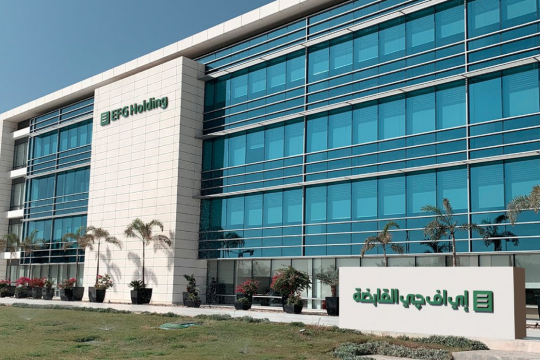
EFG Holding eyes Saudi expansion as more businesses go public: EFG Holding plans to increase its staff in Saudi Arabia by 30% to 47 people as its investment bank arm, EFG Hermes, gears up to be involved in as many as six IPOs in the kingdom this year, the company’s CEO Karim Awad told Bloomberg. “We have big plans for hopefully increasing our market share, either at brokerage or investment banking.”

The Saudi appeal: The kingdom boasts a diverse range of industries in addition to strongliquidity and investor base, Awad said.

Remember: In the cards in KSA this year is a USD 20 bn secondary sale in Aramco, whoseIPO saw EFG Hermes act as a bookrunner back in 2019. The Public Investment Fund is also mulling more equity offerings in its portfolio companies, Bloomberg reported last month.

What does EFG Hermes have in store outside KSA? The investment bank has three to four IPO transactions pending in the UAE, one in Kuwait, and up to two in Egypt, Bloomberg says. Awad said that the bank also plans to continue upping its headcount in the UAE — its biggest overseas office — where currently a team of 130 employees is based.

On home soil: Egypt has “turned an important corner” in light of recent FX inflows and the float of the EGP, but to revive its IPO market, “you will have to see more foreign inflows into the stock market and more investments, and I believe it’ll come,” Awad added.

6

IPO

Act Financial to raise EGP 1 bn in its upcoming IPO

Act Financial eyes EGP 1 bn IPO: Investment management firm Act Financial plans to offer a minority stake worth EGP 1 bn through a capital increase in its long-awaited EGX debut, Al Borsa reports, citing unnamed sources. The company reportedly filed a temporary listing request with the EGX yesterday and is awaiting the listing committee’s approval.

No exit: Act Financial reportedly aims to raise the whole amount through a capital increase, without the exit of any existing shareholders.

Exact stake TBD: The exact size of the stake to be offered will be determined once Fact — the independent financial advisor on the transaction — concludes its studies within days.

Remember: Local media reported earlier this week that Act Financial is working to launch anIPO on the EGX in 2Q 2024. We first heard of the plan in September 2022, when Managing Partner and Co-Founder Mostafa Abdel Aziz told us that the company would offer a stake of up to 40% on the EGX by early 2023.

Advisors: Investment bank Zilla Capital and law firm Matouk Bassiouny have been tapped as consultants on the transaction, according to the sources.

7

A MESSAGE FROM VISA

Empowering women-owned small businesses

Through the Visa She's Next program, women entrepreneurs receive funding, training, and mentorship that is aimed at helping them grow their businesses. Visa has invested over USD 3 mn in She's Next, as part of its aim to digitally enable 50 mn small businesses around the world.

Meet Egypt’s 2023 She’s Next winners, three young entrepreneurs who embody resilience, creativity, and a commitment to positive change.

Salma Tammam's Reme-D pioneers affordable disease testing technologies, bridging critical healthcare gaps.

Hadeer Shalaby's Green Fashion empowers marginalized communities with eco-friendly fashion from discarded materials.

Nihal Ali's Fincart revolutionizes e-commerce shipping with AI-driven solutions, reducing carbon footprints and enhancing efficiency.

With Visa's support, these trailblazers are shaping a brighter, more inclusive future.

According to Visa’s Women digitization Index Study, 97% of women entrepreneurs in Egypt would like to digitize their businesses, but 95% said they need digital payments training. Check out the full study here.

8

DEBT WATCH

Egypt’s New Urban Communities Authority eyes EGP 260 bn sukuk issuance in 2024

NUCA to sell EGP 260 bn in sukuk this year: The New Urban Communities Authority(NUCA) plans to issue up to EGP 260 bn worth of sharia-compliant bonds in 2024, in what would be the first corporate sukuk issuance from a government entity, Asharq Business reported, citing four sources it said are in the know. The Finance Ministry-backed issuance is expected to wrap up within a month, one of the sources told the outlet.

Where will the funds go? The issuance will help the authority settle arrears it owes to Banque Misr and the National Bank of Egypt,one of the sources said.

NUCA maintains its spot as the biggest player in the securitization market: NUCA hasbeen setting records in the securitization market in recent years, issuing a total of EGP 70 bn of securities since 2019. The authority last closed a EGP 15 bn securitized bond issuance in November, in what was the second and final issuance of a EGP 30 bn program. It also set new records for the country’s biggest securitized bond issuance in 2020 with a EGP 10 bn issuance and again in 2022 with a EGP 20 bn transaction.

Plenty of corporate sukuk issuances are also in the pipeline: Five companies are in talks with the Financial Regulatory Authority (FRA) to move ahead with sukuk issuances worth a combined EGP 10 bn, the FRA’s Central Administration for Finance head, Sayed Abdel Fadil, said earlier this month. Contact Financial Holding, MNT-Halan’s Tasaheel, GB Capital, and Rawasi Urban Development are reportedly among the interested companies.

9

ALSO ON OUR RADAR

Egypt’s dairy giant Juhayna cuts prices by 15-18%

COMMODITIES-

Dairy giant Juhayna reduces prices by up to 18%: Juhayna has cut the prices of its dairy products by 18% and its juice products by 15%, according to a company statement (pdf). The move came after the government agreed with manufacturers, suppliers, and retailers to cut commodity prices by 15-20% this week.

“The decision comes in line with the government’s decisions to reduce prices and confront any negative effects that may affect the consumer. It also reflects the company’s constant interest in supporting society and individuals and supporting the Egyptian consumer in light of the currency economic changes,” read the statement.

ENERGY-

Oil and gas drilling company Ades Holding will work to boost oil production at two brownfields in Egypt after landing a ten-year service agreement, it said in a statement (pdf). Under the agreement, Ades will receive “incremental production returns,” the statement reads. The agreement has an option for a ten-year extension. The drilling giant signed the agreement with two subsidiaries of the Egyptian General Petroleum Corporation — Suez Oil Company (SUCO) and Offshore Shukeir Marine Oil (OSOCO) — and will partner on the projects with an unnamed “leading local exploration and production player.”

The details: The agreement will see Ades invest USD 30 mn in SUCO and USD 36 mn inOSOCO, over the first three years. The consortium’s share of the additional production will range between 61% and 72% depending on production volume and price factors.The project is slated for launch in July 2024.

This publication is proudly sponsored by

10

PLANET FINANCE

Egypt, KSA, and the UAE accounted for over 85% of M&As in the region in 2023

Egypt was among the top three countries in the region for M&A volumes in 2023, closing 93 transactions during the year, according to the latest PwC 2024 TransAct Middle East report (pdf). Along with Saudi Arabia and the UAE, the three countries accounted for 85.2% of the total transaction volume in the region with 381 transactions, according to the consulting firm.

But all three still witnessed y-o-y drops in the number of transactions closed, with Egypt clocking a 60% y-o-y decline in transaction value on the back of a depreciating EGP and high inflation, the Big Four accounting firm said. M&A volume dropped in the UAE saw a 14% y-o-y decline, Saudi Arabia recorded a 13% drop in the same period, and regional M&A activity as a whole was down 30% y-o-y to 447 transactions.

Despite the decline, regional transactions held up well compared to global figures over the past two years, which saw volumes plummet by half, from over USD 5 tn in 2021 to USD 2.5 tn in 2023. The consulting firm attributed the comparative regional resilience to strong market fundamentals, and supportive government policy environments.

By industry: Across the region, consumer-related mergers or acquisitions led with 106 transactions, followed by financial services with 96 and industrial, manufacturing, and automotive with 91. Healthcare and companies working in technology, media, and telecommunications rounded out the top five.

Regional outlook for 2024: “We anticipate that 2024 will be a year of growth and activity will bedriven by economic diversification goals, decarbonisation, and a focus on localisation and value creation, as organizations transform their business models and look to expand capabilities,” PwC transactions markets leader Romil Radia said.

MEANWHILE- Trump’s media company valued at nearly USD 8 bn: Former US President Donald Trump’s social media firm Trump Media & Technology Group saw its shares surge by 59% on its debut on the Nasdaq on Tuesday, bringing its value to almost USD 8 bn. (Reuters, New York Times)

THE MARKETS THIS MORNING-

Asian shares are in the red this morning while US futures were largely unchanged overnight, leaving the Dow, Nasdaq Composite, and S&P 500 still on track to close the first quarter up 10% or more. European futures were up slightly as we slid toward dispatch time this morning, suggesting major benchmarks will open in the green later today.

Remember: Today is the last day of trading in 1Q 2024 for most Western markets, which will close Friday and Monday for the Easter holiday weekend.

EGX30

28,224

-2.9% (YTD: +13.4%)

USD (CBE)

Buy 47.20

Sell 47.35

USD (CIB)

Buy 47.23

Sell 47.33

Interest rates CBE

27.25% deposit

28.25% lending

Tadawul

12,607

+0.2% (YTD: +5.4%)

ADX

9,273

-0.5% (YTD: -3.2%)

DFM

4,231

-0.3% (YTD: +4.2%)

S&P 500

5,248

+0.9% (YTD: +10.0%)

FTSE 100

7,931

0.0% (YTD: +2.3%)

Euro Stoxx 50

5,081

+0.4% (YTD: +12.4%)

Brent crude

USD 86.41

+0.4%

Natural gas (Nymex)

USD 1.72

+0.1%

Gold

USD 2,209.20

-0.2%

BTC

USD 69,010.50

-1.4% (YTD: +63.2%)

THE CLOSING BELL-

The EGX30 fell 2.9% at yesterday’s close on turnover of EGP 3.0 bn (42.1% below the 90-day average). Foreign investors were net buyers. The index is up 13.4% YTD.

In the green: Orascom Construction (+1.0%).

In the red: E-Finance (-11.6%), Alexandria Container and Cargo Handling (-6.1%) and Juhayna (-5.5%).

11

Diplomacy

El Sisi, Shoukry talk Gaza with US House Committee on Homeland Security

Gaza and national security topped the agenda of US House delegation’s visit: President Abdel Fattah El Sisi and Foreign Minister both received a US House Committee on Homeland Security delegation led by Republican Rep August Pfluger yesterday to discuss areas of security and counter-terrorism measures, as well as the ongoing war Gaza and other conflicts in the region, according to an Ittihadiya statement.

Foreign Minister Sameh Shoukry also called on the US to resume funding to UNRWA, after the US temporarily suspended funding to the UN organization for Palestinian refugees after Israel accused some of its members of participating in the October 7 attack on Israel, according to a Foreign Ministry statement.

12

My Morning Routine

My Ramadan Routine: Motaz El Dreny, founding partner of Dreny & Partners

Motaz El Dreny, founding partner of Dreny & Partners: For a special Ramadan edition of our weekly My Morning Routine column that we will run through the holy month, we spoke to Motaz El Dreny (LinkedIn), founding partner of Dreny & Partners. We asked Motaz the usual questions to find out how a successful member of the community starts their day and threw in a few more to find out how he adjusts to Ramadan and what he looks forward to in the holy month.

My name is Motaz El Dreny and I’m the founding partner of Dreny & Partners. My interest in the law started as early as high school — my father was also a lawyer — and I've been practicing law for over 20 years. I started my career as a public prosecutor and moved over to corporate law in 2006, before establishing my own firm in 2014.

I manage a firm of around 40 people, including 23 lawyers. My daily responsibilities can be split into three parts: the technical part of my job, which is the law itself, the administrative part managing the firm, and the PR and business development side, which is a key part of ensuring the sustainability of the firm.

Egypt has made a lot of progress in expanding financial services in the country, and working towards financial inclusion. This is something I had anticipated when I set up the firm. We wanted to be a key player in this wave of new financial activity that is fast developing, and to position Dreny & Partners as one of the top law firms providing legal services in the field of financial services.

As for what we do? We help to grow and support businesses who provide finance — whether that’s to consumers or to other businesses — and we make sure that they are in full compliance and that they adhere to financial regulations, which are often complex.

Our job goes hand in hand with the macroeconomic conditions. So, for example, with the float of the EGP, we’re seeing busier private M&A activity. Or, a decision to increase interest rates will subdue financing activities as people go for unconventional methods of lending, like structured finance.

In terms of my usual morning routine, I’m quite sporty. I’ll wake up at 6:30am, say goodbye to my three boys before they head to school, and then I’ll head to the gym for an hour-and-a-half workout. I’m fortunate enough that my home, my gym, and my office are all in the same compound. Back home, I’ll cook breakfast and check if I have any external meetings for the day. I take external meetings in the afternoon, and then head back to the office for internal meetings with the admin team or the lawyers. After that comes the best part of the job — the ‘lawyering’ itself, the technical stuff, which usually only starts around 5pm or 6pm.

But, my Ramadan routine is completely different, and super hectic. You need to squeeze in the same routine of the regular working day in fewer hours and on lower energy. During Ramadan, I usually head to the office first. The team will finish up in the office around 3pm or 4pm, so I’ll work by myself for a couple of hours and then hit the gym right before iftar and social gatherings. I’ll sometimes join a business suhoor, but I enjoy spending time with family and friends the most.

The one constant in my day? My boys. They’re 15, 10, and 7 years old and I like to be super present in their lives. Whatever spare time I have from work, I’ll spend with them. I’ll take them to sports activities and I’ll join them on trips.

It’s easy to forget to ‘live’ when progressing in the corporate world. One thing I’m trying to work on is getting the right work-life balance. Getting back in touch with the people I love and miss, whom I lost touch with while focussing on my career.

I’m a big fan of Al Daheeh. I discovered it quite late, around four or five years ago, but I love that it’s a show that you can relax to whilst also learning valuable information.

As for books, I’m reading two at the moment: ‘Everything Is Fu**ed: A Book About Hope’ by Mark Manson and ‘Sapiens’ by Yuval Noah Harari. I would recommend them both.

What’s next? As for Dreny & Partners, we’re seeking regional expansion. We’re looking into GCC countries, especially Saudi Arabia. I think it makes sense for any business here who is looking to expand. We’ve started making moves into the UAE, but there’s nothing solid confirmed so far.

I was one of the youngest lawyers to make partner in the corporate field, and I’d often resent how the older, established lawyers would treat younger colleagues. The mentality of, “Who are you to tell me what to do?” But one of the best pieces of advice I was given came from my professor at the University of Commercial Law, Dr Hani Sarieldin, with whom I also worked with until 2015 — he’s very charismatic and someone I look up to. He would tell me, “You’re young, you have the future. They don’t. So use your youth wisely. It’s one of the most valuable assets you have.”


2024

MARCH

28 March (Thursday): Industrial Development Authority to close applications for 1 mn sqm of land in 10 different governorates.

29 March (Friday): IMF’s Executive Board to discuss Egypt’s loan program.

29 March (Friday): Egypt removed from JPMorgan Chase’s Emerging Local Markets Index Plus.

APRIL

1 April (Monday): Deadline to bid for 23 blocks in an international oil and gas tender.

2 April (Tuesday): President Abdel Fattah El Sisi swearing in ceremony, New Administrative Capital.

9 April (Tuesday): Eid El Fitr (TBC) (national holiday).

15-21 April (Monday-Sunday): The IMF / World Bank Spring Meetings.

25 April (Thursday): National holiday in observance of Sinai Liberation Day (TBC) (national holiday).

26 April (Wednesday): Clocks move forward one hour at midnight as daylight saving time starts.

28 April (Sunday): Grace period to ins. brokerage firms to comply with Law 215 for 2023 expires.

28-29 April (Sunday-Monday): Saudi Arabia hosts a World Economic Forum (WEF) meeting on ‘global collaboration, growth, and energy.’

29 April (Monday): The government’s car export scheme expires.

MAY

1 May (Wednesday): National holiday in observance of Labor Day (TBC) (national holiday).

2-5 May (Thursday-Sunday): Townhall Expo in Riyadh.

5 May (Sunday): Coptic Easter.

6 May (Monday): Sham El Nessim (national holiday).

20 May (Monday): Malaysian Palm Oil Forum in Cairo, with attendance from Malaysian Plantation and Commodities Minister Johari Abdul Ghani.

23 May (Thursday): Central Bank of Egypt’s Monetary Policy Committee meeting.

29 May (Wednesday): Virtual launch of Chicago Booth Executive Program.

JUNE

15-19 June (Saturday-Wednesday): Eid El Adha (TBC) (national holiday).

30 June (Sunday): June 30 Revolution Day (national holiday).

JULY

7 July (Sunday): National holiday in observance of Islamic New Year (TBC).

18 July (Thursday): Central Bank of Egypt’s Monetary Policy Committee meeting.

23 July (Tuesday): Revolution Day (national holiday).

SEPTEMBER

2-5 September (Monday-Thursday): Egypt International Airshow, El Alamein International Airport.

5 September (Thursday): Central Bank of Egypt’s Monetary Policy Committee meeting.

15 September (Sunday): National holiday in observance of Prophet Muhammad’s birthday (TBC).

25-26 September (Wednesday - Thursday): The Asian Infrastructure Investment Bank’s (AIIB) 2024 annual meeting, Samarkand, Uzbekistan.

OCTOBER

6 October (Sunday): Armed Forces Day.

17 October (Thursday): Central Bank of Egypt’s Monetary Policy Committee meeting.

21-27 October (Monday-Sunday): The World Bank and IMF annual meetings.

NOVEMBER

21 November (Thursday): Central Bank of Egypt’s Monetary Policy Committee meeting.

DECEMBER

26 December (Thursday): Central Bank of Egypt’s Monetary Policy Committee meeting.

EVENTS WITH NO SET DATE

January 2024: The Red Sea Ports Authority is set to finalize an agreement with the Abu Dhabi Ports Group for the operation and maintenance of the tourist passenger terminal in the Sharm El Sheikh Sea Port.

February 2024: Egypt will sign a USD 1.5 bn financing agreement with the International Islamic Trade Finance Corporation (ITFC).

February 2024: Funds from the Islamic Development Bank for the high speed electric railway will get the sign off.

April 2024: President Abdel Fattah El Sisi will visit Turkey.

1Q 2024: Egyptian-Qatari Joint Supreme Committee.

1Q 2024: Opening of the newly developed Pyramids Plateau in Giza.

1Q 2024: The government is set to finalize the sale of the Gabal El Zeit wind farm.

February-May: The Grand Egyptian Museum could officially open to visitors.

March 2024: The USD 2.7 bn MIDOR Refinery is set to begin full operations.

May 2024: Arab Finance Ministers’ meeting at Egypt’s administrative capital.

June 2024: Gov’t expects to finalize sale of Beni Suef combined-cycle power plant.

1H 2024: Gov’t expects to finalize sale of four water desalination plants.

1H 2024: The European Union is set to hold an investment conference in Egypt during spring.

2H 2024: Gov’t to launch the Cairo Ring Road BRT buses.

November 2024: Egypt to host the World Urban Forum (WUF12).

End of 2024: The launch of the high-speed train line linking Ain Sokhna with Al Alamein City.

2025

EVENTS WITH NO SET DATE

2Q 2025: Safaga Terminal 2 to start operations.

2027

20 January-7 February: Egypt to host the African Games

EVENTS WITH NO SET DATE

End of 2027: Trial operations at the Dabaa nuclear power plant expected to take place.

Now Playing
Now Playing
00:00
00:00