Get EnterpriseAM daily

Available in your choice of English or Arabic

Our return to the global LNG market

1

What We're Tracking Today

19 districts to hold parliamentary elections re-runs in December

Good morning, friends. The news flow is showing no sign of slowing down even as we inch closer to the weekend. We lead today’s issue with news that the government is after fresh LNG imports to fill the supply gap and an interview with Valu CEO Walid Hassouna on the firm’s latest earnings and what we can expect next.


The fourth and final weekly special issue about the GEM will land in your inbox later this morning, charting the museum’s journey from the launch of a record-breaking international design competition to the final stages of completion and capturing the challenges, milestones, and unwavering ambition that brought it to life.

Missed the first three issues of the series? Catch up here: (The backstory | Openingnight | The immediate impact).


PSA-

WEATHER- It’s a sunny day in Cairo today, with a high of 28°C and a low of 17°C, according to our favorite weather app.

It’s just as sunny in Alexandria, with a high of 28°C and a low of 17°C.

WATCH THIS SPACE-

Nineteen districts to hold parliamentary elections re-runs in December: Voters in 19 districts across Giza, Fayoum, Assiut, Sohag, Qena, Alexandria, and Beheira will head back to the polls next month for a re-run of the House of Representatives elections, the National Elections Authority (NEA) announced in a statement yesterday. This comes after President Abdel Fattah El Sisi called on the authority to review appeals filed by several candidates over alleged fraud in the first round of the parliamentary vote.

HAPPENING TOMORROW-

Will the CBE resume its easing cycle tomorrow? The central bank’s Monetary Policy Committee will meet tomorrow to decide whether to cut interest rates again. The committee decided to cut interest rates 100 bps in its sixth meeting of the year in October, extending the easing cycle it resumed in April after a brief pause in July.

Analysts and economists polled by EnterpriseAM are divided about what the CBE will do, with four out of the 11 analysts we surveyed penciling a 50-100 bps rate cut, while five see policymakers leaving rates unchanged, and the remaining two undecided.

CIRCLE YOUR CALENDAR-

The Egypt Business Solutions Summit will take place on 1 December at the InterContinental City Stars in Cairo. The event will bring together SME leaders, investors, and policymakers to explore innovation, finance, growth, and sustainability in Egypt’s business ecosystem.

Check out our full calendar on the web for a comprehensive listing of upcoming news events, national holidays and news triggers.


Have you checked out EnterpriseAM MENA <> India? It's our newest briefing tracking one of the world's most dynamic trade, investment, and cultural corridors. Every Monday, Wednesday, and Friday, we'll track the transactions, trends, and market moves connecting these two dynamic regions. The flow of capital, talent, and trade between MENA and the Indian subcontinent is one of the most important economic stories in the world — and we’re telling as only we can.

If you’re investing, trading, or scouting for your next big move in MENA or India, subscribe to EnterpriseAM MENA <> India by tapping here to get the strategic intelligence you need.


** DID YOU KNOW that we now cover Saudi Arabia and the UAE?

** Were you forwarded this email? Tap or click here to get your own copy delivered every weekday before 7am Cairo time — without charge.


CORRECTION- In yesterday’s issue of EnterpriseAM, we mistakenly said that CIRA Education’s net income increased fourfold y-o-y last fiscal year. In fact, the education services provider actually saw its income increase nearly fivefold — 385% to be precise. We have amended the story on our website.

THE BIG STORY ABROAD-

A US tech market slump and the Epstein files are dominating headlines in the international press this morning. Claude-maker Anthropic received a push from Microsoft and Nvidia, but US tech stocks still took quite a hit.

Anthropic will receive up to USD 15 bn in new funding from Microsoft and Nvidia, the latest wager on the fast-growing Claude developer. Microsoft will invest up to USD 5 bn while Nvidia will invest up to USD 10 bn, part of a broader funding round expected to value Anthropic at more than USD 300–350 bn. The AI startup has agreed in return to purchase USD 30 bn in Azure computing capacity, which will run on Nvidia’s newest AI chips. (Reuters | The Financial Times | Semafor | CNBC)

Markets are not buying it: US tech stocks fell sharply on Tuesday as mounting concerns over “frothy” AI valuations triggered a broad sell-off across global markets. The tech-heavy Nasdaq Composite closed 1.2% lower, with major AI-linked names leading the declines as Nvidia slid 2.8%, while Microsoft shed 2.7% and Amazon declined 4.4%. The pullback comes ahead of Nvidia’s earnings on Wednesday, a report investors see as a critical gauge of whether the AI boom can justify the sector’s soaring valuations. (The Financial Times | Semafor | CNBC | Reuters)

^^ We have more on that in this morning’s Planet Finance, below.

ALSO- President Donald Trump received Crown Prince Mohammed Bin Salman in the White House, where they signed agreements on defense, nuclear negotiations, AI and more. The President cleared future F-35 deliveries to Saudi and designated the Kingdom as a major non-Nato ally, while the Crown Prince pledged to increase Saudi’s investment package in the US to a whopping USD 1 tn.

AND- The US Congress voted overwhelmingly on Tuesday to release the Justice Department’s files on the disgraced financier Jeffrey Epstein, a move enabled by Trump’s abrupt reversal after months of resisting the measure. The legislation is now awaiting Trump’s signature. (Reuters | CNN | The Financial Times | New York Times | Bloomberg)

ALSO WORTH READING-

  • Cloudflare restored internet services on Tuesday after an oversized security configuration file crashed parts of its network and clocked access to platforms like X and ChatGPT. (Reuters | Semafor | CNBC)

*** It’s Hardhat day — your weekly briefing of all things infrastructure in Egypt: EnterpriseAM’s industry vertical focuses each Wednesday on infrastructure, covering everything from energy, water, transportation, and urban development, as well as social infrastructure such as health and education.

In today’s issue: We dive into the under-construction 2.6k land route between Egypt and Chad.

The Opening of The Kaktus Hotel marks a new destination in Somabay, inspired by active lifestyle and culinary destination offerings. The Kaktus has finally bloomed on the Red Sea.

#Lovesomalivekaktus

2

Energy

Egypt returns to global LNG market to fill supply gap

We’re once again seeking LNG imports: The Egyptian General Petroleum Corporation (EGPC) is heading back to the global LNG market to plug a supply gap after months of cutting and delaying imports on the back of oversupply and weaker demand, Bloomberg reports, citing people it says have knowledge of the matter. EGPC has issued a tender to procure three liquefied natural gas (LNG) shipments for delivery in mid-to-late November.

(Tap or click the headline above to read this story with all of the links to our background as well as external sources.)

Reversing course: Last month, the Oil Ministry moved to reduce the number of agreed-upon LNG shipments scheduled for shipment in October — for the second month in a row — to six shipments from an initially expected 19, citing a combination of weak domestic demand and increased local output.

LNG supplies secured through next summer: The Madbouly government has secured strategic medium-term contracts for LNG through June 2026 and is continuing to request additional shipments through monthly tenders to keep prices competitive, a government source told EnterpriseAM.

We have quite the roster of suppliers: Over the past two years, the Oil Ministry has expanded its natural gas supplier roster to more than 70, helping stabilize prices. Over the summer, Egypt agreed to purchase up to 125 LNG cargoes annually from a long list of suppliers that includes Saudi Aramco, Trafigura Group, Vitol Group, Hartree Partners, BGN, Shell, and Azerbaijan’s Socar.

The shift comes following the freeze of a new Israeli gas agreement, which had been expected to boost pipeline inflows beginning last October. EGPC is now turning back to the global market to secure additional LNG shipments to meet local demand, a senior government official told EnterpriseAM. The source added that up to 20 LNG shipments are expected before year-end, with new cargoes being secured through tenders with approved suppliers.

REMEMBER- Israel has hit pause on its USD 35 bn gas export agreement with Egypt until its interests are secured and a fair price for the Israeli market is agreed upon, Israeli Energy Minister Eli Cohen’s office said in a statement earlier this month. While political tensions between Cairo and Tel Aviv already complicated the agreement, this most recent roadblock is reportedly from internal commercial disputes in Israel.

Still, import needs are expected to decline next year. LNG import volumes are projected to fall around 30% in 2026, supported by higher domestic production and growing renewable energy capacity, according to the source. Our LNG requirements for next year are estimated at 120-125 shipments.

3

EARNINGS WATCH

Walid Hassouna on Valu’s 9M earnings, expansion, and more

Valu has been having an “exceptional” year so far, delivering “outstanding” earnings. The EGX-listed fintech giant saw its net income more than double y-o-y to EGP 541 mn during the first nine months of the year and revenues jump 84% y-o-y to EGP 4.0 bn during the period, according to its latest earnings release (pdf).

Diving deeper: Gross merchandise value (GMV) was up 56% y-o-y during the nine-month period to come in at EGP 17.3 bn, with transactions more than doubling to EGP 6.1 mn. Total loans issued reached EGP 14.5 bn, up 49% y-o-y, for 9M 2025, while the number of active users climbed to 873k, giving the company a 23% market share as of August.

Zooming in: Net income came in at EGP 201 mn during the third quarter of the year, marking a 966% y-o-y jump, while revenues jumped 70% y-o-y to EGP 1.4 bn.

Behind the numbers: Valu’s expanding customer base and higher engagement levels supported the strong results, with increased reliance on the platform’s core lending product and growing daily use of its products. To dig deeper into the numbers and the strategic direction behind them, we spoke to Valu CEO Walid Hassouna.

KEY HIGHLIGHTS FROM OUR TALK WITH HASSOUNA-

Hassouna told EnterpriseAM that the firm’s performance this year is being driven by a structural shift in how consumers use the platform, with prepaid card frequency, disciplined underwriting, and deeper customer engagement emerging as the core levers behind profitability. Hassouna said Valu has hit a “tipping point” where higher-frequency, smaller-ticket transactions are generating operating leverage and accelerating net income well above revenue growth.

Also from Hassouna:

  • Valu is preparing its first EGP 2-3 bn conventional bond issuance, expected to hit the market in 1Q 2026.
  • The fintech has staffed its new Jordan entity, wired USD 7 mn in capital, and expects to begin operations in 1Q 2026.
  • The first reduced its approval rates and introduced new rules, particularly for customers with high debt-to-income ratios.
  • The player is looking to get its SME lending license.
  • Average daily transactions have grown from 10k last year to 22.2k per day.

INSIDE THE VALU PLAYBOOK-

To understand the drivers behind Valu’s accelerating profitability and the roadmap for 2026 we spoke with Hassouna for a deeper look under the hood.

EnterpriseAM: You've got net income up 139% and revenue up 84%. The one thing that really just jumped out at us is the delta between income growth and revenue growth, which suggests a lot of operating leverage. What are the top factors that allowed profitability to accelerate so much faster than the growth in the top line?

Walid Hassouna: We’re trying to be in the lives of customers on a daily basis. Our average daily transactions have grown from 10k last year to 22.2k per day. Our main goal was always to have a smaller ticket size with higher frequency because this makes customers less sensitive to the current interest rate environment and willing to pay interest on smaller transactions. This increased frequency, driven by prepaid card growth, has led to operational efficiencies (less overhead, simpler processes), even if the prepaid card itself is slightly more expensive. This is basically why our net profit growth is higher than our revenue growth. This will be the case going forward because we hit a tipping point last year.

EnterpriseAM: You had a 56% uptick in gross merchandise value that you covered, and yet NPLs (Non-Performing Loans) were still sub 1% at like 0.92% or so. Typically, you would see, especially in a climate like this where consumers are strained, that rapid revenue growth also translates into new strain on the loan book. What has allowed you to constrain the NPL ratio so tightly while you're growing the GMV so fast?

WH: In the last few years, our main focus has been growing our market share. This year, after the IPO, we had a shift in our strategy. Most transactions are from our recurring customers, which accordingly reduces our NPL. We only want to onboard customers with extraordinary credit performance, so we're now scrutinizing new customers with a focus on the highest-quality customers in terms of risk. We’ve decreased our [new client] approval rates from the mid-50s to the mid-40s. We remain above 20% market share, competing with 45 companies, but most importantly, we're protecting our market share by not onboarding lower-credit profiles.

EnterpriseAM: Tell us about consumer sentiment heading into 2026. Some folks are reading the tea leaves right now and seeing signs of a further deterioration, not just in purchasing power but in the ability to manage the debt that some segments of the consumer market had racked up. How do you feel about that? How are you addressing that in the business model?

WH: We’ve seen this, which is why we reduced our approval rates and introduced new, more stringent underwriting rules, particularly for customers with high debt-to-income ratios, even if they fall within regulatory limits. We’re also avoiding customers who have already racked up debt elsewhere. There is a new breed of customers coming in with minimal information about this product. Some practices are converting this into something similar to cash loans, and this is not something the regulator would love to see. We’re actively screening out that sort of potential customer.

Also, many customers are very wise right now. They understand we're in an easing cycle. They'll be better off by next year after a decrease in interest rates. Those customers will not move right now.

I believe next year will look like the following: There will be a massive decrease in interest rates, and we're already planning to decrease ours significantly. Actually, we have a promo in December on that basis. Also, you will see fewer promos from many players, including Valu, because these promos are loss-making for customer acquisition. And since the FRA has stopped issuing more licenses, everyone is going to be very wise with loss-making promos — they’re going to dry up. It’s very important what we’ve done this year to onboard customers with high affordability and high willingness to pay.

EnterpriseAM: So careful attention to who you onboard and to the ongoing credit quality of the portfolio.

WH: Yes. The other thing is we are now more focused on our prepaid card as an everyday solution. We think it has already been transformed into a credit card, which is very good. We're also focused on longer tenor loans. We’ve increased our market share significantly in auto loans. It jumped from around 3-4% to 15%. We also introduced Shop’IT, an in-app checkout marketplace operated by Valu.

EnterpriseAM: What does that mean in practical terms? What does Shop’IT do exactly? How would we use it?

WH: When we launched Valu, people thought that if they had Valu and an active limit, they could easily transact through the app like a marketplace. The reality is they had to go to Amazon, Noon, or Zara to make a transaction, whether offline or online. Now, we have more than 25 merchants who have made their full catalog available in our app. So, they can search, find what they want, buy the product, pay for it, and wait for it to be delivered. This is Shop’IT.

EnterpriseAM: How much of that is competition to your relationship with Amazon, your shareholder?

WH: It's the contrary. Our shareholder is very happy because we now act as their affiliate marketing company. We're one of those partners using affiliate programs. So, it's better for their strategy and enhances our relationship. The full Amazon catalog is available on our app right now.

EnterpriseAM: You had a 75% jump in transactions per customer. How did you get them to view you as an everyday solution and not for big-ticket purchases?

WH: We had this goal from day one. It was difficult for merchants and clients because we were focused on “pay with Valu,” not “install with Valu.” We added many categories that customers hadn’t previously considered for affordability. We increased our exposure to fashion, pharmacies, and education. We're signing a new agreement with electric charging companies. We also introduced Spark’IT, a zero-cost one-month tenor product across all our merchants. And we built our prepaid card in the customer's mind. Our most prominent players in the prepaid card market will be ride-hailing apps and food delivery services.

EnterpriseAM: When we spoke last around the IPO, you saw Shift and Ulter as key to your strategy. Today’s report called them notable contributors to earnings.

WH: It's essential to look at this from 2022. Competition was increasing, and we didn’t want this product commoditized. Last year, in the same nine months, 72% of our business came from U. This year, the figure is 60%. Our prepaid card grew from 9% to 18%. Shift moved from 11% to 13%. Ulter and loans have tripled. They now represent 6.5% of our GMV. This was our strategy from day one: having multiple products that are wider and deeper than any competition.

EnterpriseAM: What can we expect from Jordan in 2026, and when do you think Jordan hits the P&L?

WH: We’ve already got a mandated chairman and a country manager, and a CEO who was hired last month. We wired USD 7 mn to our account in Jordan. We’re in the final stages of licensing, and we’re going to operate in 1Q 2026. Jordan will be a little bit loss-making in year one. Still, you will see profitability growth at Valu on a consolidated basis between 2026 and 2027, even after consolidating Jordan. Our hope is that Jordan turns positive in 18 months.

EnterpriseAM: Then we spoke again about the IPO, focusing on one Asian market and one African market in the second half of 2026. Is that still in the cards?

WH: So, Jordan is our Asian market. We’re focused on it. A market after that will be an African market. It might be delayed until early 2027. We need to make sure Jordan is on autopilot before directing resources into a new market. But it’s an African / North African market.

EnterpriseAM: In terms of growth heading into the new year, is there that stereotypical thing that is 20% of our business delivering 80% of our growth? What is the big driver?

WH: The Valu product line is now very diversified. The maximum frequency will be on the prepaid card, but it will represent less than 30-35% of our business. Then it’s U, the revolving credit limit that we’ve set on a closed-loop basis, because these are recurring customers.

We have over 800k active customers. So my assumption is prepaid card, followed by U, and then everything else. Shop’IT would be the hero of next year's growth, but I don’t believe it’s going to exceed 5-7% of our sales. The beauty of Shop’IT is that it offers a massive return: we receive a rebate and an immediate marketing commission.

We submitted for an SME lending license. We think we’ve got everything we need to serve our merchants not only on the B2C side but also on the B2B side. We have a readily available closed-loop financing program for them based on their history and performance with us. And we're considering new instruments for financing next year. We want to add to what we have on discounting, offloading, securitization, bilateral agreements, and bond issuance.

EnterpriseAM: Any color on the potential bond?

WH: The bond is in early stages. We finalized the private rating process, and it was very positive. We hired EFG Hermes to be our advisor on that, and it's in the early stages. We're looking at EGP 2-3 bn of funding. This will be conventional financing. I expect the bond to be issued and subscribed to in the first quarter of next year.

This publication is proudly sponsored by

4

EXPANSION

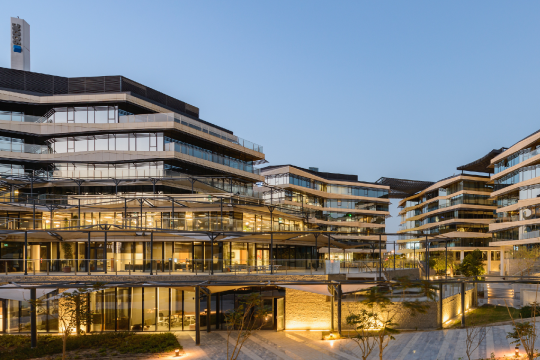
Hassan Allam Holding to help develop SAR 3.3 bn project in Riyadh

Egyptian players ♥️Saudi Arabia: Two Egyptian players announced projects in Saudi Arabia with combined investments exceeding SAR 3.4 bn.

A SAR 3.3 BN REAL ESTATE PROJECT-

Hassan Allam Holding and Tilal Real Estate will develop a SAR 3.3 bn integrated project in Riyadh under a strategic partnership inked with the National Housing Company (NHC), according to a joint statement (pdf). The 228k-sqm project — whose investments are set to total USD 880 mn at today’s exchange rate — will be executed by Hassan Allam Holding’s development arm Grova Developments, with Tilal Real Estate serving as the primary local partner.

(Tap or click the headline above to read this story with all of the links to our background as well as external sources.)

The project aligns with Saudi Arabia’s Vision 2030 housing program, an effort by the NHC to increase home ownership by “[combining] regional expertise and national leadership to deliver a new model for modern urban living,” according to the statement.

What they said: “This milestone reflects our confidence in Saudi Arabia's dynamic real estate sector and our commitment to long-term investment in the Kingdom. For decades, we have delivered landmark projects that connect people, infrastructure, and opportunity. Through this partnership with NHC, we are bringing that legacy to Riyadh, building communities that combine sustainable design with lasting value for residents,” Hassan Allam Holding CEO Hassan Allam said.

A SAR 120 MN HOTEL-

Local hospitality player Brassbell Hospitality Group launched Fanaya Hotel in Jeddah with a SAR 120 mn investment, the group’s Vice President of Expansion and Growth Adham Elbedewy told EnterpriseAM. The move marks the group’s first venture outside of Egypt and its first in the Kingdom, according to an emailed statement (pdf). The launch coincides with the tourism investments hype the Kingdom is seeing this quarter, Elbedewy told us.

More to come: Brassbell is positioning the Kingdom as its primary expansion focus over the next five years, Elbedewy told us. Following its debut in Jeddah, the group is in advanced discussions to open two new Fanaya properties in Riyadh. It is also developing 145 units across two serviced apartment complexes in the capital, slated to open next year, Elbedewy said. In addition, Brassbell is in early negotiations for a wellness resort in Taif, and it is mulling developing a hybrid lifestyle hotel in the Eastern Province.

Brassbell is “extremely optimistic” about the Kingdom’s hospitality sector, as tourism is on track for “sustained double-digit annual growth,” Elbedewy told us, citing major events and increased air connectivity driven by Vision 2030. Brassbell expects that demand will outpace supply, especially in Jeddah and Riyadh.

5

Banking

Egypt to digitize financial identity

In its latest efforts to support the country’s digital transformation, the Central Bank of Egypt will launch the country's first program to digitize financial identity, in a move that would allow for the seamless access to banking services without the need for a physical presence at bank branches, according to a statement.

(Tap or click the headline above to read this story with all of the links to our background as well as external sources.)

The CBE has already launched the "Haweya" platform, the first integrated national digital financial identity platform. The CBE holds a EGP 308 mn, 55% stake in the company behind the platform.

The platform's launch precedes the upcoming release of the official application — "Haweyeti" — on app stores, a move aimed at enhancing financial inclusion in the local market.

REMEMBER- Financial inclusion in Egypt reached 76.3% in June 2025, with 53.8 mn citizens having active bank or Egypt Post accounts, mobile wallet, or prepaid cards, up from 74.8% at the end of last year.

The platform allows both local and foreign residents to easily open bank accounts, obtain credit facilities, or authenticate previously submitted customer requests, National Bank of Kuwait’s Mahmoud El Masry told EnterpriseAM. It will attract the unbanked population, giving it access to various financial services, including digital ins. services, Economist Hany Abou El Fotouh said.

The success of the new platform hinges on three key factors: Offering low-cost services suitable for all segments of society, the extent of smartphone penetration; and the ease of use of the electronic application, according to Abou El Fotouh.

Through collecting customer data across governorates, the new platform will boost anti-money laundering efforts by improving the CBE's supervision of financial transactions, according to El Masry. The CBE’s primary goal is to achieve a balance between speedy service delivery and enhanced oversight.

Confidence in data protection is crucial for ensuring customer adoption, according to Abou El Fotouh. Customer privacy and security must be guaranteed, ensuring identity data remains separate from financial data under the Data Protection Law, he said. “Any platform involves risks of data leaks or hacking; however, these risks can be mitigated by adopting advanced firewalls and secure servers, which are very costly,” according to El Masry.

How to get people on board? Any change will face initial resistance, El Masry notes, adding that the CBE must promote the initiative through awareness campaigns.

What this means for banks: Reducing customer visits to branches and minimizing paper transactions will help banks lower their operating expenses and improve efficiency. However, in return, banks will need to make initial investments to link their internal systems within the new platform, according to Abou El Fotouh.

On a regional level: A lot of GCC nations already have their own platforms to make digital banking and identity more seamless — Saudi Arabia has Absher, Kuwait has Houwiyeti, and the UAE has UAE Pass. “Regional neighbors accelerated the launch of digital platforms during the Covid-19 pandemic, digitizing their governmental and financial services,” according to El Masry.

6

M&A WATCH

Mid-market investment firm RMBV said to buy Spinneys Egypt for EGP 2.5 bn

Spinneys Egypt draws interest from RMBV: North Africa Fund III (RNFA III), a private equity vehicle managed by RMBV, reportedly signed an agreement to fully take over Spinneys Egypt for roughly EGP 2.5 bn, Asharq Business reports citing people it says are familiar with the matter. Spinneys Egypt didn’t immediately return our request for comment.

(Tap or click the headline above to read this story with all of the links to our background as well as external sources.)

Expansion in the cards: The move, which is said to be pending approval from the Egyptian Competition Authority, will see the fund double the retailer’s roughly 30-store network over the next three years.

IN CONTEXT- This transaction directly aligns with RMBV's previously announced intentions to ramp up its investment in the domestic market, particularly targeting consumer-facing sectors. RMBV had earlier stated its plan to invest USD 100 mn in Egypt during 2025 by acquiring stakes in four to five companies. It is said to be targeting at least USD 400 mn in commitments. RMBV's current investments in Egypt include Cleopatra Hospitals Group and EGX-listed higher ed outfit Taaleem.

ADVISORS- Arqaam Capital is said to be quarterbacking the transaction, while Matouk Bassiouny & Hennawy provided legal counsel.

ICYMI- The Sovereign Fund of Egypt is in talks to invest in North Africa Fund III, a source told us last month, though the size of its potential stake remains under negotiation.

We sat down with Spinneys Egypt CEO Mohanad Adly in 2023, check out the full conversation here.

7

EARNINGS WATCH

Contact Financial’s net income falls 44% y-o-y in 9M 2025

Non-banking financial services firm Contact Financial Holding reported a normalized net income of EGP 280 mn in 9M 2025, down 44% y-o-y, according to its latest earnings release (pdf). The decline was driven by weaker profitability in both its financing and ins. divisions, despite growth in operating income. The group’s total operating income rose 17% y-o-y to EGP 2 bn during the nine-month period.

(Tap or click the headline above to read this story with all of the links to our background as well as external sources.)

The breakdown: The financing division saw its net income fall 51% y-o-y in 9M 2025 to EGP 153 mn, as higher operating and digital transformation costs weighed on the bottom line. The ins. division also saw a sharp decline, with net income dropping 48% y-o-y to EGP 73 mn, despite strong growth in gross written premiums and revenue.

What they said: “2025 has been a deliberate year of rebuilding for Contact — strengthening our foundations, restructuring the group, and reinforcing operational discipline across all subsidiaries … Our ins. platform continued to scale its contribution, with revenues rising 52% y-o-y, reaffirming Contact’s unique position as Egypt’s only NBFI operating at depth across financing, ins., mobility, and business solutions,” the company’s management said.

8

Also on our Radar

Deloitte Innovation Hub has big investment plans for Egypt

DIGITAL EXPORTS-

Deloitte Innovation Hub plans to invest USD 80 mn over the next three years to strengthen Egypt’s digital ecosystem, according to a statement (pdf). This builds on the USD 30 mn the company has already invested in the market.

(Tap or click the headline above to read this story with all of the links to our background as well as external sources.)

What they said: “As we move forward, we’re investing heavily in advancing our AI and cloud capabilities, further strengthening Cairo’s position as a global destination for digital excellence,” COO Ahmed Salem said.

REMEMBER- Deloitte was one of 39 global digital services companies said to be planning to use Egypt as their main base of operations.

DEVELOPMENT FINANCE-

Egypt secured EUR 294.5 mn in concessional financing, debt swaps, grants, and technical cooperation from Germany under agreements signed between the two sides during Planning Minister Rania Al Mashat’s time in Berlin. While some of the agreements are old news, some are coming to light for the first time.

The new agreements include: A EUR 15 mn grant to finance the second phase of the Risk Management Mechanisms project, which aims to support SMEs and facilitate their access to funds; A EUR 20 mn grant to fund the third phase of the national solid waste management program; A EUR 570k grant to help digitize distribution networks and support ongoing energy-efficiency upgrades.

PLUS- The two sides also signed the 2025-2028 negotiation protocol, which grants use EUR 123 mn in concessional financing and technical cooperation. The funding will support projects across a wide range of national priorities, including climate and energy transition and education.

MANUFACTURING-

Almarai subsidiary Beyti inaugurated five new production lines at its Nubaria factory, with EGP 1 bn in investments, according to a statement (pdf). The expansion boosts the factory’s production capacity for cheese, yogurt, and drinking yogurt.

9

PLANET FINANCE

Markets see widespread sell-offs amid growing AI bubble fears

Markets continued to see sell-offs for the fourth consecutive session due to investors’ anxiety over soaring AI companies’ valuations and the instability of the artificial intelligence boom. Sundar Pichai, CEO of Google parent company Alphabet, also warned in an interview with the BBC that “no company is going to be immune” to the impacts of the AI bubble bursting. He described the current AI investment wave as "extraordinary" while acknowledging that it has an “element of irrationality.”

(Tap or click the headline above to read this story with all of the links to our background as well as external sources.)

US markets saw steep declines: The S&P 500 closed down 0.8%, while the Dow Jones fell 1.1%, and the tech-heavy Nasdaq shed 1.2% during yesterday’s trade. Also driving the fall is speculation over US interest rates not getting cut as “quickly as hoped,” The Guardian reports, citing commentary from policymakers. Nervousness over tech giant Nvidia’s earnings and worry around massive debt over AI infrastructure are also adding to market volatility.

Could Nvidia’s earnings offer some comfort? US chipmaker Nvidia will release its quarterly results later today. Investors will also be on the lookout for September’s US jobs report, which will see the light tomorrow after government-shutdown related delays.

Behind the numbers: “A selloff in the world’s largest technology companies drove stocks to their longest slide since August, underscoring the US market’s narrow reliance on a handful of growth giants. Wall Street has grown increasingly concerned that AI isn’t yet generating enough revenue or profits to justify the massive spending on infrastructure,” Bloomberg wrote.

MARKETS THIS MORNING-

Asian markets are mixed in early trading this morning as investors assess the fallout from the sell-off. Japan’s Nikkei, the Shanghai Composite, and the Hang Seng are all in the green, looking at moderate gains, while the Kospi is down 0.2%.

EGX30

40,501

-1.4% (YTD: +36.2%)

USD (CBE)

Buy 47.11

Sell 47.24

USD (CIB)

Buy 47.13

Sell 47.23

Interest rates (CBE)

21.00% deposit

22.00% lending

Tadawul

11,099

+0.4% (YTD: -7.8%)

ADX

9,882

-0.3% (YTD: +4.9%)

DFM

5,899

-1.0% (YTD: +14.3%)

S&P 500

6,617

-0.8% (YTD: +12.5%)

FTSE 100

9,552

-1.3% (YTD: +16.9%)

Euro Stoxx 50

5,535

-1.9% (YTD: +13.1%)

Brent crude

USD 64.56

-0.5%

Natural gas (Nymex)

USD 4.38

+0.2%

Gold

USD 4,061

-0.2%

BTC

USD 92,590

+0.4% (YTD: -1.1%)

S&P Egypt Sovereign Bond Index

964.52

+0.2% (YTD: +24.0%)

S&P MENA Bond & Sukuk

152.03

+0.1% (YTD: +8.6%)

VIX (Volatility Index)

24.69

+10.3% (YTD: +42.3%)

THE CLOSING BELL-

The EGX30 fell 1.4% at yesterday’s close on turnover of EGP 5.3 bn (8.9% above the 90-day average). International investors were the sole net sellers. The index is up 36.2% YTD.

In the green: Juhayna (+2.3%), Abu Qir Fertilizers (+1.2%), and Ibnsina Pharma (+0.9%).

In the red: GB Corp (-4.1%), Misr Cement (-3.8%), and Emaar Misr (-3.6%).

CORPORATE ACTIONS-

CIRA Education’s board approved a EGP 200 mn dividend payout for the fiscal year that ended August 2025, equivalent to EGP 0.34 per share, according to an EGX disclosure (pdf). The proposal is pending shareholders’ approval.

10

HARDHAT

Egypt-Chad land route to connect the landlocked economy to Egypt, North Africa, and beyond

All roads lead to Cairo. Industry Minister Kamel El Wazir yesterday described the under-construction 2.6k land route between Egypt and Chad as a strategic axis that will open up “new horizons for intra-regional trade,” according to a ministry statement. The route through the Libyan desert connects landlocked Chad and its surplus of livestock to Egypt’s growing appetite on account of its population and even hungrier Egyptian businesspeople in search of attractive investment possibilities.

(Tap or click the headline above to read this story with all of the links to our background as well as external sources.)

Work on the Egyptian side is already underway, with the state’s Arab Contractors having built 15% of the 370 km section between East Oweinat and the Libyan border, according to El Wazir. Arab Contractors are also set to study the 390 km part of the route through Libya and have inked two agreements with the Chadian government for two stretches stretching 1360 km all the way to N’Djamena.

The route is set to be a big boost for Chad’s economy, opening up a quicker route to the sea for the landlocked country. Bridging the Libyan desert has the potentially to effectively connect the central African nation to economies across North Africa opening options also outside Egypt for import, export, and investment,

The route also gives Chad the chance to capitalize on its plentiful green area in the south and livestock potential. Ahead of the route’s completion — which may take some time — Egyptian private sector players are already coordinating on opening livestock farms and slaughterhouses in the country, according to El Wazir.

Dairy and cheese cooperation is also part of the plan, with Egyptian companies using the link as a springboard to start milk processing factories and cheese factories. There’s potential to really add value by using Egyptian expertise to develop the capacity in Chad to turn milk into infant formula. And where there’s cows, there’s leather, which could open cooperation for tanned leather and leather product production.

The Chad-Egypt land route is just part of a larger plan with much more important implications. The most optimistic of which is an African Continental Freetrade Area working towards mirroring the economic weight of the European Union, which necessitates the efficient and freetravel of goods and capital across the continent through roads, railways, and maritime links connecting each country of the continent.

Progress on building physical infrastructure connecting nations has been made — but at a much slower place than planned. Since 1971, the United Nations Economic Commission for Africa-initiated Trans-African Highway project has completed about 20% of the planned 57k kilometer road network. The nine highways crisscrossing the continent and connecting Cairo all the way down to Cape Town in the south and Dakar in the west were envisaged as an obvious way to boost trade and alleviate poverty — so the question is, what happened?

At present, it’s said that it’s cheaper and faster to ship a container from Shanghai to Mombasa than it is to move the same container from Mogadishu to Mombasa. Cairo’s relationship with many other African nations is the same, with imports from outside the continent outweighing imports from Africa at quite dramatic ratios.

Just 16 of the 52 African countries source more than 0.5% of their intermediate goods from within Africa. Despite all sitting on the same continent, imports from outside Africa are often cheaper — a fact that the African Union, African Development Bank, and many others are trying to change.

Intra-African trade accounts for around 15-18% of total trade, compared to 68% within Europe, according to the United Nation Conference on Trade and Development. Asia, which has geographic and political complications of its own, sees intra-continental trade account for 59% of total trade.

Looking at Egypt specifically, only 2.2% of our total imports in 2024 were from nations in the African Union, led by copper from the Democratic Republic of Congo. Exports to African Union nations makes up a much larger proportion at 17.2%, but this mostly due to exports to our North African neighbours, with non-Arab African countries accounting for around 3% of total exports.

Much of the problem stems from colonial-era infrastructure works being designed for extraction not integration. Roads and railways ran from the mine to the port, or from the plantation to the sea — they were never designed to link African capitals to one another. And following the end of colonial rule, the ways countries’ economies and urban centres developed geographically was often informed by this existing infrastructure, which happened at varying degrees depending on the country.

Security has been, and continues to drag on interconnectivity projects, with a civil war in Libya until only a few years back preventing any large scale logistics projects in the country. Other countries across the continent have also gone through or are currently experiencing conflict, preventing the building of additional trade networks and haulage companies veering away because of the lack of a properly insured route.

It also all comes at a cost — and the continent is yet to secure the necessary backing. Out of the USD 130-170 bn a year in infrastructure financing the African Development Bank thinks we need to hit its targets for the continent — which faces a roughly USD 96 bn financing gap — logistics infrastructure is a big part. Road, ports, and other logistics infrastructure needs a lower estimate of USD 35 bn and higher estimate of USD 47 bn per year to realize the development bank’s vision for a more interconnected region that will in turn boost the economy.


NOVEMBER

16-19 November (Sunday-Wednesday): Cairo ICT 2025, Egypt International Exhibition Center.

16-19 November (Sunday-Wednesday): The 12th edition of the Digital Payments and Financial Inclusion Exhibition and Forum (PAFIX 2025), Egypt International Exhibition Center.

20 November (Thursday): Monetary Policy Committee meeting.

21 November (Friday): Egypt’s Entrepreneur Awards

23-25 November (Sunday-Tuesday): NEBU Expo 2025 gold and jewelry exhibition, Egypt International Exhibitions Center, New Cairo.

November: Egypt to join the EU’s Horizon Europe research and innovation program.

November: The Conference on Early Recovery, Reconstruction, and Development in Gaza.

DECEMBER

1 December (Monday): The Egypt Business Solutions Summit, InterContinental City Stars Cairo.

1-4 December (Monday-Thursday): Egypt Defence Expo, Egypt International Exhibition Center.

4-7 December (Thursday-Sunday): Egy Stitch & Tex Expo 2025, Cairo International Conference Center.

8 December (Monday): Egypt-UK Investment Conference, Cairo.

15 December (Monday): Neo Gen PropTech and Sustainable Smart Cities Conference, The St. Regis Hotel New Capital

25 December: (Thursday): Monetary Policy Committee meeting.

EVENTS WITH NO SET DATE

Mid-2025: EGX launches sustainability index.

December: Germany’s North Rhine-Westphala business delegation to land in Egypt.

3Q 2025: Nasr Automotive begins locally manufacturing passenger cars.

3Q 2025: Polaris Parks to finalize contracts for two new industrial zones in the new capital and Sadat City.

Mid-2025: The Administrative Capital for Urban Developments to roll out the second phase of offering industrial plots to investors

2H 2025: Potential visit by Chinese President Xi Jinping to Egypt

4Q 2025: The beginning of construction works on China’s State Grid two solar projects.

4Q 2025: GB Auto starts assembling one of China’s Great Wall Motor models in 4Q 2025.

4Q 2025-1Q 2026: Kasrawy Group to launch first Avatr EV models in Egypt.

2025: The InterAcademy Partnership assembly.

2025: Nile Basin States Summit, Cairo, Egypt.

2025: Release of the government’s Startup Charter document.

Before 2025-end: The government will launch two ro-ro shipping lines with Saudi Arabia and Turkey.

2026

Early 2026: Passenger operations on the New Administrative Capital–Nasr City monorail scheduled to begin.

1Q 2026: Trial operations for the Ain Sokhna–Sixth of October section of Egypt’s first high-speed rail line scheduled to begin.

1 January: European Union’s Carbon Border Adjustment Mechanism (CBAM) to fully come into effect.

10-12 February (Tuesday-Thursday): Gitex Global’s AI Everything Middle East & Africa Summit

15 March 2026: IMF to hold its seventh review of Egypt’s USD 8 bn EFF arrangement.

30 March - 1 April: Egypt International Energy Conference and Exhibition 2026 (EGYPES)

May 2026: End of extension for developers on 15% interest rates for land installment payments

15 September 2026: IMF to hold its eighth review of Egypt’s USD 8 bn EFF arrangement.

27-29 September (Sunday-Tuesday): Egypt will host the fourth edition of the Global Conference on Population, Health and Human Development.

2H 2026: Operations at Deli Glass Co’s new USD 70 mn glassware factory kick off.

2027

20 January-7 February: Egypt to host the African Games.

April 2027: Tenth of Ramadan dry port and logistics hub to begin operations.

EVENTS WITH NO SET DATE

2027: Egypt to host EBRD’s annual meetings for 2027.

2027: Egypt-EU Summit 2027

End of 2027: Trial operations at the Dabaa nuclear power plant expected to take place.

September 2028: First unit of the Dabaa nuclear power plant begins operations.

Now Playing
Now Playing
00:00
00:00