Get EnterpriseAM daily

Available in your choice of English or Arabic

Non-oil private sector contraction eased last month

1

What We're Tracking Today

Ganope invites bids for new exploration blocks in the Red Sea

Good morning, all. The news cycle is showing no sign of cooling down as we bring you another packed issue, this time led by the S&P Global’s latest PMI report measuring the country’s non-oil private sector activity in October. We also have some updates on the latest privatization moves, with sources telling us that the government has plans to offer unused assets and idle factories to investors.

BEFORE WE DIVE IN- Our second of four weekly EnterpriseAM special issues about the GEM will land in your inboxes shortly, diving into the museum’s grand opening ceremony, the restoration efforts taking place behind the scenes, and the impact it already had on our tourism sector with hotel occupancy across Cairo and Giza reaching 100% in the days leading up to the inauguration.

The museum welcomed an unprecedented 20k visitors yesterday — its first day officially open to the public — up from the average 400 it saw during its soft opening phase, sources with knowledge of the matter told us.

Missed issue one? Check it out here.


PSA-

WEATHER- It’s another sunny day in Cairo, with a high of 30°C and a low of 21°C, according to our favorite weather app.

It’s a little cooler in Alexandria, with a high of 27°C and a low of 20°C.

WATCH THIS SPACE-

A fresh Red Sea exploration round: South Valley Egyptian Petroleum Holding Company (Ganope) is inviting bids for four new oil and gas exploration blocks in the Red Sea — the RS-Block 1, RS-Block 2, RS-Block 3, and RS-Block 4 — through the Egypt Upstream Gateway (EUG). Interested parties have until 3 May 2026 to submit their bids.

For the first time, the offering will apply the R-Factor mechanism designed to incentivize investment in the sector. The cabinet agreed to implement the mechanism in specific oil agreements earlier this year as part of wider efforts to incentivize energy players. You can read more about the mechanism here.

REMEMBER- Oil and gas giant Shell and its partners — Woodside, Qatar Energy, and Mubadala — withdrew from their two Egyptian Red Sea exploration blocks back in March, which they were awarded in 2019. Red Sea Block 1 — held by Chevron, Woodside, and Egypt’s Tharwa — is now the only active block in the area.

** DID YOU KNOW that we cover Saudi Arabia and the UAE?

** Were you forwarded this email? Tap or click here to get your own copy delivered every weekday before 7am Cairo time — without charge.

THE BIG STORY ABROAD-

US midterm elections are taking over headlines this morning, with heated races across the country that will serve as a litmus test of whether President Trump’s policies are appealing to voters. Democratic socialist Zohran Mamdani has been projected to become New York City’s first Muslim mayor, beating Trump-supported Andrew Cuomo, while an anti-Trump campaign in Virginia managed to snatch a victory for its first female governor Abigail Spanberger. (Washington Post | Reuters | CNN | Financial Times)

ALSO- Chipmaker AMD’s sales beat analyst estimates in 3Q, logging a 36% increase to USD 9.25 bn. However, a revenue forecast of USD 9.6 bn for the fourth quarter alarmed investors who jumped in on the stock’s rally, leading shares to fall over 3% in extended trading.

AND- More tech layoffs? IBM said yesterday it will lay off “a low single-digit percentage” of its global workforce in 4Q. Just cutting 1% of the workforce would see 2.7k jobs lost, according to IBM’s headcount at the end of 2024. Layoffs have been getting more frequent lately, with Amazon cutting 14k jobs in October and Meta gutting its AI unit amid an increasing reliance on AI tools.

ALSO WORTH NOTING THIS MORNING-

  • Former US vice president Dick Cheney has passed away at 84. The “war on terror” architect is considered the most powerful VP in modern US history, overseeing devastating military interventions that included the 2003 Iraq war. (CNN)
  • Norway’s sovereign wealth fund is not going to vote for Elon Musk’s USD 1 tn pay package, concerned about “the total size of the award, dilution and lack of mitigation of key person risk.” (The Guardian)
  • Apple is getting ready to enter the low-cost laptop market, working on a budget Mac geared for light users, unnamed sources told Bloomberg.

*** It’s Hardhat day — your weekly briefing of all things infrastructure in Egypt: EnterpriseAM’s industry vertical focuses each Wednesday on infrastructure, covering everything from energy, water, transportation, and urban development, as well as social infrastructure such as health and education.

In today’s issue: We take a look at how real estate developers are responding to Egypt’s office space shortage.

The Opening of The Kaktus Hotel marks a new destination in Somabay, inspired by active lifestyle and culinary destination offerings. The Kaktus has finally bloomed on the Red Sea.

#Lovesomalivekaktus

2

Economy

Egypt’s non-oil private sector contraction eases in October

Egypt’s non-oil private sector contracted at a slower rate in October, in a sign of a potential recovery after a long period in the red territory, according to S&P Global’s latest Purchasing Managers Index report (pdf). The country’s headline figure improved 0.4 points to 49.2 from the month before.

(Tap or click the headline above to read this story with all of the links to our background as well as external sources.)

Despite the improvement, the sector is still in red, having stayed below the 50.0 threshold that separates growth from contraction for the last eight months. The sector has only pushed up into the green twice since November 2020 and has a series average of just 48.2.

The decline in output volumes hit its slowest pace in eight months, which was driven by improvements in the manufacturing sector outweighing continuing downturns in the services, retail, and construction sectors.

New orders also saw mild improvement under improved market conditions, but again it was manufacturing driving the good news, being the only sector to register an increase in order volumes.

“Egypt PMI stayed above its long-term trend in October, pointing to a y-o-y GDP growth rate of about 4.6%. At the same time, overall business activity moderated at its slowest pace in eight months, while demand indicators are picking up, hinting that momentum in domestic markets has improved slightly at the start of the fourth quarter,” S&P Global Senior Economist David Owen wrote.

BEHIND THE NUMBERS- While Egypt’s whole economy PMI hit a three-month high in October, new export orders hit their highest level since January, Capital Economics’ James Swanston wrote in a research note seen by EnterpriseAM. “This might reflect the signing of the Israel-Hamas ceasefire which, while still fragile, provides an upside risk to shipping through the Red Sea and Suez Canal, bolstering Egypt’s exports and further utilizing its external advantage of a weaker EGP," he added.

But ratcheting up the pressure on businesses were input costs rising at their fastest rate in five months, driven in no small part by the quickest jump in wages since October 2020. Cost pressures were also fueled by higher supplier prices and increased fuel costs. “Rising cost pressures could slow things down if companies struggle to absorb these costs in the months ahead,” Owen cautioned.

Despite heightened cost pressures, firms raised their selling prices at a softer pace from that observed month earlier, in an attempt to absorb much of the cost increase to boost sales. “The output price component declined to a four-month low, adding to our view that disinflation will resume and pave the way for two more interest rate cuts by the Central Bank of Egypt this year,” Swanston said.

Employment remained broadly stable in October, with businesses reporting a slight increase in hiring, marking the third jump in job creation within four months.

Looking ahead, the business community is more upbeat — or at least less pessimistic — than they have been recently, expecting an uptick in demand and overall economic conditions.

“Overall, the report conveys some optimism among businesses and relative improvement in expectations about business activity in October … While we see growth in manufacturing is great news, our main concern is that some inflationary pressures like strong wage revisions could be here to stay, and could feed later into price levels,” Thndr Securities’ Esraa Ahmed told us.

Tags:

This publication is proudly sponsored by

3

INVESTMENT WATCH

Egypt plans to offer unused assets and idle factories to investors under usufruct system

More assets to join the privatization list? The Madbouly government is working on its inventory of state-owned unused assets and idle factories ahead of offering them to investors under an usufruct system, a government source told EnterpriseAM. The inventory will cover assets owned by all government entities and will coincide with the launch of the updated privatization program.

(Tap or click the headline above to read this story with all of the links to our background as well as external sources.)

The details: Authorities are currently working to catalog all idle or loss-making assets in preparation for including them in the expanded privatization program, offering them as investment opportunities under usufruct or profit-sharing arrangements. Through these investments, the state aims to help loss-making state-owned firms improve their financial standing.

What expanded privatization program? The Madbouly government plans to expand its privatization program to include 50 state-owned companies spanning 14 economic sectors up from 35 currently in focus, sources told us last month. The new plan will also favor selling smaller minority stakes on the EGX over one-off strategic sales.

According to initial estimates, the state owned around 2 mn sqm of undeveloped land, in addition to unused warehouses and idle factories, our source said.

Part of wider efforts to reel in investors: The state is working on a comprehensive investment map, especially for high-demand areas across Cairo.

IN CONTEXT- The government is mulling revising the state ownership policy to prioritize private sector investments in state-owned companies over asset sales.

Many state-owned firms turn a profit though, data shows: The state owns 75% or more of 257 companies, 50-75% of 41 companies, and around 25% of 69 companies. Of these firms 364 are profitable, 78 are loss-makers, and 14 have broken even, while 105 companies are still finalizing their financial statements.

4

INVESTMENT WATCH

Egypt to launch fresh PPPs worth EGP 31 bn

Fresh PPPs up for grabs: The Madbouly government is preparing an integrated package of projects worth EGP 31 bn to be set up through public-private partnerships (PPP), Finance Ministry’s public-private partnership unit head Atter Hannoura told EnterpriseAM. This includes projects covering water desalination, electricity, sanitation, transformer stations, and recycling.

(Tap or click the headline above to read this story with all of the links to our background as well as external sources.)

A closer look at the projects on offer: The projects include a USD 80 mn waste recycling plant, with a daily capacity of 4k tons, which the state plans on replicating across several governorates, Hannoura told us. The Finance Ministry is preparing to offer seven other waste recycling projects for private players to be carried out through PPPs in coordination with the Environment Ministry, he added. The projects will see combined investments reaching USD 800 mn, Environment Ministry sources told EnterpriseAM.

And following up on a year-old project: The Suez Canal Economic Zone is expected to award the seawater desalination plant, which it invited companies to submit prequalification applications to design, finance, build, operate, and maintain last year, in February, Hannoura said.

REMEMBER- Egypt is looking towards the private sector to help it increase total investments in electricity and renewables to EGP 136.3 bn this fiscal year, up from EGP 72.6 bn in FY 2024-2025. Under the plan, the private sector will account for 27% of total investment, with the public sector investing the remaining 73%.

ICYMI- The Finance Ministry and the European Bank for Reconstruction and Development launched a EUR 10 mn fund in September to finance feasibility studies and advisory services for projects being set up under PPPs.

5

Coffee with…

The inside story of how Hany Rashwan built and exited the world’s first and largest crypto ETF issuer

Hany Rashwan didn’t set out to build a a global crypto powerhouse — he just wanted to make his mom’s life a little bit easier. Along the way, he pulled off what we think is the largest exit by an Egyptian startup founder — ever — selling his crypto startup 21Shares, the first and largest crypto ETF issuer in the world, to FalconX, the leading prime brokerage for digital asset in a transaction made public late last month.

Hany won’t say how much the transaction was worth, but a source with first-hand knowledge tells us it’s a bit north of USD 1.2 bn.

From an idea designed to make life easier for two moms (Hany’s and his co-founder’s), 21Shares today has c. USD 12 bn in assets under management across more than 50 exchange-traded products and funds listed on stock markets in the United States, UK, Switzerland, Australia, Austria, Brazil, France, Germany, Sweden, and the UAE, among others.

We caught up with Hany between flights to unpack how he built the business, why it was the right time to exit, what’s next, and how being an Egyptian was one of the superpowers that let him build what he did. Edited excerpts from our conversation:

ENTERPRISE: What is 21Shares? What does it do?

HANY RASHWAN: 21Shares makes it easy to invest in crypto — without having to deal with or touch crypto. Normally, if you want to buy BTC or ETH, you’d need to open a crypto wallet, manage private keys, or use crypto exchanges. Instead, 21Shares packages each crypto asset into a traditional financial product — think of it like a stock or an exchange-traded fund — that anyone can buy using their regular bank or brokerage account the same way they would if they were buying Apple or Nvidia shares.

E: Let’s go back to the beginning. Why crypto in the first place? Take us back to that moment.

HR: I moved to San Francisco to do my first startup when I was 20 years old. It was a payments company, so I found myself in the middle of fintech in Silicon Valley. That’s why and when I first heard about BTC, sometime around 2011. I remember getting c. USD 50 of BTC from someone I knew, not knowing what to do with them, seeing the USD 50 become USD 15, and subsequently losing the whole flashdrive. It just really wasn’t that important back then.

E: That’s real money in today’s terms…

HR: The USD 50 was 3 BTC, which were then priced at around USD 15 each, but today would be valued at USD 110k — meaning my flippant attitude back then prevented me from seeing USD 50 go up 23,000x to more than USD 350k within 15 years…

None of this is unique. Everyone has dismissed crypto or BTC at some point. Some still today.

I sold my startup, Payout, in 2016 and started thinking about what to do next. I wanted to stay in fintech and was exploring a few ideas in that domain, but crypto’s promise was unlike anything else. Though nascent at the time, it promised something that none of the other fintech ideas did: an instantaneously global offering. Fintech is so regulated and complex that you often as a startup become siloed to one country or one region. Crypto, on the other hand, was always-on and global from day one.

I believed in that bullish crypto vision and still do today, though it’s much more refined today. Ironically, though, I never intended to build a company in this space at all. That part happened almost by accident.

E: What was the original thesis for 21Shares, or Amun as it was known when you started. What was white space in the crypto market you were trying to fill? What made you say, “Yeah, a crypto asset management business — that’s the ticket.”

HR: Oh, the thesis back then was so simple: We weren’t even trying to build 21Shares at the beginning. A good friend of mine and I had the same problem. Various members of our families, including our mothers, had by 2017 heard about and were interested in investing in BTC and ETH, but they couldn’t find simple products they understood and they were deeply uncomfortable with crypto exchanges or handling their own keys and custody. All we were looking for at the beginning was a product for them to use.

We ran into some really terrible products that, unfortunately, a lot of people were forced to use, and we then asked ourselves, ‘How hard could this possibly be to build?’ Turns out it was pretty damn difficult. That good friend of mine was Ophelia [Snyder], who became my co-founder and built 21Shares with me from scratch.

It took us about a year and a half to find a jurisdiction that wanted us and that made sense. We eventually found our perfect home in Switzerland and launched the world’s first physically-backed crypto exchange-traded product in November 2018. My Egyptian mother and Ophelia’s Italian mother were very happy.

But even back then, we didn’t really comprehend how big the opportunity would turn out to be. The first product we built was a basket composed of the top five crypto assets. Our customers then asked for a single-asset ETF, like a BTC ETF or an ETH ETF. So those were our next five products and we grew quite slowly, slowly for a couple of years before then riding the crypto wave up to bns of USD in AUM from dozens of products across dozens of geographies serving mns of customers.

In retrospect, 21Shares was much harder than we thought, took much longer than we wanted, and turned out to be much larger than we imagined.

E: You mentioned to me that the company was founder-majority controlled and profitable for seven of its eight years. How did you pull that off in a frothy climate?

HR: We pulled that off because of the climate, not in spite of it.

Our company and our products were written off by most experts, both crypto bulls and crypto bears. While the company’s products may seem obvious today with how popular BTC (and other crypto) ETFs are today, the entire crypto asset class was dismissed by most back when we started. To make matters worse, native crypto users thought back then that ETFs were completely counter to the decentralized philosophy, not appreciating the central role ETFs would take in bringing institutional and retail money into the space.

So when we launched, we were a little ahead of our time and the company at the beginning was a little of a slow burn. Switzerland has a more nascent tech startup scene and American Silicon Valley VCs aren’t really known for investing much outside of the Valley — let alone America.

As a result of all of that, very few investors were willing to give us money at the beginning, which is the stage where most of the dilution and board seats happen. By the time they caught up to the fact that this would be a great investment, the company was already doing nine-figures in revenues, worth too much, and was too large for most of these seed investors to invest in.

That’s how we managed to maintain control for so long. We were forced to be profitable to survive. But because we were profitable, we as a company thrived with vision as founders firmly in control of the company’s direction.

E: Did you learn anything from your previous businesses that was key to your success building 21Shares?

HR: I learned something from each product company I built and I have built three such companies so far.

With my first company, I learned the importance of the co-founding partner you have. It’s not enough to be excellent at what you each do. Given that even semi-successful startups take close to 10 years to get to that stage, who you do it with is of paramount importance. You and your co-founders must work well together and that often means things like shared values and frameworks. My 21Shares co-founder and I couldn’t be more different as people, but when it comes to values and the important stuff, I can’t remember us ever having a disagreement. That support and lack of infighting allowed us to build a crypto giant without the internal distractions a lot of startups sometimes have.

With my second company, I learned the importance of markets. Not even a great founder could succeed if the market is bad. A terrible founder can get lucky sometimes if the market is massive or euphoric or very fast growing, and we’ve seen some examples of this in every bubble from AI to crypto. The most powerful position is to grab a lot of market share in a market that’s overlooked because it’s so small but has rapidly compounding growth. That leads to the kind of success 21Shares had, starting contrarian enough that no one notices but then seeing both the products and market size exponentially improve.

With 21Shares, I saw first hand the magic of owning good distribution. Once we had a good product and great distribution, we were able to grow at a rate neither old or new competitors could catch-up with and it’s part of what led to such a great outcome in the end. There’s an adage that first-time founders fixate on product and second-time founders fixate on distribution. I’ve personally found that to be quite true.

E: Why Switzerland?

TAP OR CLICK HERE to continue reading our interview with Hany Rashwan.

6

PHARMA

Eva Pharma launches oncology arm with 18 locally-manufactured drugs

Eva Pharma has officially entered the oncology scene: Local pharma player Eva Pharma has started producing immunotherapy hematology and oncology meds with an annual capacity of 22 mn packs — more than enough to meet domestic demand and enable Egypt to serve as a regional hub for cancer drug exports, Managing Director Riad Armanious said at a presser attended by EnterpriseAM.

(Tap or click the headline above to read this story with all of the links to our background as well as external sources.)

Long time in the making: The company has spent the past seven years building an integrated oncology business, developing 18 specialized products for a range of cancers, including breast, lung, colon, and blood cancers. Seven of these products are already on the market and being exported, with the remainder to follow soon, after securing EU, Egyptian, and regional regulatory approvals.

A broader local manufacturing drive is underway: Eva’s launch is part of a national push to localize 30 complex targeted cancer treatments — a process that requires long-term investment and technical expertise — Egyptian Drug Authority (EDA) head Ali El Ghamrawy said at the event.

Why this matters: Some 50k new cancer cases are diagnosed in Egypt each year, with between 360-380k patients receiving treatment through Health Ministry-affiliated centers, and another 80k receiving treatment under the Universal Health Ins. System, according to Health Minister Khaled Abdel Ghaffar. Imported meds can cost patients EGP 200k per month, while local alternatives would reduce the monthly bill to around EGP 57-59k, El Ghamrawy said.

Pharma market growth is expected to accelerate: El Ghamrawy sees domestic pharma sales rising 30% to EGP 400 bn in 2025, up from EGP 309 bn last year. Exports are projected to reach USD 1.3 bn by the end of next year.

The localization drive is already bearing fruit: The EDA has helped local manufacturers localize 208 drugs that used to cost USD 732 mn in annual imports.

ALSO FROM THE EDA- The EDA is currently studying a potential price update in light of recent economic improvements — including a stronger EGP, falling inflation, and lower interest rates — which could allow for selective price reductions without compromising product quality or threatening the sustainability of local industry, El Ghamrawy said.

7

DEBT WATCH

Aman closes EGP 928 mn securitized bond sale

Aman Consumer Finance wrapped a EGP 928 mn securitized bond issuance, according to a statement from financial advisor CI Capital. This marks Aman Group’s eighth securitization, bringing cumulative issuances to more than EGP 7.4 bn. Aman Holding is a portfolio company of Raya Holding.

(Tap or click the headline above to read this story with all of the links to our background as well as external sources.)

About the bond: The issuance came in three tranches with tenors ranging between 6 and 24 months and ratings ranging from P1 and A- from Middle East Rating & Investors Service (Meris).

ADVISORS- CI Capital acted as sole financial advisor, issuance manager, bookrunner, and lead arranger. Zaki Hashem & Partners was legal counsel, while United for Auditing, Tax, Advisory & Financial Services (UHY) was the financial auditor.

8

Moves

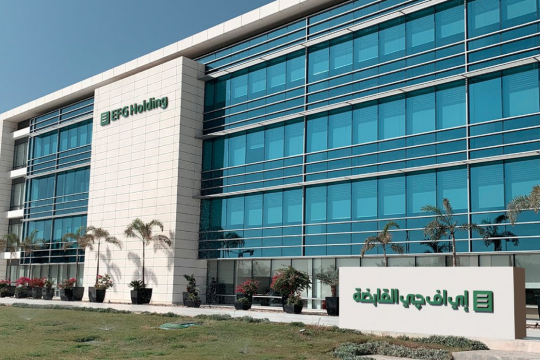
EFG Hermes taps Christopher Laing to lead equity capital markets

Our friends at EFG Hermes have appointed HSBC and Deutsche Bank veteran Christopher Laing (LinkedIn) as head of equity capital markets, Bloomberg reports. Laing succeeds Ali Khalpey, who recently left his role to join Cantor Fitzgerald.

Laing has nearly 30 years of capital-markets experience, having held senior roles at Deutsche Bank and HSBC. At Deutsche Bank he led emerging-markets ECM before joining HSBC to head its ECM operations.

(Tap or click the headline above to read this story with all of the links to our background as well as external sources.)

What they said: “We are pleased to welcome Christopher Laing as Head of Equity Capital Markets to lead our ECM franchise starting this month and based in Dubai. With 30 years of experience — including senior ECM roles at HSBC and Deutsche Bank — Laing brings extensive expertise in emerging markets. His addition supports our strategy to strengthen regional presence and enhance value creation for clients,” Mostafa Gad, Global Head of Investment Banking at EFG Hermes, said.

9

Also on our Radar

Korea’s H&L to set up USD 12 mn plant in Qantara

MANUFACTURING-

Garment company H&L has become the first Korean company to invest in the Qantara West Industrial Zone, inking a contract with the Suez Canal Economic Zone to build a USD 12 mn factory for sportswear and other ready-made garments, according to a statement from the zone. The project will create 2k direct jobs

(Tap or click the headline above to read this story with all of the links to our background as well as external sources.)

DATA POINT- Total investments in the Qantara West Industrial Zone have reached USD 1.2 bn, covering 45 different projects spanning 2.8 mn sqm, and creating 62.2 jobs.

HOSPITALITY-

Travco Group plans to invest USD 1.5 bn in 2026 to open ten new hotels across Egypt, Morocco, and several African countries, Chairman Hamed El Chiaty told Asharq Business. Half of the investment will be self-financed, while the remaining will be covered through bank loans. Travco also aims to attract 1.5 mn tourists to Egypt by the end of 2025 by tapping new markets including Brazil and Mexico, though El Chiaty noted that the absence of direct flights from some destinations remains a challenge.

ENERGY-

ExxonMobil will invest in a new concession area west of Zohr under a newly-signed MoU with state-owned Egas, which will also see ExxonMobil expand its natural gas exploration activities in the Mediterranean.

DEVELOPMENT FINANCE-

The International Finance Corporation (IFC) will extend a USD 50 mn loan to the Suez Canal Bank to on-lend to SMEs across Egypt, the IFC said in a statement. A quarter of the loan will support women-owned businesses, “which make up 20% of Egypt’s MSME market, yet experience a significant financing gap.”

PLUS- The IFC and Attijariwafa Bank Egypt have partnered to launch a USD 10 mn local-currency risk-sharing facility aimed at boosting financing for small and medium-sized enterprises and creating jobs in Egypt, according to a statement from the World Bank’s private sector-focused lender. The program is also supported by a USD 2.5 mn blended finance facility from the Netherlands-backed Prospects Partnership .

The facility will support Attijariwafa’s USD 20 mn SME loan portfolio, with the IFC covering up to 50% of the credit risk. It is also expected to expand the bank’s SME portfolio by more than 50% over the next five years.

DEBT WATCH-

The National Bank of Egypt is providing Ora Developers with a long-term EGP 3 bn facility, which will be used to help finance its 316-feddan Solana West project in West Cairo, the bank said in a statement (pdf). The loan will help fund construction and infrastructure work in the project.

10

PLANET FINANCE

MENA sees M&As rise 23% y-o-y in 9M to USD 69.1 bn -EY

MENA logged another strong stretch of M&A activity in 9M 2025, closing 649n transactions worth USD 69.1 bn, a 23% y-o-y rise in volume and the region’s most active cross-border run in half a decade, supported by renewed investor confidence and a firmer macro backdrop, according to EY’s MENA M&A insights report. The GCC alone accounted for the bulk of M&A plays at 500 transactions valued at USD 65.9 bn.

(Tap or click the headline above to read this story with all of the links to our background as well as external sources.)

What EY says is behind the uptick: “MENA’s improving economic outlook, expanding digital economy and strategic policy support attracted higher foreign investor interest in the first nine months of this year. The UAE maintained strong foreign direct investment (FDI) momentum, driven by its stable economy and investor-friendly policies,” Anil Menon, EY MENA head of M&A and equity capital markets leader, said.

The UAE remained the region’s M&A hub, attracting 171 inbound transactions worth USD 29 bn, more than any other one country, led by OMV and Borealis’s USD 16.5 bn acquisition of a 64% stake in Borouge, the region’s largest M&A YTD. Adnoc’s USD 6.3 bn purchase of 46.94% of Canada’s NOVA Chemicals and Saudi Aramco’s USD 3.5 bn acquisition of Peru’s Primax followed as major outbound plays.

Cross-border activity continued to drive growth, contributing 54% of the total count and 76% of total value. Outbound M&A reached 189 transactions worth USD 28.5 bn, led by the UAE and Saudi Arabia, which together accounted for 85% of total outbound value. Canada topped the list by value, while the UK was the most targeted market by volume.

Egypt and Kuwait were among the region’s top five buyers and targets, with Oman and Qatar also seeing increased dealflow. The surge in cross-border activity reflects “a growing appetite for international expansion and portfolio diversification,” EY Strategy and Transactions Leader Brad Watson said, adding that the “shift toward mid-size transactions reflects a strategic focus on high-growth, innovation-driven sectors that support long-term economic development in line with the region’s economic diversification goals.”

Inbound transactions rose 25% y-o-y in volume and 34% in value to 160 plays worth USD 23.8 bn, buoyed by Austrian investment linked to the Borouge acquisition. Chemicals and technology led sectoral activity, contributing USD 23.9 bn and USD 12.2 bn, respectively.

On the domestic front, MENA sealed 300 local M&As with a combined disclosed value of USD 16.8 bn, representing 46% of overall volume. Activity was concentrated in technology, provider care, banking, and capital markets, while mid-sized transactions dominated. Technology and consumer product industries made up 32% of the domestic transaction value and 40% of volume.

Sovereign wealth funds remained active, executing 22 transactions (17 outbound) focused on energy, logistics, and technology. UAE- and Saudi-based funds led the charge, reflecting their growing role as cross-border consolidators and long-term strategic investors.

MARKETS THIS MORNING-

Asian markets are in the red in early trading this morning extending losses triggered by concerns over elevated valuations. Japan’s Nikkei is down 4.2%, South Korea’s Kospi is down 4.0%, while the Shanghai Composite and Hang Seng are looking at more moderate losses.

EGX30

39,066

+1.2% (YTD: +31.4%)

USD (CBE)

Buy 47.30

Sell 47.44

USD (CIB)

Buy 47.31

Sell 74.41

Interest rates (CBE)

21.00% deposit

22.00% lending

Tadawul

11,398

-0.7% (YTD: -5.3%)

ADX

10,058

+0.3% (YTD: +6.8%)

DFM

6,013

-0.1% (YTD: +16.6%)

S&P 500

6,772

-1.2% (YTD: +15.1%)

FTSE 100

9,715

+0.1% (YTD: +18.9%)

Euro Stoxx 50

5,660

-0.3% (YTD: +15.6%)

Brent crude

USD 64.44

-0.7%

Natural gas (Nymex)

USD 4.30

-1.0%

Gold

USD 3,943

-0.5%

BTC

USD 101,146

-5.1% (YTD: +8.0%)

S&P Egypt Sovereign Bond Index

956.38

+0.3% (YTD: +23.0%)

S&P MENA Bond & Sukuk

151.94

-0.1% (YTD: +8.6%)

VIX (Volatility Index)

19.00

+10.7% (YTD: +9.1%)

THE CLOSING BELL-

The EGX30 rose 1.2% at yesterday’s close on turnover of EGP 6.7 bn (39.8% above the 90-day average). Local investors were the sole net buyers. The index is up 31.4% YTD.

In the green: TMG Holding (+4.8%), Orascom Development (+4.4%), and Telecom Egypt (+3.2%).

In the red: Juhayna (-2.1%), Ibnsina Pharma (-1.2%), and Egypt Aluminum (-1.1%).

11

HARDHAT

How are real estate developers responding to Egypt’s office space shortage?

Egypt’s office and administrative real estate market is shifting as the gap between supply and demand widens. Local and international companies are showing more interest in high-quality and flexible workspaces. While developers and office space providers are ramping up expansions, the market still faces structural challenges related to development patterns, space size, and evolving post-pandemic work preferences.

(Tap or click the headline above to read this story with all of the links to our background as well as external sources.)

The race to expand office supply in Cairo is underway, but developers are facing challenges. The market is seeing a shortage of large, premium grade A spaces and a shifting demand toward flexible and hybrid models. Still, the broader trend points to a reshaped office landscape in Egypt, fueled by the entry of global players like IWG, growing Gulf investment, and Cairo’s rising appeal as a regional business hub.

There’s a clear mismatch between available administrative space and actual demand, Savills Egypt Head of Strategic Consulting Rania Nazmi told EnterpriseAM. Most new projects focus on small units, while multinational companies are seeking large grade A spaces with advanced operational standards, she said.

The rush by many developers to sell smaller units to individual investors for quick liquidity has created a structural imbalance, Savills Egypt Operations Director Sherine Badr El Din told us, adding that small offices are oversupplied, while large spaces are hard to find. Global firms entering Egypt need offices three to five times larger than those in Dubai or Riyadh, but the local market still struggles to meet that demand, Savills Egypt Country Head Catesby Langer-Paget told EnterpriseAM.

Egypt’s office market is seeing strong momentum, with total Cairo supply expected to grow 82% by 2030 to reach 1.82 mn sqm. The growth reflects Egypt’s expanding economy and Cairo’s position as a regional business hub, he said. Corporate priorities are also shifting from location to quality, with grade A spaces now seen as key to attracting and retaining talent, Knight Frank Head of Research for MENA Faisal Durrani said. Premium office rents across Cairo’s prime districts are also converging as competition for top-tier space intensifies, he added.

New Cairo dominates the market with around 1.33 mn sqm of existing and upcoming supply — the highest among Cairo districts — with an average selling price of EGP 274k per sqm in 1H 2025, according to Knight Frank. Other areas are catching up, with Sheikh Zayed averaging EGP 229k per sqm, and Sixth of October at EGP 171k per sqm. The narrowing price gap suggests the market is focusing less on location and more on quality, Durrani said.

Egypt’s administrative real estate sector has become the second-most attractive for Gulf investors, with interest rising to 49%, double the 2023 figure, Knight Frank found. It’s also the top choice for Saudi investors at 63%. This interest is being driven by Egypt’s rapid rise as a regional outsourcing hub, thanks to operating costs being 50-60% lower than in Europe and the US, and a pool of multilingual talent, Durrani said.

Flexible workspace providers have become central to Cairo’s office ecosystem, Nazmi said. Shared offices are helping bridge part of the market gap and are proving to be popular with SMEs and even some global firms seeking flexibility without long-term commitments. Egypt has become one of IWG’s fastest-growing markets globally, expanding from ten centers to over 30 in less than two years, IWG Regional Director Marc Descrozaille told EnterpriseAM. The group is investing heavily in Egypt based on its economic potential and the strong shift toward flexible work, he added. However, Egypt still faces a “clear gap” between supply and demand, especially in the small and mid-sized segments favored by entrepreneurs, IWG Senior Vice President for Africa and the Middle East Kory Thompson told EnterpriseAM. IWG is also planning to open its largest center globally in Egypt, spanning 17k sqm on South 90 Street in New Cairo before the end of this year, he added.

IWG’s expansion is built on partnerships with local developers, allowing rapid scaling while maintaining global standards, IWG Egypt CEO Youssef Naguib said. The model supports the company’s plans to expand to the new capital, North Coast, El Gouna, Alexandria, and Upper Egypt, Naguib said. Tech, finance, and outsourcing firms are the main drivers of demand for IWG’s spaces in Egypt, with outsourcing jumping into the top three sectors last year, he added. IWG’s expansion into new cities aims not only to meet existing demand but also to build awareness and shape future demand, Thompson said. Being early in the market is key to success, he added. Descrozaille said IWG’s goal is to offer flexible work solutions in every Egyptian city so that entrepreneurs and companies can find suitable, affordable space anywhere in the country.

Tabarak Holding is among the local developers adapting to the shift, Chairman Ali Al Shorbany told EnterpriseAM. The company is focusing on flexible, hybrid, grade A offices designed near major transport hubs and airports, with short-term leasing options for firms seeking operational agility.

Real estate investment funds could help ease the shortage of large administrative spaces by acquiring assets and leasing them to major tenants, Badr El Din said. Premium office space in Cairo remains competitively priced at USD 723 per sqm per year, she noted. Knight Frank’s Head of Project Services Moataz Mosallam expects the market to move toward sustainable offices that prioritize employee wellbeing and energy efficiency. Developers should focus on smart design and flexibility as key differentiators, he added.

At the 2025 EnterpriseAM Egypt Forum, real estate and tech leaders agreed that adaptability will define the next decade. Cities are shifting toward mixed-use projects that integrate living, working, and leisure, while culture and wellbeing are reshaping younger generations’ priorities. Experts said AI will redefine jobs and skills but won’t replace human creativity or interaction. Instead, it will make them more valuable. With more local opportunities, Egyptian talent abroad could begin returning home. Urban districts such as Downtown Cairo may also see a revival that blends history with innovation.


Your top infrastructure stories for the week:

  • Mostakbal Misr Agency for Sustainable Development is preparing to offer 5k feddans to investors for logistics zone development, with infrastructure work already underway to link the areas to key ports via the existing road network.
  • The Egyptian Bioethanol Company signed a USD 135 mn loanagreement with seven banks to build Egypt’s first bioethanol facility in Damietta, which will produce 100k tons annually from sugar beet molasses.

NOVEMBER

9-11 November (Sunday-Tuesday): The sixth edition of the TransMEA 2025 forum and exhibition, Egypt International Exhibition Center.

10 November (Monday): Capmas expected to release inflation data for October.

16-19 November (Sunday-Wednesday): Cairo ICT 2025, Egypt International Exhibition Center.

16-19 November (Sunday-Wednesday): The 12th edition of the Digital Payments and Financial Inclusion Exhibition and Forum (PAFIX 2025), Egypt International Exhibition Center.

20 November (Thursday): Monetary Policy Committee meeting.

23-25 November (Sunday-Tuesday): NEBU Expo 2025 gold and jewelry exhibition, Egypt International Exhibitions Center, New Cairo.

November: Egypt to join the EU’s Horizon Europe research and innovation program.

November: The Conference on Early Recovery, Reconstruction, and Development in Gaza.

DECEMBER

1-4 December: Egypt Defence Expo (Monday-Thursday), Egypt International Exhibition Center.

4-7 December (Thursday-Sunday): Egy Stitch & Tex Expo 2025, Cairo International Conference Center.

8 December (Monday): Egypt-UK Investment Conference, Cairo.

15 December (Monday): Neo Gen PropTech and Sustainable Smart Cities Conference, The St. Regis Hotel New Capital

25 December: (Thursday): Monetary Policy Committee meeting.

EVENTS WITH NO SET DATE

Mid-2025: EGX launches sustainability index.

December: Germany’s North Rhine-Westphala business delegation to land in Egypt.

3Q 2025: Nasr Automotive begins locally manufacturing passenger cars.

3Q 2025: Polaris Parks to finalize contracts for two new industrial zones in the new capital and Sadat City.

Mid-2025: The Administrative Capital for Urban Developments to roll out the second phase of offering industrial plots to investors

2H 2025: Potential visit by Chinese President Xi Jinping to Egypt

4Q 2025: The beginning of construction works on China’s State Grid two solar projects.

4Q 2025: GB Auto starts assembling one of China’s Great Wall Motor models in 4Q 2025.

4Q 2025-1Q 2026: Kasrawy Group to launch first Avatr EV models in Egypt.

2025: The InterAcademy Partnership assembly.

2025: Nile Basin States Summit, Cairo, Egypt.

2025: Release of the government’s Startup Charter document.

Before 2025-end: The government will launch two ro-ro shipping lines with Saudi Arabia and Turkey.

2026

Early 2026: Passenger operations on the New Administrative Capital–Nasr City monorail scheduled to begin.

1Q 2026: Trial operations for the Ain Sokhna–Sixth of October section of Egypt’s first high-speed rail line scheduled to begin.

1 January: European Union’s Carbon Border Adjustment Mechanism (CBAM) to fully come into effect.

10-12 February (Tuesday-Thursday): Gitex Global’s AI Everything Middle East & Africa Summit

15 March 2026: IMF to hold its seventh review of Egypt’s USD 8 bn EFF arrangement.

30 March - 1 April: Egypt International Energy Conference and Exhibition 2026 (EGYPES)

May 2026: End of extension for developers on 15% interest rates for land installment payments

15 September 2026: IMF to hold its eighth review of Egypt’s USD 8 bn EFF arrangement.

2H 2026: Operations at Deli Glass Co’s new USD 70 mn glassware factory kick off.

2027

20 January-7 February: Egypt to host the African Games.

April 2027: Tenth of Ramadan dry port and logistics hub to begin operations.

EVENTS WITH NO SET DATE

2027: Egypt to host EBRD’s annual meetings for 2027.

2027: Egypt-EU Summit 2027

End of 2027: Trial operations at the Dabaa nuclear power plant expected to take place.

September 2028: First unit of the Dabaa nuclear power plant begins operations.

Now Playing
Now Playing
00:00
00:00