Get EnterpriseAM daily

Available in your choice of English or Arabic

New tax breaks aim to revive EGX listing appetite

1

WHAT WE’RE TRACKING TODAY

Local urea output holds steady despite gas squeeze

Good morning, friends. We hope you’re staying warm as we push through this cold snap and welcome the weekend.

In today’s issue we look at what the Finance Ministry has in store to ease listing anxiety, how local airlines are dealing with the recent rise in jet fuel prices, and more.

***

WISH THIS MORNING’S ISSUE was a podcast? We’ve got you. Tap or click here to listen to Morning Drive, a 10-minute version of today’s issue crafted for you to enjoy with your morning coffee, while getting the kids ready for school, or while stomping around the house wondering where the [redacted] you left your [redacted] reading glasses.***

Watch this space

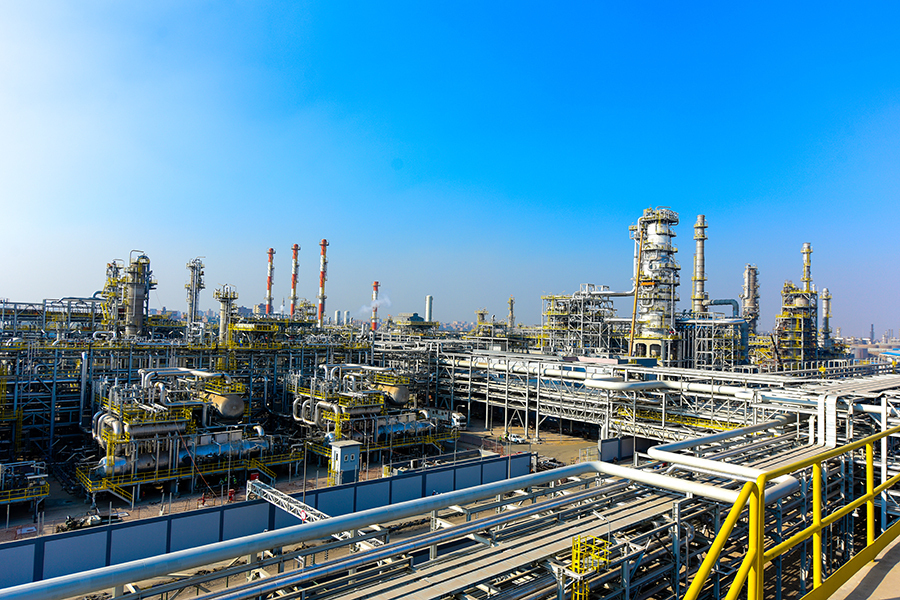
Urea production is keeping pace, and April cargo sales are still being booked, signaling stable supply despite tighter gas availability, urea producers told energy and commodities price reporting agency Argus Media. Producers have so far avoided disruptions even after Israel halted gas exports — equivalent to roughly one LNG cargo every four days. The government has mitigated the impact by securing limited LNG shipments and curbing domestic energy demand, opting for conservation over buying at high spot prices.

But looking ahead, producers “acknowledge that the industry is not fully insulated from wider gas management policies,” with the possibility that output could fall if energy supply pressures persist.


Tourists will still be able to enjoy restaurants, malls, and cafes past the 9pm curfew, after Tourism Minister Sherif Fathy said the recently-imposed curfew for commercial activity does not apply to tourism destinations, which will continue to operate normally. He named Hurghada, Marsa Alam, Luxor, Aswan, and Sharm El Sheikh among the destinations unaffected by the curfew, as well as restaurants that cater to tourists all over the country.

** DID YOU KNOW that we cover Saudi Arabia, the UAE, and the MENA-IndiaCorridor?

** Were you forwarded this email? Tap or click here to get your own copy delivered every weekday before 7am Cairo time — without charge.

Data point

9.8 mn tons — that’s how much wheat the country is expected to produce over the upcoming 2026/27 marketing year, which starts in July, up 6.5% y-o-y, according to a report (pdf) from the US Department of Agriculture. The jump is attributed to an expected expansion in harvested areas, estimated at 1.5 mn hectares, up from 1.3 mn hectares in the previous season, thanks to higher wheat procurement prices from the government.

Despite the welcome jump in expected domestic production, local demand is, of course, still significantly behind local production. With local market demand seen reaching 20.3 tons for the 12-month period starting in the second half of the calendar year, 12.5 mn tons of exported wheat is expected to plug the demand gap. While this will likely mark the country as the world’s largest wheat importer for another year, it is nonetheless down 1.6% y-o-y.


PSAs

Catching a flight outta Egypt today? EgyptAir suggests you should arrive early at the airport due to the stormy weather we’re witnessing. For international flights, the flag carrier suggests passengers arrive four hours before departure and three hours for domestic flights, it said in a statement.


Setting the record straight

Curfews, a day off, and school suspension all false rumors: The Madbouly government has denied rumors regarding a curfew on public roads, giving state and private sector employees the day off, and a 15-day school suspension. The government clarified that these claims are baseless.


WEATHER- Cairo is in store for another rainy day today, with a few showers in the morning, along with a high of 21°C and a low of 12°C, according to our favorite weather app.

It’s a mostly sunny day in Alexandria, with a high of 20°C and a low of 12°C.

And over the weekend, expect to see the rain subside and temperatures climb to 29°C by Saturday in the capital and to 27°C in Alexandria.

The big story abroad

Washington maintains that peace talks with Iran are ongoing, despite Tehran roundly rejecting the ceasefire proposal put forward by the Trump administration. The Islamic Republic is reportedly looking to secure assurances that the US-Israeli assault will not resume, reparations for war-related damage, and recognition of its authority over the Strait of Hormuz.

Meanwhile, in the world of social media: Meta and Google were found liable for creating social media platforms harmful to teenagers. The plaintiff claimed that using YouTube and Instagram caused them anxiety, depression, and body dysmorphia. Social media companies now face USD bns of litigation risk as this case provides a roadmap for future claims regarding platform safety and minor well-being.

And on Wall Street: US investment bank Jefferies Financial Group failed to meet analysts’ estimates for 1Q 2026, despite seeing its net income rise 22% y-o-y. Its biggest losses were attributed to private credit mishaps related to Market Financial Solutions and First Brands Group. Despite the turmoil stemming from the war on Iran, Jefferies execs still expect robust M&A and IPO activity and dealmaking in 2026.

Somabay becomes the stage for Egypt’s equestrian legacy.

From 26 to 29 March 2026, the Egyptian Equestrian Cup arrives on the Red Sea, uniting riders, horses, and elite competition in a setting defined by discipline, mastery, and place.

2

The Big Story Today

Listing anxiety? The Finance Ministry thinks it’s got a fix

A new incentive scheme will offer tiered corporate income tax reductions over three years to companies that list on the EGX, a senior government official tells EnterpriseAM. Under the recently agreed-on plan, newly listed companies will receive a 30% reduction on payable corporate income tax in their first year, followed by 20% in the second and 10% in the third.

Eligibility will be conditional on maintaining the listing over the three years and hitting annual revenue growth prior to each year’s tax reduction. The companies must also adhere to the Financial Regulatory Authority’s listing and disclosure requirements, including the submission of quarterly reports and the payment of listing-related costs.

Why this matters: Listing a company and building up the transparency needed to stay listed can be expensive, especially for companies that have just gone public. For companies on the fence about listing, a 30% top-line corporate tax reduction goes a long way in assuaging concerns that meeting the FRA’s disclosure requirements may be too costly.

The scheme will apply to both private and public companies, which should improve the runway for the some 20 state-owned enterprises that the state is looking to list or exit as part of its plan to generate USD 3-4 bn in divestment revenues by the end of the calendar year.

The bigger picture: After a very calm few years on EGX in terms of listings, policymakers and some in the sector had been talking up 2026 as the year activity may ramp up. We entered the year with falling interest rates globally and the expectation that capital flows would move from developed to emerging nations and from fixed income investments to equities — but then Trump happened. The war in the region has, at best, pushed back companies’ plans to list as market uncertainty weighs on investor appetite.

And maybe more significant for market liquidity is the decision to waive capital gains tax liabilities on stock transactions dating back to June 2023, which should help bolster investor appetite in the market. Missed revenues from the waiver should be cushioned by their replacement with the stamp tax, which is expected to raise EGP 15 bn a year, double the initial estimates due to an increase in market activity.

This publication is proudly sponsored by

3

AVIATION

Hormuz closure tests Egypt’s aviation fuel buffers

Jet fuel prices have doubled in recent weeks as the closure of the Strait of Hormuz cuts a significant chunk of global supply, with Kuwait and the UAE both among the top three global exporters of jet fuel. Flight ticket prices have already started rising, but the real shock may yet to come, as some airlines are warning that jet fuel reserves at some airports could run out in a matter of weeks.

So far, jet fuel reserves in Egypt are at safe levels, government officials tell EnterpriseAM. They relayed that there are currently no issues in terms of aviation fuel shortages to us.

But how deep does that buffer really run? Industry insiders have their worries. “Egypt is not well protected in a prolonged disruption because it relies on imported oil,” warns Avaero Capital Partners Principal Managing Partner Sindy Foster in comments to EnterpriseAM. This reliance in times of stress becomes an issue because flows may not always be consistently available, which does not work well with the aviation industry’s need for “high-volume, continuous, and reliably financed supply,” she explained.

Supplies can be secured, but you can’t avoid the impact of much higher prices. “For African and Egyptian carriers, the immediate pressure from higher fuel costs is as much about network economics as it is about pricing,” Center of Aviation Head of Analysis Richard Maslen tells us. Fuel costs — which have now doubled in a matter of weeks — typically account for around 30-40% of total flight costs, we’re told.

A dip in tourist appetite for Egypt could also pressure airlines, which could make “revenue per flight [...] less predictable, and in some cases weaker,” according to Foster.

“Over time, this becomes a question of whether airlines can secure and pay for fuel at scale, in foreign currency, without eroding already thin margins,” Foster tells us. This will be especially true for smaller and low-cost operators as their model “depends on tight margins and high utilisation, so they have far less room to absorb fuel disruption or inefficiency.”

Some of this will be absorbed by higher ticket costs, with new ticket prices for Egyptian carriers up around 20-30%, the government officials tell us. Of this, 10% can be attributed to higher fuel costs, while the rest can be attributed to risk ins. and disruptions at other airlines, pushing up demand for Egyptian carriers with international routes.

Ticket prices are only one lever for airlines facing tighter margins, as there’s a limit to how much they can charge before failing to fill up seats, according to Maslen. “A prolonged jet fuel squeeze therefore feeds directly into utilization and network design — marginal routes are trimmed, frequencies adjusted, and aircraft redeployed to stronger flow,” he added. Similarly, Foster said in times like these, “airlines [prioritize] operational stability and revenue protection first” through “protecting core routes, cutting weaker services, adjusting schedules, and managing fuel use tightly to ensure the network remains deliverable.”

Shortages are understandably drawing increased attention to planned sustainable aviation fuel projects, which the government is now trying to accelerate by fast-tracking the timelines for some of the projects, another government official tells us. To feed these planned projects, a set of incentives to help make used cooking oil collection projects more financially viable and collect 1 mn tons annually is being prepared, Waste Management Regulatory Authority Chairman Yasser Abdullah tells us.

4

Energy

New energy investment model starts bearing fruit

Our new energy investment model in action: CIS Gaz, Aten Petroleum, and Terra Petroleum will explore and produce gas in an Eastern Desert block under the new energy investment model adopted by the Madbouly government, according to an official document seen by EnterpriseAM. This comes after the consortium inked an agreement with the Egyptian General Petroleum Corporation (EGPC).

Why it matters: The agreement — a pivot from rigid, traditional models — adopts a flexible production-sharing mechanism that links the foreign partner’s share to global Brent prices as well as daily production rates. The new framework is a fully “incentive-based system,” whereby the contractor’s share increases when Brent prices decline or production levels fall — helping offset costs.

The bottom line: This reduces investment risks, particularly in mature fields that require advanced technology or higher operating expenditures. The shift is designed to retain mid-sized oil companies in Egypt’s upstream sector, especially following the exit of larger players, according to the document under review.

READ MORE- We have a more detailed breakdown of our energy investment model shakeup here.

The fine print: EGPC’s share from production ranges between 70-80%, depending on Brent prices. The agreement obliges the foreign partner to prioritize Egypt’s domestic crude oil needs, granting EGPC the right to directly purchase production.

What’s next? The Madbouly government is expected to soon offer the Ras Badran and Zeit Bay oil fields in the Gulf of Suez after DEA’s exit from the blocks. EGPC may decide to operate these fields independently or seek a new partner willing to adopt the same “incentive-based” model to maximize remaining reserves.

5

Logistics

Why the Arctic Metagaz crisis is a wake-up call for Egypt

Egypt is unlikely to face direct environmental damage from an abandoned Russian LNG tanker currently adrift in the Mediterranean, with dominant winds and currents set to trap any spills along the coastal areas of Libya and Tunisia, former head of supply chain and transport industries at the World Economic Forum Wolfgang Lehmacher tells EnterpriseAM. While “rough seas could ignite remaining gas or breach the visible hull gash,” it’s highly unlikely — but not impossible — that Egypt could directly be affected by a spill, he added.

Nine EU member states — led by Italy and France — warned of a “serious risk of major ecological disaster,” calling on the European Commission to take swift, collective action as the fire-damaged tanker — allegedly struck by Ukrainian drones — continues to drift through Mediterranean waters.

REMEMBER- The Arctic Metagaz was abandoned earlier this month off Libya’s coast after — according to the Russian state — it was attacked by Ukrainian naval drones that set it alight and left the vessel inoperable. The vessel is currently drifting some 50 miles off Tripoli, with a load of 450 tons of heavy fuel, 250 tons of diesel, and a substantial amount of LNG, opening up the possibility of an oil spill or the ignition of remaining fuel held onboard.

Why this matters: We might be spared this time, but that’s down to luck alone. With maritime vessels now a target in the Russia-Ukraine war, the war on Iran, and the Houthis’ actions in Bab El Mandeb — in addition to the risk of spills from accidents that happen outside of war — Egypt needs to be prepared to handle spills.

Egypt’s national oil spill contingency plan can handle tier 1 limited spills of under 100 cbm, but “tier 3 megaspills reveal gaps,” warns Lehmacher. Managing large uncontained spills requires cross-border collaboration and shared cleanup kits across North Africa with the involvement of private players, governments, and industry associations to “transform yesterday’s siloed firefighting into tomorrow’s collaborative living systems.”

6

Also on our Radar

NBE secures USD 313 mn trade finance boost

Miga to back USD 313.5 mn trade finance facility for NBE

The National Bank of Egypt (NBE) is set to receive a liquidity boost for its trade finance operations via a USD 313.5 mn backing from the World Bank’s Multilateral Investment Guarantee Agency (Miga), according to a project disclosure. The backing will cover short-term, revolving trade loans provided by HSBC and Standard Chartered, protecting the lenders against the risk of non-payment by NBE.

The facility will target “strategic priority” sectors, specifically energy and agriculture, with short-term loans featuring tenors of up to one year for trade-related payments.

Why it matters: This de-risked facility is designed to maintain NBE’s access to global capital markets. By using Miga to wrap the credit risk, NBE can tap international banks like HSBC and Standard Chartered for cheaper or more reliable funding than it might get on an unsecured basis.

Incolease taps securitization market with debut EGP 2 bn issuance

International Company for Leasing (Incolease) completed its debut securitization issuance, raising EGP 2 bn as part of a broader EGP 10 bn program, according to a statement (pdf) from counsel Matouk Bassiouny & Hennawy. The transaction aims to strengthen the firm’s liquidity and diversify its funding sources, the statement read.

Advisors: Al Ahly Pharos acted as investment bank, Baker Tilly served as auditor, and Meris provided the credit rating. Participating banks included the Arab African International Bank, the National Bank of Egypt, Banque Misr, Al Baraka Bank Egypt, Saib, and Attijariwafa Bank. Matouk Bassiouny & Hennawy provided counsel.

Contact reports 2025 earnings

Contact Financial reported a net income of EGP 345 mn in 2025, according to its latest earnings release (pdf). Operating income saw a 12% y-o-y jump to EGP 2.8 bn during the year, while its top line rose 29% y-o-y to reach EGP 8.4 bn.

The firm’s financial division saw its operating income climb 12% y-o-y, reaching EGP 2.2 bn, backed by a focus on high-margin premium products and robust returns from portfolio transfer activity.

7

PLANET FINANCE

The global economic growth outlook is darkening as the war drags on

Fitch Solutions’ BMI is now expecting the war to shave 0.2-0.3 percentage points off of global economic growth if the war lasts longer than four weeks and persists through April, which is longer than its initial baseline, it said in a recent note. This is due to the “direct impact of high energy prices on importing economies, as well as a hit to domestic consumption more generally amid rising inflationary pressures,” BMI explained.

Much of it boils down to oil and gas prices: Brent crude has hovered at USD 90-110 / bbl this month, but an extended conflict could push it to USD 110-130 / bbl in April or USD 150 / bbl in a worst-case scenario, according to BMI. Worst-case outcomes could add up to 0.7 percentage points to headline inflation for major economies in 2026, it said, with importers in Europe and Asia the hardest hit while exporters in North America could get a windfall. Higher oil prices would also push inflation in most countries beyond targets. If the conflict abates, we’re looking at prices normalizing closer to USD 70 / bbl later in the year.

Some of the damage is already done: “Even if the current conflict ends soon, inflation risks may remain high if expectations drift higher, while lingering security risks and global uncertainty could be a more persistent drag on activity,” it added.

It would take around a month for trade flows to normalize around the Strait of Hormuz, meaning that disruptions to LNG and oil shipments would continue through to 2Q 2026, which could have a severe impact on GCC economies.

Fiscal conditions would tighten around the world, as an uptick in interest rates and borrowing costs would weigh on investment growth and government spending plans. Currencies from energy-importing markets like Egypt and South Africa are also set to see declines against the greenback amid a more risk-averse backdrop.

The security and infrastructure risks are particularly stark for our region. A continued war would likely entail more damage to key energy infrastructure in the region, and ongoing attacks would keep much-needed, deep-pocketed tourists at bay. The hit to regional tourism would spill over into countries with remittance ties to the area.

MARKETS THIS MORNING-

Asia-Pacific markets are mixed in early trading this morning following contradicting updates on the regional war, with the Trump administration saying that talks with Iran are underway and Iran denying the news. In Japan, the Nikkei is basically unchanged, while South Korea’s Kospi is down over 2.7%.

EGX30

47,498

+1.2% (YTD: +13.6%)

USD (CBE)

Buy 52.52

Sell 52.66

USD (CIB)

Buy 52.53

Sell 52.63

Interest rates (CBE)

19.00% deposit

20.00% lending

Tadawul

11,080

+1.2% (YTD: +5.6%)

ADX

9,778

+2.7% (YTD: -2.2%)

DFM

5,698

+5.2% (YTD: -5.8%)

S&P 500

6,592

+0.5% (YTD: -3.7%)

FTSE 100

10,107

+1.4% (YTD: +1.6%)

Euro Stoxx 50

5,649

+1.2% (YTD: -2.5%)

Brent crude

USD 103.39

+1.1%

Natural gas (Nymex)

USD 2.97

+0.6%

Gold

USD 4,534

-1.1%

BTC

USD 71,298

+1.1% (YTD: -18.6%)

S&P Egypt Sovereign Bond Index

1,038

-0.1% (YTD: +4.5%)

S&P MENA Bond & Sukuk

148.73

+0.2% (YTD: -2.1%)

VIX (Volatility Index)

25.38

-5.8% (YTD: +69.8%)

THE CLOSING BELL-

The EGX30 rose 1.2% at yesterday’s close on turnover of EGP 7.3 bn (11.3% above the 90-day average). Local investors were the sole net buyers. The index is up 13.6% YTD.

In the green: Fawry (+4.2%), Ibnsina Pharma (+3.6%), and Eastern Company (+3.5%).

In the red: Valmore Holding -EGP (-4.0%), Egypt Aluminum (-3.9%), and Raya Holding (-2.8%).

8

My Morning Routine

My Morning Routine: Seif Abdelmaguid, country director and associate partner at Strategic Gears

Seif Abdelmaguid, country director and associate partner at Strategic Gears: Each week, My Morning Routine looks at how a successful member of the community starts their day — and then throws in a couple of random business questions just for fun. Speaking to us this week is Strategic Gears’ Country Director and Associate Partner Seif Abdelmaguid (LinkedIn). Edited excerpts from our conversation:

I’m Seif Abdelmaguid, and I’ve been working as a consultant for more than 15 years, with experience in large-scale transformation and execution of all types of businesses. I also worked on national-level initiatives and institutional reforms as a banker at the Central Bank of Egypt.

Coming from an engineering background really shaped the way I think. Engineering taught me a lot about systems, precision, and structure, while consulting taught me about strategy and impact. I bridge both worlds to design with rigor and execute with discipline and consistency.

I currently lead the company’s commercial hub in Egypt, which oversees the rest of Africa. We’re a consulting firm that works with the private sector, public sector clients, ministries, and semi-governmental entities. We’re inputting national-level strategies and executing them, as well as working with the private sector on business strategies and helping it realize value from those strategies.

Clients don’t only want strategies, designs, and fancy slides — they want ownership of execution and what you promised them as a consultant. In countries like Egypt, for instance, this is a clear demand from all types of clients.

The company started around 11 years ago in Riyadh, Saudi Arabia, since it’s the biggest consulting market in the world. The company’s Saudi origins helped us stand out in the market, as it’s rare to see a Saudi firm launch in this space.

My morning routine hasn’t changed for 22 years. I know this sounds boring, but it’s not. I wake up at 5am and have a small snack, not an actual breakfast, and then I hit the gym or go jogging. After that, I’m at work by 8am, which gives me some sort of a competitive edge. By that time, I’ve already started my day very early and cleared out all communications, allowing me to be ready for the day before everyone else. My work day is split between three things: client meetings, internal meetings for committees, and operational meetings.

Between all these tasks, I try to stay connected to people in the company as much as I can, and this is something that we value in the company’s work culture in general. We actually have an open-door policy, so that anyone can walk in at any time to discuss any work-related topic.

The two constants in my day are duaa and sports. I’m a big believer in the power of duaa. I make sure to make it a habit to make my duaas on my way to work after finishing at the gym. I believe this habit transformed my life, and it’s a constant that will never change no matter what. I also work very long hours, but if I don’t have my daily 45-minute to 1-hour session at the gym, I feel like something is wrong with me — it’s what helps me keep my balance.

I believe that a work-life balance can be distributed over time. You can be unbalanced for five years, investing in your work, growth, and scaling your capabilities, then spend the next two years traveling or learning something new unrelated to work. I once heard businessman Ahmed Tarek say that every five years, he takes a year-long break from work. He isolates himself from everything and only focuses on quality rest and balancing himself. He then comes back with a new project idea or mission for the next five years. And I’m a big believer in this school of thought.

On a professional level, we want to expand in Africa. I see countries like Kenya, Rwanda, Morocco, and Algeria growing every day. I think there is great potential there to leverage our expertise to support these economies to grow faster and faster.

The best piece of advice I ever received was given to me by an athlete called Kris Gethin, who used to say that if you fail to plan, you will plan to fail. He was talking about the importance of planning, at least the night before.


2026

MARCH

30 March-1 April (Monday-Wednesday): Egypt International Energy Conference and Exhibition (EGYPES).

APRIL

2 April (Thursday): Monetary Policy Committee’s second meeting of 2026.

12 April (Sunday): Coptic Easter.

25 April (Saturday): Sinai Liberation Day.

MAY

1 May (Friday): Labor Day.

21 May (Thursday): Monetary Policy Committee’s third meeting of 2026.

27-29 May (Wednesday-Friday): Eid El Adha (TBC).

JUNE

30 June (Tuesday): National holiday in observance of the June 30 Revolution (TBC).

JULY

9 July (Thursday): Monetary Policy Committee’s fourth meeting of 2026.

23 July (Thursday): National holiday in observance of Revolution Day (TBC).

AUGUST

20 August (Thursday): Monetary Policy Committee’s fifth meeting of 2026.

26 August (Wednesday): National holiday in observance of Prophet Muhammad’s birthday (TBC).

SEPTEMBER

15 September (Tuesday): IMF to hold its eighth review of Egypt’s USD 8 bn EFF arrangement.

24 September (Thursday): Monetary Policy Committee’s sixth meeting of 2026.

27-29 September (Sunday-Tuesday): Global Conference on Population, Health, and Human Development.

OCTOBER

6 October (Tuesday): Armed Forces Day.

29 October (Thursday): Monetary Policy Committee’s seventh meeting of 2026.

DECEMBER

17 December (Thursday): Monetary Policy Committee’s eighth meeting of 2026.

EVENTS WITH NO SET DATE

Early 2026: Passenger operations on the New Administrative Capital-Nasr City monorail scheduled to begin.

1Q 2026: Trial operations for the Ain Sokhna-Sixth of October section of Egypt’s first high-speed rail line scheduled to begin.

May 2026: End of extension for developers on 15% interest rates for land installment payments.

2H 2026: Operations at Deli Glass Co’s new USD 70 mn glassware factory kick off.

2027

20 January-7 February: Egypt to host the African Games.

April 2027: Tenth of Ramadan dry port and logistics hub to begin operations.

EVENTS WITH NO SET DATE

2027: Egypt to host EBRD’s annual meetings.

2027: Egypt-EU Summit 2027.

End of 2027: Trial operations at the Dabaa nuclear power plant expected to take place.

September 2028: First unit of the Dabaa nuclear power plant begins operations.

Now Playing
Now Playing
00:00
00:00