Get EnterpriseAM daily

Available in your choice of English or Arabic

Net foreign assets dropped 35% to USD 6.0 bn in November

1

What We're Tracking Today

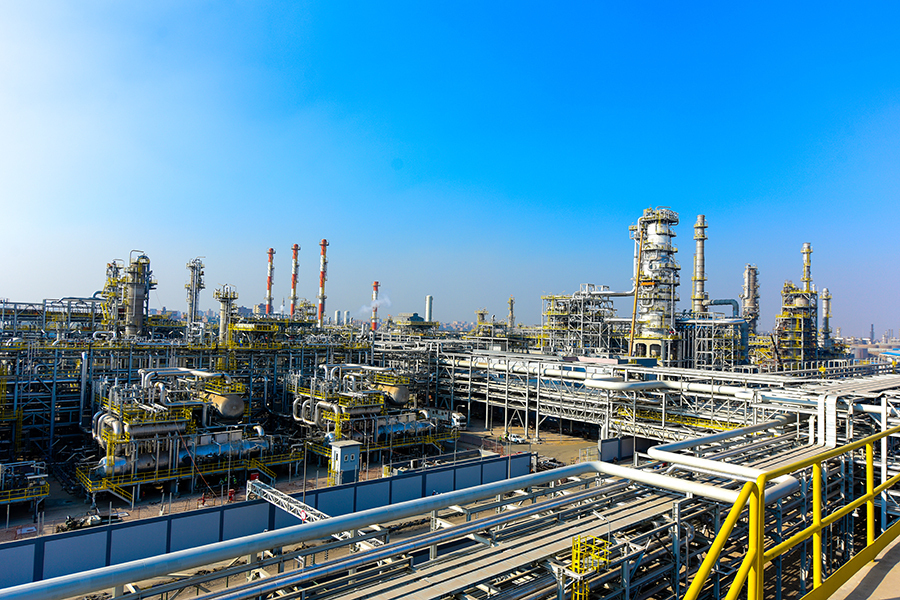
Increased production to cut annual energy import bill by USD 1.5 bn starting 2025

Good morning, folks. We hope that those who celebrated Coptic Christmas enjoyed some meaningful time with their family and friends and are ready to get back at their desks to finish off the shorter-than-usual workweek. In today’s issue, we’ve got important economic data, a one-on-one interview with Egyptian Tax Authority head Rasha Abdel Aal, and so much more.

BUT FIRST- Feeling a bit confused by the new rules about bringing newly purchased mobile phones into the country? We’re sure you’re not alone — but don’t fret, the National Telecom Regulatory Authority is out with an explainer about the new personal mobile phone import rules and the accompanying Telephony app.

We’re still allowed to bring in one phone from abroad for personal use, with one important caveat. To make sure you don’t get caught having to cough up import dues for a phone you’re allowed to bring in without issue, you need to drop by the Customs Authority at the airport before you leave the arrival hall to do the necessary paperwork.

Those planning to buy a phone here in Egypt also need to take note of the new system, with it being highly recommended that you check via the Telehony app that the device’s import dues have already been paid and ask for a tax invoice with the 15-digit IMEI Number as proof.

You’ve got nothing to worry about if you’re roaming using a non-Egyptian SIM, regardless of the length of your stay for both foreigners and Egyptians.

WATCH THIS SPACE-

Egypt will save around USD 1.5 bn annually on energy imports starting this year, with increasing local production to help reduce the country’s reliance on imports, a cabinet statement quotes Oil Minister Karim Badawi as saying. Badawi pointed to the state’s recent emphasis on paying back dues owed to foreign energy companies as an important reason for a recent uptick in production.

Remember: Following a costly few months of energy imports to bridge the gap between local production and demand, the Oil Ministry has been on a mission to start increasing local energy production starting in 2025. In addition to partially clearing arrears to international oil companies since the EGP float in March, the Oil Ministry is offering new incentives to energy players that include increasing production sharing ratios with foreign companies in exchange for new investments, enhancing exploration efforts, and increasing extraction rates with the aim of boosting local production.

HAPPENING TODAY-

The Greek prime minister and Cypriot president are in town for a tripartite summit, with President Abdel Fattah El Sisi set to welcome Greek Prime Minister Kyriakos Mitsotakis and Cypriot President Nikos Christodoulides to Cairo today, Ekathimerini reports. The summit will discuss pressing regional security issues, including Israel’s assault on Gaza and the evolving political dynamics in Syria, along with energy cooperation, likely concerning the prospect of re-exporting Cypriot gas via Egyptian LNG gasification facilities and the EuroAfrica Interconnector project.

Keep your eyes and ears peeled for a joint press conference of the three heads of state set to to take place later today, which should hopefully give us plenty to cover in tomorrow’s issue of EnterpriseAM.

PSA-

#1- Budding young traders can now jump on the EGX at the age of 15, after the Financial Regulatory Authority greenlit an amendment to lower the age individuals can trade in EGX-listed securities to 15, down from 16 currently, the authority announced in a statement. Individuals between 15 and 21 will also now be able to hold a portfolio worth up to EGP 40k, up from EGP 10k currently.

#2- There’s never been a better — or cheaper — day to head to one of the country’s many museums, with the Culture Ministry offering free access to national museums in celebration of Egyptian Culture Day, according to a statement.


WEATHER- It’s set to be a sunny wintery day in Cairo today, with a high of 21°C and a low of 12°C, according to our favorite weather app.

Alexandria is in store for a cloudy day, with a high of 21°C and a low of 11°C.

** DID YOU KNOW that we now cover Saudi Arabia and the UAE?

** Were you forwarded this email? Tap or click here to get your own copy delivered every weekday before 7am Cairo time — without charge.

DATA POINT-

Non-oil exports passed the USD 40 bn mark for the first time ever in 2024, marking an at least 16% increase on the year before, according to an Investment Ministry statement. The state is aiming to up its annual non-oil exports to USD 145 bn by 2030.

CIRCLE YOUR CALENDAR-

Egyptian expats will be able to choose from 3k plots of land across the country on 14 January to build a home in the country, the Housing Ministry said in a statement. Plots of land will be offered up online from the Beit Al Watan project in 13 cities, including New Cairo, Sixth October, Sheikh Zayed, Tenth Ramadan, New Damietta, Sadat City, May Fifteenth, New October, New Obour, Capital Gardens, New Minya, New Aswan, and New Qena.

Check out our full calendar on the web for a comprehensive listing of upcoming news events, national holidays and news triggers.

THE BIG STORY ABROAD-

It’s a busy morning in the foreign press, with a wide-ranging press conference from US president-elect Donald Trump, along with updates on the latest round of Israel-Hamas ceasefire talks, and news from Meta, Nvidia, and Anthropic getting plenty of ink.

#1- More threats of tariffs and annexation from Trump: Trump said he could use economic — and possibly military — action to acquire Greenland and take control of the Panama Canal, threatening to tariff Denmark “at a very high level” if it refuses, and separate tariffs on Mexico and Canada, which it also said it could annex through “economic force.” Canadian Prime Minister Justin Trudeau took to X later to say “There isn’t a snowball’s chance in hell that Canada would become part of the United States,” in response to Trump’s comments.

Trump also revealed a USD 20 bn investment planned by Emirati developer Damac Properties in US data centers, saying Damac’s founder Hussain Sajwani was inspired by Trump’s election to make the commitment. Sajwani said he’d been waiting four years to ramp up investments in the US.

The press conference got a lot of ink: FT | Reuters | NPR | AP | CNN

#2- Also from Trump Land, his new Middle East envoy Steve Witkoff said he is “hopeful” for some good news from the Israel-Hamas ceasefire talks taking place in Doha before Trump’s inauguration on 20 January, Reuters quotes him as saying. Trump again threatened that “all hell will break out in the Middle East" if Hamas does not release the hostages by the time he takes office during his presser.

PLUS- Several stories on the tech and AI front are making the rounds:

  • Facebook owner Meta shelved a US fact-checking program and curbed restrictions on discussions around contentious topics on its platforms in response to pressure from conservatives. (Reuters)
  • Nvidia’s shares slid 6.2% after an unveiling of a new product lineup — including a new USD 3k desktop PC — failed to reassure investors about a near-term return. (Bloomberg)
  • AI startup Anthropic is closing in on a USD 2 bn investment that would value it at USD 60 bn, only two months after securing an additional USD 4 bn investment from ecommerce giant Amazon. (WSJ)

*** It’s Hardhat day — your weekly briefing of all things infrastructure in Egypt: Enterprise’s industry vertical focuses each Wednesday on infrastructure, covering everything from energy, water, transportation, and urban development, as well as social infrastructure such as health and education.

In today’s issue: We take a look at why the real estate sector is bracing for a monumental year marked by significant promise, but also hurdles.

Somabay Golf is leading the way in sustainable golf.

Somabay Golf Course has become the first golf course in Egypt and one of only four in Africa to earn the prestigious GEO Certified® status. This global recognition highlights Somabay’s leadership in sustainability, with initiatives like solar-powered desalination, wastewater treatment, modern irrigation systems, and eco-friendly grass.

This milestone underscores Somabay’s commitment to sustainable excellence and its position as a premier sports destination.

2

Economy

Egypt’s net foreign assets dropped 35% to USD 6.0 bn in November

Net foreign assets in Egypt’s banking sector dropped to USD 5.96 bn in November, down from USD 9.2 bn in October, marking a sharper monthly decline of 35.2%, according to EnterpriseAM calculations based on data from the Central Bank of Egypt. This is the second consecutive monthly drop as pressure on foreign currency resources increases.

(Tap or click the headline above to read this story with all of the links to our background as well as external sources.)

This decline was attributed to the worsening deficit in the net foreign assets of commercial banks, which dropped to a deficit of USD 5.84 bn, compared to a USD 1.4 bn deficit in October. Foreign liabilities saw a decrease in both commercial banks and the CBE to a total of 61.07 bn by the end of November, compared with USD 63.16 bn in October.

The central bank helped cushion the fall, with the bank recording both a decrease in its liabilities and slight increase in its foreign assets in November, which rose to USD 45.44 bn, up from USD 44.84 bn in October. This increase of net foreign assets in the central bank by approximately USD 1.2 bn to USD 11.8 bn helped support the overall position of the banking system net foreign assets during the month.

The country’s net foreign asset surplus has shrunk 58% since its May 2024 peak of USD 14.3 bn in May 2024, while commercial banks have now clocked in their fourth consecutive month recording a net foreign asset deficit.

Remember: The May peak marked the first time that net foreign assets recorded a surplus in over two years, which followed the second and final tranche of the USD 35 bn Ras El Hekma agreement bringing in some USD 14 bn of fresh inflows — USD 6 bn of which the central bank poured into the nation’s banking sector. Before this, the country’s net foreign asset position had been in a deficit since February 2022, when the Russian invasion of Ukraine triggered a shock capital outflow of almost USD 20 bn.

This publication is proudly sponsored by

3

Economy

Egypt’s non-oil private sector sees deepest slump in eight months during December

Egypt’s non-oil private sector activity contracted for the fourth consecutive month in December, falling to 48.1 from 49.2 in November, according to S&P Global’s latest Purchasing Managers’ Index (PMI) Report (pdf). The reading marked the sharpest decline in business conditions since April, as rising input costs and subdued demand weighed heavily on activity, and takes Egypt further away from the 50.0 threshold separating growth from contraction.

(Tap or click the headline above to read this story with all of the links to our background as well as external sources.)

Output and new order volumes deteriorated at their fastest pace in eight months, as businesses struggled with challenging economic conditions and reduced client demand. Construction and wholesale/retail sectors were hit the hardest, while activity in the service sector remained relatively stable, the report shows.

The EGP weakened to above 50 per USD in December, driving up material costs and causing the fastest increase in input price inflation in three months. In response to rising input costs, companies withdrew heavily from their stockpiles, resulting in a decline in total inventories for the first time in six months. However, businesses kept output prices stable, choosing to reduce their margins to maintain sales.

Employment dropped for the second consecutive month, mainly due to not replacing departing staff, according to the report. Rising salary costs — linked to cost of living challenges — also added pressure.

On a positive note, the firms regained some confidence in future business conditions compared to November’s survey, which saw companies report one of the lowest levels of confidence on record. The non-oil private sector anticipates a stronger future output, as many firms see better domestic and geopolitical conditions in 2025. However, inflation and exchange rate fluctuations remain to be significant concerns, as S&P Global Market Intelligence senior economist David Owen noted that "the latest data shows that while the non-oil private sector’s anticipated recovery is unlikely to be without setbacks, businesses are still hopeful for improvements in 2025.”

The international press also took note of the report: Reuters.

ELSEWHERE IN THE REGION-

Tags:

4

Coffee with…

Coffee With: Rasha Abdel Aal, Egyptian Tax Authority head

The ETA is gearing up for major reforms: From launching new tax relief packages to finalizing a comprehensive tax law, the Egyptian Tax Authority (ETA) has ambitious plans to streamline tax administration, attract investments, and integrate the informal economy. In an exclusive interview, ETA head Rasha Abdel Aal shares her insights into the authority's plans for 2025.

E: Where do we stand with the announced tax relief packages?

RAA: The primary goal is to foster investment, not just increase tax revenues. The relief packages aim to improve the perception of tax policies among investors and support SMEs by simplifying procedures, resolving disputes amicably, and leveraging the government’s digital capabilities to ease compliance.

E: When will the announced tax relief packages take effect?

RAA: The first phase will roll out this month. These reforms have already gained significant acceptance within the tax community and will be fully implemented by the end of January.

E: Are there more tax relief measures on the way?

RAA: Yes, expect a second package in 2H 2025. Ongoing dialogue with stakeholders has encouraged the tax community to propose additional reforms. The ETA is prioritizing these suggestions and expects to introduce further relief measures alongside the implementation of the first package this year.

E: The business community is often concerned about implementation and procedural challenges. How are you addressing this?

RAA: We’ve taken steps to streamline and standardize implementation processes. The ETA has carefully studied the challenges and is unifying implementation mechanisms to ensure consistency, so taxpayers in Cairo are treated the same as those in other governorates. A high-level committee — led by the ETA head — has been formed to oversee the rollout, along with four specialized teams dedicated to tax relief initiatives.

Phased examinations for different activities are also part of the plan. The initial phase will target less common sectors such as leasing and real estate development, supported by digital transformation to align procedures with broader tax policies. These measures will be announced soon.

E: What’s the status of the tax dispute resolution law?

RAA: We’re making it easier for taxpayers to resolve disputes. A ministerial decree has activated the law, requiring taxpayers to submit requests for dispute resolution via an online platform or by mail. The ETA has allocated six months to review and resolve disputes, urging the tax community to act quickly to benefit from the law.

E: What about incentives for SMEs under the new tax policy?

RAA: This package is a game-changer for Egypt’s business community. It applies to all activities without exception, focusing solely on business size — a groundbreaking feature not present in previous legislation. One of the law’s standout features is the clear handling of all tax bases, giving businesses a transparent framework from the moment they join the system.

Another major benefit is a five-year audit exemption, providing businesses the opportunity to grow. The law’s aim is not to boost tax revenues but to integrate the informal economy, ensuring fairness between compliant and non-compliant taxpayers. Businesses joining the system also get a clean slate, with no liabilities for prior periods. Think of it as your tax birth certificate — your obligations start from day one of joining the system.

E: How does the ETA plan to tackle the informal economy?

RAA: Incentives are on the table for voluntary compliance. Studies estimate the informal economy makes up 50-55% of GDP. We expect the first phase of integration efforts to bring around 100k new taxpayers into the formal fold.

E: Are there additional incentives for small businesses?

RAA: Yes, exceptional revenues won’t disqualify businesses from tax benefits. If a business experiences a one-time revenue spike — such as selling an asset or completing a large transaction — that increases turnover by up to 20% in a single year, it will retain its tax treatment until the end of the five-year period. This measure is designed to encourage growth and ensure businesses aren’t penalized for exceptional circumstances. The ETA will also monitor for potential misuse to prevent manipulation.

E: What’s the plan to reduce the number of entities collecting taxes and fees from investors?

RAA: The goal is to simplify and centralize tax and fee collection. The Investment Ministry aims to ease burdens on investors by improving transparency and removing procedural challenges. While direct taxes are borne by taxpayers, indirect taxes — collected and remitted on their behalf — cannot be included in this consolidation effort.

The finance and investment ministries are working to consolidate the various taxes and fees investors pay to different government entities. These will be streamlined into a single, clear system, making it easier for investors to plan their projects in Egypt. Once collected, the fees will still be distributed internally, but the types of taxes will remain unchanged. The focus is on making the system more transparent to facilitate investment decisions.

A unified tax law is also in the works. For the first time, all tax-related provisions from various laws will be merged into a comprehensive tax law. This includes initiatives like integrating the reduced tax brackets for small enterprises into the tax law, while preserving access to benefits under the Micro, Small and Medium Enterprises Development Agency (MSMEDA). The aim is to prevent surprises for investors who often encounter unexpected fees or taxes after reviewing the primary tax law.

E: Where does Egypt stand regionally on tax rates?

RAA: Egypt’s tax rates are competitive. Studies comparing Egypt to regional peers and countries with similar economic conditions show that tax rates are not a significant hurdle for investors. Procedural and legislative challenges, rather than tax rates, are the primary concerns in this area.

E: Are there changes in VAT or income tax exemptions on the horizon?

RAA: No changes are planned for now. VAT rates and registration thresholds will remain stable, and the ETA is studying the possibility of raising income tax exemptions to ease the burden on low-income earners.

E: Ramping up tax collection rates is a key focus of the ETA reforms. How do you plan to achieve this?

RAA: Our main challenge lies in the tax collection rate relative to GDP. Egypt’s current tax collection rate stands at just 12-12.5%, far below the 21% target we should reach, according to international benchmarks. This gap highlights significant revenue losses. The solution lies in integrating the informal economy, expanding horizontally, and broadening the tax base. These efforts will create a major shift in public revenues, reduce debt burdens, and ease interest payments. International institutions stress that Egypt’s tax-to-GDP ratio should not fall below 17%.

E: Arbitrary tax assessments remain a major challenge for the business community. How are you addressing this?

RAA: We’re working to minimize arbitrary assessments through better risk management. This issue stems from the high volume of files compared to the number of taxpayers. To address this, we’re adopting a risk-based sampling approach for audits. By doing so, we aim to gradually reduce the workload on individual tax officers, ensuring that each case is handled accurately. This will cut down on arbitrary assessments and dry up sources of tax disputes.

E: What’s your strategy for reshaping public awareness around tax compliance?

RAA: We’ve studied global best practices to build a new approach. In countries like Japan — where tax compliance rates exceed 98% — we found that public awareness is deeply tied to education, culture, and enforcement. As a result, we’ve worked with the Education Ministry to include tax law awareness in school curricula. In addition, we’re rebuilding trust with taxpayers by allowing them to amend tax filings from 2020 onward without penalties for the next three years.

E: What’s the status of the government’s electronic integration plans?

RAA: Our roadmap involves connecting with 72 government entities to exchange non-financial information. In the first phase, we’ve targeted integration with 32 entities, 12 of which are already connected. We’ve also achieved partial integration with others. However, the biggest challenge lies in some entities still finalizing their own digital transformation processes.

E: What’s happening with the social solidarity contribution mechanism?

RAA: Currently, it’s calculated based on gross revenues. Shifting the calculation to net profit requires legislative changes, which fall under the purview of the Investment Ministry and the Universal Health Ins. Authority. Once these changes are made, we can adjust the mechanism in time for the next tax filing season.

E: When will the electronic tax systems be fully operational?

RAA: We’ve made substantial progress and aim to complete implementation by the end of 2025. We’ve already processed 1.3 bn documents, with 40 mn new invoices added each month. Last fiscal year, this system helped recover EGP 11 bn in lost tax revenues, and this figure continues to grow as we uncover more fraudulent invoices.

Full implementation of the electronic receipt system is expected by late 2025. The automated tax system currently covers 75% of taxpayers. This year, we’ll expand to other regions, beginning with Alexandria.

The unified payroll tax system has increased payroll tax revenues by 35%, covering over 8 mn employees. The system has also reduced annual disputes between taxpayers and the ETA.

E: Speaking of payroll taxes, will we see an increase in the tax exemption threshold next year?

RAA: This is under review but no decision has been made yet. We’re constantly evaluating the exemption threshold in light of inflation and its impact on lower-income employees. The unified payroll tax system has provided precise data on wage averages and distributions, enabling us to make informed decisions.

E: What revenue target are you setting for the next fiscal year?

RAA: We’re targeting EGP 2.5 tn in tax revenues. This builds on a strong performance in the first quarter of the current fiscal year, where tax revenues grew by 42% y-o-y.

E: Are there any updates on e-commerce and digital platform taxes?

RAA: No legislative changes, but procedural updates are in the works. We’re rolling out a simplified registration system for digital platforms, which will bring bns worth of revenue growth. Sellers on these platforms will be required to provide their tax registration numbers. To ensure compliance, we’ve introduced a mechanism for advertisers to verify the validity of tax registration numbers. Additionally, we’ll monitor online pages and websites conducting sales and combine enforcement with awareness campaigns to promote tax compliance.

E: What about international tax and multinational companies? Are there any plans to revise the current system?

RAA: The current framework remains stable. We’re not looking to impose new taxes or make changes to the existing systems governing multinational corporations at this time.

5

DEBT WATCH

Aman Holding and Erada Microfinance close bond issuances with CI Capital

More reports of companies joining in with the end-of-year securitization rush have emerged, with news that Aman Consumer Finance, Aman Microfinance, and Erada Microfinance also hit the securitization markers.

DATA POINT- These issuances bring the total value of securitized bonds issued in Egypt in 2024 to EGP 44.2 bn, less than half of EGP 96.1 bn recorded in 2023, according to data tracked by EnterpriseAM.

RAYA’S AMAN SECURES EGP 2.5 BN IN SECURITIZED BONDS-

Aman Holding has successfully issued EGP 2.5 bn in two securitized bond issuances in December through two of its subsidiaries, according to a disclosure (pdf) from parent company Raya Holding. The issuances were divided into an issuance worth EGP 1.08 bn backed by a portfolio of receivables originated by Aman Consumer Finance, and a second issuance worth EGP 1.42 bn backed by a portfolio of receivables originating by Aman Microfinance.

Advisors: CI Capital and Al Ahly Pharos acted as the co-lead-arrangers and lead coordinators for the two issuances. Zaki Hashem provided counsel and UHY- Egypt was the independent financial auditor. Middle East Rating Services (MERIS) provided the credit rating for the issued bonds.

(Tap or click the headline above to read this story with all of the links to our background as well as external sources.)

ERADA MICROFINANCE CLOSES EGP 718 MN ISSUANCE-

Erada Microfinance closed an EGP 718 mn securitization issuance, structured into three tranches with maturities ranging from six to 20 months, according to a statement (pdf) from CI Capital who led the issuance. The first two tranches, valued at EGP 371 mn and EGP 255 mn, secured P1 ratings, while the third tranche of EGP 92 mn received an A- rating. The bonds were backed by Erada’s microfinance portfolio and attracted interest from financial institutions and money market funds.

Advisors: CI Capital acted as the financial advisor, issuance manager, and lead arranger for the issuance. Barakat, Maher & Partners in collaboration with Clyde & Co provided legal advisory, while Russel Bedford served as the auditor, according to a separate statement (pdf).

6

Economy

Egypt’s foreign reserves inch up USD 157 mn in December to USD 47.1 bn

Net foreign reserves came in at USD 47.1 bn at the end of December 2024, marking an increase of USD 157 mn from November, according to data from the Central Bank of Egypt. Net foreign reserves have now increased month on month for 28 consecutive months.

(Tap or click the headline above to read this story with all of the links to our background as well as external sources.)

Here’s the breakdown, according to CBE data (pdf):

  • FX reserves rose USD 296 mn to USD 36.4 bn in December, up from USD 36.1 bn in November.
  • Gold reserves fell USD 133 mn to USD 10.6 bn, down from USD 10.8 bn
  • Special drawing rights dipped by USD 6 mn to USD 31 mn, down from USD 37 mn the month before.

SOUND SMART- Special drawing rights — also known as SDRs — are international reserve assets created by the IMF. While not a currency, they are a form of international money that can be used by countries to supplement their official reserves. They are primarily used for IMF transactions, such as repaying loans or increasing quotas.

Egypt’s net foreign reserves have increased by around USD 11.8 bn in the 10 months since the government announced the USD 35 bn Ras El Hekma agreement, which was followed by the float of the EGP and FX liquidity returning to the official banking system, paving the way for more international funds. In February — the month immediately before the float — foreign reserves stood at USD 35.3 bn.

7

LAST NIGHT’S TALK SHOWS

Christmas unity in Egypt and leadership uncertainty in Lebanon dominate last night’s talk shows

It was an unusually festive evening on the airwaves, with President Abdel Fattah El Sisi’s attendance at Christmas celebrations in the new administrative capital grabbing the spotlight across last night’s talk shows. El Sisi attended festivities at the Cathedral of the Nativity of Christ, where he extended his greetings to Copts in a speech that emphasized unity and tolerance (watch, runtime 24:50). His appearance was covered by Masa’ DMC (watch, runtime 2:27) and Al Hayah Al Youm (watch, runtime 3:15).

(Tap or click the headline above to read this story with all of the links to our background as well as external sources.)

ALSO- Will Lebanon elect a new president tomorrow? Lebanon’s political deadlock was another hot topic, with Kelma Akhira host Lamees El Hadidi spotlighting the challenges surrounding the election of a new president. Parliament will convene tomorrow to try to end the 26-month vacancy in the country’s top office.

Lebanese Army Commander General Joseph Aoun is emerging as a leading candidate, El Hadidi noted, though analyst Bechara Khairallah told her that Aoun’s election remains unlikely without a prior political consensus (watch, runtime 13:56). Meanwhile, political analyst Jean Feghali said the opposition is backing figures such as Jihad Azour, while the pro-Hezbollah bloc is rallying behind alternative names.

Feghali highlighted how external powers are shaping the race, claiming that Washington supports Joseph Aoun’s candidacy, while Riyadh remains opposed. Faghali predicted that Thursday’s session is unlikely to yield a breakthrough and hinted that the decision could drag on until after the inauguration of incoming US President Donald Trump.

8

EGYPT IN THE NEWS

US reallocates USD 95 mn in military aid from Egypt to Lebanon

The Biden administration plans to redirect USD 95 mn in military aid from Egypt to Lebanon, Reuters, citing a note it saw from the US State Department to Congress. The decision is aimed at supporting Lebanon’s armed forces, upholding the Israel-Lebanon ceasefire agreement signed in November, and countering threats from Hezbollah and other non-state actors. The Congress has 15 days to object to the reallocation, but approval is highly expected, an anonymous congressional aide told the newswire.

“The move comes after some of Biden's fellow Democrats in Congress expressed deep concerns about Egypt's human rights record,” Reuters wrote. However, the notification did not explicitly tie Egypt’s human rights conditions to the reallocation, the newswire noted.

Remember: The US State Department approved in September to allocate the full annual USD1.3 bn military aid to Egypt, including USD 95 mn tied to “releasing political prisoners” despite objections from some congresspersons.

9

Also on our Radar

Medlog to begin infrastructure work on Tenth of Ramadan dry port project this month following final contract signing

LOGISTICS-

Medlog inks final contract for USD 130 mn Tenth of Ramadan dry port project: The Transport Ministry’s Public Authority for Land and Dry Ports inked a more final agreement with Medlog — the cargo subsidiary of Italy’s Mediterranean Shipping Company (MSC) — to develop a dry port and logistics hub in the Tenth of Ramadan City under a public-private partnership, a statement from the ministry reads. The project will be set up with investments amounting to USD 130 mn, with infrastructure work on the project to begin this month, AlBorsa reports, citing unnamed officials from the Public Authority for Land and Dry Ports.

(Tap or click the headline above to read this story with all of the links to our background as well as external sources.)

We’ve been on the lookout for news from the project for the last few months: The agreement, which includes designing, constructing, operating, and maintaining the facility, comes months after unconfirmed reports suggested the final contract would be signed in November following parliamentary approval.

Remember: Medlog first inked an agreement with the government to develop the new dry port in August 2023. The 250-feddan project will be carried out under a 30-year PPP contract and is expected to serve the industrial area in Badr, Ain Sokhna, East Port Said, the New Capital, and the Tenth of Ramadan.

It’s all part of a bigger, more ambitious plan: Egypt wants to become a global trade and logistics hub through a package of multipurpose transport projects — this includes developing Egyptian seaports and connecting them to production and distribution areas via rail, river, and road networks. The country wants to create integrated logistical hubs that connect ports to one another and establish dry ports and logistics areas that will enhance existing infrastructure by providing storage, distribution, and clearance locations. You can read more about Egypt’s plan to expand its dry port network in a recent Hardhat deepdive we did here.

DIPLOMACY-

Egypt, EU eye stronger trade and investment ties: Investment Minister Hassan El Khatib met with EU Ambassador to Cairo Angelina Eichhorst to explore boosting trade and investment cooperation, according to a ministry statement. Talks focused on harmonizing policies, reducing trade barriers, and enhancing market access, with both sides agreeing to form a joint task force to implement future initiatives.

COMMODITIES-

Gov’t complex to bolster edible oil reserves in the works: The Supply Ministry’s Holding Company for Food Industries has inked a cooperation protocol to set up an industrial complex for oils with Mostakbal Misr Agency for Sustainable Development — the government agency that recently replaced the General Authority for Supply Commodities as the agency in charge of importing commodities — according to a ministry statement. The agreement comes amid Mostakbal Misr’s plan to build strategic reserves of commodities to protect against market instability, according to the statement.

FINTECH-

PayMint and ADIB Egypt to roll out Meeza cards: Local fintech startup PayMint has received the final thumbs up from the Central Bank of Egypt to launch its first Meeza prepaid cards in collaboration with ADIB Egypt, according to a statement(pdf). “The new card is targeted at individual customers, including permanent and temporary workers for companies, freelancers, and suppliers, enabling them to receive their financial dues and benefit from card services,” PayMint Founder Mohammad Rabie said.

10

PLANET FINANCE

EUR stands to hit USD parity with the USD following Trump’s return

The EUR is teetering towards parity with the USD, Bloomberg reports citing numerous analysts who warn that the currency could drop further following US president-elect Donald Trump’s inauguration this month. “We’re not far off so it could happen very quickly,” senior strategist at BNY Geoffrey Yu said, adding that “parity is inevitable.”

Where we’re at: The EUR tumbled over 7% since September 2024, recently touching a more-than-two-year low at USD 1.0226. “Sentiment could not be worse,” head of G-10 FX spot trading at Nomura Antony Foster said. The EUR has hit USD parity a small handful of times in its 25 years of existence, Bloomberg notes, most recently in 2022 after Russia launched its invasion of Ukraine.

Options markets suggest a 40% chance that the EUR will hit parity with the greenback in 1Q 2025, with contracts targeting parity gaining over the last week. JPMorgan also expects that parity could be realized this quarter, with Wells Fargo expecting the threshold to occur during the second quarter. Other analysts expect it to happen as soon as this month.

What’s behind the approaching parity: Analysts including Bank of New York Mellon and Mizhuo point to mounting pressures on Europe which could find itself caught in the middle of a trade war following Trump’s move to the White House. Weak economic growth, aggressive ECB rate cuts compared to a slower approach by the Fed, and political instability also contribute to a bearish outlook on the EUR, Bloomberg explained.

The EUR’s falling value is also related to the strength of the USD, which has been risingover the past several weeks since Trump’s reelection. The USD’s rise is likely triggered in large part by Trump’s plans to impose broad tariffs on imports from several countries (including Canada, Mexico, and China), although the question of whether the currency rally will continue depends on whether Trump follows through on his campaign pledges.

MARKETS THIS MORNING-

Asian markets are broadly in the red in early trading this morning, with the exception of South Korea’s Kospi, which is firmly in the green. Hong Kong’s Hang Seng Index is down more than 0.6%, mainland China’s CSI is down 0.8%, and Shanghai is also down 0.4%. The Kospi is bucking the trend so far and is up 1.3%.

Futures suggest a more positive open for Wall Street later today, with futures for the Dow Jones, S&P 500, and Nasdaq all in the green despite all three indexes falling at the end of trading yesterday.

EGX30 (Monday)

29,930

-0.8% (YTD: +0.6%)

USD (CBE)

Buy 50.59

Sell 50.73

USD (CIB)

Buy 50.60

Sell 50.70

Interest rates (CBE)

27.25% deposit

28.25% lending

Tadawul

12,113

+0.1% (YTD: +0.6%)

ADX

9439

+0.1% (YTD: +0.2%)

DFM

5214

+0.5% (YTD: +1.1%)

S&P 500

5909

-1.1% (YTD: +0.5%)

FTSE 100

8245

-0.1% (YTD: +0.9%)

Euro Stoxx 50

5012

+0.5% (YTD: +2.4%)

Brent crude

USD 77.05

+1.0%

Natural gas (Nymex)

USD 3.46

+0.2%

Gold

USD 2665

+0.7%

BTC

USD 96,505.20

-5.1% (YTD: +3.4%)

THE CLOSING BELL-

The EGX30 fell 0.8% at Monday’s close on turnover of EGP 3.3 bn (17% below the 90-day average). International investors were the sole net buyers. The index is up 0.6% YTD.

In the green: Fawry (+2.7%), Palm Hills Development (+1.3%), and Ezz Steel (+0.9%).

In the red: Eastern Company (-4.1%), Elsewedy Electric (-3.1%), and Oriental Weavers (-2.4%).

11

HARDHAT

What will Egypt’s real estate sector look like in 2025?

A transformative yet challenging year ahead: The real estate sector is bracing for a monumental year marked by significant promise, but also hurdles. While the market is set to witness robust activity — with expansive real estate projects and broader urban development fueled by years of infrastructure expansion — rising construction costs, dependence on imported inputs, and uncertainty surrounding interest rates will influence pricing strategies and market dynamics. These factors are likely to persist through 2025 and 2026, shaping the sector’s trajectory.
(Tap or click the headline above to read this story with all of the links to our background as well as external sources.)

Consumer preferences are shifting: Demand patterns in the real estate market are undergoing significant changes. With increased investment inflows and surplus liquidity, alongside efforts to export real estate and launch platforms to manage a massive portfolio of state-owned and developer-built finished units, the sector is poised for a shakeup. These shifts are expected to push real estate sales beyond the EGP 1 tn mark next year, industry insiders told EnterpriseAM.

Real estate remains a safe bet for 2025: Beta Egypt Chairman Alaa Fikry told EnterpriseAM that expectations of lower interest rates, coupled with ongoing volatility in gold and USD prices, will likely drive more Egyptians to invest in real estate. He highlighted that real estate is no longer viewed solely as an investment vehicle, but also as a secure way to preserve savings, often appreciating in line with or above inflation.

Challenges for investors amid uncertainty: High interest rates — which can reach as much as 33% for the sector — and reliance on imported production inputs continue to challenge investors, Fikry said. Addressing these issues requires careful planning and expertise, he added, noting that some 200 SME developers have struggled recently due to poor planning, mispricing, and insufficient risk management.

Prices set to rise further: Real estate prices could rise by as much as 30% this year, driven by inflation, rising production costs, and high interest rates, Mohamed El Bustani, the deputy head of the Federation of Egyptian Chambers of Commerce’s real estate division, told EnterpriseAM. Fikry echoed the sentiment, noting that pricing remains tricky due to uncertainty surrounding the global USD outlook and Egypt’s exposure to regional tensions. He added, that prices are unlikely to fall any time soon.

Government support remains key: Real estate developers continue to benefit from strong government support, head of the Federation of Egyptian Industries’ (FEI) real estate division, Osama Saad El Din, told EnterpriseAM. The government’s responsiveness to developers’ demands and efforts to resolve challenges reaffirm its commitment to the sector as a growth engine and investment magnet. Saad El Din added that while mega-projects will persist, private sector developers are expected to take the lead in driving foreign and local investments to advance Egypt’s urban development agenda.

Coastal properties are in high demand: Tourism and coastal real estate are becoming major investment targets, offering returns that far surpass those of traditional bank CDs. Bustani highlighted strong demand for properties in the North Coast, Red Sea, and premium areas in Cairo.

Catering to Egyptians abroad: Egyptians living abroad, along with Arab and foreign investors, now make up 50% of real estate demand, according to Fikry. Local buyers account for the remaining half. Developers are increasingly targeting Egyptians abroad, leveraging favorable exchange rates to drive sales and boost liquidity.

Risk management takes center stage: Developers are adopting more specialized pricing strategies and phasing project sales to mitigate risks, Saad El Din and Fikry told us. Many developers are reserving inventory for later phases of construction to offset early-stage sales losses. Fikry also highlighted a trend of shortening installment periods to maintain steady cash flow throughout project timelines.

A pivot towards hotel construction: Major developers are focusing on hotel construction to cater to Egypt’s growing tourism industry. From historical sites to coastal destinations, Egypt’s appeal as a tourist hub — bolstered by favorable exchange rates and strategic location — makes the sector a prime target for expansion. Saad El Din expects the coming year to see more hotel projects rolled out by developers.

Contractors eye regional expansion: Contractors are increasingly partnering with developers under co-development agreements to complete infrastructure and utilities projects. They’re also looking to expand regionally, with Iraq, Libya, and Saudi Arabia among the top markets, Egyptian Federation for Construction and Building Contractors head Mohamed Sami Saad told EnterpriseAM.

Government spending to remain capped: The government plans to keep public investment spending tight in the coming fiscal year, according to a government source who spoke to EnterpriseAM. Ministries have been instructed not to exceed their current fiscal year budgets for investment projects, with total allocations capped at EGP 1 tn.


Your top infrastructure stories for the week:

  • The Suez Canal Authority successfully tested a new 10 km lane in its southern section, raising the canal’s two-way length to 82 km. The extension boosts capacity by 6-8 vessels daily and improves navigational safety, according to SCA head Osama Rabie. (Statement)
  • Egypt’s Arish Port receives its first ever breakbulk shipment, which included five wind turbines and their accessories for use at a wind power plant in North Sinai. (Statement)
  • Government greenlights ACWA Power and Hassan Allam Utilities to establish their 1.1 GW wind farm in the Gulf of Suez, a government source told EnterpriseAM. The first of the project’s two phases will see the firms establish 550 MW worth of capacity in Ras Shukeir, with the second phases set to see an additional 550 MW installed in Ras Ghareb.

JANUARY

8 January (Wednesday): Trilateral summit between Cyprus, Greece, and Egypt in Cairo to focus on energy, regional security, economy, and technology

14 January (Tuesday): The 4th edition of the Egypt Economic Summit will take place.

15 January (Wednesday): Launch of Egypt’s first joint-stock ship waste management company in Port Said.

28 January (Tuesday): Nigeria to inaugurate the USD 5 bn Africa Energy Bank in Abuja

28-29 January (Tuesday-Wednesday): US Federal Reserve’s Federal Open Market Committee meeting.

January 2025: Food products will require food safety and validity certificates from the National Food Safety Authority (NFSA)

January 2025: Bavarian Delegation visit to Egypt

FEBRUARY

2 February: Energy Day Conference, Cairo, Egypt.

17-19 February (Monday-Wednesday): EGYPES Technical Conference, Egypt International Exhibition Center, Cairo, Egypt.

18-19 February (Saturday-Sunday): German-Egyptian Joint Economic Committee meetings, Cairo, Egypt

20 February (Thursday): Monetary Policy Committee's first meeting.

MARCH

March-April 2025: The government plans to start collecting taxes on capital gains from EGX transactions.

APRIL

Saxony Delegation visit to Egypt.

7-10 April 2025 (Monday-Thursday): EFG Hermes One on One conference, Dubai, UAE

17 April 2025 (Thursday): Monetary Policy Committee’s second meeting.

28-30 April 2025 (Monday-Wednesday): FDC Regional Digital Industry Summit will launch cybersecurity index.

MAY

22 May 2025 (Thursday): Monetary Policy Committee’s third meeting.

May 2025: Egyptian Exporters Association (Expolink) exhibition, Italy

JULY

10 July 2025 (Thursday): Monetary Policy Committee’s fourth meeting.

AUGUST

28 August 2025 (Thursday): Monetary Policy Committee’s fifth meeting.

August 2025: Tourism Development Authority to waive late payment penalties for land purchases if full installments are paid

OCTOBER

2 October 2025 (Thursday): Monetary Policy Committee’s sixth meeting.

NOVEMBER

20 November 2025 (Thursday): Monetary Policy Committee’s seventh meeting.

DECEMBER

25 December 2025 (Thursday): Monetary Policy Committee’s eighth meeting.

EVENTS WITH NO SET DATE

1Q 2025: The Egyptian-Italian business forum

1Q 2025: Investment Minister Hassan El Khatib to visit Italy

1Q 2025: Eipico’s biopharma plant to begin operations

1Q 2025: Finance Ministry to launch public consultations on its tax policy document

1Q 2025: Egypt-Azerbaijan joint committee to meet to bolster trade and investment ties

2Q 2025: Financial Regulatory Authority (FRA) to introduce derivatives on the EGX

2Q 2025: Safaga Terminal 2 to start operations

1H 2025: The Egyptian-US Investment Forum.

2025: The InterAcademy Partnership assembly

2025: Nile Basin States Summit, Cairo, Egypt

2025: Release of the government’s Startup Charter document

FY 2025-26: Egypt to issue its first EGP-denominated sovereign sukuk to finance public investments outside the general budget

FY 2025-26: The government to begin introducing cash-based subsidies on a trial basis in select areas of the country

2025-2027: EUR 4 bn in concessional loans to follow as part of a EUR 7.4 bn package

2026

May 2026: End of extension for developers on 15% interest rates for land installment payments

2027

20 January-7 February: Egypt to host the African Games

EVENTS WITH NO SET DATE

End of 2027: Trial operations at the Dabaa nuclear power plant expected to take place

September 2028: First unit of the Dabaa nuclear power plant begins operations

Now Playing
Now Playing
00:00
00:00