Get EnterpriseAM daily

Available in your choice of English or Arabic

JPMorgan sees another rate hike in our future

1

What We're Tracking Today

And so the Ramadan slowdown begins

Good morning, wonderful people. The traditional first day of Ramadan news slowdown was real, giving us all a breather after a busy couple of weeks as markets begin to settle into the new post-float normal.

The float remains the big story here at home as the business community absorbs (and begins adapting to) the new normal.

We saw healthy signs of movement and volatility in the FX market yesterday. Anecdotally: Bankers tell us that the carry trade is back — and volumes in the interbank market were strong. We also saw the posted USD : EGP exchange rate fluctuate throughout the day: The EGP gained 17 piasters to end the day at 49.05 to the greenback.

So, when do we eat? Maghrib prayers are at 6:02 pm in the capital, and you’ll have until 4:41 am tomorrow to hydrate and caffeinate ahead of fajr.


PSA- The Ramadan schedule is here: The Cairo Metro will now run an hour lateruntil 1am, along with the LRT which will run until midnight for the rest of the month of Ramadan.

WATCH THIS SPACE-

Egypt is emerging as an attractive destination for Turkish textile manufacturers, following last week’s float of the EGP, writes Bloomberg. Turkish garments manufacturers — pressured by a relatively strong local currency and high minimum wages in their own country — are thinking about shifting their operations to Egypt, enticed by a weaker EGP, low energy costs, and cheaper labor.

Déjà vu? Turkey’s Jade Textile earlier this year signed a framework agreement to invest USD 30 mn in a ready-made garments unit for a larger factory that will also house a USD 35 mn dyeing unit. News of Turkish companies setting up shop or expanding here have become a regular fixture of the local business news cycle.

TO KEEP YOU ENTERTAINED UNTIL MAGHRIB-

Missed the Oscars last night? EnterprisePM has you covered, with a rundown of the most notable awards of the night and moments worth noting — ie John Cena walking on stage in his birthday suit.

Still haven’t decided on a mosalsal to watch? EnterprisePM has compiled a roundup of some of the shows airing this Ramadan season, which should help you narrow it down to a show or two amid the sea of mosalsalat to choose from.

THE BIG STORY ABROAD-

It’s not the big story abroad, but it should be: Ramadan begins with hunger worsening inGaza and no end to war in sight, writes Politico. Gaza is on (but not atop) the world’s front pages. Joe Biden had suggested a Ramadan ceasefire was in reach — it didn’t happen. That has many outlets diving deep into the state of relations between the US and Israel, including Bloomberg’s big front-page take: Tension between Israel and US is rising with Gaza death toll.

Also in Washington: Joe Biden’s USD 7.3 tn budget proposes new taxes on corporations and high-income earners.

Plus: Tiktok could face a ban in the US of A when lawmakers vote on Wednesday and Reddit is looking to raise USD 500 mn in an IPO that could set the tone for tech listings this year. (You can check out its S-1 filing here.)

Closer to home: Abu Dhabi wealth fund Mubadala and G42 have launched what they see as a USD 100 bn AI investment firm that will invest in verticals including AI infrastructure, semiconductors core AI technologies and applications, Bloomberg reports.

Over in London: Photo editors at mainstream newspapers are freaked out that Princess Catherine’s Mother’s Day portrait was photoshopped. Much ado about nothing? Experts say the image is “consistent with an amateur splicing together different images from the same session to make a nice family portrait,” the Wall Street Journal writes.

Why all the fuss? Catherine has stepped back from public life since abdominal surgery in January.

WHILE IN BIG TECH NEWS- Chipmaker giant Nvidia is facing a proposed class-action lawsuit from three authors who allege the tech giant infringed on their copyrights by using their books without permission to train its NeMo AI platform (Reuters).

*** It’s Going Green day — your weekly briefing of all things green in Egypt: Enterprise’s green economy vertical focuses each Tuesday on the business of renewable energy and sustainable practices in Egypt, everything from solar and wind energy through to water, waste management, sustainable building practices and how you can make your business greener, whatever the sector.

In today’s issue: We dissect OECD’s economic survey on Egypt and its take on what needs to be done in efforts to accelerate climate action.

Escape to Somabay, where the sun-kissed shores await your arrival. Immerse yourself in the warmth of a perfect vacation, starting each day with the radiant embrace of the sun. Unwind, explore, and create unforgettable memories in this paradise by the sea.

2

Economy

Could Egypt hike rates again this month?

Post-float reactions: Almost a week later, the aftermath of the EGP float and 600 bps rate hike is still unfolding.

ANOTHER RATE HIKE-

Two rate hikes in a single month? JPMorgan sees the CBE hiking interest rates by a further 200 bps when it meets on 28 March to clamp on soaring inflation spurred by the recent float of the EGP, according to a note seen by Reuters. The central bank hiked interest rates by 600 bps at a surprise monetary policy meeting last week, leaving the deposit and lending rates at 27.25% and 28.25%, respectively.

Remember: Egypt’s annual headline inflation defied expectations and jumped 5.9 percentage points to 35.7% in February, after easing for four consecutive months.

Don’t expect cuts anytime soon: JPMorgan doesn’t expect the central bank to move forward with any rate cuts before February 2025.

EGX UP-

EGX30 up 12% since day of the float: After rising as much as 5% in intraday trading following the central bank’s announcement that it would float the EGP on Wednesday, the country’s benchmark index finished the day 3.0% down. Since then, the EGX30 has risen 12.2% over just three days of trading and is up 34.1% YTD.

We’re expecting more foreign investors to pour funds into the bourse after the float made the EGX30 much more attractive in USD terms.

"Confidence in the foreign exchange liquidity situation is seen improving slowly" and there are early signs this sentiment is attracting foreign investors back, Naeem Brokerage’s Allen Sandeep told Bloomberg.

CIB EASES FX LIMITS-

CIB eases FX transaction limits abroad for the second time in less than a week: The CIB has raised the monthly maximum cap on FX transactions abroad to the equivalent of EGP 75k-200k depending on the account type, up from EGP 25k-175k, according to a statement (pdf) from the lender. Egyptians abroad can now also withdraw the equivalent of EGP 3.5k-10.5k from ATMs abroad every month, up from EGP 2k-6.5k.

There’s also good news for CIB customers wanting to renew their online subscriptionsThe bank also increased the monthly ceiling on FX transactions at home to EGP 50k for all account types, up from EGP 3.5k-12.5k.

The move follows another loosening of FX transactions the bank and others had made over the weekend, following instructions from the central bank to gradually lift restrictions on credit card FX transactions as the country adjusts to a new post-float normal and waves goodbye to the parallel market and FX shortages.

CORRECTION: In yesterday's issue of EnterpriseAM Egypt, we mistakenly reported that the CBE auctioned off three-year t-bonds worth EGP 28 mn on Sunday. The auction cited was from 2023.

3

TECHNOLOGY

Yes, AI is going to change how you work. Welcome to the era of soft skills and BS radars.

The opening session of EFG Hermes’ One on One last week featured a panel, moderated by Enterprise, to address the question on everyone’s minds: Are we or are we not endangered by AI? Our panelists, who are friends, came from two two very different schools of thought:

In one corner: Renier Lemmens (LinkedIn) is the outgoing CEO of Riyadh-headquartered fintech player Geidea who has served on the boards of more than a dozen fintechs in London and around the world. He’s a veteran of McKinsey in London, New Delhi, and San Francisco and was CEO of PayPal for EMEA. He began his career as a banker with Barclays.

In the other corner: Our friend Wael Fakharany (LinkedIn) is CEO of Edenred Middle East, which empowers businesses and more than 2 million cardholders in the UAE with smart financial technology. He’s a digital optimist to the core, with a track record that includes service as a senior executive at Google, Google X, Careem, IBM, and Oracle.

The debate: How might AI impact frontier and emerging markets? How can executives across the region adapt to the new normal?

“Many of us will not have a job, or those who succeed us won’t” was Lemmens’ startingpoint into the discussion. In finance and investment, more “forward-looking” companies have already started to appoint AI committee members that are now participating in meetings. Having that kind of co-pilot with infinite knowledge of your company and your competitors, and the ability to access any data about them in a matter of seconds, will have a big impact on jobs, Lemmens said.

It’s already happening, Lemmens argues: Geidea piloted AI in the legal department, and sawa massive improvement in productivity in terms of contract analysis and negotiation, Lemmens added. “Did dozens of people lose their jobs? No, but we did cancel two vacancies for paralegals,” he said, adding that the software it was piloting was an off-the-shelf, early-stage software. “It’s very early days, but there’s already a significant impact [and] dislocation of [certain] types of jobs [that] will happen in a very big way.”

For Fakharany, it’s more a matter of being one step ahead and using AI to enhanceperformance. “AI is legal performance-enhancing drugs; some people will fall off the bandwagon, but others will do more things than others,” he said. “As a manager, I would ask my team to give me more efficiency and productivity because they have superpowers with the help of AI; they would only be out of a job if they’re unable to leverage that superpower,” he added.

History also tells us that jobs will change, but will not be replaced completely, Fakharanyargues, referencing the evolution of TV from traditional cable to streaming and the development of software from CDs to cloud storage.

For emerging markets, AI can help create more potential for financial inclusion and help them leapfrog, Fakharany said, adding that AI can help advance financial education and literacy, as well as access to financial services. Developed markets, on the other hand, will use AI for better fraud management and to create more sophisticated financial models, he added.

The expansion of AI will also help level the playing field, as both EMs and developedmarkets are grappling with similar challenges associated with AI, Lemmens said. Companies need to be discovering and working through those challenges now, or they’ll fall behind, he added.

The good and the bad for emerging markets: “The good news is there’s a lot of young people and energy here, and in KSA and Egypt, with a lot of labor arbitrage. You can have jobs based in Egypt, but revenues in USD. Lots of great potential,”Fakharany said. The bad news, according to Lemmens, is that the burden of more education will be placed on people who don't have access to it, possibly pushing them to less attractive jobs or unemployment.

Which sectors can get the most out of AI? Fakharany thinks B2B software, companies thatstreamline supply chains, and last-mile delivery are promising, while Lemmens believes AI can transform healthcare service delivery and drug development.

The age of soft skills + BS radars: While AI continues to develop and become more commoditized, the jobs of the future are those that center around the study of human beings, like anthropology, Fakharany argued. Lemmens, on the other hand, believes everyone will need to dig under the hood of AI and understand how it works to develop a “BS detector” that can allow them to stay ahead of the curve — AI, he says, is too important to be left exclusively to your CTO or CIO.

4

Energy

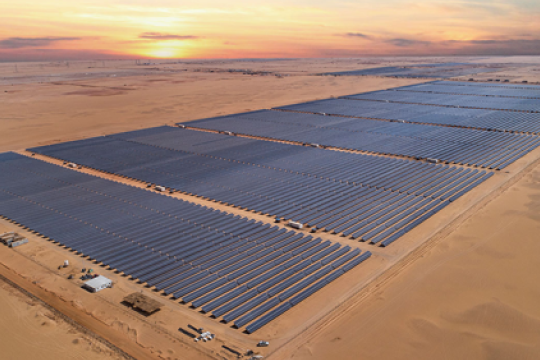
Scatec’s Nagaa Hammadi solar plant is going to be twice as big as we thought, cost USD 1.1 bn

The price tag of Scatec’s Naga Hamamdi solar plant unveiled: Norwegian renewables developer Scatec’s planned solar plant to power EgyptAlum’s Nagaa Hammadi industrial complex will be set up with investments of USD 1.1 bn, according to a statement out last week. The project is part of the state-owned aluminum producer’s plan to ramp up production, comply with global sustainability and manufacturing standards, and lower its carbon footprint.

Double it: The solar plant will produce 2-GW worth of green power — double what was indicated last month when Scatec inked an agreement with the Public Enterprise Ministry to set up the project.

It also looks like Scatec will be footing the bill: The developer will finance the project, conduct the required studies, develop the plant, and install the needed equipment.

What’s next? The timeline initially saw Scatec finishing up the first 500-MW phase of the project within 17 months and the second phase within two years — neither Scatec nor the government have unveiled a new timeline in line with the plant's expanded capacity.

That’s not all that Scatec has got in store for Egypt: Scatec in December inked agreements with the government to establish a 1-GW solar and 200-MWh battery storage project — the first in the country — and a USD 1.1 bn green methanol project. The company is also working on a 50-100 MW green hydrogen project in Ain Sokhna in partnership with ammonia producer Fertiglobe and the Sovereign Fund of Egypt.

5

Real estate

Egyptian firms to set up a USD 1 bn real estate project in Oman

Egyptian firms are looking to set up a USD 1 bn real estate project in Oman: A consortium of local real estate developers, contractors, and consultants have plans to set up a USD 1 bn real estate project in Oman, reports Al Borsa, citing Shams El Din Youssef, chair of Alshams For Contracting, one of the parties involved. The project will consist of residential, commercial, and administrative units.

Who’s involved? Along with Alshams For Contracting, the consortium includes AlexandriaCompany for Investment and Development, real estate marketing company Real Mark, Construction and Project Management Consultancy, and an unnamed contracting company specialized in infrastructure projects, Youssef said.

Where things stand: The consortium is currently in discussions with the Omani government over the timeline and final investment size for the project, Youssef said.

Oman wants our input: The Omani government proposed the project to the Alexandria Company for Investment and Development in order to benefit from the expertise of Egyptian firms, he added.

This publication is proudly sponsored by

6

EGYPT IN THE NEWS

A tale of two canals

The Suez Canal isn’t the only waterway having a hard time: The Wall Street Journal did a deep dive (excuse the pun) into difficulties facing the world’s main shipping arteries — the Suez Canal and Central America’s Panama Canal where together some 18% of global trade volumes crossed last year. While Houthi attacks and US-led airstrikes on targets in Yemen have caused shipping lines to divert around South Africa, slashing Suez Canal receipts, the Panama Canal is also in trouble — facing a prolonged drought that has led to a backlog of ships waiting to cross the canal.

7

Also on our Radar

Steigenberger to operate a tourist city in Egypt’s St. Catherine

HOSPITALITY-

Steigenberger to run an integrated tourist city in St. Catherine: German hotel company Steigenberger Hotels will manage and operate an integrated tourist city in South Sinai’s St. Catherine after inking an agreement with the New Urban Communities Authority yesterday, according to a cabinet statement.

In detail: Steigenberger will manage hotels and ecotourism resorts within Misr Sinai Tours’ new tourist city, which is part of a larger project — dubbed the Great Transfiguration — aimed at developing the UNESCO-registered area around St. Catherine’s Monastery and Mount Sinai into a site for religious, recreational, and environmental tourism.

More hospitality companies to join? The government is in talks with other international companies to operate other facilities at the site, according to a separate cabinet statement.

8

PLANET FINANCE

Private equity firms grapple with USD 3 tn worth of unsold companies

The private equity industry is facing a severe liquidity crunch, with firms globally sitting on a whopping 28k unsold companies valued at USD 3.2 tn, according to consultancy Bain & Co's latest annual private equity report (pdf). Nearly half of assets have been held for four years or more, which the report says is the largest proportion since 2012

The good and the bad: The staggering pile of assets highlights the breakneck growth of the buyout industry over the past decade, but also points to the immense challenges posed by soaring interest rates in recent years that have made exiting investments far more difficult.

Dealmaking came to a crashing halt last year as debt financing dried up: The total value of companies PE groups sold via private sales or public listings dipped 44% y-o-y in 2023 to USD 345 bn — the lowest level in a decade. The slump was even worse for portfolio companies sold to rival buyout firms, with sales tumbling 47% to USD 62 bn amid widespread pricing disagreements across the industry.

ALSO WORTH NOTING-

  • BTC once again reached a new record high, breaking the USD 72k barrier and hitting USD 72,886 before paring back gains yesterday. BTC was trading at USD 72,636 as of midnight CLT.
  • Companies have raised USD 3.2 bn through European IPOs since January — over double the amount raised during the same period last year. (Financial Times)

THE MARKETS THIS MORNING-

Asian markets are mixed this morning, with the Nikkei down 1.33% at dispatch time (setting it on course for a second day of losses). The Shanghai Composite is (just) in the red, while the Kospi and Hang Seng are in the green. Traders of Japanese equities were reacting to news that inflation in January was higher than pundits had expected, CNBC writes.

Looking ahead: Shares in Europe, on Wall Street and in Toronto look set to start the day in the green as stock futures inched up overnight. Wall Street is looking forward to the February consumer price index reading — it’s due out at 8:30am Eastern time in the US.

EGX30

33,383

+1.4% (YTD: +34.1%)

USD (CBE)

Buy 48.97

Sell 49.11

USD at CIB

Buy 48.95

Sell 49.05

Interest rates CBE

27.25% deposit

28.25% lending

Tadawul

12,556

-0.5% (YTD: +4.9%)

ADX

9,232

0.0% (YTD: -3.6%)

DFM

4,248

-0.1% (YTD: +4.6%)

S&P 500

5,118

-0.1% (YTD: +7.3%)

FTSE 100

7,669

+0.1% (YTD: -0.8%)

Euro Stoxx 50

4,930

-0.6% (YTD: +9.1%)

Brent crude

USD 82.21

+0.2%

Natural gas (Nymex)

USD 1.75

-0.7%

Gold

USD 2,182

0.0%

BTC

USD 72,636

+5.3% (YTD: +71.2%)

THE CLOSING BELL-

The EGX30 rose 1.4% at yesterday’s close on turnover of EGP 7.2 bn (53.8% above the 90-day average). Foreign investors were net buyers. The index is up 34.1% YTD.

In the green: E-finance (+14.0%), CIB (+8.9%), and Telecom Egypt (+4.6%).

In the red: Elsewedy Electric (-6.4%), Orascom Construction (-5.0%), and Heliopolis Housing (-5.0%).

9

Going Green

Egypt should set specific climate targets, boost the private sector role in combating climate change, the OECD suggests

OECD weighs in on how Egypt could accelerate its climate action: In its first survey on Egypt’s economy, the OECD provided some insight on how the country could step up its climate action game. The Paris-based organization recommended that Egypt should set specific climate targets, boost the role of the private sector in climate action, establish an independent regulator for the electricity sector, and draw climate financing for mitigation and adaptation efforts.

The environmental risk: While Egypt’s carbon footprint represents less than 1% of the global total, its emissions have been on the rise since 2010. The country is dominated by desert, with a meager 3.7% of its landmass suitable for agriculture, supported by the Nile River and Delta. Egypt’s annual renewable water per capita is expected to drop to 390 cbm by 2050 from 570 cbm in 2018 on the back of climate-induced extreme weather, well below the UN’s 700 cbm water scarcity threshold, the OECD warned, citing data from the government.

So, what does Egypt need to do to speed up its green transformation?

#1 Egypt’s climate targets need to be more spot-on: Egypt needs to set more specific emission reduction targets to be more efficient in combating climate change, the OECD said, noting that the country’s Nationally Determined Contributions (NDCs) (pdf) to climate action under the Paris Agreement don’t include an economy-wide emissions reduction target or net-zero target.

The details: Instead of setting economy-wide emissions targets, the country’s NDCs, which were last updated in 2023, list sectoral targets — such as reducing electricity sector emissions by 33%, oil and gas emissions by 65%, and transport sector emissions by 7%. The OECD, however, says that “more quantitative targets and specific actions are needed.”

#2 Scrapping energy subsidies: The OECD sees that phasing out the country’s broad-based energy subsidies to, eventually, reflect the global energy prices is a must, adding that fully phasing out subsidies both for electricity and natural gas would help address inefficiencies in electricity use in manufacturing, transport and logistics, which account for nearly 40% of domestic power demand.

Remember: Egypt had originally planned to eliminate energy subsidies by the end of the fiscal year 2018-2019, but has been prolonging the phase-out process ever since. The government hiked electricity prices for households and businesses at the start of 2024 by 16-26%.

ALSO- Low-income support is recommended over subsidizing electricity tariffs: “Shifting from subsidized tariffs based on consumption to direct income support for low-income households will enhance fairness and competition, enabling private suppliers to compete more effectively with state-owned distribution firms. This move will also empower consumers to make informed choices about their energy consumption,” the OECD said.

#3 The private sector’s role in climate action needs to be expanded, the OECD said, adding that integrating the latter with public policies, government investments and international support will optimize capital allocation to better achieve climate targets.

Regulations need to back the private sector involvement: The OECD also recommends implementing a regulatory framework that ensures competitive neutrality, which includes eliminating restrictive regulations on private sector activities and unwinding subsidies on fossil fuels and electricity tariffs. In addition, the establishment of independent watchdogs in high-emitting sectors — such as transport, construction and manufacturing — along with streamlining procedures for doing business could attract more green investments from the private sector.

#4 Independent regulator for the electricity sector? The OECD called for the establishment of an independent regulator for the electricity sector to prevent conflict of interest and level the playing field for the private sector via the separation of regulatory and operational roles and ending the state’s “quasi-monopoly” in electricity distribution.

#5 More green financing is needed: The country must mobilize more financing through green bonds, soft loans, multilateral funding schemes and long-term power-purchasing agreements with private investors. Bringing in international investors could lower the spread on debt finance by 8%, adding multilateral development banks could lower it by 10%, and combining the two under public-private partnerships could reduce it by 40%, the OECD said, citing an UNCTAD study.

Remember: Egypt sold USD 750 mn in its maiden green bond issuance in 2020, which was almost 5x oversubscribed, attracting some USD 3.7 bn worth of orders for the bonds.

#6 More renewables call for more transmission grids: Power grids and transmission networks have to be upscaled in both quality and quantity to accommodate the integration of renewable energy facilities, the OECD suggests, citing a study by the World Bank.

Remember: The government wants to generate 42% of its electricity from renewable energy sources by 2030 and 60% by 2040.

#7 Egypt should expand renewable energy projects to keep its NDCs on track: The energy sector’s gas flaring and methane venting, as well as energy used for extraction account for the bulk of the energy sector’s emissions. Natural gas and oil accounted for 92% of primary energy supply in 2021, with the World Bank projecting wind and solar projects to account for 8% and 5%, respectively, of the energy mix. However, Egypt will need to ramp up its wind and solar energy projects to occupy 43% and 15% of its energy mix if it wants to hit its NDCs targets, according to a World Bank study cited by the OECD.

#8 More needs to be done in the transport sector: The government needs to bring its vehicle emissions caps up to par with international standards given that the transport sector accounts for 24% of total emissions from fuel combustion, the OCED said.

#9 Go for the tried-and-true methods to greenify different sectors: Egypt could fast track its emission targets by “initially focusing on ‘low-hanging fruit’ in sectors where mitigation gains are fairly straightforward, using proven and existing methods,” that include decarbonizing the oil and gas sector via “electrification and integration of renewable energy; gas flaring reduction; abatement of CO2 venting and participation in international projects to develop carbon capture and storage; as well as digital solutions for demand-side management,” the OECD said, citing the World Bank.

As for heavy industries, like the manufacturing of cement, steel and fertilizers, low-emission filters and fuels, carbon capture technology and lower-energy production methods should be implemented, it added.

#10 Rationalizing resources: Better management of scarce resources could boost Egypt’s climate resilience, such as traditional water-saving methods, planting more climate-resilient crops and wetland restoration, the OECD said.


Your top green economy stories for the week:

  • German waste and water management company Remondis could work on a project to safely treat and recycle waste from certain healthcare facilities in Canal Zone governorates and Upper Egypt. (Statement)
  • Infinity + SIACFM to deploy EV charging stations: Renewable energy firm Infinity has partnered with SIAC Assets & Facilities Management (SIACFM) to install and manage EV chargers at SIACFM's sites. (Enterprise Climate)
  • Arab Organization for Industrialization will set up four waste recycling plants worth a combined EUR 38.8 mn as part of the Kitchener Drain depollution project. (Statement)

2024

MARCH

20 March (Wednesday): End of sugar export ban.

28 March (Thursday): Central Bank of Egypt’s Monetary Policy Committee meeting.

28 March (Thursday): Industrial Development Authority to close applications for 1 mn sqm of land in 10 different governorates.

29 March (Friday): Egypt removed from JPMorgan Chase’s Emerging Local Markets Index Plus.

APRIL

1 April (Monday): Deadline to bid for 23 blocks in an international oil and gas tender.

2 April (Tuesday): President Abdel Fattah El Sisi swearing in ceremony, New Administrative Capital.

9 April (Tuesday): Eid El Fitr (TBC) (national holiday).

15-21 April (Monday-Sunday): The IMF / World Bank Spring Meetings.

25 April (Thursday): National holiday in observance of Sinai Liberation Day (TBC) (national holiday).

26 April (Wednesday): Clocks move forward one hour at midnight as daylight saving time starts.

28 April (Sunday): Grace period to ins. brokerage firms to comply with Law 215 for 2023 expires.

28-29 April (Sunday-Monday): Saudi Arabia hosts a World Economic Forum (WEF) meeting on ‘global collaboration, growth, and energy.’

29 April (Monday): The government’s car export scheme expires.

MAY

1 May (Wednesday): National holiday in observance of Labor Day (TBC) (national holiday).

5 May (Sunday): Coptic Easter.

6 May (Monday): Sham El Nessim (national holiday).

20 May (Monday): Malaysian Palm Oil Forum in Cairo, with attendance from Malaysian Plantation and Commodities Minister Johari Abdul Ghani.

23 May (Thursday): Central Bank of Egypt’s Monetary Policy Committee meeting.

29 May (Wednesday): Virtual launch of Chicago Booth Executive Program.

JUNE

15-19 June (Saturday-Wednesday): Eid El Adha (TBC) (national holiday).

30 June (Sunday): June 30 Revolution Day (national holiday).

JULY

7 July (Sunday): National holiday in observance of Islamic New Year (TBC).

18 July (Thursday): Central Bank of Egypt’s Monetary Policy Committee meeting.

23 July (Tuesday): Revolution Day (national holiday).

SEPTEMBER

2-5 September (Monday-Thursday): Egypt International Airshow, El Alamein International Airport.

5 September (Thursday): Central Bank of Egypt’s Monetary Policy Committee meeting.

15 September (Sunday): National holiday in observance of Prophet Muhammad’s birthday (TBC).

25-26 September (Wednesday - Thursday): The Asian Infrastructure Investment Bank’s (AIIB) 2024 annual meeting, Samarkand, Uzbekistan.

OCTOBER

6 October (Sunday): Armed Forces Day.

17 October (Thursday): Central Bank of Egypt’s Monetary Policy Committee meeting.

21-27 October (Monday-Sunday): The World Bank and IMF annual meetings.

NOVEMBER

21 November (Thursday): Central Bank of Egypt’s Monetary Policy Committee meeting.

DECEMBER

26 December (Thursday): Central Bank of Egypt’s Monetary Policy Committee meeting.

EVENTS WITH NO SET DATE

January 2024: The Red Sea Ports Authority is set to finalize an agreement with the Abu Dhabi Ports Group for the operation and maintenance of the tourist passenger terminal in the Sharm El Sheikh Sea Port.

February 2024: Egypt will sign a USD 1.5 bn financing agreement with the International Islamic Trade Finance Corporation (ITFC).

February 2024: Funds from the Islamic Development Bank for the high speed electric railway will get the sign off.

April 2024: President Abdel Fattah El Sisi will visit Turkey.

1Q 2024: Egyptian-Qatari Joint Supreme Committee.

1Q 2024: Opening of the newly developed Pyramids Plateau in Giza.

1Q 2024: The government is set to finalize the sale of the Gabal El Zeit wind farm.

February-May: The Grand Egyptian Museum could officially open to visitors.

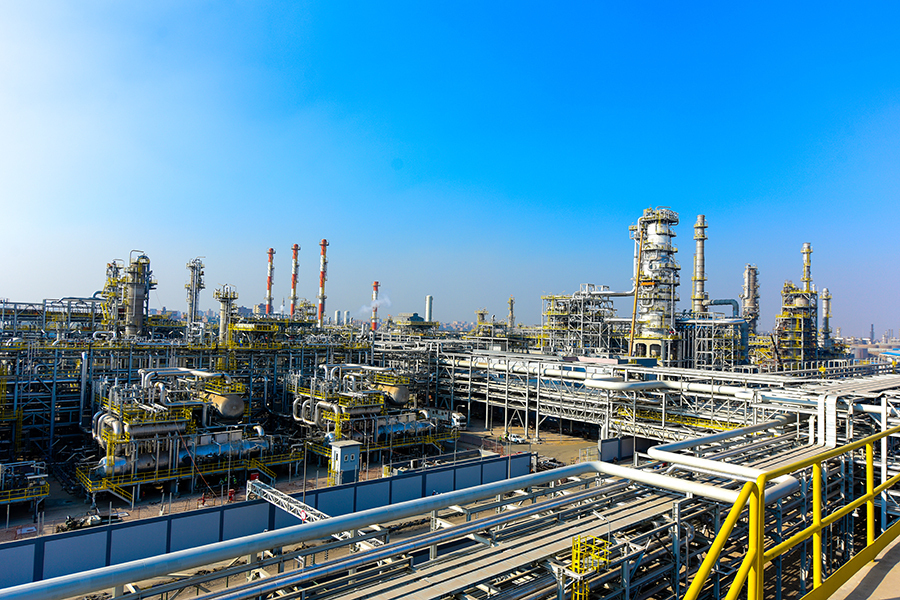
March 2024: The USD 2.7 bn MIDOR Refinery is set to begin full operations.

May 2024: Arab Finance Ministers’ meeting at Egypt’s administrative capital.

June 2024: Gov’t expects to finalize sale of Beni Suef combined-cycle power plant.

1H 2024: Gov’t expects to finalize sale of four water desalination plants.

1H 2024: The European Union is set to hold an investment conference in Egypt during spring.

2H 2024: Gov’t to launch the Cairo Ring Road BRT buses.

November 2024: Egypt to host the World Urban Forum (WUF12).

End of 2024: The launch of the high-speed train line linking Ain Sokhna with Al Alamein City.

2025

EVENTS WITH NO SET DATE

2Q 2025: Safaga Terminal 2 to start operations.

2027

20 January-7 February: Egypt to host the African Games

EVENTS WITH NO SET DATE

End of 2027: Trial operations at the Dabaa nuclear power plant expected to take place.

Now Playing
Now Playing
00:00
00:00