Get EnterpriseAM daily

Available in your choice of English or Arabic

Inflation inches up 0.1 percentage point to 26.5% y-o-y in October, marking third consecutive monthly rise

1

What We're Tracking Today

Labor Act to top govt’s legislative agenda

Good morning, friends. In today’s issue, we’ve got news that inflation is up, arrears to energy companies are down, and that momentum to pass the redrafted Labor Act is building.

PSA-

WEATHER- It’s feeling much the same as yesterday in Cairo today, with a high of 24°C and a low of 18°C, according to our favorite weather app.

It’s a smidge cooler in Alexandria, with a high of 22°C and a low of 17°C, along with a chance of light to moderate rain across the whole of the North Coast.

** DID YOU KNOW that we now cover Saudi Arabia and the UAE?

** Were you forwarded this email? Tap or click here to get your own copy delivered every weekday before 7am Cairo time — without charge.

WATCH THIS SPACE-

#1- Labor Act to top the government’s legislative agenda: The Madbouly government wants to see the newly-redrafted labor bill passed into law before the end of 2024, Parliamentary Affairs Minister Mahmoud Fawzi told the Senate yesterday. The 267-article bill was redrafted following several rounds of consultations with workers and business owners, to “reflect the interests of three parties: the government, workers and employers,” according to Fawzi.

Refresher: The act drafted earlier this year triggered criticism from business associations, who argued that the “draft law is unbalanced, giving workers a lot of rights at the expense of duties.” The Federation of Egyptian Industries voiced its opposition to 17 articles in the bill, including those relating to strikes, holidays for women in the workplace, and salaries, employment contracts, bonuses, and membership of businessmen in the proposed rehabilitation and training fund.

Progress on the new re-draft: The legislation will tackle shortcomings in the current law and regulate work conditions through digital platforms, Labor Minister Mohamed Gobran told the Senate. The House Manpower Committee — which provisionally approved the redrafted bill last month — has so far greenlit 63 articles covering child labor, recruitment, women in the workplace, maternity leave, working hours, and the establishment of a training fund. The House will reconvene on 17 November.


#2- ERC to pay down a further USD 150 mn of primary net loans by year-end: Qalaa Holdings’ subsidiary Egyptian Refining Company (ERC) plans to repay another USD 150 mn of its primary net loans by the end of this year, bringing its outstanding primary net loans to USD 375 mn, Qalaa Holdings founder and chairman Ahmed Heikal told Asharq Business. Heikal also noted that ERC’s capacity has increased by 10%, with plans for an additional 15% boost over the next four years at a potential cost of USD 200 mn.

Remember: Yesterday we got word that ERC was planning to repay USD 200 mn of its outstanding USD 742 mn debt, bringing the company's total debt down to USD 524 mn. Qalaa has been trying to pay off USD 2.4 bn worth of loans for its multi-bn USD greenfield refinery in Mostorod, with the company’s 1Q 2024 earnings release showing that 72.5% of the company’s total consolidated debt of EGP 111.2 bn was related to ERC.

Still no EGX debut on the horizon: Qalaa has no intention of listing ERC’s shares on the EGX for the meantime, Al Borsa writes, citing Heikal, who added that the company is still committed to planned expansions.

HAPPENING TODAY-

#1- CBE is holding a USD t-bill auction: The Central Bank of Egypt will auction USD 1.5 bn in USD-denominated, one-year t-bills today, according to its website. The auction will mark the first USD-denominated t-bill auction for the current fiscal year.

ICYMI: The central bank’s decision to hit the bond market comes just one day after the country repaid some USD 1.3 bn in USD-denominated bonds for a tranche of bonds issued back in 2016.


#2- It’s day one of the Arab-African Investment and Cooperation Summit: The five-day Arab-African Investment and International Cooperation Summit that kicks off today in Aswan will welcome delegations from 35 countries. The summit will reportedly witness a tourism investment project and two new factory projects with input from Russian and Serbian capital announced at the event.

DATA POINT-

The hospitality sector is expected to add 1.2k new keys to Cairo’s existing 26.7k key stock by the end of 4Q 2024, according to a recent report (pdf) from global real estate consultancy JLL.

ICYMI- Missed this week’s Inside Industry? In our weekly vertical exploring all things industry and manufacturing, we looked at how higher energy costs are pushing industry toward solar. Check out the story here.

THE BIG STORY ABROAD-

There’s no single story capturing the imagination of the international press this morning, instead giving us a smattering of stories about US president-elect Donald Trump’s plans in office and how global leaders are reacting to his upcoming term.

Trump’s policy on Russia and Ukraine is a key point of concern for Ukraine, Russia, and outgoing president Joe Biden, who is planning to lobby Trump to maintain the US’ support for Ukraine when the two meet at the Oval Office on Wednesday. Trump, meanwhile, reportedly spoke with Russian President Vladimir Putin, but urged him not to escalate his war against Ukraine, Reuters reports.

MEANWHILE- BTC rallied to a record high as the crypto industry sees Trump’s election — including him securing all seven swing states — as a positive outcome that will see digital currencies facing less hostile policy. The cryptocurrency rose above USD 81k, with expectations it will break the USD 90k ceiling soon. The Financial Times and CNBC have more.

*** It’s Blackboard day: We have our weekly look at the business of education in Egypt, from pre-K through the highest reaches of higher ed.

In today’s issue: We talk to Beltone Holding’s Chief Data Scientist Basma Rady about the company’s first AI hackathon.

Somabay, every reason to fall in love.

2

Economy

Inflation in Egypt rises for the third consecutive month to 26.5%

Inflation continues inching up: Annual headline urban inflation rose 0.1 percentage point to 26.5% in October, extending its upward trajectory for a third consecutive month, according to data from state statistics agency Capmas. The increase follows a modest 0.2 percentage point rise in September to 26.4%.

Driving the increase: “Half of the basket’s items recorded deceleration, other remained flat with only three items recording notable annual acceleration, namely clothing & footwear, housing & fuel, and medical care,” Al Ahly Pharos analyst Esraa Ahmed wrote in a note seen by EnterpriseAM.

Food and beverage inflation continued to retreat: Food and beverage prices — the largest component of the basket of goods and services used to calculate headline inflation — continued to rise but at a softer rate of 27.3% y-o-y in October, down 0.4 percentage points from a month prior. On a m-o-m basis, food prices climbed only 1.1%, down from September’s 2.6%.

Despite the slight jump, October’s reading comes much lower than expected: A Reuters poll of 17 analysts expected headline inflation to accelerate 0.6 percentage points to 27.0% y-o-y in October, with fingers firmly pointed at fuel price hikes that came into effect during the month and education costs. Closer to the mark was economist Mona Bedair, penciling in 26.8% in a note.

Inflation is yet to feel the pinch from rising fuel and education costs: While the mid-October fuel price hike of up to 17% and rising education costs were expected to weigh heavily on October’s inflation reading, their impact has largely been deferred. Education-related expenses will be reflected in February’s 2025 data, coinciding with second semester school fees, Naeem Holding’s Hesham Hamdey told Asharq Business. Bedair similarly added that “the fuel basket adjustments do not appear to reflect the recent mid-October fuel price hikes.”

Annual core inflation — which excludes volatile items like food and fuel — continued to slow, with the Central Bank of Egypt recording an annual core inflation of 24.4% in October, down 0.6 percentage points from the month before. However, monthly core inflation continued its upward trend, picking up 0.3 percentage points to 1.3% throughout the month.

Analysts are already split on which way inflation will go in November: Bedair expects inflation “to begin a downward trajectory in November, with pressures expected to ease further,” despite that “next month’s reading will still reflect the impact of the recent increases in fuel and tobacco prices.” Bloomberg on the other hand, sees inflation “likely” picking up in November as recent fuel price hikes will be fully reflected in the new data set, bolstered by cigarette price hikes from tobacco giant Eastern Company. Some others, including Hamdey, see falling fruit and vegetable prices as potentially offsetting additional pressures from fuel price hikes.

Inflationary pressures could ease going forwards if back-to-back subsidy cuts get put on pause: The government is in negotiations with the International Monetary Fund to delay the implementation of the plan to phase out subsidies. Talks are currently underway to adjust the timeline and targets of previously agreed reforms as the Fund carries out its fourth loan review.

Don’t expect rate cuts before the new year: October’s inflation data could strengthen the case for the Central Bank of Egypt to keep rates unchanged for the fifth consecutive meeting when it meets later this month, most analysts seemed to agree. Ahmed argued that the new numbers “underscore our view of stable states rates ‘until further notice.’”

This publication is proudly sponsored by

3

A MESSAGE FROM AUC SCHOOL OF BUSINESS

Championing innovation and leadership: AUC School of Business Executive MBA

Empowering Leaders: The AUC Executive MBA Journey

The AUC School of Business cultivates exceptional leaders and innovators through its comprehensive Executive Master of Business Administration (EMBA) program. Tailored for executives with at least eight years of experience, the EMBA combines rigorous academic training with practical insights, equipping participants to navigate today’s complex business landscape.

Tapping into Global Opportunities

The MBA program enhances innovation, leadership, and problem-solving skills in management education through collaboration with esteemed institutions such as Kellogg School of Management in the USA, China Europe International Business School (CEIBS), University of Stellenbosch (USB) in South Africa, the Center for Creative Leadership (CCL), and Antwerp Management School (AMS) in Belgium. This partnership not only enriches participants’ knowledge and skills but also provides access to some of the world’s leading business arenas.

Students benefit from a comprehensive view of the global business landscape, learning from a diverse faculty hailing from Europe, the United States and Egypt. The program comprises two international live-in weeks in two different continents. Additionally, the EMBA stresses the importance of understanding local and African contexts, featuring a dedicated module focused on the continent.

Unlock Your Potential with Fellowships

The AUC School of Business supports exceptional students by helping them overcome financial barriers through a range of fellowship opportunities. These awards are available in four categories designed for exceptional leaders, innovative entrepreneurs, dedicated women professionals, and international students who have made significant contributions to their fields. The fellowships emphasize excellence and impact, encouraging candidates to showcase their achievements and potential for growth.

Alumni Triumphs

Reflecting on her journey through the EMBA program, Noha Marghany, Chief Operating Officer at 2B Egypt expressed, “Being part of the AUC EMBA program was definitely a game-changer in my professional career. It equipped me with cutting-edge business knowledge and leadership skills, assisting me in making strategic decisions for my company on a day-to-day basis.”

Participants engage in a dynamic learning environment that fuels collaboration. Shaden Al Rimaly, Head of the Meeza Scheme at the Egyptian Banks Company, highlighted the program's collaborative spirit, “The insights and experiences shared by my peers were just as impactful as the lessons from the faculty.”

Abdalla Elsayed, Senior Director and Chairman of the Audit Committee in Saudi Arabia emphasized, “The EMBA is not just a degree; it's a catalyst for lifelong learning and professional excellence.” This aligns perfectly with the AUC School of Business’s vision to empower individuals through transformative education that transcends borders.

Through its robust programs and fellowships, the AUC School of Business continues to pave the way for future leaders, contributing to sustainable growth and development across Africa and beyond.

Learn more about the EMBA program and fellowship options

Tags:
4

Energy

Egypt has paid 78% of its arrears to foreign oil and gas companies since March

The government now only has USD 1 bn in outstanding arrears to foreign oil and gas companies, after having cleared another USD 1 bn in arrears last week, an unnamed government source told Asharq Business . Egypt has cleared USD 3.5 bn in arrears since March, marking a 77.8% reduction in the government’s outstanding arrears over a seven-month period by our math.

Clearing arrears is part of a larger plan to increase local production following a costly few months of energy imports to bridge the gap between local production and demand that emphasized the need to get the country’s energy production back on track. Alongside efforts to proactively clear arrears, the Oil Ministry is now offering new incentives to energy players that include increasing production sharing ratios with foreign companies in exchange for new investments, enhancing exploration efforts, and increasing extraction rates with the aim of boosting local production starting 2025.

It seems that the Oil Ministry’s efforts are already bringing home the goods, with several international energy giants recommitting to the country with big-ticket investments. Among these are Italian energy giant Eni that is set to resume drilling at the Zohr gas field in December of this year, with the arrival of a rig to drill two new wells. We also recently found out from unconfirmed reports that US gas giant Chevron is set to begin drilling its Singer exploratory gas well in the Mediterranean this month with investments of USD 150 mn.

And it looks like there’s more energy investment news in the pipeline — excuse the pun — with Emirati oil and gas giant Dana Gas recently saying in a statement (pdf) accompanying its latest earnings release that they are waiting for USD 24 mn out of a total USD 59 mn of outstanding dues owed by the government before it launches a USD 100 mn project to develop production. The proposed 11 new wells are expected to add 80 bn cf of gas reserves and save “over USD 1 bn for Egypt’s economy, reducing reliance on imported LNG and mazut for power generation,” according to the company

After several years of production declines, the government has ambitious targets to meet, with unconfirmed reports that Egypt is looking to boost natural gas production by 30% to 6 bn cubic feet of gas per day by the end of 2025. This new target follows the country’s natural gas production having fallen 20-25% over the past two years, Oil Minister Karim Badawi said at a presser last month.

5

A MESSAGE FROM HSBC

Opportunity is rarely a straight line. Our international network connects you to what’s next. Search HSBC Egypt

6

EARNINGS WATCH

It was a challenging 1Q 2024-25 for Abu Qir Fertilizers

Abu Qir Fertilizers saw its net income fall 35.4% y-o-y during the first quarter of the fiscal year 2024-25 to record EGP 1.3 bn on the back of a jump in operating supply costs due to exchange rate fluctuations, according to its earnings release (pdf).

The company’s topline fared a bit better, inching down 1% y-o-y to EGP 5.1 bn for the quarter. However, revenues from its main activity saw a 16% y-o-y dip to EGP 3.6 bn.

Driving the dip: The company attributed the decline in revenues to lower sales, triggered by the disruptions that plagued the country’s gas supplies over the past months, which prompted the government to impose a scheduled load shedding, affecting the company’s productivity, and sales consequently. Lower FX prices of exports also played a role in the company’s diminishing sales, as well as an overflowing inventory.

Remember: Industry insiders told EnterpriseAM earlier this year that fertilizer manufacturers have been pushing for an approval to raise the prices of subsidized quantities to offset the increase in cost resulting from the float of the EGP.

But the company is eying a recovery, as most of the increased inventory was contracted for October and November, at a markup over the shipping rates in September, aiming to maximize returns, according to the release.

7

LAST NIGHT’S TALK SHOWS

The Arab-Islamic Summit in Riyadh caught the attention of the nation’s hosts

It was a quiet night on the airwaves, as the nation’s pundits turned their attention to the Arab-Islamic Summit being hosted in Riyadh today, while regional tensions continue to escalate amid Israel's ongoing military aggressions in Gaza and Lebanon.

Ala Mas'ouleety's Ahmed Moussa dedicated a big chunk of his show to discussing the summit, which he said differs from its predecessors, particularly regarding the Palestinian cause and the potential implications of Donald Trump's return to the White House this January following his electoral victory (watch, runtime: 1:01:14).

This year's focus: The summit will evaluate the decisions made during last year's meeting, particularly those related to ending the war on Gaza and the two-state solution, political science professor Reda Farhat told Moussa.

8

Also on our Radar

Electricity Ministry sets offtake prices for stored solar energy. PLUS: Knauf + Hassan Allam Construction, Siemens, Dynamic Distribution, Aton

RENEWABLES-

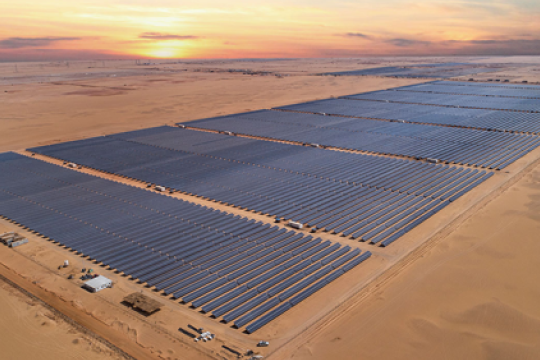
Egypt sets tariffs for stored solar energy: The Electricity Ministry has put a price tag on energy produced from solar and battery storage projects — USD 0.023/kwh for projects set up by private investors under a build-own-operate (BOO) contract and USD 0.014/kwh for projects where the government owns the solar plants while investors provide storage, unnamed Electricity Ministry sources told AlMal.

We’ve been hearing a lot about stored solar energy projects recently: Egypt currently has a few solar and battery storage projects in the works, most notably Emirati AMEA Power’s 1 GW solar power plant with 600 MWh battery storage system in Benban — expected to be the continent’s largest. UAE’s Masdar, Hassan Allam Utilities, and Infinity Power are also working on a solar project, which will have a capacity of 1.2 GW of energy and 240 MW/hour of storage batteries.

CONSTRUCTION-

Knauf to supply Hassan Allam with building materials: Building materials manufacturer Knauf will provide our friends at Hassan Allam Construction with building materials and solutions under a newly-announced strategic partnership, according to a joint press release (pdf). The partnership will see Knauf supplying Hassan Allam Construction with gypsum boards, cement boards, metal profiles, and more.

ICYMI: Knauf is expected to increase its Egypt investments to EUR 120 mn by 2026, up from EUR 50 mn in June, to expand operations and add new production lines at its Suez gypsum board factory.

INVESTMENT-

Could Egypt and Japan host their own investment conference? The Egyptian-Japanese Business Council proposed hosting an Egypt-Japan investment conference next year, modeled on June’s Egypt-EU Investment conference, Al Mal reports.

TECH-

Around 1k factories are set to go digital: The Chamber of Information Technology and Telecommunication in partnership with the Industrial Modernization Center has launched an initiative to digitize 1k factories, according to a statement. The initiative aims to support and fund local factories with their digital transformation to help enhance their production efficiency and help reduce operation costs.

INFRASTRUCTURE-

Siemens completes EGP 385 mn power station in Sadat City: Germany’s Siemens has completed construction of a power transformer station that will feed the eighth industrial zone expansion in Sadat City, according to a Housing Ministry statement. The 220/66/22 kV station will power the 1.5k-feddan industrial expansion area, as well as electricity networks in the southern and western extensions.

AUTOMOTIVE-

Dynamic to open Fiat's largest regional service center: Egypt’s Fiat distributor Dynamic Distribution plans to invest EGP 350 mn to establish what will be the Italian brand's largest service center and showroom in the region, chairman Emad Helmy told Al Borsa. The facility will offer after-sales services, maintenance, and spare parts, alongside a showroom displaying various models. The company also plans to launch a new competitively-priced Fiat model in 1Q 2025, according to Helmy.

Remember: Helmy said in September that the distributor plans to distribute new Fiat models — including EVs — in Egypt next year.

MINING-

A new Aton drilling venture in Abu Marawat: Canadian gold miner Aton Resources revealed that Abu Marawat Gold Mines Ltd — a joint venture between Aton and the Egyptian Mineral Resources Authority — has inked an agreement with LSE-listed Capital Drilling to drill up at least 5k meters in the Abu Marawat concession, according to a company statement.

9

PLANET FINANCE

Emerging markets remain vulnerable to the sway of US economic policies, even as momentum for de-dollarizing the world economy grows

EMs at a crossroads: As another Donald Trump presidency looms, Bloomberg Economics sees emerging market economies (EMs) as having some cause for optimism — as well as significant causes for concern. While EM interest rates and growth prospects may not be as tightly linked to developments in the US as they once were, financial vulnerabilities and as-of-yet unrealized chances for coordination could hamper EM attempts to adjust to a new global economic normal.

In some ways, EMs’ independence from the US’ economic sphere has never been greater: Bloomberg’s research outfit points out that EMs’ rate moves are beginning to break away from the US Federal Reserve’s easing and tightening cycles, with several EMs lowering rates before the Fed did. Some countries have moved in the opposite direction of the Fed, with Brazil and Russia hiking rates shortly after the Fed’s initial 50 bps cut in September — suggesting that at least some EMs’ fates are beginning to decouple somewhat from the US economic outlook.

But US economic policy still has an oversized impact on EMs — especially following Trump set to soon take up the Oval Office: Egypt, along with Argentina and South Africa are pointed to as EMs that stand out as being particularly vulnerable to building debt burdens on the back of higher global rates pushed up by a forecasted uptick in inflation in the states. The new Republican president’s talk of hiking tariffs could also have an outsized impact on certain countries with export industries that target the US.

So far, Brics is yet to live up to its promise of de-dollarizing the world economy: Brics has yet to capitalize on its potential to coordinate policies and boost trade across its member economies, Bloomberg Economics writes. While the bloc has continued to grow in economic weight, it has struggled to reduce its reliance on the USD and has failed to find a mechanism to settle trade between members in alternative currencies — a key condition for decoupling EM growth from US policy.

MARKETS THIS MORNING-

Asian markets are starting the day in the red, as the markets react to inflation data for China that came in lower than forecast, putting into question the country’s economic recovery. Leading the pack in the red was Hong Kong’s Hang Seng that was down 2.4% at the time of writing, followed by Korea’s Kospi at -0.9%, Japan’s Nikkei at -0.2%, and China’s Shanghai index at -0.1%

EGX30

31,394

+0.4% (YTD: +26.1%)

USD (CBE)

Buy 49.18

Sell 49.31

USD (CIB)

Buy 49.18

Sell 49.28

Interest rates (CBE)

27.25% deposit

28.25% lending

Tadawul

12.103

-0.2% (YTD: +1.1%)

ADX

9,449

-0.2% (YTD: -1.3%)

DFM

4,640

-0.1% (YTD: +14.3%)

S&P 500

5,996

+0.4% (YTD: +25.7%)

FTSE 100

8,072

-0.8% (YTD: +4.4%)

Euro Stoxx 50

4,803

-1.0% (YTD: +6.2%)

Brent crude

USD 73.87

-2.3%

Natural gas (Nymex)

USD 2.67

-0.9%

Gold

USD 2,695

-0.4%

BTC

USD 80,327.90

+5.0% (YTD: +88.9%)

THE CLOSING BELL-

The EGX30 rose 0.4% at yesterday’s close on turnover of EGP 3.5 bn (18.0% below the 90-day average). International investors were the sole net sellers. The index is up 26.1% YTD.

In the green: Faisal Islamic Bank - EGP (+10.2%), Juhayna (+3.2%), and Madinet Masr (+1.7%).

In the red: Ezz Steel (-4.0%), Eastern Company (-1.8%), and GB Corp (-1.5%).

10

BLACKBOARD

Beltone brought together 400 students for its first AI hackathon

Beltone Holding concluded its first AI hackathon earlier this month, challenging students to roll out their own AI solutions predicting gold price fluctuations, according to a press release (pdf). The hackathon was held in collaboration with the American University in Cairo’s Mathematics, Actuarial, and Data Science Association. To learn more about the hackathon, EnterpriseAM spoke with Beltone Holding’s Chief Data Scientist Basma Rady (LinkedIn) and Hesham El Alamy, one of the students who participated in the event.

A big turnout: Over 400 students from the AUC and the German University in Cairo took part in the event, with 30 teams submitting over 450 solutions.

EnterpriseAM: Could you tell us more about the hackathon and what encouraged you to hold it now?

Basma Rady: The hackathon is a unique chance for students to get hands-on and real life experience with data science and AI. We wanted to give as many students as we possibly can the chance to get their hands dirty with data science and help them break into this world. We already take in six interns every year, showing them what the field looks like and how it’s applied — but we also take them through the most important steps for building an AI model and applying it to the financial or any other sector. The hackathon is meant to give this chance to more students.

The structure of the hackathon was designed in a way that would highlight the importance of technical skills, staying up to date with advances in data science and AI, being able to use cutting edge tech to develop a solution to a very hard problem — and the importance of being able to explain it, regardless of whether or not the audience comes from a technical background.

The hackathon spanned a full month. The problem statement was: “can you predict the percentage change in gold prices in Egypt?” The data set that we curated for the hackathon was in itself something innovative, as it combined numerical and textual data from Egypt and global markets. The data included things like the monthly inflation rate, stock prices, the Fed’s interest rate, daily news, and the intraday gold prices in Egypt, among other things. We then asked the students to predict the difference in gold prices in Egypt for the next day.

The teams that submitted the best performing models were invited to the closing day, where they would submit their findings to a jury of technical experts as well as people without a background in data science. The non-technical people would ask the teams to explain their models — and to do so in simple terms, in a way that someone from a business background would be able to understand. Even if a certain team had the best model, it didn’t end there — they had to explain it, present it, and be able to convince the business side that this model was worth their time and attention.

E: What did the winning team present? What did their model look like? And why was it chosen?

BR: The winning team had a solid model and its members were able to explain their findings in an impactful way. They provided compelling data visualization, explained the problem statement, and they had developed a model that predicts the percentage change in gold prices.

E: How is Beltone going to benefit from the winning model or other models produced during the competition?

BR:We were inspired by a few ideas from the top teams. While they are still student-built models, they still gave us inspiration for new ideas that we could develop further. From Beltone’s side, a part of it is about fostering data science talent that is able to take academic concepts and apply them to real world problems.

E: How might such initiatives bridge the gap between academia and organizations?

BR: During the closing ceremony, our group CEO asked the winning teams what they learned during the hackathon — and the common sentiment was that they had to learn to work with a deadline and to manage their time properly. Another point of relevance was showing them what a data scientist would face in real life. Finally, they had to learn how to sell their solution — how to convince the most technical people in the room that the model works, and also convince the business people in the room that they should trust their model.

E: How are AI applications being applied in the financial services sector?

BR: AI is used across the board, be it for generating new content, or even for credit scoring and with coming up with new products for clients. The work from our research — on the use of machine learning and AI in order to forecast volatility for stocks in the EGX — and the output from the hackathon are currently being merged with and leveraged by our asset management platform in Beltone. We’re also doing a lot of interesting stuff with language models and news data, and extracting sentiment from news, categorizing it, and being smarter with how we consume news internally.

E: Can we expect more hackathons from Beltone soon?

BR:We’re hosting another hackathon this year, and next time it won’t be limited to the AUC and the GUC communities. We want to collaborate with Ain Shams, Cairo University, Alexandria University, as well as new universities in the new capital.

E: Do you plan on any more planned collaborations with the talents that emerged during the hackathon?

BR:We’re in touch with the top six teams, and we’re planning on inviting them to shadow us and show them how we’re applying data science, and we’re also going to have them sit with our asset management team so that they can get them to see the business side of our world. The winning team will also intern with us for a month.

WHAT ABOUT THE STUDENT SIDE-

EnterpriseAM spoke to Hesham El Alamy, one of the students who participated in the event, for his take on the hackathon.

E: Can you tell us about the solution you presented?

HEA: The hackathon was about predicting the percentage change in gold prices, and we were given real life data sets that were gathered by Beltone. It was very challenging compared to other competitions and projects that we took part in. We had two weeks, and we thought we needed to have a strong model in terms of the technical side and a strong machine learning model, but we also wanted to create a comprehensive solution that’s built on statistics, economics, and business solutions for the end user.

E: Tell us about the solution you came up with.

HEA: Our machine learning model utilized a new idea that we developed called the Stacked Regressor. We used our predictions and the data sets that we were given to build an automated dashboard that can help Beltone employees find relevant data that they could analyze easily. We were given structured data, but this dashboard can help you find insights, analyze the numbers, and understand how this data was gathered, helping them use it in their daily operations.

The most important takeaway from the hackathon is that even if you have a really strong model, it won’t be appreciated if you can’t sell it right and be able to link it with business solutions. An understanding of the business side that coincides with an understanding of machine learning is needed.


Your top education stories for the week:

  • EBank launches InfoSec Academy for IT grads: EBank, in partnership with the CBE’s Egyptian Banking Institute, has launched its Information Security Academy to equip university graduates with skills in cybersecurity and IT. (Statement | pdf)
  • Egypt plans to add 1k schools: The General Authority for Investment and Educational Buildings Authority aim to attract investments to establish 1k schools by offering fresh facilities.
  • Social Impact Capital submits offer to own up to 100% of CIRA: CIRA Education majority shareholder Social Impact Capital (SIC) has submitted a mandatory tender offer to acquire up to an additional 48.78% of CIRA. SIC currently holds a 51.2% stake in the country’s leading private education company. The offer is currently being reviewed by the FRA.

2024

NOVEMBER

10-12 November (Sunday-Tuesday): Falak Startups’ Fund Manager Masterclass, Cairo, Egypt.

11-15 November (Tuesday-Friday): Arab African Investment and International Cooperation Summit, Aswan, Egypt.

17 November (Sunday): The House of Representatives reconvenes.

17-19 November (Sunday-Tuesday): Autotech Exhibition for Automotive Aftermarket & Feeder Industries, Cairo, Egypt.

21 November (Thursday): Central Bank of Egypt’s Monetary Policy Committee meeting.

25-27 November (Monday-Wednesday): Annual Digital Nation Conference, Cairo, Egypt.

26-28 November (Tuesday-Thursday): Egypt Energy Show, Cairo, Egypt.

28 November (Thursday): National Railway Authority to launch tender for the management and operations of the multi-story parking garage at the Bashteel railway station.

28-30 November (Thursday-Wednesday): Cairo International Wood and Wood Machinery Show, Cairo, Egypt

29 November (Friday): Egypt and Italy to launch a ro-ro shipping line connecting Damietta Port with Italy’s Port of Trieste.

30 November (Saturday): Deadline to apply for renewable energy projects under the peer-to-peer (P2P) system.

DECEMBER

16-17 December (Monday-Tuesday): Mining World Conference 2024, London, UK.

26 December (Thursday): Central Bank of Egypt’s Monetary Policy Committee meeting.

EVENTS WITH NO SET DATE

3Q 2024: Egyptian-Armenian Joint Committee.

December: Conference on Gaza humanitarian aid mobilization, Cairo, Egypt.

End of 2024: The launch of the high-speed train line linking Ain Sokhna with Al Alamein City.

2025

28 January (Tuesday): Nigeria to inaugurate the USD 5 bn Africa Energy Bank in Abuja.

7-10 April 2025 (Monday-Thursday) : EFG Hermes One on One conference, Dubai, UAE.

May 2025: Egyptian Exporters Association (Expolink) exhibition, Italy.

July 2025: The first operational trail of Egypt-KSA electricity interconnection line.

March 2025: Operation of phase one of the Amotope wind farm

EVENTS WITH NO SET DATE

2025: The InterAcademy Partnership assembly.

2025: Nile Basin States Summit, Cairo, Egypt.

2Q 2025: Safaga Terminal 2 to start operations.

Mid-2025: The Administrative Capital for Urban Developments to roll out the second phase of offering industrial plots to investors.

2027

20 January-7 February: Egypt to host the African Games

EVENTS WITH NO SET DATE

End of 2027: Trial operations at the Dabaa nuclear power plant expected to take place.

Now Playing
Now Playing
00:00
00:00